This site is supported by our readers. We may earn a commission, at no cost to you, if you purchase through links.
Imagine: one cold snap in spring can wipe out your apple blossoms overnight, turning a year’s hopes into disappointment.
The secret to a successful fruit harvest isn’t luck—it’s knowing how to read your climate, match varieties to your soil, and time your picking with precision.
A well‑planned fruit harvest means more than full baskets; it’s the difference between crisp apples and bruised peaches, between sweet berries and mush.
With the right fruit harvest planning guide, you can turn unpredictable weather and tricky ripening windows into an organized, rewarding season.
Let’s get your orchard working for you.
Table Of Contents
- Key Takeaways
- Fruit Harvest Timing
- Choosing Fruit Varieties
- Planting Fruit Trees
- Harvesting Techniques
- Post Harvest Care
- Frequently Asked Questions (FAQs)
- How to harvest fruit effectively and easily?
- Do you need special equipment to harvest fruit?
- Should you harvest fruits from your garden?
- What tools do you need to harvest fruits?
- Why is harvesting a fruit important?
- How do you harvest fruit & vegetables?
- What not to plant next to fruit trees?
- What is the easiest fruit to harvest?
- How do you know when fruit is ready to be picked?
- What fruit takes the longest to harvest?
- Conclusion
Key Takeaways
- Your harvest window is shaped more by local climate, frost timing, and microclimates than by the calendar alone, so track forecasts daily and plan accordingly.
- Matching fruit varieties to your soil, chill hours, and family preferences is the single biggest factor in getting reliable, quality yields season after season.
- Gentle handling, field-side sorting, and rapid cooling within four hours of picking are what separate crisp, market-ready fruit from bruised, short-lived produce.
- Smart post-harvest storage—controlling temperature, humidity, and ethylene exposure—can extend your harvest’s freshness from days into weeks or even months.
Fruit Harvest Timing
Timing your fruit harvest isn’t just about watching the calendar. There are a few key factors you’ll need to think about before picking begins.
It’s also smart to keep an eye out for birds, since protecting your fruit from birds naturally can help you harvest at just the right moment.
Let’s look at what shapes your harvest schedule.
Climate Considerations
When you’re planning your fruit harvest, evaluating local climate and microclimate is your first step.
Frost timing can damage blossoms overnight, while heat stress limits fruit set and flavor.
Rainfall impact affects picking efficiency and fruit firmness, so weather forecasting is essential.
Humidity management and temperature thresholds—like apples needing 0 to 1°C for storage—shape your seasonal planning.
That sunny corner or sheltered wall might offer a microclimate advantage, stretching your harvest window.
Frost can cause reduced fruit yield.
Fruit Type Variations
Understanding fruit type variations shapes your harvest schedule and preservation methods.
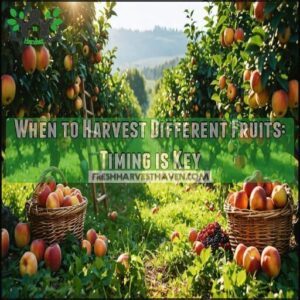
Apples demand staggered picking, since firmness and maturity indicators vary even on the same tree. Peaches offer a range of acidity—some ripen sweeter, others tart. Berries need frequent checks; their storage life is short, so timing matters. Stone fruit texture requires gentle handling to avoid bruising. Citrus ripening depends on steady warmth, making local climate a deciding factor for fruit varieties. Consider these:
- Apple firmness and maturity signals
- Peach acidity and texture
- Berry storage and harvest frequency
Following optimal harvest timing can extend apple storage life.
Weather Conditions
As you weigh fruit type variations, keep weather conditions front and center.
Temperature impacts ripening—too much heat shrinks berries, while frost management shields buds from cold.
Rainfall risks soften fruit and stall machinery. Humidity effects trigger rot; wind damage bruises crops.
Microclimate and local climate shape harvest scheduling and crop maturity, so track forecasts daily and adjust your picking plans accordingly.
Choosing Fruit Varieties

Choosing the right fruit varieties is the first step toward a productive harvest.
You’ll want to think about what grows well in your area and what suits your family’s tastes. Here are a few key factors to help guide your decision.
Climate Suitability
Choosing fruit varieties isn’t just about taste—it’s about matching each tree to your climate’s quirks. Evaluating Local Climate and Microclimate means checking Chill Hours for apples, watching Frost Risk for early bloomers, and measuring Heat Units for fruit maturity indicators.
Rainfall Requirements and Humidity Impact shape Crop Management.
Even a sunny wall can create a microclimate perfect for citrus.
Family Preferences
Family habits and traditions often steer your fruit harvest schedule more than you’d expect. For example, if your household leans toward sweet vs tart, prioritize apples or grapes over sour berries.
Crunchy preference means apples and pears fit as convenience snacks, while allergy‑safe choices keep kiwi or stone fruits off the list.
Consider these:
- Sweet vs Tart and Crunchy Preference
- Convenience Snacks and Allergy‑Safe Choices
- Cultural Traditions and Preservation Planning
Native Temperate Fruits
Even as you weigh family tastes, native temperate fruit varieties deserve a prominent place in your fruit harvest schedule. These regional classics, like American plums and wild currants, thrive thanks to centuries of adaptation—meaning they handle local chill requirements and weather swings with ease. You won’t have to fuss much with pest control, since native berry nutrition and historical orchard management practices make these fruits naturally resilient.
Native temperate fruits like American plums and wild currants thrive effortlessly, thanks to centuries of adaptation and natural resilience
For instance, pawpaw uses a range from creamy desserts to jams, while wild currant history reveals their role in traditional preserves and homemade wines. American plum hardiness stands out, offering reliable harvests even in colder climates.
- Picture clusters of juicy blueberries and raspberries, bursting with antioxidants and vibrant color.
- Imagine pawpaw’s tropical flavor, ripening quietly in your backyard, a proof to native fruit maturity indicators.
These choices anchor your fruit harvesting guide with practical, time‑tested reliability.
Warm Climate Fruits
If your growing zone stays warm and frost‑free, warm climate fruits open a world of options.
Citrus—like oranges and lemons—shine in USDA zones 9‑11, thriving with drip irrigation and mulching benefits that conserve moisture and support pest management.
Mangoes demand steady heat above 40°F, while figs and guavas flourish with windbreak strategies to shield from storms.
Avocados ripen year‑round, provided you assess local climate and microclimate carefully.
Your fruit harvest schedule hinges on fruit maturity indicators and timely fruit tree pruning.
For harvest optimization, store citrus in the fridge, ripen mangoes on the counter, and freeze figs for later, ensuring sound orchard management throughout.
Planting Fruit Trees
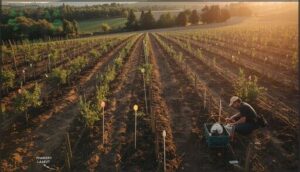
Getting your fruit trees off to a strong start begins with a few key decisions. Where you plant, how you prepare the soil, and the way you set up your orchard all play a part.
Let’s walk through what you’ll need to think about before putting your trees in the ground.
Site Selection
Think of site selection as laying the cornerstone for your orchard’s future. Your fruit trees need sunlight exposure—at least eight hours daily—to fuel healthy fruiting.
Don’t let poor soil drainage sabotage your efforts; waterlogged roots spell disaster. Windbreak placement shields delicate blossoms and fruit from harsh gusts, while microclimate mapping helps you assess local climate and microclimate, guiding fruit tree planting decisions.
Practical agricultural planning means considering access pathways for equipment and harvest. For successful orchard establishment, focus on:
- Full sun locations for maximum fruit yield
- Well-draining soil for healthy roots
- Sheltered sites for wind protection
Soil Preparation
healthy orchard begins beneath your feet. Before planting fruit trees, use soil testing to reveal pH, nutrient levels, and drainage issues.
If pH needs adjustment, apply lime or sulfur months ahead. Boost organic matter with compost to improve structure and moisture holding.
Drainage improvement is critical—loam is ideal, but clay soils need extra attention.
Nutrient balancing prevents excesses and shortages, supporting steady growth.
Soil conservation and management, along with proper fertilization and irrigation planning, lay the groundwork for lasting fruit production.
Tree Spacing
Space is money in orchard management and care — and getting it wrong costs you years of fruit production. Rootstock influence is the starting point: dwarf trees need just 2.5 to 3 meters apart, while standard trees demand up to 9 meters. Row orientation affects light penetration across your canopy width throughout the day. Proper airflow management reduces fungal risk substantially.
Smart fruit tree spacing delivers:
- More sunlight reaching lower branches
- Better pollinator movement between trees
- Easier access for pruning and tree care
Irrigation Systems
Once your trees are spaced for sunlight and airflow, irrigation systems step in as the backbone of fruit production techniques. Drip emitters deliver water right to the roots, saving time and reducing waste. Mulch-protected tubing shields your lines and keeps soil quality high. Soil moisture sensors help you schedule watering, preventing stress and promoting deeper roots. Fertigation injectors feed nutrients during irrigation, matching your fruit harvest schedule to crop needs. Pressure-compensating timers automate cycles, so you won’t miss a beat during hot spells or dry winds.
For smart agricultural practices, remember:
- Monitor soil moisture weekly
- Flush drip lines monthly
- Adjust watering for weather and fruit stage
Harvesting Techniques
When harvest time rolls around, knowing the right techniques makes all the difference.
You’ll want to think about how you pick, handle, and store your fruit to keep it at its best. Here’s what you need to think about as you plan your harvest.
Tool Selection
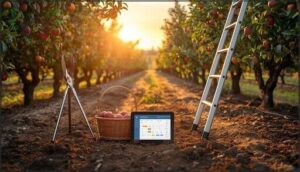
Selecting the right tools shapes your harvest planning and tracking.
Shear blade types for apples and citrus, choose drop‑forged steel for clean cuts. Telescopic pole lengths—like VEVOR’s 26‑foot picker—reach tall branches efficiently. Ladder stability features, such as tripod bases and flared legs, keep you safe on uneven ground. Basket material choices matter: wicker allows airflow, while foam‑lined baskets protect soft fruits.
Tool maintenance schedule using farm management software or precision agriculture apps to simplify inventory management and keep everything running smoothly.
Handling Methods
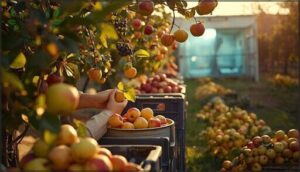
Once your tools are set, handle fruit drives for Harvest Optimization. Use picking bags at chest height so apples slide gently rather than fall.
Shape Fruit Harvesting Methods around four steps:
- Practice Gentle Gripping, twisting berries off the stem instead of pulling.
- Match Container Selection to the crop, choosing shallow padded buckets for soft fruit.
- Use Sorting Culling in the field to remove damaged pieces.
- Begin Rapid Cooling within four hours as your first post‑harvest handling step for food preservation and distribution planning.
Harvest Scheduling
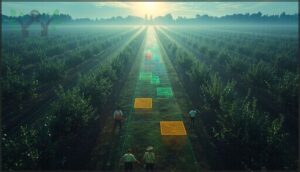
After you master gentle handling, you turn to Harvest Planning.
Creating a Fruit Harvest Schedule starts with Maturity Indices so you match Harvest Timing to Crop Maturity, not the calendar.
Use Staggered Calendars and Harvest Labor Planning together: plan Labor Allocation two months ahead, pick in cool early mornings, and rotate crews as blocks ripen, adding Weather Adjustments for rain, heat, and wet fields safely.
Fruit Storage
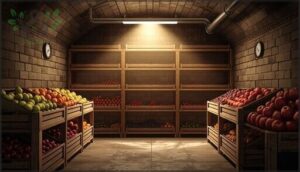
Preserving your harvest starts with smart Fruit Storage. You want to keep fruit fresh, so focus on Temperature Control and Humidity Management.
For instance, apples last longer at 30–40°F and high humidity, while ethylene mitigation keeps sensitive fruits safe from rapid ripening. Use containers with airflow, and check daily for spoilage.
Here’s your checklist:
- Container Selection for airflow
- Temperature Control in cold storage
- Ethylene Mitigation—separate producers
- Humidity Management
- Daily PostHarvest Handling for spoilage
Post Harvest Care
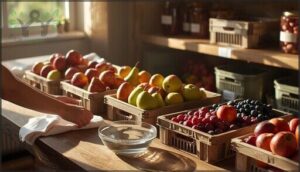
Once your fruit is picked, what you do next matters just as much as the harvest itself. handling, storing, and preserving your crop will help you keep it fresh and flavorful.
Here’s what you need to know to make the most of your fruit after picking.
Fruit Handling
Did you know dropped apple can bruise and lose market value in seconds? That’s why bruise prevention starts with gentle picking and immediate sorting.
Wear gloves for thorny fruits, sanitize tools between trees, and keep harvested fruit shaded in the field. Prioritize temperature control and ethylene management, and follow strict sanitation protocols—these steps anchor your postharvest handling and orchard maintenance.
Storage Options
With a well‑planned storage approach, you turn your fruit harvest into weeks—or even months—of fresh flavor. Each fruit comes with its own quirks, so you need to match your storage method to its natural ripening and shelf life.
For instance, Refrigerated Storage is essential for berries, keeping them firm at 32–35°F and high humidity. Apples thrive in Controlled Atmosphere rooms, where low oxygen and high humidity preserve crunch and prevent water loss. Stone fruits demand Vented Crates for airflow, while tropical fruits prefer room temperature—cold will ruin their taste.
Humidity Management is essential for grapes and citrus, maintaining texture and preventing mold. Zero‑Energy Cooling, using sand walls or evaporative chambers, offers short‑term solutions where electricity isn’t available. Smart Food Preservation and Storage means adapting your tools and techniques to each fruit’s needs.
- Refrigerated Storage for berries
- Controlled Atmosphere for apples
- Vented Crates for stone fruits
- Room temperature for tropical fruits
- Humidity Management for grapes and citrus
Preservation Methods
Why let your harvest fade when you can lock in flavor for months? With smart food preservation, you have choices:
Canning Techniques seal high-acid fruits safely; Freezing Tips keep berries vibrant and ready for smoothies; the Dehydrating Process concentrates sweetness into chewy snacks; Fermentation Basics turn fruit into tangy, probiotic-rich treats.
Each method offers practical ways to extend your fruit’s shelf-life, giving you control over your harvest’s longevity and nutritional value.
Shelf Life Extension
Think of your harvest as a living investment—how you handle it now decides its value tomorrow. To stretch storage capacity and keep fruit at its best, blend several strategies. For example:
- Temperature Control slows ripening and preserves flavor,
- Humidity Management prevents dehydration and shriveling,
- Ethylene Inhibition delays over‑ripening in climacteric fruits,
- Atmospheric Modification or Edible Coatings create barriers against spoilage.
Smart postharvest handling paired with these fruit preservation tools means you’ll enjoy crisp apples or plump berries long after picking, not just today.
Frequently Asked Questions (FAQs)
How to harvest fruit effectively and easily?
Picture a crisp morning, dew fading, and you’re reaching for ripe apples with a telescoping picker—no ladder needed.
Gentle bagging systems, careful handling, and a smart fruit harvest schedule keep your harvest firm, flavorful, and safe.
Do you need special equipment to harvest fruit?
You don’t need fancy harvest equipment, but telescopic pickers, protective gloves, and harvest bags make the job safer and easier.
Ladder safety matters for tall trees.
DIY harvest tools work well, but planning helps track and automate your harvest.
Should you harvest fruits from your garden?
Harvesting fruits from your garden is like striking gold—fresh flavors, higher nutritional benefits, and real market value.
Fruit maturity indicators ensures best harvest planning, reduces labor cost, involves your family, and lowers environmental impact for a rewarding experience.
What tools do you need to harvest fruits?
You’ll want Pruning Shears for clean cuts, Harvest Baskets for easy collection, Fruit Ladders and Picker Poles to reach high branches, and Protective Gloves for safety.
Keeping tools clean helps Harvest Planning and prevents disease during Harvesting Techniques.
Why is harvesting a fruit important?
Much like a sculptor unveiling their finest work, picking fruit at peak ripeness delivers Flavor Optimization, Nutrient Retention, and Waste Reduction.
Proper fruit harvest timing boosts Market Value, ensures Food Safety, and enhances Agricultural Productivity Optimization for top Fruit Quality and safety.
How do you harvest fruit & vegetables?
Pick fruits at full ripeness, twisting or clipping with clean tools to prevent damage.
Harvest vegetables early, using pruners or scissors. Handle produce gently for yield optimization, and follow safety protocols.
Proper equipment maintenance and storage guarantee efficient harvesting techniques and market timing.
What not to plant next to fruit trees?
Avoid planting walnut trees due to Juglone Toxicity, fennel for Allelopathic Fennel effects, brassicas for Brassica Nutrient Competition, nightshades for Nightshade Disease Risk, and root crops for Root Crop Disturbance.
Prioritize Fruit Tree Care and Orchard Management Best Practices.
What is the easiest fruit to harvest?
Strangely simple yet rewarding, strawberries make Fruit Harvesting easiest:
Ground level picking, Minimal tool needs, Frequent simple picks, Low maintenance plants, Quick yields, Fruit Maturity Indicators and Fruit Ripeness aid Harvest Planning and Harvest Optimization.
How do you know when fruit is ready to be picked?
Observe fruit maturity indicators: Color Indicators, Texture Tests, Aroma Cues, Seed Maturity, and Ease Separation.
By observing fruit maturity indicators, you’ll confirm fruit ripeness, harvest ripe fruit, and time fruit ripening and storage for flavor.
What fruit takes the longest to harvest?
Large tree fruits like apples and pears take the longest to harvest, requiring several weeks as individual fruits ripen at different rates across branches.
Check regularly and pick in stages for best results.
Conclusion
Like the farmer in Aesop’s fable who found treasure by digging deep into his soil, your greatest harvest rewards come from the work you put in before a single fruit ripens.
Your fruit harvest planning guide—rooted in timing, variety selection, proper technique, and smart storage—is that hidden treasure.
Follow each step with intention, and your orchard won’t just survive unpredictable seasons.
It’ll thrive through them, delivering baskets full of exactly what you planned for.
- https://www.rhs.org.uk/fruit/fruit-trees/harvesting
- http://www.rosiesfarmmarket.com/seasons.html
- https://extension.umaine.edu/fruit/harvest-and-storage-of-tree-fruits/maturity-indicators/
- https://www.farmstandapp.com/62118/7-techniques-for-managing-labor-efficiently-during-harvest/
- https://plant-heroes.com/why-is-it-important-to-have-a-planned-schedule-for-fruit-harvesting/