
This site is supported by our readers. We may earn a commission, at no cost to you, if you purchase through links.
Most gardeners pull their first green beans too soon, then wonder why the next batch turns tough and stringy before they can blink. That pencil-thick sweet spot—right around 6 to 8 millimeters—separates crisp, tender pods from chewy disappointments, and you’ve got maybe a 48-hour window to nail it. Miss that window, and your beans shift from kitchen gold to compost fodder faster than you’d expect.
The good news? Once you know what to look for—that taut, bright green skin, that clean snap between your fingers—you’ll stop second-guessing every pod. Timing your harvest right doesn’t just give you better beans; it tells your plants to keep pumping out more, turning a single planting into weeks of steady picking.
Table Of Contents
- Key Takeaways
- Key Signs Green Beans Are Ready to Harvest
- Best Time of Day to Harvest Green Beans
- How Green Bean Variety Affects Harvest Timing
- Step-by-Step Green Bean Harvesting Techniques
- Common Harvesting Mistakes to Avoid
- What to Do if Beans Are Overripe
- Storing and Preserving Freshly Harvested Green Beans
- Frequently Asked Questions (FAQs)
- Are green beans ready to harvest?
- When is the best time to pick green beans?
- How do you harvest green beans?
- How often should you harvest green beans?
- How do you know if green beans are ready for harvest?
- When are green beans ready to eat?
- How do I know when my green beans are ready to pick?
- Can you leave green beans on the vine too long?
- What is the peak season for green beans?
- How does rainfall affect green bean harvest timing?
- Conclusion
Key Takeaways
- Harvest green beans when they’re pencil-thick (6-8 millimeters) with taut, bright green skin that snaps cleanly—you’ve got a 48-hour window before they turn tough and stringy.
- Pick every 2-3 days during peak season to signal your plants to keep producing flowers and pods instead of shifting energy to seed development, which can double your total yield.
- Harvest in early morning when pods are crisp and full of moisture, then cool them to 32-40°F within two hours to lock in freshness and flavor.
- Support the stem with one hand while picking or snipping with the other to avoid damaging the plant, which protects future production and prevents disease entry points.
Key Signs Green Beans Are Ready to Harvest
Knowing when your green beans are ready to pick isn’t guesswork—it’s about reading the signs the plant gives you. Miss the window, and you’ll end up with tough, stringy pods that nobody wants to eat.
The same principle applies across your whole garden—timing your harvest right makes the difference between peak flavor and disappointment.
Here’s exactly what to look for so you can harvest at peak tenderness every single time.
Timing matters—check out this guide to harvesting vegetables at peak quality to learn the exact signs that your crops are ready to pick.
Ideal Pod Size and Thickness
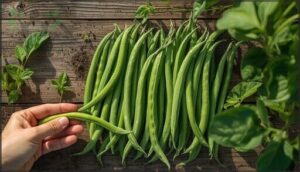
Your green beans are at their prime when they’re about pencil-thick—roughly 6 to 8 millimeters in pod diameter. At this thickness, you’ll catch them before seed development bulks up the pods and fiber content climbs.
Pairing this timing with proper hand-picking techniques helps you avoid bruising the tender pods and keeps your plants producing longer.
Harvest timing matters: slimmer pods snap cleanly and taste tender, while thicker ones turn tough and stringy. That pencil test? It’s your ticket to perfectly crisp beans every single time.
For best results, follow the proper harvest techniques to guarantee the best flavor and texture.
Pod Color and Texture
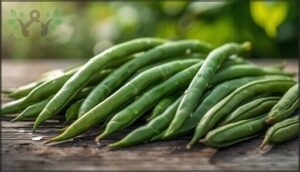
Beyond pencil-thick pod size, you’ll want to check color and firmness. Look for bright green, smooth pods with a crisp snap when you bend them gently. That vibrant hue signals perfect harvest time.
Watch for these texture clues:
- Firm, taut pods without wrinkles or soft spots
- Uniform diameter from stem to tip—no bulges
- Surface feels smooth, not leathery or hollow when pressed
Dull color or flabby texture? You’ve waited too long.
Snap Test for Tenderness
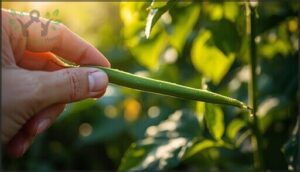
Here’s the real test of harvest readiness: grab a pod near the stem end and bend it gently. It should snap cleanly with a crisp sound—that’s your threshold for perfect tenderness. If it bends without breaking or makes a dry crack instead, you’ve missed the window.
This snap test gives you instant feedback on pod flexibility and bean firmness, no guessing required.
Avoiding Over-mature Beans
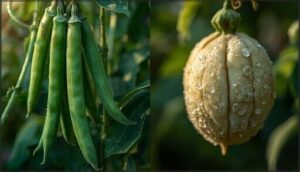
Let those beans hang too long on the vine, and you’ll end up with tough, mealy pods that taste more like cardboard than the sweet, crisp harvest you’re after. Watch for bulging seeds pushing through the pod—that’s your warning sign.
The harvest timeframe is narrow, so daily pod selection keeps you ahead of over-maturity. Check those bean maturity signs religiously!
Best Time of Day to Harvest Green Beans
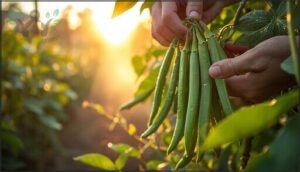
You’ve spotted the signs—your beans are ready. Harvest at the right time of day, and you’ll lock in better flavor, crispness, and longer storage life. But here’s something most gardeners miss: the clock actually matters when you’re out there picking.
Morning harvests give you the crispest pods, and if you’re growing pole beans, timing your picks for extended yield keeps those vines cranking out fresh beans all season long.
Morning Harvesting Benefits
Cooler morning temperatures give you serious control over your green bean harvesting guide. By picking at dawn, you’re working smarter—field efficiency skyrockets because temperature control keeps pods crisp and moisture management prevents wilting.
This harvest timing directly boosts crop yield and improves your entire harvesting and storage workflow. Morning harvesting techniques protect freshness during that critical harvest timeframe when your beans are at peak quality!
Preserving Freshness and Flavor
Right after harvest, your fresh storage tips become mission-critical! Rapid cooling methods lock in flavor retention and texture preservation—get those beans to 32–40°F within two hours. Harvest management doesn’t stop at picking; preserving freshness through proper harvesting and storage transforms your yield.
Timing matters too—knowing when crops reach peak ripeness ensures you’re cooling produce at its nutritional and flavor best.
Here’s your food preservation techniques arsenal:
- Store unwashed in perforated bags to maintain humidity without condensation
- Skip the damp towels—excess moisture accelerates spoilage fast
- Bean blanching for 1–2 minutes before freezing preserves color and snap
- Vacuum-seal to minimize moisture loss and aroma exchange
- Consume within 5–7 days for peak freshness and flavor
How Green Bean Variety Affects Harvest Timing
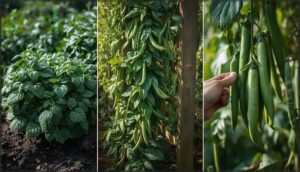
Not all green beans ripen on the same schedule, and knowing your variety makes a huge difference in when you’ll be out there picking. Bush beans tend to give you all their pods in a quick, concentrated window, while pole beans keep producing week after week if you stay on top of harvesting.
The specific type you’re growing—whether it’s a delicate French filet or a hardy wax bean—will also shift your timing by days or even weeks.
Bush Vs. Pole Bean Harvest Windows
Your bean variety dramatically shapes your harvest window. Bush beans deliver a concentrated 2–3 week harvest window starting around 50–70 days after sowing—perfect if you want all your beans at once for canning. Pole beans? They’re marathon runners, producing steadily for 6–8 weeks beginning at 60–75 days.
Different growth patterns mean you’ll plan harvesting and crop yield management completely differently.
French, String, and Wax Bean Differences
Each bean type whispers its own harvest story through pod color, bean texture, and timing. Slender French beans reach prime at 3–5 inches with sweet, crisp snap. Traditional string beans vary widely but often mature plumper and may need destringing. Wax beans flash pale yellow pods, signaling readiness with their waxy sheen and mild flavor profile—perfect for visual variety in your harvest basket.
Key distinctions you’ll notice:
- French beans: Ultra-tender, thin pods; harvest early for best texture
- String beans: Broader pods; check for fibrous strings in older cultivars
- Wax beans: Pale yellow color makes ripeness easy to spot
- Seed size: French beans have smaller seeds inside than string varieties
- Culinary uses: French shine in stir-fries; wax beans brighten steamed dishes
Days to Maturity for Popular Varieties
Your variety selection sets the entire growth cycle clock in motion. Bush beans usually mature fastest—50 to 60 days from sowing to harvest windows. Pole beans need patience, reaching 60 to 70 days before first picking. French filet types often hit peak at 50–55 days, while wax beans land around 55–65 days.
Seed quality affects these maturity rates, so choose wisely!
Step-by-Step Green Bean Harvesting Techniques
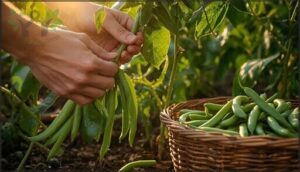
You’ve spotted the perfect pods—now it’s time to get them off the plant without causing damage. The way you harvest matters more than you might think, affecting both your current haul and future production.
Let’s walk through the best techniques to pick your green beans like a pro.
Hand Picking Vs. Using Scissors
When you’re out there harvesting green beans, you’ve got two solid choices: your own two hands or a clean pair of scissors. Hand picking gives you better control and preserves stem integrity, reducing plant damage while you carefully select each pod.
Scissors speed things up considerably on big plantings, though they can nick adjoining stems if you’re not careful. Both work—pick what fits your gardening style!
Supporting Stems During Harvest
Once you’ve chosen your method, here’s where stem handling really matters. Hold the stem just below the pod with one hand while you pick or snip with the other—this gentle picking technique prevents tearing and keeps your plants thriving.
- Stabilize the main stem to reduce stress on neighboring pods
- Use minimal pressure when supporting to avoid crushing tissues
- Keep pole beans steady since their vines are more delicate
- This post harvest care boosts future yields markedly!
Frequency for Maximum Yield
Here’s the secret sauce: frequency is everything. Pick your beans every 2-3 days during peak season, and you’ll see double the yield compared to weekly harvests. That’s because removing pods signals the plant to keep producing instead of forming seeds—you’re basically telling it “keep those flowers coming!”
Harvest beans every 2-3 days to double your yield—frequent picking signals plants to keep flowering instead of forming seeds
| Growth Stage | Harvest Cadence |
|---|---|
| Early Production | Every 3-4 days |
| Peak Season | Every 2 days |
| High Heat Zones | Every 1-1.5 days |
| Late Season | Every 3-4 days |
This harvest schedule keeps your plants pumping out pods through multiple growth stages. When you skip harvests, the plant shifts energy to seed formation, shutting down pod formation entirely—and that’s game over for crop yield optimization. Regular picking maintains those flowering cycles in perfect sync!
Common Harvesting Mistakes to Avoid
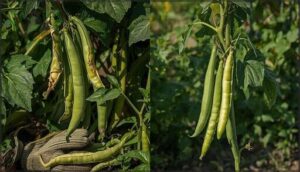
Even experienced gardeners make simple mistakes that can hurt their bean harvest. I’ve seen these same issues pop up year after year, and they’re easier to fix than you might think.
Let’s cover the three most common missteps so you can avoid them and keep your plants producing like crazy.
Picking Too Early or Too Late
Timing is everything when harvesting green beans, and getting it wrong costs you yield and quality. Here’s what happens when you miss the mark:
- Too early: Pods lack flavor and proper snap, leaving you with a disappointing harvest.
- Bulging seeds: Your pods are overripe, turning fibrous and stringy.
- Dull color: Late harvest means tough, flavorless beans.
- Reduced production: Poor harvest timing slows future pod development dramatically.
Monitor crop development daily during peak season!
Damaging Plants During Harvest
Your hands can wreck a healthy crop in seconds if you’re not careful! Rough handling tears stems, creating entry points for pests and disease.
Here’s your damage-control guide:
| Mistake | Impact |
|---|---|
| Twisting pods off | Tears vascular tissue, interrupts sap flow |
| Grabbing stems during pod removal | Causes abrasions, invites gray mold |
| Using dull tools | Crushes adjacent tissue unnecessarily |
| Pulling plants upward | Breaks roots, reduces future yields |
Gentle picking saves your plants. Use clean, sharp scissors and support stems with one hand while cutting pods with the other—this simple technique protects your harvest investment!
Skipping Regular Harvests
Too often, gardeners let beans sit on vines for days—then wonder why yields drop! Skipping regular harvests creates cascading problems in your crop management:
- Yield reduction up to 20% as plants shift energy to seed development
- Weakened plant vigor from constant seed production stress
- Increased disease risk from humid, crowded pods
- Interrupted harvest scheduling that complicates succession planting
- Tougher, less flavorful beans that disappoint at dinner
Pick every 2-3 days—your green beans will thank you!
What to Do if Beans Are Overripe
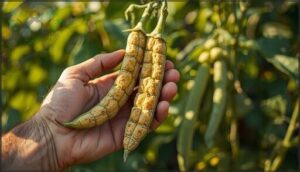
Don’t panic if you find a few overripe beans hiding in the foliage—it happens to even the most diligent gardeners! While those tough, bumpy pods won’t be as tender as you’d like, they’re not a total loss.
Here’s what you need to know about identifying them, putting them to use, and understanding how they affect your plant’s productivity.
Identifying Overripe Green Beans
You’ll know you’ve waited too long when your once-slender green beans start looking more like swollen fingers—thick, lumpy, and noticeably bulging with visible seed shapes pressing through the pod.
Here’s what overripe signs look like:
| Visual Clue | What You’ll See | Action Needed |
|---|---|---|
| Bean Color Change | Faded yellow-green, dull appearance | Pick immediately or repurpose |
| Pod Wilting | Shriveling skin, loss of firmness | Too late for fresh eating |
| Seed Development | Large bumps protruding through pod | Shell for dry beans instead |
The snap test fails completely—overripe beans bend instead of breaking crisply.
Using Overgrown Pods in The Kitchen
Don’t toss those overgrown pods just yet! Proper pod preparation is your secret weapon—trim the tough strings, peel if woody, then slice diagonally for better texture modification. Cooking methods like braising or stir-frying work wonders for flavor enhancement, especially when you add garlic and lemon.
While they’re past their prime snap bean glory, these kitchen storage solutions preserve your gardening tips harvest without waste.
Impact on Future Harvests
Leaving those overgrown pods on the vine isn’t just about losing one harvest—it’s like telling your plant to shut down production entirely, because once beans mature to seed stage, the whole plant stops making new flowers and pods.
Your yield management suffers, and here’s what happens next:
- Plant energy redirects from flower production to seed development
- Harvest scheduling gets disrupted for weeks
- Pest and disease management becomes harder with declining plant vigor
- Soil quality depletes faster without proper crop rotation planning
- Future gardening tips won’t help if your plants already decided they’re done
Storing and Preserving Freshly Harvested Green Beans
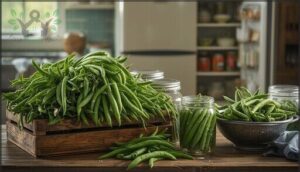
You’ve worked hard to pick those beans at just the right moment, so don’t let them go to waste now! The way you handle and store your harvest makes all the difference between crisp, flavorful beans and sad, wilted ones.
Let’s walk through the simple steps to keep your green beans fresh, whether you’re eating them this week or stashing them away for winter.
Proper Handling After Harvest
Right after harvesting, get those beans cooled fast—within two hours keeps them crisp and colorful! Give them a quick rinse under cool water to remove field debris, then trim the ends with clean scissors. Pat them dry thoroughly; moisture control matters here.
Cooling methods and proper postharvest cleaning set you up for outstanding freshness retention and food preservation success!
Refrigeration and Humidity Control
Store your beans at 32–40°F in the crisper drawer, where humidity levels hit that sweet spot of 90–95 percent—perfect for cold storage and food preservation! Use perforated bags; packaging methods matter for temperature control and moisture balance.
Keep beans away from apples and bananas for smart ethylene management. These storage conditions protect your harvesting efforts, ensuring your green bean cultivation pays off with crisp, fresh pods for days!
Blanching and Freezing for Long-term Storage
Want your harvesting bounty to last months? Blanching times matter—dunk those beans in boiling water for 3–4 minutes, then shock them in ice water. This freezing technique locks in color and texture preservation like nothing else!
- Dry beans thoroughly before packaging methods kick in
- Use airtight bags for optimal freezer storage
- Label with harvest dates for frozen quality tracking
- Keep at 0°F for 8–12 months of food storage and preservation excellence
Frequently Asked Questions (FAQs)
Are green beans ready to harvest?
Your green beans are ready when pods reach 4-6 inches, feel firm yet snap crisply, and show bright color.
Regular crop monitoring ensures perfect harvest timing—check pod development daily once snap beans start forming!
When is the best time to pick green beans?
You’ll want to harvest your green beans in the early morning when pods are crisp and full of moisture.
This timing preserves snap bean quality and maximizes vegetable harvesting success for better flavor.
How do you harvest green beans?
Use clean scissors or garden shears to cut pods, leaving small stems attached.
Harvest every 1-3 days during peak production, handling gently to avoid plant damage and preserve your snap beans’ crisp quality.
How often should you harvest green beans?
You should pick your green beans every 2 to 4 days during peak production. Regular harvesting keeps plants producing new pods and prevents beans from becoming tough or overmature—boosting your overall yield.
How do you know if green beans are ready for harvest?
You’ll know your green beans are ready when pods reach pencil thickness, show vibrant bean color, and pass the snap test—breaking cleanly with an audible crack, signaling peak harvest timing in their growth cycle.
When are green beans ready to eat?
Your beans hit peak readiness when pods snap cleanly—a satisfying crack signaling pod maturity. Harvest timing matters: slender, firm pods (4–6 inches) with bright color and crisp bean texture deliver freshness factors you can taste.
How do I know when my green beans are ready to pick?
Check for pods 4 to 6 inches long with smooth, firm walls and bright color. Perform the snap test—pods should crack cleanly. Seeds inside should be tiny, not bulging.
Can you leave green beans on the vine too long?
Leaving green beans too long causes vine overstay—pods shrivel, seeds bulge, and harvest timing suffers. Bean spoilage begins, yield reduction follows, and that perfect snap test fails. Pick regularly to keep plants producing!
What is the peak season for green beans?
In temperate regions, green beans hit their stride from June through August when temperatures hover between 70–85°F.
Regional climate and seasonal variations shape your harvest periods, with warmer zones enjoying extended picking windows.
How does rainfall affect green bean harvest timing?
Heavy rainfall can shift your harvest window by days or even weeks.
Excess water during pod fill slows color development and toughens texture, while dry spells concentrate maturity—making timing unpredictable.
Conclusion
You’ve turned those vines into your own steady harvest machine—no more guessing, no more waste. The best time for harvesting green beans boils down to watching for that pencil-thick snap, picking every two days, and grabbing your basket before the sun climbs too high.
Now you’re not just pulling pods; you’re reading your garden like a pro, catching every bean at its peak and keeping those plants cranking out more all season long.
- https://health.clevelandclinic.org/why-do-beans-make-you-fart
- https://extension.usu.edu/preserve-the-harvest/dev/storing-dry-beans-1
- https://journeywithjill.net/gardening/2023/03/29/how-to-grow-green-beans-beginners-starter-guide/
- https://nevegetable.org/crops/bean-snap-lima-and-dry
- https://thekitchengarten.com/when-to-harvest-beans/