This site is supported by our readers. We may earn a commission, at no cost to you, if you purchase through links.

There’s something quietly satisfying about picking fruit from your own yard and dropping it straight into a bowl. No waxy supermarket shine, no guessing how long it’s been sitting in cold storage—just ripe strawberries, blueberries, and peaches that actually smell like what they are.
Homegrown fruit salads hit differently because the ingredients haven’t traveled a thousand miles to reach you. Growing and assembling your own means you control the ripeness, the flavor, and the mix.
This guide walks you through exactly how to do it well, from the garden bed to the bowl.
Table Of Contents
- Key Takeaways
- Best Fruits to Grow for Salads
- Essential Ingredients for Flavorful Salads
- How to Prepare Homegrown Fruit Salads
- Tips for Keeping Fruit Salads Fresh
- Creative Homegrown Fruit Salad Variations
- Frequently Asked Questions (FAQs)
- How much garden space is needed for fruit salads?
- Which fruits grow best in small containers?
- Whats the typical growing timeline for salad fruits?
- How do soil conditions affect fruit salad quality?
- Can fruit salad gardens work in cold climates?
- Can homegrown fruit salads support a healthy diet?
- Which fruits grow best in small garden spaces?
- How do you fix an overly sweet fruit salad?
- Are organic homegrown fruits safer for raw salads?
- What tools make fruit salad prep easier?
- Conclusion
Key Takeaways
- Picking fruit at peak ripeness from your own yard is the single biggest reason homegrown fruit salads taste better than anything from a store.
- Matching your fruit to your climate zone and staggering plantings keeps fresh ingredients coming all season without wasted effort.
- A few smart prep habits — morning harvesting, gentle handling, and a quick lemon juice toss — are all it takes to keep your salad looking and tasting its best.
- Add-ins like fresh mint, toasted nuts, or a honey-lime dressing do more to elevate a fruit salad than any fancy recipe ever could.
Best Fruits to Grow for Salads
Growing your own fruit for salads is one of those small wins that just makes everything taste better. The right fruits pull double duty — they thrive in your garden and shine in a bowl.
From cherry tomatoes to strawberries, easy fruits you can grow indoors mean fresh salad ingredients are never more than a few steps away.
Here’s what’s worth planting if salads are your goal.
Top Homegrown Fruits for Salads
Your backyard has everything you need for a standout fruit salad.
Strawberries bring natural berry sweetness balance, while blueberries add deep color and juicy bursts — mature bushes can yield up to 3.5 kg annually.
Raspberries offer a citrus zest boost when paired with herbs.
These healthy options double as fresh fruit salad ingredients straight from the garden, making summer recipes genuinely satisfying.
For best flavor, plant strawberries in full sun planting.
Seasonal Fruit Selection Tips
Knowing when to grow is just as important as knowing what to grow.
Match your fruit to the climate zone — peaches love zones 7–9, while apples thrive in colder zones 3–6. Smart succession planting keeps your bowl full all season long.
- Use climate matching to avoid wasted effort
- Watch ripeness indicators like color, scent, and firmness
- Stagger plantings for continuous fresh fruit
- Check soil compatibility before committing to a variety
- Choose pollinator‑friendly plants to boost yields
Consult hardiness zone guidelines to make sure your fruit varieties match local climate.
Harvesting and Preparing Fresh Produce
Once you’ve nailed your seasonal fruits, picking them right makes all the difference. Morning Harvest Timing matters — cooler morning picks stay fresh longer.
Use Gentle Berry Handling to avoid bruising. Scrub melons with the Brush Cleaning Method, then pat dry. Cut with Uniform Piece Sizing for balanced bites, and use Acidic Dressing Prep like lemon juice to keep everything bright.
| Step | Tip |
|---|---|
| Harvest Time | Pick in the morning for freshness |
| Berry Handling | Roll gently, support with both hands |
| Washing | Scrub firm fruits, pat berries dry |
| Cutting | Uniform 1-inch pieces for even bites |
| Browning Prevention | Toss in lemon or lime juice immediately |
Essential Ingredients for Flavorful Salads
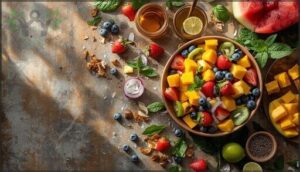
great fruit salad isn’t just about the fruit.
The right add-ins — and knowing what to leave out — make all the difference between something forgettable and something people ask you to bring every time.
For citrus-forward ideas that truly elevate your bowl, creative kale salad combinations with citrus and vinaigrette show exactly which additions are worth keeping — and which ones crowd the plate.
Here’s what you actually need.
Must-Have Fruits for Color and Taste
Color is your salad’s first impression.
Start with Vibrant Red Berries like strawberries and raspberries for that sweet-tart punch. Add Lush Green Kiwis for striking contrast, then Sunny Yellow Pineapple for tropical sweetness.
Toss in Golden Orange Citrus segments and finish with Deep Blue Berries for antioxidant-rich depth.
Mix seasonal fruits and colorful berries together, and honestly, your bowl practically dresses itself.
Creative Add-Ins (Herbs, Nuts, Cheese)
The real secret ingredient? It’s the add-ins.
Fresh Herb Pairings like mint leaves with strawberries or basil with melon bring a cooling lift that surprises people.
Mint with strawberries, basil with melon — fresh herbs are the surprising lift every fruit salad needs
Toasted Nut Flavors — think walnuts for that Walnut Texture Boost — add satisfying crunch.
Feta Cheese Accents work beautifully in a Watermelon Feta Salad, balancing sweet and savory combinations perfectly.
Even Lavender Bud Uses with citrus open up bold recipe customization possibilities.
Ingredients to Avoid for Freshness
Some ingredients quietly sabotage your salad before it even hits the table. Keep these off your list:
- Overripe Fruit — mushy cells break down fast and spread spoilage
- High Watermelon ratios — excess juice dilutes acids and soaks everything
- Early Dairy — yogurt or cream turns leftovers risky within a day
- Salty Add-Ins — draws water out, leaving fruit limp
- Ethylene Producers like bananas — skip them in make-ahead batches
How to Prepare Homegrown Fruit Salads
Getting the prep right makes all the difference between a fruit salad that wows and one that just sits there looking sad.
A few simple steps — washing, cutting, dressing, and mixing — are all it takes to bring your homegrown fruit to life.
Here’s how to nail each one.
Washing and Cutting Techniques
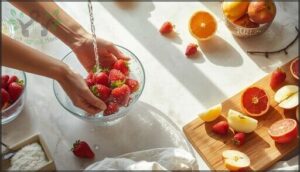
Clean fruit is happy fruit.
Start with a Running Water Rinse — hold each piece under cool water for 10 to 20 seconds while rubbing gently.
For berries, a Vinegar Soak (one part vinegar, three parts water) kills nearly all surface bacteria.
Got apples or pears? Try a Baking Soda Scrub to cut pesticide residue.
Strawberry Hulling and Citrus Segmenting round out your simple fruit preparation toolkit.
Simple Fruit Salad Dressings

The dressing makes or breaks a fruit salad.
A simple Honey Lime blend — two tablespoons honey whisked with fresh lime juice — hits that sweet-tart spot every time.
Want something heartier? Try a Citrus Vinaigrette with orange juice and Dijon.
Yogurt Dressings add creaminess, Poppy Seed dressings bring texture, and Mint Dressings brighten everything with fresh, tropical flavor.
Natural sweeteners like honey keep it clean and simple.
Assembling and Mixing for Best Results
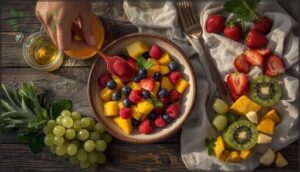
Think of assembling fruit salad like building a good sandwich — order matters. Layering Technique: firm fruits like grapes and pineapple go in first. Delicate berries come last.
For the Gentle Toss, Tool Selection is simple: grab a silicone spatula and fold; don’t stir.
Timing Chill means mixing your fruit combination, then refrigerating for 30 minutes.
For Juice Integration, toss the salad lightly, slice the fruit evenly, and make the dressing just before serving.
Tips for Keeping Fruit Salads Fresh
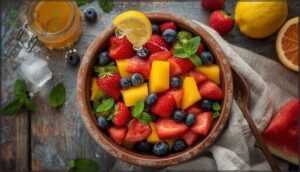
You put the work in growing and prepping that fruit — the last thing you want is a soggy, brown mess an hour later.
Keeping a fruit salad fresh is easier than you’d think, once you know a few simple tricks.
Here’s what actually works.
Make-Ahead and Storage Strategies
A little planning goes a long way with fruit salad make-ahead and storage. Staggered assembly is your best friend here — prep sturdy fruits like mango and peaches up to two days early, then combine closer to serving.
- Airtight materials like glass containers or mason jars
- Portion labeling with prep dates
- Syrup coating extends freshness for days
- Temperature control matters — keep your fridge at 32–34°F
Preventing Browning and Sogginess
Browning happens fast — and sogginess sneaks up even faster.
A quick Lemon Juice Soak (two tablespoons lemon juice to one cup water) keeps apples and pears looking fresh. Prefer something neutral? A Salt Water Soak works just as well without adding flavor. A Citrus Dressing Coating using lime juice seals out air beautifully. Smart Firm Fruit Selection and Last Minute Additions make all the difference.
| Method | Best For | How Long It Works |
|---|---|---|
| Lemon Juice Soak | Apples, pears | Up to 12 hours |
| Salt Water Soak | Mixed cut fruit | Several hours |
| Citrus Dressing Coating | Melon, grapes | Day of serving |
Best Containers for Storing Salads
Once you’ve handled the browning battle, smart fruit salad storage is your next win.
- Airtight Seals lock out air — Rubbermaid Brilliance’s 360-degree clips are no joke.
- Compartment Trays keep wet fruits separate from dry ones.
- Material Durability matters — glass endures refrigeration cycles without absorbing odors.
For make-ahead fruit salad, capacity sizes and cleaning ease seal the deal.
Creative Homegrown Fruit Salad Variations
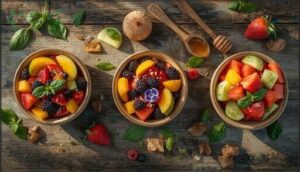
Once you’ve nailed the basics, it’s time to have a little fun with what’s growing in your yard.
Fruit salads don’t have to follow a formula — there are so many ways to mix things up depending on the season, the crowd, or what’s on the dinner table.
Here are some of the best variations worth trying.
Creamy, Tropical, and Savory Options
Once you start mixing styles, fruit salad becomes a whole new thing.
Go creamy with Yogurt Dressing Variations — vanilla Greek yogurt, honey, and lemon coats strawberries and grapes beautifully.
Try a Coconut Lime Fusion for a tropical fruit salad recipe that sings.
Want savory? A Feta Walnut Mix or Honey Mustard Drizzle work surprisingly well.
Feeling bold? A Spicy Chili Lime kick changes everything.
Kid-Friendly and Brunch-Ready Ideas
Kids make the best taste testers — and they’re surprisingly good prep cooks too.
Set up Rainbow Bowls using five colors of fruit, then let them build their own Individual Cups. It’s easy party food that doubles as breakfast ideas for your brunch menu.
- Let kids wash berries while you handle the cutting
- Layer fruit in clear cups so every color shows
- Offer Fun Toppings like yogurt or whipped cream
- Set out a DIY Dressing Station with honey and citrus
Visually appealing food doesn’t have to be complicated — this easy fruit salad recipe proves it.
Pairing Fruit Salads With Meals
Fruit salad isn’t just a side dish — it’s a smart pairing tool.
| Meal | Best Pairing |
|---|---|
| Grilled chicken | Citrus-based salad |
| Seared salmon | Mango or pineapple |
| Glazed ham | Tart grapefruit or kiwi |
| Spicy cookout sides | Melon and berry mix |
For Protein Pairings, match bold mains with bright fruit. Flavor‑Texture Balance matters too — crunchy apples alongside soft mains, tropical fruit beside smoky meat.
Course Timing shapes everything: serve lighter citrus blends as starters, creamy versions after. For Drink Pairings, sparkling wine loves a mixed berry bowl. Perfect for your brunch menu, potluck dishes, or picnic food.
Frequently Asked Questions (FAQs)
How much garden space is needed for fruit salads?
You don’t need a farm — just 50 square feet.
Plant spacing guidelines and vertical gardening options increase yield per square foot, giving you fresh seasonal produce for fruit salad preparation without sprawling rows.
Which fruits grow best in small containers?
Compact berry varieties like strawberries and blueberries thrive in small pots.
Dwarf citrus options — mandarin oranges especially — do well on sunny balconies.
Patio stone fruits, mini figs, and pomegranates also fit containers nicely with the right container soil mix.
Whats the typical growing timeline for salad fruits?
Strawberries take forever — just kidding, but germination period runs 7–14 days. Vegetative growth, flowering stage, and fruit ripening follow fast. Harvest timing lands around 60–90 days total for most seasonal fruit.
How do soil conditions affect fruit salad quality?
Your soil is basically a flavor lab.
Balanced nutrients, healthy pH, good organic matter, and smart moisture management directly shape how sweet, firm, and aromatic your fruit salad ingredients turn out.
Can fruit salad gardens work in cold climates?
Yes, absolutely. Cold-hardy picks like haskaps, currants, and prairie grapes thrive in zones 2–
Smart Site Selection Design, Container Gardening Tips, and Season Extension Structures give you a real, productive fruit salad garden even in brutal winters.
Can homegrown fruit salads support a healthy diet?
Absolutely.
Homegrown fruit salads pack serious nutrient density, deliver a solid fiber boost, and stay low‑calorie.
Add pesticide‑free benefits and a natural consumption increase, and healthy eating genuinely gets easier — and tastier.
Which fruits grow best in small garden spaces?
Think of your balcony as a mini orchard.
Strawberries, blueberries, raspberries, and dwarf varieties of grapes thrive through vertical planting and proper container soil, hitting their harvest timing with just six hours of daily sunlight.
How do you fix an overly sweet fruit salad?
Squeeze in some lime juice or lemon zest for Citrus Balance.
toss in nuts for Nut Crunch.
stir in plain yogurt for Dairy Dilution.
or add fresh mint for Herb Brightness.
Are organic homegrown fruits safer for raw salads?
Organic homegrown fruits carry fewer synthetic pesticide residues than store-bought ones.
Wash thoroughly, manage soil contaminants, and practice solid kitchen hygiene — and your raw salads are genuinely safer, fresher, and better.
What tools make fruit salad prep easier?
You could spend half your morning wrestling a pineapple with the wrong knife.
Paring knives, fruit corers, melon ballers, salad spinners, and prep bowls make fruit salad prep genuinely quick and easy.
Conclusion
Sure, you could keep buying those suspiciously perfect supermarket strawberries—the ones that look great and taste like wet cardboard. Or you could grow your own.
Homegrown fruit salads don’t need a fancy recipe or a culinary degree. They need good fruit, picked at the right moment, and a little confidence in your own backyard. You’ve got the tools now. The garden’s doing its part. The rest is just showing up with a bowl.
- https://kristineskitchenblog.com/fruit-salad/
- https://eathealthy365.com/the-ultimate-guide-to-perfect-fresh-fruit-salads/
- https://www.thegraciouswife.com/best-fruit-salad-recipe/
- https://www.chelseasmessyapron.com/blackberry-lime-fruit-salad-with-orange-zest/
- https://lifemadesimplebakes.com/how-to-make-fruit-salad-4/