This site is supported by our readers. We may earn a commission, at no cost to you, if you purchase through links.
Last summer, my neighbor pulled fifteen pounds of tomatoes off a single Big Beef plant while mine barely managed four. The difference? She’d spent three seasons building her soil with compost, chose varieties bred for performance, and watered deep instead of often.
Increasing garden produce output isn’t about working harder, it’s about working smarter with what you’ve got. Whether you’re dealing with a tiny balcony or a sprawling backyard, the same principles apply: feed your soil properly, pick plants that actually produce, use every inch of space efficiently, water like you mean it, and keep pests from stealing your harvest.
Get these fundamentals right, and you’ll be amazed at what even a small plot can deliver.
Table Of Contents
- Key Takeaways
- Optimize Soil for Maximum Productivity
- Choose High-Yield and Resilient Plants
- Maximize Space and Garden Design
- Improve Watering and Irrigation Practices
- Enhance Pest and Disease Management
- Frequently Asked Questions (FAQs)
- How often should I water for maximum yields?
- Whats the ideal garden pH for productivity?
- When should I harvest to encourage more production?
- How do I know if plants need fertilizer?
- Can pruning techniques increase overall garden output?
- How often should I fertilize during the growing season?
- When is the best time to harvest each vegetable?
- Can I save seeds from my garden for replanting?
- What tools are essential for maintaining a productive garden?
- How do I extend my growing season in fall?
- Conclusion
Key Takeaways
- Building healthy soil through compost, aged manure, crop rotation, and mulching creates the foundation for consistent high yields while cutting water needs by 20-30% and breaking pest cycles naturally.
- Strategic plant selection matters more than effort—high-yield varieties like Big Beef tomatoes can produce 10-15 kg per plant, while companion planting boosts productivity by 32% through improved soil health and pest suppression.
- Maximizing space through raised beds, vertical gardening, intensive planting, and succession sowing lets you harvest comparable yields from half the land, turning even small spaces into serious production zones.
- Smart watering with deep, infrequent irrigation (1 inch per session reaching 6-12 inches down) combined with drip systems and mulch builds stronger roots while using 30-60% less water than traditional methods.
Optimize Soil for Maximum Productivity
Your soil is the foundation of everything that grows in your garden, and getting it right means bigger harvests with less hassle. Think of it as building a strong house—you wouldn’t skimp on the foundation, right?
Here are three proven strategies to transform your soil into a nutrient-rich powerhouse that keeps your plants thriving season after season.
Enhancing Soil Fertility With Compost and Manure
Soil health starts with the right fuel, and compost delivers nitrogen, phosphorus, and potassium in slow-release forms that feed plants without washing away. Manure works similarly but needs proper aging—at least six months—to eliminate pathogens before you spread it near edibles.
Before applying any manure to your beds, check out these herb garden maintenance tips to ensure your composting timeline protects both soil quality and plant health.
- Compost benefits: Boosts soil microbes, improves water retention, and builds long-term fertility management through organic matter.
- Manure safety: Use well-aged or bagged products on food crops to avoid contamination risks.
- Soil fertility: Regular applications increase nutrient reserves better than synthetic fertilizers alone. Understanding compost use guidelines is essential for maximizing its benefits.
Incorporating Crop Rotation and Green Manures
Beyond adding compost, rotation planning transforms your soil into a self-sustaining system. Switching plant families each season—legumes one year, brassicas the next—breaks pest cycles and delivers yield optimization gains averaging 20 percent over monoculture.
Green manuring with legumes fixes up to 419 kilograms of nitrogen per hectare, slashing fertilizer costs while building crop diversity. It’s soil enrichment that pays dividends season after season. Incorporating green manure strategies can markedly improve soil fertility and crop performance.
Mulching to Retain Moisture and Suppress Weeds
Once you’ve enriched your beds with compost and rotation, lock in those gains with the right mulch materials.
Spread two to four inches of straw or wood chips for moisture retention that cuts watering needs by 20 to 30 percent while delivering weed suppression up to 100 percent.
For best results with different tree varieties, check out this organic fruit tree care guide to match mulch types with specific growth stages.
Organic mulching transforms water management, letting you focus energy on growth instead of constant irrigation and hand-pulling invaders.
By applying principles from strategic crop rotation, you can select fast-cycling cover crops that suppress weeds naturally while enriching soil between harvests.
Choose High-Yield and Resilient Plants
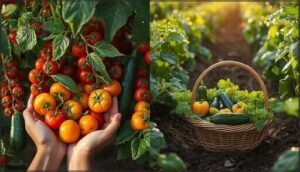
You’ve built the foundation with great soil, now it’s time to think about what you’re actually planting. Not all varieties are created equal—some pump out harvests like clockwork while others barely make it past July.
If pests show up early, switching to the best pest control for leafy greens keeps your plants thriving without harsh chemicals.
Let’s look at smart plant choices that’ll give you more food with less fuss, starting with varieties bred specifically for high yields.
Selecting High-Yield Vegetable and Fruit Varieties
You’ll transform your garden yield by choosing varieties bred specifically for high yield capacity.
For vegetable gardening success, consider Big Beef tomatoes producing 10-15 kg per plant, or Lunchbox cucumbers delivering over 100 fruits each.
Seed quality matters immensely, so select proven performers like Cherokee Trail of Tears beans at 1.2 pounds per plant.
Fruit variety selection drives crop yield factors more than most gardeners realize!
Companion Planting for Improved Growth
Companion planting creates powerful partnerships in your garden beds through crop diversification and intercropping. You’ll boost yields by pairing tomatoes with basil for pest suppression, or planting sweet alyssum alongside vegetables for pollinator attraction.
These strategic combinations improve the soil microbiome, enhance nutrient cycling, and increase productivity. Field studies show companion systems delivering 32 percent higher yields than monocultures, proving smart crop rotation and gardening tips really work!
Companion planting boosts yields by 32 percent through improved soil microbiomes and nutrient cycling—proof that strategic crop rotation really works
Growing Perennial and Space-Saving Crops
Perennials are your garden’s gift that keeps on giving, year after year, without replanting—and when you combine them with space-saving crops, you’re building a productivity powerhouse that works smarter, not harder.
Think asparagus, rhubarb, and perennial herbs paired with vertical gardening techniques like pole beans climbing trellises.
You’ll optimize every square inch through intercropping methods and container gardening, creating layers of production that deliver serious returns without constant replanting.
Choosing Plants Suited to Local Climate
Climate Zone Mapping starts with understanding your USDA hardiness zone—those 5-degree bands determine which perennials survive winter and when you’ll face frost dates that bookend your growing season.
Match Crop Hardiness to your zone, then dig deeper: select regionally appropriate varieties with Heat Tolerance for scorching summers or early maturity for short seasons.
Phenology Tracking—watching when local indicator plants bloom—beats calendar dates every time, helping you nail crop selection timing perfectly.
Maximize Space and Garden Design
You don’t need a massive plot to grow serious amounts of food. Smart garden design lets you squeeze more productivity out of every square foot, turning even tight spaces into high-yield production zones.
Here’s how to rethink your layout and make the most of what you’ve got.
Raised Beds and Vertical Gardening Techniques

Want to squeeze more harvest from less ground? Raised beds and vertical gardening techniques give you that power. Build beds 8 to 12 inches high and 3 to 4 feet wide—you’ll reach the center easily without compacting soil.
Vertical gardening on trellises keeps vining crops off the ground, cuts disease pressure, and can multiply your space efficiency dramatically. It’s garden optimization that actually works.
Intensive Planting and Succession Sowing
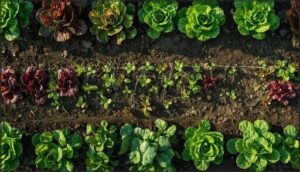
Intensive gardening lets you pack plants closer together—when properly managed, you’ll harvest comparable yields from half the land. That’s where crop density management and plant spacing strategies really shine!
Pair this with succession planting: sow lettuce or radishes every week or two for continuous harvests instead of one big flush. Succession cropping and intercropping optimize your beds throughout the season, turning yield optimization into reality.
Utilizing Containers and Small Spaces
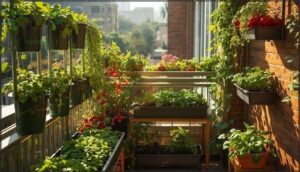
Don’t let a tiny balcony stop you—container gardening and vertical farming techniques turn even a cramped patio into productive urban gardening space. Small space tips start with picking the right vessels: use 5-gallon buckets for tomatoes, shallow trays for micro greens, and vertical gardening towers that stack multiple crops in one square foot.
- Self-watering containers keep moisture steady without daily fussing
- Leaf lettuce in small pots delivers harvest in just 30 days
- Tower systems multiply your planting area upward, not outward
Designing Beds for Accessibility and Productivity
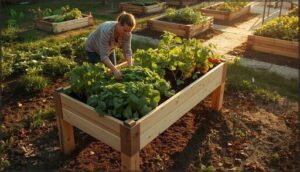
Beyond container gardening, ergonomic bed design transforms your garden planner into a productivity powerhouse. Build raised beds around 30 inches wide—you’ll reach every plant without stepping on soil or straining your back. Raised bed heights of 30 inches cut bending dramatically.
Wheelchair gardening benefits from H-shaped layouts with accessible pathways, while keyhole garden configurations pack maximum square foot gardening harvest into minimal space.
Improve Watering and Irrigation Practices
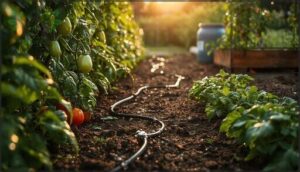
Water is the lifeblood of your garden, and how you deliver it makes all the difference between struggling plants and a thriving harvest. Too much, too little, or at the wrong time can set you back weeks, while smart irrigation practices keep your soil consistently moist and your plants productive.
Here’s how to water smarter, not harder, so every drop counts toward bigger yields.
Deep and Efficient Watering Techniques
You’ll get more from every drop when you water deeply instead of often. Most vegetables need moisture to reach 6 to 12 inches down into the root zone, so aim for about 1 inch of water per session to wet that soil properly.
This builds stronger roots, cuts evaporation losses, and sets you up for better irrigation efficiency and water management down the line.
Installing Drip Irrigation Systems
Drip system design turns those deep-watering principles into autopilot mode. A basic setup—mainline tubing, drip tape with built-in emitters, a pressure regulator, and a filter—delivers water straight to root zones at 30% to 60% lower volumes than overhead methods while boosting irrigation efficiency.
You’ll conserve water, support fertigation methods for precise feeding, and see crop yield climb without standing around holding a hose.
Using Mulch to Conserve Soil Moisture
Once your drip system is humming, mulch becomes your secret weapon for slashing water loss. A two- to three-inch layer of organic mulching—straw, newspaper, or bran—cuts evaporation reduction by 28 to 58 percent, locking in soil moisture between irrigations.
You’ll water less, boost water conservation, and watch your soil health and conservation improve while weeds stay buried.
Adjusting Watering Schedules to Weather Patterns
Weather forecasting transforms irrigation timing from guesswork into strategy. Smart rainfall management and water conservation mean your irrigation systems work with nature, not against it, boosting gardening productivity.
You’ll slash water waste by checking soil moisture a few inches deep before watering—surface dryness can fool you during hot snaps. When heat waves spike, bump frequency to keep roots moist without drowning them. After rainfall, hold off until soil health demands it.
Enhance Pest and Disease Management
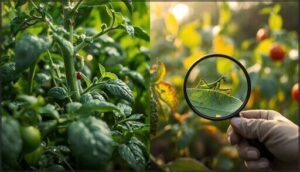
Pests and diseases can wipe out weeks of hard work in your garden, but the right strategies keep problems under control without drowning your plants in chemicals.
A smart approach combines prevention, early detection, and targeted action that protects both your harvest and the beneficial creatures doing half the work for you.
Here’s how to build a defense system that actually works.
Implementing Integrated Pest Management (IPM)
You don’t need to spray pesticides every week to protect your garden. IPM strategies combine pest monitoring, biological control, and economic thresholds so you only act when pest numbers actually threaten your harvest.
Scout plants every 5 to 7 days, watch for early warning signs, and use sustainable practices like selective sprays that protect beneficial insects while keeping disease management effective and affordable.
Attracting Beneficial Insects and Pollinators
Your garden’s best defenders already live nearby, waiting for you to roll out the welcome mat. Diverse floral resources, nesting habitat, and pesticide reduction transform your space into a hub for pollinators and pest control allies that strengthen integrated management naturally.
- Plant perennials, shrubs, and succession planting mixtures that bloom spring through fall, boosting pollinator diversity and pollination.
- Leave bare ground patches, dead stems, and small brush piles so ground-nesting bees and predatory beetles find shelter.
- Skip broad-spectrum sprays, use companion planting, and practice crop diversity and rotation to let beneficial insects thrive.
Using Row Covers and Physical Barriers
Row covers and physical barriers act like invisible armor for your plants, blocking pests while you boost yields. Install floating fleece or insect netting at transplanting to exclude whiteflies, aphids, and fruit flies—some trials saw zero pest pressure until removal.
These barrier designs also provide season extension through microclimate modification, raising nighttime temps by three to five degrees and protecting crops from wind and sunburn, all while increasing marketable harvests up to twenty-five percent in cucurbits.
Practicing Good Garden Sanitation and Crop Rotation
Pathogens don’t take vacations—they lurk in soil, dead leaves, and dirty tools until your next crop arrives. That’s where sanitation and rotational planning transform garden cleanup into a defensive shield, slashing disease carryover by up to eighty percent between seasons.
- Remove diseased plant debris immediately to prevent overwintering pathogens that fuel next year’s outbreaks
- Rotate plant families every three to four years across beds for soil conservation and disease prevention
- Disinfect tools with ten percent bleach between plants to stop pathogen spread during pruning and harvest
Frequently Asked Questions (FAQs)
How often should I water for maximum yields?
Most vegetables thrive on 1 to 5 inches of water weekly, delivered deeply once or twice instead of daily sprinkling.
Adjust irrigation scheduling based on soil moisture, evapotranspiration rates, and weather to optimize crop yield.
Whats the ideal garden pH for productivity?
Most vegetables thrive in slightly acidic to neutral soil—usually pH 0 to This sweet spot maximizes nutrient availability, fosters microbial balance, and keeps both deficiencies and toxicities at bay for consistent, productive growth.
When should I harvest to encourage more production?
Harvest timing makes all the difference—pick indeterminate crops like tomatoes and cucumbers frequently to keep them flowering.
For leafy greens, use cut-and-come-again harvesting techniques, and deadhead spent blooms to boost yields and extend your season.
How do I know if plants need fertilizer?
Your plants will tell you they’re hungry. Watch for yellowing older leaves, stunted growth, or poor flowering—classic signs of Nutrient Deficiency.
Soil Testing confirms what’s missing, guiding smart Fertilizer choices and Plant Nutrition.
Can pruning techniques increase overall garden output?
Yes, strategic pruning boosts garden output markedly. Research shows severe pruning can increase fruit yield to 66 kg per tree versus 60 kg with light pruning, demonstrating how proper crop management and plant training improve garden productivity.
How often should I fertilize during the growing season?
How do you know when to feed? Most vegetables need fertilizer every 3 to 4 weeks during active growth, especially heavy feeders like tomatoes and peppers. Soil testing reveals when your crops truly need nutrition.
When is the best time to harvest each vegetable?
Getting your crop maturity and harvest timing right makes all the difference. Pick tomatoes at the breaker stage, cucumbers every few days, and leafy greens when tender—these harvesting strategies optimize both vegetable yield and flavor.
Can I save seeds from my garden for replanting?
You can absolutely save seeds from your garden, but here’s the catch: choose open-pollinated varieties instead of hybrids.
Open-pollinated seeds replicate the parent plant reliably, while hybrids produce unpredictable offspring when replanted.
What tools are essential for maintaining a productive garden?
Your gardening productivity depends on the right gardening hand tools: a sharp hand trowel for soil cultivation, bypass pruners for plant maintenance, and efficient irrigation systems like drip tubing paired with a sturdy garden hoe for weeding.
How do I extend my growing season in fall?
Want to keep harvesting after frost hits? Use cold frames or high tunnels for greenhouse-like frost protection, plant cold-tolerant fall crops early, and layer row covers to manage your microclimate through succession cropping.
Conclusion
Think of your garden as a production line: every weak link costs you harvest. Increasing garden produce output comes down to eliminating those bottlenecks—starved soil, wrong varieties, wasted space, lazy watering, unchecked pests.
Fix each one systematically, and you’re not just growing vegetables anymore, you’re running a high-performance system. The difference between a mediocre harvest and a truly abundant one isn’t luck or magic. It’s deliberate choices, repeated consistently, season after season.
- https://www.pnas.org/doi/10.1073/pnas.2108429118
- https://agrigold.com/resources/agronomy-library/understanding-the-basics-of-integrated-pest-management
- https://vegcropshotline.org/article/integrated-insect-management-strategies-for-vegetable-farms/
- https://soiltesting.cahnr.uconn.edu/suggested-fertilizer-practices-for-vegetables-and-herbs/
- https://aesl.ces.uga.edu/publications/soil/cropsheets.pdf