This site is supported by our readers. We may earn a commission, at no cost to you, if you purchase through links.
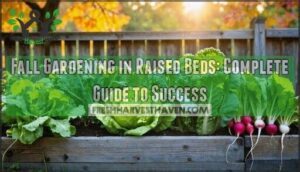
 Most gardeners assume spring is the golden season for growing vegetables, but fall gardens often outperform their spring counterparts. Cooler temperatures mean fewer pests, less watering, and sweeter-tasting crops—carrots and kale actually improve after a light frost.
The catch? You can’t plant on a whim. A successful fall gardening harvest depends on working backward from your first frost date, choosing varieties that mature quickly, and protecting tender greens when temperatures drop.
With the right timing and a few simple strategies, your autumn beds can deliver fresh produce well into November or even December. The secret lies in planning now, while summer’s still here, so you’re harvesting when everyone else has packed up their garden tools.
Table Of Contents
Key Takeaways
- Fall gardens often outperform spring ones because cooler temperatures bring fewer pests, less watering, and sweeter-tasting crops like carrots and kale that improve after frost.
- Success depends on working backward from your first frost date, subtracting the crop’s days to maturity, and adding a 14-day buffer to account for slower fall growth.
- Choosing fast-maturing varieties (30-60 days) minimizes frost risk, while mixing them with late-maturing types (80-120 days) balances quick harvests with higher yields.
- Simple tools like row covers, cold frames, and drip irrigation extend your harvest window by several weeks while cutting water use by 70% and reducing disease.
Planning Your Fall Garden for Success
Fall gardening isn’t just about throwing seeds in the ground and hoping for the best. You need a solid plan that accounts for your local frost dates, the right crops for cooler weather, and realistic goals for what you can actually harvest before winter arrives.
Let’s break down the three key steps that’ll set you up for a productive fall garden.
Setting Fall Gardening Goals
Setting clear goals can boost your harvest success rate by more than half. Think about what you want from your fall garden—maybe extending the growing season with cool-weather crops like kale and spinach, hitting specific yield targets, or preparing soil for spring.
Many gardeners focus on disease resistance when choosing varieties, and about 45% plan to use season extenders like row covers to stretch their harvest time.
When you define what success looks like for your garden planning, you’ll make smarter choices about crop planning and your planting schedule.
Timing Your Plantings by Frost Date
Once your goals are set, your planting schedule hinges on knowing your first frost date. This average date when temperatures hit 32°F guides everything.
Here’s how to time cool-season crops right:
- Calculate backward – Take your first frost date, subtract the crop’s days to maturity, then add a 14-day buffer week for slower fall growth.
- Adjust for your microclimate – Urban heat islands can extend your window by two weeks, while shaded slopes may shorten it by a week.
- Try sequential planting – Sow crops every 10–14 days for staggered harvests and better frost protection.
Frost date tools like the Gardenary Calculator help you nail the timing, accounting for growth rate impact as temperatures drop.
Using Regional Planting Calendars
Regional planting calendars take the guesswork out of fall sowing by matching your zip code or hardiness zone to planting windows. Virginia’s zone 7a, for example, recommends broccoli between August 10–September 10, while zone 6 gardeners finish by mid-October. These zone-specific dates account for frost date impact and calendar variations across microclimates.
Understanding your area’s first frost date is essential for timing your planting schedule. Extension service guides from Maryland, Purdue, and Texas A&M offer precise, late-season gardening tips that adjust for your location’s unique growing conditions, ensuring your fall planting guide aligns with local climate realities.
Choosing The Best Fall Vegetables
Picking the right vegetables makes all the difference when you’re planning a fall garden. You’ll want crops that can handle cooler temperatures and mature before hard frost arrives.
Let’s look at which varieties work best for autumn growing in the Northeast.
Top Cool-Season Crops for The Northeast
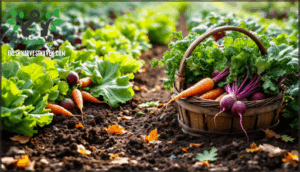
Fall vegetable gardens thrive when you match crops to the Northeast’s cooler temperatures. Lettuce germinates best between 45–75°F and reaches harvest in just 30 days, while spinach survives down to 20°F. Kale, like ‘Winterbor,’ tolerates temperatures near 10°F.
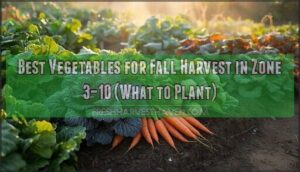
For roots, carrots sweeten after frost, and beets thrive in 50–65°F soil. These frost-tolerant varieties turn cooler soil temperature impact into advantage, making succession planting of pest-resistant crops worthwhile for harvest flavor peaks.
Gardeners can also enjoy sweeter tasting crops due to frost.
Fast-Maturing Vs. Late-Maturing Varieties
When you’re racing the clock before frost, crop maturity times make all the difference. Fast-maturing varieties reach harvest in 30–60 days, perfect for succession planting through late summer. Late-maturing types need 80–120 days but often yield 15–25% more per plant.
Quick growers like arugula minimize frost-loss risk and cut irrigation needs by 20%, while slower crops offer bigger single harvests. Mixing both strategies balances climate adaptation with resource efficiency.
Selecting Disease-Resistant and Hardy Types
Disease resistance and cold tolerance aren’t just nice-to-haves—they’re your fall vegetable garden‘s insurance policy. Hardy varieties like ‘Provider’ beans and collard greens thrive in cool-season crops, shrugging off frost tolerance tests below 28°F.
Modern breeding strategies using genomic selection deliver dual-resistant cultivars that cut fungicide costs by 30–50%.
Smart vegetable selection and crop rotation with these hardy types keep your harvest rolling through November.
Preparing Soil for Fall Planting
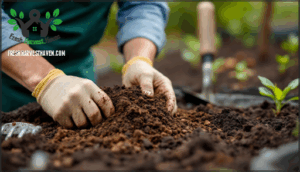
Your fall garden’s success starts underground, and getting the soil ready is worth the effort.
The next two steps will help you build a foundation that feeds your plants and keeps moisture where it belongs.
Let’s look at how to prepare your beds for a productive autumn harvest.
Enriching Soil With Compost or Manure
Your fall garden’s success starts beneath the surface. Compost and well-rotted manure are game-changers for soil health, boosting organic matter by up to 10% compared to synthetic fertilizers.
This soil preparation dramatically increases nutrient availability—compost can raise nitrogen levels by 227% and phosphorus by 340%. You’ll also wake up beneficial microbes that drive nutrient cycling, making soil fertility sustainable for seasons to come.
Compost can raise nitrogen by 227% and phosphorus by 340%, waking beneficial microbes that make soil fertility sustainable for seasons
Apply compost generously before planting to give your cool-season crops the foundation they need.
Mulching Techniques for Moisture Retention
Mulch acts like a blanket over your garden beds, locking in soil moisture and cutting water loss from 40% down to just 7% in the first week.
For vegetable beds, spread organic mulching materials like straw or grass clippings about 1 to 2 inches thick. This simple step protects against soil erosion, extends time between waterings, and keeps roots hydrated longer—essential for moisture management as temperatures drop.
Protecting Plants From Cold and Pests
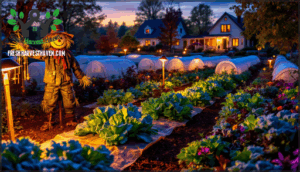
As temperatures drop and daylight fades, your fall garden faces two main challenges: cold snaps and hungry pests looking for one last meal. The good news is that a few simple tools can keep your crops safe and thriving right up to harvest.
Here’s what works best to shield your plants through autumn’s unpredictable weather.
Using Row Covers and Plant Protection Blankets
When temps drop, floating row covers act like a cozy blanket for your cool-season crops. These lightweight garden fabrics protect against frost—offering 2 to 7°F of warmth depending on thickness—while letting air, water, and about 70% of light through.
For serious frost protection, go with heavier spunbonded polypropylene at 1.25 oz per square yard. Seal the edges with soil to keep warmth in and boost weather resistance.
Managing Fall Garden Pests and Diseases
Your fall garden’s biggest threats aren’t always visible until it’s too late. Aphids, spider mites, and caterpillar pests thrive in cooler weather, so check plants weekly—that’s your first line of pest and disease control.
Remove spent foliage immediately; this fall sanitation habit cuts overwintering pathogens by 65%.
For organic pest control methods, try beneficial nematodes or predatory wasps as biological controls—they work down to 41°F and slash aphid numbers by 90% within three weeks.
Employing Drip Irrigation and Shade Cloth
Beyond pest control, your fall garden’s success depends on water conservation and soil temperature management. A drip irrigation system cuts water use by 70% while keeping foliage dry—reducing powdery mildew by 50%. Pair it with shade cloth to drop soil temps 3–10°C, protecting cool-season crops during warm autumn days.
Here’s how to optimize irrigation efficiency:
- Install drip emitters at plant bases to deliver 0.5–2 liters per hour directly to root zones
- Use 30–50% shade cloth during late-summer transitions to maintain ideal canopy temperatures
- Combine drip lines with mulch to cut surface evaporation by 60%
- Add automated timers to reduce manual watering labor by 70%
- Monitor soil moisture weekly—drip systems maintain 10–15% higher water content than sprinklers
This integrated approach to shade management and frost protection methods extends your harvest window while slashing resource waste by 40%.
Maximizing Your Fall Harvest
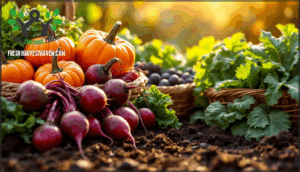
After protecting your plants from frost and pests, it’s time to focus on getting the most out of your fall garden. Knowing when to harvest, how to extend your growing season, and what to save for next year can make a real difference.
Let’s look at three ways to optimize what you’ve worked so hard to grow.
Monitoring Crop Maturity and Harvest Timing
Knowing when to pick your crops can make or break your harvest. Check your seed packet for the maturity time, then watch for visual cues—lettuce leaves firm and full, beet shoulders peeking above soil.
Soil moisture affects ripening speed, so probe regularly.
Harvest timing matters: picking at peak ripeness boosts flavor and storability, while delaying even a few days can reduce quality by several percentage points, especially for fast-maturing fall crops.
Extending The Harvest With Covers or Cold Frames
Once you’ve picked at peak ripeness, row covers and cold frames can buy you several more weeks of growth. Lightweight floating row cover fabrics trap 2–4 °F extra warmth around cool-season crops, shielding against light frost.
Cold frames with double-glazed lids hold 5–10 °F more heat at night, letting you grow spinach and lettuce well into November.
These season extension tools turn a short harvest window into months of fresh produce—real frost protection that maximizes your yield.
Storing and Saving Seeds for Next Season
Saving your best-performing plants’ seeds is like keeping a family recipe—it connects next year’s harvest to this season’s successes. Let seeds dry thoroughly on a screen until they snap rather than bend, then store them in paper envelopes at 32–41°F with humidity below 15%.
Label each packet with the crop name, variety, and harvest date so you remember what worked. Most vegetable seeds stay viable for one to three years when kept cold and dry, though onions and parsnips lose germination strength after just one season.
These Seed Storage Tips preserve Seed Viability and help your seedlings germinate strong next spring.
Frequently Asked Questions (FAQs)
How do I transition summer crops to fall?
Let’s not leaf anything behind—shifting summer crops to fall requires strategic timing and smart crop rotation. Start by removing spent summer plants, then prepare your soil with compost or manure to replenish nutrients depleted over the growing season.
Focus on cool-season crops like kale, broccoli, and lettuce that thrive in autumn’s cooler temperatures. Calculate your first frost date, add the "fall factor" for shorter days, and work backward to determine late-season gardening tips for transplant timing.
Using row covers and cold frames helps with frost protection methods while extending the growing season well into November.
What cover crops work best after harvest?
After your fall harvest, cover crops like cereal rye and crimson clover are excellent choices.
Rye survives harsh winters and reduces soil erosion by up to 80%, while clover fixes nitrogen—adding 50 to 200 pounds per acre—and suppresses weeds naturally.
Can I replant in the same beds?
You can replant in the same beds, but crop rotation prevents soilborne diseases and monoculture impacts that deplete nutrients by 30–50%.
Rotating crops improves soil health and preparation while boosting yields up to 48%, supporting sustainable replanting with clear economic benefits.
How often should I water fall gardens?
Watering frequency depends on weather and crop needs. Most fall vegetables need about 1 inch of water weekly, including rainfall.
Check soil moisture at 8-10 inches deep; if it’s dry, water deeply once a week to encourage strong roots.
When should I stop fertilizing for winter?
Your lawn might actually grow best when you stop pushing it—late-season nitrogen triggers tender shoots that freeze before they can toughen up. For lawns, stop fertilizing by late October or early November.
Trees and shrubs benefit from one last feeding around Thanksgiving to strengthen roots, but nothing after early December.
Fall vegetables should get their final dose in early to mid-October, before soil temps drop below 55°F.
Conclusion
Strike while the iron is hot—fall gardens reward those who plan ahead. Your successful fall gardening harvest hinges on knowing your frost date, choosing fast-maturing varieties, and protecting crops when temperatures dip.
The payoff? Sweeter vegetables, fewer pests, and fresh greens through winter. Start mapping out your beds now, enrich your soil, and keep row covers handy.
When neighbors are ordering from grocery stores, you’ll be harvesting carrots that taste like candy. Autumn doesn’t end your growing season—it perfects it.