This site is supported by our readers. We may earn a commission, at no cost to you, if you purchase through links.
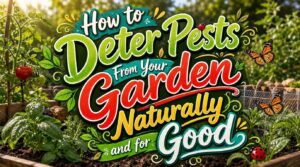
Something ate your tomatoes last night. Not an animal—something smaller, quieter, and far more persistent. Pest pressure in home gardens rarely announces itself until the damage is done, and by then, you’re already behind. The frustrating part? Most infestations don’t start with bad luck. They start with conditions you can actually change.
Plants under drought stress send out chemical distress signals that insects can detect. Poor drainage rolls out the welcome mat for slugs and fungus gnats. Even your watering schedule influences who moves into your garden. Once you understand what’s drawing pests in, deterring them becomes less about fighting and more about outsmarting.
The good news is that natural, long-term pest control is genuinely achievable—through smarter planting, simple barriers, and a few well-timed habits.
Table Of Contents
- Key Takeaways
- Why Pests Keep Targeting Your Garden
- Cultural Practices That Naturally Deter Garden Pests
- Companion Planting and Natural Repellent Herbs
- Physical Barriers and Organic Sprays That Work
- Attracting Beneficial Wildlife for Biological Pest Control
- Frequently Asked Questions (FAQs)
- How do I pest proof my garden?
- How to stop pests from eating in the garden?
- How to naturally keep pests out of your garden?
- Do coffee grounds repel bugs?
- What is the best natural pesticide for vegetable gardens?
- How do you keep pests away from vegetable plants?
- Do garden pests wreak havoc on your plants?
- How do I get rid of pests in my garden?
- How do I get rid of pests naturally?
- How do I keep mosquitoes out of my Garden?
- Conclusion
Key Takeaways
- Pests aren’t random visitors — they’re drawn in by specific signals like drought-stressed plants, excess moisture, and overgrown shelter, so fixing those conditions cuts infestations off at the source.
- Pairing crop rotation with 5–7 cm of mulch disrupts pest breeding cycles and strengthens soil health, making your garden a much harder target season after season.
- Physical row covers like row covers and copper tape, combined with organic sprays like neem oil and cayenne pepper mix, give you a layered defense that works without harsh chemicals.
- Inviting natural allies — predatory insects, birds, frogs, and beneficial nematodes — turns your garden into a self‑regulating system that handles pest pressure for you.
Why Pests Keep Targeting Your Garden
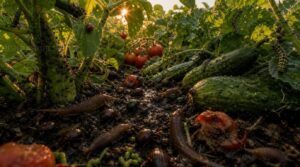
Pests don’t show up randomly — they’re drawn to specific signals your garden sends out. Understanding what attracts them in the first place puts you one step ahead.
Once you start recognizing those signals, a guide to common vegetable garden pests and their patterns can help you match the clues to the culprit fast.
Here’s what’s actually pulling them in.
How Plant Health Affects Pest Attraction
Think of your plants like people — when they’re run-down, trouble finds them faster. Drought stress triggers volatile emissions that practically signal pests to come and feed. Nutrient imbalance makes new growth tender and irresistible to aphids and caterpillars.
Leaf discoloration attracts even more unwanted visitors. But healthy root microbiome strengthens plant immunity from the ground up, so soil health improvement, to prevent pest infestations, starts with healthy soil practices and consistent plant health monitoring.
Implementing integrated pest management can further reduce outbreaks.
Environmental Conditions That Invite Infestations
Your plants’ health sets the stage — but your garden’s environment seals the deal. Certain conditions roll out the welcome mat for pests almost automatically.
- Warm climate speeds up insect breeding cycles dramatically
- Excess moisture and poor soil moisture management invite slugs, snails, and fungus gnats
- Dense shelter from overgrowth gives pests safe hiding corridors
- Food availability from fallen fruit or open compost draws beetles and flies
- Structural gaps in fencing let rodents and crawling insects slip right in
Common Garden Pests and How to Identify Them
Knowing what’s targeting your garden makes all the difference.
Aphids leave sticky honeydew trails and curled leaves. Slugs leave mucus slime trails and ragged holes overnight. Whiteflies scatter in clouds when disturbed, causing yellowing. Caterpillars leave frass droppings and clear leaf damage patterns. Spider mites create webbing and stippling on dry leaves.
Spot these common garden pests early, and you’re already ahead.
Cultural Practices That Naturally Deter Garden Pests
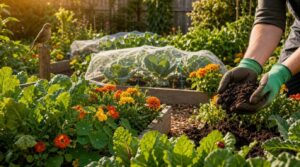
The good news is that pests are creatures of habit — and you can use that against them. A few smart changes to how you manage your garden can break their cycles before they ever get started.
Here are the cultural practices worth building into your routine.
Crop Rotation and Mulching to Disrupt Pest Cycles
Pests are creatures of habit — they return to the same spot because the same food is waiting. Crop rotation breaks that pattern.
When you rotate crops to disrupt pest cycles, you’re essentially pulling the rug out from under pests that counted on a reliable food source.
Rotation sequence planning means moving plant families each season so pests lose their host‑free periods and can’t establish.
Pair that with mulch depth optimization of 5–7 cm, and you’re boosting soil microbes, suppressing weeds, and making life genuinely difficult for slugs and cutworms.
Watering Techniques That Reduce Pest Breeding
How you water matters just as much as how often.
Drip Timing with Morning Watering lets foliage dry fast, leaving nothing damp for aphids or fungal problems to settle.
Base-Only Watering keeps moisture where roots need it, while Zone-Specific Irrigation with Moisture Sensors prevents soggy patches that attract mosquitoes.
Smart Mulching and Water Feature Management, to reduce mosquitoes, completes your defense.
Soil Health and Compost for Stronger, Pest-Resistant Plants
Healthy soil is your garden’s first line of defense. When organic matter levels are high, soil structure improves — roots grow deeper, plants grow stronger, and pests find them far less inviting.
Mature compost feeds microbial diversity and introduces mycorrhizal fungi, which extend root networks and prime natural plant defenses. These soil amendment techniques that deter pests are simple, effective organic pest management.
Regular Monitoring and Early Intervention Techniques
Think of your garden like a patient — catch the problem early, and treatment is simple.
Regular monitoring and early detection of pests start with weekly pest inspection rounds using a Scouting Checklist:
- Log pest type, location, and damage level
- Snap photos for Photo Documentation to track changes
- Set Threshold Levels so you intervene before damage spreads
- Use Pheromone Traps to catch arrivals early
An Intervention Calendar keeps your integrated pest management on schedule all season.
Companion Planting and Natural Repellent Herbs
Some plants are basically working security guards for your garden—quietly keeping pests away just by growing nearby. Choosing the right companions and herbs can make a real difference without any sprays or traps.
Here’s what to plant and where to put it.
Best Companion Plant Pairings for Pest Control
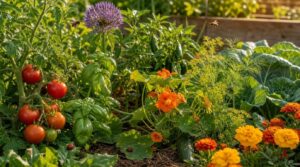
Some plants are natural bodyguards for their neighbors.
Basil-Tomatoes is a classic pairing — basil drives off whiteflies while helping tomatoes thrive. Try Nasturtium-Cucumber combos to lure aphids away from your crop. Dill-Cucumber works beautifully to attract beneficial insects that prey on pests. Plant Marigolds near cabbage, and use Garlic-Pepper pairings to cut aphid pressure.
Companion planting for pest deterrence really works.
Insect-Repelling Herbs and Flowers to Grow

Your herb garden can pull double duty.
Grow Basil near doorways as a Basil Mosquito Repellent — it releases oils that confuse biting insects.
Plant Marigolds along bed edges for Marigold Soil Protection against nematodes.
Lavender acts as a Lavender Moth Barrier, while Rosemary acts as a Rosemary Ant Deterrent.
Add sage as a Sage Looper Shield near brassicas.
These herb repellents make companion planting genuinely rewarding.
Trap Crops and Decoy Plant Strategies

Trap crops act like decoys — they pull pests away from your main vegetables and into a controlled zone. Plant Marigolds or sunflowers as Perimeter Plantings around beds.
Use a Row Intercropping Strategy with maize between rows.
Some plants work as Dead-End Traps, stopping pest reproduction.
Match Seasonal Planting Timing to pest cycles, and your Volatile Lures do the rest naturally.
Physical Barriers and Organic Sprays That Work
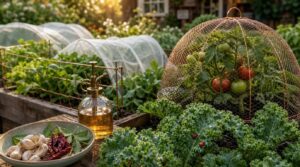
Sometimes the best defense is a literal one. Putting something between pests and your plants — or hitting them with a well-mixed spray — can stop an infestation before it ever gets started.
Here are the physical barriers and organic sprays worth keeping in your toolkit.
Installing Row Covers and Fine Mesh Netting
Installing row covers is one of the simplest nonchemical pest control moves you can make. Material selection matters — lightweight spunbonded fabric lets rain and light through while keeping moths and flea beetles out. Get your timing right by putting covers down at planting.
- Space hoops every 1–2 meters for even support
- Seal ends to block wind-driven pest entry
- Vent on warm days to prevent heat stress
Using Copper Tape and Beer Traps for Slugs and Snails
Slugs and snails are sneaky — they do their damage overnight and disappear by morning. Two nonchemical approaches to slug and snail management work really well together: copper tape and beer traps.
Copper tape installation around pot rims creates a barrier that reacts with slug slime, sending them elsewhere.
Beer trap placement, bury shallow containers at soil level and refresh them every few days.
That’s integrated pest layering at its simplest.
Applying Neem Oil Safely and Effectively
Copper tape and beer traps handle slugs beautifully — but what about aphids, mites, and whiteflies? That’s where neem oil spray earns its place in organic garden pest management.
Here’s how to use it right:
- Emulsion Preparation: Mix 2 tsp neem oil with 1 tsp mild dish soap per quart of water — shake well until fully blended
- Dilution Ratios: Keep active neem oil between 0.5–1% to stay effective without harming foliage
- Phytotoxic Testing: Spot-test one leaf and wait 24 hours before full application
- Application Timing: Spray early morning or late afternoon — never in peak heat
- Safety Gear: Wear gloves, make sure good ventilation, and keep pets away until dry
Reapply every 7–10 days. Using neem oil as insect repellent this way is one of the smartest DIY natural pest control techniques you can keep in your toolkit.
DIY Sprays Using Cayenne Pepper and Dish Soap
Neem oil controls the fliers — but cayenne pepper spray takes care of crawlers like aphids and cabbage loopers.
Mix 3 tsp cayenne pepper with 1 quart water and a dash of liquid dish soap. That soap helps your DIY natural pest control technique stick to leaves. Apply early morning, run a quick plant sensitivity test first, and store any leftover homemade spray in a cool, shaded spot.
Diatomaceous Earth for Soft-Bodied Insects
Diatomaceous earth is one of the most reliable non-chemical pest control tools you’ll find. Sprinkle food-grade diatomaceous earth along stems and soil edges — your target pest list includes aphids, slugs, mites, and whiteflies.
Apply in dry conditions for best results, since moisture management matters here. Reapplication frequency after rain keeps it working.
Wear a mask during application — that’s your key safety precaution.
Attracting Beneficial Wildlife for Biological Pest Control
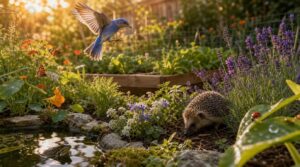
Your garden doesn’t have to fight pests alone — nature has plenty of allies ready to help. The trick is giving them a reason to show up and stick around.
Here are a few simple ways to roll out the welcome mat for the wildlife that does your pest control for free.
Inviting Predatory Insects With Nectar Plants
Think of your garden as a dining table — if you set it right, the good guys will show up. Planting a Nectar Plant Mosaic of dill, yarrow, and alyssum creates Diverse Flower Borders that keep beneficial predatory insects fed and nearby.
Use Staggered Bloom Blocks for Seasonal Nectar Planting across spring through fall, and add Predator Water Stations — shallow pebble trays work perfectly — to keep them coming back.
Using Birdhouses and Feeders to Reduce Pest Populations
Birds are one of the most underrated weapons in your pest control arsenal. A single chickadee can eat hundreds of insects daily — that’s free, natural pest control working around the clock.
A single chickadee can eat hundreds of insects daily — free pest control working around the clock
Here’s how to make it happen:
- Apply Feeder Placement Strategies — position feeders 10–15 feet from beds.
- Follow Birdhouse Design Tips — size entrance holes for bluebirds and chickadees.
- Rotate Seasonal Seed Mixes to attract different Bird Species Selection year-round.
- Practice Feeder Hygiene Practices — clean stations regularly to keep birds returning.
- Pair birdhouses with beneficial wildlife habitats to strengthen your integrated pest management IPM plan.
These natural pest control methods for gardens turn your yard into a thriving, self-regulating ecosystem.
Creating Frog Habitats to Control Slugs and Beetles
Frogs are quiet, tireless hunters — and they love slugs and snails, control duty. Give them a shallow pond with a gentle Pond Edge Slope so they can move in and out easily.
Add Log Rock Shelters, Moist Leaf Litter, and Frog-Friendly Plantings nearby for cover.
Use a Rainwater Supply to keep water chemical-free.
Be FrogFriendly, skip pesticides, and you’ll gain a natural pest control method for garden ally that manages Japanese beetles and slugs all season.
Setting Up Insect Hotels for Natural Garden Balance
An insect hotel might be the smartest small investment your garden never knew it needed. Mount a weather-resistant wooden frame with a sloped roof 1–2 meters high, facing east for morning warmth.
Strategic Placement near flowering plants boosts visits fast. Material Variety matters — pack bamboo tubes, bark, and pine cones across separate sections.
Seasonal Maintenance keeps it functional, supporting beneficial insects through natural methods all year.
Frequently Asked Questions (FAQs)
How do I pest proof my garden?
Pest-proofing your garden is less about fighting nature and more about working with it. Healthy soil, companion planting, row covers, and diatomaceous earth give you a strong, lasting defense.
How to stop pests from eating in the garden?
Stop pests from eating your crops by combining companion planting, row covers, diatomaceous earth, and homemade sprays.
Remove leaf debris, manage shade and soil pH, time your harvests, and release beneficial nematodes to protect plants naturally.
How to naturally keep pests out of your garden?
Keep pests out naturally by combining companion planting for pest deterrence, garden hygiene, and leaf litter management.
Beneficial insects, biodegradable traps, and nonchemical pest control through organic gardening keep your beds healthy without harsh chemicals.
Do coffee grounds repel bugs?
Think of coffee grounds as a bouncer at the door — ants and slugs don’t like the smell and often turn away.
That caffeine repellency is real, making coffee grounds a handy, natural repellent in organic gardening.
What is the best natural pesticide for vegetable gardens?
Neem Oil Spray is your best all-around choice. It disrupts pest life cycles without harming your harvest. Apply every seven to ten days and reapply after rain.
How do you keep pests away from vegetable plants?
Rotate crops, mulch beds, and use companion planting for pest deterrence. Physical barriers like row covers and mesh shield young plants.
Applying diatomaceous earth for soft-bodied pests and attracting beneficial insects for biological control keep your garden naturally protected.
Do garden pests wreak havoc on your plants?
Yes, they can. Common garden pests cause leaf damage, root damage, and yield loss. Many act as disease vectors, with seasonal peaks making infestations worse. The damage adds up fast.
How do I get rid of pests in my garden?
Rows of chewed leaves, wilting stems, and vanished seedlings — pests don’t knock before entering.
You can reclaim your garden using natural solutions, companion planting for pest deterrence, and an integrated pest management IPM approach.
How do I get rid of pests naturally?
You can get rid of pests naturally using companion planting, diatomaceous earth, homemade sprays, and beneficial insects.
Simple natural methods like these protect your garden without harsh chemicals — and they actually work long-term.
How do I keep mosquitoes out of my Garden?
Like a leaky faucet inviting rust, standing water invites mosquitoes.
Eliminate breeding sites, use citronella oil sprays, plant mosquito repellent plants, and deploy Evening Fan Use or CO2 Traps for reliable, nonchemical pest control.
Conclusion
Like a house with locked doors and bright lights, a well-tended garden simply stops being an easy target. When you know how to deter pests from your garden, you shift from reacting to damage to preventing it altogether.
Healthy soil, smart planting, and a few well-placed barriers work together quietly in the background.
You don’t need a perfect garden—just one that’s harder to exploit than the next. That’s usually enough.