This site is supported by our readers. We may earn a commission, at no cost to you, if you purchase through links.
Most gardeners don’t lose their harvests to bad luck—they lose them to small, fixable mistakes made before a single seed goes in the ground. A bed planted in the wrong spot, soil that drowns roots after every rain, plants crowded so tightly they can’t breathe. These aren’t beginner errors; they’re the kind of thing that trips up experienced growers too.
The good news is that vegetables are forgiving when you get the fundamentals right. Solid vegetable garden care tips aren’t about complicated techniques—they’re about understanding what your plants need and building those conditions deliberately. Get the basics dialed in, and your garden practically works with you instead of against you.
Table Of Contents
- Key Takeaways
- Choose The Right Garden Site
- Build Healthy Vegetable Garden Soil
- Maintain Plants Through The Season
- Watering Deeply and Consistently at The Root Zone
- Using Mulch to Conserve Moisture and Suppress Weeds
- Inspecting Plants for Pests and Diseases Weekly
- Removing Weeds Before They Compete With Crops
- Pruning, Thinning, and Supporting Vegetable Plants
- Harvesting Vegetables at Peak Maturity
- Cleaning Beds and Tools After Each Season
- Top 5 Tools for Garden Care
- Frequently Asked Questions (FAQs)
- How do I keep my vegetable garden healthy?
- How do I take care of my vegetable garden?
- How do you care for a vegetable garden?
- How do you plan a vegetable garden?
- Do you need help planning a vegetable garden layout?
- How do you protect a vegetable garden?
- How do I choose a good site for my vegetable garden?
- Is vegetable gardening a good idea for beginners?
- What vegetables grow best in containers?
- How do I save seeds for replanting?
- Conclusion
Key Takeaways
- Where you put your garden decides half the battle — aim for 6–8 hours of direct sun, test your drainage before planting, and keep beds narrow enough to reach the center without stepping on the soil.
- Healthy soil isn’t a bonus, it’s the foundation — work in compost, loosen it deeply, test before fertilizing, and rotate your crop families each season to keep disease and nutrient depletion in check.
- Consistent, deep watering paired with a 2–4 inch mulch layer does more for your plants than any fancy product — it keeps moisture where roots need it and cuts your weeding workload in half.
- Catching problems early is what separates a struggling garden from a productive one — walk your beds weekly, pull weeds before they go to seed, prune for airflow, and harvest at peak maturity so plants keep producing.
Choose The Right Garden Site
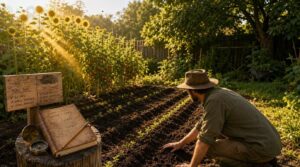
Where you put your garden matters more than most people realize. A bad spot can fight you all season, while the right one makes everything easier.
Getting the basics right from the start pays off all season, and these vegetable growing and harvesting tips can help you set up for success.
Before planting a single seed, consider these critical factors to ensure success.
Selecting a Sunny Location With 6–8 Hours of Direct Light
Location, location, location — it’s as true for gardens as it is for real estate. Before planting a single seed, spend a few days on sun charting. Observe shadows at 9 a.m., noon, and 3 p.m.
South-facing beds win here. Aim for 6–8 hours of direct sunlight exposure daily. Reflective walls can rescue shadier spots. Stay within your zone.
A light meter classification guide helps measure sun intensity to confirm full or partial sun areas.
Checking Soil Drainage Before Planting Vegetables
Once you’ve nailed your sun exposure, it’s time to look down. Dig a drainage test hole — 12 inches wide and deep — fill it twice, and track the hourly drainage rate. Good soil drains 1–3 inches per hour.
Too slow? Clay needs amendment strategies like compost and expanded shale. Too fast? Add organic matter.
A raised bed height of 12 inches solves most chronic drainage problems fast.
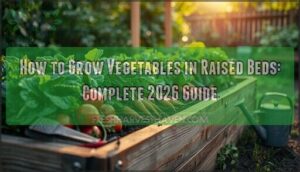
Planning Raised Beds, Pathways, and Garden Access
Now that drainage is sorted, it’s time to focus on layout. Keep bed width to a maximum of 4 feet—this allows you to reach the center without stepping on the soil. Pathways should be 3–4 feet wide to accommodate a wheelbarrow comfortably. Opt for permeable surfaces like gravel, which drain well and remain mud-free.
For raised bed construction, consider the following:
- Raised bed height: 12–18 inches for wheelchair access and back-friendly gardening
- Bed length: Keep irrigation runs short and manageable
- Garden layout planning: Position beds near your water source
Spacing Vegetables for Airflow and Healthy Growth
Plants need their space — and that’s not just a preference. Proper pruning and thinning open canopy gaps so light and air reach every stem.
Row width between leafy greens should sit at 18–24 inches, while tomatoes and peppers need 24–36 inches between plants with pathways of 3–4 feet.
Intercrop spacing and vertical intervals keep airflow moving and encourage strong growth throughout the bed.
Using Vertical Supports for Vines and Small Spaces
When square footage is tight, going vertical is your smartest move. A well-anchored trellis — posts driven 18–24 inches deep, spaced 6–12 feet apart — transforms a narrow bed into a productive climbing lane.
- Trellis Materials: Steel posts or 1-inch wood hold tension reliably
- Stake Placement: Position support stakes and twine at planting time, not after
- Cage Alternatives: Livestock fencing circles work beautifully for tomatoes and squash
- Space-Saving Trellis: Train cucumbers and beans upward using vertical gardening and space-saving methods
- Training Techniques: Use staking and trellising with soft twine via a stake-and-weave pattern for even, healthy growth
Build Healthy Vegetable Garden Soil
Good soil is the foundation everything else depends on. Before you plant a single seed, it’s worth taking a few steps to get your soil in the best shape possible.
Here’s what actually matters.
Adding Compost, Manure, and Organic Matter
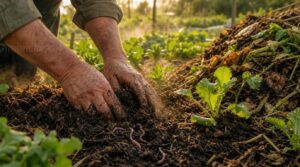
Think of compost as your soil’s best investment. Incorporating 2–4 inches of nutrient-rich compost and aged manure 3–6 weeks before planting gives organic matter benefits time to work.
A beginner-friendly garden trowel with depth markings makes working that compost evenly into tight spots much less of a chore.
Balanced C/N ratio materials — mixing greens with browns — accelerate humus formation and feed soil microbes steadily.
Compost incorporation timing matters: don’t rush it. Mulching and organic matter incorporation together keep that hard-won fertility exactly where roots need it.
Loosening Soil for Stronger Root Growth
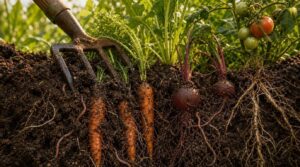
Compacted soil is the silent yield-killer. Loosen to at least 18 inches deep to augment root penetration depth and macroporosity enhancement — both critical for strong crops.
This unlocks key benefits:
- Soil aeration improves oxygen flow to roots
- Earthworm activity increases, accelerating microbial nutrient cycling
- Water infiltrates evenly, preventing drought stress
Your soil amendment efforts mean nothing if roots can’t push through.
Applying Balanced Fertilizer at Crop-specific Rates
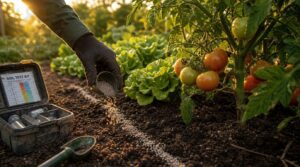
Not all crops require the same nutrients. Lettuce thrives on 120–180 kg N/ha, while tomatoes can demand nearly double that.
Know your soil nutrient levels before reaching for any bag. Soil test interpretation tells you exactly what’s missing.
From there, apply balanced fertilizers by banding them 2–3 inches from rows, and sidedress during the growing season using split applications — this keeps nitrogen timing on point and cuts leaching dramatically.
Rotating Vegetable Families to Protect Soil Health
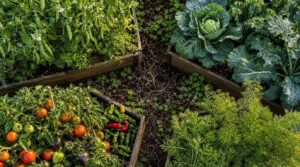
Planting the same family in the same bed year after year is like never changing your socks — things get unpleasant fast.
Planting the same crop family in the same bed every year is like never changing your socks — things get unpleasant fast
A smart Family Rotation Schedule breaks that cycle:
- Nitrogen Fixation Benefits from legumes recharge soil naturally
- Disease Suppression Strategy starves family-specific pathogens
- Microbial Diversity Boost through Cover Crop Integration
- Crop Rotation Planning protects long-term soil health and fertility management
Maintain Plants Through The Season
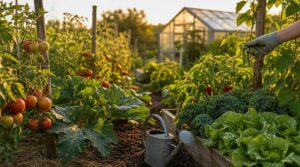
Once your soil is set and seeds are in the ground, the real work begins.
Keeping your plants healthy through the season means staying on top of a few key habits consistently. Here’s what to focus on.
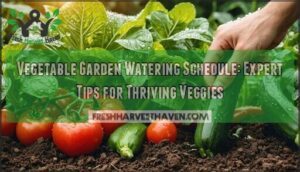
Watering Deeply and Consistently at The Root Zone
Water doesn’t just need to reach your plants — it needs to reach their roots. Deep Root Irrigation means letting water soak 12–18 inches down, not just wetting the surface. Drip Zone Design and soaker hoses simplify this, delivering moisture directly to root zones. Pair these methods with Early Morning Watering and a Consistent Water Schedule (every 3–7 days, depending on heat), and efficiency follows.
Check Soil Moisture Regularly by pressing a finger an inch into the soil. If damp, skip watering. Irrigation Scheduling should adapt to your garden’s needs, not rigid calendars. Prioritize Watering Deeply But Infrequently to encourage roots to grow downward, fostering drought resilience during dry spells.
| Soil Type | Watering Frequency | Ideal Depth |
|---|---|---|
| Sandy | Every 3–4 days | 12–15 inches |
| Loamy | Every 5–6 days | 15–18 inches |
| Clay | Every 6–7 days | 12–18 inches |
| Raised Bed | Every 4–5 days | 12–15 inches |
| Container | Every 2–3 days | 8–12 inches |
Effective Watering and Irrigation Techniques hinge on consistency. Whether testing moisture by hand or probe, Soil Moisture Monitoring sustains root health and ensures steady yields all season.
Using Mulch to Conserve Moisture and Suppress Weeds
Once you’ve nailed your watering rhythm, mulch becomes essential for retaining hard-won moisture. Spread a 2–4 inch layer of organic mulch—such as straw, shredded leaves, or compost—to create a weed barrier that blocks sunlight from weed seeds. This simple step integrates weed control while preserving soil moisture.
The moisture retention benefits alone make it worthwhile. Just ensure mulch remains 1–2 inches clear of stems to protect plants. By using mulch, you’ll simplify garden maintenance all season long, making it a reliable ally for sustainable care.
Inspecting Plants for Pests and Diseases Weekly
Mulch controls moisture — but it won’t catch what’s quietly eating your plants. Walk your beds every week with fresh eyes.
Flip leaves over, check stems near the soil, and use a hand lens if something looks off. Good pest signal tracking and sampling documentation turn a vague "something’s wrong" into a real diagnosis.
Early detection saves crops. That’s integrated pest management working exactly as it should.
Removing Weeds Before They Compete With Crops
Catching pests early is half the battle — but weeds are the other half, and they don’t wait. Start with a clean seedbed. Seedbed flaming or shallow preplant tillage just before planting clears small weed flushes before they establish. Then stay consistent.
Regular weeding and weed control strategies work best together. Follow these key practices:
- Pull weeds early and often — seedlings are easier to remove than deep-rooted plants.
- Use mulch as a barrier — two to four inches blocks light and slows germination.
- Apply a cover crop strategy between seasons to smother weed pressure naturally.
- Install landscape fabric barriers along bed edges to stop encroachment from pathways.
Hand weeding techniques at early stages prevent seeds from returning to soil. Just say no to weeds before they compete.
Pruning, Thinning, and Supporting Vegetable Plants
Think of pruning and thinning as editing — you’re cutting what doesn’t serve the plant. Pruning timing matters: shape early for structure, then prune later to balance fruiting.
For indeterminate tomatoes, sucker management keeps one strong stem thriving.
Thinning techniques open the canopy, boosting light penetration by up to 40%.
Use cages or stakes as support anchors — supporting plants with stakes and trellises keeps fruit clean and accessible.
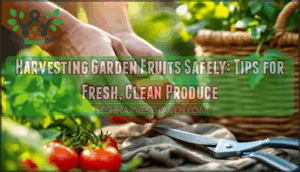
Harvesting Vegetables at Peak Maturity
Knowing when to harvest is half the battle. Train your eye on three quick checks before you reach for the shears:
- Color Cues — tomatoes should be rich and uniform; cucumbers, glossy and deep green.
- Size Benchmarks — green beans at 4–6 inches, peas plump but not bulging.
- Texture Checks — firm, never mushy.
Morning harvest keeps produce crisp. Harvest promptly and cut gently — don’t yank.
Cleaning Beds and Tools After Each Season
Once the season wraps up, a solid cleanup routine protects everything you’ve built. Clear out all crop debris — dead plants and leftover roots are prime real estate for overwintering pests. Bed disinfection matters only when disease appeared; otherwise, a thorough rinse suffices.
| Task | Why It Matters |
|---|---|
| Debris Removal | Cuts pest and disease pressure |
| Tool Sharpening & Rust Prevention | Ensures clean cuts next season |
Don’t skip row cover sanitizing — folded-away pests return rapidly. Clean your garden tools, oil blades, and store them dry. Seasonal garden cleanup and smart tool disinfection remain your best investment for next year’s harvest.
Top 5 Tools for Garden Care
Good tools don’t just make garden work easier — They make it more effective. Having the right ones on hand means less time wrestling with weeds and more time actually growing food.
Here are five worth keeping close.
1. Rubbermaid Brute Heavy Duty Bucket
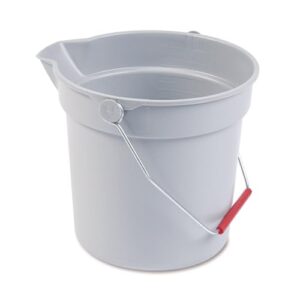
The Rubbermaid Brute Heavy Duty Bucket pulls more weight in the garden than you’d expect from a simple pail. Its 10-quart capacity accommodates everything from mixing compost tea to hauling weeds, and the molded measurement markings eliminate guesswork about volumes.
The integrated pour spout ensures tidy liquid transfers, while the corrosion-resistant bail guarantees reliability during transport.
Built from thick-walled HDPE and made in the USA, this bucket is engineered to outlast flimsier alternatives, delivering enduring performance through rugged construction.
| Best For | Homeowners, gardeners, and facility workers who need a durable, no-nonsense bucket for daily cleaning, mixing, or hauling tasks. |
|---|---|
| Material | HDPE plastic |
| Durability Rating | Heavy duty |
| Ergonomic Design | Bail grip handle |
| Warranty | Not specified |
| Weight | Not specified |
| Storage Solution | Stackable design |
| Additional Features |
|
- Thick-wall HDPE construction holds up to heavy daily use without cracking or warping
- Built-in measurement markings save time and cut down on mess when mixing liquids
- The pour spout and comfortable bail grip make moving full buckets a lot less of a hassle
- The bail sits lower than on some buckets, so gripping near the rim with a heavy load gets awkward
- It’s a bit heavier than your average bucket, which adds up when you’re hauling it around all day
- Packaging isn’t always great—some units show up dented or deformed if shipping gets rough
2. MERTURN Blue Leather Touch Screen Gardening Gloves
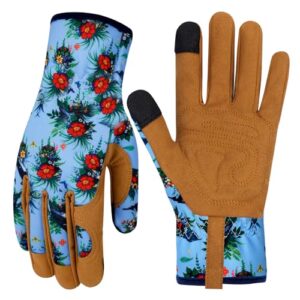
Your hands take a beating in the garden — thorns, rough soil, sharp stems. The MERTURN Blue Leather Gardening Gloves handle all of that without making you feel clumsy. Leather construction and reinforced fingertips protect against punctures, while the microfiber palm keeps your grip solid on trowels and shears.
The best part? Touchscreen-compatible fingertips mean you can check your phone without stripping them off.
At $11.99, they’re a smart buy — just size up if your hands run large.
| Best For | Home gardeners and plant lovers who want solid hand protection without losing the ability to use their phone mid-session. |
|---|---|
| Material | Leather & microfiber |
| Durability Rating | Reinforced |
| Ergonomic Design | Contoured fit |
| Warranty | Not specified |
| Weight | Lightweight |
| Storage Solution | Compact fold flat |
| Additional Features |
|
- Leather build with reinforced fingertips holds up against thorns, spines, and rough soil
- Touchscreen-compatible fingertips let you use your phone or Apple Watch without taking them off
- Microfiber palm gives you a real grip on tools — no slipping on handles or stems
- Sizing runs small, so go up a size if your hands are on the larger side
- Not waterproof or insulated, so heavy rain or cold weather can make them uncomfortable
- Standard length may leave longer wrists a bit exposed
3. Tabor Collapsible Adjustable Metal Rake
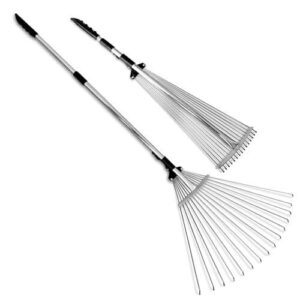
A good rake earns its keep every single season. The Tabor Collapsible Adjustable Metal Rake excels here—its adjustable head (expanding from 8 to 23 inches) adapts to wide garden beds or tight rows, eliminating the need for multiple tools. The telescopic handle extends to 63 inches, cutting back strain for taller gardeners.
Durability meets practicality: galvanized steel tines resist rust, ensuring longevity, while the entire rake collapses to 32 inches for compact, hassle-free storage.
Simple, sturdy, and genuinely useful—this rake delivers year-round reliability without compromise.
| Best For | Gardeners of all heights who want one versatile rake that handles everything from tight flower beds to open lawns—and stores easily in small spaces. |
|---|---|
| Material | Galvanized steel |
| Durability Rating | Heavy duty |
| Ergonomic Design | Telescopic handle |
| Warranty | Not specified |
| Weight | Lightweight |
| Storage Solution | Collapses to 32 in |
| Additional Features |
|
- The adjustable head (8–23 in) means you can tackle a wide garden bed or squeeze between plants without swapping tools.
- Galvanized steel tines and a solid metal frame will outlast most plastic rakes season after season.
- Collapses to 32 inches, so it fits in a closet, locker, or even a backpack without any fuss.
- The widely spaced tines let fine debris slip through, so it’s not great for picking up small leaves or light mulch.
- Tines grab onto wet soil and clay easily, meaning you’ll be stopping to clean it more often than you’d like.
- The telescopic joint can loosen over time with repeated use, which may affect how sturdy it feels at full extension.
4. Garden Guru Heavy Duty Trowel
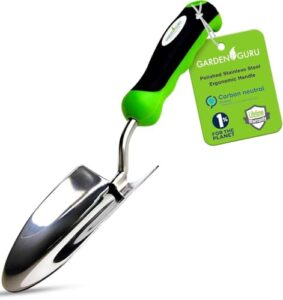
A trowel is your most-used tool — make it count. The Garden Guru Heavy Duty Trowel features a wide, concave stainless-steel blade that cleanly scoops soil and compost, ideal for transplanting seedlings or banding fertilizer 2–3 inches from rows.
At just 9 oz, it balances lightweight design with durability, handling compacted clay effortlessly. Its ergonomic grip with finger grooves and thumb rest ensures comfort during repetitive digging tasks.
Backed by a lifetime warranty, this trowel is engineered to outlast cheaper alternatives, delivering long-term reliability for gardeners.
| Best For | Gardeners and outdoor enthusiasts who dig frequently and want a durable, comfortable trowel that holds up in tough conditions like heavy clay soil or placer mining. |
|---|---|
| Material | Stainless steel |
| Durability Rating | Heavy duty |
| Ergonomic Design | Finger grooves & thumb rest |
| Warranty | Lifetime + 90-day |
| Weight | 9 oz |
| Storage Solution | Standard tool storage |
| Additional Features |
|
- Wide, concave stainless-steel blade makes scooping soil, compost, and fertilizer fast and efficient
- Ergonomic grip with finger grooves and a thumb rest keeps your hand comfortable during long digging sessions
- Lifetime warranty plus a 90-day satisfaction guarantee means you’re covered for the long haul
- The large handle may feel awkward or uncomfortable if you have small or medium-sized hands
- Heavier and bulkier than most trowels at 9 oz and 5.5 inches, so it’s not the best pick if you’re trying to pack light
- Needs regular cleaning and periodic oiling to stay in good shape, which is more upkeep than a typical garden trowel
5. Garden Guru Dandelion Weed Puller Stainless Steel
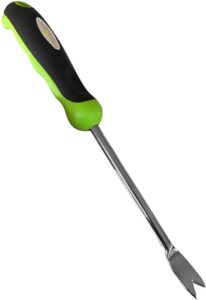
Weeds don’t wait — and neither should you. The Garden Guru Dandelion Weed Puller features a two-pronged stainless-steel tip that grips taproot weeds like dandelions and thistles at the root, ensuring they’re pulled whole to prevent regrowth.
At just 6.3 oz, this tool is lightweight enough for navigating tight rows between crops. Its ergonomic soft-grip handle minimizes fatigue during regular garden maintenance, making weekly inspections effortless.
This solution requires no chemicals and causes no collateral damage to nearby plants, offering a clean and precise approach to weed control.
Priced at $18.95 with a lifetime warranty, it’s a smart, long-term investment for manual weed management.
| Best For | Home gardeners who want a chemical-free, precise way to pull taproots weeds without disturbing surrounding plants. |
|---|---|
| Material | Stainless steel |
| Durability Rating | Heavy duty |
| Ergonomic Design | Contoured finger supports |
| Warranty | Lifetime + 90-day |
| Weight | 6.3 oz |
| Storage Solution | Integrated hang hole |
| Additional Features |
|
- The two-pronged tip grabs the whole root, so weeds like dandelions and thistles are less likely to grow back.
- At just 6.3 oz, it’s easy to maneuver in tight spots between plants or along garden borders.
- The ergonomic grip helps reduce hand fatigue, which is a real plus if you’re out there pulling weeds every week.
- The hang hole on the handle can dig into your palm during longer sessions, which may cause blisters over time.
- The handle runs a bit thick, so it might feel awkward if you have smaller hands.
- It’s a fixed-length manual tool, so it won’t be much help with very deep roots or large areas where a power tool would save a lot of time.
Frequently Asked Questions (FAQs)
How do I keep my vegetable garden healthy?
Start with the basics: good soil, consistent water, and regular attention. Test your pH, feed your plants, stay on top of pests, and harvest on time.
A little care each week goes a long way.
How do I take care of my vegetable garden?
Taking care of your vegetable garden comes down to a few core habits.
Choose a sunny spot, build rich soil, water deeply, stay on top of weeds and pests, and harvest often.
How do you care for a vegetable garden?
A neglected garden fights you. A tended one feeds you.
Care for your vegetable garden by choosing a sunny site, building rich soil, watering deeply, managing pests early, and harvesting at peak maturity.
How do you plan a vegetable garden?
Planning a vegetable garden starts with picking the right spot — at least six hours of sunlight daily, decent drainage, and enough room to grow what you actually want to eat.
Do you need help planning a vegetable garden layout?
Yes — and it’s easier than you think. Map your sunniest spot, sketch bed widths of 3–4 feet, and group thirsty plants near your water source. A simple plan saves hours later.
How do you protect a vegetable garden?
Protect your garden by using row covers, fences, and netting to block insects, birds, and larger animals.
Rotate crops and use companion planting to naturally reduce pest pressure and disease buildup.
How do I choose a good site for my vegetable garden?
Pick a spot that gets 6–8 hours of direct sun daily, drains well after rain, and gives you easy access to water. South-facing beds work best in temperate climates.
Is vegetable gardening a good idea for beginners?
Absolutely — growing your own food is one of those surprisingly forgiving hobbies.
Start with lettuce, radishes, or bush beans. They sprout fast, forgive rookie mistakes, and hand you real results within weeks.
What vegetables grow best in containers?
Compact and dwarf varieties thrive best in containers. Think cherry tomatoes, bush beans, leaf lettuce, radishes, and peppers. Most do well in 5–10 gallon pots with good drainage and full sun.
How do I save seeds for replanting?
"Save the seed, save the harvest." Start with open-pollinated varieties only—hybrids won’t grow true.
Let fruits fully ripen, dry seeds completely, then store them in a cool, dry, and labeled place for next season.
Conclusion
Even Voltaire’s Candide knew that tending your garden is where real reward lives. That wisdom holds in the soil beneath your feet.
The best vegetable garden care tips aren’t secrets—they’re steady habits: right light, healthy soil, consistent water, and watchful eyes through every season. Follow them, and your garden stops feeling like a gamble. It becomes something you’ve genuinely built.
Show up for your plants, and they’ll show up for your table.
- https://swanhose.com/blogs/watering-vegetables/how-to-water-your-vegetable-garden-the-right-way?srsltid=AfmBOoqihHtUWZRux7Yoe-J4Fhcxi225hHy2vubL1SX2KnsmvbtzKII5
- https://gardeningsolutions.ifas.ufl.edu/plants/edibles/vegetables/watering-the-vegetable-garden/
- https://www.canr.msu.edu/resources/smart_watering_in_the_vegetable_garden
- https://thecottagepeach.com/blog/no-more-underwatered-or-overwatered-plants-a-comprehensive-guide-to-watering-your-garden
- https://www.seedsofchange.com/articles-and-videos/how-to-prepare-your-soil