This site is supported by our readers. We may earn a commission, at no cost to you, if you purchase through links.
Most gardeners don’t lose their plants to drought, disease, or pests—they lose them to inconsistency. A missed watering here, compacted soil there, weeds left to seed because life got busy. The yard doesn’t forgive neglect quietly; it announces it in yellowing leaves and bare patches.
But here’s the thing: thriving gardens aren’t the result of green thumbs or secret knowledge. They run on simple, repeatable habits done at the right time. Nail your watering depth, feed your soil, and stay one step ahead of weeds and pests—these home garden maintenance tips will show you exactly how.
Table Of Contents
- Key Takeaways
- Water Smarter for Healthier Plants
- Build Healthy Soil and Mulch Beds
- Stop Weeds and Garden Pests Early
- Weekly Weed Inspection and Removal Habits
- Pulling Weeds Before They Set Seed
- Mulch as a Natural Weed Barrier
- Identifying Annual Vs. Perennial Weeds
- Regular Pest Scouting for Early Detection
- Using Beneficial Insects in Home Gardens
- Removing Diseased Plant Material Promptly
- Organic Pest Control Methods for Small Gardens
- Prune, Mow, and Tidy Regularly
- Follow a Seasonal Garden Care Plan
- Spring Cleanup, Feeding, and Planting Prep
- Summer Watering, Mulching, and Harvest Routines
- Fall Composting, Dividing, and Garden Cleanup
- Winter Protection and Dormant Pruning Tasks
- Creating a Simple Weekly Maintenance Checklist
- Using Reminders and a Garden Journal
- Adjusting Tasks for Weather and Climate Zone
- Frequently Asked Questions (FAQs)
- How do I maintain my garden?
- How do you plan a garden maintenance routine?
- Are garden maintenance tips magic?
- How do I know if my garden needs maintenance?
- Can gardening lower cholesterol?
- How do I test my garden soil pH?
- Whats the best way to attract hummingbirds?
- When should I divide perennial plants?
- How can I extend my growing season?
- What are companion planting strategies for vegetables?
- Conclusion
Key Takeaways
- Deep, infrequent watering — at least 6 inches deep — builds drought‑resilient roots and cuts evaporation losses dramatically compared to shallow, frequent watering.
- Healthy soil starts with regular pH testing and compost worked 6–8 inches deep, keeping nutrients accessible and roots genuinely thriving all season.
- Catching weeds before they seed and scouting for pests weekly — especially on leaf undersides — stops small problems from turning into full‑blown garden disasters.
- Matching your pruning, mowing, mulching, and feeding schedule to each season is what separates a garden that survives from one that actually flourishes.
Water Smarter for Healthier Plants

Watering sounds simple until your tomatoes start drooping or your lawn turns patchy brown. The truth is how you water matters just as much as how often you do it.
Getting the timing, depth, and frequency right is easier when you start with beginner vegetable gardening tips that cover watering basics.
Here are smart watering habits that can make a real difference in your garden.
Deep Watering Vs. Shallow Watering
Think of your garden’s root zone depth like a building’s foundation — the deeper it goes, the stronger everything stands. Deep, infrequent watering pushes moisture past 6 inches, building drought resilience and cutting evaporation losses dramatically.
Shallow watering, though, keeps roots lazy and near the surface.
For efficient watering and irrigation techniques, slow and deep always wins — just watch for waterlogging risk in poorly drained spots.
How Much Water Gardens Need Each Week
Now that deep watering sets your roots up right, your weekly water budget matters just as much. Most vegetables need 1 to 1.5 inches weekly — lawns too.
But your plant water requirements shift with the season. Heat waves can spike demand by 40%.
Good soil moisture monitoring and irrigation scheduling tools take the guesswork out of your watering schedule entirely.
Best Time of Day to Water
Timing your watering schedule is just as important as how much you apply. Aim for that sweet 4–9 AM window — Morning Watering Benefits are real. Cooler soil pulls water deeper, wind evaporation impact drops dramatically, and foliage dries before nightfall. Evening Disease Risk climbs when wet leaves sit overnight.
Top watering and irrigation best practices by time:
- 4–6 AM – Ideal for drip systems and deep infrequent watering; soil absorbs maximum moisture
- 6–9 AM – Best for hand‑watering; light wind and cool air limit evaporation
- 10 AM–2 PM – Avoid; heat spikes evaporation and stresses plants
- 3–6 PM – Acceptable only for arid climates with Seasonal Timing Adjustments
- After 6 PM – Risky in humid areas; apply to soil only, never foliage
Temperature Scheduling shifts with the seasons, so revisit your irrigation scheduling as sunrise times change.
Checking Soil Moisture Before Rewatering
Before you water again, check what’s actually happening underground. Push your finger two knuckles deep — that’s your quickest DIY Moisture Test.
For more precision, Tensiometer Readings tell you how hard roots are pulling for water. Visual Soil Cues like cracking clay or faded color signal stress.
Calibrate your Depth Probing by soil type: sandy beds need checks at 3–4 inches, deeper roots at 12–18 inches. Good soil moisture monitoring practices keep your watering schedule honest.
Drip Irrigation and Soaker Hose Benefits
Drip irrigation and soaker hoses put water exactly where it counts — the root zone — cutting waste by up to 50%. That’s real water savings without the guesswork.
Soaker hoses seep moisture slowly along their length, while drip emitters deliver precise flow rates measured in gallons per hour.
Both are low maintenance, filtration compatible, and cost efficient over time, making them smart picks for water conservation in any yard.
Adjusting Watering for Sandy or Clay Soil
Your soil type changes everything about how you water. Sandy soil frequency needs to increase — think 2 to 3 times weekly — because it drains fast and holds barely an inch of water. Clay soil infiltration is slower, so stretch intervals to 5 to 7 days.
Add organic amendments to improve both. Moisture sensor calibration keeps your root zone depth consistently hydrated without guesswork.
Rainwater Collection for Garden Use
Collecting rainwater is one of the smartest moves you can make for your garden. A basic setup pays off fast — no chlorine, near‑neutral pH, and your plants will thank you.
- Barrel Sizing: Choose 50–80 gallon rainwater barrels for most homes
- First Flush Diverter: Removes dirty initial runoff before storage
- Rainwater Filtration: Screen out leaves and debris at the inlet
- Overflow Management: Direct excess water away from your foundation
Build Healthy Soil and Mulch Beds
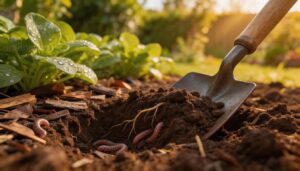
Good soil is the foundation, everything else depends on. Before you plant, water, or mulch, it pays to know what’s actually going on beneath your feet.
Here’s what to focus on to get your soil and mulch beds working for you.
Why Soil Testing Matters for Home Gardens
Think of a soil test as your garden’s annual checkup — it catches problems before your plants show symptoms. Nutrient Deficiency Detection alone is worth the effort; you’ll spot low iron or zinc before leaves turn yellow. Tests reveal NPK ratios, Cation Exchange Capacity, and Microbial Health Indicators, guiding smarter soil amendment decisions all season.
| What Tests Reveal | Why It Matters |
|---|---|
| NPK ratios | Guides fertilizer choices precisely |
| Micronutrient Balance Insight | Prevents chlorosis and stunted growth |
| Cation Exchange Capacity | Shows nutrient retention ability |
| Microbial Health Indicator | Signals soil biology strength |
| Soil Test Scheduling | Tracks depletion across growing season |
Use soil pH monitoring and regular soil testing together for real soil health control.
Ideal Soil PH for Vegetables, Herbs, and Flowers
Most vegetables, herbs, and flowers hit their stride when soil pH level sits between 6.0 and 7.0. In that sweet spot, Nutrient Availability peaks — nitrogen, phosphorus, and potassium all become readily accessible to roots.
Regular pH Testing and soil pH monitoring tell you exactly where you stand.
If readings dip too low, Lime Application fixes it. Too high? Sulfur Amendments bring it back down.
Adding Compost and Organic Matter
Good compost is like a slow-release organic fertilizer — it feeds your garden without the spikes or crashes.
Spread 1 to 3 inches of organic compost over your beds, then work it in 6 to 8 inches deep using a fork or tiller. That’s your incorporation technique sorted.
A healthy compost pile hits a Compost C:N Ratio around 10–15:1, which supercharges soil health and microbial activity.
The organic matter benefits are real: better soil structure improvement, smarter moisture management, and roots that actually thrive.
Choosing The Right Mulch Materials
Now that your soil is fed, let’s talk about what goes on top. Not all mulch is created equal — and the wrong pick can do more harm than good.
- Shredded bark offers slow decomposition speed and steady nutrient release rate, perfect for most beds.
- Straw delivers excellent weed suppression with easy mulch application best practices.
- Pine needles work beautifully as acidic soil mulch around blueberries or azaleas.
- Light-colored gravel or wood chips act as heat reflective mulch for heat-sensitive plants.
- Cocoa hulls smell pleasing but aren’t pet-safe mulch — skip them if you have dogs or cats.
How Much Mulch to Apply
Once you’ve picked your mulch, depth matters more than most gardeners realize. Too thin, and weeds push right through; too thick, and you risk suffocating roots.
| Plant Type | Recommended Depth |
|---|---|
| Vegetable beds | 2 inches |
| Flower beds | 2–3 inches |
| Shrubs | 2–3 inches |
| Sandy soil areas | 3 inches |
| Container gardens | 1 inch |
Follow these mulch depth guidelines seasonally — bump up to 3 inches in dry summer heat, and scale back slightly in winter around shallow-rooted plants.
Keeping Mulch Away From Stems and Trunks
Depth is only half the equation — where you place mulch matters just as much. Keep a mulch clearance gap of 2 to 4 inches around stems and trunks. Piling it against the bark traps moisture, which invites wood decay fungi and girdling roots.
Think of it as a ring inspection routine: check that gap regularly, because trunk moisture control starts with airflow around the base.
Improving Drainage and Reducing Soil Compaction
Poor drainage and compaction are silent plant killers. If water puddles for hours after rain, your soil needs help.
Try hollow tine aeration — it punches channels 6 to 12 inches deep, improving subsoil drainage channels almost immediately.
Adding gypsum soil amendment loosens clay without shifting pH.
Raised bed design sidesteps compaction entirely, and cover crop rotation rebuilds structure season after season.
Stop Weeds and Garden Pests Early

Weeds and pests don’t wait, so neither should you. Getting ahead of them early saves a lot of frustration later in the season.
Here are the habits that actually make a difference.
Weekly Weed Inspection and Removal Habits
Think of your weekly inspection schedule as a first line of defense.
Walk beds slowly in bright daylight, checking 6-inch patches around perimeters with a hand lens identification approach for sneaky seedlings like crabgrass. Log each find in your weed logbook — date, location, species.
Then use root extraction tools while soil is moist, and finish with light soil surface raking to expose any stragglers.
Pulling Weeds Before They Set Seed
One dandelion left to flower can release up to 15,000 seeds — that’s a problem worth stopping early.
One unplucked dandelion can unleash 15,000 seeds — act before a single flower fades
Weed prevention and control strategies start with timing:
- Early morning pulling loosens roots in cool, moist soil more easily.
- Moist soil pulling after rain improves full root extraction.
- Root severing techniques using a weeding knife cut taproots below the crown.
- Weed bagging practices stop seeds from re-entering your beds.
Log species and dates using weed diary tracking — it sharpens your weekly garden maintenance schedule beautifully.
Mulch as a Natural Weed Barrier
Mulch is one of the best weed prevention and control strategies in your toolkit. A 2–4 inch layer works through light blocking — cutting off the sunlight weed seeds need to sprout.
Depth management matters here: let it drop below 1 inch, and weeds bounce back fast. Organic decomposition adds a bonus, improving soil health while extending barrier longevity naturally.
Identifying Annual Vs. Perennial Weeds
Knowing your enemy makes all the difference. Annual weeds like crabgrass sprout fast, set seed within weeks, and die off — but perennials like dandelion and bindweed keep coming back through deep root systems. Here’s how to tell them apart:
- Root System Clues — Annuals pull out easily; perennials resist with thick taproots or spreading rhizomes.
- Seed Head Timing — Annuals flower and seed quickly in one season; perennials bloom yearly.
- Growth Habit Patterns — Creeping stolons and clumping foliage signal perennials every time.
Regular Pest Scouting for Early Detection
Catch problems early — a quick 15-to-30-minute weekly walk through your beds saves you serious headaches later. During each pass, focus on leaf underside inspection, since that’s where spider mites and aphids hide first.
early damage signs like stippling, curling, or honeydew residue.
sticky trap placement near plant bases to monitor flying pests, and track everything with a simple pest log template to spot patterns before they explode.
Using Beneficial Insects in Home Gardens
Think of lady beetles and lacewings as your garden’s free pest control crew. A single lady beetle can devour dozens of aphids daily.
Support them through habitat plantings with nectar plant diversity — native flowers blooming across seasons keep beneficials fed and sheltered.
Maintain ground litter habitat for soil beetles, avoid non-target sprays, and time any commercial releases in cool morning hours for best survival.
Removing Diseased Plant Material Promptly
Your beneficial insects won’t last long if disease is already spreading through the bed. Spot disease symptoms early — yellowing spots, cankers, fuzzy mold — then act fast.
Timely disposal within 24 to 48 hours stops pathogens cold. Bag infected material and trash it; never compost it.
Follow sanitization protocols: tool sterilization with 70% alcohol between cuts prevents cross‑contamination. Recheck the area within 14 days.
Organic Pest Control Methods for Small Gardens
Once disease is contained, shift your focus to prevention.
Neem oil sprays every 7–14 days disrupt larval feeding before damage spreads. Bacillus thuringiensis targets caterpillars without harming pollinators. Sticky traps cut flying pest populations by up to 50%. Diatomaceous earth stops crawlers cold.
Pair crop rotation with companion planting, and you’ve got Integrated Pest Management for home gardens working quietly in your corner.
Prune, Mow, and Tidy Regularly
A tidy garden doesn’t happen by accident — it takes a little hands-on attention each week. Knowing when and how to cut things back makes a real difference in how healthy your plants grow.
Here’s what to focus on to keep everything looking sharp and growing strong.
Deadheading Vs. Pruning: Key Differences

Deadheading and pruning aren’t the same thing — though people mix them up constantly. Deadheading snips spent blooms to support continuous bloom timing and seed set reduction, so your plant keeps flowering instead of setting seed.
Pruning shapes woody tissue preservation and overall structure.
Tool choice differences matter too: scissors for deadheading, loppers for pruning.
Both are essential pruning and deadheading best practices for healthy plants.
When to Prune Shrubs, Trees, and Perennials

Timing is everything in seasonal pruning. Once you’ve handled deadheading, step back and look at the bigger picture of your plants’ growth cycles:
- Shrubs: Post‑Bloom Trim spring‑flowering types within two weeks of fading; use a Dormant Pruning Window for summer bloomers.
- Trees: Winter Structural Pruning during dormancy keeps canopies strong.
- Perennials: Early Spring Shaping before growth starts works best.
- Evergreens: Skip Late Summer Cutback — frost can damage tender new shoots.
Removing Dead, Damaged, or Crowded Growth

Spotting trouble early is the heart of a solid garden maintenance routine.
Start with dead limb identification — any branch more than 50 percent dead comes out, full stop. Cut diseased wood at least 6 inches into healthy tissue.
Crowded canopy thinning improves airflow dramatically, so remove every third to fifth interior shoots.
Seasonal removal timing matters too: late winter is your best window.
Cutting Above Healthy Buds for Better Shape
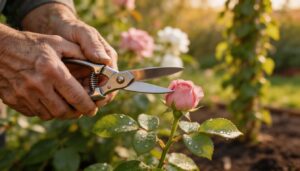
Where you cut matters just as much as what you cut. Always snip just above an outward-facing bud — bud orientation directly controls growth direction, steering new shoots away from the center for better airflow.
- Make 45-degree angle cuts to speed healing
- Practice tool hygiene: wipe blades with alcohol between plants
- Match cutting height to the bud, not the branch length
- Pruning techniques vary by species — roses want vase shapes, forsythia prefers arching stems
- Consistent pruning and deadheading best practices preserve bloom cycles season after season
Lawn Mowing Height and The One-third Rule
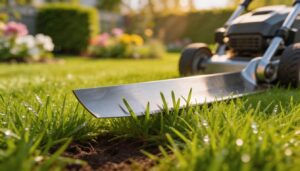
Think of your mower as a surgeon’s scalpel — precision matters. The one-third rule is simple: remove no more than one-third of grass height per session. Cutting deeper stresses roots and invites weeds.
| Grass Type | Proper Cutting Height |
|---|---|
| Cool-season | 2–3 inches |
| Warm-season | 1–2 inches |
| Heat stress period | Raise by ½ inch |
| Post-drought recovery | Mow lightly, frequently |
Blade sharpness, mowing frequency, and clipping recycling all support root depth promotion naturally.
Edging Beds for a Cleaner Garden Look
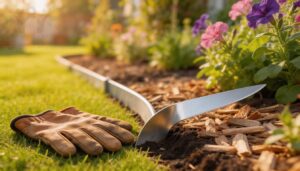
Ever notice how a crisp edge transforms a garden bed?
Steel edging offers strong visual contrast and resists lawn encroachment for up to 25 years. Flexible metal lets you shape edge curvature—perfect for redesigning beds using a hose guide.
Install at least four inches deep for durability. Edge trimming for clean borders, mulch after edging, and routine maintenance cleaning keep your layout sharp.
Cleaning and Sharpening Tools After Use

Dull blades tear plants instead of cutting them cleanly — and that invites disease.
After each use, rinse off dirt and sap, then wipe blades dry. Oil blade protection is simple: a light coat of mineral oil prevents rust. Maintain sharpening angle consistency with a file or stone for a lasting edge. Check grips for cracks, and your garden tool maintenance routine is complete.
Follow a Seasonal Garden Care Plan
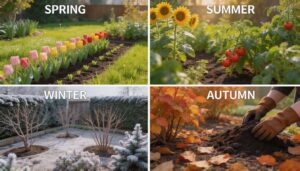
Your garden doesn’t follow the same routine year-round, and neither should you. Each season brings its own set of tasks that keep everything growing strong.
Here’s how to stay on top of it all, from the first spring thaw to the last winter frost.
Spring Cleanup, Feeding, and Planting Prep
Spring is basically your garden’s fresh start — but timing matters. Wait until after your frost date timing clears, then get moving.
Walk your yard with a spring yard cleanup checklist: pull debris, trim dead growth, and test your soil.
Soil testing and nutrient management tell you exactly what’s missing. Add compost, set up raised beds, and apply organic fertilizer once soil warmth monitoring confirms temperatures are rising.
Summer Watering, Mulching, and Harvest Routines
Summer turns up the heat fast, and your garden feels it.
Stick to weekly watering early in the morning — drip irrigation saves up to 50% more water than overhead sprays.
Layer on heat-resistant mulch two to three inches deep; mulch color choice matters, since lighter shades keep roots cooler.
Harvest in the morning for water-saving harvest timing, then replenish post-harvest soil with a light compost top-dress.
Fall Composting, Dividing, and Garden Cleanup
Fall is your garden’s reset button. Layer dried leaves with kitchen scraps to hit that ideal carbon-nitrogen ratio of 25–30:1. Turn your pile every week or two — compost heat management keeps temperatures between 131–170°F, killing weed seeds.
Tackle fall perennial division now: split crowded hostas and daylilies before the ground freezes. Leaf shredding mulch and smart soil amendment timing set you up beautifully for spring.
Winter Protection and Dormant Pruning Tasks
Winter hits hard, but a little prep goes a long way. Burlap Shielding wraps delicate evergreens from desiccating winds — never plastic, which traps moisture. Root Zone Insulation with two to four inches of mulch buffers freeze‑thaw swings beautifully. For Bare Root Storage, keep roses cool and moist until planting.
Your Ice Damage Prevention and dormant pruning checklist:
- Prune in late winter and early spring using sharp, sanitized blades — Pruning Cut Sanitation stops disease, cold.
- Remove crossing branches from fruit trees to open airflow before bud break.
- Check evergreens for winter burn; trim damaged tissue once temperatures stabilize.
Creating a Simple Weekly Maintenance Checklist
Once your dormant pruning is wrapped up, a simple weekly maintenance checklist keeps everything else on track. Think of it as your garden’s habit formation tool — a quick 15-to-30-minute routine covering watering, weeding, mulching, pests, and tool care.
Digital templates or a printed sheet make progress tracking easy. Consistent time allocation on the same day each week turns good intentions into daily and weekly garden maintenance routines that actually stick.
Using Reminders and a Garden Journal
A garden journal paired with task reminders transforms your checklist into a living system. Use Journal Templates with sections for Watering Logs, weather notes, and germination dates.
Add Photo Documentation to track pest damage and growth stages. Set Pest Scouting Alerts and Reminder Customization for weekly gardening task planning.
Your garden calendar builds garden maintenance consistency tips that compound beautifully over time.
Adjusting Tasks for Weather and Climate Zone
No two gardens are the same — and your climate zone makes all the difference. Zone watering depths and irrigation timing should shift as temperatures swing.
Use microclimate scheduling to catch frost protection timing before cold sneaks in.
Heat stress management means pulling back in peak summer.
Climate zone adaptation for gardens keeps your seasonal tool storage, weather adjustment, and seasonal garden care strategies perfectly synced.
Frequently Asked Questions (FAQs)
How do I maintain my garden?
Funny how the best gardens rarely happen by accident. Consistent care — smart watering, healthy soil, timely pruning, and a solid garden maintenance checklist overview — keeps everything thriving week after week.
How do you plan a garden maintenance routine?
Start with a simple checklist. Match task scheduling to your seasons, keep tools organized, and monitor weather before planning your week.
Consistent progress tracking turns a garden maintenance routine into second nature.
Are garden maintenance tips magic?
Not quite magic — more like evidence-based habits. Garden Mythology loves magic thinking, but real results come from consistency.
Ditch expectation bias, embrace perception control, and your garden maintenance routine becomes genuinely impactful.
How do I know if my garden needs maintenance?
Your garden speaks — you just need to listen.
Midday wilting, leaf margin yellowing, soil crust formation, and pest damage are all clear signs, it’s time to start a proper garden maintenance routine.
Can gardening lower cholesterol?
Yes — and the numbers back it up.
Physical activity from digging and weeding, plus fiber-rich produce and antioxidant vegetables, help a heart-healthy diet that can meaningfully improve your cholesterol over time.
How do I test my garden soil pH?
Grab a DIY pH Kit or push a soil probe into moist ground at root depth. For precision, send a lab sample prep mix to soil testing services — results guide your soil pH adjustment and amendment timing perfectly.
Most vegetables thrive in neutral to slightly acidic soils.
Whats the best way to attract hummingbirds?
Skip the fancy gadgets — a clean feeder with 1:4 nectar concentration and tubular flower selection nearby is your real starting point.
Nail feeder placement, add perching structures, and you’ve got a pollinator paradise humming by summer.
When should I divide perennial plants?
Divide most perennials in early spring, right as shoots emerge.
For bearded irises, wait until post bloom division — about 4 to 6 weeks after flowering.
Watch for crowded plant signs like flopping stems or poor blooms.
How can I extend my growing season?
good gardener plants for tomorrow.
Start seeds indoors 4–6 weeks before your last frost. Row Covers and Cold Frames buy extra weeks. High Tunnels and Windbreaks shield crops through shoulder seasons beautifully.
What are companion planting strategies for vegetables?
Pair beans with corn using the Three Sisters method — beans fix nitrogen while stalks support vines. Basil Tomatoes, Marigold Pepper, Nasturtium Aphids, and Dill Cucumbers round out smart companion planting.
Conclusion
Like a well-tuned instrument, your garden thrives on consistent care—not ideal.
These home garden maintenance tips transform chaos into harmony: deep watering builds resilience, healthy soil fuels growth, and early pest patrols prevent disasters.
Stick to your seasonal rhythm, and watch bare patches bloom into abundance. Soon, you’ll harvest more than vegetables—you’ll reap the quiet pride of a yard that flourishes under your hands.
Now go dig in; your garden’s waiting.
- https://www.aspca.org/pet-care/animal-poison-control/toxic-and-non-toxic-plants
- https://nix-landscaping.com/yard-cleaning-tips/
- https://www.gardenersworld.com/how-to/grow-plants/gardening-for-beginners-how-to-care-for-your-garden/
- https://ag.umass.edu/turf/fact-sheets/selection-of-grasses
- https://www.worx.com/trivac-leaf-blowers.html