This site is supported by our readers. We may earn a commission, at no cost to you, if you purchase through links.
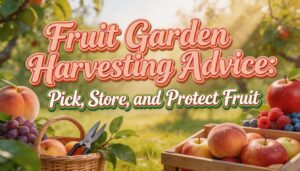
The difference between crisp, sweet fruit and a bowl of bruised disappointment often comes down to one quiet decision: when you pick. Harvest peaches too soon, and they sit hard and bland on the counter. Wait a day too long, and berries collapse before breakfast.
Good fruit garden harvesting advice starts with learning the small signals plants give you, from a grape’s deepened color to the easy twist of an apple stem. Once you know how timing, weather, handling, and storage work together, you stop guessing.
You pick with purpose, and your harvest tastes better, longer into the season.
Table Of Contents
- Key Takeaways
- Best Time to Harvest Fruit
- Signs Fruit is Ready to Pick
- Harvesting Methods for Common Fruits
- Tools That Protect Fruit Quality
- Storing Fruit After Harvest
- Frequently Asked Questions (FAQs)
- Is harvest in October or November?
- What are the 4 steps of harvesting?
- How can pests be managed during harvest?
- What are safe ways to harvest tall trees?
- Are there fruits that ripen after picking?
- How to handle surplus fruit after harvest?
- What are signs of nutrient deficiencies in fruit?
- How can I prevent birds from eating ripe fruit?
- What should I do with unripe fruit that falls?
- How do I identify and manage fruit pests?
- Conclusion
Key Takeaways
- Picking fruit in the cool, early morning preserves freshness, firmness, and flavor while making the harvest easier and safer.
- Use visual cues like uniform color, gentle pressure for firmness, sweet aroma, and easy stem release to spot peak ripeness for each fruit type.
- Handle fruit gently and use proper tools—like pruners, gloves, shallow baskets, and sanitizing practices—to prevent bruising and protect both fruit and plant health.
- Sort, store, and preserve your harvest quickly using cold storage, ethylene management, and safe handling to keep fruit tasting its best and lasting longer.
Best Time to Harvest Fruit
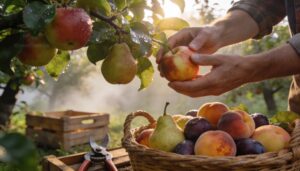
Timing your harvest makes all the difference between fruit that’s crisp and flavorful, and fruit that’s past its prime. There are a few key moments and conditions to watch for, depending on your garden and the weather.
For tips on handling your freshly picked fruit to preserve its flavor and quality, check out this guide to safe post-harvest practices for garden fruits.
Let’s walk through what matters most when picking fruit at just the right time.
Early Morning Vs Late Afternoon Picking
Between the cool hush of early morning and the golden calm of late afternoon, your fruit’s fate hangs in the balance. Early morning is the sweet spot for harvesting—preserving fruit turgor, extending shelf life, and minimizing worker fatigue.
Early morning is the sweet hour to harvest fruit, preserving freshness, firmness, and energy
Late afternoon harvests reduce sunburn risk but may sacrifice flavor and shelf life extension.
- Cooler fruit, longer freshness
- Less sweat, more flavor
- Reduced sunburn risk
- Happier, safer workers
How Weather Affects Harvest Quality
If you’ve ever wondered why fruit flavor shifts after a storm or a heatwave, here’s the answer: weather impact on fruit is real.
Cool Night Benefits keep apples tart, while Heat Stress speeds up ripening, but risks sunburn.
Frost Damage scars berries, and Sunlight Exposure deepens color.
Wind Effects dry berries, and ambient temperature effects shape every harvest’s quality and shelf life.
Seasonal Timing for Common Garden Fruits
Fruit maturity calendars and phenology monitoring are your best friends for seasonal timing. Apples color up in late summer, while strawberries peak in spring and again in fall if your latitude allows.
Altitude impact matters—mountain fruit ripens later.
Harvesting stone fruits and berries means watching for seasonal sugar accumulation.
local timing helps you pick fruit at its sweetest, not just ripe.
How Often to Check Ripening Fruit
As your fruit maturity calendar fills, a daily check becomes your best routine. Inspection frequency ramps up during the ripening window, especially when temperatures hover between 68°F and 77°F.
Use visual and tactile cues—color, aroma, gentle squeeze—to spot signs of ripeness for fruit.
Temperature checks help you adjust harvest frequency, so nothing slips past peak.
Picking Before Overripening and Drop
While waiting too long risks fruit drop and overripening, you’ll want to tune into harvest cues and act fast.
Morning harvest benefits include Temperature Controlled Picking and easier Humidity Management.
Use these steps for Fruit Drop Prevention:
- Watch for signs of ripeness in fruit
- Sort in the field for overripe fruits
- Rapid Cooling after picking
- Adjust harvest timing with weather
Signs Fruit is Ready to Pick
Knowing when fruit is truly ready makes all the difference in taste and texture. There are a handful of clues you can spot right in your garden.
Here’s what to look for as you check each fruit for peak ripeness.
Color Changes to Watch For
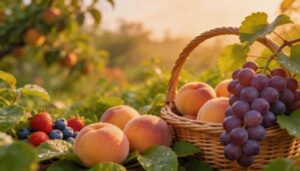
Isn’t it impressive how a uniform hue signals fruit ripeness? Watch for color shift—peaches turn golden, grapes deepen, berries brighten.
Visual cues for fruit ripeness include bloom fading and background contrast; the sunward side often changes first. Color uniformity across the fruit, rather than mottled patches, is a top ripeness indicator.
These signs help you master fruit ripeness and harvesting.
Firmness, Softness, and Gentle Pressure
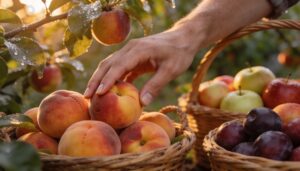
When you use the Gentle Pressure Technique, you’re checking for firm texture versus soft when squeezed—key ripeness indicators. Indentation Rebound Speed shows maturity: a quick bounce signals underripe, while slow recovery means overripe.
Remember, Temperature Firmness Effects and Cultivar Firmness Variation can change results. Firmness Testing Guidelines and gentle handling to prevent damage are your best allies for accurate visual and tactile cues.
Aroma and Sweetness Cues
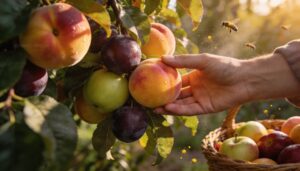
Ever noticed how a sweet fragrance hangs in the air when fruit is truly ripe? That Sugar-Driven Aroma and Ethylene Scent Spike—especially after sunlight warms the skin—signal flavor development during crop maturity.
Aroma as ripeness goes hand-in-hand with visual and tactile cues for maturity, confirming fruit ripeness and harvesting readiness. Flavor-Aroma Correlation makes scent one of your best ripeness indicators.
Stem Release and Twist Tests
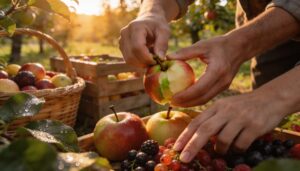
Think of stem release as your garden’s handshake—when you twist to detach the stem, look for Stem Color Cues and check Twist Resistance Levels. If the timing feels right, the fruit separates smoothly, leaving stem integrity intact.
Variety Twist Differences matter: apples need a firmer twist, berries just light pressure.
Visual and tactile cues for maturity guide postharvest storage, fruit ripeness, and harvesting.
Ripeness Differences by Fruit Type
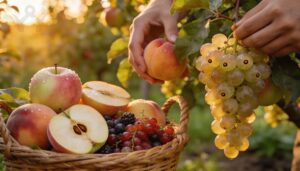
Fruit ripeness and harvesting isn’t one-size-fits-all—each fruit signals readiness in its own language.
Apples reach peak Internal Sugar Levels and Acid Balance Shift, as seeds brown, while peaches show juicy Pulp Moisture Content and gentle give. Grapes signal maturity at the Seed Development Stage, and berries’ Ethylene Production Rate and fragrance are key.
Ripeness indicators across produce types guide your fruit maturity assessment.
Harvesting Methods for Common Fruits
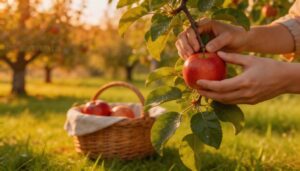
Every fruit has its own best way to be picked, and using the right method makes all the difference. Some need a gentle touch, while others call for a bit more technique.
Here’s how to handle the most common fruits in your garden.
Apples and Pears: Twist-and-Lift Method
Although apples and pears look sturdy, mastering the twist-and-lift harvest method makes all the difference.
You’ll want to focus on:
- Twist Angle Guidance: 1 to 1.5 turns for clean detachment
- Detachment Force Measurement: gentle upward lift
- Hand Positioning Technique: support stem and fruit
- Twist Speed Control: steady, not rushed
- Stem Retention Benefits: longer postharvest storage
Berries: Gentle Picking Without Bruising
Once apples and pears are tucked away, your attention shifts to berries and soft fruit handling. Use the Gentle Pull Technique or the Rolling Release Technique—lift berries lightly, never squeeze.
Place each one on a Cushioning Hand Towel, and try Silicone Stem Clips for clusters. Berry Harvest Rhythm means steady hands, gentle handling to prevent damage, and watching harvest cues for peak ripeness.
Peaches and Plums: Soft-Fruit Handling
Peaches and plums reward you for Shade Harvesting and Gentle Two-Handed Picking—handle each fruit as if you’re cradling an egg. Early morning harvest benefits keep skin firm, while Wax Bloom Protection preserves that delicate surface.
Watch for signs of ripeness for fruit: slight give, fragrant aroma.
Moisture Control and Cool Transport are your allies in postharvest storage guidelines for climacteric fruits.
Grapes and Citrus: Cutting With Stems Attached
If you’ve just finished handling soft fruit, grapes, and citrus call for sharp pruners and careful stem retention. Cutting clusters or citrus with stems attached offers Stem Retention Benefits—Moisture Preservation, Shelf Life Extension, and a Sun Buffering Effect.
Stem-Linked Sorting helps with postharvest storage guidelines and early morning harvest benefits for flavor shine when you know when and how to harvest grapes.
Figs and Delicate Fruits: Safe Hand Harvesting
When your figs show rich color and soften, use Protective Handwear and pruning shears to snip the stem—never yank. Moisture-Reduced Picking in the cool morning preserves firmness, while Fruit Positioning (stem up) prevents juice loss.
Rapid Chill Methods matter: refrigerate within two hours. Ergonomic Hand Harvest protects plant health, and following postharvest storage guidelines keeps delicate fruits fresh and flavorful.
- Wear gloves to avoid sap irritation
- Snip stems with sharp pruners
- Chill figs quickly for best quality
Tools That Protect Fruit Quality
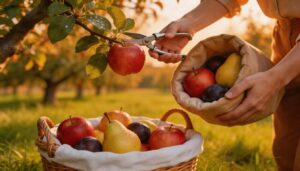
Protecting fruit during harvest starts with using the right tools for the job. Each tool plays a role in keeping your fruit fresh, safe, and easy to handle.
Let’s look at the essentials that help you pick without damaging what you’ve grown.
Hand Pruners, Scissors, and Pole Pickers
Ever tried reaching a sun-ripened pear just out of arm’s length? That’s where telescoping fruit pickers and integrated pruners shine—no ladder gymnastics required.
For close work, use pruning shears to snip the stem; choose models with blade hardness rated 56–60 HRC and ergonomic grips.
Replaceable blades, garden gloves, and hand tool usage in gardening are essential tools for harvesting fruits efficiently and safely.
Sanitizing Tools Between Plants
While you’re moving from apples to berries, cross contamination prevention matters. Dip pruning shears in a sanitizer solution dilution—one part bleach to nine parts water—after every plant. Scrub dirt first, dry tools fully, and store sanitizer safely away from fruit. When sanitizing, apply chlorine bleach solution at the proper concentration.
Clean tools often, especially during peak harvests, and keep a log.
Harvesting etiquette and tools go hand-in-hand for fruit quality.
Gloves, Ladders, and Harvest Safety
good harvest starts with the right gear. Glove material choice matters—nitrile for grip, leather for thorns, insulated for cold mornings.
Ladder stability tips? Always keep three points of contact and never stand on the top rungs.
Knee pad benefits are clear: comfort while picking low fruit.
Sun protection gear and ergonomic picking rhythm round out essential tools for harvesting fruits safely.
Shallow Baskets and Breathable Containers
Why risk bruising your best berries when a shallow basket does the heavy lifting?
Airflow Optimization and Moisture Management keep fruit fresher, while Bruise Prevention comes from soft linings and gentle stacking. Stackable Design saves space, and Cleanable Materials—like paper bags or mesh baskets—make postharvest storage easy.
Choose your storage container wisely; different produce deserves different care.
Preventing Branch Damage During Picking
Think of a branch as a bridge—one wrong move, and the whole structure suffers. You need Stem Support and Branch Guarding, not brute force.
Use Gentle Lifting at a 15–30° angle, and Picker Training to spot weak wood. Pruning techniques and the right harvest method—like “cut and come again”—keep trees thriving.
| Harvest Technique | Why It Matters |
|---|---|
| Angle Lifting | Reduces stem stress |
| Branch Guarding | Prevents bark tearing |
| Picker Training | Spots weak points early |
| Use pruning shears | Clean, precise removal |
| Gentle Lifting | Minimizes branch injury |
Storing Fruit After Harvest
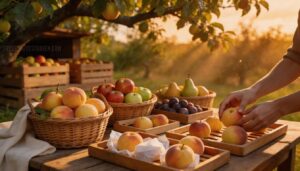
Once your fruit is picked, how you handle it next makes all the difference.
The right storage keeps flavors bright and fruit fresh longer.
Here’s what you need to know before you tuck your harvest away.
Sorting Out Damaged or Diseased Fruit
Even after a careful harvest, fruit quality assessment is essential—spotting bruise patterns or off-odor detection helps you sort out troublemakers.
Soil-borne pathogen signs, like sunken spots or mold, signal you to separate these from healthy fruit using segregated harvest bins.
For fruit waste reduction, practice safe disposal methods: seal diseased fruit and never compost it, ensuring strong postharvest handling.
When to Refrigerate and When Not To
Sorting is step one—next, your Refrigeration Decision Matrix comes into play. Not all fruit benefits from cold storage techniques right away.
For instance:
- Apples and pears welcome postharvest storage guidelines with chill for fruit shelf life extension.
- Tropical fruits need Temperature Dependent Ripening before refrigeration of harvested fruit.
- Moisture Management Inside matters—Pre Refrigeration Drying prevents mold, so always check fruit cold tolerance and storage temperature first.
Ethylene Management for Better Ripening
Once your fruit is sorted and chilled, ethylene management in produce storage becomes your next focus. Ethylene monitoring helps you spot ripening surges—especially for apples and pears.
Airflow management, carbon dioxide adjustment, and controlled atmosphere storage all slow ripening. Ethylene inhibitors can extend shelf life, while using ethylene in fruit ripening brings uniform color and flavor.
Watch for signs of ripeness for fruit daily.
Short-Term Storage for Peak Freshness
Once you’ve wrangled ripening with ethylene management, it’s time to focus on short-term storage.
Cool Temperature and High Humidity are your allies—think 32–40°F with 90% humidity. Use Perforated Bins for Airflow Management, and always Gentle Transfer for berries.
Follow postharvest storage guidelines: cool immediately, avoid temperature swings, and keep fruit in cold storage for peak shelf life and flavor.
Freezing, Drying, and Preserving Extra Fruit
When your baskets overflow, smart preservation methods step in. Freezing harvested produce is quick, but the Freeze Drying Process shines for shelf life optimization and nutrient retention strategies. For best results, use vacuum sealing techniques and moisture barrier packaging—these keep fruit crisp and flavorful.
Following postharvest storage guidelines, you’ll enjoy garden sweetness for months with:
- Freeze drying for crunch and color
- Vacuum-sealed bags
- Cool, dark storage
For peak freshness, store ethylene‑sensitive berries in vented containers for berries.
Frequently Asked Questions (FAQs)
Is harvest in October or November?
Harvest timing for most fruit peaks in October, but late varieties stretch into November—especially apples, pears, grapes, and persimmons.
Temperature swings and nighttime cooling drive sugar peaks, while early frost shortens the harvest window for tender crops.
What are the 4 steps of harvesting?
You start with Harvest Planning, then move to Field Inspection for fruit ripeness detection.
Next comes Fruit Collection using peak ripeness picking techniques, followed by the Cooling Process and Storage and Preservation of Harvested Produce, including yield documentation.
How can pests be managed during harvest?
You can manage pests during harvest by practicing Field Sanitation, using Physical Barriers like nets, monitoring pests closely, and applying Integrated Pest Management.
Cool fruit quickly for Post‑Harvest Pest Control, and sort to prevent postharvest loss and spoilage.
What are safe ways to harvest tall trees?
Measure twice, climb once—wise words for tall tree harvests.
Use a sturdy ladder with spotter assistance, ensure safety, and pole saw selection.
Employ rope retrieval for tools, maintain a steady climbing pace, and follow garden safety precautions throughout.
Are there fruits that ripen after picking?
Yes, certain climacteric fruit types—like apples, pears, peaches, and bananas—ripen after picking thanks to ethylene influence. Non-climacteric fruits, such as grapes and berries, don’t ripen post-harvest.
Temperature effects shape post-harvest storage and preservation.
How to handle surplus fruit after harvest?
Sort surplus fruit within 24 hours for Inventory Rotation and postharvest loss prevention.
Donate safe batches via Community Gleaning or Donation Logistics. Compost Integration processes spoiled pieces.
Preserve extras as Value Added Products.
Use storage and curing, plus ethylene management.
What are signs of nutrient deficiencies in fruit?
If your fruit trees start flaunting leaf yellowing, interveinal chlorosis, bitter pit, or necrotic spots, it’s their not-so-subtle way of announcing a soil nutrient balance problem—time for plant health monitoring and stress reduction to boost nutrient retention.
How can I prevent birds from eating ripe fruit?
To keep birds off your ripe fruit, use Netting Systems with tight mesh, rotate decoys, hang Reflective Scare Tape, and try Sonic Deterrents.
Pair morning harvests with Habitat Management and organic pest control for best results—timing matters.
What should I do with unripe fruit that falls?
Picture kneeling in dew, examining fallen fruit—Visual Inspection is your first step. If it’s sound, Paper Bag Ripening can coax maturity.
Make Fruit Jam with blemished pieces. Compost Unusable Fruit, or offer as Animal Feed.
How do I identify and manage fruit pests?
Spot pests early by pest scouting—check leaves for eggs, use sticky trap placement, and inspect for frass.
Practice cultural sanitation, companion planting, and plant health management.
Try biological control, mating disruption, and organic gardening for sustainable and effective pest management.
Conclusion
Perfectly picked produce promises a prolonged pleasure. By pairing fruit garden harvesting advice with practice, you’ll savor sweet success.
Precise timing, gentle handling, and thoughtful storage transform your harvest into a symphony of flavors. As you master the art of picking, storing, and protecting your fruit, every bite becomes a celebration of nature’s bounty and your green thumb.
Your journey to fruitful abundance starts now, with every harvest a chance to delight.