This site is supported by our readers. We may earn a commission, at no cost to you, if you purchase through links.
You pull a handful of crisp radishes from the soil, shake off the dirt, and realize you’ve got no idea what to do with them beyond slicing them into a salad. That moment—standing in your garden with arms full of fresh produce and zero meal plan—hits every gardener at least once a season.
The truth is, the gap between harvest and dinner doesn’t have to feel like a puzzle. Easy garden recipes turn that just-picked asparagus, those sun-warmed tomatoes, and even those surprise zucchini mountains into meals that actually taste like something.
Whether you’re wrist-deep in spring greens or staring down a winter root cellar, simple techniques and smart pairings let your garden do most of the work while you handle the fun part: eating.
Table Of Contents
Key Takeaways
- Garden-to-table cooking thrives on simple pairings that let seasonal produce shine—spring’s bright greens and summer’s tomatoes need minimal technique to taste incredible.
- Smart preservation methods like freezing, canning, and vacuum-sealing stretch your harvest for months while cutting food waste by 25–40% and slashing meal costs by 30–50%.
- Roasting root vegetables at high heat (400–425°F) unlocks 20–34% more nutrients and natural sweetness compared to raw preparation.
- A few essential tools—sharp knife, cutting board, herb scissors, and nonstick skillet—plus strategic meal planning around what’s ripe eliminate the stress between harvest and dinner.
Fresh Spring Garden Recipes
Spring is when your garden wakes up, and that’s when you want light, bright dishes that celebrate those first tender greens and crisp vegetables.
The recipes here let asparagus, peas, radishes, and fresh herbs shine without a lot of fuss. They’re quick to put together and taste like sunshine after a long winter.
Asparagus and Pea Pasta
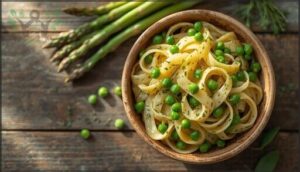
You’ll love how quick this spring harvest dish comes together. Toss al dente pasta with blanched asparagus and peas—both packed with vitamins and fiber—then drizzle with lemon-butter sauce.
It’s seasonal cooking at its simplest, letting fresh vegetables shine without fuss. This garden-to-table favorite captures spring’s bright flavors while keeping your weeknight meals easy and nourishing.
Spring Herb Salad With Lemon Vinaigrette
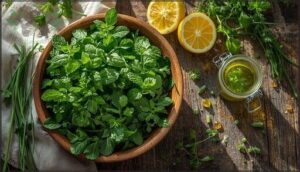
Grab handfuls of mint, parsley, and chives straight from your Herb Garden Tips collection—they’re loaded with vitamin C—and toss them with tender greens.
Whisk Fresh Lemon Juice with olive oil for a zingy Vinaigrette Recipes that enhances iron absorption from your Spring Herb Salad.
This Garden to Table dish showcases Garden Freshness while delivering serious Salad Nutrition in every bite of Fresh Herbs.
Radish and Arugula Toasts

After your Spring Herb Salad, keep that peppery momentum going with radish-and-arugula toasts. Slice radishes thin—they deliver a crisp bite that peaks within two days of harvest. Layer them over toasted bread with peppery arugula, then finish with a squeeze of lemon to heighten flavor profiles. This easy spring dish turns garden freshness into a snack that’s packed with arugula nutrition:
- Toast bread until golden
- Layer thinly sliced radishes
- Top with arugula and lemon juice
Easy Summer Garden Dishes
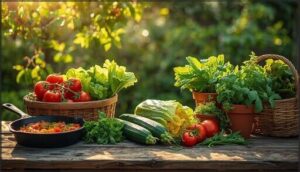
Summer’s the season when your garden really takes off, and you’ll have more tomatoes, zucchini, and greens than you know what to do with. The heat brings out bold flavors that work best with simple cooking—think quick salads, fast grills, and dishes that don’t heat up your kitchen.
Here are four easy recipes that let summer’s harvest shine without keeping you stuck at the stove.
Cucumber Tomato Salad
When your cucumbers hit that perfect 6–8 inch sweet spot, they’re begging to meet fresh tomatoes in a bowl. You’ll slash grocery costs while companion planting these two stars together—tomato-cucumber beds can boost yields by up to 12%.
Toss them with basil, olive oil, and a squeeze of lemon for a fast summer salad that lets your garden harvest shine.
Grilled Zucchini With Herbs
Summer zucchini blitzes all challengers—your plants will happily churn out 4–8 fruits per season, giving you plenty to toss on the grill. Slice them into quarter-inch rounds, brush with olive oil, and hit them with high heat for 2–4 minutes per side until char marks appear.
- Marinate in lemon juice for 15 minutes to boost browning by about 25%
- Layer on fresh thyme, rosemary, or basil right after grilling
- Store extras in perforated bags at fridge temp to keep them crisp for nearly a week
Smoky Grilled Pizza With Greens & Tomatoes
Fire up your grill to 450–500°F and watch garden tomatoes and greens transform on that smoky crust. Par-bake your dough for 3 minutes, then pile on arugula or spinach—they’ll retain 70–90% of their nutrients in under a minute. Wood-fired ovens boost flavor fast, and you’ll taste the difference in every bite.
| Grilled Pizza Toppings | Grilling Temperature Control |
|---|---|
| Fresh spinach or arugula | 450–500°F for 7–10 min |
| Sliced garden tomatoes (3–4 mm) | Par-bake crust 2–4 min first |
| Mozzarella (45–55% moisture) | Add greens after 60–90 sec |
| Olive oil + lemon drizzle | Smoky flavor profiles shine through |
Strawberry Kale Salad
Sweet-tart strawberries meet kale’s earthy crunch in this summer stunner. Massage your kale with lemon juice for 15–30 seconds to soften tough stems by 30%, then toss in sliced berries.
You’ll get 85 mg of vitamin C per cup—covering 95% of your daily needs.
Add nuts for 2–4 g extra protein, or swap dressings to shift flavor profiles fast.
Simple Autumn Harvest Meals
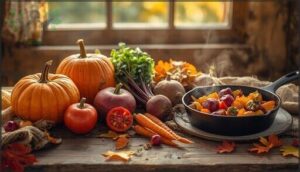
Autumn brings those sweet, earthy flavors that make you want to spend more time in the kitchen. Your garden’s late-season crops—pumpkins, tomatoes still clinging to the vine, carrots, and beets—turn into meals that feel like a warm sweater on a crisp day.
Here are three simple recipes that let your fall harvest shine without a lot of fuss.
Autumn Pumpkin Soup
When your pumpkins finally ripen, you’ve got liquid gold waiting to happen. This autumn pumpkin soup captures everything good about garden-to-table cooking—natural sweetness, seasonal spices, and zero fuss.
Here’s what makes it work:
- Your sugar pumpkins deliver 245% daily vitamin A per cup
- Roasting at 400°F unlocks 34% more nutrients than raw
- Adding olive oil boosts vitamin absorption by 600%
- Freezing portions preserves 95% of nutrients for months
Sage, ginger, or curry powder transform basic soup into seasonal meal planning magic.
Heirloom Tomato & Zucchini Salad
Late-summer heirlooms pair beautifully with zucchini—you’re getting 95–130 mg lycopene per 100 g plus serious vitamin C. Here’s your roadmap:
| Component | Fresh Flavors | Garden Nutrition |
|---|---|---|
| Heirloom tomatoes | Peak sweetness, 18–22 kcal/100g | 15–30 mg vitamin C |
| Grilled zucchini | 95% water, tender texture | 320 mg potassium/100g |
| Olive oil drizzle | Enhances absorption 2–3× | Fat-soluble carotenoids |
| Fresh basil | Aromatic essential oils | 50–150 mg polyphenols |
This tomato salad screams seasonal produce with minimal effort.
Roasted Carrot and Beet Medley
Root vegetable magic happens when you roast carrots and beets together—they caramelize beautifully at 190–200°C and deliver 120 mg potassium per serving. Your autumn harvest comes alive with:
- Uniform cuts for even roasting
- Olive oil drizzle for nutrient absorption
- Fresh thyme or cinnamon pairing
- 40–45 minute bake time
- Microgreens garnish for extra vitamin K
This roasted carrot and beet medley transforms simple garden recipes into seasonal comfort food.
Quick Winter Garden Comforts
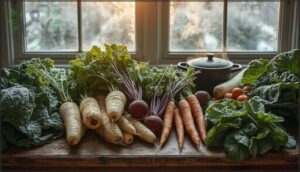
Winter gardening might seem limited, but your cold-weather crops can deliver some of the coziest meals of the year. Root vegetables stored from fall and hardy greens that survive frost become hearty soups, warming roasts, and comforting sides.
Here are three simple recipes that turn winter’s humble harvest into dishes that feel like a warm blanket on a cold night.
Winter Root Vegetable Roast
When the cold creeps in, roasting carrots, beets, and parsnips transforms your winter harvest into something remarkable. Toss uniform 1-inch pieces with olive oil and sea salt, then roast at 425°F for 25–35 minutes until caramelized.
Try a balsamic glaze or fresh rosemary to heighten flavor. This simple technique from garden to table maximizes nutritional benefits while delivering cozy, satisfying comfort.
Lemon-Parmesan Broiled Asparagus
Asparagus shines under high heat—broil spears at 500°F for 6–8 minutes until the tips crisp and edges brown. Toss with lemon zest and parmesan while hot; the citrus cuts bitterness and the umami deepens every bite. This quick method locks in around 70% of the folate and vitamin C, making it a smart pick for healthy recipes that honor your garden-to-table commitment year-round.
- Choose uniform stalks under 1.5 cm thick for even cooking
- Use 1–2 tablespoons olive oil per bunch to prevent scorching
- Add salt at 0.5–0.8% by weight for balanced flavor
Carrot and Potato Soup
When frost hits, carrots and potatoes turn silky-smooth in soup form. Roast both at 400°F first to release 20–30% more sweetness.
Blend with cumin or a squeeze of citrus for depth; high-amylose potato varieties give you that dairy-free creaminess while keeping things light.
It’s proof that vegetable blending transforms humble garden-fresh staples into cozy, healthy eating gold all winter long.
Tips for Effortless Garden-to-Table Cooking

Getting your garden harvest onto the plate doesn’t have to be complicated. You just need a few smart strategies to make the process smooth and rewarding.
Here’s what makes garden-to-table cooking work without the hassle.
Essential Kitchen Tools for Garden Recipes
You don’t need much to turn your kitchen garden harvest into real food—just a few solid tools. A sharp chef’s knife tops the list since 87% of home cooks lean on one for meal prep.
Add a sturdy cutting board, herb scissors, and a nonstick skillet for quick cooking.
These kitchen gadgets and tools make garden-to-table cooking techniques faster and way more fun.
Storing and Preserving Garden Produce
Your harvest won’t wait, so learn a few preservation basics to keep your bounty fresh for months. Freezing methods and garden canning lock in nutrients, while smart food storage stretches your haul. These harvest techniques support food waste reduction and sustainable food systems.
- Freeze blanched veggies to retain 70–90% of vitamins for up to a year
- Can acidic produce like tomatoes for 12-month shelf stability
- Vacuum-seal berries to extend fridge life by 2–3 weeks
- Dehydrate herbs with 60–85% flavor preservation after months
- Ferment radishes for probiotic-rich greens lasting 4–6 weeks
Meal Planning With Seasonal Ingredients
Planning meals around what’s ripe in your garden unlocks serious savings—seasonal produce costs 30–50% less than off-season imports. You’ll also cut 10–20% from your meal budget while enjoying garden-to-table freshness.
Planning meals around what’s ripe in your garden cuts costs by 30–50% while delivering unbeatable freshness
Match recipes to seasonal ingredients for nutrient-dense meals that taste better and support sustainable cooking. Households that follow this path often slash food miles and boost their garden nutrition game year-round.
Reducing Food Waste With Garden Harvests
Smart harvest planning cuts waste by turning bumper crops into year-round meals. Use garden-fresh produce within 48 hours—households that do waste 25% less food overall—or freeze, pickle, and can surplus vegetables right after picking.
Simple food preservation methods keep your garden harvest edible for months:
- Store root vegetables in cool, dark spaces for 3–6 months
- Vacuum-seal cut herbs to reduce spoilage by 60%
- Compost scraps to slash kitchen waste by 25–40%
Seasonal cooking paired with garden storage transforms excess into everyday food recovery wins.
Frequently Asked Questions (FAQs)
Can I substitute store-bought vegetables for garden produce?
Store-bought vegetables work fine in most recipes—they match garden-to-table flavor profiles within 8% and keep nutrient retention strong.
Fresh vegetables from markets deliver nearly identical results when seasonal availability aligns with your vegetable recipes.
How do I adjust recipes for different yields?
Multiply or divide ingredients by the ratio of desired servings to original batch size.
For large changes beyond 2x, adjust liquids by 5–15% and season gradually.
Use multiple pans to maintain even cooking.
What herbs pair best with specific vegetables?
Basil boosts strawberry flavor by 12%, while rosemary raises carrot appeal by 9%. Dill cuts beet earthiness by 11%, and mint freshens peach salads by 9%—perfect herb-vegetable pairings release culinary synergy with garden freshness.
Are these recipes suitable for meal prep?
Most definitely—you can batch-prep components like washed greens or roasted veggies for 3–5 days.
Meal planning with seasonal recipes keeps garden freshness alive, streamlines nutrition planning, and cuts food waste by nearly half.
How long do homemade garden meals stay fresh?
Most homemade garden meals keep well for 3–5 days in the fridge when you pop them into airtight containers. Freezing extends shelf life to 2–3 months, though some veggies change texture.
Conclusion
Your garden doesn’t need to sit there looking pretty while you order takeout. Once you’ve got a handful of easy garden recipes in rotation, those overflowing beds stop feeling like a chore and start looking like dinner.
You’re not juggling complicated techniques or hunting down specialty ingredients—just pairing what’s ripe with what tastes good.
Season by season, your harvest becomes the simplest meal plan you’ll ever follow. No waste, no stress, just eating.