This site is supported by our readers. We may earn a commission, at no cost to you, if you purchase through links.
Most beginners buy too much. A university survey found that new gardeners waste up to 60% of their early tool purchases on equipment they rarely touch.
One trowel, a pair of gloves, and a decent watering setup will cover most of what you’ll do in your first season—sometimes your first two.
The trouble isn’t finding gardening tools for beginners; it’s knowing which ones actually earn shelf space. Get the short list right, and everything else follows.
Table Of Contents
- Key Takeaways
- Essential Beginner Gardening Tools
- Top 10 Gardening Tools for Beginners
- 1. Foxgloves Water Resistant Gardening Gloves
- 2. Woodland Tools Compact Gear Lopper
- 3. Radius Garden Stainless Steel Digging Fork
- 4. DeWit Tulip Garden Trowel
- 5. King of Spades Balling Spade
- 6. Tabor Adjustable Metal Garden Rake
- 7. Rogue Tempered Steel Garden Hoe
- 8. Tuff Guard Kink Proof Garden Hose
- 9. Bon Aire Aluminum Hose Nozzle
- 10. Dramm Rain Watering Wand
- Tools by Job Type
- Budget Vs Quality Choices
- Ergonomics and Comfort Features
- Care and Storage Basics
- Common Beginner Tool Mistakes
- Frequently Asked Questions (FAQs)
- What are the best garden tools for beginners?
- What should you consider when buying gardening tools?
- How many tools do you need in a garden center?
- What are the benefits of using a garden tool?
- What basic gardening tools will you need?
- Is October too late to plant?
- What do beginner gardeners need?
- What gardening tools work best for container gardens?
- How do I choose quality tools on budget?
- Which tools are essential for raised bed gardening?
- Conclusion
Key Takeaways
- Most beginners waste money by overbuying early — a hand trowel, gloves, and a watering setup cover the majority of first-season tasks.
- Matching your tool to the job matters more than brand or price — hand tools excel at precision work, while long-handled tools reduce back strain during heavy digging.
- Premium tools earn their cost only if you garden frequently; budget picks last 2–3 seasons and handle light container or raised-bed work just fine.
- A little maintenance goes a long way — rinse, dry, and lightly oil your tools after each use to prevent rust and double their lifespan.
Essential Beginner Gardening Tools
Most beginners buy too much, too fast — and end up with a shed full of tools they rarely touch.
The good news is you only need a handful of the right ones to get started. Here’s what actually matters.
A simple step-by-step guide to propagating basil from cuttings shows just how little you need to get a thriving plant going.
What New Gardeners Actually Need First
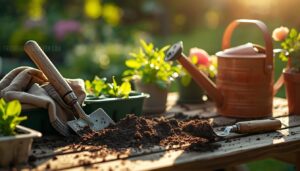
Before you spend a dollar, know this: most beginners overbuy. You don’t need a shed full of gear to get started. Focus on five essentials first:
- A sturdy hand trowel for planting and transplanting
- A good pair of gloves to protect your hands
- A watering can for seedlings
These essential gardening tools for beginners cover 80% of early tasks. Consider adding a hose‑end sprayer with adjustable spray patterns for efficient watering.
Hand Tools Vs. Long-handled Tools
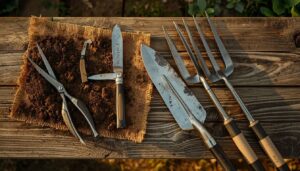
Once you’ve nailed down your three must-haves, the next question is handle length.
Hand tools give you precision control for tight, detailed work — think transplanting or fine pruning. Long-handled tools bring torque advantage and reach efficiency, so soil penetration gets easier without wrecking your back.
For beginner gardeners prioritizing fatigue reduction, both types earn their place. Pick based on your task, not habit.
Choosing Tools for Small Beds and Containers
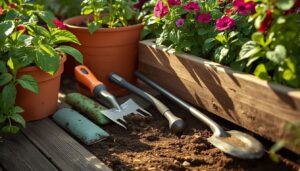
Small spaces play by different rules. In raised garden beds and containers, bulky tools just get in the way.
Reach for Container Trowels and Mini Cultivators — they fit tight corners without disturbing roots. A Low‑Profile Hoe keeps weeding manageable, and a Flexible Watering Wand targets the root zone precisely.
Toss in Knee Pads for comfort. These budget‑friendly tools make solid beginner gardening tool recommendations for container gardening.
Building a Starter Kit for First-time Gardeners
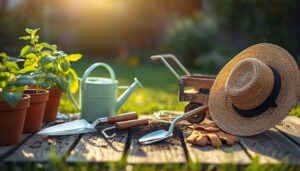
Once your container setup is sorted, a simple Starter Kit Checklist keeps you from overbuying.
Start with three Multi-Function Tools: a trowel, hand rake, and transplanting spade.
Add a lightweight watering can and short hose. Don’t skip gloves and a wide-brim hat.
For Portable Transport Options, a small garden cart covers most needs.
Build from there each season.
Top 10 Gardening Tools for Beginners
These ten tools cover what you’ll actually reach for in the garden week after week. Each one earns its spot by being reliable, beginner-friendly, and worth the money.
Here’s what made the cut.
1. Foxgloves Water Resistant Gardening Gloves
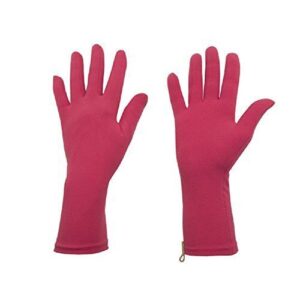
Good gloves make every garden task feel easier — and Foxglove’s nails that balance. At just 1.6 oz per pair, they’re light enough that you’ll forget you’re wearing them.
The Supplex-Lycra blend stretches with your hands, so planting seeds or running jute doesn’t feel clumsy. Silicone grip pads keep tools steady when your hands are damp.
One honest heads-up: they struggle in muddy, wet conditions. Keep that in mind if your beds stay consistently soggy.
| Best For | Gardeners who want a lightweight, flexible glove for everyday tasks like planting, potting, and weeding — especially those who want to keep their nails clean without sacrificing dexterity. |
|---|---|
| Material | Supplex nylon/Lycra blend |
| Weight | 1.6 oz |
| Price (USD) | Not listed |
| Durability | Quick-dry sport fabric |
| Ergonomics | Four-way stretch, form-fitting |
| Best Use Case | Planting, potting, weeding |
| Additional Features |
|
- Super lightweight at 1.6 oz, with four-way stretch that moves naturally with your hands
- Breathable knit layer keeps dirt off your nails and the quick-dry fabric shakes clean easily
- Bright color options mean you’ll actually find them when you set them down
- Not great in wet or muddy conditions — the fabric soaks through fast
- Sizing runs large, so smaller hands may find the medium a loose fit
- Pricier than basic garden gloves, and return shipping adds to the cost if they don’t work out
2. Woodland Tools Compact Gear Lopper
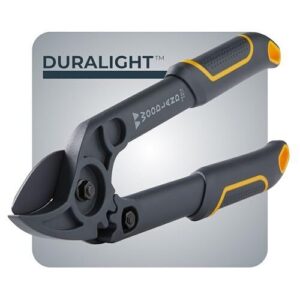
Dead branches don’t wait for the right tool — but this one’s ready when you’re. Woodland Tools Compact Gear Lopper packs serious cutting power into a 16‑inch frame that weighs just 1.4 lb.
Gear‑assisted blades handle dry wood and thick vines up to 1.25 inches without wrecking your hands. At $28.95, it’s a smart pick for raised beds and tight corners. Just know it’s happiest on dead or dry wood — green branches may push back.
| Best For | Gardeners, trail maintainers, and older users who need a lightweight, easy-to-handle lopper for dry wood, dead branches, and tight spaces. |
|---|---|
| Material | Glass-filled nylon handles |
| Weight | 1.4 lb |
| Price (USD) | $28.95 |
| Durability | Duralight nylon handles |
| Ergonomics | Gear-assist, ergonomic handles |
| Best Use Case | Dry/dead wood pruning |
| Additional Features |
|
- Gear-assist does the heavy lifting — cuts through dry branches and tough vines up to 1.25 inches without straining your hands.
- At just 1.4 lb and 16 inches long, it’s easy to toss in a bag and take anywhere.
- Hard to beat at $28.95 for the cutting power you get.
- Struggles with fresh green wood — this one’s really built for dry or dead material.
- Branches over 1.25 inches will give it trouble, so it’s not a replacement for a full-size lopper.
- Some users have noticed blade-to-anvil alignment issues that can reduce clean cutting over time.
3. Radius Garden Stainless Steel Digging Fork

Compacted clay is where most beginners give up — and where this fork earns its keep.
The Radius Garden Digging Fork’s square stainless-steel tines push through heavy soil without bending, while the O-shaped ergonomic handle gives you roughly four times the grip of a standard D-handle. Less wrist strain, more control.
It manages turning beds, mixing compost, and loosening sod down to about a foot deep.
It’s heavier than some forks at 4.85 lb, but that weight works in your favor.
| Best For | Gardeners who regularly work with heavy, compacted soil and want a durable, ergonomic fork that reduces hand and wrist strain over long sessions. |
|---|---|
| Material | Stainless steel tines, TPE handle |
| Weight | 4.85 lb |
| Price (USD) | Not listed |
| Durability | Lifetime guarantee (US) |
| Ergonomics | Double-hand O-Handle grip |
| Best Use Case | Soil cultivation, aeration |
| Additional Features |
|
- Square stainless-steel tines push through clay and compacted soil without bending or corroding
- The O-Handle gives you way more grip surface than a standard D-handle, which means less fatigue over time
- Handles the tough stuff — turning beds, mixing in compost, loosening sod — all down to about a foot deep
- At 4.85 lb, it runs heavier than comparable forks, which can wear you out faster if you prefer a lighter tool
- Some users have reported handle failure within a year of regular use, which is a red flag given the "unbreakable" marketing
- The lifetime guarantee only covers Continental U.S. customers, so if you’re outside that region, you’re on your own
4. DeWit Tulip Garden Trowel
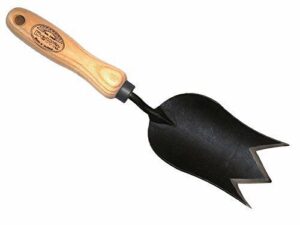
Most trowels do one thing. This one does two.
The DeWit Tulip Trowel replaces both your hand trowel and a small fork. Its three-point tulip-shaped blade slices through fine roots and compacted soil, then curves to scoop compost or seedlings right into place. At just 8 oz, your hand won’t feel it after an hour of planting.
It’s $55.63 — more than budget picks — but the tempered boron steel head and ash hardwood handle come with a lifetime guarantee.
| Best For | Gardeners who plant a lot of seedlings, bulbs, or work with compacted or clay-heavy soil and want one tool that handles both trowel and fork duties. |
|---|---|
| Material | Tempered boron steel, ash wood |
| Weight | 8 oz |
| Price (USD) | $55.63 |
| Durability | Lifetime manufacturer guarantee |
| Ergonomics | Lightweight, reduces hand fatigue |
| Best Use Case | Planting, transplanting seedlings |
| Additional Features |
|
- Two tools in one — the tulip blade scoops and the three-point tip breaks up tough soil and cuts fine roots
- Lightweight at 8 oz, so your hand stays comfortable through long planting sessions
- Built to last — tempered boron steel, FSC-certified ash hardwood handle, and a lifetime guarantee
- At $55.63, it’s a bigger investment than most basic trowels
- The unusual shape takes a little getting used to if you’re switching from a standard trowel
- The steel head can rust if you don’t clean and dry it after use, especially in wet or humid conditions
5. King of Spades Balling Spade
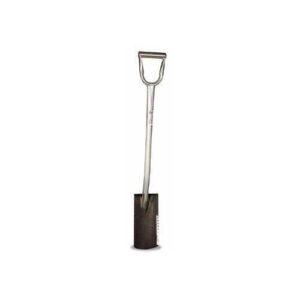
Some roots don’t ask nicely. That’s where the King of Spades Balling Spade earns its name.
The 11.5-inch heat-treated blade has a serrated edge that slices through stubborn roots up to 1.5 inches thick — no hacking required. The 27.5-inch D-grip handle keeps your posture upright and your wrists happy. TIG-welded aircraft-grade tubing means this thing won’t bend under heavy prying.
At $134.90, it’s a serious investment. But for dense clay or root-bound transplants, nothing else compares.
| Best For | Landscapers, serious gardeners, and anyone regularly wrestling with root-bound plants or tough, rocky soil. |
|---|---|
| Material | Heat-treated alloy steel |
| Weight | Not listed |
| Price (USD) | $134.90 |
| Durability | Aircraft-grade, TIG-welded |
| Ergonomics | Shorter handle, stand-on capability |
| Best Use Case | Root cutting, heavy digging |
| Additional Features |
|
- The serrated balling edge cuts through roots up to 1.5 inches thick cleanly — no sawing back and forth.
- Aircraft-grade tubing with hand-crafted TIG welds means it can take a beating without bending or breaking.
- The shorter D-grip handle is great for tight spots and gives you real control when prying out stubborn shrubs or rocks.
- At $134.90, it’s a hard sell if you only dig a hole a few times a year.
- The heavy blade wears you out faster than a lighter spade on long digging sessions.
- Dense, compacted soil can stop it cold — it’s powerful, but not a magic wand for concrete-hard ground.
6. Tabor Adjustable Metal Garden Rake
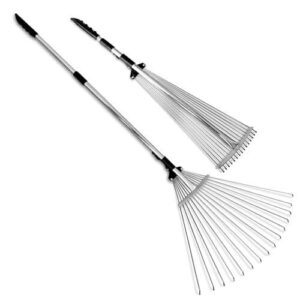
One rake, every job. That’s the promise of the Tabor J16A — and it mostly delivers.
The head adjusts from 8 to 23 inches, so you can sweep open lawn one minute and thread between flower beds the next. The telescoping handle runs from 32 to 63 inches, which is your back’s best friend during long sessions.
Galvanized steel tines resist rust after rain. At $36.90, it’s genuinely useful without the guilt.
Just don’t push it through heavy mud. It’ll remind you who’s boss.
| Best For | Homeowners and gardeners who want one versatile rake that handles everything from open lawns to tight flower beds without breaking the bank. |
|---|---|
| Material | Galvanized steel tines |
| Weight | Not listed |
| Price (USD) | $36.90 |
| Durability | Rust-resistant galvanized tines |
| Ergonomics | Telescoping, adjustable height |
| Best Use Case | Leaf and debris gathering |
| Additional Features |
|
- Adjustable head (8–23 in) and telescoping handle (32–63 in) cover nearly any task or user height
- Galvanized steel tines hold up to rain and sun without rusting out
- Collapses down small enough to toss in a shed corner or even a backpack
- Struggles with heavy mud, dense debris, or compacted material — it’s a light-duty tool
- Telescoping joints can wear down if you’re constantly folding and unfolding it
- Wet or clay soil sticks to the tines and needs a rinse after use
7. Rogue Tempered Steel Garden Hoe
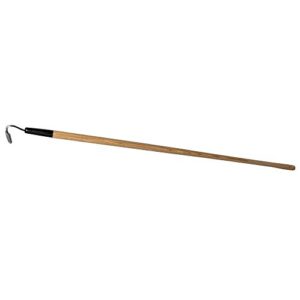
If the rake manages the light work, the Rogue Tempered Steel Garden Hoe manages the heavy stuff.
The blade is reclaimed from agricultural disc steel — genuinely tough, sharpened on three sides. That tri-edge design means you can cut forward, sideways, and in tight spots between plants without repositioning constantly. The 60-inch handle keeps your back upright. It’s built in the USA and backed by a lifetime guarantee on the head.
At $111.95, it’s not cheap. But for compacted beds and stubborn weeds, it earns every dollar.
| Best For | Gardeners who regularly break new ground or battle stubborn weeds and want a durable, USA-made tool built to last. |
|---|---|
| Material | Reclaimed agricultural steel |
| Weight | 0.01 oz (listed) |
| Price (USD) | $111.95 |
| Durability | Lifetime head guarantee |
| Ergonomics | Balanced weight design |
| Best Use Case | Weeding, breaking new ground |
| Additional Features |
|
- Reclaimed agricultural steel blade sharpened on three sides — cuts from multiple angles without constant repositioning.
- 60-inch handle keeps your back straight, and the balanced weight works for a wide range of users, including those with limited mobility.
- Lifetime guarantee on the head means you’re covered if anything goes wrong.
- At $111.95, it’s a significant investment compared to a standard garden hoe.
- Struggles with deep-rooted weeds like clover or dense grass — you may still need a second tool.
- Some users find the edge needs a quick filing out of the box before it performs at its best.
8. Tuff Guard Kink Proof Garden Hose
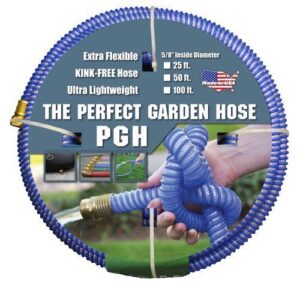
Heavy tools need a hose that keeps up. The Tuff Guard doesn’t kink — that double-helix polypropylene wrap actually works.
Drag it around raised beds, bend it around corners, and water flow stays steady.
The 5/8-inch brass fittings connect to standard spigots and nozzles without fuss.
It manages everything from -20°F winters to 158°F summer heat.
At $109.99 it costs more than basic hoses, but you won’t be untangling it mid-mid-watering session.
| Best For | Gardeners and homeowners who water frequently and want a reliable, tangle-free hose that holds up through tough seasons. |
|---|---|
| Material | Polypropylene/TPE/polyester |
| Weight | 7 lb |
| Price (USD) | $109.99 |
| Durability | 300 psi burst rated |
| Ergonomics | Flexible, easy to maneuver |
| Best Use Case | Garden watering, vehicle wash |
| Additional Features |
|
- Genuinely kink-resistant — the double-helix exterior keeps water flowing even when you’re dragging it around tight corners or raised beds.
- Handles extreme temps (-20°F to 158°F), so it works year-round without cracking or warping.
- Brass fittings are solid, wrench-friendly, and connect easily to standard spigots and nozzles.
- At $109.99, it’s a tough sell if you only water occasionally — plenty of cheaper hoses will do the job.
- Fitting leaks have been reported, and the design makes DIY repairs tricky if something goes wrong.
- The one-year warranty is short for the price, and getting support from the manufacturer can be a hassle.
9. Bon Aire Aluminum Hose Nozzle
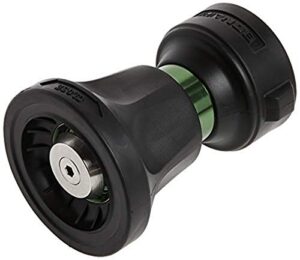
good hose means nothing without a nozzle that actually delivers.
The Bon Aire Aluminum Hose Nozzle ($28.99) gives you five spray patterns in one compact grip — from a gentle fan for seedlings to a 30-foot jet for rinsing off the driveway.
Aircraft-grade aluminum and stainless steel construction means it won’t crack or corrode. The two-way shut-off is genuinely useful mid-task. At just 0.63 lb, your wrist won’t protest after a long watering session.
| Best For | Gardeners and homeowners who want one reliable nozzle that handles everything from delicate seedlings to heavy-duty driveway cleaning. |
|---|---|
| Material | Aircraft-grade aluminum, stainless steel |
| Weight | 0.63 lb |
| Price (USD) | $28.99 |
| Durability | Drop-resistant, serviceable |
| Ergonomics | Soft-rubber comfort grip |
| Best Use Case | Cleaning, general watering |
| Additional Features |
|
- Built to last — aircraft-grade aluminum and stainless steel won’t rust or crack with regular use
- Five spray patterns cover pretty much every watering or cleaning job you’d throw at it
- The two-way shut-off actually stops leaks cold, so no drips when you step away mid-task
- Low water pressure in your line will hurt performance — it needs decent flow to shine
- Don’t leave it out in freezing temps; the internals can crack and you’re looking at repairs
- The "finest" mist setting isn’t truly fine — if you’re growing super delicate seedlings, it might still be a bit much
10. Dramm Rain Watering Wand
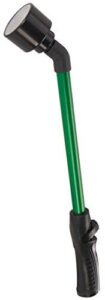
Sometimes a nozzle still isn’t enough — especially when you’re watering seedlings that bruise if you look at them wrong. That’s where the Dramm Rain Wand earns its spot.
The 16-inch aluminum wand delivers a full, gentle shower that lands softly on soil without blasting roots sideways. One-thumb flow control beats squeezing a trigger for ten minutes straight. At 14.4 oz and $27.45, it’s light, practical, and kind to delicate plants.
| Best For | Gardeners who water seedlings, herbs, hanging baskets, or delicate container plants and want a gentle, controlled flow without hand fatigue. |
|---|---|
| Material | Aluminum, rubber grip |
| Weight | 14.4 oz |
| Price (USD) | $27.45 |
| Durability | Replaceable internal components |
| Ergonomics | Thumb-actuated one-touch control |
| Best Use Case | Delicate seedling watering |
| Additional Features |
|
- Soft "rain" flow won’t blast soil or bruise fragile plants
- One-thumb control makes it easy to start, stop, and adjust without squeezing a trigger
- Replaceable parts mean you fix it instead of tossing it, saving money long-term
- Needs decent water pressure to work well — low pressure turns the shower into a sad dribble
- The plastic thumb valve can wear out or leak faster than all-metal options
- Hose attachment isn’t included, so factor in an extra purchase before you can use it
Tools by Job Type
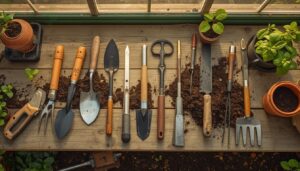
Not every tool does every job, and mixing them up is a fast way to frustrate yourself. Matching the right tool to the right task makes gardening easier and keeps your plants healthier.
Breakdown by job type so you always reach for the right one.
Planting and Transplanting Tools
Getting transplanting right comes down to having the correct tool for each job. Start with these four essentials:
- Hand trowel — narrow blade, ideal for seedlings and small plugs
- Soil knife Hori Hori — depth control features plus serrated edge for roots
- Hand cultivator — loosens soil before plant transplanting
- Lightweight aluminum shafts — reduce fatigue during repeated planting
Use plug size standards to match your dibber to the root ball. Root preservation tips matter too — soak roots first, then settle soil gently around them.
Digging and Soil-prep Tools
Before you dig a single hole, the right tools make all the difference. Stainless steel blades on a garden spade or garden fork resist rust and cut cleanly through compacted soil. Fiberglass tool grips keep weight low without sacrificing strength. Balanced tool weight reduces fatigue fast.
| Tool | Best Use | Handle Type |
|---|---|---|
| Garden Spade | Edging, trenching | Fiberglass |
| Garden Fork | Loosening compacted soil | Hardwood |
| Hoe | Weeding, furrow-making | Fiberglass |
Soil compaction strategies matter too — a broadfork lifts soil gently without disrupting layers. Your hand trowel and soil knife Hori Hori handle detail work beautifully. Look for adjustable head angles on hoes for better control.
Watering and Irrigation Tools
Watering your plants well is half the battle. The right tools make it almost easy.
- Garden hose with nozzle — adjustable nozzle patterns let you switch from gentle mist to strong jet instantly.
- Drip system design — delivers water at the roots; pair with a pressure regulator to prevent clogging.
- Soaker hose benefits — slow, even moisture along the whole bed; works great with basic timers.
A watering wand reaches hanging baskets without contorting yourself. Smart moisture sensors tell you exactly when to water — no guessing. A simple watering can manages containers perfectly. Budget-friendly options start around $15.
Pruning and Cutting Tools
Sharp tools make clean cuts. Clean cuts heal fast.
Start with bypass pruners for live stems — their curved blade material choice matters more than you’d think. Anvil-style pruners handle dead wood. Loppers reach thicker branches.
Follow a cutting angle guide: 45 degrees promotes faster healing.
Blade coating benefits include rust resistance and easy cleanup.
Multi-tool versatility saves money.
Pruning timing tips: early morning works best.
Weeding and Bed-maintenance Tools
Weeds don’t wait — and neither should your tools. A stirrup hoe technique keeps you moving without destroying soil structure. A hori hori dual blade manages both slicing roots and digging transplant holes.
- Broadfork aeration benefits loosen compacted beds without heavy turning.
- Weed puller design grabs deep taproots cleanly at the source.
- Adjustable hoe length lets you stand straight while working.
Your hand trowel, garden rake, and hoe cover nearly every weed removal and soil preparation task in small beds.
Budget Vs Quality Choices
Spending money on garden tools feels tricky when you’re just starting out. You don’t need to go cheap on everything — but you don’t need to splurge either.
Here’s how to figure out where your dollars actually matter.
How Much Beginners Should Spend
Most beginners don’t need to spend a fortune to start well. A solid starter kit costs between €100 and €250 — that’s it. Your monthly tool budget doesn’t have to hurt.
| Category | Budget Share | Estimated Cost |
|---|---|---|
| Hand tools & gloves | 40% | €40–€100 |
| Watering equipment | 15% | €15–€38 |
| Pruning & soil prep | 15% | €15–€38 |
| Storage & maintenance | 10% | €10–€25 |
| Contingency fund allocation | 5% | €5–€13 |
Seasonal purchase planning keeps annual spend under €350. Smart ergonomic tool savings come from prioritizing tools for beginner gardeners you’ll actually use — not every shiny item on the shelf.
When Budget Tools Are Enough
You don’t always need to spend more to get more. For small containers and raised beds, budget-friendly options handle daily tasks just fine. Price Tracking helps you stay under €80 for a solid Minimalist Set. Multi-purpose Essentials like a trowel and hand cultivator cover most jobs.
| Tool | Budget Pick | Basic Longevity |
|---|---|---|
| Hand Trowel | €8–€15 | 2–3 seasons |
| Pruning Shears | €10–€20 | 1–2 seasons |
| Hand Cultivator | €8–€12 | 2–3 seasons |
| Garden Gloves | €5–€10 | 1 season |
| Watering Nozzle | €8–€15 | 2+ seasons |
Seasonal Rotation keeps replacement costs low.
When Premium Tools Are Worth It
Sometimes, though, budget just won’t cut it. If you’re gardening more than twice a week, premium tools earn their price fast. Extended tool lifespan — up to five times longer — means fewer replacements. Precision edge retention protects your plants, too; clean cuts reduce disease entry points. Reduced user fatigue lets you work 30 extra minutes comfortably.
Premium tools pay for themselves when clean cuts, lasting edges, and less fatigue let you garden longer and smarter
| Tool | Premium Benefit | Splurge Threshold |
|---|---|---|
| Pruning Shears | Precision edge retention after 1,000 cuts | Prune weekly |
| Digging Fork | Enhanced material resistance in clay soils | Heavy beds |
| Garden Hoe | Ergonomic grip, 25% less wrist torque | Regular weeding |
| Hand Trowel | 20% better soil pickup efficiency | Container work |
| Garden Hose | Kink resistance, 15% less water loss | Large beds |
Warranty value proposition matters here too — up to five years’ coverage lowers your real cost over time.
Buying Single Tools Vs. Starter Sets
Single tools or a starter set? Both paths work — it really depends on where you’re starting.
| Factor | Single Tools | Starter Sets |
|---|---|---|
| Cost per Tool | Lower, buy only what’s needed | Better value per piece in kit |
| Upgrade Flexibility | Swap one tool anytime | Replace entire set or mix brands |
| Storage Efficiency | Minimal footprint | Included caddy keeps everything together |
| Brand Consistency | Varies by purchase | Uniform grips and tolerances throughout |
| Warranty Coverage | Tool-specific, often stronger | Kit-wide, sometimes limited |
If you’re tackling one raised bed, a trowel and fork beat a 12-piece set every time.
Ergonomics and Comfort Features
The right tool does half the work — but an uncomfortable one can ruin a full afternoon in the garden. Ergonomics matter more than most beginners expect, especially when you’re just building up your stamina and technique.
Here’s what to look for before you buy.
Choosing Comfortable Handle Shapes
Handle shape matters more than most beginners expect. A good Contour Grip Design follows your hand’s natural curve — spreading pressure across your palm instead of digging into one spot.
Look for ergonomic grips with a 30–40mm Diameter Size Choices, soft Surface Texture Materials, and smart Weight Distribution Balance. Proper Reach Throttle Points keep your wrist neutral, making ergonomic garden tools genuinely easier to use all day.
Lightweight Tools for Easier Use
Weight adds up fast — especially after an hour of digging. Tools under 200 grams dramatically cut Reduced Wrist Torque, keeping your joints happy longer. Balanced Center Gravity means less fighting the tool with every stroke.
Look for ergonomic grips, Foldable Design options, and Quick Release Attachments for versatility. Magnetic Blade Sheath storage is a smart bonus.
Budget-friendly options exist — smart hand tool selection matters most.
Gloves That Improve Grip and Protection
Good gloves do more than protect your hands — they change how you work. The right pair turns a slippery pruner into something you can actually control.
- Silicone Grip Technology stays tacky even when wet, keeping tools from twisting
- Nitrile Coated Durability manages oily stems without tearing
- Dot Pattern Padding with Leather Palm Reinforcement reduces vibration during long sessions
Breathable fabric matters too. Cold Weather Insulation versions exist for early-season planting.
Tools That Reduce Hand and Back Strain
Even an hour of digging can wreak havoc on your hands and back. That’s why ergonomic gardening tools matter more than most beginners expect.
| Feature | What It Does | Best For |
|---|---|---|
| Shock Absorbing Grips | Vibration Dampening Technology cuts fatigue by 40% | Repetitive digging |
| Adjustable Tool Lengths | 30–60 inch telescoping shafts reduce back bend | Tall gardeners |
| Padded Grip Inserts | Ergonomic Lever Mechanisms ease pinch force | Pruning sessions |
A kneeling pad and garden cart round out your ergonomic considerations for garden tools.
Care and Storage Basics
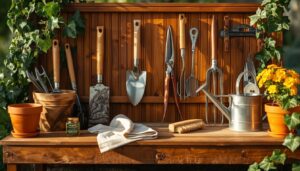
Good tools don’t last on their own — you have to help them along. little care after each session adds years to what you’ve already paid for.
Here’s what that actually looks like in practice.
Cleaning Tools After Each Use
Dirty tools don’t just look bad — they rust, spread disease, and break down faster.
After each session, wipe off loose soil, then rinse blades thoroughly for proper blade rinsing. Dry everything completely; skipping tool drying invites rust overnight. Apply a light handle oil to wooden grips. For sap removal, a little mineral spirits works well.
That’s solid garden tool care that boosts tool longevity.
Sharpening Blades for Better Performance
A dull blade tears; a sharp one glides. That difference matters more than you’d think.
Sharpening your cutting tools every 3–4 months keeps edges clean and plants healthier. Here’s what works:
- Match your edge angle selection to the tool — 20–30 degrees suits most garden blades
- Follow abrasive grit progression: start coarse (120), smooth at 600, finish at 1,000–3,000
- Understand honing vs sharpening — hone weekly, sharpen seasonally
- Respect blade edge geometry on high-carbon steel blades for lasting tool durability
- Practice basic sharpening safety: secure the blade, stroke away from your body
Preventing Rust and Corrosion
Rust doesn’t ask permission — it just shows up. solid maintenance schedule stops it before it starts.
Wipe tools dry after every use, then rub a light oil coat on metal grips and blades.
stainless steel resists corrosion naturally. For carbon steel, protective coatings like wax or oil block moisture by up to 60 percent. drying practices and reapplying coatings every 3–6 months keep tool durability high.
Safe Storage for Sheds and Garages
Once your tools are dry and coated, where they sleep matters just as much.
Good garden shed organization starts with three non‑negotiables:
- Locking Mechanisms — A hasp‑and‑padlock plus anti‑bump cylinder keeps hands out that shouldn’t be in.
- Moisture Control and Ventilation Strategies — A roof vent plus silica packs hold humidity under 60%.
- Pest Barriers and Fire Safety — Seal gaps over ⅛ inch; store flammables in a fireproof cabinet.
Solid DIY storage solutions for garden tools don’t need to be expensive — just intentional.
Organizing Tools for Quick Access
Once your shed is secure and dry, organization is what saves you time.
A pegboard layout at eye level keeps clippers and trowels visible. Wall-mounted racks hold long-handled tools within reach. Add magnetic strips for shears. Rolling carts move with you bed to bed. Drawer labeling sounds fussy — until you’re hunting a trowel mid-planting.
Good DIY storage solutions for garden tools really are that simple.
Common Beginner Tool Mistakes
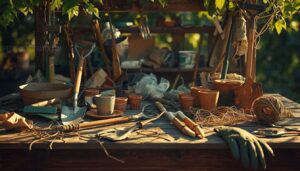
Even experienced gardeners cringe thinking back on their early tool blunders — wrong sizes, useless gadgets, skipped gloves. The good news is these mistakes are completely avoidable once you know what to watch for.
Here are the five most common ones beginners make.
Buying Tools You Do Not Need
Most beginners fall into the same trap: buying more than they need. Status Purchases and Impulse Sale Traps are real — over 60% of early tool buys come down to "it looked useful."
Bundled Set Overkill leaves half your tools untouched. Watch for Specialty Tool Redundancy too; a hori hori won’t replace your trowel.
Stick to budget-friendly options and Choose Essential Gardening Tools first.
Choosing The Wrong Tool Size
Size mistakes are just as costly as buying the wrong tool entirely. Handle Length Mismatch forces awkward bending; Blade Width Issues crush seedling roots in tight pots; Tine Spacing Errors tear through young plants; Grip Diameter Mismatch causes hand fatigue fast.
- Match handle length to your height
- Choose narrow blades for containers
- Pick tine spacing by bed type
- Test grip diameter before buying
Ergonomic grips and smart Weight Distribution Problems awareness keep strain low — core to any BudgetFriendly Tool Buying Guide.
Ignoring Soil and Garden Conditions
Overlooking your soil conditions before grabbing tools is a costly beginner trap. Soil pH Neglect, Drainage Overlook, and Compaction Ignorance all dictate which soil preparation and digging tools you actually need.
Sandy soil needs different tools than dense clay.
| Soil Issue | What It Causes | Right Tool Choice |
|---|---|---|
| Poor drainage | Root rot | Digging fork |
| Compaction | Stunted roots | Steel spade |
| Moisture Mismanagement | Drought stress | Drip irrigation kit |
| Nutrient Imbalance | Weak growth | Soil knife for amendments |
Test first. Then buy.
Skipping Protective Gear and Gloves
Skipping gloves and gear is one of those "I’ll be fine" decisions you’ll regret by Tuesday. Bare hands invite real problems fast:
- Cut Risk and Blister Formation from trowels and weeders
- Skin Irritation from plant sap or pesticide residue
- Eye Injury and Sunburn Exposure during longer sessions
Budget-friendly options like Foxgloves run under $30. No excuse.
Delaying Upgrades on Worn-out Tools
Hanging onto worn-out tools longer than you should is a quiet drain on your garden — and your wallet. Dull edges cause efficiency loss of up to 40 percent, and cracked grips become real safety hazards fast.
Repair costs add up quickly too, often exceeding replacement price within a season.
Track performance decline every few years, and upgrade strategically. Your effort deserves better than a tool fighting against you.
Frequently Asked Questions (FAQs)
What are the best garden tools for beginners?
Too many tools, too little clarity — that’s the real beginner problem. Start with a hand trowel, cultivator, and pruning shears. Simple, lightweight, and built to last.
What should you consider when buying gardening tools?
Look for corrosion resistance, grip texture, weight balance, and tool length that suits your height. Ergonomic grips reduce strain.
Factor in warranty terms, tool maintenance needs, and budget-friendly options before committing.
How many tools do you need in a garden center?
Five to seven tools cover most garden tasks.
Think of it as curating, not collecting — the right trowel, fork, shears, weeder, and hose wand outwork a shed full of rarely touched gear.
What are the benefits of using a garden tool?
The right tool does more than dig a hole. It cuts your effort in half, gives you Precision Planting, and keeps plants healthier.
ergonomic grips mean less strain, more control, every time.
What basic gardening tools will you need?
Don’t put the cart before the horse — start with five tools: a hand trowel, pruning shears, garden gloves, a garden hose with nozzle, and a garden spade.
Is October too late to plant?
Not at all.
October works well for fast maturing crops like radishes, spinach, and garlic. Check your frost date timing, confirm soil workability, and use protective row covers to extend your season by weeks.
What do beginner gardeners need?
Think of it like packing for a trip — you don’t need everything, just the right things.
Start with soil testing, plant labels, and smart sun exposure checks before buying a single tool.
What gardening tools work best for container gardens?
Container gardens need a mini trowel, narrow hand rake, and perforated watering can.
Add lightweight soil scoop, soft grip shears, and a hand cultivator for tight spaces, vertical planters, and easy pruning.
How do I choose quality tools on budget?
Start with high-grade steel and a solid warranty. One adaptable trowel beats three cheap ones.
Mid-range price performance wins every time — decent brand reputation, durable materials, and multi-tool versatility stretch your budget surprisingly far.
Which tools are essential for raised bed gardening?
For raised beds, you really need a hand trowel, garden fork, and garden rake.
Add a wheelbarrow for hauling compost, a kneeling pad for comfort, and soil moisture sensors to avoid overwatering.
Conclusion
The wrong tools slow you down. The right gardening tools for beginners free you to actually garden.
You don’t need ten specialty items gathering dust—you need five that show up every single time.
Start with what fits your hands, your space, and your first real season.
Buy less, use more, and let results teach you what to add next.
Your best tool list won’t look like anyone else’s. That’s exactly the point.