This site is supported by our readers. We may earn a commission, at no cost to you, if you purchase through links.

Squash is one of the hungriest, most pest-prone plants—and yet it thrives when you give it the right neighbors.
Marigolds push back nematodes. Borage pulls up deep minerals. Beans quietly fix nitrogen while your squash sprawls across the bed.
These aren’t gardening myths passed down from grandmothers; the chemistry is real and the results show up at harvest.
This squash companion plants guide walks you through which plants earn their spot beside your squash, which ones actively sabotage them, and how a few smart pairings can mean the difference between a struggling vine and an unstoppable one.
Table Of Contents
- Key Takeaways
- Best Squash Companion Plants
- Pest-Repelling Herbs and Flowers
- Pollinator-Friendly Squash Companions
- Soil-Boosting Squash Plant Partners
- Plants to Avoid Near Squash
- Top 3 Squash Season Helpers
- Frequently Asked Questions (FAQs)
- Can squash be planted near other squash?
- Is October too late to plant?
- Can squash companion plants improve fruit size?
- How do companion plants affect squash watering needs?
- Which companions work best in container-grown squash?
- Do companion plants help with powdery mildew on squash?
- When should companion plants be removed at seasons end?
- Conclusion
Key Takeaways
- Marigolds, borage, and nasturtiums aren’t just pretty fillers — they actively fight pests, pull up deep soil minerals, and lure aphids away from your squash before damage starts.
- Beans and peas are your soil’s quiet partners, fixing nitrogen from the air and feeding squash roots without you ever opening a fertilizer bag.
- Some plants — fennel, potatoes, and cucumbers — look harmless but compete hard for the same nutrients or invite the exact pests your squash can’t afford, so keep them out of the patch entirely.
- Smart companion planting doesn’t just protect your plants; it cuts your watering needs by up to 25% and can boost fruit size by letting squash pour energy into growth instead of pest defense.
Best Squash Companion Plants
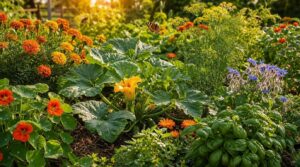
Some plants just make squash happier — and your harvest bigger. The right neighbors can ward off pests, draw in pollinators, and keep your garden humming all season long.
Pairing squash with the right companions is one of the easiest forms of natural pest control for summer vegetables you can practice without sprays or chemicals.
Here are five companion plants worth growing alongside your squash.
Marigolds
Marigolds are your garden’s quiet bodyguard. For variety selection, French marigolds stay compact and fit neatly between squash vines, while African types create bold pest deterrent borders.
Their root secretions handle nematode suppression in surrounding soil.
Regular deadheading keeps blooms coming and attracts beneficial insects. Plant them in well-draining soil — companion planting is exceptionally reliable.
They also require full sun exposure for ideal growth.
Nasturtiums
Nasturtiums pull double duty where marigolds leave off. These sun-loving annuals sprawl beautifully between squash vines, and their peppery flavor makes them a welcome edible garnish in your kitchen, too.
Trailing varieties weave through beds while quietly working as pest deterrent plants — luring aphids away from squash during their annual life cycle.
Here’s what makes them worth planting:
- Trap aphids and squash bugs effectively
- Attract beneficial insects like hoverflies
- Edible flowers and leaves throughout the season
- Thrive in poor soil with minimal care
Calendula
Calendula brings even more to the table than nasturtiums. These bright orange and yellow blooms attract ladybugs, hoverflies, and parasitic wasps — your garden’s built-in pest control crew.
Beyond companion planting, calendula offers real medicinal benefits, and its edible petals work beautifully in cooking and dye applications.
Seed germination is quick, variety selection is easy, and it fits naturally between squash rows.
Sweet Alyssum
While calendula draws the heavy hitters, sweet alyssum works the edges — low groundcover that quietly pulls beneficial insects into your squash beds all season long. Its extended bloom and cool-weather flowering mean consistent pest pressure coverage.
- Attracts hoverflies that prey on aphids
- Aids consistent moisture retention as living mulch
- Thrives with 4–6 hours of sun
- Works in hanging basket trailing arrangements near squash borders
Borage
Borage is a hardworking annual herb that earns its place in any squash companion planting setup. Its blue starflowers bloom continuously, creating a steady nectar source that draws beneficial insects all season. That cucumber scent deters pests naturally.
As a vigorous accumulator, borage pulls minerals from deep in the soil. Chop it back and let it mulch itself right where squash needs it most.
Pest-Repelling Herbs and Flowers
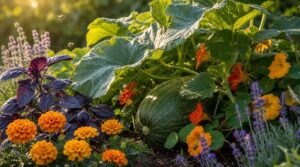
Some plants don’t just grow — they fight for you. The right herbs and flowers planted near your squash can quietly push back against the pests that do the most damage.
Here are the best ones to put to work.
Garlic for Aphid Control
Garlic pulls double duty in squash companion planting — growing it nearby deters aphids through scent alone, while a homemade spray delivers direct aphid suppression.
Crushing a few garlic cloves into water makes a potent spray — explore this and other companion planting strategies for your strawberry garden to keep pests at bay naturally.
Allicin concentration matters here: crush fresh cloves, dilute to a 1–3% solution, and apply using a foliar-application method every 5–7 days. Watch your spray timing — early morning limits leaf burn risk on sensitive varieties.
Dill for Vine Borers
Dill does more than flavor your pickles — it’s a frontline defense against squash vine borers. Its volatile compounds confuse egg-laying moths during peak season, creating a natural scent barrier around your plants.
Interplanted in clusters, dill also pulls in beneficial insects like parasitic wasps and lady beetles. This companion planting strategy enhances pest control while supporting biodiversity.
Additionally, dill serves as a living ground cover, suppressing weeds and conserving soil moisture. Crucially, it remains fully harvestable throughout its growth, blending culinary utility with garden protection. This makes it a true culinary dual-use companion planting win.
Lavender for Moth Deterrence
Lavender is a quiet powerhouse in your squash garden. Its linalool compounds genuinely confuse egg-laying moths, reducing visits during fruit set.
Use oil spray dilution—about 1–2% in water—directly on plant crowns, or try sachet border deployment along bed edges for passive, steady coverage.
Encapsulated release products last longer, and pairing a lavender-cedar blend with good airflow optimization spreads deterrence across your whole plot.
Radishes as Barrier Crops
Radishes are one of companion planting’s best-kept secrets. Plant them in a ring around your squash one week before sowing, and they get straight to work.
Their root channeling improves drainage, while biofumigation effects suppress soil-borne pests.
You also gain natural weed suppression and moisture retention as a bonus. Intercropping radishes cuts squash vine borer infestation by roughly 40%.
Nasturtiums as Trap Crops
Nasturtiums are the decoys your squash garden needs. They release glucosinolates that lure aphids, flea beetles, and squash bugs away from your plants.
For best results:
- Border Timing — Sow nasturtiums 7–14 days before squash emerges
- Upwind Placement — Position borders so prevailing breezes carry scent toward pests
- Climbing Varieties — Train them on trellises for maximum trap surface
Pest monitoring weekly keeps spillover in check.
Pollinator-Friendly Squash Companions
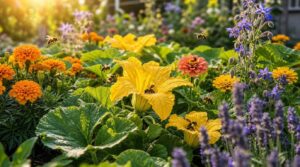
Squash plants are heavy feeders, but they’re also heavy drinkers regarding pollination — no bees, no fruit. The good news is that the right companion plants can turn your garden into a pollinator magnet.
Here are five flowers that pull that job off beautifully.
Cosmos for Bee Activity
If you want reliable bee activity throughout squash’s flowering window, cosmos earns its place in every bed. Its mass bloom effect creates a true bee corridor design — drawing honeybees and bumblebees straight to your squash blossoms.
These drought-tolerant forage plants maintain nectar continuity even in dry spells.
Their tall stems enable vertical foraging, and few companion plants for squash match cosmos for consistent pollinator attraction.
Calendula for Hoverflies
While cosmos keep bees buzzing, calendula works a different angle — it pulls in hoverflies. Nectar abundance is the key draw here. Those bright orange blooms act as a flight corridor, guiding beneficial insects straight to your squash bed.
Thoughtful plant spacing near aphid-prone areas gives hoverfly larvae immediate food. This strategic placement ensures natural pest control where it’s needed most.
Bloom extension through deadheading keeps this companion planting partnership running all season. By prolonging floral resources, the practice delivers larval support right where you need it, sustaining aphid management through continuous hoverfly activity.
Yarrow for Lacewings
Hoverflies aren’t the only beneficial insects worth courting. Yarrow brings lacewings into your squash bed — and lacewing larvae are relentless aphid hunters. The attractant scent and nectar timing of yarrow blooms keep adults fed through spring and summer.
For best results, focus on border placement and plant density, spacing clumps along the bed’s edge to improve bloom longevity and consistent pest deterrent coverage.
Sweet Alyssum for Hoverflies
Sweet alyssum quietly does more work than its size suggests. Its nectar persistence — flowers staying loaded for hours — gives hoverflies a reliable feeding station right along your squash rows. Use it as compact edging, and let varietal fragrance does the heavy lifting for beneficial insect attraction.
Early-season sowing gets it established before pest pressure builds, and its self-seeding benefit means less replanting each year.
Lavender for Fruit Set
Nectar-rich lavender pulls bumblebees and hoverflies toward squash beds, establishing a natural pollinator hub that sustains beneficial insect activity during peak flowering. Staggered blooms further extend this pollination support throughout the entire fruiting period.
Its dense foliage fosters microclimate creation by shading soil and aiding in moisture conservation, while simultaneously enhancing soil health.
The plant’s strong scent acts as a pest-deterrent herb, effectively repelling moths and safeguarding blossoms from damage.
Soil-Boosting Squash Plant Partners
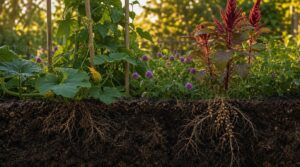
Healthy soil is the foundation of a great squash harvest, and the right plant neighbors can build it for you.
Some companions pull nitrogen straight from the air and deposit it where your squash roots can use it — others break down into rich organic matter that feeds the soil long after they’re gone.
Here are the best soil-boosting partners to grow alongside your squash.
Bush Beans
Bush beans are quite workhorses in the squash garden. Their nitrogen fixation ability enriches the soil naturally, fixing 20–30 kg of nitrogen per hectare — that’s free fertilizer. Their compact habit means they won’t crowd your squash either.
- Nitrogen fixation feeds neighboring squash roots
- Early maturity (50–60 days) fits tight growing seasons
- Dwarf varieties suit container-friendly and small-plot setups
- Facilitates companion planting without heavy management
- Improves soil health for future crops
Pole Beans
Pole beans bring a lot to the table — literally growing up to 12 feet tall, they free up ground space while their roots fix nitrogen for your squash. Beans fix nitrogen quietly, pulling their weight in companion planting without much fuss.
Trellising techniques and consistent vine training keep things orderly and improve airflow.
They need 6–8 hours of light daily and steady soil moisture for good pod harvest timing.
Peas
Peas are a quiet powerhouse in companion planting. As a cool-season planting option, they fix nitrogen into the soil early, enriching it before your squash even hits its stride.
They also act as living mulch, steadying soil temperature for young roots. This dual role makes them an invaluable early-season ally for garden ecosystems.
Plus, peas deliver real fiber benefits and serve as a solid protein source right from your garden, combining soil-enhancing utility with direct nutritional value.
Three Sisters Planting
The Three Sisters system is one of the oldest companion planting strategies that actually works. Corn, beans, and squash each pull their weight.
The Three Sisters — corn, beans, and squash — is one of history’s oldest companion planting strategies, and it still works
- Mound Design groups nutrients and warmth where roots need them most
- Staggered Planting lets corn establish before nitrogen-fixing beans climb and squash spreads outward for Water Conservation
- Canopy Management from squash leaves suppresses weeds naturally, while Harvest Timing stays balanced across all three crops
Borage Mulch
Borage pulls double duty in the squash bed — grow it, chop it, drop it. As a living mulch, it shades the soil for moisture conservation and weed suppression.
Cut back at 2–4 inches deep, it breaks down fast, improving soil structure and driving nutrient cycling back to your squash roots.
| Borage Benefit | What It Does |
|---|---|
| Moisture conservation | Reduces evaporation in heat |
| Weed suppression | Blocks light to soil surface |
| Soil structure improvement | Improves drainage, cuts compaction |
| Nutrient cycling | Returns calcium, potassium, silica |
| Erosion control | Slows runoff on sloped beds |
Plants to Avoid Near Squash
Not every plant in your garden makes a good neighbor for squash.
Some will quietly steal nutrients, invite pests, or even stunt your plants before you notice anything is wrong. Here’s what to keep out of the squash patch.
Potatoes

Potatoes might seem like harmless neighbors, but they’re one of the worst companion plants for squash. They’re heavy feeders that drain the same nutrients your squash depends on, creating competition that weakens both crops.
Their starchy varieties attract wireworms and aphids, which then migrate straight to your vines. This pest invasion, combined with nutrient depletion, leads to poor soil health and compromised harvests. Keep potatoes well away—your squash, and your harvest, will thank you.
Fennel
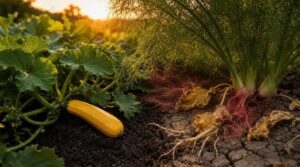
Fennel is a sun-loving herb with real seed oil benefits, but it’s the wrong neighbor for squash. It releases allelopathic inhibition chemicals into the soil that actively stunt surrounding plants.
While its anise aroma might smell pleasant, your squash roots will suffer. The advice is clear: Skip fennel entirely — save it for a separate bed, far from your bulb harvest and vines.
Brassicas
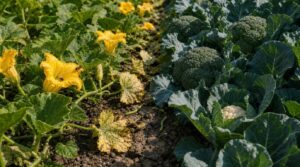
Fennel isn’t the only troublemaker. Brassicas — think broccoli, cabbage, and cauliflower — look innocent but quietly drain your soil. Their cool-season timing often overlaps with squash, sparking direct nutrient competition.
Despite their glucosinolate health benefits and canopy weed suppression in their own beds, these sulfur flavor compound-heavy crops attract shared pests like cabbage worms that migrate straight to your squash vines.
Melons and Cucumbers
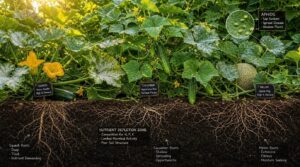
Brassicas deplete your soil from above — but cucumbers and melons crowd out squash from every direction. These Cucurbitaceae cousins share the same water, nutrients, and soil pH preferences, creating fierce competition right at the roots.
They also attract Powdery Mildew and aphids that spread between vines quickly. This shared environment intensifies pest and disease risks, undermining the entire patch.
Practice intentional companion planting: give squash space. Reserve Drip Irrigation and Trellising Techniques for crops that actively support its growth, not hinder it.
Beets and Carrots
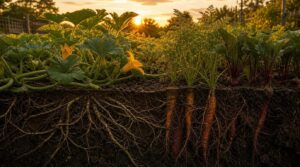
Beets and carrots may seem quietly bad neighbors for squash. Both require loose, well-drained soil with specific root spacing, creating competition. Their cool-season sowing window directly clashes with squash’s need for warm soil, causing timing conflicts.
There is no real nutrient synergy between these crops. Disturbing squash’s shallow roots during carrot or beet harvest can significantly set back the entire patch, disrupting growth.
Top 3 Squash Season Helpers
Good companion planting gets you far, but a few practical tools can take your squash season even further. Whether you’re dealing with stubborn pests or just want to stay ahead of problems, having the right resources in your corner makes a real difference.
Here are three helpers worth keeping close this season.
1. Common Sense Pest Control Book
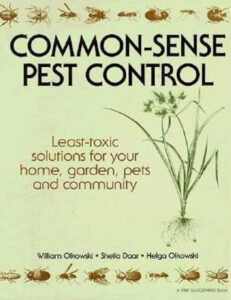
Think of this book as a seasoned gardening mentor on your shelf. The Common Sense Pest Control guide covers hundreds of low-toxicity pest solutions across insects, rodents, and more — all built around integrated pest management.
It teaches you to identify pests accurately, understand their life cycles, and choose targeted controls that protect beneficial insects.
At $10 used, it’s a practical, no-nonsense reference for anyone serious about keeping their squash patch healthy without reaching for harsh chemicals.
| Best For | Homeowners, gardeners, and pest-control pros who want practical, low-toxicity solutions without relying on harsh chemicals. |
|---|---|
| Price | $10.00 |
| Format | Printed Book |
| Primary Use | Pest Reference Guide |
| Target User | Homeowners & Gardeners |
| Ease of Use | Self-directed reading |
| Limitations | Outdated content |
| Additional Features |
|
- Covers a huge range of pests — insects, rodents, wood-rot organisms, even bats — so it’s genuinely useful across a lot of situations
- At $10 used, it’s hard to beat the value for nearly 750 pages of pest management know-how
- Built around integrated pest management, so it helps you think smarter, not just spray more
- Published in 1991, so some recommendations may be outdated or no longer compliant with current regulations
- Plant-specific and horticultural pest coverage is reportedly thin, which could leave gardeners wanting more
- It’s a used copy, so condition can vary — and there are no updated editions to fill in the gaps
2. Bonide Captain Jack Neem Oil
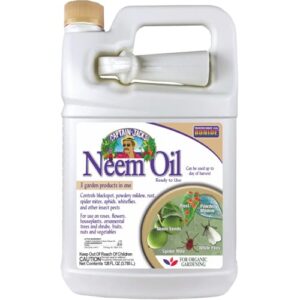
Bonide Captain Jack Neem Oil is one of the most reliable tools for uninvited pests. This ready-to-use 128 oz formula acts as a fungicide, insecticide, and miticide in one bottle, requiring no mixing.
It targets all life stages of aphids, spider mites, and whiteflies—pests that particularly threaten squash.
Certified organic, it’s safe to spray right up to harvest day. However, expect a strong smell and plan for repeat applications every 7–14 days.
| Best For | Home gardeners who want an all-in-one organic spray to protect vegetables, roses, and houseplants from both pests and fungal diseases without any mixing. |
|---|---|
| Price | $34.99 |
| Format | Liquid Spray |
| Primary Use | Pest & Disease Control |
| Target User | Organic Gardeners |
| Ease of Use | Ready-to-use spray |
| Limitations | Odor & clogging |
| Additional Features |
|
- Covers a huge range of problems—kills insects at every life stage and fights fungal diseases like powdery mildew, all in one bottle
- Certified organic and safe to use right up to harvest day, so no stressful waiting periods
- Ready to spray out of the box with no diluting or measuring required
- The smell is pretty rough, especially if you’re using it indoors or in a small space
- Results on whiteflies can be hit or miss, and you’ll likely need several applications over a few weeks
- The spray nozzle has a reputation for clogging and can be awkward to use one-handed
3. KitchenAid Variable Speed Hand Blender
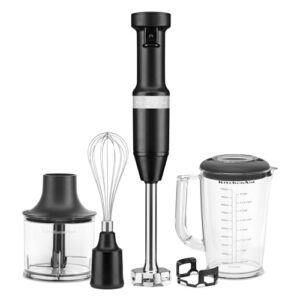
After a long day in the garden, the last thing you want is a complicated kitchen cleanup. The KitchenAid Variable Speed Hand Blender (KHBV83BM) manages your harvest-to-table workflow with ease.
Blend fresh squash soups directly in the pot using the 8-inch stainless-steel arm, switch to the whisk for homemade herb dressings, or dice garden herbs with the 2.5-cup chopper.
Dishwasher-safe parts mean less scrubbing, more gardening. At $99.99, it earns its spot in any serious kitchen.
| Best For | Home cooks and gardeners who want a versatile, easy-to-clean blender for soups, sauces, and small-batch prep without the hassle of a full countertop blender. |
|---|---|
| Price | $99.99 |
| Format | Physical Appliance |
| Primary Use | Food Processing |
| Target User | Home Cooks |
| Ease of Use | Plug-in operation |
| Limitations | Small capacity |
| Additional Features |
|
- Comes with three attachments — blending arm, whisk, and chopper — so it handles way more than a basic immersion blender
- Dishwasher-safe parts make cleanup quick, which is a big deal after cooking a full meal
- Variable-speed trigger gives you real control, so you’re not just stuck on one setting
- Not great with ice or thick frozen drinks, so don’t expect smoothie-shop results
- The 4-cup pitcher and 2.5-cup chopper are pretty small — you’ll be doing multiple batches for anything family-sized
- It’s corded, so you need an outlet nearby, and the plastic parts can warp if they end up on a hot dishwasher shelf
Frequently Asked Questions (FAQs)
Can squash be planted near other squash?
Yes — and no. You can plant squash near squash, but it’s rarely a good idea.
Crowded vines compete for water, block airflow, and invite disease quickly.
Space them at a minimum of 4–6 feet apart.
Is October too late to plant?
October can work, but it’s a race against frost. If your first freeze is still weeks out and soil stays above 60°F, fast-maturing varieties (45–60 days) give you a real shot.
Can squash companion plants improve fruit size?
Smart planting partners genuinely grow better squash. Bush beans fix nitrogen that feeds fruit development, while marigolds cut pest pressure — both letting your plant pour energy into bigger, healthier harvests.
How do companion plants affect squash watering needs?
Companion plants act like a natural mulch system, shading the soil and cutting evaporation. That means your squash needs about 10–25% less water weekly, with steadier moisture between sessions.
Which companions work best in container-grown squash?
Ironically, containers limit your space — but that’s exactly what makes marigolds, sweet alyssum, and bush beans shine.
They stay compact, repel pests, fix nitrogen, and boost pollination without crowding your squash roots.
Do companion plants help with powdery mildew on squash?
Companion plants can help by improving airflow through diverse plantings, which slows powdery mildew spread. Marigolds and borage reduce humidity near leaves, creating conditions less favorable for mildew development.
Nasturtiums and calendula attract beneficial insects that manage pests, thereby lowering plant stress and reducing overall mildew risk.
When should companion plants be removed at seasons end?
Pull annual companions after your last harvest, once frost threatens.
Cut herbs to the ground, remove trap crops like nasturtiums, and clear dead debris to stop pests from overwintering in your beds.
Conclusion
Your garden bed is basically a neighborhood—and like any neighborhood, the wrong neighbors cause drama. This squash companion plants guide gives you the blueprint to build one that actually works.
Marigolds stand guard, beans feed the soil, and borage pulls up minerals your squash craves. Plant smart, and the vines take care of the rest.
The chemistry isn’t magic; it’s biology doing exactly what it’s always done. Let your squash thrive with the right crew beside it.
- https://www.farmersalmanac.com/companion-planting-guide
- https://www.parkseed.com/blogs/park-seed-blog/5-companion-plants-for-squash
- https://thehomesteadingrd.com/zucchini-companion-plants
- https://www.southernliving.com/summer-squash-companion-plants-11956692
- https://www.almanac.com/companion-planting-guide-vegetables