
This site is supported by our readers. We may earn a commission, at no cost to you, if you purchase through links.
Mint is practically unkillable. Basil? It will collapse overnight. That contrast captures everything you need to know about growing herbs indoors—each plant has a personality, and your herb growing kit works best when you understand them.
Most kits come loaded with what you need: seeds, a grow light, containers with drainage, even a moisture indicator. What separates a thriving windowsill garden from a pot of sad stubs is knowing how to use those tools well.
Light placement, watering rhythm, feeding schedule, timely pruning—get these right, and fresh herbs become a permanent fixture in your kitchen.
Table Of Contents
Key Takeaways
- Light, watering, and temperature each play a distinct role in herb health, so matching your care routine to each herb’s specific needs—rather than treating them all the same—is what separates a thriving crop from a struggling one.
- Overwatering kills more herbs than neglect does, so always check the top inch of soil before reaching for the watering can and ensure your containers drain freely.
- Consistent pruning and harvesting aren’t just maintenance tasks—they actively stimulate bushier growth and keep essential oil production high, which means better flavor and bigger yields over time.
- Giving your herbs at least six hours of light daily (whether from a south-facing window or a full-spectrum LED on a 14–16 hour timer) is the single most reliable way to prevent weak, leggy growth.
Choose The Best Kit Location
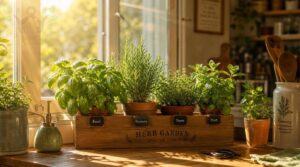
Where you place your herb kit matters more than most people expect. The right spot can mean the difference between a thriving little garden and a pot of sad, struggling sprouts.
A good starting point is understanding which herbs love sun and which prefer shade—this small-space herb gardening guide breaks it down simply.
Here are the key placement options to keep in mind.
Sunny Windowsill Placement
South-facing windows are your indoor herb garden kit’s best friend, delivering full sun for most of the day. Remember that south-facing windows provide strongest daylight for best herb growth.
- Match herbs to window sun direction — south for basil, east for parsley.
- Account for seasonal sun angle shifts by reassessing placement monthly.
- Use light-colored containers to improve heat reflection from roots.
- Maintain sill airflow and light diffusion with sheer curtains when needed.
Countertop Grow Light Setup
Not every kitchen gets great window light — that’s where a good LED grow light setup earns its keep. Full-spectrum LEDs covering 400–700 nm replicate natural sunlight beautifully for indoor herb garden kits.
| Feature | Recommendation | Why It Matters |
|---|---|---|
| Mounting Height | 6–12 inches above herbs | Optimizes light intensity without scorching |
| Timed Light Cycle | 14–16 hours on/off | Mirrors natural daylight consistently |
| Heat Management | Small fan nearby | Prevents moisture buildup and mold |
| Light Diffusion | Multi-panel arrangement | Eliminates hot spots across your tray |
| Cable Management | Clips or cable ties | Keeps countertop safe and tidy |
Choose dimmable LED grow lights with low power consumption — your herbs and electricity bill will both thank you.
Stable Indoor Temperatures
Even with great grow lights sorted, temperature swings can quietly sabotage your indoor herb garden kits. Keep rooms between 20–25°C — a drop of even 2–3°F overnight stresses roots.
Calibrate your thermostat to confirm accuracy, implement draft prevention around windows to stabilize your microclimate, and use a heat mat under pots for root-zone warmth. Daily temperature monitoring catches problems before your herbs do.
Humidity for Tender Herbs
Temperature isn’t the only invisible force shaping your microclimate — humidity matters just as much. Most DIY herb kits thrive between 50–60% relative humidity (that’s your ideal RH range).
Basil and cilantro love around 60%. Use moisture trays for humidity monitoring and passive water retention.
Staying in range boosts essential oil production — your mold prevention and essential oil boost, all in one.
Outdoor Sunlight Needs
If you’re growing your kit outdoors, full sun is non-negotiable — most culinary herbs need at least six hours of direct sunlight daily. A south-facing exposure gives you the strongest, most consistent light.
Take advantage of the morning sun advantage: early rays are gentler and reduce leaf scorch. Watch for seasonal sun shifts, and use shade cloth during intense midday heat to protect tender leaves.
Set Up Your Herb Kit
Once you’ve found the perfect spot, it’s time to actually get your herbs in the ground—or the pod, or the sponge, depending on your kit.
Setup is simpler than it looks, but a few small steps done right make a real difference later on. Here’s how to get everything ready before your first seeds go in.
Check Included Components
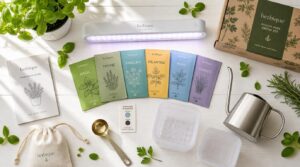
Before you do anything else, lay everything out and take stock. Your kit should include color-coded seed packets, a full-spectrum LED fixture, a moisture indicator sticker, BPA-free containers with drainage holes, a measuring scoop, and a small watering can.
Cross-check every item against the instruction booklet — missing tools now means guesswork later.
Prepare Growing Medium
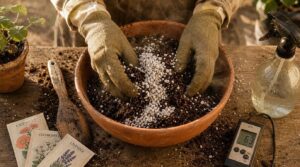
Before a single seed touches the mix, getting your growing medium right sets the tone for everything ahead.
- Aim for a pH of 5.5–6.5 to boost nutrient capacity and natural uptake
- Blend inorganic soil amendments like perlite (10–40%) for drainage and water retention balance
- Use sterilization methods and verified component ratios to eliminate pathogens before planting
Plant Seeds Correctly
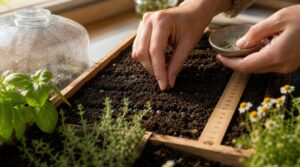
Depth guidelines matter more than most beginners expect. Small herb seeds — think basil, thyme, or chamomile — should be planted just 2–3 times their diameter deep. Seedbed preparation should leave soil fine and moist, with temperatures between 60–75°F for reliable seed germination.
For a full seasonal breakdown of soil prep and spacing by herb type, growing seasonal herbs outdoors walks you through everything from first sow to harvest.
Follow your kit’s seed spacing recommendations, and place a humidity dome over the tray to lock in moisture until sprouts emerge.
Label Each Herb
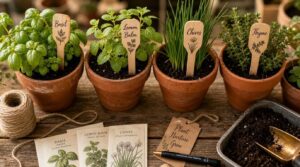
Think of your labels as tiny passports — without them, you are guessing which seedling is basil and which is lemon balm. Good plant markers make herb identification easy and keep your garden planning organized from day one.
Each label should clearly show:
- Common vs Latin name (e.g., Basil / Ocimum basilicum)
- Plant part identification — leaf, seed, or flower
- Net weight display for packaged seed stock
- Allergen warnings if relevant to your household
- QR code tracking for batch and source traceability
Start Lights or Reservoir
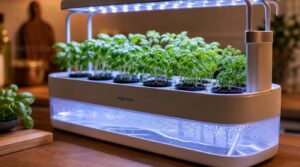
Now your kit is ready to bring to life — time to flip the switch. If your kit includes grow lights, plug in the Power Supply Setup and program the timed light schedule: most herb kits run 16 hours on, 8 hours off.
For self-watering systems, your First Water Fill is key — pour water into the reservoir, confirm Wick Positioning Guide contact with the soil, and check your Reservoir Capacity Planning gauge.
Use Light Intensity Tuning to lower brightness for seedlings, supporting steady soil moisture management across all seed pod systems.
Water Herbs The Right Way
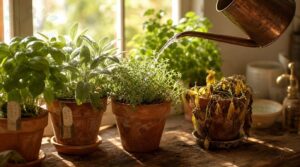
Most herb growers go wrong — and it’s usually not from neglect, but from doing too much. Getting it right comes down to reading your plants and understanding a few simple rules.
Here’s what you need to know to keep your herbs thriving.
Keep Soil Lightly Moist
Consistent soil moisture management is vital for healthy herbs—avoid both sogginess and extreme dryness. Check the top inch of soil or growing medium with your finger; if it feels dry, water immediately. Using a moisture meter eliminates guesswork entirely.
Mulching offers benefits like slowing evaporation, while the soil texture you choose directly influences your watering frequency. Always ensure proper drainage to maintain free water movement.
Avoid Soggy Roots
Soggy roots are the silent killer of herb kits. Even a well-intentioned watering schedule can drown your plants if drainage isn’t set up right. Here’s how to keep roots happy:
- Mix perlite into your potting mix for better soil aeration
- Add a gravel drainage layer beneath your growing medium
- Choose containers with holes or try air pruning pots
- Pair hydroponic setups with a clean wicking system to prevent pooling
Good soil drainage and smart moisture management stop root rot before it starts.
Refill Self-watering Reservoirs
Self-watering systems take a lot of guesswork out of watering, but they still need your attention. Most reservoirs hold between 0.5 and 5 liters — capacity planning matters here. Check your water level indicator regularly to ensure consistent hydration.
Refill the system every 2–7 days based on your plants’ needs, and clean the fill port monthly to prevent algae buildup. This maintenance prevents clogs and ensures water flows freely.
Watch your overflow management: A functioning overflow outlet is critical to keep roots aerated, not waterlogged. This protects plants from root rot and promotes healthier growth.
Check Moisture Daily
Even with self-watering systems handling the heavy lifting, a quick daily moisture check keeps root rot off the table. Try the finger test technique — press your fingertip about an inch into the soil. Still damp? Hold off. Feeling dry? Water now?
Pair this with weight monitoring by lifting the pot, and maintain a simple moisture log to track your readings. This helps spot seasonal moisture adjustments early, ensuring consistent care for your plants.
Adjust for Herb Type
Not every herb drinks from the same cup.
Basil demands warmth — 70 to 85°F — with consistently moist soil.
Rosemary’s moisture tolerance is low, preferring drier conditions between deep waterings.
Cilantro’s temperature preferences skew cooler, around 60 to 70°F, with steady moisture and modest light requirements.
Mint spreads eagerly, so factor its growth habit variations into your watering and pruning routine from day one.
Provide Proper Light Daily
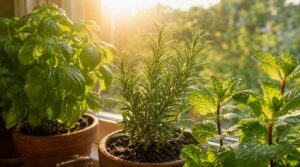
Light is the engine behind every thriving herb, and getting it right makes all the difference.
Whether you’re working with a sunny window or a grow light setup, a few simple habits will keep your plants strong and productive. Here’s what to focus on each day.
Six Hours Minimum Sunlight
Think of sunlight as your herbs’ daily fuel — they need at least six hours of it to truly thrive. An east-facing windowsill delivers morning light optimization naturally, but watch for shadow avoidance around midday when nearby objects block full sun. Seasonal light shifts in winter can quietly starve your plants.
To ensure optimal growth, follow these key practices:
- Place pots where light intensity peaks, not where it merely glows
- Rotate containers to eliminate uneven light angle adjustment
- East-facing sills deliver clean morning light requirements without scorching
- Avoid partial shade spots that trick you into thinking they’re bright enough
- Track shadows across your windowsill before committing to a location
Use Full-spectrum LEDs
When natural sunlight falls short, full-spectrum LEDs are your next best ally for indoor gardening. Unlike basic bulbs, these grow lights cover 400–700 nm — blue for sturdy stems, red for leafy growth — making them ideal for herbal garden kits.
Spectrum tuning, UV integration, thermal management, and app integration optimize energy efficiency, so your herb garden design thrives year-round without the guesswork.
Set Consistent Light Timers
Your grow lights are only as good as the schedule behind them. For herb garden kits, a 12-hours-on, 12-hours-off cycle is a solid starting point.
Digital timers beat mechanical ones for precision — just add smart app sync for remote adjustments.
Mind your timer placement (away from heat and moisture), set seasonal offsets for daylight changes, and swap batteries every couple of growing seasons.
Rotate Plants Weekly
A quarter-turn each week does more than you’d think. Rotating your pots 90 degrees promotes light balance across all sides, which directly enhances stem strength and leaf uniformity — no more lopsided plants bending toward the window.
This simple habit syncs with your watering, pruning, and harvesting routines naturally, reinforcing growth synchrony and visual symmetry. The result? Your herb kit becomes genuinely beautiful and easier to manage.
Watch for Leggy Growth
Stretched, spindly stems are your herbs crying out for more light. When light intensity drops too low — especially on a cloudy windowsill — plants elongate desperately toward any source they can find.
- Boost spectrum balance by switching to full-spectrum grow lights
- Improve airflow circulation and plant spacing to reduce shaded competition
- Pinch leggy tops immediately to redirect energy into bushier side shoots
Feed and Prune Regularly
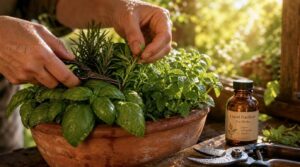
Feeding and pruning might sound like extra work, but they’re actually what keeps your herbs productive and healthy long-term. A little fertilizer and some strategic snipping go a long way toward fuller plants and better harvests.
Here’s what you need to know to get it right.
Use Diluted Liquid Fertilizer
Think of liquid fertilizer like seasoning—a little enhances flavor, but too much ruins everything. Always dilute to a 1:20 ratio (one part fertilizer, twenty parts clean water) to protect delicate roots from soil salt buildup. Good water quality matters here; skip hard tap water when possible.
| Factor | Guideline |
|---|---|
| Dilution Ratio | 1 part fertilizer: 20 parts water |
| Safety Precautions | Wear gloves; store concentrates away from children |
Use a balanced water-soluble fertilizer or certified organic fertilizer for herb-friendly care. Apply only to moist soil, never to dry soil.
Feed Every Few Weeks
Now that your dilution ratio is sorted, timing is everything. Feed herbs every 2–4 weeks using a balanced water-soluble fertilizer or organic fertilizer — never more often.
- Root zone application delivers nutrients directly where they’re absorbed
- Trace mineral boost promotes healthy chlorophyll and aroma
- Feeding frequency adjustment prevents yellowing leaves
- Nutrients and fertilizers stay balanced without accumulation
- Post-feeding flush clears excess salts when fertilizing regularly
Pinch Top Growth
Beyond feeding, your hands are one of the best tools in your herb garden kit. Pinch timing matters — wait until your plant has a few sets of true leaves, then use sanitary tools or clean fingers to nip just above a leaf node.
The branching benefits are real: two new stems replace one, giving you fuller growth, better harvests, and natural stress management through symmetrical pinching.
Remove Yellowing Leaves
While pinching shapes your herbs, yellowing leaves tell a different story — one worth reading closely. Inspect leaves regularly to diagnose yellowing early; Discoloration often signals overwatering, root rot, or soil pH imbalance.
Trim affected foliage promptly using sanitized tools to support pest and disease management and improve airflow. Then monitor recovery over several days, adjusting your watering routine as needed.
Prevent Early Flowering
Early flowering — or bolting — is one of the sneakiest setbacks in herb growing. Bolting basil, for example, often signals stress from heat, inconsistent watering, or too little light.
To address this, maintain a light schedule of 14–16 hours daily, keep temperatures between 68–72°F, and practice consistent pruning by pinching tops weekly.
Additionally, nitrogen balance, humidity regulation around 40–60%, and avoiding soil temperature spikes all work together for steady, leafy growth.
Prevent Common Herb Kit Problems
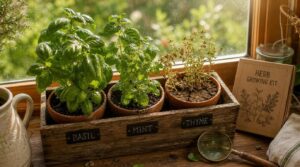
Even the best herb kits run into trouble sometimes, and that’s completely normal. Knowing what to watch for early makes all the difference between a thriving harvest and a frustrating setback.
Here are the most common problems you’ll likely encounter — and exactly how to fix them.
Overwatering and Root Rot
Too much love can hurt your herbs — overwatering is the top killer in herb care. When roots sit in soggy soil, oxygen deprivation shuts down root function fast, triggering harmful microbial shifts that accelerate root rot.
Overwatering kills more herbs than neglect ever will
Watch for these warning signs:
- Wilting despite damp soil
- Yellowing leaves from the base up
- Foul-smelling potting mix
To prevent issues, enhance drainage by mixing perlite into your growing medium and ensure your pot has holes. Self-watering systems help regulate moisture but still require weekly checks. If rot occurs, rescue repotting into a fresh mix saves most herbs.
Nutrient deficiencies follow quickly once roots fail, so act early.
Poor Seed Germination
Sometimes, seeds simply don’t perform — and it’s rarely your fault. Seed viability drops sharply when aging seed impact kicks in; seeds over two years old can lose up to 40% germination capacity. Poor storage humidity and seed coat damage make things worse.
Always choose non-GMO organic seeds with reliable germination testing on the label.
| Problem | Cause | Fix |
|---|---|---|
| No sprouting by day 7 | Aging seed impact / low seed quality | Replace with fresh non-GMO organic seeds |
| Uneven germination | Storage humidity damage | Store seeds cool and dry |
| Cracked seed coats | Rough handling | Handle pods gently |
| Mold on seeds | Excess moisture | Improve airflow |
| Slow emergence | Poor seed germination conditions | Adjust temperature and depth |
Weak or Stretched Stems
Stretched, wobbly stems are your plant’s distress signal — usually a light problem, but not always. Nutrient imbalance, especially phosphorus deficiency, weakens cell walls quickly.
To address these issues:
- Boost plant lighting — move to a sunny windowsill or add full-spectrum LEDs
- Improve airflow optimization with a small fan
- Insert support stakes for leaning stems
- Apply balanced water-soluble fertilizer to correct deficiencies
Indoor Pests
Tiny invaders can turn your thriving herb kit into a battleground overnight. Spider mite management starts with weekly leaf inspections — look for stippling and fine webbing.
For pest control, organic soap spray works wonders across most culprits. Here’s a quick guide to common issues and solutions:
| Pest | Solution |
|---|---|
| Spider mites | Organic soap spray |
| Fruit flies | Fruit fly traps near drains |
| Ant infestations | Natural insect repellents |
Mold on Soil
White, green, or black patches on your soil surface are classic mold identification clues — and they’re almost always a moisture management problem.
Scrape off the moldy layer, replace it with fresh mix, and ease back on watering. Improve ventilation by adding a small fan nearby.
For persistent cases, spot treatment with diluted hydrogen peroxide clears things up fast.
Harvest Herbs for Fresh Flavor
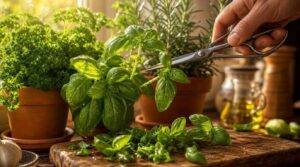
Harvesting is where all your patience pays off — and how you do it matters more than most people realize.
A few simple habits keep your herbs productive and flavorful week after week.
Here’s what to do to get the most from every snip.
Pick in The Morning
Always harvest herbs in the early morning — that’s when essential oils peak, giving you maximum aroma maximization in every sprig. Stomatal closure later in the day means morning picks retain more moisture, supporting extended shelf life for fresh herbs or herb drying methods.
- Heat stress avoidance keeps delicate leaves intact
- Morning cuts trigger growth flush promotion for repeat harvests
- Timing your seasonal harvesting right makes all the difference
Harvest Above Leaf Nodes
Now that morning timing is locked in, where you cut matters just as much. Harvest herbs by snipping just above a leaf node — the bump where leaves attach to the stem. This technique triggers branching stimulation through auxin reduction, prompting two new shoots to replace one.
Sterilize your scissors between plants to prevent disease spread, ensuring tools remain clean. Maintain a consistent harvest cadence to preserve flavor consistency across batches.
By grouping these practices, you optimize both plant health and culinary quality.
Take Small Amounts Often
Now that you know where to cut, how much you take matters too. Harvest small pinches every two to three days rather than stripping stems all at once. This promotes continuous yield, maintains leaf tenderness, and protects plant vigor by causing minimal shock.
Frequent light cuts also boost aroma preservation by keeping essential oil production active throughout your herb garden kit’s growing season.
Store Cut Herbs Properly
Once you’ve snipped your fresh herbs, how you store them makes all the difference.
Water Jar Storage works beautifully for basil and mint—just stand trimmed stems upright in water, loosely cover with a plastic bag, and change the water every couple of days.
For cilantro and chives, the Paper Towel Method keeps things crisp: wrap them in a slightly damp towel and refrigerate.
Got a surplus? Freeze herbs by chopping them into ice cube trays with olive oil—your Freezer Herb Cubes are ready to drop straight into soups or sauces.
Herb Drying Techniques like air-drying rosemary or thyme bundles also extend shelf life beautifully.
Infused Oil Preservation turns fresh cuttings into flavorful kitchen staples within days.
Replant Spent Seed Pods
Once a pod runs its course, don’t toss it—you likely have a second round waiting inside. Smart herb propagation starts with proper pod sanitization and medium renewal.
- Inspect pods for mold before replanting: pathogen prevention saves your next batch
- Rinse, then follow the drying procedure completely before reuse
- Practice viable seed extraction by gently separating remaining seeds
- Use fresh growing medium every cycle
- Label pods and practice succession sowing for continuous harvests
Frequently Asked Questions (FAQs)
What are common herb growing mistakes?
The most common herb growing mistakes come down to wrong pot material, garden soil use, poor airflow, overcrowding seedlings, and skipping pruning and harvesting —
small missteps that quietly sabotage even the most enthusiastic grower.
Which herbs grow well together in one kit?
Pair rosemary, thyme, and oregano — the Mediterranean herb trio — together. Add basil, chives, and parsley nearby. Keep mint separate.
These moisture compatibility and root space sharing matches make companion planting in kitchen herb garden kits genuinely easy.
Can I use tap water for hydroponic herb kits?
Yes, but treat it first. Let tap water sit 24–48 hours for chlorine removal, then check pH balancing to achieve 5–
Hard water mitigation is also important — high minerals can disrupt nutrient interaction in hydroponic roots.
How do I transition indoor herbs to outdoors?
Move your indoor herbs outdoors gradually through hardening off. Start with partial shade for a few days, then slowly increase gradual sun exposure.
Monitor temperature closely and ensure wind protection before full outdoor placement.
Are organic seed varieties worth the extra cost?
Organic seeds cost 20–30% more, but certification assurance provides an advantage in genetic diversity and contributes to better soil health over time.
For herbal garden kits, this peace of mind is genuinely worth it.
When should I upgrade to a larger container?
Think of your herb’s roots like a growing family — they will need more room eventually. Upgrade your container when roots circle the pot walls, growth slows noticeably, or overflow occurs twice a week.
Conclusion
Here’s what no one tells you about how to care for a herb growing kit: the herbs are always watching. Skip a watering, crowd the light, let basil bolt unchecked—and they respond fast.
But tend to them consistently, and something quietly special happens. Your kitchen starts smelling like a garden. Meals get brighter. That little kit on your counter stops being a project and becomes a habit—one that keeps rewarding you, harvest after harvest.
- https://ecogardener.com/blogs/news/watering-herbs-best-practices?srsltid=AfmBOorLl6kudPw414HEfTDaz48h4IrmvgpFh9-w2Wmgp1nbkTySxWG6
- https://www.almanac.com/when-water-your-vegetable-garden-watering-chart
- https://extension.wvu.edu/lawn-gardening-pests/gardening/gardening-101/herb-gardening-for-beginners
- https://cmg.extension.colostate.edu/Gardennotes/731.pdf