This site is supported by our readers. We may earn a commission, at no cost to you, if you purchase through links.

A 4×8 patch of soil can yield more food than most people expect—and you don’t need a backyard to prove it. Rooftops, balconies, and narrow patios across cities have quietly become some of the most productive growing spaces around, thanks largely to raised garden beds that work with urban constraints instead of against them.
The right bed manages weight limits, poor soil quality, and limited square footage without asking you to compromise on what you grow. Whether you’re choosing between self-watering resin beds, Aluzinc-coated steel frames, or lightweight fabric options, each material brings trade-offs worth understanding before you spend a dollar or dig a hole.
Table Of Contents
- Key Takeaways
- Top 10 Raised Beds for Urban Gardeners
- 1. Keter Urban Bloomer Self Watering Raised Garden Bed
- 2. Keter Splendor Self Watering Garden Bed
- 3. Vego Modern Metal Raised Garden Bed
- 4. One Sweet Earth Raised Garden Bed
- 5. Field Guide to Urban Gardening
- 6. Raised Bed Container Gardening Guide
- 7. Raised Bed Gardening Guide for Vegetables
- 8. BTDVR Steel Raised Garden Bed
- 9. Land Guard Galvanized Raised Garden Bed
- 10. Meberam Galvanized Metal Raised Garden Bed
- Choose Your Urban Garden Location
- Select The Right Bed Material
- Build and Fill Your Bed
- Plant, Water, and Harvest Efficiently
- Frequently Asked Questions (FAQs)
- What is an alternative to raised beds?
- How deep should a raised bed be for a vegetable garden?
- How do I protect beds from urban pests?
- Can raised beds improve rooftop insulation value?
- What permits do urban rooftop gardens require?
- How do I winterize raised beds in cities?
- Which crops grow best in shaded urban spaces?
- Conclusion
Key Takeaways
- A 4×8 patch of soil in the right raised bed — whether self-watering resin, galvanized steel, or fabric — can turn any balcony or rooftop into a genuinely productive food source, as long as you match the material to your space’s weight limits and sun exposure.
- Before you fill a single bed, verify your balcony’s structural load rating, test for soil contamination, and check lease or HOA rules — skipping these steps can undo everything else you build.
- Bed height (24 inches is the sweet spot), drainage layers, and a compost-rich soil mix aren’t optional upgrades — they’re the foundation that determines whether your crops thrive or stall.
- Compact varieties, drip irrigation, vertical trellising, and lasagna layering let you push serious harvests from tight urban spaces without overcomplicating your setup.
Top 10 Raised Beds for Urban Gardeners
Not every raised bed works the same way in a city setting — space, weight, and water access all shape what fits your situation.
The options below cover a comprehensive range of styles, materials, and sizes so you can find the right fit. Here’s what made the 2026 list.
Safety-conscious picks—like options with rounded edges and capped corners—are highlighted in our guide to raised garden beds designed for seniors and child-friendly households.
1. Keter Urban Bloomer Self Watering Raised Garden Bed
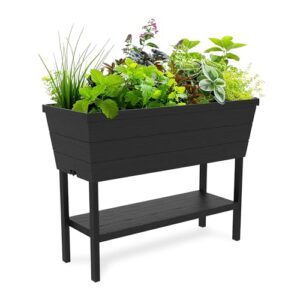
The Keter Urban Bloomer is a solid starting point for anyone new to balcony gardening. At 30.7 inches tall, you won’t be hunching over your herbs anymore. Its built-in water reservoir manages moisture delivery through capillary action, so you won’t need to babysit your plants every day. The 12.7-gallon capacity comfortably accommodates leafy greens, basil, and compact vegetables.
Tool-free assembly ensures you can start growing quickly.
Just note: intense heat can warp the resin over time, so positioning matters.
| Best For | Beginners, balcony gardeners, or anyone who wants fresh herbs and veggies without the hassle of daily watering or bending down to ground level. |
|---|---|
| Material | UV-protected resin |
| Assembly Difficulty | Tool-free snap assembly |
| Primary Use | Urban patio gardening |
| Weather Resistance | UV-protected, rust-prone legs |
| Target User | Beginners and busy households |
| Price Range | Mid-range |
| Additional Features |
|
- The self-watering reservoir keeps soil moisture consistent, so your plants stay happy even if you forget to check on them for a day or two.
- At nearly 31 inches tall, you can garden standing up — no sore back, no kneeling in the dirt.
- The resin build looks like wood but won’t rot, splinter, or rust the way traditional planters do.
- In really hot climates, the plastic body can warp or soften over time, so placement in direct sun all day isn’t ideal.
- The metal legs are prone to rust in humid or coastal areas, which could mean extra upkeep down the road.
- The water gauge can stick and give you a false reading, so you’ll want to double-check the actual water level manually every now and then.
2. Keter Splendor Self Watering Garden Bed
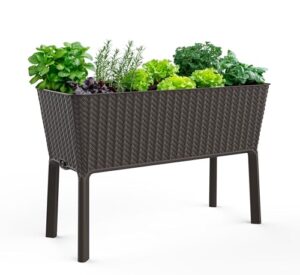
If the Urban Bloomer felt like a warm-up, the Splendor is the full workout. With a 31.7-gallon capacity and dimensions of nearly 45 inches wide by 30 inches tall, this bed means business.
The built-in reservoir ensures consistent soil moisture, while the dual drainage plug provides control during heavy rain.
Constructed from polypropylene with a rattan finish, it is rust-proof, fade-resistant, and deck-friendly.
Assemble carefully; the corners can be fragile straight out of the box.
| Best For | Gardeners who want a serious growing space on a balcony or patio — especially seniors or anyone who’d rather not bend down to tend their plants. |
|---|---|
| Material | Polypropylene resin |
| Assembly Difficulty | Tool-free snap assembly |
| Primary Use | Balcony/deck gardening |
| Weather Resistance | UV-resistant, crack-prone corners |
| Target User | Seniors and limited-mobility users |
| Price Range | Mid-range |
| Additional Features |
|
- Big 31.7-gallon capacity gives roots plenty of room to grow
- Self-watering reservoir keeps moisture consistent without daily check-ins
- Rust-proof polypropylene holds up outdoors year-round without rotting or fading
- Corners and internal dividers can crack during shipping or assembly
- Water-level gauge is unreliable — don’t count on it to tell you when to refill
- Once it’s full of soil, moving it is a real project — plan where it’s going before you fill it
3. Vego Modern Metal Raised Garden Bed
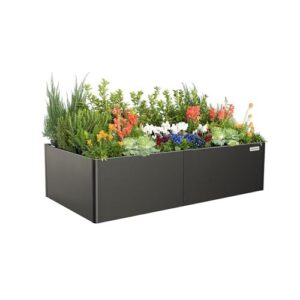
Step up in material, and you step up in longevity. The Vego Modern Metal Raised Garden Bed is built from Aluzinc coated steel — a serious upgrade for gardeners who want something that outlasts a few seasons.
Rounded corners and a rubber safety strip keep things safe during setup.
Modular panels let you build rectangular, L-shaped, or extended configurations, all at a consistent 17-inch height.
Assembly takes under 60 minutes. At 15 to 20 years of expected lifespan, it earns its place.
| Best For | Gardeners who want a long-lasting, low-maintenance raised bed that looks great on a patio or in a commercial setup and don’t mind paying more upfront for something that’ll last 20+ years. |
|---|---|
| Material | Powder-coated galvanized steel |
| Assembly Difficulty | Tool-free modular assembly |
| Primary Use | Residential/commercial gardens |
| Weather Resistance | Corrosion-resistant, paint-chip risk |
| Target User | DIY and commercial gardeners |
| Price Range | Premium ($349.95) |
| Additional Features |
|
- Built tough — double-walled steel with powder-coat finish means it won’t warp, rot, or rust like wood will over time
- Rounded corners and no sharp edges make it safer to work around, especially with kids or older family members nearby
- Tool-free modular assembly lets you set it up fast and reconfigure it if your garden layout changes
- No built-in bottom, so you’ll need a liner or weed fabric underneath — especially on concrete or hard surfaces
- At $349.95, it’s a bigger upfront investment than a basic wooden planter
- Shipping can leave dents or paint chips, so it’s worth inspecting the panels carefully when your order arrives
4. One Sweet Earth Raised Garden Bed
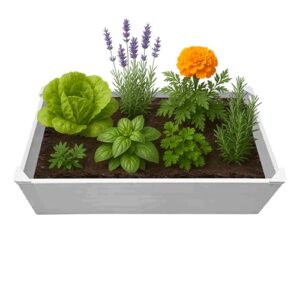
Not every urban gardener wants metal. If you’re working a balcony or patio where heat is already a challenge, the One Sweet Earth Raised Garden Bed offers something different. Built from heavy-duty, BPA-free HDPE plastic, it snaps together in minutes — no tools, no hardware.
The 2 × 4 ft footprint fits tight spaces without sacrificing depth. At 11.5 inches deep, roots have room to settle.
It’s lightweight, food-safe, and made in the USA by a woman-owned company.
| Best For | Balcony and patio gardeners who want a quick, low-maintenance setup without the heat risk that comes with metal beds. |
|---|---|
| Material | High-density polyethylene (HDPE) |
| Assembly Difficulty | Tool-free snap assembly |
| Primary Use | Balcony/patio gardening |
| Weather Resistance | Weather-resistant, no heat transfer |
| Target User | Hot-climate and food-safe growers |
| Price Range | Mid-range (~$70) |
| Additional Features |
|
- Snaps together in minutes with zero tools — genuinely easy solo assembly
- HDPE plastic won’t rust, rot, or overheat roots in hot climates
- BPA-free and food-safe, so you can grow herbs and veggies without worry
- Sides may bow under a full soil load without added internal support
- Corner snap-fit can be loose, sometimes needing a rubber mallet to seat properly
- At around $70, it costs more than most basic plastic beds on the market
5. Field Guide to Urban Gardening
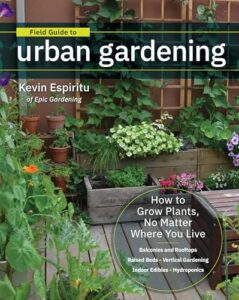
Growing food in a city doesn’t have to mean guessing your way through it. Kevin Espiritu’s Field Guide to Urban Gardening gives you a clear roadmap — covering raised beds, containers, balconies, indoor edibles, and hydroponics across 224 practical pages.
Whether you’re maximizing a tiny balcony or building out raised beds, this spring vegetable garden planning guide pairs perfectly with Espiritu’s methods for squeezing serious harvests from small spaces.
You’ll find soil recommendations, plant-spacing cheat sheets, and troubleshooting guides all in one place. It’s the kind of book that turns uncertainty into confidence.
At $21.56, it’s a smart companion for anyone serious about making the most of limited urban space.
| Best For | City dwellers — renters, apartment folks, balcony growers — who want to start growing their own food without a big yard or a lot of prior experience. |
|---|---|
| Material | Paperback print |
| Assembly Difficulty | N/A (book) |
| Primary Use | Urban gardening reference |
| Weather Resistance | N/A (book) |
| Target User | Beginner urban gardeners |
| Price Range | Budget ($21.56) |
| Additional Features |
|
- Covers five solid methods in one book, so you’re not hunting across multiple resources to figure out what works for your space.
- The cheat sheets and troubleshooting guides save you a lot of trial and error, especially when you’re just starting out.
- At $21.56, it’s an easy buy — packed with photos, diagrams, and step-by-step plans that actually make sense.
- If you’ve been gardening for years, a lot of this will feel like a refresher you don’t really need.
- Climate guidance is pretty general, so if you’re in a tricky zone, you’ll likely need to pull in other resources.
- It’s paperback only and English only — no e-book option and no translations, which limits who can easily use it.
6. Raised Bed Container Gardening Guide

At just $14.99, the Raised Bed Container Gardening Guide punches well above its weight for beginners. Packed into 136 pages, it walks you through DIY bed builds, budget-friendly container setups, and seasonal planting calendars — all written with a light, humor-infused tone that makes the learning curve feel less steep.
You’ll also find companion-planting charts and organic pest control tips that genuinely work in tight urban spaces. The guide’s practical, no-nonsense approach ensures quick wins without unnecessary complexity.
It’s a practical starting point if you want quick wins without the overwhelm, offering actionable advice tailored to small-space gardening challenges.
| Best For | Beginners, renters, and urban gardeners who want to grow their own food in small spaces without spending a lot or feeling overwhelmed. |
|---|---|
| Material | Paperback print |
| Assembly Difficulty | N/A (book) |
| Primary Use | Small-space gardening guide |
| Weather Resistance | N/A (book) |
| Target User | Beginner to intermediate gardeners |
| Price Range | Budget ($14.99) |
| Additional Features |
|
- Covers everything from DIY raised beds to companion planting in one affordable, easy-to-read package.
- The seasonal planting calendar and budget-focused tips make it genuinely useful from day one.
- Light, humor-filled writing keeps it fun — you’ll actually want to finish it.
- Experienced gardeners will likely find the content too basic for their needs.
- Tailored to small spaces, so it’s less helpful if you’re working with a larger plot of land.
- It’s a printed book, which means it can’t be updated as new growing methods or climate conditions evolve.
7. Raised Bed Gardening Guide for Vegetables
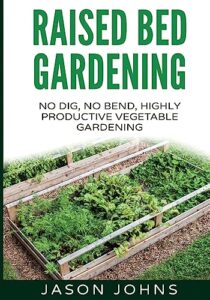
For under $10, the Raised Bed Gardening Guide for Vegetables delivers more than you’d expect from 98 pages. It covers step-by-step bed planning, soil mix formulation, and practical techniques like square-foot and lasagna gardening — everything you need to get your first harvest moving. The instruction is solid, though black-and-white photos are minimal.
Additional content includes pest control, crop rotation, and over-wintering tips, rounding out the comprehensive yet concise guidance.
If you’re starting fresh and want clear, actionable guidance, this slim guide earns its shelf space.
| Best For | New gardeners or anyone with back and mobility issues who wants a no-fuss, practical guide to getting started with raised bed growing. |
|---|---|
| Material | Paperback print |
| Assembly Difficulty | N/A (book) |
| Primary Use | Raised bed gardening guide |
| Weather Resistance | N/A (book) |
| Target User | Mobility-limited gardeners |
| Price Range | Budget ($9.99) |
| Additional Features |
|
- Covers everything from bed planning and soil mix to square-foot and lasagna gardening in one tidy package
- Great value at $9.99 — solid, actionable guidance without the fluff
- Includes year-round tips like pest control, crop rotation, and over-wintering
- Only black-and-white photos, so visual learners may find it lacking
- At ~98 pages, it’s too brief for anyone wanting deep horticultural theory or advanced design ideas
- Essentially a printed Kindle edition — the digital version may offer a better reading experience overall
8. BTDVR Steel Raised Garden Bed
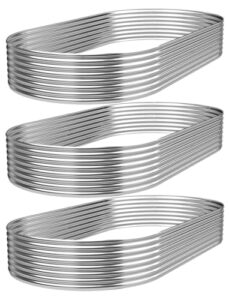
The BTDVR Steel Raised Garden Bed is built for gardeners who want structure without the fuss. Its galvanized steel panels resist rust and hold their shape under heavy soil loads, making it a reliable long-term investment for balconies and patios.
Pre-drilled holes and included hardware ensure assembly is straightforward — no guesswork. The bottomless design lets roots reach down freely, reducing how much growing medium you need to add.
If you value durability and clean lines, this bed delivers both.
| Best For | Gardeners who want a low-maintenance, weather-tough raised bed that integrates directly with existing ground soil on a patio, balcony, or backyard. |
|---|---|
| Material | Galvanized steel |
| Assembly Difficulty | Basic tools included |
| Primary Use | Patio/ground gardening |
| Weather Resistance | Galvanized, heavy-weather rated |
| Target User | General outdoor gardeners |
| Price Range | Budget |
| Additional Features |
|
- Galvanized steel holds up through rain, snow, and sun without rusting or warping over time.
- Bottomless design lets roots grow deep and cuts down on how much extra soil you need to buy.
- Comes as a set of three with all the tools and hardware included, so setup is quick and painless.
- No built-in bottom means it won’t work on bare concrete or any surface where you’d need a liner.
- Once it’s filled with soil and plants, moving it is a real chore — plan your placement carefully.
- Dimensions aren’t listed, so you can’t confirm upfront whether it’s deep enough for root vegetables or other deep-rooting crops.
9. Land Guard Galvanized Raised Garden Bed
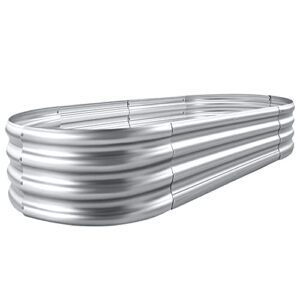
The Land Guard Galvanized Raised Garden Bed is built for urban spaces where durability and smart design actually matter. Its Q195 galvanized steel panels carry a double-layer anti-corrosion coating, so rust stays out of the picture for years.
The oval cross-section distributes soil pressure more evenly than standard rectangular frames — a subtle but smart engineering choice.
Assembly takes about five minutes with included hardware.
At 4 × 2 × 1 ft, it fits compact patios well, and you can stack kits higher if deep-root crops are on your list.
| Best For | Urban and small-space gardeners who want a low-maintenance, rust-resistant bed that goes together fast and lasts through tough weather. |
|---|---|
| Material | Galvanized steel (Q195) |
| Assembly Difficulty | Basic tools required |
| Primary Use | Seasonal vegetable growing |
| Weather Resistance | Double-layer anti-corrosion coating |
| Target User | Seasonal and back-strain-conscious gardeners |
| Price Range | Budget-mid |
| Additional Features |
|
- Double-layer anti-corrosion coating on Q195 steel means it holds up in rain, heat, and humidity without rusting out
- Oval cross-section spreads soil pressure more evenly, so the panels stay sturdy once you’ve got it packed with dirt
- Stackable design lets you add height for deeper root crops — great if bending over is hard on your back
- Some kits ship with defective hardware like short coupling nuts, so keep a few spare fasteners on hand just in case
- Panel edges can be sharp, so wear gloves during assembly — it’s a minor thing but worth knowing upfront
- At 1 ft deep, it’s too shallow for deep-rooted plants on its own, and stacking requires longer bolts that don’t come in the box
10. Meberam Galvanized Metal Raised Garden Bed
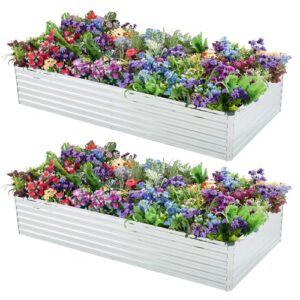
Two beds for the price of one — that’s the Meberam’s opening move. Each galvanized steel bed measures 72 × 36 × 12 inches, offering 18 square feet of growing space per unit (36 combined).
Assembly requires no tools, relying on 30 self-tightening bolts, while corner caps eliminate sharp edges that might cause unexpected injuries.
The non-toxic coating ensures food crops remain safe. It’s a practical, no-fuss choice for reliable steel without the premium price tag.
| Best For | Home gardeners who want an affordable, easy-to-assemble metal bed for growing veggies, herbs, or flowers without spending a weekend on setup. |
|---|---|
| Material | Galvanized steel |
| Assembly Difficulty | Tool-free bolt assembly |
| Primary Use | Vegetable and herb growing |
| Weather Resistance | Non-toxic galvanized coating |
| Target User | Budget-conscious home gardeners |
| Price Range | Budget |
| Additional Features |
|
- You get two full-sized beds in one package — great value at 36 square feet of growing space total
- Tool-free assembly with self-tightening bolts means most people can get it done quickly and without frustration
- Non-toxic coating makes it safe for food crops, so you’re not second-guessing what’s leaching into your tomatoes
- Panels can arrive slightly bent, so you may need pliers to straighten things out before you even start
- The instructions are pretty bare-bones — just part diagrams — so some guesswork may be involved
- At only 12 inches deep, it’s on the shallower side, which limits what you can grow and how much soil you’ll need to prep underneath
Choose Your Urban Garden Location

Location makes or breaks an urban garden before you plant a single seed. Even a small balcony or rooftop corner can work once you know what to look for.
Here’s what to check before you commit to a spot.
Find Six-hour Sunlight Spots
Scouting sunlight is the first real move in urban gardening. Your raised garden beds need at least six hours of direct sun daily — that’s the baseline for most vegetables.
Use a sun path mapping app to confirm your balcony orientation or roof exposure assessment before committing. South-facing and corner balconies usually win.
Factor in seasonal sun shifts, and don’t overlook reflective surface utilization from nearby walls to meet sunlight requirements.
You can also record sun exposure times to verify actual sunlight hours.
Check Balcony Weight Limits
Sunlight confirms your spot — but weight is what seals the deal. Most residential balconies handle 255–408 kg per square meter, yet that limit disappears fast once soil, containers, and furniture stack up. Before filling a single bed, verify your balcony’s structural load rating with building management or a structural engineer.
Before filling a single bed, verify your balcony can handle the weight
Keep these five load principles in mind:
- Live Load Calculation — Account for soil, water, plants, and people together, not separately.
- Container Weight Distribution — Spread lightweight portable beds evenly; never cluster pots in one corner.
- Structural Load Verification — Request building drawings or hire an engineer for your balcony garden plan.
- Seasonal Load Adjustments — Wet winter soil and snow add surprising weight to your small-space gardening setup.
- Railing Support Impact — Avoid hanging heavy planters on railings; they aren’t designed for concentrated loads.
Fabric beds and HDPE containers make accessibility gardening and urban gardening far safer — they weigh a fraction of concrete or dense wood setups.
Avoid Contaminated City Soil
Weight limits protect your structure — soil contamination protects your health. Urban ground soil often carries heavy metals like lead and arsenic, especially near roads or old industrial sites. Soil testing reveals what’s hiding beneath the surface.
Always fill raised beds with certified clean topsoil, install liner barriers to block root penetration, and practice topsoil rotation annually. These steps create a safer growing environment by preventing contaminated soil contact.
Contaminant monitoring and consistent remediation of soil contamination ensure long-term safety. By combining proactive measures with ongoing vigilance, you keep harvests genuinely safe.
Leave Accessible Walking Paths
Safe soil matters — so does safe movement. Once your beds are in place, the paths between them deserve just as much thought. Good layout protects you, your family, and any visitor who uses a cane, walker, or wheelchair.
Keep these non-negotiables in mind:
- Maintain a minimum pathway width of 1.8 meters between beds
- Choose slip-resistant surfaces like broom-finish concrete or compacted gravel
- Keep gentle gradient limits at or below 5 percent to prevent stumbles
- Create obstacle-free corridors by positioning planters outside the main travel line
- Use high-contrast wayfinding markers at junctions for low-vision gardeners
Beds with lockable wheels support back-friendly gardening by letting you reposition without lifting. Smart spacing is the quiet backbone of garden bed ergonomics — and a genuine elderly gardening solution that benefits everyone.
Follow Lease or HOA Rules
Before you buy a single bed, check your lease and HOA guidelines — some communities restrict raised bed heights, exterior appearance, and even materials used on a balcony. Know who carries HOA fine responsibilities, and get tenant rule acknowledgment in writing.
The lease approval process matters more than you’d think. City gardening thrives when you plan within the rules, not around them.
Select The Right Bed Material
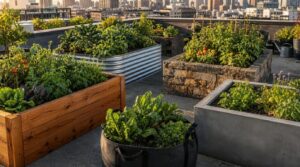
The material you build with shapes everything — how long your bed lasts, what it costs, and how it fits your space. Each option has its own trade-offs worth knowing before you buy.
Here’s a closer look at the five most common choices for urban gardeners.
Cedar and Redwood Beds
Cedar and redwood are the classics for a reason. Both woods carry natural oils that fight rot and insects — no chemical treatment required.
- Durability lifespan: Untreated cedar beds last 7–10 years; treated ones push 20.
- Grain aesthetics: Cedar’s warm amber tones and redwood’s rich reddish hues suit any urban gardening setup beautifully.
- Sustainable sourcing: Look for FSC-certified boards or reclaimed lumber.
Finish options range from clear UV sealers to opaque stains — reapply every few years and your bed stays sharp.
Galvanized Steel Durability
Few materials in urban gardening outlast galvanized steel. The zinc coating acts as a sacrificial anode—corroding first to shield the underlying steel for decades. Hot-dip coating thickness, typically ranging 45–85 micrometers, directly determines corrosion resistance and durability against moisture and salts.
Environmental factors significantly influence longevity. Coastal exposure, for instance, accelerates wear, while thicker coatings ensure longer outdoor lifespans.
| Factor | Impact |
|---|---|
| Coating Thickness | Longer outdoor lifespan |
| Environmental Exposure | Accelerates wear near coasts |
Adhere to a simple annual inspection schedule to maximize performance. Options like the Land Guard Galvanized Raised Garden Bed Kit deliver reliable, heavy-duty galvanized metal construction tailored for serious urban gardening.
Recycled Plastic Options
Recycled plastic raised garden beds punch above their weight in urban gardening. High-density polyethylene panels resist rot, rust, and insects, while UV inhibitors protect against sun damage.
Modular connections enable tool-free assembly in minutes.
Food-safe plastics ensure confidence when growing edibles. Their lightweight design and significant recycled content contribute to sustainability.
Options like the Keter Urban Bloomer make sustainable growing genuinely practical for any balcony.
Fabric Beds for Portability
Fabric beds give you something rigid materials can’t — genuine freedom to move.
The Victory 8 Fabric Raised Bed uses nonwoven felt fabric and breathable fabric panels to keep roots oxygenated and cool. Its lightweight aluminum foldable frame, featuring integrated grips and snap assembly, ensures setup takes minutes, not hours.
Whether your balcony layout shifts or you relocate entirely, the compact garden design relocates with you.
Concrete Block Stability
Concrete blocks bring serious raised bed durability to urban backyards — but they demand respect. Their thermal mass warms soil steadily, and achieving subgrade compaction at 95 percent proctor density makes settling a non-issue. Prioritize drainage planning with gravel backfill to manage lateral earth pressure and prevent frost heave.
An interlock design adds structural integrity, and in exposed urban locations, seismic reinforcement keeps everything exactly where you built it.
Build and Fill Your Bed
Getting your bed set up the right way makes everything easier once planting season hits. Smart decisions upfront save you a lot of frustration later.
From height, reach, drainage, and soil mix, focus on these critical factors before adding a single seed.
Pick Ergonomic Bed Height

Getting the height right is where back-friendly gardening actually begins. A bed sitting 12 to 24 inches high accommodates most gardeners comfortably, but for knee strain reduction and hip alignment, aim closer to 24 inches. Seniors and those with back problems benefit most from that range.
Adjustable base benefits shine here too — seated reach comfort improves dramatically, making elderly gardening solutions and better accessibility genuinely achievable.
Keep Beds Reachable
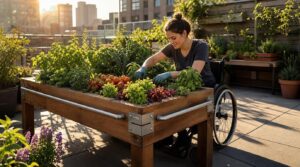
Width and reach matter just as much as height. Keep beds to 3–4 feet wide so you’re never straining across the center.
- Set Adjustable Frame Height between 18–24 inches
- Choose Wheelchair-Friendly Width of 42–48 inches
- Use Tool-Free Accessory Mounts for grab bars
- Add Low-Profile Guard Rails along exposed edges
- Maintain Clear Pathway Space of at least 30 inches
Options like the Best Choice Elevated Raised Garden Bed with Lockable Wheels make back-friendly gardening genuinely easy — even elderly gardening solutions in small spaces benefit from lockable wheels for easy repositioning.
Add Drainage Before Soil
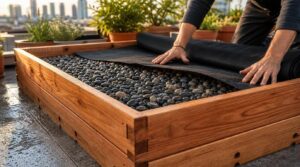
Once your bed sits at the right height, the next step happens before a single scoop of soil goes in. Start with a 2–6 inch gravel base layer to move water away from roots fast. Lay a geotextile barrier over it to prevent soil from clogging the drainage pipe installation below.
Add a slight slope design toward the weep holes, and you’ll ensure improved drainage functions efficiently every time it rains. This setup keeps water moving away from roots while maintaining structural integrity.
Mix Compost-rich Soil

Now that drainage is sorted, your raised bed soil mix is where the real magic happens. A smart compost soil ratio — two parts organic compost to three parts existing soil — builds fertility fast.
- Microbial activity drives the timing of nutrient release naturally
- pH balancing stabilizes nutrient uptake for most vegetables
- Texture enhancement loosens compacted urban soil
- Nutrient-rich soil mixes reduce fertilizer dependence
Use Lasagna Layering
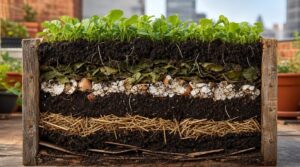
Layering your raised bed like lasagna might sound unusual, but it’s one of the best small space gardening solutions. Start by laying cardboard as a weed suppression layer, then alternate materials that balance carbon and nitrogen—such as straw, kitchen scraps, and compost blends—every two to three inches.
This method, known as lasagna gardening, integrates soil amendments to accelerate natural decomposition. The layered approach ensures efficient breakdown, transforming materials into rich, organic compost-fed ground.
Within weeks, your raised bed soil mix settles into fertile ground, becoming ready for planting. This technique maximizes space while fostering healthy, nutrient-dense soil.
Plant, Water, and Harvest Efficiently

You’ve built the bed and filled it with good soil—now comes the part that actually feeds you. Getting plants, water, and harvest working together doesn’t have to be complicated, and smart choices make all the difference.
Here’s what urban gardeners are doing to squeeze the most out of every square foot.
Grow Compact Vegetables
Small spaces reward smart choices. Space-Saving Varieties turn a single 4×4 raised bed into a productive kitchen garden through square foot gardening principles.
Prioritize these Rapid-Growth Crops for maximum space efficiency:
- Bush cherry tomatoes — fruit-ready in 55–65 days
- Cherry Belle radishes — harvested in just 22–30 days
- Baby bok choy — cut-and-come-again greens within 45 days
Seasonal succession planting keeps your vegetable cultivation continuous all season.
Add Balcony Herb Gardens
Growing herbs on a balcony is small space gardening at its most satisfying.
Herb pot selection matters — choose lightweight, UV-resistant containers with drainage holes, and group herbs by water needs.
Keep soil pH management in mind: aim for 6.0–7.0.
Harvest timing is simple — clip in the morning for peak flavor.
Consistent pest management and a steady watering schedule keep everything thriving.
Install Drip Irrigation
Drip irrigation puts you in complete control of your water management. A proper setup includes a backflow preventer, filter installation, and pressure regulator to keep everything running clean and consistent. From there, custom tubing layout lets you route water exactly where roots need it.
- Zone valves let you tailor moisture to each garden bed
- Emitters deliver steady, targeted soil moisture control
- Self-watering integration reduces daily effort greatly
Mulch for Moisture Control
Organic mulch is your raised bed’s quiet workhorse. A 2–4 inch mulch depth cuts evaporation by up to 70 percent, giving your soil moisture control without daily fuss.
Mulch texture matters too — wood chips outlast straw, while compost adds nutrients.
Those microclimate benefits keep roots steady through heat spikes.
Plan for mulch replenishment every six to twelve months for consistent mulching for moisture retention.
Trellis Vertical Crops
Vertical gardening turns a tight balcony into a productive powerhouse. Train climbing crops upward and suddenly your square footage doubles.
- Seasonal Trellis Planning — rotate pole beans, peas, cucumbers, and tomatoes each season for natural pest management and soil recovery
- Pollinator Support — flowering climbers attract bees to your multitier garden bed
- Harvest Scheduling — fruit stays visible at eye level in vertical planting systems
- Space-saving Planting — vertical systems free ground space in small spaces for companion crops
Frequently Asked Questions (FAQs)
What is an alternative to raised beds?
If raised beds aren’t your style, you’ve got options.
Container gardening, vertical gardening systems, rooftop garden
setups, hydroponic towers, window box planting, log crib beds,
recycled pallet planters, and modular tote gardens all deliver
space-saving gardening solutions.
How deep should a raised bed be for a vegetable garden?
Twelve inches covers most vegetable gardens well, supporting leafy greens and herbs without issue.
For root vegetables, push to 18–24 inches. That extra depth gives root zone depth room to breathe and drain.
How do I protect beds from urban pests?
Think of your bed as a fortress. Seal gaps, install interceptor traps, use encasement barriers, and deploy monitoring devices.
Steam cleaning and organic pest control with natural deterrents keep pest resistance strong without chemicals.
Can raised beds improve rooftop insulation value?
Soil’s thermal mass absorbs daytime heat and releases it slowly at night, buffering temperature swings.
Dense plantings boost evaporative cooling, easing city heat island pressure and subtly improving your rooftop’s insulation value.
What permits do urban rooftop gardens require?
Before your first seed is planted, you’ll likely need a building permit, structural evaluation, waterproofing standards review, drainage approval, and safety access clearance.
City agriculture regulations can vary, so check local codes first.
How do I winterize raised beds in cities?
Lay a 3–4 inch Winter Mulch Layer over your soil, sow Winter Cover Crops like rye, do a Drainage Inspection, and log everything in a Seasonal Logbook before the first freeze.
Which crops grow best in shaded urban spaces?
Shade-tolerant greens like spinach, crisp lettuce, and kale thrive with just three to four hours of light.
Low-light herbs such as chives and mint, plus microgreens for shade, round out a productive seasonal shade harvest.
Conclusion
Even the ancient Romans understood that growing your own food was an act of quiet power. Raised garden beds for urban gardeners make that same power available on any balcony, rooftop, or patio you’ve got.
Choose the right material, fill it with compost-rich soil, and plant what your space allows. The bed is just a container—but what grows inside it belongs entirely to you. Start small, tend it well, and the harvest follows.