This site is supported by our readers. We may earn a commission, at no cost to you, if you purchase through links.
Oxygen moves 10,000 times faster through air than through water. That single fact explains why so many vegetable gardens fail before a seed ever sprouts: waterlogged, compacted dirt suffocates roots within 24 hours, no matter how much fertilizer you add.
Store-bought topsoil won’t fix that. Neither will guesswork.
The best soil mix for growing vegetables balances texture, pH, and biology, drainage that lets air reach roots, a 6.0–7.0 pH window where nutrients stay available, and organic matter that feeds the microbes doing the real work underground. Get that combination right, in a raised bed, a container, or open ground, and you’re not fighting your soil anymore. You’re building the foundation every strong harvest depends on.
Table Of Contents
- Key Takeaways
- What Makes Soil Ideal for Growing Vegetables
- Best Soil Mix Formulas for Vegetable Gardens
- Matching Soil Type to Vegetable Success
- Building The Best Soil Mix for Containers
- Maintaining Healthy Soil Season After Season
- Frequently Asked Questions (FAQs)
- What soil type is best for growing vegetables?
- Is 10-10-10 good for vegetable garden?
- What is the best soil mix for growing vegetables in pots?
- Should I use topsoil or compost for vegetable garden?
- What is the best soil combination for vegetables?
- What is the best soil mixture for a raised vegetable garden?
- What is the best potting mix for vegetables?
- What is the best soil for starting vegetables?
- What kind of soil is best for a raised vegetable garden?
- What is the best top soil for a vegetable garden?
- Conclusion
Key Takeaways
- Oxygen diffuses 10,000 times faster through air than water, so waterlogged or compacted soil can starve vegetable roots within 24 hours regardless of fertilizer use.
- Ideal vegetable soil maintains a 6.0–7.0 pH range, since levels below 5.5 trigger aluminum toxicity and levels above 7.0 lock away phosphorus.
- Proven mixes like Mel’s Mix (equal parts compost, peat/coir, and vermiculite) and university blends (40–60% loam with 40–60% compost) deliver the drainage, nutrition, and structure vegetables need in raised beds or containers.
- Healthy soil requires ongoing maintenance—annual compost amendments, pH testing, mulching, and crop rotation—to sustain microbial life and prevent nutrient depletion season after season.
What Makes Soil Ideal for Growing Vegetables
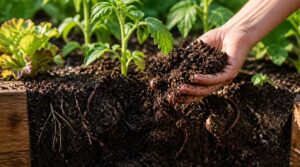
Great vegetables start with great soil, and great soil follows a few clear rules. Your dirt’s chemistry, texture, and biology all work together, or they work against you. Here’s what separates soil that grows thriving crops from soil that just sits there.
If you’re aiming to grow more than just one crop, check out this guide to growing a variety of vegetables that thrive in the same well-balanced soil.
Ideal PH Range for Vegetables
Why does pH matter so much? Because it controls nutrient solubility for every vegetable you grow. Most crops thrive between 6.0 and 7.0. Brassicas prefer 6.5-7.5, while carrots tolerate 5.5-6.5. Below 5.5, aluminum toxicity blocks phosphorus. Above 7.0, calcium locks phosphorus away entirely. This range also fuels microbial activity, preventing nutrient lockout and supporting micronutrient availability your plants depend on.
Using digital pH pens can provide more accurate readings for your soil.
Soil Texture and Drainage Basics
Getting pH right won’t help if water sits for days. Texture — the sand-silt-clay ratio — controls drainage speed. Sandy soils drain fast; clay drains slow, risking waterlogging within 24-48 hours.
Three texture checks:
- Feel test for grit vs. stickiness
- Perc test for drainage rate
- Lab analysis for exact ratios
Loamy soil balances infiltration and water retention, avoiding compaction.
Organic Matter and Microbial Life
Texture only tells half the story. What lives in that soil matters just as much: microbial activity drives organic matter formation, converting residues into stable necromass. Fungal hyphal networks physically bind particles, boosting soil aggregate stability. Bacteria process fresh amendments fast, while microbial exudates create compounds resistant to breakdown—building a genuine nutrient mineralization reservoir for your vegetables.
Why Oxygen and Porosity Matter
Roots breathe just like you do, and they need connected pore space to do it. Oxygen diffuses through air pockets 10,000 times faster than through water, so waterlogged soil starves roots within 24 hours.
Oxygen moves 10,000 times faster through air than water, which is why waterlogged soil starves roots within a day
Compaction collapses macropores, cutting off root zone oxygenation and aerobic microbial respiration. Perlite and vermiculite keep those channels open, protecting soil structure and giving roots room to actually breathe.
Best Soil Mix Formulas for Vegetable Gardens
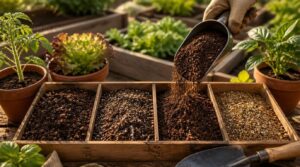
Good soil doesn’t happen by accident. Gardeners rely on tested formulas to hit the right balance of drainage, nutrients, and structure every time. Here are four proven mixes worth building your garden around.
Mel’s Mix for Raised Beds
Mel’s Mix solves the raised bed puzzle with a dead-simple ratio: equal parts compost, peat or coir, and coarse vermiculite.
This blend keeps moisture and drainage in check, which is why so many gardeners turn to a square foot gardening layout guide when planning what to plant where.
- Compost (⅓): five+ varieties, feeds microbes
- Peat/coir (⅓): moisture retention, screen coarse
- Vermiculite (⅓): magnesium, calcium, potassium; won’t compact
- Mix thoroughly on a tarp before filling
Replenish compost annually. A 4×8 bed at 10 inches needs roughly 20 cubic feet total.
University Loam-Compost Blend
University blends split 40–60% loam with 40–60% compost, landing near neutral pH (6.5–7.0).
| Property | Result |
|---|---|
| Texture | Crumbly, aerated |
| Organic matter | 40–60% by volume |
| Drainage | Improved over clay |
| Microbial life | Diverse, active |
Nutrient cycling stays efficient, feeding roots without waterlogging your vegetable garden soil.
Custom Nutrient-Dense Soil Recipe
Mix 2 parts aged compost with 1 part rotted manure for broad-spectrum nutrition, then add 1 part coir and 1 part perlite for aeration and moisture balance.
Mix in rock phosphate, kelp meal, and feather meal for slow-release nitrogen and trace minerals.
Add 1 cup biochar per cubic foot and worm castings—both boost microbial life and long-term nutrient availability in your custom mix.
Top Commercial Soil Mix Picks
Not every gardener wants to build a recipe from scratch, and that’s fine. FoxFarm Ocean Forest delivers loamy texture and porosity for strong roots, while Espoma Organic earns OMRI certification for true organic growing.
Pick based on need:
- Synthetic speed – Miracle-Gro for fast seedling starts
- Organic feeding – Espoma or Ocean Forest
- Professional-grade – Pro-Mix BX for greenhouse-quality consistency
Matching Soil Type to Vegetable Success
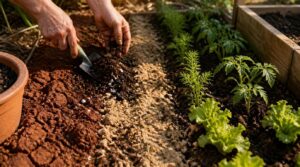
Not every garden starts with perfect dirt, and that’s fine. Clay, sand, and loam each behave differently, and each one asks for its own fix. Here’s how to size up what you’ve got and get it working for you.
Improving Clay Soil for Vegetables
Clay soil suffocates roots. Work in 2 to 4 inches of aged compost across the top 6-12 inches, then break up compaction with a broad fork before adding organic matter.
Gypsum, at roughly 20 lbs per 1,000 square feet, splits clay aggregates without shifting pH. Raised ridges and shallow drainage channels keep water moving. Skip deep tilling afterward—it destroys the very structure you’re building.
Boosting Sandy Soil Fertility
Sand drains fast, but it drains nutrients right along with the water. Work in 2 to 4 inches of compost, then mulch heavily to slow evaporation.
Add legume cover crops to fix nitrogen naturally, and switch to drip irrigation—it delivers water precisely instead of flushing nutrients past the root zone. Microbial inoculants boost the biology sandy soil lacks.
Why Loamy Soil Grows Best
Sand’s problems and clay’s problems cancel out in loam, which is why it sits at the top of every horticulturist’s list. Its crumbly structure gives roots easy penetration while boosting cation exchange capacity, holding potassium and calcium right where roots need them.
- Steady moisture without soggy roots
- Nutrients that stay put after rainstorms
- A thriving underground world you can’t see but can trust
That balance drives faster nutrient mineralization and stable microbial habitats season after season.
Testing and Identifying Your Soil
Loam is a goal, not a guess. Confirm yours with a jar test: mix soil and water in a jar, let it settle 24 hours, then read the sand, silt, and clay layers for texture classification.
| Test | Reveals | Frequency |
|---|---|---|
| pH/EC | Salinity, nutrient sufficiency | Annually |
| Jar Test | Texture, structure | Once |
| Visual cues | Color, earthworms | Ongoing |
Building The Best Soil Mix for Containers
Containers play by different rules than garden beds. Your pots need a mix built for confined roots and fast drainage, not native dirt. Here’s how to get that formula right, from bagged options to your own custom mix.
Soilless Mixes for Small Containers
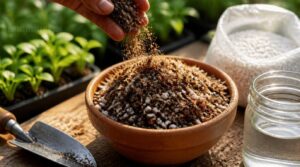
Once your containers drop below 30 gallons, regular garden soil compacts fast and suffocates roots. That’s why soilless potting mix wins for small pots: coco coir holds moisture with good aeration, perlite prevents waterlogging, and lime balances pH.
- Coco coir (moisture + aeration)
- Perlite (drainage)
- Compost or worm castings (slow nutrients)
- Lime (pH balance)
Watch salt buildup—flush occasionally and follow a liquid fertilizer schedule.
DIY Container Soil Recipes
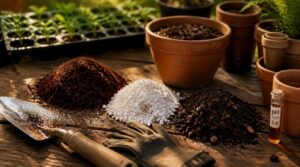
Mixing your own growing media saves money and gives you full control over texture and nutrients. Coir vs peat matters here: coir holds water at neutral pH, peat lowers pH slightly.
| Component | Ratio | Purpose |
|---|---|---|
| Coir/peat | 40-50% | Moisture |
| Perlite | 20-30% | Aeration |
| Compost | 20-30% | Nutrients |
Test pH after mixing, not before.
Refreshing Soil Each Growing Season
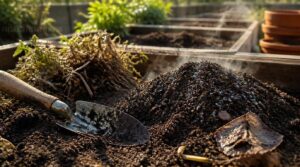
Every season strips your container mix of nutrients, so renewing beds annually matters as much as the initial recipe.
Remove old plant residues first, then work 2-3 inches of finished compost into the top 6-8 inches. Add fully decomposed manure only—fresh material burns roots. Include rock minerals for trace mineral replenishment. Start 2-4 weeks before planting, giving microbes time to activate and restore fertility.
Organic Potting Mixes for Vegetables
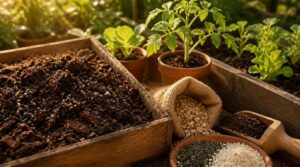
Peat, coir, or composted bark forms the fiber base—sustainable growers lean toward coir and bark to cut peat harvesting impact.
Three additions matter most:
- Vermiculite/perlite for aeration
- Compost for slow-release fertility
- Kelp or bone meal as organic fertilizers
Look for OMRI certification—it guarantees organic compliance. Balanced moisture retention plus drainage keeps container gardening productive and root rot rare.
Maintaining Healthy Soil Season After Season
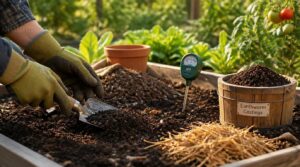
Great soil doesn’t stay great on its own. Every season pulls nutrients out and throws pH out of balance, so upkeep isn’t optional. Here’s what that upkeep actually looks like, year after year.
Adjusting PH With Lime or Sulfur
pH drift happens gradually, so catch it before your crops do. Agricultural lime raises pH by neutralizing acidity; elemental sulfur lowers it through microbial oxidation, working over weeks or months. Dolomitic lime adds magnesium where needed. Buffering capacity and particle size determine your rate and speed. Split spring/fall applications sustain results better than one large dose.
Amending In-Ground Beds Annually
Beds get tired without yearly attention. Loosen the top 6 to 8 inches each spring to open root pathways, then work in 2 to 4 inches of aged compost. Rake it level, top-dress with straw or mulch, and check drainage after rain—water standing past 60 minutes signals trouble.
Test soil pH and fertility every year or two to guide amendments precisely.
Compost, Mulch, and Cover Crops
Think of compost, mulch, and cover crops as your soil’s maintenance crew, each handling a different job.
Compost boosts organic carbon by up to 5%, feeding microbial diversity. Mulch cuts evaporation 20–50%, moderating temperature. Legume cover crops like hairy vetch fix 30–100 lbs nitrogen per acre—terminate before flowering to release nutrients efficiently for spring planting.
Crop Rotation for Soil Fertility
Planting the same crop yearly is a recipe for depletion. Legume nitrogen fixation (beans, peas) rebuilds soil fertility naturally for follow-on crops.
Rotating families shifts nutrient uptake patterns, preventing lockout, while varied roots boost soil porosity benefits and break compaction. Diverse residues drive organic matter accumulation and nitrogen cycling.
Rotation also disrupts pest life cycles tied to single hosts—your best defense against soilborne disease buildup.
Frequently Asked Questions (FAQs)
What soil type is best for growing vegetables?
Loamy soil wins for vegetables, balancing sand, silt, and clay for solid drainage, nutrient availability, and root health. Its crumbly soil structure holds moisture without waterlogging, while organic matter keeps microbes active and roots breathing.
Is 10-10-10 good for vegetable garden?
Jack of all trades, master of none: 10-10-10 works in a pinch, correcting NPK deficiencies fast, but overuse risks salt burn. Test soil first, watch for nutrient deficiency signs, and lean on organic fertilizer alternatives for long-term plant nutrition.
What is the best soil mix for growing vegetables in pots?
Your pots need a soilless potting mix: 40% compost, 30% perlite for aeration, 30% coir or light soil. This balances drainage vs moisture, boosts water retention capacity, and prevents nutrient leaching while worm castings add microbial vitality.
Should I use topsoil or compost for vegetable garden?
Neither alone gets you there. Blending soil ratios—roughly 70% topsoil to 30% compost—delivers structure plus nutrients. Topsoil anchors your beds; compost drives microbial life and nutrient availability balance. Skip one, and you’re gardening with half a toolkit.
What is the best soil combination for vegetables?
Equal parts compost, peat moss or coconut coir, and perlite or vermiculite create the best soil mixture for vegetables. This ratio balances mineral-to-organic content, prevents nutrient lockout, and provides the moisture retention and porosity roots need to thrive.
What is the best soil mixture for a raised vegetable garden?
Think of it as baking bread: get the ratio right and everything rises. Mix equal parts compost, peat moss or coir, and vermiculite — Mel’s Mix delivers loamy texture, steady nutrient density, and drainage that still holds moisture for hungry roots.
What is the best potting mix for vegetables?
Your best bet blends compost, peat moss or coir, and perlite for drainage, keeping pH near 0– This soilless potting mix retains moisture, boosts microbial activity, and prevents nutrient lockout—giving container vegetables the balanced foundation they need to thrive.
What is the best soil for starting vegetables?
Picture a nursery, not a battlefield: seedling roots need gentle, welcoming ground.
Mix coco coir, compost, and vermiculite for moisture retention balance and steady nutrient solubility. This soil composition helps fast seedling root establishment and thriving microbial activity from day one.
What kind of soil is best for a raised vegetable garden?
Mix equal parts compost, peat moss (or coir), and vermiculite for a loamy, well-draining mix. This combination boosts nutrient retention, prevents waterlogging, and helps the microbial life your raised bed’s soil structure depends on for healthy roots.
What is the best top soil for a vegetable garden?
Your best topsoil sits between pH 0 and 0, dark and crumbly, with 3% to 6% organic matter for nutrient solubility, aggregate stability, and microbial habitat. Loamy texture balances drainage and moisture, supplying essential macronutrients while supporting healthy root respiration.
Conclusion
Antaeus drew his strength each time he touched the earth, and your vegetables work the same way.
The best soil mix for growing vegetables isn’t a product you buy once and forget. It’s a living system you build, test, and renew. Check pH every spring. Feed the microbes with compost. Let air reach every root. Do that, and your garden stops depending on luck. It starts depending on you, season after season, harvest after harvest.
- https://homegrown-garden.com/blogs/blog/best-soil-mix-for-vegetable-garden
- https://justagirlandherhomestead.com/how-to-create-the-perfect-soil-mixture-for-raised-garden-beds
- https://www.almanac.com/plant-ph
- https://sfyl.ifas.ufl.edu/lawn-and-garden/homemade-potting-mix
- https://www.groworganic.com/blogs/articles/how-to-use-soil-amendments-vermiculite