This site is supported by our readers. We may earn a commission, at no cost to you, if you purchase through links.
That basement shelf next to the furnace feels like the perfect spot for your canning jars, until you realize warm air rising past those metal lids invites rust and slowly breaks down the seal that’s keeping botulism spores out. Home canners lose entire harvests each year not from bad recipes, but from bad real estate: garages that swing from freezing to sweltering, sunrooms that bleach color and strip nutrients, damp corners where humidity creeps past 70%.
Knowing how to store homemade canned garden goods means treating your pantry like a controlled environment, not an afterthought. Temperature, humidity, shelving, even jar spacing all affect how long your food stays safe to eat. Get these details right, and that jar of tomatoes you sealed in August still tastes like summer come next spring.
Table Of Contents
- Key Takeaways
- Choosing The Right Storage Location for Your Preserves
- How Long Homemade Canned Goods Really Last
- Top Products for Storing Home Canned Goods
- Frequently Asked Questions (FAQs)
- How long will homemade canned vegetables last?
- Where is the best place to store homemade canned goods?
- What are the best canned vegetables to stockpile?
- How to store homemade canned tomatoes?
- How do I know if a jar has sealed properly?
- What should I do with bulging or leaking jars?
- Can I reuse metal rings after processing jars?
- Why should jars be stored without their bands?
- How should I safely clean up a spoiled jar?
- Conclusion
Key Takeaways
- Store canned goods at 50–70°F with 50-60% humidity, avoiding garages, sunrooms, and damp basements where temperature swings and moisture degrade seals and encourage spoilage.
- High-acid foods (jams, pickles) stay at peak quality for 12-18 months, while properly pressure-canned low-acid foods (beans, meats) can remain safe for 2-5 years.
- Use steel shelving with proper spacing (8.5" for quarts, 6.5" for pints) and store jars without their metal bands to let moisture escape and make seal failures easy to spot.
- Discard bulging or leaking jars immediately without tasting them, and reprocess any jar that loses its seal within 24 hours by reheating to boiling.
Choosing The Right Storage Location for Your Preserves
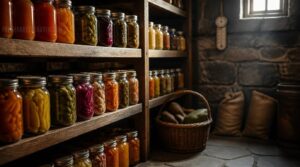
Where you store your canned goods matters just as much as how you can them. The right spot protects your seals, your jars, and everything inside them from slow, silent spoilage. Here’s what to look for, and what to steer clear of, when picking a storage space.
Stocking up on quality jars and lids from a trusted source like small-batch canning supplies for home preservers is the first step toward a storage space that actually protects your hard work.
Ideal Temperature and Humidity Range
Every jar you’ve worked hard to fill deserves a spot that won’t undo your efforts. Aim for 50°F to 70°F, since heat above 90°F releases seals fast. Pair that with 50-60% humidity control—too damp invites rust and mold, too dry isn’t a real risk here.
Check conditions seasonally with a thermometer-hygrometer combo, since summer heat and winter furnaces both create dangerous hot spots. Be aware that high humidity levels can compromise your jar seals.
Best Shelving and Jar Placement
Once your temperature and humidity are dialed in, shelving matters just as much. Choose steel over plastic, since filled quart jars add up fast and cheap shelves buckle under real weight.
Space shelves 8.5 inches apart for quarts, 6.5 for pints, and keep stacking to two layers max with cardboard between rows for even weight distribution.
Spaces to Avoid for Storage
Skip attics and garages, where summer heat tops 95°F and swings freeze jars in winter, cracking seals.
Damp basements push humidity past 70%, corroding lids within months.
Sunrooms and windowsills bake jars to 130°F under direct UV, fading labels and destroying nutrients.
Avoid tight, airless corners too — poor circulation traps moisture and creates uneven microclimates that compromise seals unpredictably.
How Long Homemade Canned Goods Really Last
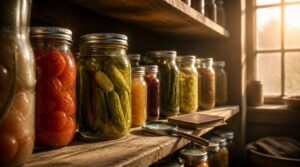
Even a perfect seal won’t guarantee your food stays safe or tasty forever. Acidity, ingredients, and storage time all play a role in how long a jar stays good. Here’s what you need to know before you crack one open.
Shelf Life of High-Acid Foods
That jar of tomato jam won’t last forever, even sealed perfectly. High-acid foods—jams, pickles, fruits—hold peak quality for 12 to 18 months at 50–70°F. Beyond that, texture softens and flavor fades, though safe pH (4.6 or below) keeps botulism risk low.
Low-acid canned goods like beans or meats can safely stay shelf-stable for 2 to 5 years, so stocking up on proper jars and lids from a beginner’s guide to garden canning supplies pays off long after this season’s harvest.
Light exposure accelerates nutrient loss and dulls color, so dark storage matters as much as temperature control.
Shelf Life of Low-Acid Foods
Low-acid vegetables and meats play by different rules than fruit. Because their pH sits above 4.6, only pressure canning at 10–15 PSI destroys botulism spores.
Properly processed jars last 12–24 months at 50–70°F, though safety often extends further if seals stay intact. Nutrients decline 5–20% yearly. Check seal integrity before use, and remember altitude adds processing time above 1,000 feet.
Storing Canned Nuts Safely
Nuts don’t follow the same acid rules as your vegetables, since their high fat content makes rancidity the real enemy. Keep them in mason jars with oxygen absorbers, vacuum sealed when possible, stored below 70% humidity.
- Room temperature: 3 months
- Refrigerated (40°F): 6 months
- Frozen (0°F): 12+ months
- Rancid odor: discard immediately
Freezing dramatically extends shelf life without compromising texture, since low water content prevents ice damage.
Reprocessing Foods Stored Too Long
Occasionally a jar loses its seal after processing, and you’ll need to act fast. Reprocess within 24 hours, heating food to boiling first.
| Situation | Action |
|---|---|
| Unsealed, FIFO rotation keeps your pantry honest, sending new jars to the back so nothing gets forgotten until it’s too old to trust |
- Add new jars behind, never in front
- Use diagonal, gravity-fed shelf inserts
- Refill your grab zone weekly
- Run monthly rotation checks
- Integrate jars right after canning
Tracking Inventory and Use-by Dates

Your pantry deserves a paper trail. Keep a written or digital log near your shelves listing contents, quantities, and use-by dates—apps like Cooklist or My Pantry Tracker scan barcodes and send expiration alerts automatically. Manual labeling works too: waterproof marker, canning date, batch number.
Whichever method you choose, pair it with FIFO rotation so tracking and shelf life stay perfectly synced.
Top Products for Storing Home Canned Goods
The right gear makes safe storage so much easier to maintain, day after day. From jars to markers to cleaning solutions, a few trusted products handle most of the work for you. Here are four staples worth keeping stocked in your canning kitchen.
1. Ball wide mouth glass mason jars
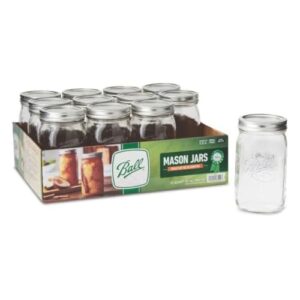
Twelve jars, one purchase, zero guesswork: this Ball wide mouth glass set gives your pantry a solid foundation. Each 32 oz jar features an airtight grommeted seal, USDA-certified food grade glass, and rust-proof BPA-free lids that hold up through repeated canning cycles.
They’re built for water-bath and pressure canning alike, handling everything from pickles to low-acid vegetables. Beyond preserving, they double as fermentation vessels or meal-prep containers. Sturdy, multi-purpose, and genuinely dependable—exactly what a canning shelf needs.
| Best For | Home cooks and fermentation enthusiasts who want a complete, reliable jar set for canning, pickling, and everyday food storage. |
|---|---|
| Package Quantity | 24 cans |
| Primary Material | Tuna in water |
| Intended Use | Food/Nutrition |
| Setting Suitability | Home, Travel, Camping |
| Special Certification | MSC, Non-GMO, Kosher |
| Storage/Handling | Shelf-stable pantry storage |
| Additional Features |
|
- Airtight grommeted seals help prevent leaks and keep contents fresh
- USDA-certified food grade glass is heat resistant and built to last
- Versatile enough for canning, fermenting, meal prep, or home decor
- Glass construction means jars require careful handling to avoid breakage
- Only available in the 32 oz wide mouth size, with no other size options
- At nearly 6 kg for the full set, the box is on the heavier side to store or move
2. Crayola Ultra Clean Washable Markers
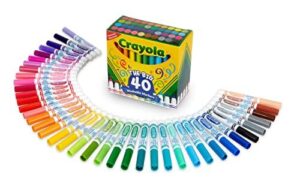
Good jars need good labels, and that’s where a set of Crayola Ultra Clean Washable Markers earns its shelf space. With Color Max Ink technology and a 0.5 cm broad tip, they’re perfect for marking waterproof labels with contents, batch number, and processing date without smearing.
Since they wash cleanly from skin and painted walls, stray marks near your pantry shelves won’t leave permanent evidence. At 40 markers per set, you’ll have plenty of colors for coding high-acid versus low-acid batches at a glance.
| Best For | Parents, teachers, and gift-givers looking for a large, washable marker set that’s great for classroom use, art projects, and kids ages 3 and up. |
|---|---|
| Package Quantity | 40 markers |
| Primary Material | Plastic/Ink |
| Intended Use | Arts and Crafts |
| Setting Suitability | Home, Classroom |
| Special Certification | Age 3+ Safety Rated |
| Storage/Handling | Store with cap sealed |
| Additional Features |
|
- Washable formula wipes off skin, clothing, and most painted walls
- 40 assorted colors give plenty of variety for creative projects
- Broad tip design makes it easy for young kids to color and helps build fine motor skills
- Not recommended for children under age 3
- How well it cleans off walls depends on the type of paint used
- Only one tip style (broad line), so no fine-tip option in this set
3. Avery Removable Multi Use Labels
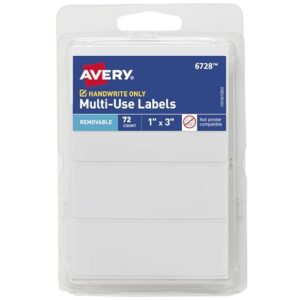
Once your marker labels the batch date, an Avery Removable Multi Use Label keeps that information locked to the jar without fighting you during cleanup. The 1" x 3" white labels peel away cleanly from glass, plastic, and metal lids, so reusing Mason jars next season won’t leave gummy residue behind.
With 72 labels per pack, you’ll have enough for a full canning run. They’re handwrite-only, which pairs perfectly with your washable markers for fast, legible FIFO labeling.
| Best For | Home canners and food preppers who want an easy, printer-free way to mark batch dates on jars, bins, and containers without leaving sticky residue behind. |
|---|---|
| Package Quantity | 72 labels |
| Primary Material | Adhesive paper blend |
| Intended Use | Organization/Labeling |
| Setting Suitability | Home, Office |
| Special Certification | None Specified |
| Storage/Handling | Store flat, dry area |
| Additional Features |
|
- Peels away cleanly from glass, plastic, and metal without leaving gummy residue
- Generous 72-label count covers a full canning run or household organizing project
- Smooth white surface makes handwritten dates and notes easy to read
- Not compatible with printers, so every label must be handwritten
- Limited to a single 1" x 3" size, which may not fit larger containers or bins
- Best performance is on smooth surfaces, so textured or uneven materials may not hold as well
4. CloroxPro Disinfectant Cleaner with Bleach
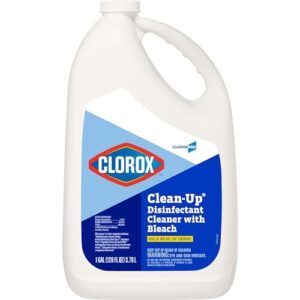
Clean labels matter, but a spotless shelf underneath matters just as much. CloroxPro Disinfectant Cleaner with Bleach kills 99.9% of bacteria and viruses, including COVID-19 in 30 seconds, making it ideal for wiping down shelving and jar exteriors before storage.
Its corrosion inhibitor protects metal lids and bands, while EPA registration (No. 67619-17, List N) confirms disinfection strength. Use gloves and ventilate the area — this formula contains 1.84% sodium hypochlorite, so treat it with the same respect you’d give any bleach-based product.
| Best For | commercial facilities like offices, schools, and restaurants that need a fast, reliable one-step cleaner and disinfectant for hard, nonporous surfaces. |
|---|---|
| Package Quantity | 1 bottle (128 fl oz) |
| Primary Material | Liquid cleaning solution |
| Intended Use | Cleaning/Disinfecting |
| Setting Suitability | Commercial, Home |
| Special Certification | Disinfectant Registered |
| Storage/Handling | Store upright, ventilated area |
| Additional Features |
|
- Kills 99.9% of bacteria and viruses, including COVID-19 in just 30 seconds
- Corrosion inhibitor helps protect surfaces while cleaning
- Cuts through grease, grime, mold, mildew, stains, and odors in one step
- Contains bleach, so gloves, ventilation, and surface testing are needed
- Only suitable for hard, nonporous surfaces — not a universal cleaner
- Comes as a refill bottle, requiring manual transfer into a spray bottle before use
Frequently Asked Questions (FAQs)
How long will homemade canned vegetables last?
High-acid vegetables stay at peak quality for 12 to 18 months, while low-acid varieties last up to two years when pressure canned properly. Quality fades gradually, but safety depends entirely on unbroken seals and correct storage conditions throughout.
Where is the best place to store homemade canned goods?
A cool, dark pantry or basement between 50–70°F works best, away from heat sources and sunlight. Avoid garages or sheds prone to swings above 90°F, since heat and light both degrade seals and nutrients over time.
What are the best canned vegetables to stockpile?
The vegetables that last longest are often the cheapest — corn, green beans, and diced tomatoes stockpile best, delivering 88-210 calories per can, with low-acid varieties like beans staying safe indefinitely when sealed and undamaged.
How to store homemade canned tomatoes?
Keep jars between 50–70°F, in a dark, dry spot with 50–60% humidity. Store upright, seals intact, away from light and moisture. Check for bulging lids or cloudy liquid before use, and consume within 12–18 months for best quality.
How do I know if a jar has sealed properly?
That faint "ping" during cooling? It’s your first clue. Press the lid’s center — it shouldn’t flex or pop back. A concave, immovable lid and a sharp ring when tapped confirm your seal held true.
What should I do with bulging or leaking jars?
Discard bulging or leaking jars immediately—don’t taste-test them. Place them in sealed plastic bags, avoid opening bulging lids, wear gloves, and sanitize surfaces with a 1:5 bleach solution afterward. When in doubt, throw it out.
Can I reuse metal rings after processing jars?
Yes, as long as they’re free from rust, dents, or warping. Wash by hand, dry thoroughly, and store separately from lids. Discard any ring that’s bent or stretched—it can’t create the tension needed for a proper seal.
Why should jars be stored without their bands?
Going bare up top isn’t just tidiness — it lets trapped moisture escape instead of corroding the metal, while an unobstructed lid makes bulging or a broken vacuum seal immediately obvious before spoiled food ever reaches your table.
How should I safely clean up a spoiled jar?
Never open bulging lids—double-bag the jar in heavy plastic first. Wear disposable gloves, wipe surrounding surfaces with a 1:5 bleach solution, then wash hands thoroughly.
Sanitize all nearby jars and utensils immediately to prevent cross-contamination and protect the rest of your pantry.
Conclusion
The USDA estimates that improper storage conditions cause more home-canned spoilage than faulty sealing ever does. That single fact changes how you see your pantry.
Mastering how to store homemade canned garden goods isn’t about luck; it’s about consistent temperature, smart shelving, and honest labels. Your cellar shelf becomes a vault against waste.
Check jars twice a year, trust your senses, and every August harvest will still taste like sunshine when winter breaks.
- https://extension.umn.edu/preserve-your-own-food/canning
- https://extension.psu.edu/storage-guidelines-for-home-preserved-foods
- https://www.nal.usda.gov/exhibits/ipd/canning/items/show/73
- https://nchfp.uga.edu/how/can
- https://www.healthycanning.com/wp-content/uploads/USDA-Complete-Guide-to-Home-Canning-2015-revision.pdf