This site is supported by our readers. We may earn a commission, at no cost to you, if you purchase through links.
Most gardens don’t fail from neglect—they fail from guesswork. A patch that gets six hours of morning shade gets planted with tomatoes that never fruit. Beds get crammed too close together, tools can’t fit through, and watering becomes a daily emergency. The fix isn’t more effort; it’s a smarter plan before anything goes in the ground.
Good garden planning ideas treat your space like a system—where sunlight, water, pathways, and plants work together instead of competing. Whether you’re starting from bare soil or reworking an established space, this approach ensures harmony among essential elements.
These seven strategies will help you design a garden that actually performs, transforming guesswork into intentional, thriving design.
Table Of Contents
- Key Takeaways
- Plan Productive Garden Zones
- Maximize Small Garden Spaces
- Design Raised Bed Layouts
- Mix Vegetables, Herbs, Flowers
- Build Sustainable Garden Systems
- Create Pollinator-Friendly Garden Plans
- Add Useful Garden Design Features
- Frequently Asked Questions (FAQs)
- What are the four common mistakes landscapers make when planting?
- What is the best way to layout a garden?
- How do I start a garden from scratch?
- What is the best soil mix for vegetables?
- How can I prevent common garden pests naturally?
- Which tools are essential for beginner gardeners?
- How do I plan crop rotation in my garden?
- How do I test and improve garden soil?
- What’s the best mulch for vegetable gardens?
- How often should I water new seedlings?
- Conclusion
Key Takeaways
- Map your sunlight and water zones before you plant anything — that single step replaces most of the guesswork that kills gardens.
- Small spaces punch above their weight when you go vertical, use compact raised beds, and pair plants that naturally support each other.
- Sustainable systems like rainwater harvesting, drip irrigation, and compost stations let your garden work for you, not the other way around.
- Adding pollinators, defined edging, and functional features like lighting or a pergola turns your garden from a chore into a space you actually want to be in.
Plan Productive Garden Zones
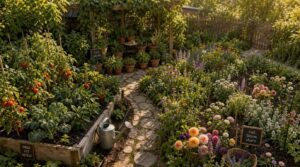
A productive garden starts with knowing your space. Before you plant a single seed, it helps to break your yard into zones based on sun, water, and how you actually use the space.
Scouting your yard for the right mix of sunlight and access is a great first step—these beginner vegetable gardening tips walk you through exactly what to look for.
Here are five simple ways to plan your garden zones and get more out of every square foot.
Sunlight Mapping
Before you plant a single seed, map where your sun actually lands. Use Light Meter Logging and Sun Path Diagrams to track exposure through the day.
- Record shade structures and shadows seasonally using Shadow Mapping
- Build Seasonal Sun Charts to identify Microclimate Zoning patterns
- Flag shade-tolerant vegetables for spots with under three daily sun hours
Garden microclimate analysis turns guesswork into a real plan. Use a full‑sun mapping guide to pinpoint areas that receive eight or more hours of sunlight for heat‑loving crops.
Water Needs Grouping
Once you know your sun zones, water is next. Hydrozoning Planning groups plants by water needs — a simple shift that makes garden irrigation far easier to manage.
| Zone | Water Need |
|---|---|
| Veggie beds | High (1–1.5"/week) |
| Native borders | Low (drought zones) |
| Mixed herbs | Moderate |
Soil Moisture Sensors eliminate guesswork in Seasonal Water Scheduling, particularly for Clay Soil Watering. Pairing drip irrigation with rainwater harvesting creates truly water-wise gardening and supports sustainable garden design.
Pathway Access
Good garden pathway design keeps your workflow smooth and your soil intact. With your water zones sorted, pathways tie it all together.
Width Standards matter: main garden pathways require 24–36 inches, while raised bed access paths need at least 18 inches.
Choose Surface Materials like gravel or pavers for optimal drainage. Edging Techniques help define routes clearly, ensuring durability and visual appeal.
Add Lighting Placement every few feet to enable safe evening harvests and enhance ambiance.
Activity Areas
With pathways in place, your activity areas can really shine. Think of them as your garden’s engine room — where Sunlit Workstations, Tool Caddy Zones, and Soil Amendment Stations live side by side.
A 10×12-ft space accommodates more than you’d expect:
- Mobile Irrigation Pods reduce hose drag
- Activity Zone Lighting extends your evening workflow
- Outdoor kitchen and patio setups anchor functional zones
- Outdoor dining within outdoor living areas ties everything together
Harvest Zones
Once your activity areas are set, divide your garden into harvest zones based on sunlight, drainage, and soil variability. Microclimate mapping helps identify which corners ripen crops faster.
Use yield mapping and GPS delineation to track productive areas year after year, ensuring consistent results.
Zone scheduling keeps vegetable succession planting organized, guaranteeing a steady harvest with no wasted space or guesswork.
Maximize Small Garden Spaces
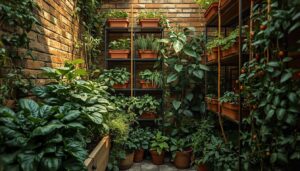
A small garden doesn’t mean a small harvest. With the right layout, even the tightest space can punch well above its weight.
Here are five smart ways to make every square foot count.
Vertical Growing
Think your small yard has nothing left to offer? Go vertical. Wall‑mounted Planters and Hydroponic Wall Systems turn bare fences into productive wall gardens.
Freestanding Vertical Towers stack 20 to 40 plants in a single footprint. Trellis Frame Systems guide climbing crops upward, while Bag Barrel Planters and hanging baskets flex around balconies and patios.
Vertical gardening concepts make every square foot count.
Compact Raised Beds
Even a tight backyard can produce more than you’d expect with the right compact raised bed setup.
- Composite bed materials hold up for years without rotting or warping
- Adjustable depth options let you grow carrots, lettuce, or herbs in the same frame
- Removable liners protect wood and simplify cleanup
- Modular frame connectors let you reshape beds as your garden grows
- Color-coded labeling keeps crop rotations clear and stress-free
Balcony Containers
Your balcony is a full garden waiting to happen. Lightweight planters keep things safe and movable, while self-watering systems cut daily watering in half. Use a quality container soil mix with perlite for drainage.
Microclimate pairings — like basil beside tomatoes — naturally deter pests.
Add vertical gardening structures along railings to maximize space.
Always prioritize wind protection to keep containers stable and thriving.
Pocket Gardens
Pocket gardens punch above their weight. With smart Microclimate Creation — grouping sun-lovers together and using Reflective Surface Boost from light-colored walls — you tap into surprising growing potential in tiny spaces.
- Blend a Soil Compost Blend with 40% compost for nutrient-rich roots
- Install Hidden Drip Irrigation to keep moisture consistent without fuss
- Use Pocket Windbreaks like small trellises to shield delicate plants
Sustainable design principles and vertical gardening make every inch count.
Shade-Smart Corners
Corners don’t have to be dead space. With smart Microclimate Design, you can turn shady spots into productive zones using ornamental grasses for height and shade vines on a lattice seating nook.
| Shade Garden Layout and Plans | Plant or Feature |
|---|---|
| Rainwater Corner | Rain barrel + drip line |
| Mulch Depth | 2–3 inches |
| Shade-tolerant vegetables | Lettuce, spinach |
| Vegetable Shade Garden Plan | Herbs in raised pockets |
| Shade structures | Lattice with climbing vines |
Shade-tolerant crops and vegetables thrive here year-round.
Design Raised Bed Layouts
Raised beds put you in control of your soil, space, and harvest. A few smart layout choices can make the difference between a garden that works and one that frustrates.
Here are the design decisions worth getting right.
Square-Foot Planting
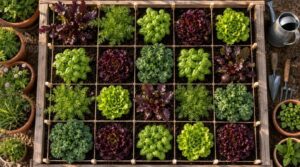
Square foot gardening turns a raised bed into a precise Grid Planting Guide — each 1×1 foot square assigned a specific crop.
Fill beds with Mel’s Mix Recipe (compost, peat moss, vermiculite) for balanced nutrients.
Use Density Yield Calculations to plant 16 carrots or 9 beets per square.
Apply Seedling Thinning Techniques as plants mature, and rotate crops seasonally for a productive Square Foot Garden Layout for vegetables, herbs, flowers.
Easy-Reach Bed Widths
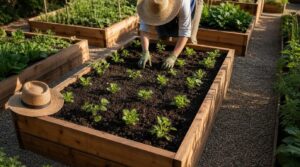
Once your square foot gardening grid is mapped, bed width makes or breaks your reach. Standard Dimensions matter here — keep your raised bed between 3 and 4 feet wide so you never have to step inside.
- Accessibility Guidelines suggest 36 inches for solo beds
- Clearance Requirements recommend a 24-inch side path
- Modular Adjustability lets you expand rails as needs change
- Material Compatibility principles apply: no awkward overextending
Good garden bed dimensions keep you working smarter.
Paver Bed Ideas
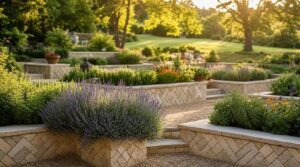
From bed width, it’s a short step to what your bed is actually built from. Paver beds change the game, offering solutions like Terraced Paver Steps or Color-Contrast Borders to give gardens lasting structure through hardscape design.
| Feature | Option | Benefit |
|---|---|---|
| Patterned Paver Designs | Herringbone, running bond | Visual interest, stability |
| Integrated Seating Walls | Same-material low walls | Cohesive outdoor rooms |
| Paver Drainage Solutions | Sand base, crushed stone | Prevents waterlogging |
Low-maintenance hardscape materials—such as concrete or natural stone—ensure raised bed dimensions remain clean and chemical-free, combining practicality with enduring style.
Pathway Spacing
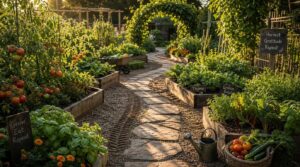
Once your beds are built, the paths between them need just as much thought. Good garden walkway design keeps you moving efficiently—aim for 6 to 8 feet of spacing between fixtures, adjusting for surface reflectivity and traffic density.
On curves, tighten your spacing slightly for smooth light overlap. Even simple curve adjustments prevent dark gaps and keep every harvest zone easy to navigate.
Mix Vegetables, Herbs, Flowers
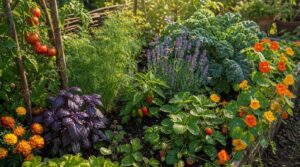
The best gardens don’t keep vegetables, herbs, and flowers in separate corners — they mix them together on purpose. Smart plant pairings can boost your harvest, fight off pests, and make the whole space look better at the same time.
Here are five combinations worth trying in your own garden.
Tomato and Basil
Tomatoes and basil are a natural team in any raised bed vegetable garden layout. Plant basil 12 to 18 inches from your tomato bed for real flavor enhancement and pest deterrence — basil’s aromatic oils help repel hornworms.
The pairing also creates microclimate benefits by improving airflow.
Use staking techniques to keep tomatoes upright, and time your harvest so both peak together.
Three Sisters Planting
Few companion planting methods rival the Three Sisters. Corn support lifts bean vines toward light, while nitrogen-fixing roots quietly enrich the soil below. Squash mulch smothers weeds naturally.
In the Three Sisters garden, corn lifts beans, beans feed the soil, and squash smothers the weeds
This cultural heritage system, rooted in Indigenous tradition, serves as your definitive companion planting guide.
- Plant corn first on mound planting mounds
- Interplant beans once corn reaches 5 inches
- Let squash sprawl to retain moisture
- Use crop rotation techniques between seasons
- Monitor soil health each harvest cycle
Marigold Borders
Marigolds do more than look good — they work hard. Plant them along your borders to suppress nematodes, attract pollinators, and define your bed edges cleanly.
| Border Maintenance | Seasonal Color Cycle | Companion Contrast |
|---|---|---|
| Deadhead every 1–2 weeks | Blooms late spring to autumn | Pair with blue salvia |
| Mulch for Edge Soil Health | Stagger sowings for continuity | Mix with chives or thyme |
| Replace spent plants seasonally | Peak color in midsummer | Try border planting ideas with dwarf types |
These pollinator-friendly plants support bees while keeping colorful flower beds vibrant all season through smart flower garden ideas.
Radish and Carrot Rows
Radishes are nature’s gift to impatient gardeners. These fast-growing radish plants double as Rapid Row Markers, showing you exactly where slow-growing carrots are emerging.
- Use Successional Sowing every 7–10 days for continuous harvests
- Follow seed spacing guidelines: radish 1 inch apart, carrots thinned to 2–3 inches
- Enjoy a Soil Aeration Boost as radish roots loosen compacted topsoil
- Practice Root Competition Management by harvesting radishes before carrots crowd them out
Drip irrigation ensures Moisture Uniformity — making these high-yield, low-space crops thrive together.
Sunflower Shade Planting
Sunflowers aren’t just sun-chasers — plant them strategically and they become living shade structures for your garden.
| What to Do | Why It Works |
|---|---|
| Choose branching varieties | Better tolerance for partial shade |
| Space rows 2–3 feet apart | Improves airflow and light access |
| Add organic mulch | Enhances soil enrichment and moisture |
| Pair with shade-tolerant vegetables | Smart companion plants thrive underneath |
Row spacing and mulch management turn sunflowers into productive, sustainable gardening allies.
Build Sustainable Garden Systems
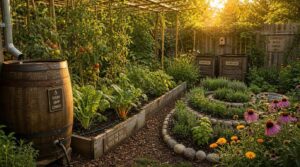
A truly great garden doesn’t just grow — it gives back. Building sustainable systems means your space works smarter, not harder, season after season.
Here are five practical ways to make that happen.
Rainwater Harvesting
Your roof is already collecting water — you just haven’t captured it yet. Rainwater harvesting for gardens turns every storm into a resource.
Start with these three essentials:
- Match gutter sizing to your roof’s surface area
- Install a first flush diverter to keep debris out
- Plan tank sizing, overflow management, and UV disinfection from day one
Water-wise gardening and Eco-Friendly Garden Ideas start here — conserving resources while building a truly sustainable gardening system.
Drip Irrigation
Once you’ve captured rainwater, put it to work smartly. Drip irrigation delivers water straight to the root zone — no waste, no runoff.
Emitter placement matters: position emitters near each plant’s base.
Pressure regulation keeps flow steady across every bed.
Subsurface drip cuts evaporation further.
Add fertigation integration to feed plants while watering.
Before winter hits, winterization practices protect your lines.
Waterwise gardening at its best.
Compost Stations
Smart irrigation feeds your plants — but compost feeds your soil. A well-built compost station relies on aeration channels, moisture management, and proper material sorting to break down organic waste fast. It uses a pest-proof enclosure to keep critters out, and sensor monitoring tells you when to turn or water.
These organic gardening practices build rich soil amendment and support garden biodiversity promotion naturally.
Reclaimed Materials
Good soil comes from the ground up — and so does good design. Reclaimed Timber Decks, Salvaged Brick Walls, and Repurposed Metal Trellises transform salvaged materials into beautiful DIY garden structures.
Vintage Stone Steps add character without the carbon footprint, while Upcycled Glass Mosaics bring vibrant color to borders. These Eco-Friendly Garden Ideas ensure low-impact gardens remain grounded in green design that actually lasts.
Organic Mulch
Reclaimed materials set the stage — now let organic mulch finish the job. A 2–3 inch layer of wood chips or straw manages Weed Suppression, Moisture Retention, and Soil Temperature control all at once.
- Decomposing mulch drives Nutrient Cycling naturally
- Annual Mulch Refresh rebuilds soil fertility management
- Mulching aids garden composting methods and eco-friendly garden materials
Your soil preparation starts here.
Create Pollinator-Friendly Garden Plans

Your garden can do more than just feed you — it can support entire ecosystems.
Welcoming pollinators isn’t complicated; it just takes the right mix of features working together.
Here’s what to add to your space to start attracting bees, butterflies, and birds.
Native Flower Borders
Native flower borders are one of the smartest investments you can make in your yard. Start with Soil Texture Prep — loose, well-drained ground lets Drought-Tolerant Natives like Echinacea and Rudbeckia thrive with little fuss.
Use Height Tiering to layer tall grasses behind low perennials.
Native Seed Mixes handle Seasonal Bloom Sequencing naturally, delivering non-stop color while boosting biodiversity in your pollinator garden year-round.
Bee-Friendly Blooms
Bees don’t just show up — you earn them. Start with Lavender Planting along sunny edges for mid-spring nectar, then let Coneflower Attraction carry flowers into fall.
Sage Nectar feeds colonies from late spring through autumn, while Sunflower Pollen draws crowds in midsummer.
Add Yarrow as a consistent Yarrow Foodsource across your Pollinator Garden Design, and your space becomes a hub for beneficial insects and pollinator-friendly plants.
Butterfly Landing Spots
Butterflies need more than nectar — they need places to land and warm up. Add Sunlit Rock Perches in open, Wind‑Sheltered Basking spots so they can regulate their temperature quickly.
Set up Mud Puddle Stations with Mineral‑Rich Puddles using a shallow saucer filled with damp sand.
Place Foliage Perch Plants at 1–3 meters high to round out your pollinator garden design and support beneficial insects and wildlife habitat.
Bird Baths
A bird bath is one of the easiest wildlife habitat upgrades you can make. For attracting species like sparrows and robins, a placement height of 18–24 inches works best.
Choose porous stone for smart material choices — it stays cooler longer.
Add water movement with a small solar pump.
Stick to a weekly cleaning routine, and your outdoor water features will thrive.
Insect Hotels
An insect hotel turns your garden into a working ecosystem. Smart garden planning and garden design choices here can dramatically boost pollinator activity.
- Materials Selection: Use untreated wood, bamboo, and hollow stems
- Cavity Dimensions: Drill holes between 3–9mm for solitary bees
- Placement Height: Mount 1–2 meters up, near pollinator-friendly plants and native plants
- Maintenance Schedule: Clear debris seasonally, guided by Seasonal Monitoring of visitor activity
Add Useful Garden Design Features
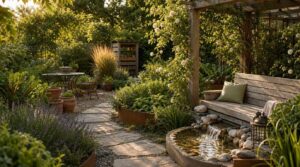
A great garden isn’t just about plants — it’s about how the whole space works for you. The right design features can turn an ordinary yard into somewhere you actually want to spend time.
Here are a few practical additions worth building into your plan.
Solar Path Lighting
Solar path lights do more than guide your steps — they shape the whole mood of your yard. Look for fixtures with semi-flexible panels and strong battery capacity to ensure lights run all night. Nighttime sensors automate the switching process.
With smart tilt optimization, panel efficiency improves considerably. These features collectively enhance both functionality and sustainability.
These landscape lighting ideas transform your dining patio lighting and overall yard lighting design into an eco-friendly garden idea worth showcasing.
Simple Water Features
After lights set the mood, water brings it to life. A simple garden fountain adds movement and sound without much effort. Bubbling rock designs sit naturally in any corner, while pondless waterfall ideas work beautifully in tighter spaces.
For those who love calm spaces, reflecting pool benefits include a mirror effect that opens up courtyard, garden, or patio designs.
A container water garden fits any patio perfectly, offering versatility and charm in compact settings.
Pergola Shade
A pergola transforms any open backyard into a real outdoor living space.
With UV-blocking fabrics blocking up to 95% of sun rays, you stay cool without losing light. Adjustable louvers allow precise control over shade throughout the day. Choosing aluminum frames ensures material longevity and simplifies maintenance.
Even a shady side yard benefits from smart orientation cooling through north or east-facing placement.
Defined Bed Edging
Good edging pulls your whole garden together. For a raised bed, brick or natural stone borders last 20–50 years and add timeless character. Steel creates that sharp, modern line.
Match your aesthetic color to mulch and foliage for cohesion—it’s a core garden design principle.
Flexible materials handle curved borders cleanly. Weed management becomes easier, too, since solid edging installation keeps grass from creeping in.
Outdoor Dining Spaces
Your garden’s edges are clean — now make the space work harder. A well-placed patio with weatherproof furniture, like teak or powder-coated aluminum, turns unused corners into real outdoor living.
Add shade structures, privacy screens, and ambient lighting to extend your evenings. Smart flooring solutions keep things safe when wet.
An outdoor kitchen or dining nook completes the picture.
Frequently Asked Questions (FAQs)
What are the four common mistakes landscapers make when planting?
Four mistakes stand out: skipping site assessment, poor garden soil preparation, ignoring plant spacing guidelines, and irrigation errors. Ignoring microclimates and skipping soil testing also hurt plant health fast.
What is the best way to layout a garden?
Think of your garden like a well-organized kitchen. Start with sunlight mapping, then group plants by water needs.
Use height zoning and buffer strips to optimize space and protect soil.
Incorporate seasonal rotation to maintain productivity and ecological balance.
How do I start a garden from scratch?
Start with site clearing, then do a quick soil test.
Pick beginner-friendly seeds, set a budget, and grab basic tool essentials.
A simple raised bed is all you need to begin.
What is the best soil mix for vegetables?
Loamy base soil works best. Mix 40% organic matter, 30% garden soil, and 30% aeration additives like perlite. Hit pH 0–0 for nutrient balancing. Perfect for raised beds and container gardening tips.
How can I prevent common garden pests naturally?
Beneficial insects, crop rotation, and companion interplanting break pest cycles naturally. Physical barriers like row covers protect seedlings. Organic sprays such as neem oil handle outbreaks.
Integrated pest management keeps your garden balanced without chemicals.
Which tools are essential for beginner gardeners?
A bad workman blames his tools — but a good one picks the right ones.
Your must-haves: a Hand Trowel Basics kit, Pruning Shears Guide, Ergonomic Gloves, Moisture Meter Use tool, and a Garden Tool Tote.
How do I plan crop rotation in my garden?
Group crops by plant family and move each family to a new bed every year. Let legumes go before heavy feeders.
Track it all in a simple rotation diary so nothing repeats.
How do I test and improve garden soil?
Think your soil’s fine? Surprise—it probably isn’t.
Grab a pH Test Kit first. Then fix nutrient deficiency with compost, improve soil aeration, and follow an amendment schedule for healthy, productive growth.
What’s the best mulch for vegetable gardens?
Straw mulch, compost mulch, grass clipping mulch, wood chip mulch, and pine needle mulch all work well. Each fulfills a different purpose, so your best pick depends on your soil and climate.
How often should I water new seedlings?
Water new seedlings daily using mist spraying and tray soaking. Stick to a daily schedule to ensure consistent care.
Morning moisture keeps roots happy all day. Check soil dampness regularly and never let the top inch dry out to maintain optimal growing conditions.
Conclusion
A garden without a plan is like a map with no roads—you’ll wander but never arrive. These garden planning ideas give your space direction, purpose, and staying power.
When sunlight, water, plants, and pathways all work together, your garden stops being a guessing game and starts becoming something you’re proud of.
Start with one zone, one bed, one smart choice. The rest builds naturally from there.