This site is supported by our readers. We may earn a commission, at no cost to you, if you purchase through links.
My tomato patch used to draw aphids like a dinner bell every June, until I tucked nasturtiums along the border and watched the pests migrate straight to those peppery leaves instead. That’s the quiet magic of pairing flowers to plant near vegetables: the right blooms bait pests away from your crops, summon ladybugs and lacewings to patrol for you, and pull in bees your squash desperately needs.
Marigolds, calendula, borage, dill—each one earns its spot for a reason rooted in chemistry or timing, not folklore. Get the pairings right, and your vegetable beds start running like a small, self-defending community.
Table Of Contents
- Key Takeaways
- Best Flowers to Plant Near Vegetables
- Flowers That Attract Pollinators
- Flowers for Natural Pest Control
- Edible Flowers Beside Vegetables
- Smart Flower Placement Tips
- Frequently Asked Questions (FAQs)
- What are the best flowers to plant near a vegetable garden?
- What flowers should not be planted near vegetables?
- Is October too late to plant flowers?
- What flowers can you put with vegetables?
- How does comfrey improve nutrient levels for vegetables?
- Can crimson clover boost nitrogen for vegetable beds?
- Which flowers help break up compacted garden soil?
- Do phacelia roots improve drainage for root vegetables?
- How does yarrow enrich poor soil around crops?
- Conclusion
Key Takeaways
- Marigolds release alpha-terthienyl from their roots, a compound that fights off nematodes underground while nasturtiums use mustard oil scents to lure aphids and cabbage whites away from vegetables above ground.
- Pollinator-friendly flowers like borage, zinnias, and bee balm keep bees, butterflies, and hummingbirds visiting your garden throughout the season, directly boosting vegetable pollination and yields.
- Predatory-insect magnets such as sweet alyssum, dill, and fennel recruit hoverflies, parasitic wasps, and lacewings to hunt down aphids and caterpillars, creating natural pest control without chemicals.
- Smart placement matters just as much as plant choice, since factors like sun direction, spacing, root competition, and regular deadheading determine how well companion flowers protect and support nearby vegetables.
Best Flowers to Plant Near Vegetables
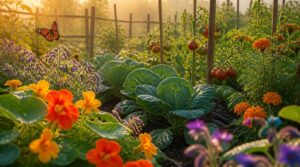
Your vegetable patch doesn’t have to fight pests alone, since the right flowers do a lot of that work for you. Some repel troublemakers with their scent, while others lure pests away before they ever reach your tomatoes or brassicas.
Pairing marigolds with basil or planting nasturtiums as a trap crop are just a couple of the combos covered in this guide to the best flowers for vegetable gardens.
Here are five flowers I plant every year to keep my vegetables healthier and my garden a little more balanced.
Marigolds for Nematode Control
Tuck French marigolds along your bed edges, and you’re waging chemical warfare underground. Their roots release alpha-terthienyl, a compound that penetrates nematodes and triggers oxidative stress until they die off. Research indicates that pathogenic nematodes invade plant roots and cause various deformities.
- Plant early for peak root exudate timing
- Border, don’t scatter, for rhizosphere contact
- Replace plants every 8-12 weeks
- Let residues biofumigate after cutback
- Pair with rotation for lasting suppression
Nasturtiums as Trap Crops
Marigolds fight underground; nasturtiums fight above it, using mustard oil volatiles and glucosinolate compounds to lure aphids and cabbage whites away from your brassicas.
Plant them as perimeter pest barriers, or keep some in pots for mobile placement when pest hotspots shift. Climbing varieties reach 6-10 feet, expanding the catchment area near trellised crops—a living decoy your vegetables will thank you for.
Calendula for Pest Distraction
If nasturtiums pull pests upward, calendula pulls them sideways—into decoy zones where aphids and whiteflies cluster on sticky stems instead of your tomatoes.
Volatile compounds deter nematodes while blossoms offer early-season nectar for hoverflies and lacewings.
My favorite trick? Deadhead regularly to manage pest reservoirs and keep beneficial insects fed all season long.
Petunias Near Tomatoes
Petunias bring a different gift to the tomato bed: nonstop color that keeps bees and hoverflies cruising through all season.
Their sprawling habit doubles as living mulch, shading soil to hold moisture and choke out weeds. Keep stems 12 inches from tomato bases, though, so roots aren’t fighting over nutrients.
Not a pest shield exactly, but a cheerful, hardworking garden ally.
Lavender for Moth Deterrence
Lavender does double duty, deterring cabbage moths and carrot rust flies while its scent disrupts pheromone detection nearby.
Plant it within 18 inches of brassicas and root crops for best lavender scent efficacy.
- Space plants 18 inches from vegetables
- Dry sachets near garden sheds
- Reapply oil sprays monthly
- Combine with cedar for layered defense
- Refresh scent every 1-3 months
It’s a gentle, natural moth prevention ally—no chemicals needed!
Simply tuck a sachet among your dried leaves and stems, and for more tips on keeping herbs fresh, check out this guide to preserving fresh herbs long term.
Flowers That Attract Pollinators
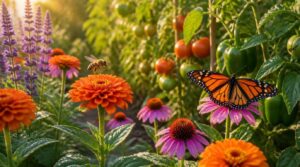
Vegetables can’t pollinate themselves, so you need bees, butterflies, and other beneficial insects showing up on a regular basis. The right flowers act like a welcome sign, pulling pollinators in and keeping them close to your crops. Here are five of my favorites for turning any vegetable patch into a buzzing, thriving little world of their own.
Borage for Bees
Borage is a pollinator powerhouse, its star-shaped blue blooms offering wide landing platforms and nectar rich in sugar. Bees return again and again since nectar replenishes throughout the day, while bumblebees gather protein-packed pollen too.
Even in cool spells, production holds steady, giving your garden stable seasonal forage. I love placing borage near apiary sites for a real pollination boost.
Zinnias for Butterflies
Watch a monarch drift across your garden, and it’ll likely beeline for zinnias. Pink, red, orange, and white blooms cue nectar from a distance, so plant 8 to 16 in a mass for real visitation.
Choose single-petaled, open-faced varieties like Profusion or Zahara—their flat centers give butterflies easy nectar access from midsummer straight through frost.
Cosmos for Beneficial Insects
Ever notice how a single wide-open cosmos bloom looks like a landing pad? That’s exactly what it is for hoverflies and lacewings.
A single wide-open cosmos bloom serves as a landing pad for hoverflies and lacewings
Predators travel these blooms as a nectar corridor between vegetable beds, hunting pests along the way.
- Aphid control
- Hornworm patrol
- Season-long blooms
- Garden health
Stagger sowings for continuous cover, and let a few self-seed for lasting beneficial insect habitat.
Bee Balm for Pollinators
Picture a nectar gap in mid-August, when spring blooms fade but pests and pollinators keep working. Bee balm fills that gap, its crowded floret heads offering steady nectar concentration through late summer.
Tubular florets let bees, butterflies, and hummingbirds probe deep, boosting pollinator visitation rates nearby. With so many Monarda cultivars available, you’ll find one suited to your beds, drawing beneficial insects right where your vegetables need them most.
Sunflowers for Garden Diversity
Why stop at bees when sunflowers invite the whole neighborhood? Their broad discs offer layered habitat, from ground beetles below to seed-loving finches above.
Bloom timing fills a key nectar window, while dwarf-to-giant sunflower varieties suit any garden scale. I love pressing seeds for oil, too—nothing beats homegrown biodiversity paying you back twice: pollinator support now, harvest later.
Flowers for Natural Pest Control
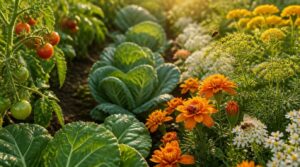
Beyond attracting pollinators, certain flowers roll out the welcome mat for insects that actively hunt down garden pests. Think of these blooms as your recruitment station for tiny predators and parasites who do the dirty work for you. Here are five flowers that turn beneficial bugs into your best line of defense.
Sweet Alyssum for Aphids
Tiny white blooms pack a serious punch against aphids. Hoverfly larvae each devour dozens of aphids daily, and alyssum’s nectar keeps adults nearby.
- Plant 5–10 plants per square meter for reliable coverage
- Border lettuce and brassica beds for fastest colonization
- Expect blooms within 6–8 weeks, creating a lasting predator reservoir right when aphid pressure builds.
Dill for Parasitic Wasps
Once alyssum’s covered your aphid patrol, dill steps in for the caterpillar squad. Its umbels feed parasitic wasps, extending survival by roughly 17.5 days and boosting glycogen reserves for host-searching.
Plant 3-6 dill in clusters within 2 meters of tomatoes. Blooms arrive 6-8 weeks post-sowing—succession-sow every few weeks for continuous nectar and maximum wasp visitation.
Fennel for Lacewings
Once dill’s wasps are patrolling your caterpillars, fennel invites another ally: green lacewings. Its flowers bloom continuously spring through late summer, feeding adults nectar while larvae hunt aphids and eggs nearby.
Plant fennel in full sun, avoid pesticides, and let umbels flourish. No room? Try coriander or Queen Anne’s lace—similar umbellifer alternatives for natural pest suppression.
Yarrow for Beneficial Insects
Yarrow rounds out your beneficial-insect crew with flat-topped flower clusters that act as landing pads for lacewings, hoverflies, and lady beetles. Its ferny foliage offers predatory wasps shelter, while deep roots aid soil aeration nearby.
Drought-tolerant and blooming late spring through summer, yarrow bridges nectar gaps—my favorite low-maintenance biodiversity corridor plant. Space clumps 12-18 inches apart in full sun.
Angelica for Ground Beetles
Towering angelica turns your garden’s back border into a beetle skyscraper. Reaching 5–8 feet, its umbels lure ground beetles that patrol soil for slugs and cutworms.
Plant it in partial shade, spaced 4–5 feet apart, mulched well for soil moisture management.
- Beetle refuge in seed heads
- Pairs with dill, fennel, yarrow
- Anchors your beneficial insect corridors
Edible Flowers Beside Vegetables
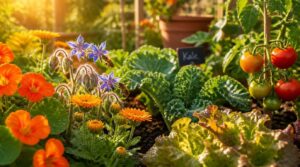
Once you’ve handled pests and pollinators, why not let your flower beds feed you too? Plenty of companion flowers taste as good as they look, adding color and flavor straight from the garden to your plate. Here are five edible varieties worth planting right alongside your vegetables.
Nasturtiums in Salads
Ever bite into a flower and get a peppery kick like arugula? That’s nasturtium leaves and blooms for you.
Toss chopped leaves and petals with citrus vinaigrette, goat cheese, and walnuts for crunch. Even the seed pods pickle beautifully for extra heat.
Rinse gently, add flowers last, and serve within 15 minutes for peak color and culinary flavor tolerance.
Borage Blossoms for Garnish
Picture five-pointed star-shaped blue blooms floating on a gin fizz or scattered over a citrus tart—that’s borage doing double duty as garden ally and edible flower.
Their mild cucumber flavor pairing works beautifully with mint or dill. Rinse gently, pat dry, and refrigerate in a damp towel for safe harvest practices that keep petals fresh 2-3 days before that final borage petal garnishing touch.
Chive Flowers Near Roots
Those dense lavender-purple umbels aren’t just pretty—they’re pulling double duty right in your vegetable rows.
Chive flowers rise on tall stalks straight from the bulb, so root zone competition stays minimal near carrots and lettuce. Sulfur compounds help deter aphids, while the blooms offer solid pollinator nectar accessibility for hoverflies and bees. Snip blossoms for a mild onion garnish, and pinch spent stalks to keep foliage thriving.
Daylily Buds for Cooking
Ever eaten your daylily patch without knowing it? Those unopened buds have a mild sweet pea flavor and crisp bite.
Harvest firm, bright-green buds before they unfurl, then sauté in butter 2-4 minutes. Cooking deactivates raw buds’ mild laxative effect.
Only use edible Hemerocallis varieties—skip ornamental cultivars, since not all daylilies are safe for the table.
Anise Hyssop for Tea
Licorice-mint flavor in a cup? That’s anise hyssop, and I love harvesting it just before flowering for peak essential oils.
Steep 1-2 teaspoons dried leaves 5-10 minutes; pair with lemon or honey. It aids digestion and attracts pollinators like bees to nearby squash and beans.
Dry leaves in a cool, dark spot—they’ll keep flavorful for six months.
Smart Flower Placement Tips
Choosing the right flowers is only half the battle, since where and how you plant them matters just as much. A little planning around height, spacing, and upkeep keeps your garden working with you instead of against you. Here are five placement tips that’ll help your flowers pull their weight all season long.
Plant Sunflowers North
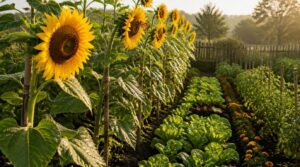
Give your sunflowers the north side of the bed, and everything south of them gets fair sunlight without fighting for it. Tall varieties reaching 3-4 meters create a natural windbreak function, while morning sun builds strong stems before afternoon heat sets in.
- Reserve northern edges for tallest cultivars
- Keep dwarf varieties (under 90cm) near low crops
- Space plants 12-24 inches apart
- Stake multi-branch hybrids in windy spots
Edge Beds With Bee Balm
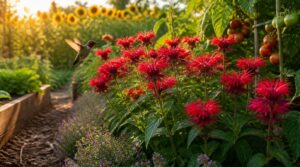
Once sunflowers anchor the north, let bee balm handle the borders. Its bright red spikes create a visual border 18-24 inches tall while forming a pollinator floral corridor for bees and hummingbirds.
The scent even helps mask tomato and pepper aromas, deterring pests naturally.
Since it spreads by rhizomes, divide clumps every 3-4 years to keep edges tidy—pair it with creeping thyme for a layered look.
Use Alyssum as Mulch
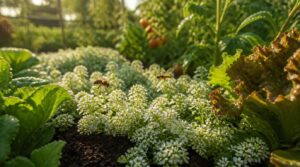
Bee balm covers the edges, but sweet alyssum covers the ground. This living mulch spreads 6-12 inches wide, suppressing weeds while retaining moisture and feeding soil microbes as it breaks down.
Perks include:
- Weed suppression within 4-8 weeks
- Erosion prevention via shallow roots
- Pollinator support, drawing beneficial insects for natural pest control
Space Zinnias and Cosmos
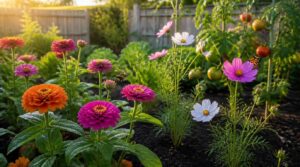
Crowding causes trouble here. Give Space Zinnias 8-18 inches and Cosmos 12-36 inches, since tall cultivars flop without room to breathe.
Loose, slightly acidic soil (pH 6.0-7.0) helps roots establish, while shallow seed sowing gets both species off to a strong start.
Cosmos experiences drought once rooted, making it a low-fuss neighbor that still pulls in bees, butterflies, and other beneficial insects for your vegetables.
Deadhead for Continuous Blooms
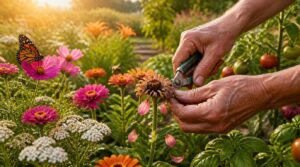
Snipping spent blooms is the secret to keeping your pest repellent plants and pollinator magnets working all season. This energy redirection pushes zinnias, cosmos, and yarrow toward new flowers instead of seed production.
Deadhead every 1-3 weeks, ideally in the morning. Sanitize your shears between plants, and reblooming varieties like daylilies will reward you with fresh blossoms attracting pollinators and beneficial insects throughout companion planting beds.
Frequently Asked Questions (FAQs)
What are the best flowers to plant near a vegetable garden?
Ever wonder why some vegetable beds seem to thrive while others struggle against pests?
Marigolds, nasturtiums, and calendula offer proven companion planting benefits, deterring nematodes and hornworms while borage and sweet alyssum boost pollinator habitat creation, supporting genuine integrated pest management naturally.
What flowers should not be planted near vegetables?
Skip toxic bulb interference from daffodils and gladiolus’s competitive moisture thieves, which starve shallow roots.
Chrysanthemums bring allelopathic growth inhibitors, hurting tomatoes, while daisies risk pest reservoir risks and nutrient competition issues—choose true garden allies instead for reliable natural pest control.
Is October too late to plant flowers?
Not if your frost date falls late — think "fall" as a verb, not a deadline. In milder zones, roots still establish before freeze; colder zones need mulch, quick-rooting plugs, and soil above 50°F for success.
What flowers can you put with vegetables?
Marigolds, nasturtiums, calendula, borage, and dill all pair beautifully with vegetables. They act as pest deterrents, attract beneficial insects, and boost pollination—true companion planting benefits that support healthier, more productive garden beds naturally.
How does comfrey improve nutrient levels for vegetables?
A plant that hoards nutrients only to give them all away—that’s comfrey.
Its deep taproot mining pulls potassium, calcium, and trace elements upward, later released through leaf mulch or comfrey tea, feeding soil microbial activity and boosting nutrient cycling for hungry vegetables nearby.
Can crimson clover boost nitrogen for vegetable beds?
Yes—Rhizobium bacteria nodules fix 50-125 lbs nitrogen per acre. This winter annual builds soil organic matter, then releases nitrogen quickly after spring termination, feeding heavy-feeding companion plants like tomatoes right when they need it most.
Which flowers help break up compacted garden soil?
Think of compacted soil as a locked door—bio-drilling flowers hold the key.
Sunflowers drive deep taproots through hardpan, while daikon-adjacent companions and comfrey fracture dense clay, improving soil aeration and enriching soil organic matter for stronger vegetable roots.
Do phacelia roots improve drainage for root vegetables?
Absolutely — that deep taproot boosts soil pore connectivity and macroporosity, guarding carrots and beets from drought and preventing root rot, especially valuable for clay soil remediation before root crops go in the ground.
How does yarrow enrich poor soil around crops?
Digging deep, mining minerals, moderating microclimates—yarrow does it all. Its deep root mining pulls potassium and phosphorus upward, boosting mineral availability while decaying leaves aid soil aggregate formation and support nutrient mineralization for hungry neighboring vegetables.
Conclusion
One patch of blooming borage can draw enough bees to pollinate thirty tomato plants twice over—that’s the return a few seed packets deliver.
Choosing the right flowers to plant near vegetables isn’t decoration; it’s strategy dressed in petals. Marigolds confuse nematodes, dill feeds parasitic wasps, sunflowers shade tender greens.
Plant with intention, and your garden stops fighting pests alone. It starts defending itself, bloom by bloom, season after season.
- https://soilmanagement.ces.ncsu.edu/cover-crop-management/tidewater-cover-crops/crimson-clover/
- https://www.sare.org/publications/managing-cover-crops-profitably/legume-cover-crops/crimson-clover/
- https://www.canr.msu.edu/news/benefits_of_crimson_clover
- https://growperma.com/blog/crimson-clover-as-cover-crop-nitrogen-fixer-and-pollinator-magnet