This site is supported by our readers. We may earn a commission, at no cost to you, if you purchase through links.
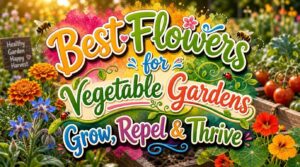
Most gardeners think of flowers and vegetables as two separate worlds—one for beauty, one for food. That’s a costly mistake. The best flowers for vegetable gardens do serious work: drawing in pollinators that boost yields, confusing pests with scent compounds, fixing nitrogen directly into soil, and even putting food on your plate.
A single borage plant, for instance, can attract enough bees to measurably improve tomato fruit set within a few feet of it. Whether fighting aphids, feeding the soil, or stretching your harvest season, the right flowers planted in the right spots enhance your garden’s efficiency.
These strategic blooms make your entire garden run better, transforming it into a thriving, interconnected ecosystem.
Table Of Contents
Key Takeaways
- Flowers like borage and marigolds aren’t just pretty — they actively boost yields, deter pests, and fix nitrogen, making them working partners in any vegetable garden.
- Strategic placement matters as much as plant choice: tall flowers on the north side, compact varieties in raised beds, and border plantings in odd-numbered groups all maximize impact.
- You don’t need separate pest control products when flowers like lavender, catnip, and sweet alyssum are already doing that job naturally through scent compounds and beneficial insect attraction.
- A staggered bloom plan — starting with cool-season flowers and bridging into summer — keeps pollinators active and pest pressure low throughout the entire growing season.
Best Pollinator Flowers
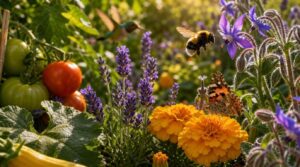
Pollinators are the quiet workers behind every tomato, squash, and cucumber your garden produces. Without them, even the healthiest vegetable beds can underperform.
Inviting bees and butterflies into your beds through spring pollinator garden strategies can noticeably boost both your harvests and long-term plant diversity.
These five flowers will bring bees, butterflies, and hummingbirds straight to your plants.
Borage
Borage is one of those quiet workhorses you’ll be glad you planted. Its star-shaped blue flowers open daily, pulling in bees and butterflies like a magnet. It grows well in dry nutrient‑poor soils, preferring well‑drained substrate.
Here’s why it earns a spot in companion planting:
- Self-Seeding Cycle – Plant once; it returns each year on its own.
- Taproot Moisture & Drought Tolerance – Deep roots pull water up, easing dry spells.
- Harvest Timing – Pick flowers mid-morning when fully open for peak cucumber aroma.
Bee Balm
Bee Balm brings a different kind of energy to your pollinator lineup. Its minty aroma drifts through beds, while hummingbirds and bumblebees work every bloom. For companion planting and biological pest control, it’s a reliable ally.
To maintain health, ensure air circulation for mildew prevention, and practice rhizome division every few years. Prune spent stems to encourage extending fall blooms—simple steps for a big payoff.
Sunflowers
Where bee balm hands off the baton, sunflowers take it and run. These towering companions are pollinator magnets — each head holds hundreds of tiny florets packed with nectar and pollen. Their heliotropic growth and spiral seed pattern aren’t just beautiful; they’re engineered for beneficial insects.
- Giant hybrids reach 5–8 ft, boosting garden biodiversity
- Oilseed varieties feed birds and bees alike
- Staking techniques keep tall stems upright in wind
- Compact cultivars suit tighter companion planting arrangements
Black-Eyed Susans
If sunflowers are the bold headliners, Rudbeckia plays a steady, reliable supporting role — and your vegetable beds will thank you for it. Black-eyed Susans shine in companion planting thanks to their strong pollinator attraction and impressive drought tolerance.
Start them from seed, sowing directly after frost. Hybrid varieties improve mildew management, and as a cut flower, longevity lasts 6–12 days.
Beneficial insects love them.
Bachelor’s Buttons
Few flowers earn their place in a vegetable garden quite like Bachelor’s Buttons. These reliable bee and butterfly magnets bloom from early summer into fall, drawing pollinators and beneficial insects straight to your crops — that’s companion planting working exactly as it should.
They’re drought-tolerant once established, self-seed freely, and thrive in blue, white, and pink varieties. Collect seeds easily, and enjoy their versatility as cut flowers too.
Best Pest-Control Flowers
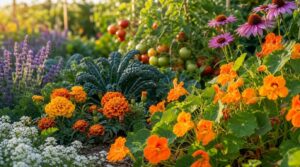
Some flowers do not just look good — they actually work for you by keeping pests away from your vegetables. A few well-chosen plants can shield your crops from aphids, beetles, nematodes, and moth larvae without reaching for a single spray bottle.
Pairing the right blooms with your vegetables is easier than you’d think — these companion planting strategies for a pest-free garden show exactly which flowers pull their weight.
Here are five pest-control flowers worth growing alongside your vegetables.
Marigolds
Few garden plants pull double duty quite like marigolds. Their strong scent works as a natural pest deterrent, repelling nematodes, squash bugs, and bean beetles — without harming beneficial insects you actually want around. Companion planting marigolds along vegetable rows is one of the smartest low-effort moves you can make.
Marigolds repel nematodes, squash bugs, and beetles naturally — protecting your vegetables without harming a single beneficial insect
- Variety Comparison: French (8–12 in.) stays compact; African types reach 36 in.
- Color Symbolism: Warm oranges and golds signal vitality — and brighten any bed
- Deterrent Mechanism: Pyrethrum in the foliage drives off soil nematodes naturally
- Marigold History: Cultivated by Indigenous Americans centuries before European gardens adopted them
- Seasonal Care: Deadhead spent blooms regularly to keep flowers — and protection — coming all season
Sweet Alyssum
Sweet alyssum is one of those quiet overachievers you’ll want in every vegetable bed.
This Cool‑Weather Bloomer doubles as a Fragrant Groundcover and a Beneficial Insectary — hosting hoverflies and lady beetles that handle aphids naturally. It’s organic pest control without the effort.
| Feature | Detail | Benefit |
|---|---|---|
| Height | 4–9 inches | Weed‑Suppressing Edge along rows |
| Bloom Season | Spring to frost | Long-lasting support for pollinators and beneficial insects |
| Self‑Sowing Habit | Returns in mild climates | Low-maintenance companion planting |
Catnip
Catnip serves a dual purpose in the vegetable garden—nepetalactone’s repellent effect drives flea beetles away from eggplants while still attracting bees. Yes, the same feline attraction that delights your cat is actually a powerful natural pest control tool. It combines companion planting and insect repellent in one fragrant package.
Here are key tips for using catnip effectively:
- Harvest leaves early — early harvest timing matters since aroma peaks just before flowering.
- Try indoor potting near windows where its tolerance to soil moisture keeps it thriving year-round.
- Plant near eggplant as companion planting to deter flea beetles naturally.
- Let it flower to draw beneficial insects like bees to your beds.
Lavender
Lavender pulls double duty in the vegetable garden—its aromatic essential oils deter moth larvae and foliage-eating pests, while pollinators flock to every spike. This dual functionality makes it a valuable companion plant for natural pest control.
Good soil drainage is non-negotiable; varieties like English lavender thrive with winter pruning, maintaining a compact, productive shape. Proper care ensures longevity and health, aligning with its low-fuss nature.
Its drought tolerance makes it low-maintenance, quietly supporting the garden ecosystem without demanding excessive resources. This resilience underscores its role as an efficient, hassle-free companion plant.
Buckwheat
Buckwheat is one of those quiet overachievers that earns its place twice over. As a cover crop, it suppresses weeds fast and improves soil health through quick improvement of soil organic matter — a genuine cover cropping win.
Its dense, pollen-rich flowers draw beneficial insects and pollinators while naturally knocking back aphid populations. That’s integrated pest management working exactly as it should.
Best Edible Garden Flowers
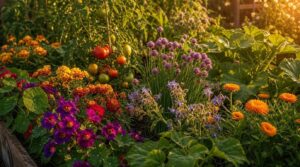
Some flowers pull double duty — they look great in the garden and taste just as good on your plate. Growing edible flowers alongside your vegetables means you’re never far from a fresh garnish or a handful of something interesting for dinner.
Five worth planting this season include varieties that enhance both aesthetics and meals.
Nasturtiums
Nasturtiums pull double duty in the vegetable garden — and honestly, few flowers match their usefulness. Their bright orange blooms lure beneficial insects while their signature peppery scent works as a natural pest repellent, deterring aphids and squash bugs nearby.
Here’s what makes them stand out:
- Companion planting with tomatoes and peppers reduces pest pressure
- Trap crop function draws aphids away from vegetables
- Quick groundcover fills bare soil, blocking pest harborage spots
- Fresh petals double as a culinary garnish in salads
- Easy seed harvesting means free plants every season
Calendula
If nasturtiums are the garden’s bold multitaskers, calendula is its quiet overachiever. These bright orange and yellow blooms offer a peppery petal flavor that brightens salads and rice dishes.
They support soil health by attracting beneficial insects and assist with organic pest control nearby.
Extended-bloom varieties keep flowering all season — especially with deadheading and proper sunlight and soil needs are met.
Chamomile
Calendula’s quiet reliability makes chamomile feel like a natural next step. German chamomile (Matricaria chamomilla) pulls double duty — offering medicinal benefits through calming herbal tea while aiding companion planting strategies around vegetables. Its growth cycle runs spring through fall, peaking at harvest timing when petals fully open.
Key reasons to grow it:
- Essential oil compounds attract beneficial insects
- Aids organic pest control naturally
- Varietal differences affect height and hardiness
Zinnias
Zinnias are the showstoppers, pulling their weight with vibrant charm. These heat-tolerant annuals dazzle in red, orange, pink, and purple, while their nectar-rich blooms attract beneficial insects throughout the season.
For practical gardening, employ companion planting strategies by placing them near vegetables to naturally deter pests. Extend bloom duration through regular deadheading, and preserve your favorites by saving seeds each fall.
Borage Blossoms
Borage might just be the most underrated flower in the edible garden. Those star-shaped blue blooms carry a cool cucumber flavor — lovely in salads or summer drinks.
Beyond the kitchen, borage’s nectar yield, which is abundant, creates a prime habitat for pollinators and attracts hoverflies all season.
Its self-seeding behavior ensures it returns yearly, while succession sowing maintains steady blooms.
Tuck it near tomatoes for smart companion planting; the light shade it provides also benefits nearby herbs.
Best Soil-Boosting Flowers
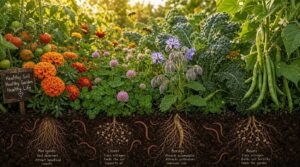
Not every flower earns its spot in the garden by looking pretty — some actually improve the soil beneath your feet. A handful of plants quietly fix nitrogen, add organic matter, and set your vegetables up for a stronger season.
Here are the best soil-boosting flowers worth making room for.
Crimson Clover
Crimson clover is basically free fertilizer in flower form. Through nitrogen fixation, it pulls atmospheric nitrogen into the soil via root nodules — cutting your fertilizer bill naturally.
It also delivers erosion protection with a dense canopy, adds biomass buildup when turned in, and offers early bloom for beneficial insects.
Nail your termination timing before seed set, and it’s a perfect crop rotation asset.
Dutch White Clover
Dutch white clover is the quiet workhorse of companion planting flowers and vegetables. Its nitrogen fixation ability enriches soil health improvement without any extra effort from you.
Growing just 4–6 inches tall, it’s a natural low‑maintenance lawn alternative that withstands light foot traffic and shade beautifully.
It also provides erosion control on gentle slopes, making it a versatile ground cover for varied landscapes.
The plant’s delicate white blooms attract beneficial insects, enhancing garden ecosystems while maintaining aesthetic appeal.
Phacelia
Phacelia might be the most underrated flower in companion planting flowers and vegetables. Its rapid biomass — full growth in just 6–8 weeks — makes cover crop timing easy, even for busy gardeners.
Here’s what it quietly does for your soil and garden:
- Breaks compacted earth, improving soil aeration for roots
- Delivers continuous nectar as blooms open sequentially, attracting hoverflies and other pollinating insects
- Creates a beneficial insect refuge that keeps pest pressure low
- Self-seeding behavior means it returns with minimal effort
Yarrow
Yarrow pulls double duty in the vegetable garden. Its drought tolerance means you won’t babysit it through summer heat, and its flat-topped blooms become a beneficial insect refuge packed with pollinating insects.
Prune the foliage and mulch it back for gentle soil enrichment.
Just watch its rhizome spread—division every few years keeps it honest in companion planting with flowers and vegetables.
Coreopsis
Coreopsis is the low-maintenance workhorse your raised bed didn’t know it needed. It tolerates poor soil while stabilizing beds and adding organic matter when cut back — a true flower-vegetable synergy.
Variety selection matters: dwarf forms suit tight spaces, while taller types extend summer color into fall, creating ideal pollinator habitats.
Stick to a division schedule every two to three years, and bloom extension becomes virtually self-sustaining across most hardiness zones.
Best Placement and Planting Tips
Knowing which flowers to grow is only half the battle — where and how you plant them makes all the difference. Strategic thinking about placement can mean healthier vegetables, better pollination, and fewer pest headaches throughout the season.
Here are the key tips that tie everything together.
Border Planting
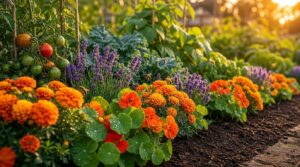
Think of your flower border as the backbone of your vegetable garden’s design. A well-placed planting edge gives the whole bed color and rhythm, along with structure. Group companion crops in odd numbers — threes or fives — to create natural flow.
Mulch edge management keeps things tidy, suppressing weeds while locking in moisture. Varying seasonal texture ensures your insect-friendly garden looks purposeful from spring through frost.
Tall Flowers North
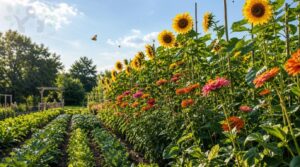
Once your borders are set, think vertically. Positioning tall flowers like Sunflower and Zinnia along the north side creates a natural windbreak design while opening up sun exposure zones for shorter crops. These structural plants build vertical habitats that pollinators love at every level.
Use structural staking for stems hitting 5–7 feet, ensuring stability as plants grow. This supports dense, healthy growth and prevents damage from wind or weight.
Plan a staggered harvest across hardiness zones to keep perennial garden borders productive through autumn. This approach extends the growing season and maximizes yield from your vertical design.
Raised-Bed Choices
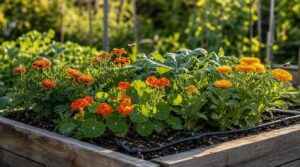
Raised bed gardening rewards smart flower choices. Keep bed width at 3–4 feet so you can reach all plants without stepping in the bed.
For the soil blend, aim for 60% quality garden soil, 30% compost, and 10% perlite. Flowers like Marigolds, Nasturtiums, and Calendula thrive in this mix.
Pair drip irrigation systems with compact varieties. Note that material choice affects how warm the soil stays.
Seasonal Bloom Planning
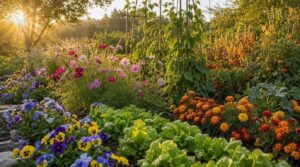
Choosing the right bed setup is only half the story — timing matters just as much. A solid seasonal planting guide ensures color and pollinator support continues all year.
Start with cool-season flowers like pansies to achieve your spring bloom window, then bridge any bloom gap into summer with cosmos. This succession of flowering plants maintains vibrancy through the fall color shift, ensuring your vegetable beds never go quiet.
Companion Planting Guide
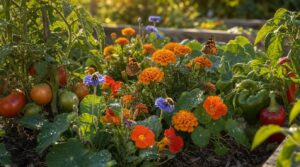
A good garden companion guide takes the guesswork out of crop pairing. Match flowers to vegetables using intercropping strategies that factor in root depth matching—shallow-rooted nasturtiums beside tomatoes, deep-rooted marigolds near peppers.
Time your seasonal companion planting so beneficial bug attractors like bachelor’s buttons bloom when pests peak.
That’s flower-vegetable synergy and natural pest repellent working together.
Frequently Asked Questions (FAQs)
What flowers should I plant in a vegetable garden?
Picture your vegetable garden buzzing with life — bees darting between blooms, pests staying away.
Planting marigolds, nasturtiums, and borage creates a real flower-vegetable synergy, delivering companion planting benefits while attracting bees and boosting harvests naturally.
Can flowers replace chemical pesticides entirely in gardens?
Flowers can considerably reduce your need for chemicals through biological control and Integrated Pest Management. However, they rarely replace pesticides entirely.
Seasonal coverage gaps and heavy infestations may still require targeted intervention.
Which flowers are toxic to dogs or cats?
Lilies are deadly to cats — every part, even a nibble. Tulip bulbs carry the highest toxicity for dogs. Daffodil lycorine effects include vomiting and heart issues.
Watch for lethargy as pet poison signs.
How often should companion flowers be watered and fertilized?
Most companion flowers require watering one to three times weekly, checking soil moisture before each session.
Feed every four to six weeks with a balanced fertilizer, reducing frequency during heat or heavy rain.
Conclusion
It’s no coincidence that the most productive vegetable gardens always seem to have flowers growing among them. Experienced growers stumbled upon this pattern long before science caught up to explain why.
Now you know the reasons—and the specific plants behind the results.
The best flowers for vegetable gardens aren’t decoration; they’re working partners. Plant them with intention, place them strategically, and your vegetables won’t just survive the season—they’ll genuinely thrive in it.
- https://dinternursery.ca/gardening-resources/attracting-beneficial-insects
- https://hort.extension.wisc.edu/articles/plant-flowers-to-encourage-beneficial-insects/
- https://hereshegrows.com/2024/01/10/edible-flowers/
- https://www.sugarmaplefarmhouse.com/companion-planting-flowers-herbs-that-help-repel-bugs/
- https://www.gardenary.com/blog/best-flowers-to-grow-in-vegetable-garden