This site is supported by our readers. We may earn a commission, at no cost to you, if you purchase through links.

Pesticides work. Nobody disputes that. But they also kill beneficial insects like ladybugs, lacewings, and parasitic wasps—nature’s free pest control. This tradeoff has pushed many gardeners toward a quieter, centuries-old strategy hiding in plain sight.
Certain herbs produce oils sharp enough to scramble an aphid’s feeding instincts, confuse cabbage moths seeking egg-laying sites, or trigger the same neurological alarm in mosquitoes that DEET does. These plants harness existing chemistry to repel pests while serving as food and fragrance.
Growing herbs that repel garden pests means your garden works with nature’s tools, doing double duty as food, fragrance, and a first line of defense.
Table Of Contents
Key Takeaways
- Herbs like basil, thyme, and catnip contain natural compounds that actively disrupt pest behavior — basil achieves roughly 79% mosquito deterrence, while thymol in thyme kills aphids at rates between 56–78%.
- Strategic planting matters: Pairing sage and garlic with brassicas, or basil and chives with tomatoes, creates layered protection targeting specific pests without chemicals.
- Some herbs attract beneficial predators — dill draws predatory wasps, fennel invites ladybugs, and borage lures lacewings that hunt aphids independently.
- Healthy herbs repel better: Provide full sun, well-drained soil, and regular light pruning — and contain mint to prevent invasive spread.
Best Herbs That Repel Garden Pests
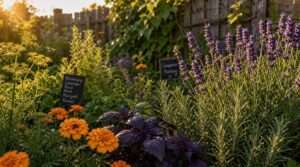
Some herbs do more than flavor your food — they quietly work to keep pests away from your garden.
Planting the right herbs near your vegetables can make a real difference — companion planting herbs like basil and rosemary naturally deter common garden pests without chemicals.
A handful of easy-to-grow options can make a real difference against the bugs that do the most damage.
Here are the best ones to start with.
Basil for Flies and Mosquitoes
Basil is one of the most reliable natural insect repellents you can grow. Its leaves contain oils like citronellal and linalool that repel mosquitoes and flies on contact.
Try the leaf crushing technique—simply rub a few leaves between your fingers near seating areas for nighttime aroma release. Citrus basil’s potency is particularly stronger, and planting a dense basil border maximizes coverage naturally.
In lab experiments, basil leaf material achieved about 79% mosquito deterrence, according to laboratory tests showed.
Sage for Cabbage Moths
Sage repels cabbage moths by releasing camphor-rich oils that confuse moths mid-flight, reducing how often they land and lay eggs on your brassicas. For organic gardening, it’s a quiet workhorse.
Three sage practices that actually help:
- Sage Edge Planting — border your cabbage bed, spacing plants 12–18 inches apart for full sage volatile emission coverage.
- Sage Leaf Harvesting — pick leaves regularly to keep the fresh scent coming.
- Sage Pruning Schedule — trim after flowering to maintain bushy, oil-rich growth.
Thyme for Aphids
Thyme repels aphids just as effectively as it controls cabbage worms. Its key compound, thymol, disrupts aphid feeding and host location — trials show mortality rates reaching 56–78% with proper oil concentration. An emulsified spray applied as a foliar treatment at dawn improves coverage without burning leaves.
Thymol synergy with carvacrol boosts results. Application timing matters — avoid midday heat to prevent evaporation and leaf damage.
| Method | Benefit | Best Use |
|---|---|---|
| Emulsified spray | Even leaf coverage | Aphid-heavy plants |
| Dawn application | Reduces evaporation | Hot-weather seasons |
| Companion planting | Encourages beneficial insects | Tomatoes, beans |
Chives for Japanese Beetles
Another sulfur-based defender worth planting is chives. Their scent intensity ramps up in full sun, creating steady beetle disruption that keeps Japanese beetles away from roses and berries. Try ring planting—spacing clumps 12 to 18 inches apart around vulnerable beds.
Watch your rhizome management too; divide clumps every few years. Seasonal timing is crucial during peak beetle activity in early summer.
Garlic for Aphids
Garlic might be your garden’s most underrated weapon against aphids. Its sulfur compounds—especially allicin—disrupt feeding and keep colonies from settling in. A simple garlic spray works surprisingly well:
- Steep crushed garlic in water for 24 hours
- Strain, then dilute 1–2 tablespoons per liter
- Add a drop of soap for better adhesion
- Apply early morning for leaf burn prevention
- Reapply every 7–14 days
Aromatic Herbs for Flying Insects

Flying insects like mosquitoes and flies ruin a backyard evening—they can be genuinely hard to get rid of. The good news is that aromatic herbs work quietly in the background, keeping these pests at bay without any chemicals.
Pairing rosemary with vulnerable plants is one of the smartest moves you can make—explore more strategies in this guide to companion planting for herb gardens.
Here are some of the best ones to grow near your outdoor spaces.
Lavender Near Patios
Lavender does double duty near patios — it repels mosquitoes while creating a calming ambiance that makes outdoor living spaces genuinely pleasant. Plant it as aromatic edging along patio borders, where seasonal blooming adds soft purple color from late spring through summer.
Its silvery foliage also aids heat mitigation near sun-baked paving. For container design, choose compact varieties in well-draining pots.
Lemongrass as Border Plants
Few plants pull double duty quite like lemongrass. Its clumping growth builds a dense hedge up to six feet tall, creating a natural barrier along garden edges. That citrus fragrance isn’t just pleasant — it actively repels mosquitoes all season long.
- Provides year-round structure without invasive spreading
- Pathway accents look stunning beside flowering companions
- Works alongside beneficial insects without disrupting them
Catnip for Mosquitoes
Catnip might surprise you — it’s not just for cats. Its active compound, nepetalactone, triggers mosquitoes’ TRPA1 mechanism, effectively overwhelming their senses and repelling them.
Catnip’s nepetalactone overwhelms mosquitoes’ senses, making it a surprisingly powerful natural repellent
Studies show catnip oil formulations can rival DEET in lab tests, proving their efficacy as a natural alternative.
For garden placement, plant catnip near seating areas and crush fresh leaves to release its powerful natural insect repellent instantly.
Mint in Containers
Mint is a powerhouse insect repellent, but it will take over your garden if left unchecked. To prevent invasive spread, contain it in a container with proper constraints.
Use a pot at least 12 inches wide, filled with well-draining soil, and ensure good drainage solutions at the bottom. This setup prevents waterlogging and root rot.
For optimal growth, provide full sun and maintain a consistent watering schedule. Light pruning encourages lushness and potency. Apply fertilizer every four to six weeks to sustain vigorous development.
Lemon Balm Near Seating
Lemon balm acts like a quiet bouncer for your patio — it naturally keeps mosquitoes at bay simply by its presence. Its groundcover fragrance creates a gentle patio aroma barrier that enhances the mood of any outdoor space.
To maximize its benefits:
- Crush a few leaves to release the citronella-like scent
- Use edge pruning to keep spreading under control
- Container planting near chairs maximizes herb-based deterrents
- Mulch around roots for moisture retention and lush growth
Companion Planting With Pest-Repelling Herbs
Where you put your herbs matters just as much as which ones you grow. Pairing the right herb with the right crop creates a kind of quiet teamwork that keeps pests guessing.
Here are the best companion planting combinations to try in your garden.
Herbs for Brassica Beds

Brassicas are bug magnets—cabbage moths, cabbage worms, and aphids love them. The fix? Weave sage, basil, thyme, and garlic through your beds using multi-layer borders and ideal planting density.
Sage confuses egg-laying moths; thyme and garlic repel aphids. This integrated pest management approach also attracts ladybugs and other beneficial insects, giving you a natural soil nutrition boost through seasonal herb rotation.
Herbs Near Tomatoes
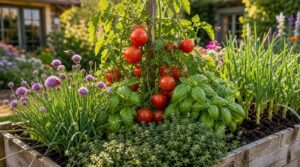
Tomatoes pair beautifully with the right herbs. Basil is the classic choice — it repels thrips and hornworm moths while enhancing flavor synergy between plants. Garlic manages aphids and whiteflies. Chives attract ladybugs and support disease suppression through microclimate creation around the bed.
Try these four companions:
- Basil — plant at root zones for soil health benefits
- Garlic — interplant in narrow borders for pest control
- Chives — use as edging to attract pollinators
- Thyme — low-growing ground cover that deters hornworms
Herbs Beside Beans

Beans love good neighbors. Basil keeps aphids and beetles away while acting as a living mulch — conserving moisture right at the roots. Cilantro boosts soil microbes when planted as a border, and its flowers attract parasitic wasps. Dill and parsley complete the trio by drawing beneficial insects that naturally suppress pest pressure.
| Herb | Companion Planting Benefits | Target Pest |
|---|---|---|
| Basil | Herb companion benefits: repels aphids, retains moisture | Aphids, beetles |
| Cilantro | Cilantro soil microbes, attracts wasps | Spider mites, aphids |
| Dill | Encourages beneficial insects, pest-resistant planting | Thrips, beetles |
Herbs Around Carrots
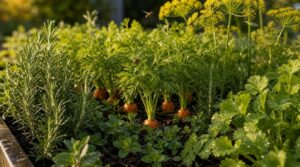
Carrots have one sneaky enemy — carrot flies that track them by their scent. A rosemary barrier breaks that trail effectively.
Weave in oregano as a low mulch between rows, and try a cilantro trap at bed edges to confuse beetles.
Dill draws beneficial insects that handle aphid pressure naturally.
With smart herb companion benefits and careful herb strip timing, your carrot bed stays cleaner all season.
Herb Borders for Vegetables
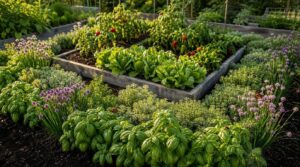
Think of your vegetable plot as a fortress — herb borders are the walls. A continuous ring of companion herbs creates layered vegetable garden protection all season long.
- Basil anchors sunny edges, boosting pollinator attraction while deterring flies
- Herbaceous borders of thyme and chives manage edge moisture and repel beetles
- Herb layering with seasonal planting and proper soil amendment keeps border width productive
Herbs That Attract Beneficial Insects

Not every garden helper comes with wings and a stinger — some of the best pest controllers are drawn in by the right plants. A few well-chosen herbs can turn your garden into a magnet for ladybugs, wasps, and lacewings that quietly do the hard work for you.
Here are the top herbs that bring those helpful insects running.
Dill for Predatory Wasps
Dill is one of the hardest-working garden companion plants you can grow. Its sunny umbels offer real umbel accessibility — wasps land easily and drink deeply. That nectar longevity keeps predatory wasps fueled for longer foraging runs, boosting biological control across your beds.
Summer flowering aligns perfectly with peak pest pressure, and border placement near brassicas maximizes wasp recruitment where you need it most.
| Dill Benefit | How It Works | Garden Impact |
|---|---|---|
| Nectar longevity | Simple sugars sustain wasps longer | More active foraging time |
| Umbel accessibility | Open flower structure aids landing | Higher visitation rates |
| Summer flowering | Blooms during peak pest season | Timely biological control |
| Border placement | Funnels wasps toward interior beds | Broader crop protection |
| Pollinator attraction | Draws beneficial wildlife consistently | Healthier garden ecosystem |
Fennel for Ladybugs
Few plants pull double duty quite like fennel. Its tall stalks create vertical habitat design that ladybugs love — offering microclimate shelter from wind and an overwintering refuge in mild seasons. Here’s what makes fennel a smart addition:
- Nectar sugar content fuels adult ladybugs during peak aphid outbreaks
- Its aphid lure strategy draws prey, keeping ladybugs resident longer
- Biological control spreads to neighboring beds naturally
Plant it. Let it work.
Parsley for Tachinid Flies
Parsley is quietly one of the hardest workers in a pollinator-friendly garden. Let it flower, and you’ve created a tachinid habitat that draws parasitic flies straight to your pest problems. These flies lay eggs on caterpillars like cabbage worms — and that’s the end of them.
Time your flower timing with succession planting to maintain a diverse nectar zone all season, supporting integrated pest management and garden biodiversity naturally.
Borage for Lacewings
Borage is a quiet powerhouse in biological pest control. Its dense blue flowers create a lacewing habitat with rich nectar supply, drawing these aphid-hunting insects right where you need them.
Borage also provides egg laying sites on its broad leaves and, through seasonal bloom timing and microclimate creation beneath its canopy, nurtures a thriving garden ecosystem — making it a cornerstone of integrated pest management.
Flowering Herbs for Pollinators
Want to attract pollinators all season long? Plant a mix of nectar-rich blooms with staggered timing. Early-season flowers like lavender and chives provide initial resources, while mid-season options such as catnip and oregano sustain momentum. Dense herb clusters from thyme and yarrow extend late-season nectar into autumn, ensuring continuous support for beneficial insects.
Blue-purple blooms, including lavender and borage, are especially magnetic to bees, enhancing pollinator activity. This strategic mix keeps your garden vibrant while fostering harmony between insect-repellent plants and helpful bugs.
Growing Herbs for Stronger Pest Control

Getting the most out of your pest-repelling herbs comes down to how well you grow them. Healthy, thriving plants release stronger scents — and that’s exactly what keeps pests away.
A few simple growing habits make all the difference.
Full Sun Placement
Most insect repellent herbs need full sun — at least six hours of direct light daily. Lavender, basil, and lemongrass all perform best with consistent sun exposure throughout the seasons.
Good plant spacing keeps air moving and reduces disease.
Use mulch management to protect soil moisture on hot afternoons.
This simple setup strengthens your pollinator-friendly garden and makes every herbal insecticide work harder.
Well-drained Soil
Sunlight helps herbs grow, but soil texture keeps them thriving. Herbs like lavender hate wet feet, so well-draining soil is essential. Poor drainage weakens insect-repellent plants and kills the aromatic oils that make them effective.
- Test drainage by pouring water into a hole you’ve dug—good soil drains at about an inch per hour.
- Incorporate gravel to loosen heavy clay soil.
- Build raised beds to lift roots above soggy subsoil.
- Layer organic mulch to maintain healthy soil structure.
Container-grown Mint
Soil texture matters for drainage — and it matters just as much for containment. Mint is one of the best insect-repellent plants, but it spreads fast. To manage its growth, keep it in a 6–12 inch pot using a soil mix formula with perlite for drainage.
Choose peppermint or spearmint for natural pest control. Water when the top inch of soil dries out, and watch for diseases to maintain your organic pest control workhorse’s health.
Timed Planting After Frost
Timing matters more than most gardeners realize. Once you’ve got mint sorted in its container, think about your other herb-based deterrents.
Soil temperature should hit 18°C before you transplant basil, while thyme tolerates cooler conditions. Hardening off for 7–10 days prevents transplant shock.
A sunny microclimate advantage can buy you extra weeks. Use row covers if late frost threatens your insect-repellent plants.
Harvesting Without Weakening Plants
Harvesting your herbs the right way keeps them strong — and strong herbs repel pests better. Clip stems just above a leaf node, never remove more than a third at once, and rotate across stems each session.
Here’s a simple rhythm to follow:
- Gentle pruning every 1–2 weeks beats a single heavy cut.
- Leaf harvesting in the morning preserves essential oils.
- Stem snipping at a diagonal encourages faster branching.
- Mulch recovery after harvest locks in moisture and aids regrowth.
Frequently Asked Questions (FAQs)
Can herbs repel pests indoors as well?
Yes — herbs work indoors too. Basil or Mint placed on a window sill naturally deter flies and mosquitoes through their essential oils.
Lavender and Rosemary are also solid choices, though always verify pet safety considerations first.
Which herbs work against soil-borne nematodes?
Marigold and garlic are your best defenses. Marigold releases nematicidal terpenes into the soil, while garlic’s allicin compounds degrade nematode viability.
Both offer reliable, plant-based pest control right at the root level.
Do herb sprays harm beneficial garden insects?
DIY sprays using essential oils can be effective, but their application requires careful consideration.
Proper spray dilution and application timing are critical to minimize non-target effects on bees and beneficial predators.
How long do dried herbs stay effective?
Dried herbs generally stay effective for one to three years with proper storage in airtight containers.
Herb type variation matters — basil fades faster than rosemary.
Do a quick quality check: if the scent is gone, so is the potency.
Can herbs replace chemical pesticides entirely?
Herbs help, but they can’t do it all alone. Think of them as your first line of defense — not the whole army. Severe infestations still need targeted, conventional backup.
Conclusion
Old alchemists spent lifetimes searching for magic potions—turns out, the answer was growing in the garden all along.
The right herbs that repel garden pests don’t just protect your plants; they pull beneficial insects in, creating a system that largely runs itself.
Plant basil near tomatoes, let dill go to flower, keep mint contained.
Give these herbs the sun and drainage they need, and your garden quietly takes care of what pesticides never could.
- https://sacredelements.world/blogs/wellness/scents-that-repel-mosquitos-flies-and-pesky-insects-naturally?srsltid=AfmBOor0j7o9C-E19MKbeSpBtkqCHmqwQ5pBUVd2CBCuRhepROJXg7uV
- https://landscapeipm.tamu.edu/types-of-pest-control/chemical-control/organic/botanical/
- https://www.sugarmaplefarmhouse.com/companion-planting-flowers-herbs-that-help-repel-bugs/
- https://gardenandgun.com/five-companion-plants-to-eliminate-garden-pests
- https://journeywithjill.net/gardening/2019/02/26/companion-planting-pest-control/