This site is supported by our readers. We may earn a commission, at no cost to you, if you purchase through links.

Some plants are selfish. Others pull their weight and then some. Centuries before synthetic fertilizers existed, farmers figured out that certain crops thrive when grown together—not by accident, but because of real biochemical exchanges happening underground and in the air.
Basil confuse hornworms with volatile oils. Marigold roots poison nematodes. Bean nodules fix nitrogen that feeds neighboring corn. These aren’t gardening myths—researchers have measured the outcomes. The right vegetable garden plant pairings cut pest pressure, build soil fertility, and boost yields without a single spray bottle.
Here’s what the science and centuries of field experience say actually works.
Table Of Contents
Key Takeaways
- Pairing tomatoes with basil and marigolds delivers measurable pest control, soil cooling, and pollinator attraction without a single synthetic spray.
- The Three Sisters method—corn, beans, and squash—works because each plant does a different job: beans feed the soil, corn supports the beans, and squash shades out weeds.
- Some pairings actively hurt your harvest, so keep fennel isolated, separate tomatoes from potatoes and corn, and never plant onions next to beans.
- French marigolds (Tagetes patula) cut root knot nematode populations by up to 60% in one season when planted five to six weeks before your main crop.
Best Vegetable Garden Plant Pairings
Some plant pairings just work better than others, and knowing which ones to choose saves you time, effort, and a lot of frustration. The combinations below are time-tested and rooted in how plants actually interact—through soil chemistry, scent, and structure.
For a deeper look at which plants genuinely help each other thrive, this companion planting guide for vegetable gardens breaks down the science behind the most effective pairings.
Here are the best vegetable garden pairings worth planting this season.
Tomatoes With Basil and Marigolds
Few plant trios pull more weight than tomatoes with basil and marigolds. Together, they deliver:
- Pest control — basil disrupts hornworm and whitefly host-finding
- Insect attraction — marigolds draw lady beetles and parasitic wasps
- Soil cooling — basil roots moderate root-zone temperature
- Flavor enhancement — basil’s volatile oils may improve fruit aroma
That’s companion planting earning its place. This combination follows a centuries‑old gardening hack proven to boost plant health.
Beans With Corn and Squash
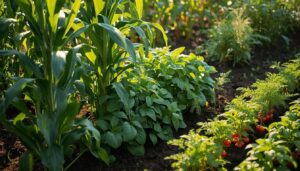
Basil and marigolds are hard to beat—but beans, corn, and squash together might be the original power trio. The Three Sisters method pairs intercropping with ecological genius.
Beans deliver a Soil Nitrogen Boost that feeds hungry corn.
Squash spreads wide, building Microclimate Creation underfoot.
You get Yield Complementarity, Root Zone Biodiversity, and real Harvest Trio Benefits—corn, beans, and pumpkins or winter squash—all from one bed.
Carrots With Onions and Rosemary
This pairing pulls double duty—in the garden and on the plate. Carrots with onions create natural pest control through scent masking: the onion aroma confuses carrot flies before they find your crop. Adding rosemary nearby stacks another protective layer.
Come seasonal harvest, this trio delivers Flavor Balance and Nutrient Synergy when roasted together with olive oil. The roasting techniques remain straightforward, transforming the garden’s defensive alliance into a flavorful, nutrient-rich dish.
Brassicas With Dill and Sage
Brassicas face a pest problem—cabbage moths, aphids, and caterpillars. Dill and sage offer effective solutions. Dill’s essential oils interact with nearby plants, attracting lacewings that prey on aphids, while sage acts as a natural pest deterrent, repelling cabbage moths through its volatile compounds.
Staggered planting timing is crucial: sow dill three weeks before transplanting the brassicas. This companion planting approach also improves airflow and conserves soil moisture naturally.
Potatoes With Beans and Marigolds
Potatoes, beans, and marigolds work like a well-rehearsed team. Together, they deliver real companion planting benefits you can measure:
- Beans drive nitrogen fixation, feeding potato roots directly
- Marigolds suppress nematodes and boost microbial activity in the soil
- Dense plantings improve soil structure and support water conservation through pest dilution
Yield enhancement starts the moment these three share a bed.
Legume Pairings for Soil Fertility
Legumes are quiet workhorses in the garden—they fix nitrogen right in the soil, feeding neighboring crops without any extra effort from you. The right pairings can make a real difference in how well your whole garden grows.
Here are five legume combinations worth trying.
Beans With Corn
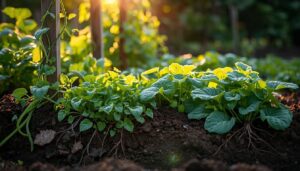
Few pairings in the garden deliver as much as beans intercropped with corn. Beans handle nitrogen fixation, pulling N₂ from the air and feeding it directly into the root zone—a gift corn eagerly accepts. Corn returns the favor by acting as a living trellis, creating a mutually supportive system.
Together, they achieve real yield synergy, reduce pest attraction, balance soil moisture, and align synchronized harvest timing. These benefits mirror the wisdom of the original Three Sisters method, demonstrating a time-tested agricultural harmony.
Peas With Leafy Greens
Cool-season timing makes peas and leafy greens natural companions. Both thrive between 60 and 70°F, so you can plant them together in early spring or fall without compromise.
Intercrop them in alternating rows—peas climb their trellises while spinach or kale fills the gaps below.
Consistent moisture management keeps both happy, and the intercropping layout naturally suppresses soil-borne pests, extending your harvest synergy well into cooler months.
Soybeans Near Heavy Feeders
Soybeans are quite workhorses — fixing nitrogen through root nodules while benefiting surrounding crops. But plant them near heavy feeders without a plan, and you’ll see moisture competition eat into your yields fast.
Keep these five strategies in mind:
- Spacing Strategies — Allow 12–18 inches between soybeans and neighboring heavy feeders
- Nodule Protection — Inoculate with rhizobial bacteria before planting
- Fertilizer Balancing — Run a soil test and adjust phosphorus and potassium accordingly
- Pest Scouting — Check weekly for aphids and pod feeders
- Mulch — Conserve moisture and reduce weed pressure around your stand
Bush Beans With Potatoes
Bush beans and potatoes are a natural team. The potato canopy shade benefits soil by keeping moisture levels steady, while beans quietly fix nitrogen underground — a nitrogen boost timing that feeds the bed over time.
You gain pest management synergy too, as beans deter beetles that target potatoes. Companion planting doesn’t get more practical than this.
Pole Beans With Trellising Crops
Pole beans don’t just climb — they work while they do it. Pair them with cucumbers or corn using solid trellis materials like wood stakes or metal grids, and you’ve got vertical stacking that earns its space.
- Aim for ideal height of 6–8 feet
- Keep row spacing at 24–36 inches
- Try rhizobium inoculation at sowing
- Practice vine pruning for airflow
- Echo the Three Sisters structure
Herb Pairings for Pest Control
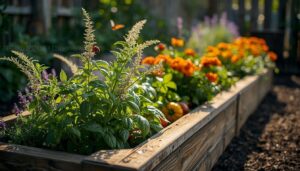
Herbs do more than flavor your food—they quietly protect your vegetables by confusing, repelling, and trapping the insects that cause the most damage. The right herb planted in the right spot can replace a lot of what you’d otherwise spray.
Here are the pairings worth knowing.
Basil Near Tomatoes
Basil is one of the best companion plants for tomatoes, and it earns that reputation. Plant it 12–18 inches from your tomato stems, and it starts working immediately—repelling aphids, whiteflies, and hornworms through aroma synergy while delivering real microclimate benefits like soil cooling around the roots.
| Factor | Basil Benefit | Tomato Outcome |
|---|---|---|
| Root spacing | Minimal competition | Stronger root development |
| Harvest timing | Simultaneous peak | Fresh Caprese ready together |
| Pest pressure | Confuses whiteflies, aphids | Less foliage damage |
Herbs as pest deterrents don’t get more practical than this pairing.
Rosemary Near Carrots
Rosemary pulls double duty where carrots are concerned. Its volatile oils create a natural scent barrier that masks carrot fly cues, cutting root pest pressure markedly. These herb pest deterrents also improve microclimate benefits by shading soil and supporting soil drainage around carrot roots.
Key companion spacing and planting guidelines:
- Space rosemary 12–18 inches from carrot rows
- Position plants on the north or windward edge
- Place rosemary along bed borders as a living scent barrier
- Prune regularly to sustain drought tolerance and airflow
Dill Near Brassicas
Dill works hard in the brassica bed. Plant it along the edge—edge planting keeps it from shading your cabbage, broccoli, or kale—and its aromatic oils deliver real moth deterrence against cabbage moths and worms.
It also creates hoverfly habitat, pulling in parasitic wasps that hunt brassica pests. This dual action fosters a natural pollinator boost while ensuring cleaner crops without sprays.
Chives Near Tomatoes
Chives pull double duty near tomatoes, leveraging sulfur compounds that mask scents to confuse aphids. Studies confirm this leads to aphid suppression of up to 40 percent with close planting.
These same sulfur compounds also aid early blight reduction by minimizing leaf-wetness duration. Additionally, their root zone compatibility ensures no crowding occurs, supporting healthy growth.
Furthermore, chives attract lady beetles, introducing natural pest control directly into the companion planting system.
Sage Near Cabbage
Sage is one of those herbaceous aromatic plants that earns its place as a perennial border around your brassicas. Its volatile pest repellent oils confuse cabbage moths, loopers, and diamondback larvae before they settle. Plant it 12–18 inches out for best airflow and effect:
- Disrupts pest navigation through scent masking
- Aids microclimate cooling on hot afternoons
- Aids soil moisture balance under mulched borders
- Provides natural weed suppression around cabbage beds
Flower Pairings for Beneficial Insects

Flowers do more than look pretty in your garden—they pull in the insects that keep pests in check and crops pollinated. Choosing the right ones can make a real difference in how well your vegetables perform.
Here are five flower pairings worth adding to your beds.
Marigolds for Nematodes
French marigolds (Tagetes patula) are one of the most reliable biocontrol tools you can plant. Their root exudate mechanisms release nematicidal compounds directly into the soil, cutting root knot nematode populations by up to 60% in a single season.
French marigolds release nematicidal compounds that slash root knot nematode populations by up to 60% in a single season
| Factor | Recommendation | Why It Matters |
|---|---|---|
| Variety efficacy | French marigolds | Strongest nematode suppression |
| Marigold spacing | 12–18 inches apart | Maximizes root contact |
| Seasonal planting timing | 5–6 weeks before main crop | Builds suppression early |
| Soil nematode control | Warm-season peak | Heat boosts compound activity |
| Companion planting use | Border or interrow | Creates full nematode barrier |
Avoid signet types — they won’t cut it where nematode pressure is serious.
Nasturtiums as Trap Crops
Nasturtiums pull double duty in any smart garden plan. While marigolds suppress nematodes below ground, nasturtiums handle the action above it — acting as a living lure that draws aphids, squash bugs, and cucumber beetles away from your main crops.
Here’s how to use this trap cropping technique effectively:
- Planting Timing — Set nasturtiums out 1–2 weeks before vulnerable crops emerge
- Spacing Density — Plant 12–18 inches apart to build continuous scent corridors
- Vertical Barriers — Use climbing varieties along trellises to intercept pests at height
- Push‑Pull Integration — Pair nasturtiums with onions or mint to push pests toward the trap
- Weekly Maintenance — Remove heavily infested growth to keep the trap fresh and functional
Think of them as your garden’s natural pest deterrents working around the clock.
Bee Balm for Pollinators
Few plants work as hard as bee balm (Monarda didyma) in attracting pollinators into your garden. Its long bloom season — six to eight weeks of high nectar yield — makes it a hummingbird magnet and a pollinator corridor between vegetable beds.
Plant it in clumps, divide every two to three years for healthy clump propagation.
Watch beneficial insects boost fruit set on nearby tomatoes and peppers.
Sunflowers as Support Plants
Sunflowers do double duty in the garden. As a pollinator magnet, they draw beneficial insects that boost fruit set on nearby tomatoes and cucumbers. Their deep roots deliver real soil benefits—pulling up nutrients and improving structure.
Use tall varieties like Mammoth Russian for a natural windbreak effect, stabilizing sunflower stems against wind while sheltering delicate companions.
Smart vegetable pairings don’t get more practical than this.
Amaranth for Garden Diversity
Amaranth pulls serious weight in polyculture gardening. Its leafy diversity and bold seasonal colors—ranging from deep red to golden—serve as a visual anchor. But the real value is ecological.
Flowering stalks create nectar corridors, attracting parasitoids and native bees throughout the summer.
With drought tolerance, plant diversity, and a bonus grain harvest, this companion planting workhorse earns its place in any garden biodiversity plan.
Three Sisters Planting Method
The Three Sisters method is one of the oldest companion planting systems that still holds up today. It pairs corn, beans, and squash in a way where each plant pulls its own weight.
Here’s how each piece of the trio works — and how to add a fourth if you want to push it further.
Corn as Bean Support

Corn does more than feed you — it works for your beans too. In the Three Sisters system, the corn stalk trellis gives pole beans something to climb, so you don’t need extra structures. As beans wind upward, their root zone interaction with corn creates microclimate benefits that moderate soil temperature.
Shading from corn leaves also helps with weed suppression, making your harvest timing smoother.
Beans for Nitrogen Fixation

While the corn manages the vertical lift, the beans are quietly doing chemistry below ground. Through Rhizobium inoculation, root nodules convert atmospheric nitrogen into a form both corn and squash can use.
Keep your soil pH around 6.0–7.0 and moisture steady — that’s your temperature window for peak fixation.
Smart variety selection and intercropping legumes like these are companion planting strategies that genuinely pay off.
Squash as Living Mulch

Once the beans get to work underground, squash takes over at ground level. In the Three Sisters method, squash acts as living mulch — its broad leaves spread wide, doing four jobs at once:
- Weed suppression — blocks light so seeds can’t germinate
- Moisture conservation — shades soil, slowing evaporation
- Soil temperature buffering — cools roots during heat spikes
- Erosion mitigation — cushions soil from heavy rain
Try Blue Hubbard squash for especially dense ground cover planting.
Sequential Planting Order

Squash covers the ground, but timing holds the whole system together. Plant corn first, then add beans two weeks later once stalks can support climbing. Squash follows another week after that.
This calendar timing and root zone sequencing lets each crop establish without competing. Think of it as vegetable succession planning — each plant enters on cue, giving the soil recovery time it needs between waves.
Fourth Sister Options

Want to push the Three Sisters even further? Consider adding a fourth companion to enhance the system. Sunflowers work well, as they attract pollinators, provide climbing beans with extra support, and introduce vertical structure without heavy competition.
Bee balm and amaranth are also solid options, each drawing beneficial insects into your companion planting mix. Think of it as weaving one more layer into an already productive guild.
Top 6 Companion Planting Helpers
Good plant pairings are only half the story—having the right tools makes the whole system work better.
These six picks support your companion planting setup from the ground up, whether you’re working with containers, space constraints, or pest pressure. Here’s what’s worth having on hand.
1. Common Sense Pest Control Book
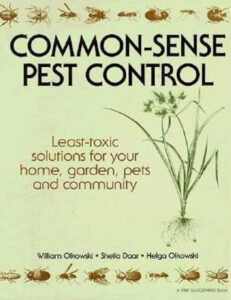
If you’re serious about low-toxicity pest control, this book belongs on your shelf. Common Sense Pest Control by Taunton Press packs 736 pages of non-chemical strategies covering insects, rodents, and more. At just $10 used, it’s a steal for any gardener wanting to reduce synthetic pesticide use.
The book walks you through integrated pest management, pest identification, and beneficial insect conservation—so you’re working with your garden’s natural systems, not against them. It offers practical, no-nonsense guidance to help you collaborate with ecological processes.
A solid reference, you’ll reach for it season after season to implement sustainable solutions.
| Best For | Homeowners, gardeners, and pest-control pros who want practical, low-toxicity solutions without relying on harsh chemicals. |
|---|---|
| Primary Use | Pest Control Reference |
| Price | $10.00 |
| Indoor Use | Yes |
| Outdoor Use | Yes |
| Material | Paper/Print |
| Pet Safe | Yes |
| Additional Features |
|
- Covers a huge range of pests—insects, rodents, bats, wood-rot organisms, and more—all in one hefty reference
- At $10 used, it’s hard to beat the value for 736 pages of actionable pest management strategies
- Great for reducing synthetic pesticide use, making it safer for kids, pets, and the environment
- Published in 1991, so some recommendations may be outdated or no longer compliant with current regulations
- Coverage of plant-specific and horticultural pests is limited, which can be frustrating for serious gardeners
- Buying used means condition can vary, and there are no updated editions to fill in the gaps
2. Harris Food Grade Diatomaceous Earth Puffer Tip
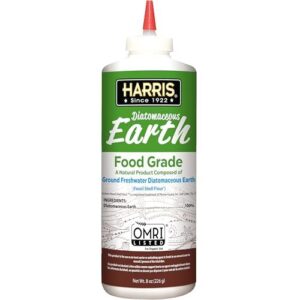
Harris Food Grade Diatomaceous Earth is one of those tools that earns its keep fast. At $9.99 for 8 oz, it’s OMRI-listed and 100% chemical-free—safe around kids, pets, and edible crops.
The puffer tip lets you dust precisely into soil crevices, plant crowns, and tight spots where pests hide. It acts as a physical barrier against ants, roaches, and beetles.
Just keep it dry—rain kills effectiveness—and wear a mask during application to protect your lungs.
| Best For | Home gardeners, organic farmers, and pet owners who want a chemical-free way to control insects indoors and in the garden. |
|---|---|
| Primary Use | Pest & Soil Control |
| Price | $9.99 |
| Indoor Use | Yes |
| Outdoor Use | Yes |
| Material | Diatomaceous Earth |
| Pet Safe | Yes |
| Additional Features |
|
- 100% food-grade and OMRI-listed, so it’s safe around kids, pets, and edible crops
- The puffer tip makes it easy to get into tight spots like cracks, baseboards, and soil crevices
- Doubles as a soil conditioner—improves aeration and moisture retention over time
- Loses effectiveness when wet, so outdoor use often means reapplying after rain
- The fine dust is a lung irritant—you’ll need a mask every time you apply it
- The puffer tip can be tricky to control, and some users find a separate bulb duster works better
3. Kazeila 10 Inch White Ceramic Planter
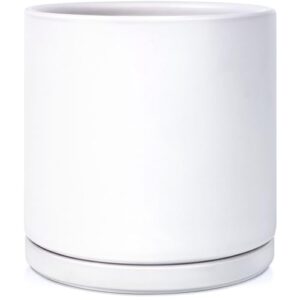
Keeping herbs like basil or thyme close to your vegetables is easier with the right container. The Kazeila 10-inch white ceramic planter manages that job well. Built from refractory ceramic, it holds up indoors and out. The drainage hole and included saucer protect roots and surfaces alike.
At 10 inches across, it fits most medium herbs comfortably on a windowsill or shelf.
Clean, minimal, and functional—it won’t compete with your plants for attention.
| Best For | Home gardeners and plant lovers who want a clean, stylish pot that works right out of the box—no extra supplies needed. |
|---|---|
| Primary Use | Plant Display |
| Price | Not specified |
| Indoor Use | Yes |
| Outdoor Use | Yes |
| Material | Ceramic |
| Pet Safe | Yes |
| Additional Features |
|
- Comes with everything you need: saucer, drainage mesh, rubber stopper, felt pad, and filler—ready to plant immediately
- Matte white ceramic looks great anywhere, indoors or out, without clashing with your décor
- The drainage hole and saucer combo keeps roots healthy and surfaces dry
- The Styrofoam packaging is a mess to deal with and not exactly eco-friendly
- A few buyers have noticed light scratches on arrival that need a quick cleanup
- The saucer is on the shallow side, so deep soaking isn’t really an option
4. Mkono Ivory Macrame Plant Hangers
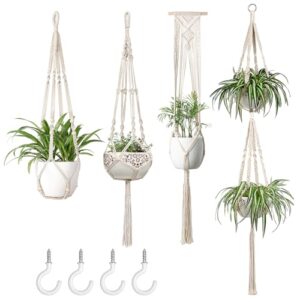
If you’re tight on space, hanging your herbs and compact companion plants is a smart move. The Mkono Ivory Macrame Plant Hangers let you do exactly that.
The set includes four cotton rope hangers in varying lengths—55, 41, 41, and 35 inches—so you can stagger plants at different heights. Each holds pots up to 7 inches wide.
They’re hand-knotted, neutral in color, and won’t clash with your greenery.
Four metal hooks are included, and setup takes minutes.
| Best For | Anyone short on wall space who wants a boho-style way to display herbs or small plants indoors or on a balcony. |
|---|---|
| Primary Use | Plant Display |
| Price | $19.99 |
| Indoor Use | Yes |
| Outdoor Use | Yes |
| Material | Cotton & Wood |
| Pet Safe | Yes |
| Additional Features |
|
- Four hangers at different lengths let you create a layered, staggered display without much effort.
- 100% cotton rope with wooden beads looks natural and pairs well with just about any plant or décor style.
- At $19.99 for the whole set, it’s an easy, affordable upgrade to any room.
- One hanger doesn’t have a top ring, so you’ll need a zip tie or some creative knotting to hang it.
- The four designs don’t match each other, which can feel mismatched if you want a clean, uniform look.
- Cotton rope isn’t weatherproofed, so heavy rain or ongoing humidity will wear it down faster than you’d like.
5. Dvine Dev Terracotta Planter Pot
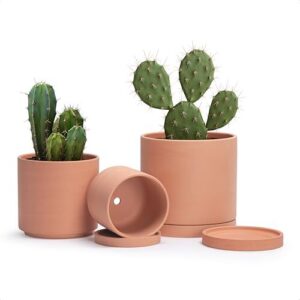
Terracotta isn’t trendy—it’s just right. The Dvine Dev Terracotta Planter Pot is made from kiln-fired natural clay, and that porous surface does real work: it lets roots breathe and pulls excess moisture away, so you’re not babying your herbs or succulents through root rot.
Available in 5.3, 6.5, and 8.3-inch diameters, each pot comes with a matching saucer, felt pad, and mesh screen.
It’s a clean, practical setup that protects your shelves and your plants.
| Best For | Plant lovers who want a natural, breathable home for succulents, herbs, or drought-tolerant plants—especially anyone who tends to overwater. |
|---|---|
| Primary Use | Plant Display |
| Price | Not specified |
| Indoor Use | Yes |
| Outdoor Use | Limited |
| Material | Terracotta Clay |
| Pet Safe | Yes |
| Additional Features |
|
- Porous terracotta pulls moisture away from roots, making it hard to drown your plants
- Comes with a saucer, felt pad, and mesh screen—everything you need right out of the box
- Three size options mean you can find a fit whether it’s a tiny desk succulent or something a bit bigger
- Terracotta chips and cracks more easily than plastic, so handle with care
- It dries out faster than other materials, which means more frequent watering checks
- Sold as single units, so building out a whole shelf of matching pots adds up quickly
6. Bamworld Tall Four Tier Metal Plant Stand
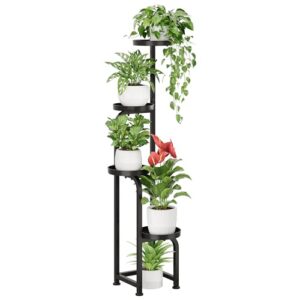
The Bamworld Tall Four Tier Metal Stand fits into tight corners on patios or balconies—just 8.8 inches wide but 46 inches tall. Its vertical structure allows you to group herbs and companion plants by light needs, positioning sun-loving basil higher while shade-tolerant plants sit lower.
Assembling in about 10 minutes and priced at $22.99, the stand features perforated trays that drain excess water without fuss, ensuring practical, low-maintenance use.
| Best For | Apartment dwellers, renters, or balcony gardeners who want to display multiple small plants vertically without taking up much floor space. |
|---|---|
| Primary Use | Plant Display |
| Price | $22.99 |
| Indoor Use | Yes |
| Outdoor Use | Yes |
| Material | Powder-Coated Metal |
| Pet Safe | Yes |
| Additional Features |
|
- Slim 8.8-inch footprint tucks into corners easily, giving you four tiers of growing space without crowding a room
- Perforated trays let water drain naturally, so you’re not babying each pot to avoid root rot
- Snaps together in about 10 minutes with no tools—easy to move or store when the season changes
- The top tier can feel wobbly when loaded up, so heavy pots are a risky choice up there
- Manufacturing inconsistencies pop up now and then, including misaligned feet that may need aftermarket pads to fix
- The adjustable feet help on mildly uneven floors, but they won’t fully save you on a seriously sloped surface
Vegetable Pairings to Avoid
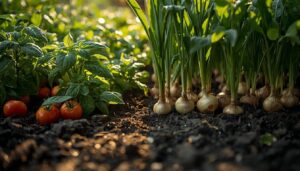
Not every plant makes a good neighbor—some pairings can actually hurt your harvest.
A few common combinations share diseases, steal nutrients, or release chemicals that slow each other down. Here are the vegetable pairings worth keeping apart in your garden.
Tomatoes With Potatoes
Though they share a kitchen bond, tomatoes and potatoes make terrible garden neighbors. Both attract the Colorado potato beetle and spread early blight to each other, making disease cross-infection a real risk.
Airflow management and spacing strategies—keep them 30 to 60 inches apart, ideally in separate beds—help, but crop rotation timing matters more.
Soil moisture balance also suffers when these heavy competitors crowd each other.
Tomatoes With Corn
Keeping that blight problem in mind, corn and tomatoes share critical issues—they compete intensely for nitrogen and spread blight pathogens. Companion planting succeeds only when you separate these two crops.
- Both crops deplete soil nitrogen fast
- Shared blight risk spreads quickly
- Corn shades tomatoes, hurting sunlight management
- No flavor balance benefit in the garden
- Harvest synchronization becomes difficult when disease strikes early
Onions With Beans
Onions seem like a natural companion for beans—they deter aphids and share similar water needs. However, onion sulfur compounds directly suppress the Rhizobia responsible for nitrogen fixation in bean roots, breaking the nitrogen transfer cycle beans depend on.
| Factor | Beans | Onions Nearby |
|---|---|---|
| Nitrogen Fixation | Active | Suppressed |
| Pest Deterrence | Moderate | Disrupted |
| Harvest Synchrony | Early | Late |
Skip this pairing.
Fennel Near Vegetables
Fennel is the loner of companion planting—beautiful, aromatic, and deeply antagonistic to most garden neighbors. Its roots release phenolic compounds that suppress nightshades, beans, tomatoes, and more through plant allelopathy. Keep it well away from these crops:
- Fennel lettuce pairings stunt leaf growth
- Fennel spinach combinations reduce germination
- Fennel cucumber and fennel zucchini show poor yields
- Fennel peppers struggle with root competition
Grow fennel in containers or isolated beds.
Black Walnut Garden Zones
Black walnut trees are a silent threat in the garden. Their roots release juglone, a toxic compound that kills tomatoes, peppers, and beans within a 50-foot radius—pure allelopathy at work.
Smart companion planting means mapping your juglone buffer zones early, managing canopy light management and root spread spacing carefully, and timing seasonal mulch timing with soil pH optimization to protect sensitive plant pairings nearby.
Frequently Asked Questions (FAQs)
How far apart should companion plants be spaced?
Most companions work best within 1 to 2 feet of each other. That sweet spot manages airflow distance, root zone overlap, and scent masking without crowding your garden layout design.
Can companion planting work in raised beds?
Raised beds are ideal for companion planting. Controlled soil amendment, efficient moisture management, and easy bed layout design make crop compatibility and companion rotation straightforward.
Vertical trellising maximizes space, while precise plant spacing guidelines ensure everything thrives.
Which pairings help with fungal disease prevention?
Certain pairings act like a natural disease shield, reducing fungal pressure through biological control and plant synergy.
Key examples include Marigold Soil Shield, Sage Leaf Drying, Dill Airflow Boost, and Rosemary Root Guard.
Do companion plants work the same in containers?
Containers change the rules a bit—root zone competition intensifies quickly. Watering synchronization and soil mix tailoring matter even more than in in-ground beds.
Above-ground plant synergy, light tiering, and pest deterrence remain effective. These strategies still hold up well despite the unique challenges of container gardening.
When should I start companion planting in spring?
Start when soil reaches 40°F and your last frost date is two to four weeks out.
Plant fast growers like radishes and peas first for early pest deterrence.
Harden off your herb starts during this period.
Conclusion
The garden you plant this season will quietly rewrite next season’s results. Every vegetable garden plant pairing you choose today is building soil biology, disrupting pest cycles, and feeding beneficial insects you haven’t met yet.
Beans are already fixing nitrogen for your corn, while marigolds warn nematodes away. These intentional pairings demonstrate how you don’t need chemicals—instead, you need the right neighbors.
Put the right plants together, and the garden largely takes care of itself.
- https://www.intechopen.com/chapters/42925
- https://www.almanac.com/content/three-sisters-corn-bean-and-squash
- https://www.growveg.com/guides/companion-planting-three-sisters-garden-plans
- https://primexgardencenter.com/benefits-of-companion-planting/
- https://brainiky.org/blog/planting-the-three-sisters-corn