This site is supported by our readers. We may earn a commission, at no cost to you, if you purchase through links.

Raised beds don’t just make gardening easier—they let you grow more in less space than most people expect. A well-built 4×8 bed can produce lettuce, carrots, herbs, strawberries, and even dwarf fruit trees, all from a few square feet of carefully managed soil. The catch is knowing what works and what wastes your time.
Soil depth, spacing, and plant pairings all shape what you can realistically grow. Get those details right, and your bed becomes one of the most productive spots in your yard.
Here’s a clear breakdown of what to grow in a raised garden bed—and how to make each choice count.
Table Of Contents
- Key Takeaways
- Best Plants for Raised Garden Beds
- Leafy Greens Like Lettuce, Spinach, Kale, and Arugula
- Root Crops Like Carrots, Radishes, Beets, and Turnips
- Fruiting Vegetables Like Tomatoes, Peppers, Cucumbers, and Beans
- Herbs Like Basil, Thyme, Rosemary, Oregano, and Parsley
- Flowers Like Marigolds, Nasturtiums, Zinnias, and Lavender
- Small Fruits Like Strawberries, Blueberries, and Raspberries
- Best Vegetables for Raised Beds
- Tomatoes for Sunny, Deep Raised Beds
- Lettuce for Cool-season Succession Planting
- Spinach for Fast Spring and Fall Harvests
- Kale and Swiss Chard for Repeat Harvests
- Carrots and Beets for Loose, Deep Soil
- Radishes and Turnips for Quick Crops
- Cucumbers and Pole Beans for Vertical Growing
- Peppers and Eggplants for Warm-season Beds
- Best Herbs for Raised Beds
- Best Flowers for Raised Beds
- Best Fruits for Raised Beds
- Choose Plants by Bed Depth
- Plan a Raised Bed Layout
- Avoid Poor Raised Bed Choices
- Frequently Asked Questions (FAQs)
- Conclusion
Key Takeaways
- Matching your plants to the right soil depth — from 6 inches for herbs and lettuce up to 24 inches for dwarf fruit trees — is the single biggest factor in whether your raised bed thrives or struggles.
- Flowers like marigolds (Tagetes patula) and nasturtiums aren’t just pretty — they actively protect your vegetables by repelling nematodes, trapping aphids, and drawing in beneficial insects that do the pest control for you.
- Invasive plants like mint, oversized squash, and heavy feeders without regular soil replenishment can quietly wreck a raised bed, so knowing what not to grow matters just as much as knowing what to plant.
- A smart layout — tall crops on the north side, climbers on trellises, and companion plants grouped by water and sunlight needs — turns a basic raised bed into a high-output growing system that nearly runs itself.
Best Plants for Raised Garden Beds
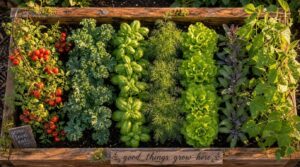
Raised beds work well because you control the soil, the spacing, and what goes in. That gives you a lot of freedom to mix and match plants that might not thrive in your yard’s native ground.
Herbs especially thrive in this setup—check out these tips for growing herbs in raised beds as a beginner to see just how easy it can be.
Here’s a look at the best options to fill yours.
Leafy Greens Like Lettuce, Spinach, Kale, and Arugula
Leafy greens are some of the easiest wins you’ll get from a raised bed. Lettuce, spinach, kale, and arugula are packed with nutrients — think vitamins A, C, and K. Kale, for instance, offers high vitamin K kale, delivering about 68% of the daily value per cup.
- Bolting Prevention: Use shade management and cool temperatures (60–65°F) to keep leaves sweet longer
- Harvest Techniques: Pick outer leaves regularly to keep plants producing
- Nutrient Boosters: Consistent soil moisture unlocks iron, folate, and antioxidants
Root Crops Like Carrots, Radishes, Beets, and Turnips
Root crops take that love of growing even deeper — literally. Carrots, radishes, beets, and turnips thrive in raised beds because you control the soil. Keep pH between 6.0 and 7.5, practice seed soaking before planting, and nail your thinning strategies early.
Good moisture management prevents woody roots. Harvest on time, then tuck them into root storage at 0–4°C for lasting freshness.
Fruiting Vegetables Like Tomatoes, Peppers, Cucumbers, and Beans
Tomatoes, peppers, cucumbers, and beans thrive in raised beds due to controlled drainage.
Provide tomatoes with a calcium boost and solid staking methods to support their growth. Monitor harvest timing closely—cucumbers turn bitter fast. Employ vertical gardening for cucumbers and beans to save space.
Opt for disease-resistant varieties and maintain temperature control post-transplanting for peppers.
Herbs Like Basil, Thyme, Rosemary, Oregano, and Parsley
Herbs are where your raised bed really starts earning its keep.
Basil loves full sun and pairs beautifully with tomatoes — both in the garden and on your plate.
Rosemary and thyme prefer dry, well-drained soil and reward you with months of flavor.
Oregano and parsley are forgiving and fast. Keep harvesting often, and they’ll keep growing back.
Flowers Like Marigolds, Nasturtiums, Zinnias, and Lavender
Flowers pull double duty in a raised bed. Marigolds (Tagetes spp.) guard against pests, nasturtiums work as edible trap crops, and zinnias keep bees and butterflies coming all season — that’s your bloom duration covered. Lavender adds a calming scent profile and cool purple tones to any flower color scheme.
Together, these pollinator-friendly flowers for raised garden beds also offer edible flower uses and are ideal for container planting beautifully.
Small Fruits Like Strawberries, Blueberries, and Raspberries
Small fruits are some of the most rewarding crops you can grow in a raised bed. Here’s why they work so well:
- Strawberries stay productive in 11-inch beds with smart watering schedules and berry mulch.
- Blueberries need acidic soil management, targeting pH 4.5–5.5.
- Raspberries act as natural pest deterrents when well-spaced.
- All three reward perennial fruit cultivation with consistent harvests across seasons.
Best Vegetables for Raised Beds
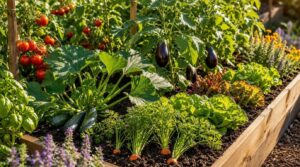
Raised beds are basically a vegetable garden’s best friend — good drainage, loose soil, and no foot traffic compacting the roots. Most vegetables actually grow better here than in the ground.
Here are the ones worth planting first.
Tomatoes for Sunny, Deep Raised Beds
Tomatoes are practically made for raised beds. Begin with raised bed soil preparation and a depth of 12–24 inches, then use deep stem burying—covering two-thirds of the transplant—to encourage strong roots.
Indeterminate tomatoes especially require sturdy caging systems and optimized drip irrigation. Follow a targeted fertilization schedule, select heat-resistant varieties, and implement companion planting strategies like placing marigolds nearby.
Lettuce for Cool-season Succession Planting
Lettuce is one of the easiest wins you can get from raised garden beds. Sow cold-tolerant greens for early planting every 10 to 14 days — that’s succession timing at its best.
Space plants 6 to 8 inches apart, follow basic plant spacing guidelines, and use shade cloth to slow bolting when temperatures rise.
Leaf harvesting from the outside in keeps each plant producing longer.
Spinach for Fast Spring and Fall Harvests
Spinach is one of those crops that rewards you twice — spring and fall. Start sowing cold-tolerant greens about 4–6 weeks before your last frost for early planting, then again when summer heat fades. In raised garden beds, pH optimization around 6.5–7.0 and consistent moisture are your best tools.
- Use shade cloth for bolting control as temperatures climb
- Try fast-maturing varieties for harvests in 25–30 days
- Space succession planting windows every 10–14 days for steady leafy greens
Kale and Swiss Chard for Repeat Harvests
Kale and Swiss chard are cut-and-come-again crops — harvest outer leaves every one to two weeks, and the plant just keeps pushing new growth.
Consistent soil nitrogen and smart mulch management keep leaves tender and production steady.
Frost sweetening is real: cool temperatures genuinely improve flavor.
For bolting control, stick to slow-bolt varieties through warmer spells.
Carrots and Beets for Loose, Deep Soil
Kale gives you leaves, carrots and beets reward your patience underground. Both need loose, stone-free soil with strong root penetration — soil compaction is their worst enemy.
- Dig 12–18 inches deep for straight carrots
- Sift out clods for beet shape
- Add compost for pH optimization (6.0–6.8)
- Apply organic mulch to retain moisture
- Maintain watering consistency at 1 inch weekly
Radishes and Turnips for Quick Crops
Radishes and turnips pay off fast, offering quick rewards compared to slower-growing roots like carrots. Radishes germinate in 3–7 days and become table-ready in as little as 20–25 days, while turnips mature in 35–40 days.
| Factor | Radishes & Turnips |
|---|---|
| Harvest Timing | 20–75 days |
| Temperature Window | 45–65°F |
| Seed Spacing | 2–3 inches |
| Storage Techniques | 32°F, high humidity |
Consistent soil moisture is critical—dry spells cause woody, split roots. Implementing succession planting for radishes in compact spaces ensures a continuous harvest throughout the growing season.
Cucumbers and Pole Beans for Vertical Growing
If radishes gave you quick wins, cucumbers and pole beans take things vertical — and that changes everything about how your raised bed works.
- Support Material Selection: Use sturdy trellises or A-frame nets at least 8–12 feet tall
- Vine Training Methods: Guide vines weekly with soft clips to prevent tangling
- Moisture Management: Mulch the base and water consistently, especially at fruit set
- Fruit Thinning Technique: Remove misshapen cucumbers promptly to keep plants producing
- Harvest Timing Strategies: Pick beans when slender and bright; don’t let them linger
Vertical gardening with cucumbers and beans improves airflow and reduces disease pressure — a significant advantage in compact spaces. Utilizing trellises and vertical supports for vining vegetables also frees up ground space for companion crops below.
Peppers and Eggplants for Warm-season Beds
Once your vertical crops are settled, warm-season crops like peppers and eggplant are next in line. Both need soil consistently above 65°F, so plastic mulch is your best friend here — it warms the bed and holds moisture.
Pair that with drip irrigation and a phosphorus boost at planting. Choose heat-tolerant varieties, harden transplants for a week outdoors, and ensure proper spacing to promote airflow.
Best Herbs for Raised Beds
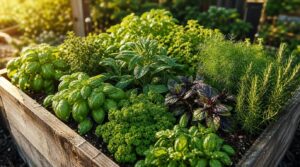
Herbs are some of the easiest and most rewarding plants you can grow in a raised bed. A small corner of your bed can keep your kitchen stocked all season long.
Here are the best herbs to try, starting with a few that do double duty in the garden.
Basil for Companion Planting With Tomatoes
Basil and tomatoes are one of the oldest pairings in the garden — and for good reason. Together, they offer real benefits beyond flavor synergy on the plate.
- Pest deterrence: Basil’s volatile oils mask tomato scents, confusing aphids and whiteflies.
- Yield boost: Less pest pressure means healthier plants and better harvests.
- Air circulation: Space basil 12–18 inches from tomatoes to keep airflow open.
- Soil moisture: Mulch between both plants to lock in water and cut weeds.
Rosemary for Dry, Well-drained Soil
Rosemary rewards you for doing less. This herb thrives on neglect—dry soil, full sunlight exposure, and good drainage are its sweet spot. For herb cultivation in raised garden beds, use a gritty mix with perlite to protect root health and prevent rot.
Aim for 12–18 inches of spacing, water deeply but infrequently, and time your pruning after harvest to keep growth tidy.
Thyme for Compact Perennial Planting
Thyme is one of the most easygoing perennials you can grow. It stays compact, forms a low creeping mat, and thrives in well-drained, alkaline soil—making it a natural fit for herb cultivation in raised garden beds.
For optimal growth, space plants 12 inches apart and keep watering minimal to ensure low water use. A light pruning after flowering helps maintain its shape.
Cutting propagation is simple if you want to expand your thyme collection quickly.
Oregano for Sunny Mediterranean-style Beds
Oregano is practically made for a sun-soaked raised bed. It needs at least six hours of sunlight daily, and using raised beds for improved drainage keeps its roots from sitting in wet soil — which is the fastest way to kill it. With good drainage requirements met, flavor development improves naturally.
Propagate by cuttings for quicker results, and try companion planting it near tomatoes or peppers.
Parsley and Cilantro for Cool-season Harvesting
Parsley and cilantro (Coriandrum sativum) are two of the most rewarding cold-tolerant greens for early planting — they actually prefer the cool end of the season. Both thrive between 60–70°F, making spring and fall your best seasonal planting windows and frost dates your real guide.
- Seed stratification: Soak parsley seeds overnight to speed up the slow 2–3-week germination.
- Moisture management: Keep soil evenly moist but never soggy for steady leaf growth.
- Bolting prevention: Shade cilantro during heat spikes to extend your harvest window.
- Post-harvest storage: Stand fresh stems in a jar of water in the fridge, or freeze them minced.
Herb cultivation in raised garden beds suits both beautifully — and bonus, you’re creating butterfly habitat for black swallowtails too.
Chives for Edible Flowers and Pest Support
Chives pull double duty in a raised bed. Their sulfur compounds work as natural aphid repellent chemistry, keeping salad greens and tomatoes cleaner without sprays.
Time your blossom harvest correctly—pick flowers just as they open—and you get the best onion flavor infusions for vinegars and dressings.
Intercrop chive bands between vegetables for a steady pollinator boost that benefits all season.
Mint in Containers to Prevent Spreading
Mint is the herb that’ll take over your whole bed if you let it — rhizomes spread 12–18 inches underground without mercy. Plant it in a bottomless planter buried 8–24 inches deep, with the rim sitting just above soil level.
Match container size to your space. Check soil moisture weekly. Stick to a pruning schedule every one to two weeks.
Best Flowers for Raised Beds

Flowers might seem like a bonus in a raised bed, but they’re doing real work out there. The right ones draw in pollinators, confuse pests, and even give you something extra to eat.
Here are the best flowers to grow alongside your vegetables.
Marigolds for Pest Management
Few flowers pull double duty like marigolds (Tagetes patula) in raised garden beds. Their terpene bioactivity and essential oil compounds work underground and above, making them a cornerstone of smart companion planting. Here’s what dense marigold plantings actually do:
- Nematode suppression — Reduces root-knot nematode populations by up to 90%
- Trap crop strategy — Lures aphids and whiteflies away from vegetables
- Planting density payoff — Covering 25% of bed area delivers real pest control methods
- Long-lasting protection — Bioactive compounds persist for weeks after planting
Nasturtiums as Edible Trap Crops
Nasturtiums (Tropaeolum majus) take trap cropping to another level — they pull pest pressure away from your vegetables and land on your plate. Smart border planting design involves placing a continuous nasturtium ring around your bed’s edge, upwind of protected crops, about 10–14 days before your main plantings emerge. This pest lure timing gap is critical to the system’s success.
| Pest Target | Crop Protected | Nasturtium Role |
|---|---|---|
| Aphids | Kale, brassicas | Preferred host plant |
| Whiteflies | Tomatoes, peppers | Lure and concentrate |
| Cucumber beetles | Squash, cucumbers | Intercept colonization |
| Cabbage loopers | Broccoli, chard | Glucosinolate attractant |
| Bean pests | Pole beans | Divert early feeding |
Climbing varieties serve double duty as beneficial insect habitat, attracting hoverflies and lacewings that prey on the very pests nasturtiums lure. For harvesting, pick flowers and leaves when pest pressure remains moderate — during heavy infestations, replace plants rather than harvest them. Companion planting strategies in raised beds rarely get tastier than this.
Zinnias for Attracting Bees and Butterflies
If nasturtiums are your bed’s pest patrol, zinnias are its welcome party.
These heat-resilient bloomers thrive from midsummer until the first frost, providing bees and butterflies with a reliable nectar source throughout the season. Their endurance and vibrant presence make them a cornerstone of pollinator-friendly gardens.
For optimal growth, space them 8–12 inches apart. To attract monarchs, prioritize warm oranges and pinks, and blend single with semi-double blooms to maximize floral diversity.
Their bloom continuity and nectar density solidify zinnias as essential pollinator-friendly flowers, particularly well-suited for raised beds.
Lavender for Pollinators and Fragrance
Lavender pulls double duty in a raised bed — it’s a pollinator magnet and a fragrant reward for you. Its terpene chemistry, specifically linalool, drives serious bee attraction through scent harvesting that bees can’t resist.
- Plant in full sun for extended bloom.
- Pair with rosemary and thyme for companion planting.
- Choose Lavandula angustifolia for nectar production.
- Prune after flowering to sustain pollinator-friendly flowers.
Calendula for Edible Petals and Beneficial Insects
Calendula (Tagetes cousin aside, it’s its own gem) earns its spot as one of the best pollinator-friendly flowers for raised garden beds.
Its early nectar supply gives beneficial insects a health boost when little else is flowering.
Harvest petals at peak bloom for the best culinary color uses — think golden rice and bright salads.
Just follow basic allergy safety guidelines if you’re sensitive to the Asteraceae family.
Dwarf Sunflowers for Vertical Interest
Don’t overlook dwarf sunflowers (Helianthus annuus) when planning Height Stacking in raised beds—they deliver Layered Color and pollinator focus without overwhelming designs. Most varieties stay under 36 inches, making them ideal Border Accents with a tidy multi-stem design.
- Space plants 8–12 inches apart for full branching
- Their vertical gardening presence draws bees all season
- Pollen-free cultivars work well near seating areas
- Deadhead blooms to keep pollinator-friendly flowers performing longer
Consistent deadheading extends the blooms’ pollinator appeal and keeps raised beds vibrant throughout the season.
Companion Flowers to Plant Near Vegetables
Pairing the right flowers with your vegetables is one of the smartest moves in companion planting. Each bloom pulls double duty — supporting pollinator attraction, pest deterrence, or even a soil health boost.
| Flower | Companion Benefit |
|---|---|
| Marigolds | Repel nematodes near tomatoes |
| Zinnias | Drive pollinator-friendly flowers for raised beds |
| Nasturtiums | Trap aphids away from beans |
| Sunflowers | Attract bees to cucumbers |
Mind seasonal bloom timing and companion color synergy for a bed that works beautifully all season.
Best Fruits for Raised Beds

Fruit doesn’t have to mean a sprawling orchard — your raised bed can handle more than you’d think. From strawberries to dwarf trees, the right varieties fit neatly into a well-built bed and still produce a real harvest.
Here is what works best.
Strawberries for Compact, Productive Beds
Strawberries are practically made for raised beds. Varieties like Albion and Seascape stay compact and fruit for months. Keep soil pH between 5.5 and 6.5, and you’re halfway there.
- Use staggered rows to fit 8–10 plants per 4×8 bed
- Mulch layering with straw cuts weeds and keeps fruit clean
- Runner pruning redirects energy straight to berries
- Try companion herbs like borage to bring in more pollinators
Blueberries for Acidic Raised-bed Soil
Blueberries are one of the most rewarding fruits you can grow in a raised bed — if you get the soil right. They require a pH between 4.5 and 5.5, making soil preparation and depth critical for success.
To achieve optimal conditions, mix in sphagnum peat moss and mulch with pine bark for acidic mulch types. Implement drip irrigation for efficient watering. Annual soil amendments ensure the environment remains perfectly tuned for your specific blueberry cultivar.
Raspberries and Blackberries With Containment
Once you’ve nailed your soil pH for blueberries, brambles are the next rewarding challenge.
Raspberries and blackberries thrive in raised beds when contained with a proper trellis system. Here’s what makes a contained bramble bed work:
- Wire tension keeps canes upright and fruit off the ground
- Anchor placement at bed edges prevents crowding and collapse
- Row spacing of 1.0–1.4 meters improves airflow and light
- Seasonal cane renewal removes old floricanes after harvest
- Netting for pests protects ripening berries from birds
Compact Watermelons for Sunny Deep Beds
After brambles, growing melons in a raised bed feels like a real leap — but compact varieties make it totally doable. Bush Sugar Baby and Golden Midget are Heat‑Tolerant Varieties that thrive in a sunny location with deep soil of 12–18 inches.
Use Trellis Optimization with Fruit‑Support Systems like mesh slings, and pack the beds with Nutrient‑Rich Soil. These steps ensure healthy growth and manage space efficiently.
Early Harvest Techniques help maintain steady soil moisture, which is crucial for achieving sweet results. This approach keeps the plants productive and the fruit flavorful.
Dwarf Fruit Trees in Large Raised Beds
Growing compact melons is impressive, but dwarf fruit trees—like apple, peach, and cherry varieties grafted onto dwarfing rootstocks (e.g., M9)—take it up a notch. These trees remain manageable in a 4-foot-wide bed with proper care.
Aim for 24–30 inches of depth in soil, incorporating solid soil amendment and implementing drip-based irrigation scheduling to ensure optimal moisture levels.
Canopy training keeps growth tidy, while companion planting with marigolds naturally reduces pest pressure.
In colder zones, frost protection is essential to safeguard the trees during temperature drops.
Soil Depth and Spacing for Fruit Crops
Depth recommendations matter more than most gardeners expect. Shallow-rooted strawberries do fine at 12 inches, but blueberries need 12–18 inches with amended organic matter to hit that ideal pH range.
Root zone volume directly affects fruit set, so don’t shortchange your soil amendment depth. Spacing intervals follow canopy spread — dwarf trees usually need 8–12 inches of buffer.
Get your raised bed soil preparation and depth right first.
Trellising and Pruning Small Fruits
Trellising transforms a tangled mess into a productive, manageable harvest. For strawberries, maintain support height between 12 and 16 inches and prioritize directing stolons instead of allowing them to wander.
Raspberries thrive with consistent wire spacing—set horizontal wires 18 to 24 inches apart for streamlined canopy training. Winter renewal pruning removes spent canes, encouraging next season’s fruiting wood.
Choose Plants by Bed Depth
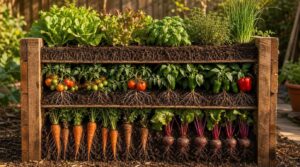
Bed depth isn’t just a building decision — it’s a planting decision. The right depth lets roots spread out, which means healthier plants and better harvests.
Here’s how to match what you want to grow with how deep your bed needs to be.
Shallow Beds for Lettuce, Herbs, and Radishes
Not everything needs deep roots to thrive. Lettuce, radishes, and most herbs flourish in just 6 to 8 inches of soil — a shallow raised bed depth that creates an ideal environment for rapid harvest cycles.
Maintain tight row spacing optimization, implement a smart irrigation scheduling routine, and deploy shade cloth use when temperatures rise. These practices streamline growth and resilience.
Herb cultivation in raised garden beds has never been simpler.
10–12 Inch Beds for Most Vegetables
A 10–12 inch bed hits the sweet spot for most vegetables. Leafy greens, herbs, and shallow-rooted crops thrive here with the right raised bed soil mix, while mulch and moisture retention keep things consistently damp.
Ergonomic bed access from both sides simplifies weeding, and season extension covers stretch your harvest longer.
Efficient drip irrigation works beautifully at this depth, ensuring a simple and low-waste watering system.
12 Inch Depth for Carrots and Compact Melons
A 12-inch raised bed is surprisingly capable — carrots (Daucus carota) and compact melons both root comfortably here when your Soil Loam is loose and well-amended. Understanding garden bed depth requirements starts with matching root zone depth to your crop.
- Carrots: Spacing Strategies and Thinning Techniques to 2–3 inches prevent forking
- Melons: Drip Irrigation keeps moisture steady without waterlogging shallow roots
- Both: Mulch Benefits include cooler soil and less surface evaporation
16–22 Inch Beds for Parsnips and Deep Roots
Parsnips (Pastinaca sativa) are long-haul growers — their taproots push 16–22 inches down, so bed depth genuinely matters. Fill that space with a loamy soil mix that promotes deep drainage and consistent moisture without soggy pockets. Mulch retention keeps the surface from crusting.
Companion root crops like beets and carrots share similar soil preferences, making understanding garden bed depth requirements essential for planning smart, productive beds.
Wide Beds for Strawberries and Berry Bushes
Strawberries and raspberries thrive in wide beds—and for good reason. A 3–4 foot width allows easy access without soil compaction, while 12–18 inches of depth ensures healthy root systems and proper drainage.
- Use Mulch Strategies like straw to cool roots
- Practice Runner Management to maintain fruit quality
- Tuck Companion Herbs like thyme between plants
- Plan Cover Crop Rotation each off-season
Avoiding Overcrowding in Small Raised Beds
Crowding your beds is like rushing guests into a tiny kitchen — someone always gets squeezed out. Maintain airflow gaps of at least 12 inches between plants to reduce disease pressure.
Crowd your raised bed like a packed kitchen, and something always gets squeezed out
Staggered planting and vertical tiering enable intensive cultivation while preserving root zone separation. Modular bed design allows seasonal reconfiguration of raised bed dimensions and garden layouts.
Matching Root Size to Soil Depth
Think of your bed like a pair of shoes — it must fit what’s inside. Root zone mapping ensures crops are matched to the correct raised bed depth before planting. A quick soil compaction testing check prevents stunted root development from the start.
Use depth-specific mulching and monitor water penetration depth to simplify root growth monitoring while keeping your raised bed soil mix productive.
Plan a Raised Bed Layout
A good layout can make or break your raised bed. The way you arrange your plants affects how much sun they get, how easy they are to water, and how well they grow together.
Here are seven simple strategies that help you get the most out of every square inch.
Place Tall Crops on The North Side

Your tallest plants belong on the north side — full stop.
This placement decision unlocks morning light optimization across your whole bed, keeping shorter crops bright while taller ones act as a natural windbreak.
- Shadow management strategy: Tall plants cast shade southward, away from your greens.
- Heat retention zone forms along the northern edge, warming adjacent crops.
- Pest habitat disruption improves with better airflow around lower plants.
- Even light reaches every row, extending your harvest season.
Grow Climbing Crops on Trellises

Once tall crops anchor your north edge, it’s time to think upward. A trellis built from galvanized steel or pressure-treated wood — your best Trellis Materials for durability — forms the foundation.
Following standard Height Guidelines, these structures can reach 6–8 feet. Ensure stability by setting anchors every 4–6 feet for solid Anchor Spacing, preventing sway in strong winds.
For delicate produce, Fabric Cradles gently sling small melons, preventing damage. This method integrates seamlessly with vertical support systems.
Interconnected Networks of trellising techniques optimize space for vining vegetables. Beans, cucumbers, and indeterminate tomatoes thrive with this approach, maximizing growth through strategic vertical support.
Interplant Fast Crops Between Slow Growers

Radishes and lettuce are your secret weapons for filling dead space. While tomatoes or peppers slowly claim their territory, fast crops work quietly in between — ready to harvest before the slow growers even notice.
- Tuck radishes between carrots for 3-week harvest sequencing gains
- Use spinach as living mulch for soil moisture balancing
- Pull spent greens to support nutrient cycling and light management
Use Square-foot Spacing for Small Beds
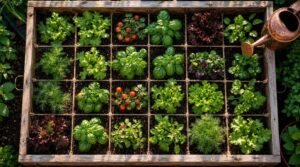
Grid Mapping your bed into 12-by-12-inch squares makes intensive planting surprisingly simple. Assign each square a crop, and you’ve got instant plant spacing and layout considerations built-in.
Square watering stays efficient because you’re hydrating only what’s growing.
Combine this with succession planning and harvest timing, and you’ll always have something ready to pull. It’s nutrient balancing made visual.
Pair Companion Plants for Pest Control

Companion planting turns your raised bed into its own defense system.
Tuck nasturtiums near beans as trap crop pairings, drawing aphids away from your harvest.
Plant basil and rosemary along edges as aromatic barrier pairings that confuse pests by masking crop scents.
Zinnias and dill work as beneficial insect lures, pulling in wasps and hoverflies that hunt down the bad guys naturally.
Group Crops by Water and Sunlight Needs
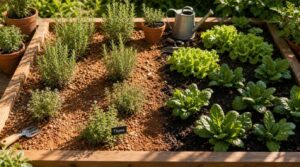
Think of your raised bed like a neighborhood — keep like-minded plants together. Group thyme and rosemary in dry, full-sun zones using sunlight mapping and water zone design.
Tuck lettuce and spinach where light watering needs meet partial shade.
This irrigation tiering and microclimate zoning approach reduces overwatering stress, improves soil moisture retention, and matches each plant’s sunlight and climate requirements naturally.
Rotate Crops Each Season to Protect Soil
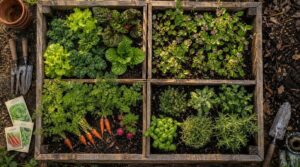
Moving crops around each season is one of the smartest things you can do for long-term soil health. Here’s why it works:
- Pest cycle interruption starves specialized pathogens by removing their host plants
- Nitrogen-fixing legumes replenish soil fertility for heavy feeders following them
- Deep-root breakage and cover crop integration boost soil microbial diversity naturally
Avoid Poor Raised Bed Choices
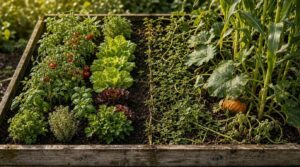
Not every plant belongs in a raised bed, and picking the wrong ones can set you back a whole season.
Some crops take over, crowd out neighbors, or just don’t play well with the setup you’ve worked hard to build. Here’s what to skip and why.
Invasive Herbs Like Uncontained Mint
Mint is the garden equivalent of that one houseguest who never leaves. Once Mentha species like peppermint or spearmint take hold, their underground root runners extend several feet yearly, making root runner control essential for herb selection and placement in raised garden beds.
Skip loose soil barriers — use buried metal edging or thick plastic as dedicated barrier materials, or grow mint in isolated dedicated mint beds entirely.
Oversized Squash and Pumpkins in Small Beds
Squash and pumpkins share mint’s space-hungry habits — just above ground. Vining types like winter squash can spread 4–12 feet per plant, quickly overwhelming a small raised garden bed. With growth-rate tracking each week, you can catch runaway vines before they crowd out neighbors.
Keep these in mind before planting:
- Fruit-load pruning limits plants to one or two fruits, concentrating energy where it counts.
- Moisture management and soil preparation with well-draining loam at pH 6.0–6.5 support healthy fruit development.
- Weight-bearing structures and pollinator planting nearby improve fruit set and prevent vine collapse.
Stick to compact bush varieties and mind your plant spacing.
Large Trees With Aggressive Roots
Large trees are a different kind of problem — one that grows slowly underground. Species like weeping willow and silver maple send roots dozens of feet outward, threatening utility lines and foundation cracks, which become a real concern near slabs.
Root barrier installation and adherence to distance buffer guidelines of 15–30 meters help maintain proper soil drainage and depth in raised beds without disruption, ensuring these structures remain intact and undisturbed.
Crops Needing Very Different Soil PH
Roots aren’t the only hidden troubles in a raised bed. Mixing crops with very different pH needs causes just as many headaches. Blueberries want highly acidic soil around pH 4.5–5.5, but lettuce thrives closer to neutral at 6.0–7.0.
Soil pH monitoring and regular soil pH testing help you catch these conflicts early. Smart soil pH management means keeping acidic crop pairings and alkaline crop pairings in separate beds.
Crowded Plantings That Reduce Airflow
Crowded plants are a hidden trap. High canopy density blocks airflow, raises leaf moisture, and spikes the risk of fungal diseases quickly.
Keep these spacing tactics in mind:
- Space Swiss chard 12 inches between plants
- Use companion planting to naturally manage pests and weeds
- Maintain garden bed spacing for weed suppression
Tight rows aren’t just crowded — they’re an open invitation for disease.
Tall Plants That Shade Smaller Crops
Tall plants like sunflowers and corn can grow rapidly, casting shadows that may disadvantage neighboring crops. Poor placement risks depriving lettuce and herbs of essential sunlight for hours daily.
Strategic companion planting transforms this challenge into an opportunity. By leveraging sunlight diffusion, microclimate cooling, and natural windbreak benefits, gardeners can optimize growing conditions.
Position tall crops on the north side to minimize shading. Incorporate trellises and vertical support systems for vining plants, and align shade patterns to complement—rather than hinder—your garden layout.
Heavy Feeders Without Soil Replenishment
Tomatoes, peppers, and cucumbers are heavy feeders—and they’ll quietly drain your beds dry if you don’t replenish what they take. Nutrient depletion leads straight to yield decline, disease susceptibility, and water stress.
Stay ahead with:
- Apply compost or organic fertilizers each season
- Practice crop rotation to reset soil health
- Amend soil post-harvest to restore balance
Skip this, and your beds pay the price.
Frequently Asked Questions (FAQs)
How often should raised bed soil be replaced?
Ever wonder why your raised bed suddenly feels tired? Plan a Full Replacement Cycle every three to five years, with an annual Partial Soil Refresh to keep nutrients flowing strong.
Can raised beds be used for year-round growing?
Yes, raised beds work beautifully year-round. Season Extension Structures like cold frames and hoop houses, Winter Soil Insulation, and Cold-Frame Integration let cold-tolerant crops thrive even when frost hits.
What materials are safest for building raised beds?
Cedar, redwood, galvanized steel, certified concrete, and natural stone are your safest bets.
Skip treated lumber — it can leach chemicals.
Food‑grade plastic and reclaimed wood work too, if sourced clean.
How do you winterize a raised garden bed?
Think of winterizing like tucking your bed in for a long nap. Clear debris, layer 2–4 inches of compost, then top with straw mulch.
Test soil pH, check frame drainage, and you’re set.
Conclusion
The difference between a struggling raised bed and one that overflows with food comes down to one thing: intention. Every plant you choose either fits your space or fights it. Now you know what to grow in a raised garden bed—and more importantly, why each choice matters.
Match your plants to your soil depth, pair them wisely, and give them room to thrive. Do that, and your raised bed won’t just produce. It’ll surprise you.
- https://frameitall.com/blogs/frame-it-all/high-yield-vegetables?srsltid=AfmBOoqGBcLoGtsCBEsbynYZxViJGPgcP6QcLj4yKgZxAw79I965evuY
- https://thehomesteadingrd.com/best-vegetables-to-grow-in-raised-beds/
- https://food52.com/story/27387-best-vegetables-to-grow-in-raised-beds
- https://savvygardening.com/best-vegetables-to-grow-in-raised-beds/
- https://eartheasy.com/blogs/grow/raised-beds-soil-depth-requirements?srsltid=AfmBOopwdcDzliHVmOkTwuT5c_bJjIu7pWB1k5ze2sWTvPLyxNkc2A_d