
This site is supported by our readers. We may earn a commission, at no cost to you, if you purchase through links.
Most gardeners learn the hard way: a beautiful raised bed frame filled with the wrong soil turns into a waterlogged, root‑strangling disappointment by midsummer. Clay‑heavy mixes can retain up to 40% more water than loam, and once bulk density creeps past 1.6 g/cm³, roots start suffocating from lack of oxygen. structure sitting above ground fools you into thinking drainage will take care of itself—it won’t.
Choosing the best soil for raised beds means balancing texture, pH, aeration, and organic matter before a single seed goes in. Get the mix right, and your plants practically grow themselves.
Table Of Contents
- Key Takeaways
- Why Soil Choice Matters for Raised Beds
- What to Consider When Choosing Raised Bed Soil
- Essential Components of The Best Raised Bed Soil
- Top 7 Soils and Amendments for Raised Beds
- How to Mix and Maintain Raised Bed Soil
- Frequently Asked Questions (FAQs)
- What is the best soil for raised beds?
- How much soil should be in a raised bed?
- Is topsoil suitable for a raised bed garden?
- Which soil mix is best for a raised garden?
- How to choose a soil mix for a raised bed?
- What is the best mix of soil for raised beds?
- Is there a difference between garden soil and raised bed soil?
- What is the best base for a raised bed?
- How do you fill a raised bed cheaply?
- How often should raised bed soil be replaced?
- Conclusion
Key Takeaways
- The ideal raised bed mix is 40% topsoil, 40% compost, and 20% perlite — this ratio balances drainage, nutrients, and root aeration without overcomplicating things.
- Clay-heavy soil retains up to 40% more water than loam, and once bulk density passes 1.6 g/cm³, roots start suffocating from oxygen loss — so texture matters before you plant a single seed.
- Most vegetables and herbs thrive at a soil pH between 6.0 and 7.0, and drifting outside that window locks out key nutrients or turns others toxic, so test your soil every one to two years.
- Organic amendments like compost and worm castings build long-term soil health through microbial diversity and slow nutrient release, while synthetic options feed fast but leach quickly and can raise salt levels that harm roots.
Why Soil Choice Matters for Raised Beds
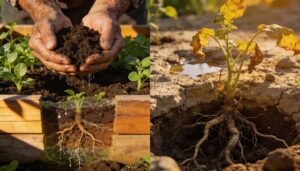
The soil you put in your raised bed isn’t just filler — it’s the foundation everything else depends on.
Getting the mix right from the start saves you a lot of frustration later, and these herb garden soil and setup tips walk you through exactly what works.
Get it wrong, and you’re dealing with puddles, compacted dirt, and struggling roots before your first seed even sprouts. Here’s what poor soil actually does to your garden, why the right mix makes such a difference, and the pH sweet spot most vegetables need.
How Poor Soil Leads to Drainage and Compaction Problems
Start with the wrong soil, and your raised garden beds can turn into a slow-draining mess. High clay content holds up to 40% more water than loamy soil, triggering waterlogging risks almost immediately.
That excess moisture drives bulk density increase past 1.6 g/cm³, causing soil compaction that chokes roots through root oxygen deprivation. Surface crusting then blocks rainfall by 25%, and nutrient leaching follows close behind.
Benefits of Proper Soil for Root Development and Nutrients
Fix the drainage problem, and your roots get to work.
Loose, well-structured soil encourages root hair proliferation — meaning more tiny roots reaching more nutrients. Mycorrhizal symbiosis then kicks in, where fungi extend that reach even further. Together, they drive nutrient uptake efficiency and root anchoring strength.
Rich organic matter fuels soil microbial diversity, keeping soil fertility and root development strong all season.
Ideal PH Range for Raised Bed Vegetables and Herbs
Roots thrive in healthy soil — but only when the pH cooperates. Most raised bed vegetables and herbs perform best within a soil pH range of 6.0 to 7.0.
Tomatoes prefer 6.0–6.8; leafy greens tolerate the full 6.0–7.0 window.
For herb pH preferences, basil and sage sit near 6.5, while oregano tolerates slight alkalinity.
Use pH monitoring tools like home test kits annually to catch seasonal pH shifts early.
What to Consider When Choosing Raised Bed Soil
Not all raised bed soils are created equal, and picking the wrong one can set your garden back before you even plant the first seed. A few key factors will guide you toward the right choice for your specific setup.
what to look at before you buy.
Raised Bed Height and Minimum Soil Depth
Raised bed height shapes everything — from how easily you can reach your plants to how well your soil holds warmth early in the season. Most standard raised bed designs run 12 to 18 inches, giving you solid bed capacity and depth temperature stability.
For height accessibility without constant bending, 18 inches is the sweet spot. Use a soil calculator to confirm your structural load before filling.
Plant Type and Root Depth Requirements
What you’re growing shapes how deep your soil needs to go. Deep-rooted veg like carrots need 12–24 inches, while shallow-rooted herbs like cilantro and chives work fine at 6–8 inches.
Your soil texture matters too — loose, well-structured soil encourages deeper root architecture than compacted mixes. Match your soil mix ratios and depth to your plant root depth requirements, and root zone moisture stays consistent.
Soil PH and Nutrient Balance
Most vegetables need soil pH between 6.0 and 7.0 — that sweet spot where nitrogen, phosphorus, and potassium stay available to roots. Drift below 5.5, and iron becomes toxic. Climb above 7.5, and micronutrient availability drops sharply.
Test your soil every one to two years, then adjust:
- Add lime to raise pH gradually
- Use elemental sulfur for lime sulfur balance adjustments
- Work in compost to boost cation exchange capacity and buffer swings
Organic amendments also help with salinity management, preventing salt buildup that blocks nutrient uptake even in fertile soil.
Drainage, Aeration, and Moisture Retention
Three forces shape healthy raised bed soil: drainage, aeration, and moisture retention. Keep soil bulk density below 1.3 g/cm³ — lighter, looser mixes drain fast and support root zone aeration.
A gravel base layer of 2–4 cm helps, while mulch crust prevention stops surface sealing. Mix in perlite or vermiculite, and use a coarse sand ratio of 1:3 with loam for reliable soil drainage solutions.
Organic Vs. Non-Organic Soil Amendments
Choosing between organic and nonorganic soil amendments for your raised garden bed really comes down to one question: do you want fast results or lasting soil health?
- Nutrient Release Speed — Compost and organic amendments feed plants slowly over months; synthetics hit immediately but leach fast.
- Synthetic Risks — Overuse raises soil salt levels, harming roots and microbial life.
- Environmental Impact & Carbon Sequestration — Organic amendments build soil carbon and support biodiversity.
- Cost Efficiency — Homemade compost wins long-term.
A balanced loam mix, with equal parts clay sand silt, provides ideal drainage and water retention.
Essential Components of The Best Raised Bed Soil
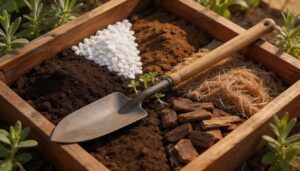
Good soil isn’t one ingredient — it’s a carefully balanced team. Each component plays a specific role, from holding structure to feeding roots to managing moisture.
Here’s what actually belongs in your raised bed mix.
Topsoil for Structure and Volume
Topsoil is the backbone of any raised bed — it provides the bulk volume and mineral structure, everything else builds on. particle size distribution and aggregate stability determine how well roots can push through without hitting walls of compaction.
Aim for a loamy texture with a healthy porosity ratio. One cubic yard fills roughly 27 cubic feet, so measure your bed carefully before ordering.
Compost for Nutrient Enrichment and Microbial Activity
Compost is your soil’s engine — and it’s more complex than most gardeners realize. A single cubic yard delivers hundreds to thousands of distinct microbial taxa, fueling a Soil Food Web that drives Enzyme Activity Enhancement, Pathogen Suppression, and continuous Nutrient Availability. That Microbial Diversity Boost also accelerates Carbon Sequestration Benefits through stable organic matter formation.
Compost fuels a living soil web that suppresses pathogens, unlocks nutrients, and sequesters carbon all at once
Add 40% compost to your mix for consistent microbial activity all season.
Coconut Coir and Peat Moss for Moisture Retention
Once your compost is in place, you need something to hold moisture between waterings. That’s where coconut coir and peat moss earn their keep.
Coir holds up to 9 times its weight in water, giving your raised bed a reliable soil temperature buffer during dry spells. Combined, their coir-peat ratio improves capillary action and evaporation control — keeping roots consistently hydrated without waterlogging.
Perlite and Vermiculite for Drainage and Aeration
Good moisture retention gets you halfway there — but without proper drainage and aeration, roots suffocate fast. That’s where perlite and vermiculite come in.
- Particle Size Effects — Coarse perlite creates large pores; fine vermiculite fills gaps, balancing airflow
- Mineral Inertness Benefits — Both won’t shift your pH or add unwanted salts
- Long Term Stability — Perlite doesn’t decompose, preserving drainage season after season
- Seed Starting Benefits — Fine-grade vermiculite keeps seedling moisture consistent
- Storage Practices — Store both dry; moisture clumps vermiculite, killing its aeration value
Use 10–25% of each in your soil mix.
Soils and Amendments to Avoid in Raised Beds
Not everything that looks like soil belongs in your raised bed.
Treated wood mulch leaches chemicals that disrupt plant growth. Coal ash contamination introduces heavy metals you can’t reverse easily. High salt amendments, like fresh manure, burn roots before plants establish. Inert sand fillers add zero nutrients. Unstable topsoil substitutes compact fast, causing drainage problems that strangle roots.
Stick with proven, tested materials only.
Top 7 Soils and Amendments for Raised Beds
Not all bagged soils are worth your money, and a few are genuinely worth every penny. The seven options below cover everything from ready-to-use mixes to amendments that improve whatever you’re already working with.
Each one earns its spot for a specific reason.
1. FoxFarm Happy Frog Potting Soil
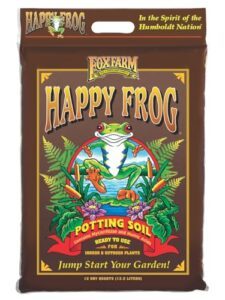
FoxFarm Happy Frog is one of those ready-to-use mixes that actually earns its price tag. At $21.99 for a 12-qt bag, it’s pricier than most, but you’re paying for a formula packed with earthworm castings, bat guano, and mycorrhizal fungi — microbes that extend your plant’s root network and improve nutrient uptake from day one.
It’s pH-adjusted, perlite-aerated, and fine-screened for easy root penetration.
It works well for tomatoes, herbs, and container vegetables without any pre-mixing required.
| Best For | Container gardeners — whether you’re growing tomatoes on a balcony, houseplants on a windowsill, or herbs in the kitchen — who want a no-fuss, high-quality mix that works right out of the bag. |
|---|---|
| Primary Use | Container & raised beds |
| Organic | Yes |
| Nutrients Included | Yes, amended |
| Moisture Retention | High |
| Drainage Support | Yes, perlite included |
| Bag Size | 12 qt / 10.1 lb |
| Additional Features |
|
- Loaded with earthworm castings, bat guano, and soil microbes that give roots a real head start without any extra prep
- PH-balanced and perlite-aerated, so it holds moisture well without turning into a soggy mess
- Versatile enough for vegetables, flowers, houseplants, and more — indoors or out
- At $21.99 for just 12 quarts, it’s one of the pricier options on the shelf — and a single bag won’t fill a 5-gallon pot
- The organic amendments can attract gnats or mold if you’re heavy-handed with watering or have poor airflow
- Some growers find it a bit dense and end up adding extra perlite, which is an added step and cost
2. Mountain Valley Minute Soil Coco Coir Brick
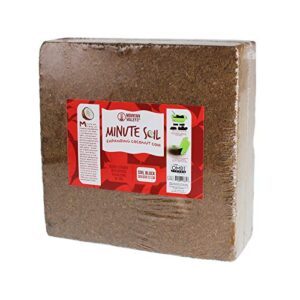
Mountain Valley Minute Soil is a smart pick when storage space or budget is tight.
One compressed brick — priced at $24.97 — expands into roughly 15 gallons of fluffy coco coir after soaking with about 5.5 gallons of water. That’s a full wheelbarrow of growing medium from something you can carry in one hand.
It’s OMRI-listed, peat-free, and pH-neutral.
Just remember: it’s nutrient-free, so you’ll need to mix in compost or feed regularly once your plants are in the ground.
| Best For | Gardeners who want an affordable, space-saving growing medium for seed starting, herbs, houseplants, or small veggie gardens without lugging around heavy bags of soil. |
|---|---|
| Primary Use | Standalone or amendment |
| Organic | Yes, OMRI-listed |
| Nutrients Included | No, must add |
| Moisture Retention | High |
| Drainage Support | Yes, good aeration |
| Bag Size | 1 block / ~15 gal expanded |
| Additional Features |
|
- One small brick expands into a full 15 gallons of growing medium — great value for the price
- OMRI-listed and peat-free, so it’s a solid choice for organic and eco-conscious growers
- Lightweight and compact until you need it, which makes storage and transport a breeze
- Nutrient-free out of the bag, so you’ll need to add fertilizer or amendments right away
- 15 gallons is a lot — if you only need a small pot’s worth, you’ll have leftovers to deal with
- Raw coir can carry salts that may require a rinse before use, especially for sensitive plants
3. Compressed Organic Coconut Coir Soil
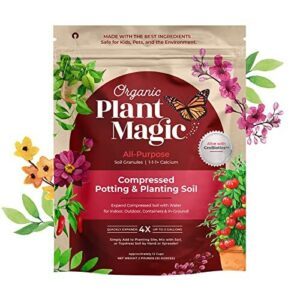
Organic Plant Magic takes coco coir a step further. Beyond just fiber, this 2 lb bag packs in worm castings, kelp, humic acids, and live mycorrhizae — the beneficial fungi that help roots absorb nutrients more efficiently.
It expands to roughly 3 gallons, holds moisture about three times longer than standard potting mixes, and delivers 55+ trace minerals.
It’s best used as a soil booster — blend it 1:2 with your existing mix — rather than filling large beds on its own.
| Best For | Indoor gardeners, seed starters, and container plant growers who want an easy, nutrient-packed soil boost without hauling heavy bags. |
|---|---|
| Primary Use | Seed starting & containers |
| Organic | Yes |
| Nutrients Included | Yes, full spectrum |
| Moisture Retention | Very high |
| Drainage Support | Moderate, blend recommended |
| Bag Size | 2 lb / ~3 gal expanded |
| Additional Features |
|
- Comes loaded with live mycorrhizae, worm castings, and 55 trace minerals — so your plants get more than just filler
- Holds moisture about 3× longer than regular potting mix, meaning fewer waterings overall
- Lightweight and compact — a 2 lb bag expands to roughly 3 gallons, which is great for small spaces
- At $39.97 for 2 lbs, it gets pricey fast if you’re covering a large garden or raised beds
- Too moisture-retentive on its own for plants that need quick drainage — you’ll want to mix in perlite or sand
- Not a standalone mix; it works best blended with existing soil rather than used by itself
4. Michigan Peat Garden Magic Top Soil
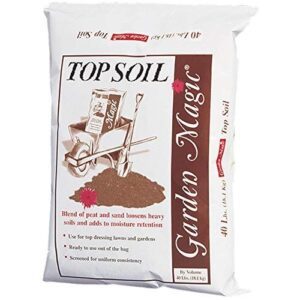
Michigan Peat’s Garden Magic Top Soil is a straightforward workhorse — a blend of dark reed sedge peat and sand that earns its place in the raised bed lineup. The peat component holds moisture during dry spells, while the sand keeps drainage moving so roots don’t drown.
It’s especially useful if you’re dealing with heavy clay soil underneath your bed. One 40-pound bag won’t fill a large bed, but it works well mixed into an existing blend to improve texture and aeration.
| Best For | Gardeners looking to improve soil structure in clay-heavy beds or patch up bare spots and lawn fissures without a full soil overhaul. |
|---|---|
| Primary Use | Lawn & garden topdress |
| Organic | Yes |
| Nutrients Included | Partial, supplement needed |
| Moisture Retention | Moderate to high |
| Drainage Support | Moderate |
| Bag Size | 40 lb |
| Additional Features |
|
- The dark reed sedge peat holds moisture well, which means less watering on hot days
- Great for loosening up heavy clay soil and giving roots room to breathe
- Versatile enough for lawns, flower beds, and veggie plots
- At 40 pounds, it’s a bit of a beast to haul around without a cart or an extra set of hands
- Pricier than basic garden soils, so it adds up fast if you’re covering a large area
- It’s not a fertilizer, so you’ll still need to feed your plants separately for best results
5. Charlies Compost Organic Soil Amendment
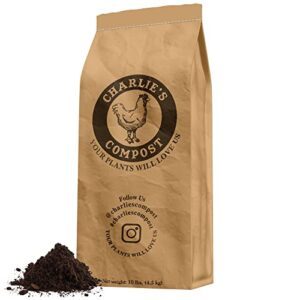
Charlie’s Compost is one of those amendments that quietly does a lot of heavy lifting. It’s built around organic poultry manure, which delivers nitrogen, phosphorus, and potassium in forms your plants can actually use quickly.
Add biochar to the mix, and you’ve got better nutrient retention and a healthier microbial environment — two things that matter a lot in raised beds.
One 40-pound bag covers roughly 1,000 square feet. Work it into your top layer each spring to keep fertility climbing year after year.
| Best For | Urban gardeners, apartment dwellers, and small-space growers who want an easy, odor-free way to feed their veggies, herbs, and containers indoors or out. |
|---|---|
| Primary Use | Raised beds & containers |
| Organic | Yes |
| Nutrients Included | Yes, slow-release |
| Moisture Retention | Moderate |
| Drainage Support | Moderate |
| Bag Size | 10 lb |
| Additional Features |
|
- The biochar and slow-release nutrients build healthier soil over time, not just a quick fix.
- Odor-free formula means you can actually use it inside without clearing the room.
- Versatile enough to brew compost tea, top-dress a lawn, or mix into a seed-starting blend.
- Can dry out and form a hard crust when watered, so you’ll want to mix it with something wetter.
- A 10 lb bag won’t go far if you’ve got more than a couple of containers or a small raised bed.
- It’s not a complete fertilizer, so heavy feeders like tomatoes will probably still need extra nutrients.
6. Hoffman Canadian Sphagnum Peat Moss
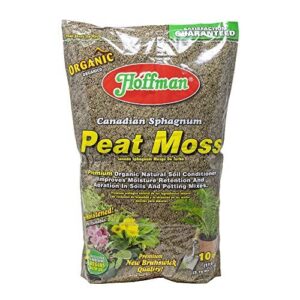
Peat moss is the quiet workhorse of moisture management. Hoffman’s Canadian Sphagnum Peat Moss is 99.8% organic and coarse-grade, meaning it holds water without turning your mix into a soggy mess.
It loosens heavy clay soils and blends easily with perlite or vermiculite for a custom raised-bed mix.
One thing to watch: it’s naturally acidic, so pair it with lime if you’re growing vegetables that prefer a pH closer to 6.5.
The resealable 10-quart bag keeps leftovers fresh.
| Best For | Gardeners working with clay-heavy soil, anyone starting seeds, or hobbyists growing carnivorous plants and bog species that love acidic conditions. |
|---|---|
| Primary Use | Soil amendment & mixes |
| Organic | Yes |
| Nutrients Included | No, must add |
| Moisture Retention | High |
| Drainage Support | Moderate, mix recommended |
| Bag Size | 10 qt / ~2.9 lb |
| Additional Features |
|
- Holds moisture really well without compacting, so roots actually have room to breathe
- Blends easily with perlite or vermiculite to dial in the exact mix you need
- Works great in specialty setups like reptile enclosures or carnivorous plant pots
- It’s naturally acidic, so if you’re growing veggies or flowers that want neutral soil, you’ll need to add lime
- 10 quarts goes fast — not enough for any large garden or bog project
- Gets dusty and powdery when dry, so you’ll want to wet it down before you start digging in
7. Coast of Maine Castine Blend Soil
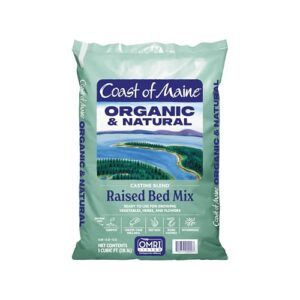
Coast of Maine’s Castine Blend is the closest thing to a complete raised-bed solution in a bag. It combines worm castings, biochar, kelp meal, greensand, and mycorrhizae — ingredients that feed your plants and build long-term soil health at the same time.
The pH is pre-adjusted for vegetables, and drainage stays balanced without getting waterlogged. These features ensure optimal growing conditions while preventing issues like waterlogging.
At roughly 1 cubic foot per bag, you’ll need several for a full bed. However, the ready-to-use formula saves real prep time, eliminating the need for extensive soil amendments or adjustments.
| Best For | Gardeners growing vegetables, herbs, or fruiting plants in raised beds or containers who want a high-quality, ready-to-use organic soil without the hassle of mixing amendments themselves. |
|---|---|
| Primary Use | Seed starting & propagation |
| Organic | Yes |
| Nutrients Included | No, inert |
| Moisture Retention | Moderate to high |
| Drainage Support | Yes, excess drains |
| Bag Size | 8 qt |
| Additional Features |
|
- Packed with living ingredients like worm castings, mycorrhizae, and kelp meal that feed plants and build soil health over time
- Ready straight from the bag — no mixing, no guessing, no extra amendments needed
- Drains well without drying out, so your plants get consistent moisture without sitting in soggy soil
- You’ll likely need multiple bags to fill a full raised bed, which adds up fast given the higher price tag
- The light, fluffy texture can be a downside in windy spots — mulching or some extra weight on top helps
- Heavy feeders might still need supplemental fertilizing since the mix doesn’t cover every micronutrient need
How to Mix and Maintain Raised Bed Soil
Mixing and caring for your raised bed soil isn’t complicated, but a few key steps make all the difference. You’ll want to start with the right blend and keep it healthy year after year.
Here’s what you need to know to get the best results.
Recommended Soil Ratios and DIY Blend Recipes
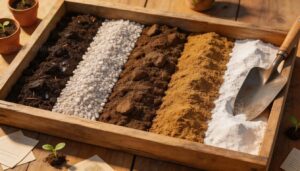
Getting your soil mixing ratios right is the foundation of a productive bed. A reliable DIY soil blend recipe starts with 40% topsoil, 40% compost, and 20% perlite or vermiculite.
From there, customize:
- Add 5–15% worm castings ratio for micronutrient boost
- Include 1–2% gypsum inclusion rate to improve structure
- Mix in aged manure ratio of 10% for slow-release fertility
Calculating Soil Volume for Your Raised Bed
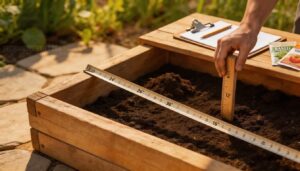
Once your soil mixing ratios are set, figure out exactly how much you need. Measure your bed dimensions from the inside edges — length, width, and depth — then multiply all three for cubic feet. Divide by 27 for cubic yards.
Always add 10–15% as a compaction allowance since soil settles. A garden soil calculator makes this quick and removes guesswork entirely.
Adjusting Your Mix for Specific Plant Types
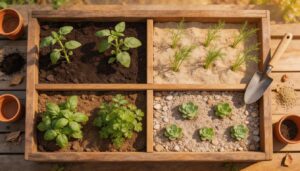
Not every plant wants the same thing.
Tomatoes need a phosphorus boost at planting — add bone meal. Herbs need herb nitrogen balance — enough to grow, not so much they bolt.
Root crops like carrots demand loose soil texture with minimal compaction for straight growth. Leafy greens prefer consistent leafy green moisture with moderate nitrogen. For a succulent mix ratio, push coarse amendments to 50%.
Annual Compost Top-Dressing and Nutrient Replenishment
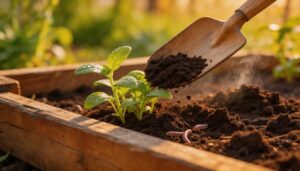
Think of compost top-dressing as a seasonal reset button for your raised bed.
Apply ¼ to ½ inch of finished compost each spring and after heavy harvests — that’s your Seasonal Application Timing sweet spot. This timing matches Nutrient Release Timing with active plant uptake, preventing waste and Nutrient Leaching Prevention.
- Boosts Microbial Diversity Boost through fresh organic matter
- Supplies nitrogen, phosphorus, potassium, calcium, and magnesium
- Releases nutrients gradually — no fertilizer burn risk
- Watch for dark color and earthy smell as Compost Quality Indicators
- Facilitates Seasonal soil maintenance and topdressing practices year-round
Preventing Compaction and Supporting Long-Term Soil Health

Compaction sneaks up quietly — one wet season, a few extra footsteps, and suddenly your roots can’t breathe. Lay 2–3 inches of organic mulch to cushion surface impact and slow crust formation. Light cultivation once or twice a season restores soil aeration without disturbing microbial aggregation or earthworm activity below.
Monitor firmness by pressing a finger 2 inches deep — resistance means it’s time to act.
Frequently Asked Questions (FAQs)
What is the best soil for raised beds?
The best soil for raised beds blends 40% topsoil, 40% compost, and 20% perlite. This mix balances drainage, nutrients, and aeration — giving roots exactly what they need to thrive.
How much soil should be in a raised bed?
Most raised beds need 12 to 18 inches of soil. Shallow crops like lettuce thrive in 6 to 8 inches, while tomatoes and carrots need the full 12 to
Is topsoil suitable for a raised bed garden?
Topsoil can work, but it’s rarely enough on its own.
Bulk density concerns, weed seed risk, and drainage problems make contaminant screening and soil amendments essential before using topsoil in any raised bed.
Which soil mix is best for a raised garden?
The ideal mix is 40% topsoil, 40% compost, and 20% perlite. This balance promotes drainage, nutrients, and root development — a reliable foundation for nearly any vegetable or herb you’re growing.
How to choose a soil mix for a raised bed?
Choosing the right soil mix for raised beds starts with your plants’ needs.
Match root depth, drainage, and pH to your crops — then blend accordingly for a mix that drains well.
What is the best mix of soil for raised beds?
Think of it like a recipe — the best soil mix for raised beds blends 40% topsoil, 40% compost, and 20% perlite for drainage, nutrients, and healthy roots.
Is there a difference between garden soil and raised bed soil?
Yes — raised bed soil is engineered for drainage and loose structure, while garden soil varies in compaction and layering.
Raised bed mixes prioritize microbial diversity, balanced soil pH, and lighter soil texture to support roots without weight load issues.
What is the best base for a raised bed?
The best base combines topsoil, compost, and organic matter over a capillary break layer of lightweight aggregate.
Add a geotextile barrier, provide bed frame support, and slope the base slightly for drainage.
How do you fill a raised bed cheaply?
Fill a raised bed cheaply by layering free materials — cardboard, leaves, grass clippings — then topping with a DIY soil mix of local compost and topsoil.
Skip bagged "raised bed" labels; they’re just marketing.
How often should raised bed soil be replaced?
Replace raised bed soil every 3 to 5 years. If you notice yield decline, compaction, or disease build-up, don’t wait — act sooner to protect your plants.
Conclusion
The perfect raised bed soil is a paradox: it must hold water yet drain excess, nourish roots yet avoid suffocation.
Achieving this balance starts with choosing the best soil for raised beds, one that combines topsoil, compost, and amendments like coconut coir and perlite.
By mixing and maintaining your soil with care, you’ll create a thriving ecosystem where plants grow strong and healthy.
Your raised beds will flourish, and so will your gardening confidence.
- https://yardandgarden.extension.iastate.edu/faq/what-would-be-good-soil-mix-raised-bed
- https://excelatgardening.com/
- https://acehardware.dttq.net/c/264145/611504/9988?subId1=BV-RU&u=https%3A%2F%2Fwww.acehardware.com%2Fdepartments%2Flawn-and-garden%2Fgardening%2Fflower-and-plant-fertilizer%2F7599723
- https://www.walmart.com/ip/20594718/
- https://www.youtube.com/user/pilarchik