This site is supported by our readers. We may earn a commission, at no cost to you, if you purchase through links.
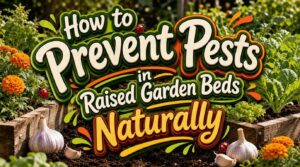
Raised beds give you more control over your growing environment than almost any other garden setup—but they don’t come with a pest-proof guarantee. Aphids find the gaps, slugs find the edges, and cabbage worms find the brassicas no matter how tidy things look from the outside.
The difference between a productive bed and a struggling one often comes down to proactive measures. Preventing pests in raised garden beds is less about reacting to damage and more about building conditions where pests can’t easily gain a foothold.
This involves prioritizing soil health, installing physical barriers, adopting smart planting strategies, and maintaining consistent observation—all of which create an environment where pests struggle to establish themselves.
Table Of Contents
- Key Takeaways
- Prevent Pests Before They Arrive
- Block Pests With Physical Barriers
- Build Pest-Resistant Raised Bed Soil
- Water and Mulch Strategically
- Rotate Crops and Sanitize Beds
- Use Companion and Trap Crops
- Attract Beneficial Garden Insects
- Apply Organic Controls Safely
- Frequently Asked Questions (FAQs)
- Conclusion
Key Takeaways
- Healthy, well-fed plants growing in pH-balanced, well-drained soil are your strongest natural defense, since pests target stressed plants first.
- Physical barriers like floating row covers, fine insect mesh, and copper tape stop pests before they reach your crops.
- Rotating crop families yearly and clearing spent plants promptly breaks pest cycles that would otherwise build up season after season.
- Companion plants like marigolds, basil, and nasturtiums do double duty — repelling harmful insects while drawing in the beneficial predators that keep your beds in balance.
Prevent Pests Before They Arrive

The best pest control starts before pests even show up. A few simple habits at the beginning of the season can save you hours of frustration later.
Getting ahead of the problem is easier than you’d think—these natural pest management techniques show exactly where to start before trouble begins.
Here’s what to focus on first.
Start With Healthy Seedlings
Your first line of defense starts before anything goes in the ground.
Strong stems, white roots, and true leaf development signal seedlings ready to thrive — not struggle. Give them 12–16 hours of consistent lighting and allow gradual temperature shifts during hardening off.
Choose seedlings that show:
- Upright, firm stems with no wilting
- Vibrant green true leaves
- Well-branched white roots
Inspect Beds Weekly
Regular pest monitoring becomes your next best tool once your seedlings are in the ground. Walk your beds every week, ideally at the same time, and check under leaves, along stem bases, and beneath mulch for early damage signs like frass or chewed edges.
Note weather conditions—humidity spikes often trigger slug surges. Log what you find, mapping pest hotspots by bed location for smarter, seasonal record keeping.
Remove Weak Plants Quickly
Once you’ve spotted trouble in your weekly rounds, act on it fast. Weak or stunted plants — those with pale leaves after the first two or three true leaves appear — draw pests like a welcome mat.
Thinning timing matters: Cut them at soil level using clean cutting tools to minimize soil disturbance. Compost removed seedlings away from the bed, ensuring proper disposal to prevent pest attraction.
Record thinning data to sharpen next season’s spacing decisions, improving future garden planning and plant health.
Keep Tools and Beds Clean
Clean tools carry pathogens from bed to bed—that is garden sanitation 101. After thinning those weak plants, wipe pruners and trowels with a disinfectant cloth before moving to the next bed. Tool disinfection and glove hygiene together form a simple yet powerful line of defense against pests.
- Sanitize cutting tools between each bed
- Change gloves to prevent cross-contamination
- Air-dry equipment completely before dry storage
- Sterilize seed trays with a diluted bleach solution
- Keep work surfaces clean through regular surface sterilization
Use Prevention-first Pest Control
Think of pest control as a layered system, not a single fix. Before reaching for any spray, start with habitat modification and exclusion — the most reliable tools. Early-season scouting, crop rotation, and garden sanitation form the backbone of this approach.
Pair them with Microbial Soil Boost practices, Diverse Crop Planning, Sanitation Stations, physical barriers, companion planting, and Habitat Diversification to keep beneficial insects thriving and pests guessing.
Incorporating early detection benefits through routine inspections helps catch problems before they spread.
Block Pests With Physical Barriers
Sometimes the simplest solution is also the most effective — just keep pests out before they ever get in.
Physical barriers do exactly that, creating a line of defense your garden can actually rely on. Here are five practical options that work.
Floating Row Covers
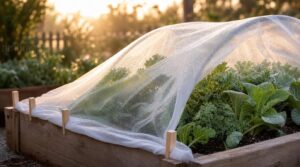
One of the simplest nonchemical pest control tools you can add to raised garden beds is a floating row cover. These spunbonded polypropylene fabrics act as a protective mesh barrier against aphids, cabbage loopers, and flea beetles — without blocking light or rain.
Key setup details:
- Choose cover materials weighing 0.5–1.5 oz/yd²
- Prioritize edge sealing with soil or clips to prevent gaps
- Practice ventilation management on warm days to avoid heat stress
- Enjoy a temperature boost of 2–6°F for frost protection on cold nights
Fine Insect Mesh
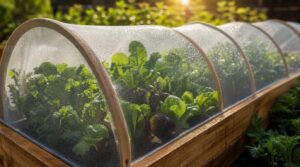
Fine insect mesh takes non-chemical pest control a step further than row covers. For mesh selection, choose 0.6–0.8 mm openings—fine enough to block thrips and aphids while letting air and water through.
UV protection keeps the mesh and netting strong for two to five seasons. This seasonal durability makes it a smart, reusable investment.
Custom fitting is easy with scissors, and edge sealing prevents gaps, ensuring effective pest exclusion.
Hardware Cloth Bottoms
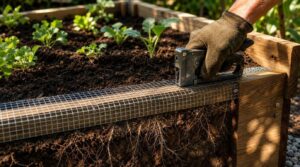
Underground invaders like gophers and voles can quietly destroy a raised bed from below. Hardware cloth bottoms stop them cold. Here’s how to do it right:
For a fully chemical-free garden, pairing hardware cloth with organic rose pest control methods keeps both above and below the soil safe.
- Choose 16–20 Mesh Gauge wire with ½-inch openings for solid pest exclusion.
- Use Installation Anchors like staples or clips for frame integration — no shifting during rain.
- Apply Edge Capping to cover sharp burrs safely.
- Galvanized coating manages Rust Prevention across multiple seasons.
- Inspect regularly for gaps — non-chemical pest management only works when coverage stays complete.
Rabbit and Deer Fencing
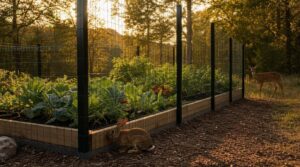
Rabbits test fence edges; deer leap over anything too short.
For rabbits, use hardware cloth or fine mesh at ground level, burying a ground skirt 12 inches deep to block burrowing.
Deer require a fence height of at least eight feet. Set posts 8–10 feet apart, choose a corrosion-resistant mesh, and secure your gate with a wildlife-proof latch.
Copper Tape for Slugs
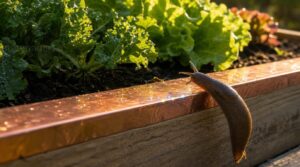
Copper tape serves as one of the most reliable non-chemical repellents for slugs in raised garden beds. When slug mucus contacts the copper, it triggers a mild electrochemical reaction that turns them away.
Choose tape 20–50 mm wide for solid coverage. Clean the rim before applying, overlap the ends, and seal edges against moisture.
Check regularly for gaps—one small break invites them back.
Build Pest-Resistant Raised Bed Soil
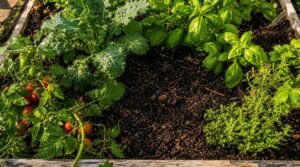
Healthy soil is your garden’s first line of defense — pests tend to target weak, stressed plants more than strong ones. Getting the ground conditions right makes a real difference in how well your vegetables can fend for themselves.
Here are the key soil practices that help build resilience from the roots up.
Add Aged Compost Yearly
Every autumn or spring, work 2 to 3 inches of aged compost into your raised bed soil to a depth of 6 to 8 inches. This organic matter addition drives a Microbial Activity Boost, promotes beneficial insects, and delivers a Slow Nutrient Release that feeds crops steadily.
The result is real Soil Structure Improvement, better soil health, and measurable Yield Boost Potential — up to 15 percent more tomatoes with consistent application timing.
Improve Drainage
Good compost improves soil texture, but water still needs a place to go. For your raised garden bed, start with a gravel underbed layer — 6 to 12 inches of coarse rock beneath the soil.
Add downspout extensions to redirect roof runoff, dig surface swales around bed edges, or install French drains to move subsurface water away. An elevated bed base keeps roots above surrounding moisture levels.
Avoid Waterlogged Roots
Even with great drainage pipes in place, too much water is still a threat. Waterlogged roots can’t breathe — and that opens the door to rot pathogens like Pythium and Phytophthora.
Fix it with these water management strategies for raised beds:
- Use perlite incorporation to improve aeration and soil tilth, reducing compaction
- Install moisture sensors to track soil moisture without guessing
- Apply proper watering techniques — deep, infrequent sessions only
- Adjust soil texture with coarse sand for improved drainage
Balance Soil PH
Soil drainage matters, but pH is just as important for keeping pests at bay. When your raised garden bed’s soil pH drifts outside 6.0–7.0, plants become stressed — and stressed plants invite trouble.
Use pH testing kits seasonally, then correct with lime application to raise pH or sulfur amendment to lower it.
Compost buffering and organic matter addition stabilize shifts naturally over time.
Feed Plants Consistently
Healthy plants resist pests better than stressed ones — and consistent feeding is what keeps them thriving.
Follow a Regular Feeding Calendar and use a Slow Release Fertilizer with Balanced NPK Ratios to avoid nutrient gaps. Test soil twice per season through Soil Test Monitoring, and apply Micronutrient Foliar Feeding if leaves show yellowing.
Pair feedings with compost, organic matter addition, mulching, and drip irrigation for steady soil fertility.
Water and Mulch Strategically
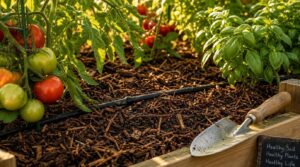
How and when you water your raised beds makes a bigger difference than most gardeners expect. Wet foliage and soggy soil are essentially an open invitation for slugs, fungal issues, and soft-bodied insects to move in.
A few simple habits with water and mulch can shut that door for good.
Water Early Mornings
Timing your watering like a morning routine cue makes a real difference. When you water early, the soil surface dries fast — cutting down slug activity and foliar disease pressure. It’s a simple water management habit for your raised garden bed that enhances integrated pest management naturally.
- Water between 6–9 a.m.
- Use drip irrigation to target roots
- Aim for 250–500 ml per plant zone
- Choose your temperature preference — room temp reduces shock
- Consistent hydration volume promotes metabolism boost and cognitive alertness in plants’ nutrient uptake
Keep Foliage Dry
Wet leaves are an open invitation for powdery mildew, slugs, and bacterial leaf spots. Base-Only Irrigation — using drip lines or soaker hoses — keeps moisture where roots need it, not on foliage. Combining this with Sunlit Row Orientation and strategic pruning for Canopy Airflow ensures leaves dry quickly after dew.
Nighttime Irrigation Avoidance is critical, as wet foliage overnight dramatically raises disease risk. Exposing leaf edges to morning sun completes the drying process, minimizing fungal and bacterial threats.
Use Straw Mulch
A 2–3 inch layer of straw mulch does quiet, steady work beneath your plants. It locks in moisture retention, delivers reliable soil insulation, and manages weed suppression without chemicals.
As straw breaks down, it creates an organic matter boost and microbial habitat that fosters natural predator habitat for beneficial insects. That’s nonchemical pest management working around the clock.
Try Shredded Leaf Mulch
Shredded leaves are a free resource most gardeners overlook. Spread a 2–3 inch layer around your plants for reliable moisture conservation, weed inhibition, and temperature buffering through summer heat.
As leaves decompose, they fuel soil microbes and kickstart nutrient cycling that feeds your plants steadily.
This organic mulch also creates a natural predator habitat, supporting beneficial insects as part of your nonchemical pest management strategy.
Reduce Slug-friendly Moisture
Slugs thrive wherever moisture lingers — so drying out their habitat is one of your sharpest defenses. Smart water management in raised beds cuts slug activity greatly.
- Water at dawn so surfaces dry before nightfall
- Use drip irrigation to keep foliage dry
- Prioritize drainage improvement with Elevated Bed Design and Soil Aeration
- Pull organic mulch back from stems to reduce slug and snail trap zones
Rotate Crops and Sanitize Beds
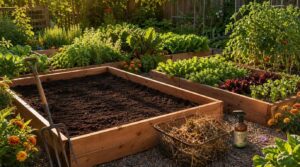
Even the healthiest raised bed can quietly build up trouble if the same crops grow in the same spot year after year. Pests and diseases learn your garden’s routine just as well as you do.
Pests learn your garden’s routine — rotate crops yearly to stay one step ahead
A few simple habits can break that cycle before it starts.
Move Crop Families Yearly
Each year, moving crop families to different beds breaks the pest lifecycle before it can take hold. This is crop rotation in action — a foundation of sustainable gardening.
A four-bed plan cycling Fabaceae, Brassicaceae, Solanaceae, and Cucurbitaceae bolsters nitrogen fixation, disease suppression, and root architecture variation. These practices collectively enhance soil vitality through genuine crop diversification.
Seasonal bed mapping and family sequence mapping ensure consistent rotation, directly contributing to long-term soil health.
Remove Spent Plants
Harvest cleanup timing matters — remove finished plants within one to two weeks after harvest. Pull stems at the base, bag diseased debris, and compost only disease-free material.
After clearing, practice surface soil loosening to expose hidden pests.
Check for crown regrowth, sweep pathways, and reset your bed with fresh mulch.
Clear Diseased Foliage
Once spent plants are cleared, turn your attention to any remaining foliage showing early trouble signs. Leaf lesion identification is your first line of defense — catch those brown spots, yellowing edges, and powdery coatings early.
- Inspect leaves weekly and log findings in a disease tracking calendar
- Bag diseased foliage immediately; never add it to regular compost
- Use designated compost disposal sites away from active beds
- Quarantine infected plants by tagging and isolating them from healthy neighbors
- Clean pruners with alcohol between cuts to support garden hygiene
Pull Pest-harboring Weeds
Weeds harbor aphids, whiteflies, and root-attacking nematodes year-round. Weed identification matters here: know what’s growing and why. Timely weed removal breaks pest cycles before eggs hatch.
Use manual removal techniques and handpicking to pull roots completely. Safe weed disposal and seed bank reduction keep your garden hygiene tight and beds genuinely clean.
Refresh Mulch Seasonally
Replenishing mulch twice a year — once in spring and again in fall — keeps your raised beds working hard for you. Pull back any compacted sections, then top up to a 2–3 inch depth using straw or shredded bark.
These mulch material selection choices support mulching for moisture control, improve soil amendment over time, and deny pests easy overwintering spots near plant crowns.
Use Companion and Trap Crops

One of the easiest upgrades you can make to a raised bed is choosing plants that work together. Certain herbs, flowers, and vegetables naturally confuse, repel, or redirect common pests — no sprays needed.
Here are five companion and trap crops worth planting this season.
Marigolds for Nematodes
French marigold roots release natural compounds that disrupt nematode development right in the soil — a quiet underground defense. For the best root exudate impact, follow a planting schedule that puts marigolds in the ground 6–8 weeks before susceptible crops. Space plants 12–18 inches apart for proper barrier spacing.
This companion planting approach also delivers a soil microbial boost, improving conditions for your next harvest.
Basil Near Peppers
Basil is one of the best companion planting choices you can make for peppers. Its volatile oils act as a natural insecticide, cutting aphids and spider mite pressure by up to 30%.
You also get microclimate benefits — basil shades pepper roots, slowing moisture loss.
It attracts beneficial predators and pollinators.
Additionally, it aids flavor enhancement at harvest and allows easy harvest synchronization for kitchen use.
Chives and Garlic Borders
Chives and garlic make a reliable aromatic barrier along raised bed edges. Their sulfur compounds act as natural pest deterrent plants, discouraging aphids, Japanese beetles, and cabbage moths from colonizing nearby crops. Think of them as a living fence.
In late summer, their edible flowers become a pollinator magnet. This companion planting strategy delivers a seasonal harvest, visual edge, and real protection, offering a multifaceted benefit to gardens.
Nasturtiums for Aphids
Nasturtiums are one of companion planting’s most effective tools for organic pest control. Their tender leaves and blooms act as a Beneficial Insect Hub while doubling as a trap crop for aphids.
Use smart Trap Crop Positioning by planting them at bed edges. Practice regular Aphid Surveillance, and apply Nasturtium Pruning and Nasturtium Bloom Management to keep biological control working all season.
Lavender to Deter Browsing
Lavender acts as a living scent barrier that browsing pests like rabbits and deer simply don’t want to cross.
Plant clusters of three to five English lavender along bed edges for maximum essential oil output. Prune after each bloom cycle to keep the fragrance strong.
Combine dried lavender bundles with rosemary or marigolds to build a layered aromatic herb border — one of the most reliable organic pest control strategies available.
Attract Beneficial Garden Insects

Not every pest battle needs a spray bottle — sometimes the best defense is already flying around your garden.
The right plants can draw in predatory insects that quietly keep aphids, caterpillars, and mites in check.
Here’s how to roll out the welcome mat for the good guys.
Plant Dill and Fennel
Both dill and fennel pull double duty in your raised bed — they’re aromatic herbs that work as natural pest deterrents while attracting natural predators like lacewings and hoverflies. For organic solutions that don’t cost much, these are hard to beat.
- Mind plant spacing: give fennel 18–24 inches
- Practice bolting management by harvesting dill leaves early
- Separate them to protect seed saving and flavor integrity
Grow Yarrow and Cosmos
Yarrow and cosmos serve as pest-repelling plants that pull in natural predators, offering dual benefits beyond dill and fennel. Both thrive in full sun — at least six hours daily, making late spring planting ideal for their growth.
Cosmos can grow up to six feet tall, so staking their tall stems helps maintain manageability. For limited garden space, container growing in 8-inch pots provides a practical alternative.
This approach ensures these plants remain functional and aesthetically pleasing throughout the season, requiring minimal adjustments for optimal results.
Protect Lady Beetles
Lady beetles — or ladybugs — are one of the most reliable beneficial predators in organic gardening. A single adult can consume thousands of aphids over its lifetime.
To keep them working your raised garden beds, try these five habitat strategies:
- Plant nectar-rich plantings like dill, fennel, and yarrow nearby
- Create pesticide-free zones to protect eggs and larvae
- Add overwintering shelters using leaf litter or ground cover
- Practice habitat diversification with varied bloom schedules
- Use population monitoring before targeted beetle releases
Encourage Lacewings
Green lacewings are another powerful beneficial predator worth encouraging. Like lady beetles, they thrive when you provide nectar‑rich perennials and a native flower mix — think yarrow, cosmos, and dill.
Add insect hotels, leaf‑litter habitat, and a shallow water feature nearby to support egg-laying and shelter. This habitat diversification is the backbone of organic gardening pest control done right.
Avoid Broad-spectrum Pesticides
All the habitat work you’ve done means nothing if a broad-spectrum spray wipes out your beneficial insects overnight. Selective Spray Use protects predatory insects like parasitoid wasps and lacewings that you’ve carefully attracted.
- Beneficial Insect Preservation keeps natural pest suppression working
- Resistance Management Strategies prevent pests from rebounding stronger
- Soil Health Safeguarding protects earthworms and microfauna below
Choose Targeted Mode Actions — insecticidal soap, Bt, or organic solutions — first.
Apply Organic Controls Safely

Sometimes pests slip past your barriers and companion plants — and that’s okay. When they do, you’ve got a toolkit of organic controls that won’t harm your soil, your beneficial insects, or your harvest.
Here’s what works and how to use each one safely.
Handpick Visible Pests
Morning Handpicking works best when pests are slow and easier to spot. Use Glove Use as your first line of manual and mechanical removal: apply the Pinch Technique to pull insects from leaf undersides and stem crevices.
Drop them into a sealed disposal container immediately.
Keep a pest count log weekly for smarter organic solutions.
Use Insecticidal Soap
Insecticidal soap is one of the most reliable organic sprays for garden pest control. Apply it at a mixing ratio of roughly 2 tablespoons per quart of water, targeting aphids, whiteflies, and spider mites directly. The best time to apply it is early morning or late afternoon.
Always wear safety gear when mixing, and rinse delicate leaves after a few hours for smart residue management — an environmentally friendly pest control habit worth keeping.
Apply Neem Carefully
Neem oil concentrate works like a slow reset for your pest problem. Mix it with a mild soap as an emulsifier, diluting to about 1–2% in lukewarm water.
Apply during shade application windows — early morning or evening — to avoid leaf burn and protect pollinators.
Always wear protective gear, follow label directions, and space these organic sprays 7–14 days apart for best results.
Use Bt for Caterpillars
Bacillus thuringiensis — Bt for short — is one of the most effective natural insecticides for use in raised garden beds, specifically targeting caterpillars without harming bees or beneficial insects.
- Timing Applications: Spray in the early morning or evening to slow UV breakdown.
- Target Species: Btk controls cabbage loopers, hornworms, and similar young larvae.
- Spray Techniques: Cover both leaf surfaces so caterpillars ingest the toxin while feeding.
- Resistance Management: Rotate Bt with other organic sprays to prevent tolerance buildup.
Try Ferric Phosphate Pellets
Ferric phosphate pellets are a reliable, low-risk option for slug and snail control in raised garden beds. Their safety profile makes them suitable around pets and wildlife, unlike harsher molluscicides. Pellet placement matters: scatter them evenly, and reapply after heavy rain, as weather can reduce coverage.
As the pellets break down, they release iron and phosphate, enhancing plant nutrition—a genuine bonus for soil health. This dual functionality ensures both pest control and soil enrichment.
| Factor | Detail | Recommendation |
|---|---|---|
| Application Timing | After dusk, when slugs are active | Every 1–2 weeks |
| Weather Effects | Rain dissolves pellets quickly | Reapply after irrigation |
| Soil Impact | Releases iron and phosphate | Enhances plant nutrition |
Frequently Asked Questions (FAQs)
What smell do pests hate the most?
Pests practically flee at the first whiff of garlic sulfur, lavender linalool, eucalyptus cineole, and peppermint potency. These nonchemical repellents, including marigolds, basil, and mint, rank among the most effective pest-repelling plants available.
Their potency and natural origins make them a preferred choice for eco-friendly pest control.
How do seasonal weather changes affect pest activity?
Spring emergence brings aphids and caterpillars as temperatures rise. Heat-driven generations multiply faster.
High humidity boosts thrips survival.
Rain-linked mosquitoes thrive near standing water.
Winter sheltering hides overwintering insects until spring.
Do raised bed heights impact which pests appear?
Yes, height matters. Beds over 18 inches reduce rodent access and slow slug mobility.
Better drainage lowers aphid incidence.
Improved airflow effects and soil temperature shifts make raised garden beds naturally less inviting to many pests.
Conclusion
A thriving raised bed is less a garden and more a system—one where every choice either invites pests in or shuts the door on them. Knowing how to prevent pests naturally means building that system layer by layer: healthy soil, smart planting, physical barriers, and steady observation.
When each piece works together, pests don’t disappear by luck. They’re simply left with nowhere to get a foothold.
- https://www.gardeningknowhow.com/plant-problems/pests/non-toxic-raised-bed-pest-control
- https://homegrown-garden.com/blogs/blog/homemade-garden-pest-repellent?srsltid=AfmBOopsgMTzDtmu2jCBnbmKxWrWutmobdGfGPsKE-SoEc19SsjghZt7
- https://www.uaf.edu/ces/publications/database/gardening/plastic-mulch.php
- https://extension.umd.edu/resource/row-covers
- https://homesteadandchill.com/hoops-row-covers-pests-shade-frost/?srsltid=AfmBOoqWqhQtYuTcQnO1rG8XGasUmmbMl8GT7gRwuKnmIIAkig7nx0L9