This site is supported by our readers. We may earn a commission, at no cost to you, if you purchase through links.
Most home cooks strip their herb plants bare, then wonder why the basil looks sad and the thyme stops growing. The truth is, how you harvest matters as much as how you grow. Pull leaves the wrong way and you’re basically wounding the plant every time you cook.
Herbs respond directly to how they’re handled. Snip them correctly and they push out fresh growth within days. Ignore the timing or grab the wrong tool, and you’ll notice the flavor dulling, the stems thinning, and the whole plant slowly checking out.
Harvesting fresh herb leaves well is a skill that pays you back every single season.
Table Of Contents
- Key Takeaways
- Why Proper Herb Harvesting Matters
- Best Times to Harvest Fresh Herbs
- Essential Tools and Preparation
- Step-by-Step Harvesting Techniques
- Harvesting Different Types of Herbs
- Cleaning and Handling Fresh Herb Leaves
- Storing and Preserving Harvested Herbs
- Frequently Asked Questions (FAQs)
- Do herbs grow back when you pick them?
- How long after planting herbs can you use them?
- Can I harvest herbs after the first frost?
- How do I revive wilted herbs after harvesting?
- Which herbs should not be harvested together?
- Do different soil types affect harvest frequency?
- Can I harvest from seedlings or only mature plants?
- Can herbs be harvested during drought or heat stress?
- How do companion plants affect herb leaf quality?
- Should herbs be harvested differently in containers vs. ground?
- Conclusion
Key Takeaways
- Snip just above a leaf node and never take more than one-third of the plant at once — this keeps growth buds active and your herbs producing for months.
- Morning is the best time to harvest, ideally between 8 and 11 a.m., when essential oil levels peak and leaves are firm before the day’s heat kicks in.
- Cut before flowers open — once a plant bolts, it shifts energy away from leaves, and the flavor you’re after quietly walks out the door.
- How you store matters as much as how you cut — wrap in a damp paper towel, stand stems in water, or freeze in ice cube trays to lock in flavor after harvest.
Why Proper Herb Harvesting Matters
Most gardeners think harvesting is just picking leaves when you need them — but how you harvest makes a bigger difference than you’d expect. Done right, it keeps your plants healthy, your herbs flavorful, and your garden producing all season long.
If you want the full breakdown, harvesting techniques for maximum vegetable yield walks through exactly when and how to cut for the best results.
Here’s why proper technique matters in three key ways.
Benefits for Plant Health
Think of each harvest as a gift you give back to the plant. When you cut just above a leaf node, dormant buds wake up and branch into two new stems — that’s Plant Regrowth in action.
Good harvesting techniques also build Healthy Roots, improve Disease Prevention, and boost Stress Tolerance. Regular, mindful pruning simply keeps your herbs thriving longer.
Influence on Flavor and Aroma
Healthy plants taste better — it’s that simple. Proper harvest timing directly shapes your herb’s flavor intensity and aroma preservation.
Cut aromatic herbs like basil or mint just before flowering, when oil concentration peaks. Volatile compounds escape fast under afternoon heat, so your harvest timing matters.
Nail it, and you’re rewarded with bold, complex flavor profiles that transform any dish.
Encouraging Regrowth and Yield
Good harvesting isn’t just about what you take — it’s about what grows back. Node pruning and smart harvest scheduling turn one basil plant into a months-long supply. Cut above a leaf pair every 5 to 7 days, and two new shoots replace every stem you snip. That’s cut-and-come-again working for you.
Smart harvesting is not about what you take — it is about what grows back
Combine flower management with solid pruning strategies, and your yield optimization practically runs itself. Understanding herb harvesting rules is essential for a continuous supply of fresh herbs.
Best Times to Harvest Fresh Herbs
Timing is everything regarding harvesting herbs. Pick at the wrong moment and you’ll lose flavor before the leaves ever reach your kitchen.
Here’s what you need to know about when to cut.
Morning Vs. Afternoon Harvests
Morning is your sweet spot for herb harvesting. Harvest timing directly affects essential oil levels, leaf moisture, and flavor preservation. Once dew dries but before midday heat builds — roughly 8 to 11 am — your herbs are at their best.
- Essential oil content peaks in cool morning air
- Leaf moisture keeps leaves firm and less prone to bruising
- Heat stress increases with afternoon harvesting, weakening plants
- Harvesting techniques work better on crisp, hydrated leaves
- Pruning and harvesting in the morning gives plants a full day to recover
Afternoon cuts? Leaves wilt faster and lose aromatic punch.
Sharp, clean tools help minimize that stress—check out these herb harvesting techniques to encourage healthy regrowth for timing and cutting tips that keep your plants productive.
Pre-Flowering Vs. Post-Flowering Timing
Harvest timing is everything — and the pre-flowering stage is your flavor peak. Before buds open, oil levels in basil, mint, and cilantro hit their highest point, meaning stronger aroma preservation in every leaf. Once flowering starts, the plant shifts energy away from leaves.
Regular pruning keeps herbs locked in that sweet growth stage, rewarding you with faster leaf regrowth and better-tasting harvests.
Seasonal and Climatic Considerations
Your climate calls the shots in herb gardening. Cool-season herbs like cilantro and parsley thrive between 10°C and 24°C — that’s your prime window for frequent harvesting.
Frost protection matters too: pull a heavy harvest one to three days before a hard freeze hits. During summer heat stress, pick early morning. After rain, wait until leaves dry fully before cutting — rain management keeps your harvests clean and flavorful.
Understanding proper herb preservation methods is essential for maintaining flavor and aroma.
Essential Tools and Preparation
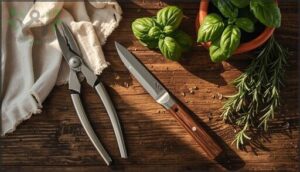
Before you cut a single stem, it pays to have the right gear in hand. The tools you use — and how you prep them — can mean the difference between a thriving herb garden and one that struggles after every harvest.
Here’s what you need to get started on the right foot.
Choosing and Sanitizing Tools
Your tools make or break a clean cut. For soft herbs like basil or cilantro, fine kitchen scissors do the job well. For woody stems like rosemary, small bypass herb pruners with stainless steel blades stay sharp longer and resist rust.
Before pruning and harvesting, wipe blades with 70% isopropyl alcohol and let them air-dry. That simple cleaning routine stops disease from spreading plant to plant.
Using Harvest Baskets and Gloves
Your basket and gloves aren’t an afterthought — they’re part of your harvesting methods toolkit. Choose a light wicker or mesh basket for herb protection and workflow efficiency; its ergonomic design keeps herbs in a single layer, preventing bruising.
Wear snug nitrile gloves for personal safety against sharp stems and irritating oils. These simple gardening tools make herb gardening feel seamless.
Preventing Disease Spread
One sick plant can quietly infect your entire herb bed — that’s why sanitation methods matter as much as any pruning methods you use. Before harvesting herbs, run through these disease inspection and tool disinfection steps:
- Wipe blades with 70% isopropyl alcohol for 30 seconds
- Inspect each plant for spots or wilting
- Harvest suspect plants last
- Isolate new plants 10–14 days before mixing them in
Step-by-Step Harvesting Techniques
Knowing when to harvest is only half the battle — how you do it matters just as much. A few simple techniques make the difference between a plant that thrives and one that struggles.
Here’s what you need to know before you make your first cut.
The One-Third Rule Explained
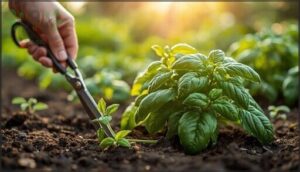
Think of it as a simple budget for your herb garden: never take more than one-third of the plant at once. This keeps enough leaves working for photosynthesis, supporting strong leaf regrowth within one to three weeks.
Respecting growth stages matters too — wait until your fresh herbs have 4 to 6 sets of leaves before harvesting. Less plant stress means better regrowth capacity all season.
Pinching, Snipping, and Cutting Methods
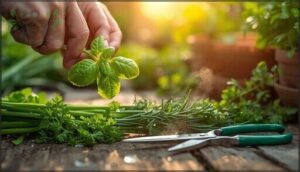
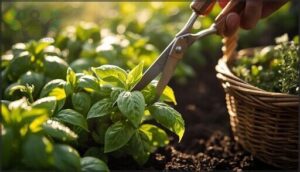
Now that you know how much to take, here’s how to take it. For soft herbs like basil or mint, finger pinching works perfectly — squeeze the stem 5–10mm above a leaf node until the tip snaps off. Scissor snipping suits chives and parsley well.
For woody herbs, pruning snips give cleaner cuts. Always cut just above a leaf node.
Avoiding Damage to Plants
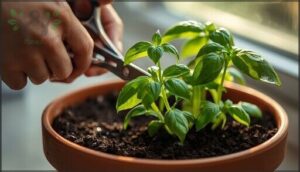
Even with the right pruning techniques, small mistakes can stall regrowth fast. Don’t strip one side of the plant clean — that throws off its balance and exposes roots to heat. Protect growth points by always leaving two to three leaf pairs on each stem.
Harvest when soil moisture is steady, not bone dry. Stressed plants recover slower, plain and simple.
Harvesting Different Types of Herbs
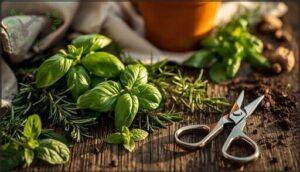
Not all herbs play by the same rules. How you harvest basil looks nothing like how you’d handle rosemary, and getting that wrong can set your plants back weeks. Here’s what you need to know for each type.
Leafy Annual Herbs (e.g., Basil, Parsley)
Basil and parsley reward you fast — but only if you harvest them right. For basil, snip just above a leaf node every 5 to 7 days to boost leaf yield and delay flowering.
Parsley’s regrowth strategy is different: pull outer stems from the base, leaving the center crown alone.
Both cutting techniques protect flavor profiles and keep your fresh herbs producing longer.
Woody Perennial Herbs (e.g., Rosemary, Thyme)
Woody herbs like rosemary and thyme play by different rules than basil or parsley. Cut green, flexible stems 10–15 cm long, staying well clear of the brown woody base — that’s where Woody Stem Care matters most.
Pruning Techniques like trimming above a leaf node trigger strong Regrowth Patterns within 1–3 weeks.
Harvest Timing peaks just before flowering, when Leaf Oil Extraction and aroma hit their highest point.
Tips for Popular Culinary Herbs
Each culinary herb has its own rhythm. For basil, wait until plants hit 15–20 cm, then snip just above a leaf pair — harvesting herbs before buds open gives you that sweet, intense flavor perfect for culinary blends.
Chives bounce back fast after a clean cut 2–5 cm above soil.
Cilantro bolts in heat, so harvest fresh herbs early and often for the best aromatic uses in cooking with herbs.
Cleaning and Handling Fresh Herb Leaves
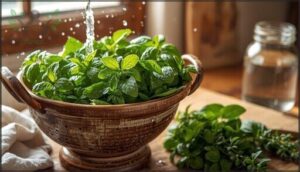
Once your herbs are cut, how you handle them next makes all the difference. A little care at this stage keeps them fresh, safe, and full of flavor.
Here’s what you need to know about cleaning and handling them the right way.
Washing and Drying Best Practices
Water quality matters more than most people think. Use cool, potable water — never warm — to protect leaf hydration and keep gentle rinsing effective.
Swish herbs in a bowl, letting grit sink. For herb drying, a salad spinner works fast; patting with a towel works too. Leaves should feel matte before you move on to storage methods.
Reducing Microbial Contamination
Contamination control starts long before your herbs hit the cutting board. Keep harvest hygiene tight — wash your hands for at least 20 seconds, wipe tools with 70% alcohol, and use food-grade containers rinsed clean.
Good soil management, like base watering and weed-free beds, reduces bacteria on fresh herbs from the start. Small habits protect big flavor.
Safe Handling for Kitchen Use
Your kitchen habits matter as much as your garden skills. Use separate boards — one for meat, one for fresh herbs — to block cross contamination. Practice allergen safety by labeling any herb blends containing parsley, cilantro, or fennel.
Temperature control keeps things safe: refrigerate within two hours. Rinse surfaces after cleaning sprays for chemical prevention, and remove physical hazards like stems and twist ties before cooking with herbs.
Storing and Preserving Harvested Herbs
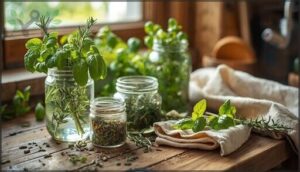
You’ve done the hard work — now let’s make sure none of it goes to waste. How you store your herbs matters just as much as how you harvest them.
Here are the best ways to keep them fresh, flavorful, and ready to use.
Short-Term Refrigeration Methods
Fresh herbs don’t have to wilt the day after harvesting them from your garden. Smart fridge storage buys you days of peak flavor. Here’s how:
- Paper Towel Method – Wrap sprigs in a damp towel, tuck into a partly open bag. Moisture control keeps leaves crisp 3–7 days.
- Jar Refrigeration – Stand stems in 2–3 cm of water, loosely cover the top.
- Container Storage – Use clear containers for easy herb wrapping and spoilage checks.
Preserving herbs starts with the right method.
Drying and Freezing Techniques
Preserving herbs doesn’t have to be complicated. Air drying works great for rosemary, thyme, and oregano — just bundle 5–10 stems and hang them upside down in a warm, dark spot for 7–21 days.
Need faster results? Dehydrator use at 35–40°C gets the job done in hours.
Freezing herbs is your best bet for basil — blend into purees, pour into ice cube trays, and you’re set.
Maintaining Maximum Flavor and Freshness
Once your herbs are dried or frozen, how you store them makes all the difference. Keep dried herbs in airtight containers away from light and heat — those two things kill flavor fast.
For fresh herbs, stay on top of post harvest care: change the water daily, and keep basil away from cold temps. Smart herb storage means your hard work harvesting herbs keeps paying off.
Frequently Asked Questions (FAQs)
Do herbs grow back when you pick them?
Yes — pick them right, and most herbs grow back stronger. Soft-stem varieties like basil and mint are true cut-and-come-again plants, rewarding smart harvesting habits with bushier, more generous leaf regrowth every time.
How long after planting herbs can you use them?
Most culinary herbs are ready 3 to 8 weeks after planting, depending on the variety. Nursery transplants speed things up — you can often start harvesting herbs just 2 to 3 weeks after putting them in the ground.
Can I harvest herbs after the first frost?
Don’t panic — frost isn’t a death sentence for your herb garden. Hardy herbs like thyme, sage, and chives survive cold snaps and stay harvestable. Just wait until leaves thaw and feel firm again.
How do I revive wilted herbs after harvesting?
Stand cut stems in 2–5 cm of cool water for 30–90 minutes. Most wilted herbs bounce back fast. Basil prefers room-temperature water. Discard anything slimy or foul-smelling.
Which herbs should not be harvested together?
Keep strong herbs like mint, rosemary, and cilantro separate from delicate ones. Toxic Herb Mixing risks real harm. Aromatic Herb Blending ruins subtle flavors. Irritant Herb Separation protects your skin. Disease Prone Herbs and Storage Incompatibles spoil healthy batches fast.
Do different soil types affect harvest frequency?
Yes — soil texture, moisture content, pH balance, nutrient levels, and drainage systems all shape how fast herbs bounce back. Better soil quality means more frequent harvesting of herbs, sometimes twice as often.
Can I harvest from seedlings or only mature plants?
Wait until your herb plants reach maturity. Seedling harvest weakens young plants and slows leaf regrowth.
For most fresh herbs, start harvesting herbs once they’re 4–6 inches tall with at least four true leaves.
Can herbs be harvested during drought or heat stress?
Yes, but go easy. During drought or heat stress, stick to light harvesting — just a few tips per stem. Morning is your best window, when plants are most rehydrated and resilient.
How do companion plants affect herb leaf quality?
Companion planting shapes herb leaf quality in real ways. Marigolds cut pest pressure, legumes boost soil nutrients, and taller neighbors create microclimate effects that protect delicate leaves — naturally deepening aroma enhancement and flavor profiles.
Should herbs be harvested differently in containers vs. ground?
Container gardening demands lighter, more frequent snips. Shallow roots and limited soil mean water stress hits fast.
Match your harvest frequency to pot size — small containers need gentler cuts than deep ground beds.
Conclusion
Your herbs aren’t just plants—they’re living pantries, quietly waiting to give. Harvesting fresh herb leaves the right way means you’re not taking from them; you’re having a conversation.
Snip at the right moment, respect the one-third rule, and store what you gather with care. The difference shows up on the plate.
One clean cut today keeps that basil bold, that thyme fragrant, and your kitchen smelling like something worth coming home to.