This site is supported by our readers. We may earn a commission, at no cost to you, if you purchase through links.
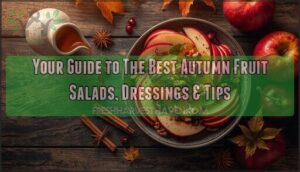
shifts in the kitchen when autumn arrives—the air carries a hint of cinnamon, and suddenly the fruit bowl looks completely different.
Apples replace peaches, pears take center stage, and pomegranate seeds spill out like little jewels across your cutting board.
The season hands you some of the most flavorful, colorful ingredients of the year, and a well‑built autumn fruit salad is one of the most satisfying ways to use them.
From tart cranberries paired with honeyed walnuts to citrus slices brightened with warm spice dressings, fall fruit combinations reward anyone willing to move beyond the usual summer bowl.
Table Of Contents
- Key Takeaways
- Best Fruits for Autumn Fruit Salads
- Delicious Autumn Fruit Salad Combinations
- Nutritious Toppings and Flavorful Pairings
- Fall-Inspired Dressings and Spices
- Tips for Preparing and Serving Autumn Salads
- Frequently Asked Questions (FAQs)
- What fruit is best in autumn?
- Can fruit salad help with weight loss goals?
- Which fruits should diabetics avoid in salads?
- How do you prevent apples from browning?
- Whats the best time to buy seasonal fruits?
- Can you freeze leftover autumn fruit salad?
- What are the health benefits of autumn fruit salads?
- What nutritional values do fall fruit salads provide?
- Why do consumers prefer autumn fruit salads today?
- How does packaging influence autumn fruit salad purchases?
- Conclusion
Key Takeaways
- Autumn’s best fruit salads start with a sturdy base of Honeycrisp apples, Bartlett pears, and red grapes, then get bold with figs, pomegranate arils, and citrus for color, crunch, and brightness all at once.
- Simple homemade dressing—think cinnamon-orange, maple-lime, or honey with warm spices—does more for your salad than any store-bought bottle ever could.
- The right toppings make all the difference: toasted walnuts, pecans, or pumpkin seeds add crunch, while a crumble of blue cheese or Gorgonzola brings that sweet-salty contrast that ties everything together.
- A smart prep—tossing fruit in lemon water to prevent browning and storing in airtight containers at 32–34°F—keeps your salad fresh and vibrant for up to five days.
Best Fruits for Autumn Fruit Salads
Autumn is honestly one of the best times to build a fruit salad, because the season brings such a good mix of textures and flavors all at once.
From crisp apples to juicy pears, homegrown autumn fruit salad ideas show just how easy it is to turn your garden’s harvest into something genuinely delicious.
The trick is knowing which fruits are worth reaching for when you’re at the market.
Here are the ones that truly shine this time of year.
Apples, Pears, and Grapes
Start with the sturdy trio that makes every autumn harvest fruit salad shine. Honeycrisp apples and Bartlett pears hold their shape beautifully, while red grapes bring juicy seasonal sweetness to the bowl. Together, they create:
- Texture balance — crisp, soft, and juicy in every bite
- Acidic brightness — a quick lemon toss keeps everything fresh
- Color palette — greens, reds, and golds that look stunning
- Nutrient synergy — fiber, vitamin C, and antioxidants naturally combined
For extra crunch, consider adding crisp apple texture.
Figs, Pomegranates, and Citrus
Once you’ve got your apples and pears sorted, bring in the bold players. Fresh figs offer a soft, honeyed fig sweetness modulation that balances crisp apples beautifully — think fig and apple and pecan salad with layers of flavor in every bite.
Pomegranate arils deliver a pomegranate antioxidant boost plus jewel‑like color. Citrus adds the zest balance and acidity pairing that keeps everything tasting bright.
This delicious autumn fruit salad also pairs wonderfully with roasted chicken or pork for a complete meal.
| Fruit | What It Brings |
|---|---|
| Fresh Figs | Fig texture contrast, soft sweetness |
| Pomegranate | Antioxidant-rich ruby crunch |
| Citrus | Bright acidity, freshness |
Seasonal Berries and Dried Fruits
Fresh blackberries add a tart, vibrant pop that pairs beautifully with the figs and citrus you’ve already tossed in.
Their deep, jewel-toned color also makes them a stunning visual addition—browse these quick garden salad recipes with fresh berries for even more inspired combinations.
Dried fruits bring their own kind of magic — think Dried Fig Bits, Dried Apricot Sprinkle, and dried cranberries for a Cranberry Crunch that holds up well in the bowl.
A Goji Berry Boost and Mulberry Sweetness round things out, adding depth without overpowering your honey drizzle.
Delicious Autumn Fruit Salad Combinations
Autumn is the perfect time to get creative with fresh, seasonal fruits that actually taste good together.
Each combination below brings its own mix of textures and flavors, so there’s something here for every kind of gathering.
Here are four autumn fruit salad combinations worth trying this season.
Classic Apple-Pear-Cranberry Salad
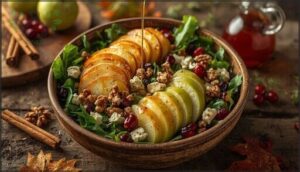
The classic apple-pear-cranberry salad is autumn’s sweetest gift to your table.
Layer crisp Granny Smith apples and tender Bartlett pears over spring mix, then scatter dried cranberries and toasted walnuts for texture balance and seasonal sweetness.
Crumbled crumbled gorgonzola adds wonderful cheese pairing contrast.
Drizzle a simple vinaigrette — two tablespoons cider vinegar, three tablespoons of olive oil, a touch of honey — right before serving.
Roasted Pear and Cranberry Mix
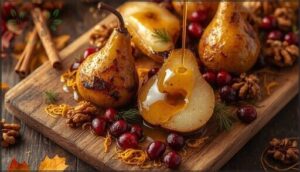
Warm, caramelized roasted pears are autumn fruit salad magic at its best. Preheat your oven to 425°F, coat Bosc pear halves with a honey glaze, and let the cinnamon spice do its work for 40–45 minutes.
- Roast cranberries alongside for tart bursts
- Add nutty crunch with toasted walnuts
- Serve warm with a bright citrus dressing for texture balance
Pomegranate, Walnut, and Citrus Salad
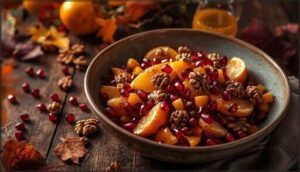
This salad is all about flavor balance — and it delivers every time. Toss juicy pomegranate seeds with toasted walnuts and citrus segments, then drizzle a simple citrus dressing made with fresh orange juice, olive oil, and a touch of honey.
The texture contrast between the crunchy walnuts and soft fruit is genuinely satisfying. For seasonal presentation, serve it chilled with a crisp Pinot Gris.
Warm Roasted Grape and Nut Salad
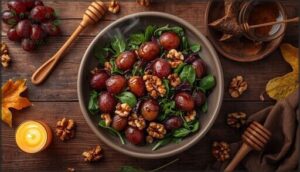
If you want something a little unexpected on the table, try roasting red seedless grapes with a drizzle of olive oil at 400°F for 10 to 15 minutes.
The heat draws out their natural sweetness beautifully. Toss them over mixed greens with toasted walnuts for texture balance, then finish with balsamic vinegar and a touch of honey.
Serve it warm — that serving temperature makes all the difference.
Nutritious Toppings and Flavorful Pairings
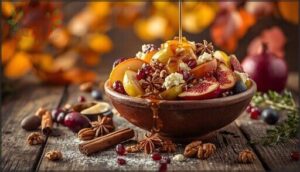
The right toppings can take your autumn fruit salad from good to genuinely memorable.
A handful of nuts or a crumble of bold cheese adds layers of flavor that fruit alone just can’t deliver.
Here’s what works best.
Pecans, Walnuts, and Pumpkin Seeds
Nuts and seeds are the unsung heroes of any autumn fruit salad.
Toasted walnuts bring earthy depth and Omega‑3 Benefits your body actually uses, while pecans offer that buttery Crunch Balance alongside sweet pears and grapes.
Pumpkin seeds quietly boost Protein Content per bite.
Try Toasting Methods like 325°F for 15 minutes, then finish with Spice Infusions — cinnamon or harissa work beautifully.
Blue Cheese and Gorgonzola Pairings
Few ingredients transform an autumn fruit salad quite like a good blue cheese or Gorgonzola crumble. That sharp, creamy bite creates the Flavor Balance that your whole bowl has been waiting for. Think about these pairings:
- Cosmic Crisp apple with 3 oz Gorgonzola for a sweet-salty Texture Contrast
- Sliced pears with Stilton in a Spiced Pear and Gorgonzola Salad
- Pomegranate arils over blue cheese for vibrant, tart pops
Cheese Crumble Techniques matter — crumble loosely so every forkful gets a little.
Balancing Crunch and Creaminess
Getting that perfect bite comes down to one simple idea: every creamy element needs a crunchy partner. Your Yogurt Dressing Ratio should stay balanced — roughly 2:1 cream to crunch. Toast pecans using proper Nut Toasting Timing (350°F, 8 minutes) for double the snap. Maintain Fruit Size Uniformity at ½‑inch pieces, and always serve at Cold Serving Temperature for the best crunchy texture contrast.
| Element | Role | Example |
|---|---|---|
| Greek yogurt | Creamy base | Citrus Acid Balance with lemon |
| Toasted pecans | Crunchy texture contrast | Nut and cheese pairings |
| Diced apples | Fruit Size Uniformity | Autumn fruit salad mix |
| Citrus dressing recipes | Flavor bridge | Orange-honey drizzle |
Fall-Inspired Dressings and Spices

The right dressing can pull your whole autumn salad together, turning a good bowl into something you’ll want to make every weekend.
Fall spices like cinnamon, nutmeg, and ginger bring that warm, cozy depth that store-bought dressings rarely capture. Here’s how to dress your salad the season’s way.
Homemade Cinnamon Orange Dressing
Making this cinnamon orange dressing takes just minutes and transforms any fall salad. Start by zesting your orange — citrus zest benefits the whole dressing with deeper, aromatic flavor. Whisk the fresh orange juice with ground cinnamon, ground nutmeg, and maple syrup, then slowly drizzle in avocado oil using an emulsion technique for a silky finish.
A quick zest, whisk, and drizzle is all it takes to make a silky cinnamon orange dressing that transforms any fall salad
This warm spice balance pairs beautifully with nut pairing ideas, especially with pecans.
Maple Syrup and Honey-Lime Drizzles
Two simple drizzles can completely change your autumn fruit salad.
Whisk 1/4 cup maple syrup with fresh lime juice for that perfect Sweetness Balance — maple’s caramel depth softened by Citrus Brightness.
For a honey-lime version, combine three tablespoons honey with lime zest for floral warmth.
Both deliver an Antioxidant Boost, maintain ideal Drizzle Consistency, and keep their Seasonal Shelf Life refrigerated for up to three days.
Using Ginger, Nutmeg, and Clove
Spice Balance is where autumn fruit salad truly comes alive.
A pinch of freshly grated nutmeg softens berry tartness, while 1/4 teaspoon ginger adds bright Seasonal Warmth to your spiced pear and Gorgonzola Salad.
Cloves deepen citrus notes beautifully.
Think of Flavor Layering and Aroma Pairing like building a cozy fire — each spice, including ground cinnamon, adds its own quiet warmth.
Tips for Preparing and Serving Autumn Salads
Getting your salad from cutting board to table doesn’t have to be complicated.
A little planning goes a long way, especially when you’re feeding people you care about.
Here’s what you need to know to prep, store, and serve your autumn fruit salad with confidence.
Prepping and Chopping Autumn Fruits
A little prep goes a long way when working with seasonal fruit. Keep your pieces consistent — uniform cutting sizes mean every bite has balanced flavor. Here are three tips and tricks to get started:
- Core Removal Techniques: Halve apples or pears, then scoop with a melon baller.
- Apple Browning Prevention: Soak slices in lemon water — one tablespoon per cup.
- Safe Knife Handling: Always cut on a stable board with a sharp chef’s knife.
Make-Ahead and Storage Tips
Planning ahead makes sharing this salad so much easier. Toss sliced apples and pears with a citrus glaze — it manages oxidation prevention beautifully, keeping everything fresh‑looking.
Store your make‑ahead salad in airtight containers and keep fridge temperature between 32°F and 34°F. Shelf‑life timing works in your favor here: citrus‑glazed salads stay vibrant for up to five days, giving you one less thing to worry about.
Creative Serving Ideas for Gatherings
Serving your autumn fruit salad creatively turns any gathering into something memorable.
Set up Fruit Skewer Stations so guests can build their own handheld bites, or scoop the salad into Hollowed Pumpkin Bowls for a cozy seasonal touch.
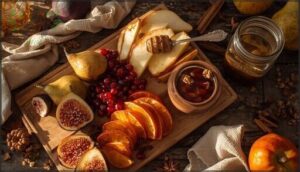
Charcuterie Fruit Boards, Individual Cup Servings, and Platter Display Themes all make colorful seasonal plating easy — perfect for holiday gathering salads, where nut and cheese pairings in salads truly shine.
Frequently Asked Questions (FAQs)
What fruit is best in autumn?
Like nature’s own gift basket, autumn delivers crisp apples, juicy pears, grapes, figs, and pomegranates at peak harvest timing — each bursting with nutrient density, vibrant flavor profile, and satisfying texture contrast.
Can fruit salad help with weight loss goals?
Yes, fruit salad can genuinely support weight loss.
Thanks to low Calorie Density, high Fiber Benefits, and natural Sugar Control, it delivers real Satiety Boost while keeping portions smart — a simple, effective Portion Management strategy.
Which fruits should diabetics avoid in salads?
Diabetics should skip high‑GI fruits like watermelon, ripe bananas, and mango due to tropical fruit spikes. Dried fruit risks are real too — raisins pack over 100 grams of sugar per cup.
Portion control matters.
How do you prevent apples from browning?
apple slices in a lemon juice solution — one tablespoon per cup of water — for three to five minutes.
honey water bath or salt water dip works just as well.
Whats the best time to buy seasonal fruits?
Shop during your regional peak — September through November for most autumn fruits. That’s when harvest calendar timing aligns with the lowest price fluctuations, freshest texture, and best overall quality before storage impact sets in.
Can you freeze leftover autumn fruit salad?
You can freeze leftover fruit salad, though texture changes are expected. High-water fruits soften after thawing.
For best results, freeze portions separately, skip the dressing, and thaw overnight in the fridge.
What are the health benefits of autumn fruit salads?
Think of autumn fruit salads as nature’s multivitamin on a plate.
They deliver Fiber Boost, Antioxidant Power, Heart Support, Immune Boost, and Bone Health — making them truly nutrient rich side dishes worth savoring every fall.
What nutritional values do fall fruit salads provide?
Fall fruit salads deliver impressive Fiber Content, Antioxidant Power, and a solid Vitamin C Boost — all in one bowl.
With a low Calorie Count and healthy Potassium Levels, they’re genuinely nutrient‑rich side dishes worth making.
Why do consumers prefer autumn fruit salads today?
People are drawn to seasonal produce recipes for their Health Benefits, Sustainability Appeal, and Comfort Flavor.
Wellness Trends show 66% now choose nutritious addition options, making healthy fall side dishes a natural, balanced sweet and tart choice.
How does packaging influence autumn fruit salad purchases?
Clear packaging builds instant trust—visibility cues let shoppers inspect freshness before buying.
Sustainability messaging, portion convenience, and smart shelf placement all shape decisions, while material perception signals quality and care.
Conclusion
Most people spend autumn stress‑scrolling recipes while a pomegranate sits forgotten on the counter, quietly judging them. Meanwhile, the season’s best flavors are practically throwing themselves at your cutting board.
Your autumn fruit salads don’t need to be complicated—just intentional. Choose fruits that excite you, build a dressing that warms the bowl, and add toppings that bring contrast. The table is set. All that’s left is showing up with a good knife.