This site is supported by our readers. We may earn a commission, at no cost to you, if you purchase through links.
Your orchard’s profitability hinges on a 72-hour window you can’t afford to miss. Harvest too early, and you’ll watch fruit fail quality standards at the packing house; wait too long, and ground-drops rob you of premium pricing while opening the door to pest pressure and disease.
The best fruit picking methods aren’t about speed alone—they’re about reading your trees like a veteran grower reads weather patterns, understanding the interplay between canopy microclimates and ripeness indicators, then executing with precision that protects both fruit quality and worker safety.
You’ve invested months in orchard management, and your harvest technique determines whether that investment pays dividends or disappears into bruised fruit and missed market opportunities.
Table Of Contents
Key Takeaways
- You’ll maximize profitability by mastering the 72-hour harvest window through precision timing based on ripeness indicators like color analysis, sugar content (Brix 12-14%), and ethylene monitoring rather than calendar dates alone.
- Strategic pre-harvest preparation—including 20-40% fruit thinning, canopy management for optimal light penetration, and climate-specific harvest scheduling—directly increases premium-grade yield by 5-15 percentage points.
- Gentle hand-picking with controlled pressure (0.5-1.0 N) and proper tool use cuts fruit damage by up to 60%, while ergonomic practices and PPE reduce picker injuries by 20-50% across different injury types.
- Post-harvest success hinges on immediate temperature control (0-4°C), proper packing materials that reduce bruising by 22-28%, and controlled-atmosphere storage that extends shelf life by 20-40%.
Key Factors for Successful Fruit Picking
You can’t master fruit picking without understanding the fundamentals that separate a mediocre harvest from an outstanding one. Timing your harvest correctly, reading ripeness signals, and adapting to your local climate will make or break your entire season.
Here’s what you need to watch for to take full control of your harvest.
Determining Optimal Harvest Timing
Mastering harvest timing isn’t guesswork—it’s your ticket to maximum yield and profit. You’ll want to track fruit maturity through climate monitoring and ripeness indicators specific to your region’s harvest season. Don’t rely on calendar dates alone; fruit ripening accelerates in those final weeks.
Smart harvest scheduling means watching for the telltale signs: that first fruit dropping naturally signals peak ripeness across your entire crop.
Effective study habits, such as those found in AP study guides, can also improve your understanding of complex topics.
Assessing Fruit Ripeness Indicators
You can’t rely on guesswork when fruit ripening signals peak harvest. Color analysis reveals that chlorophyll degradation hits 30–60% during ripeness, while sugar tracking shows Brix readings of 12–14% mark ideal sweetness. Ethylene monitoring catches that 3–5× production spike in climacteric fruits.
Fruit sensors and handheld penetrometers deliver ripeness testing within 5–15% of market standards—your secret weapons for precision harvest timing and excellent fruit quality.
Recognizing Regional and Climate Variations
Pinpointing ripeness isn’t enough—your geographic location rewrites the harvest calendar. Temperature fluctuations shift apple maturity by 2–3 weeks between climate zones, while regional microclimates at higher elevations delay cherry harvests through cooler temperatures.
Geographic variations demand fruit adaptation strategies:
- Track Growing Degree Days to predict ripening in your specific climate zone
- Scout regional microclimates—south-facing slopes ripen fruit 7–10 days earlier
- Adjust seasonal fruit harvesting windows as warming trends accelerate maturation dates
Master orchard management strategies by matching cultivars to your microclimate’s temperature patterns.
Essential Pre-Harvest Preparation Steps
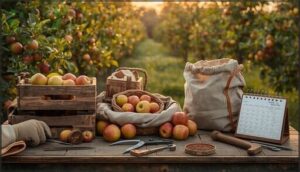
You can’t just show up at the orchard and hope for the best—successful fruit picking starts weeks before you touch a single branch. The work you put in during pre-harvest determines whether you’ll haul away premium fruit or settle for second-rate yields.
Here’s what you need to lock down before harvest day arrives.
Researching Fruit-Specific Harvest Windows
You can’t wing fruit harvesting—every variety operates on its own clock. Start by consulting a harvest calendar calibrated to your climate, then cross-reference degree-day models that track fruit maturation with 15–25% better accuracy than calendar dates alone.
Study ripeness indicators specific to your fruit varieties, and incorporate yield forecasting tools that blend historical records with real-time climate modeling for precise harvest timing decisions.
Pruning and Canopy Management for Yield
Strategic pruning techniques reshape canopy structure to optimize fruit yield—when you remove 20–40% of last season’s wood, you’ll boost light penetration and flowering bud formation by 10–25%. Maintain a leaf area index between 3.5 and 5.0 through systematic tree training and regular tree maintenance.
Smart orchard management with proper pruning shears sets up excellent harvesting techniques while keeping fruit tree care efficient and productive.
Effective communication about theme identification techniques is vital for successful orchard management.
Fruit Thinning Techniques for Quality Improvement
Thinning strategies release dramatic fruit quality gains—remove 20–40% of early-set fruit to shift carbohydrate allocation toward remaining pieces, boosting size by 10–30% and raising Brix levels up to 2 points. Hand-thinning delivers excellent uniformity over chemical methods, improving premium-grade yield by 5–15 percentage points.
Time your fruit size management 10–20 days post-bloom while controlling defoliation to preserve canopy health and optimize harvesting methods returns.
Best Fruit Picking Methods and Techniques
Once your orchard is prepped and the fruit is at peak ripeness, the way you pick makes all the difference between a profitable harvest and a pile of bruised rejects. Your hands are your best tool, but knowing when to reach for clippers or poles separates weekend hobbyists from serious growers.
Let’s break down the techniques that’ll keep your fruit intact from branch to bin.
Gentle Hand-Picking Practices
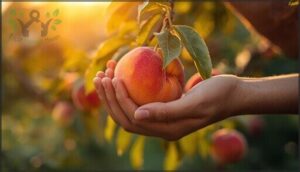
You’ll cut fruit damage by up to 40% when you master hand picking with a gentle grip. Think of your fingers as sensors—keep them on the skin, never rolling against stems, and you’ll drop bruising by a quarter.
Select fruit that feels full and heavy for its size, then lift straight off with finger-only pressure. This harvesting technique preserves fruit quality and boosts your marketable yield by 12–18%.
Proper Use of Picking Tools and Equipment
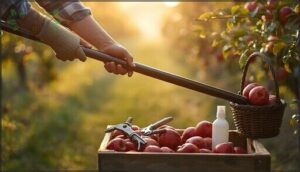
Your picking pole becomes a key tool when it extends 2.5–3.0 meters—you’ll reach 60% of tree height without risking a ladder climb.
Ergonomic grips on fruit clamps slash wrist strain by 28%, while tool sanitization between rows cuts contamination risk by 40%.
Master these harvesting tools and picking techniques, and you’ll boost harvest efficiency while protecting both your body and your crop.
Selecting and Handling Fruit to Prevent Damage

You’ll prevent 60% of bruising when you detach fruit with controlled pressure—aim for 0.5–1.0 N on soft varieties to slash damage rates by 40%. Gentle handling preserves firmness and keeps skin breakage under 3% in delicate crops like table grapes.
That post-harvest care matters: minimize manual contact and use low-ethylene transport to maintain fruit quality and dodge peel browning that can spike 22% in apples.
Safe and Efficient Harvesting Practices

You can’t optimize your harvest if you’re sidelined by avoidable injuries or exhaustion. Smart harvesting isn’t just about technique—it’s about protecting yourself so you can work efficiently throughout the entire season.
Let’s cover the essential safety practices that keep you productive and injury-free in the field.
Personal Protective Equipment and Clothing
You can’t conquer the orchard if scratches, slips, and sun exposure sideline you before the day’s done. Protective gear isn’t just red tape—it’s your frontline defense when harvesting fruit gets real. Here’s your kit for staying safe and efficient:
- Gloves: Puncture-resistant styles cut hand injuries by roughly 40%, giving you firm grip on pruning shears and fruit picker tools.
- High-visibility vests: Reduce vehicle-related incidents by 20–30% in busy orchards.
- Non-slip footwear: Drop slip-and-fall events by 15–25% on uneven ground or wet ladders.
- UPF 50+ long sleeves: Lightweight, breathable clothing materials shield you from sun damage while keeping you cool.
- Safety glasses: Block branches and thorns, slashing eye injuries by over 50%.
PPE standards aren’t suggestions—they’re your ticket to owning every harvest day with confidence and control.
Ergonomic Harvesting to Reduce Injuries
Your body isn’t a machine—don’t treat it like one. Reaching overhead at angles above 60 degrees cranks up shoulder strain by 28%, while repetitive gripping drives 34% of hand injuries among pickers.
Treat your body with care during harvest—overhead reaching and repetitive gripping cause the majority of picker injuries
Ergonomic tools slash peak joint load by 22%, and anti-fatigue mats at packing stations cut lower-limb fatigue by 18%.
Master body mechanics and injury prevention now, or pay later.
Hydration and Breaks for Worker Safety
Proper body mechanics mean nothing if dehydration shuts you down mid-row. Heat stress prevention starts with smart hydration strategies and break scheduling—your output depends on it.
- Drink 2.5 liters per 8-hour shift to slash heat cramps and worker fatigue by measurable margins
- Take 15-minute breaks every 2 hours to drop stress markers by 12%
- Use cold water stations (≤10°C) to cut heat symptoms by 20–25%
- Watch for dehydration symptoms early—thirst alone won’t save you
Post-Harvest Handling and Storage Tips
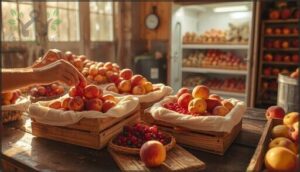
Getting your fruit from the tree to the table without turning it into mush takes more than just tossing it in a bucket. What happens in those critical hours after picking determines whether you’ll enjoy premium produce or watch your hard work rot on the counter.
Here’s how to clean, pack, and store your harvest so it stays fresh and profitable.
Cleaning and Grading Freshly Picked Fruit
Superiority in postharvest care starts the moment you leave the orchard. Implementing rigorous sanitation protocols and debris removal immediately is crucial. Washing removes field contaminants, while grading standards separate fruit by size and ripeness for ideal quality control.
Here’s your systematic approach to fruit handling:
| Washing Stage | Technique | Purpose |
|---|---|---|
| Initial rinse | Cool water spray | Remove loose dirt, leaves |
| Sanitizing bath | Chlorinated solution (50–200 ppm) | Eliminate surface pathogens |
| Final rinse | Clean water | Remove chemical residues |
| Air drying | Ambient or forced air | Prevent moisture-related decay |
Master these fruit washing and grading standards to transform your harvesting techniques—your fruit quality depends on it.
Packing and Transporting to Prevent Bruising
After sorting your harvest, smart packing materials and container design become your frontline defense against bruising. Straw or corrugated cardboard inserts cut bruise incidence by 28% compared with loose packing, while cushion-pad liners for berries reduce damage by 22%. Your transport optimization strategy hinges on gentle handling protocols and proper fruit cushioning—because bruise prevention directly impacts postharvest care quality and shelf life.
- Stack bins no higher than 1.8 times their width to reduce contact pressure by 9%
- Pre-cool fruit within 2 hours of harvest to lower internal tissue softness by 5–7%
- Use non-slip liners to decrease fruit movement by 25% during transit
Optimal Storage Conditions for Shelf Life Extension
At your storage facility, temperature control between 0–4°C remains non-negotiable—deviations of just 2–3°C can halve expected shelf life for delicate fruits.
You’ll extend postharvest care outcomes by 20–40% using controlled-atmosphere storage methods with humidity management at 85–95%. Monitor ethylene removal systems in ventilated storage containers, because fruit quality depends on precision.
Shelf life monitoring identifies metabolic breakdown early, protecting your investment.
Frequently Asked Questions (FAQs)
What are common fruit picking mistakes beginners make?
Like overager hands crushing ripe treasure, beginners often yank fruit sideways—snapping stems and bruising skin.
They misjudge ripeness by color alone, ignore tool safety, and rush harvest timing, turning abundance into waste.
How do you pick fruit from tall trees?
To safely access fruit above three meters, you’ll need proper ladders, extendable poles, or mobile platforms.
Modern orchards use mechanical pickers and controlled-height training systems to keep most fruit within safer reach.
Can overripe fruit be salvaged or used?
Bruised peaches can become jam, while spotless ones sell fresh—that’s the split.
You can trim soft portions, freeze pulp within 24 hours, or cook overripe fruit into sauces, preserving 70–95% usable yield through proper salvage techniques and ethylene management.
What time of day is best for picking?
You’ll want to aim for mid-morning to early afternoon—when dew dries but before peak heat hits. That sunlit window maximizes fruit ripening, sugar balance, and harvest timing while reducing bruising from daytime picking methods.
How do you identify pest-damaged fruit before picking?
Pest damage signs like skin blemishes or frass can affect 5–15% of fruit in unmanaged orchards.
You’ll spot circular corky spots, surface russeting, or stem-end frass through quick visual screening tools during pre-pick assessment.
Conclusion
The proof’s in the pudding when your first harvest hits the packing line—bruise-free fruit commanding premium prices versus culls that couldn’t cover labor costs. Mastering the best fruit picking methods transforms you from a passive orchard owner into an operator who dictates market timing, controls quality outcomes, and protects profit margins others surrender to guesswork.
Your trees don’t respect second chances, but precise execution during that critical 72-hour window ensures they won’t need to offer one.