This site is supported by our readers. We may earn a commission, at no cost to you, if you purchase through links.
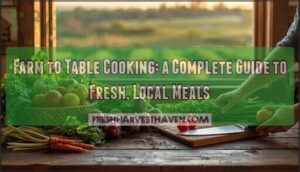
The tomatoes you picked up at the supermarket last week traveled an average of 1,500 miles to reach your kitchen. By the time they hit your cutting board, they’ve lost up to 45% of their nutrients and most of their flavor.
Farm to table cooking flips this script entirely—it’s about sourcing ingredients directly from local growers and getting them onto your plate while they’re still bursting with life. This approach isn’t just a trend chefs throw around to sound impressive. It’s a complete shift in how you think about food, from the soil it grows in to the techniques you use to prepare it.
When you build relationships with the people growing your food and cook with the seasons, you’re not just making better-tasting meals—you’re participating in a food system that actually makes sense.
Table Of Contents
- Key Takeaways
- What is Farm-to-Table Cooking?
- Sourcing Fresh, Local Ingredients
- Essential Farm-to-Table Cooking Techniques
- Seasonal Farm-to-Table Recipe Ideas
- Sustainable and Eco-Friendly Kitchen Practices
- Frequently Asked Questions (FAQs)
- What are the 5 steps of farm-to-table?
- Why is farm-to-table so expensive?
- What is farm-to-table cooking?
- How do I start a kitchen garden at home?
- What equipment is essential for farm to table cooking?
- Can farm to table work in urban apartments?
- How do I preserve seasonal produce for winter?
- Are farm to table ingredients more expensive than conventional?
- How do I store fresh farm produce properly?
- What kitchen tools work best for local ingredients?
- Conclusion
Key Takeaways
- Farm-to-table cooking prioritizes sourcing ingredients directly from local growers within 100 miles, cutting out long supply chains that strip produce of up to 45% of its nutrients and most of its flavor during transport.
- Building consistent relationships with farmers through market visits and farm tours creates predictable supply partnerships while supporting sustainable practices like regenerative agriculture that strengthen local economies and food security.
- Simple cooking techniques—steaming, sautéing, roasting, and grilling—preserve the natural flavors and nutrients of seasonal ingredients better than complicated preparations, letting quality produce shine without heavy intervention.
- Reducing kitchen waste through smart meal planning, proper storage methods, and year-round engagement with local food systems (including winter markets and CSA programs) extends the environmental and health benefits of farm-to-table eating beyond peak harvest season.
What is Farm-to-Table Cooking?
Farm-to-table cooking is more than just a trend—it’s a way of eating that connects you directly to the people who grow your food. This approach prioritizes fresh, local ingredients and cuts out the long supply chains that can leave produce sitting in trucks for days.
If you have your own backyard garden, try these garden-to-table summer recipes that make the most of what’s ripe right now.
Let’s break down what this movement really means, where it came from, and why it matters for your health and the planet.
Definition and Core Principles
Farm to table describes sourcing food directly from local farms for your kitchen or restaurant. You’ll work with nearby producers—often within 100 miles—to get ingredients picked at peak ripeness, usually within 24 hours of cooking.
This approach emphasizes a seasonal focus, direct relationships with growers, and ingredient integrity through minimal processing.
Local sourcing promotes sustainable practices like regenerative agriculture while keeping dollars in your community’s economy.
History and Evolution of The Movement
This food movement took root in the late 20th century, when early advocates challenged industrial supply chains through grassroots origins like neighborhood collectives and farmers markets.
By the early 2000s, chef influence brought local menus into the mainstream, sparking policy shifts that supported small farms.
The evolution of the food industry accelerated globally throughout the 2010s, reshaping food politics and policy around regional sourcing.
Health and Sustainability Benefits
Beyond the historical momentum, farm-to-table delivers real health and environmental wins. Here’s what you gain when you cook with local, seasonal ingredients:
- Nutrient retention – Fresh-picked produce keeps more vitamins intact than long-haul imports.
- Reduced emissions – Local food sourcing slashes transportation fuel and carbon output.
- Food safety – Shorter supply chains mean faster tracking and fewer spoilage risks.
- Community wellness – Direct grower relationships strengthen neighborhood food security.
- Biodiversity – Regenerative agriculture and seasonal ingredients support diverse crop rotations.
Sustainable food systems start on your plate, building healthy eating habits one meal at a time. Choosing local foods is also a key way to reduce your. Choosing local foods is also a key way to reduce your carbon footprint—farm to table cooking cuts transport emissions by up to 40% while keeping more nutrients on your plate.
Planning your meals around what’s in season makes it easier to find fresh, local ingredients and cuts down on seasonal food planning challenges.
Sourcing Fresh, Local Ingredients
The secret to great farm-to-table cooking starts before you even step into the kitchen. Knowing where to find quality ingredients, how to connect with the people who grow them, and when to buy what’s in season makes all the difference.
Here’s how to source like a pro and build a local ingredient network that’ll transform your cooking.
Finding Farmers Markets and Local Producers
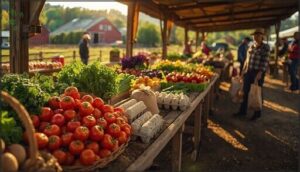
You can tap into local food sourcing faster than you think. Start with the USDA National Farmers Market Directory or LocalHarvest to find markets near you—they list vendor offerings, market schedules, and accessibility tips.
Check for produce, dairy, and meat vendors at your neighborhood farmers market, then plan visits around peak harvest weeks. Farm to Table cooking begins with knowing where your locally sourced ingredients come from.
For in-depth details on vendor options and payment types, explore the comprehensive national food directory.
Building Relationships With Growers

After a few market visits, shift from transaction to partnership. Grower trust builds when you show up consistently, ask about their growing practices, and communicate your supply chain needs clearly.
Farm visits deepen those bonds—seeing fields firsthand helps you understand harvest windows and quality standards. Strong partnership models in the local food movement mean predictable orders, honest communication strategies, and celebrating locally sourced wins together.
Seasonal Ingredient Selection Tips
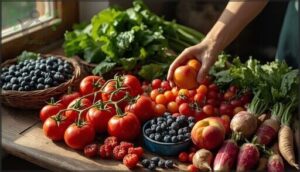
When local sourcing, you’ll notice seasonal ingredients reveal themselves through simple cues. Ripe fruit yields to gentle pressure and releases a sweet fragrance. Vegetables should feel heavy for their size with firm, unwrinkled surfaces.
Fresh produce showcases vibrant color and crisp texture—your seasonal menu deserves nothing less. Farm partnerships help you pinpoint peak harvest timing for maximum seasonal flavors.
Essential Farm-to-Table Cooking Techniques
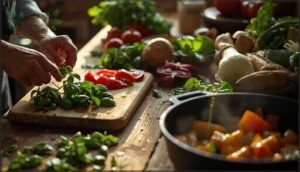
Once you’ve got fresh ingredients in hand, the next step is knowing how to cook them right. The beauty of farm-to-table cooking is that it doesn’t require fancy techniques—just a few smart approaches that let quality ingredients shine.
Here’s what you need to focus on to get the most out of your seasonal haul.
Preserving Flavor and Nutrition
The real magic in farm to table cooking happens when you lock in the flavors and nutrients that make local produce worth the trip to the farmers market. Here’s how you can boost both:
- Steam or gently sauté vegetables in minimal water to preserve water-soluble vitamins and bright, natural flavors
- Store produce in opaque containers away from light to protect sensitive vitamins and maintain freshness
- Add fresh herbs and citrus zest at the end of cooking to preserve their volatile aroma compounds
- Use quick blanching before freezing seasonal ingredients to minimize enzyme activity that dulls color and taste
These nutrient retention techniques help you get the most from your seasonal ingredient cooking while supporting sustainable food practices.
Simple Preparation and Cooking Methods
You don’t need complicated cooking techniques to make farm to table shine. Focus on methods that honor the ingredients: a sharp knife cuts cleanly through heirloom tomatoes, a hot cast-iron pan sears pasture-raised steak, and gentle roasting coaxes sweetness from root vegetables. Meal prep becomes easier when seasonal eating guides your choices.
| Technique | Best For |
|---|---|
| Sautéing | Greens, summer squash, quick vegetables |
| Roasting | Root vegetables, winter produce |
| Grilling | Local meats, seasonal peppers |
Master these basics and you’ll support the farm to table movement with every plate.
Adapting Recipes to Seasonal Produce
Seasonal swaps are the heart of farm to table cooking. When your go-to produce isn’t available, flavor profiling helps you find smart replacements—swap summer zucchini for fall butternut squash, adjusting cooking times for texture modification.
Menu engineering means planning ahead with harvest forecasting, so your seasonal menu flows naturally. Master these seasonal ingredients and local produce becomes second nature.
Seasonal Farm-to-Table Recipe Ideas
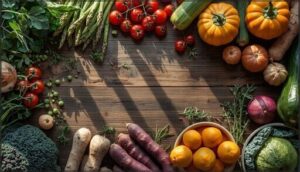
Farm-to-table cooking shines brightest when you let the seasons guide your menu.
The beauty of this approach is that you’re working with ingredients at their peak—when tomatoes actually taste like tomatoes and squash arrives with real sweetness.
Farm-to-table cooking means using ingredients at their peak—when tomatoes taste like tomatoes and squash arrives truly sweet
Let’s explore some standout recipes that make the most of what’s fresh right now.
Spring and Summer Salads and Dishes
When warm weather hits, your farm to table kitchen shines with vibrant summer salads and grilled vegetables that capture the season’s best flavors. Seasonal eating becomes straightforward with fresh greens like arugula and butter lettuce, while herb infusions enhance every bite.
- Crisp asparagus and snap peas add bright textures
- Local berries introduce natural sweetness
- Grilled zucchini and peppers showcase sustainable cooking
- Farro or quinoa creates hearty grain bowls
- Crumbled feta pairs perfectly with seasonal produce
Autumn Roasts and Hearty Soups
As temperatures drop, autumn roasts and hearty soups become your go-to farm to table cooking methods. Root vegetables like carrots and beets caramelize beautifully at 400°F, while butternut squash simmers into velvety soup bases.
These cooking methods highlight local ingredients and seasonal spices—think thyme, sage, and smoked paprika. You’ll master roast techniques that transform simple produce into comfort food that honors sustainable living and local food culture.
Main Courses With Local Meats and Vegetables
Local meat selection transforms farm fresh recipes when you pair sustainable proteins with seasonal vegetables. Grass-fed beef sirloin roasted with carrots and parsnips accommodates six beautifully—use a 1.5-inch cut to create rich pan jus from drippings.
Free-range chicken thighs braised with potatoes deliver tender results, while the farm to table movement celebrates these local food systems that connect your kitchen directly to regional growers.
Sustainable and Eco-Friendly Kitchen Practices

Farm-to-table cooking isn’t just about what you bring into your kitchen—it’s also about how you use it.
Your cooking habits and daily choices can either support or undermine the environmental values that make local sourcing so important in the first place.
Let’s look at three practical ways you can make your kitchen more sustainable while honoring the quality ingredients you’ve worked hard to source.
Reducing Food Waste
Smart meal planning is the cornerstone of waste reduction in your kitchen. Track what you’ve already got in the fridge, then plan portions that match what you’ll actually eat.
Proper storage techniques—like using crisper drawers correctly—can cut spoilage by up to 50 percent. Composting kitchen scraps and freezing leftovers in labeled containers turns potential waste into valuable resources while supporting sustainable agriculture.
Supporting Local Food Systems Year-Round
Supporting the local food movement doesn’t stop when frost arrives. Winter markets and Community Agriculture programs keep you connected to regional growers year-round.
Food hubs aggregate seasonal eating options even in January, while farm partnerships through institutional buying create sustainable food systems. Embracing the locavore lifestyle means choosing farm-to-table ingredients in every season—frozen local beans, preserved tomatoes, and cold-stored roots all count.
Eco-Friendly Cooking and Storage Habits
Green Cooking starts with the basics: cover your pots to slash energy use by 20 percent, and swap single-use plastic for reusable beeswax wraps—you’ll cut waste by over a pound monthly.
A Sustainable Kitchen thrives on smart Food Storage like vacuum-sealed bags that triple shelf life, while batch cooking and food preservation turn your Zero Waste goals into daily habits that actually stick.
Frequently Asked Questions (FAQs)
What are the 5 steps of farm-to-table?
Think of your grandmother’s garden—that’s the blueprint. The five steps of farm-to-table are: find local farms, build partnerships, plan seasonal menus, source ingredients directly, and prepare dishes fresh.
Why is farm-to-table so expensive?
Farm-to-table costs more because ingredient sourcing from small farms raises labor costs, transportation fees add up with frequent deliveries, and limited supply chain efficiency drives menu pricing higher than conventional restaurants.
What is farm-to-table cooking?
Picture a tomato still warm from the morning sun, landing on your plate that same afternoon.
Farm to table cooking connects you directly with local growers, celebrating seasonal eating and sustainable food systems.
How do I start a kitchen garden at home?
Start with a sunny spot and quality soil. Plant easy crops like lettuce and herbs.
Water consistently, test your soil pH, and harvest regularly. Small steps build your confidence in kitchen gardening quickly.
What equipment is essential for farm to table cooking?
You’ll need sharp knives, a cutting board, cast iron cookware, Dutch oven, mixing bowls, and food storage containers.
These kitchen essentials help you prep seasonal ingredients and execute fundamental culinary techniques properly.
Can farm to table work in urban apartments?
You can absolutely embrace farm-to-table living in apartments through vertical gardens, rooftop cultivation, and farmers markets nearby.
Space optimization, seasonal local sourcing, and kitchen garden sustainability make urban farming practical year-round.
How do I preserve seasonal produce for winter?
Use freezing methods, canning tips, and dehydration techniques to lock in freshness. Root cellaring stores hardy vegetables while fermentation transforms summer’s bounty into tangy winter staples worth savoring.
Are farm to table ingredients more expensive than conventional?
Yes, farm-to-table ingredients usually cost more due to local sourcing premiums and higher labor costs.
However, quality benefits like excellent freshness and flavor often justify the price, with some economic offsets reducing overall expenses.
How do I store fresh farm produce properly?
Store leafy greens in damp paper towels inside breathable bags. Keep berries unwashed with moisture-absorbing liners.
Separate ethylene-producing fruits from sensitive vegetables. Blanch before freezing. These fresh storage tips preserve seasonal ingredients and farm-to-table quality.
What kitchen tools work best for local ingredients?
A professional kitchen thrives on the right kitchen tools. Sharp kitchen knives, sturdy cooking utensils, and proper food storage containers transform seasonal ingredients into memorable farm-to-table meals while supporting essential culinary techniques and efficient meal prep.
Conclusion
Farm to table cooking doesn’t require a farmer’s market on every corner or a backyard garden. It starts with one conversation at a market stall, one basket of seasonal produce, and one meal prepared with intention.
The connection between your kitchen and the land around you strengthens with every ingredient you choose deliberately. When you prioritize freshness and locality, you’re not just feeding yourself differently—you’re reshaping how food reaches your table.
- https://foodtank.com/news/2015/05/ten-things-we-can-all-do-to-support-a-local-food-system/
- https://foodprint.org/blog/winter-csa/
- https://www.montgomerycountymd.gov/agservices/farm-to-table/csa.html
- https://www.sare.org/resources/farm-to-table-building-local-and-regional-food-systems/
- https://pmc.ncbi.nlm.nih.gov/articles/PMC11031423/