This site is supported by our readers. We may earn a commission, at no cost to you, if you purchase through links.
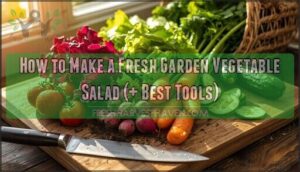
There’s something almost rebellious about making your own fresh garden vegetable salad in a world dominated by pre-packaged, preservative-laden convenience foods. When you slice into a ripe tomato still warm from the sun, toss crisp lettuce you picked that morning, and drizzle homemade vinaigrette over vibrant vegetables, you’re reclaiming control over what nourishes your body.
The difference isn’t just in taste—though the explosion of natural flavors will remind you what real food should taste like—it’s in the nutrients your body actually absorbs and uses. Fresh vegetables deliver their vitamins, minerals, and phytonutrients at peak potency, supporting everything from your immune system to your digestive health.
With the right ingredients, simple techniques, and a few essential tools, you’ll transform ordinary vegetables into satisfying meals that honor both your health and your taste buds.
Table Of Contents
- Key Takeaways
- Why Fresh Garden Vegetable Salad Stands Out
- Essential Ingredients and Preparation Tips
- Step-by-Step Guide to Making Your Salad
- Top 5 Tools for Perfect Salad Preparation
- Frequently Asked Questions (FAQs)
- How can I prevent salad from getting soggy?
- What are the best containers for salad storage?
- Can garden salads be made ahead for meal prep?
- Are there kid-friendly versions of vegetable salads?
- How do I add protein to a garden salad?
- Can I make garden salad the night before?
- What dressings pair best with garden vegetables?
- How do I keep lettuce crispy longer?
- Should vegetables be raw or slightly blanched?
- Can garden salad be served as main course?
- Conclusion
Key Takeaways
- Fresh garden salads made with seasonal, peak-harvest vegetables deliver superior flavor and maximum nutrient potency compared to pre-packaged alternatives, supporting immune function, digestive health, and chronic disease prevention through vitamins A, C, K, fiber, and phytonutrients.
- The key to maintaining crispness and freshness is storing greens, chopped vegetables, and dressings separately in airtight containers at 40°F or below, then combining them just before serving to prevent sogginess and preserve texture.
- A 1:3 ratio of acid to oil creates balanced homemade vinaigrettes, with extra virgin olive oil providing heart-healthy fats and rich flavor that transforms simple vegetables into satisfying meals without processed additives.
- Essential prep tools including a sharp santoku knife, sturdy cutting board, quality mixing bowls, and a mortar and pestle for grinding fresh herbs elevate both the efficiency and flavor of salad preparation while ensuring food safety through proper techniques.
Why Fresh Garden Vegetable Salad Stands Out
A fresh garden vegetable salad isn’t just another side dish—it’s a celebration of clean eating that brings vibrant flavors and real nourishment to your table.
Discover how to build healthy garden salads using seasonal vegetables that deliver maximum nutrition and incredible taste in every bite.
You’ll discover how this simple combination of crisp greens and colorful vegetables can transform your meals, whether you’re looking for a quick lunch or a wholesome dinner companion.
You can explore a variety of quick recipes using fresh produce that keep your vegetables perfectly crisp and nutrient-rich.
Here’s why this classic salad deserves a permanent spot in your weekly rotation.
Fresh Flavor and Seasonal Ingredients
There’s something almost rebellious about ditching wilted, grocery-store greens for vegetables picked at their peak—when seasonal produce bursts with moisture, aroma, and natural sweetness that no off-season substitute can match.
When you cook with what’s actually in season, you’ll find that simple harvest cooking transforms basic ingredients like roasted squash or sautéed greens into something genuinely satisfying.
Choosing vegetables at their seasonal peak feels almost rebellious—when fresh produce bursts with moisture, aroma, and sweetness no grocery-store substitute can match
- Harvest timing determines when cherry tomatoes reach their juiciest, most vibrant flavor
- Fresh leafy greens from local markets arrive crisper, having traveled shorter distances
- Cucumber and other vegetables taste sweeter during their natural growing periods
- Fresh herbs and vegetable variety expand as regional climates shift through seasons
- Homemade vinaigrette highlights these flavor profiles, letting fresh ingredients shine through
Health Benefits of Vegetable Salads
Beyond flavor, you’ll find that fresh leafy greens deliver fiber, vitamins A, C, and K—nutrients linked to immune function and chronic disease prevention. Each colorful bite promotes digestive wellness, nutrient absorption, and mental health through gut-friendly prebiotics. That’s why this healthy recipe feels like an act of self-care: vegetarian options packed with nutrition facts that protect your body from the inside out.
You can turn those nutritional principles into real meals with garden vegetable side dish recipes that make healthy eating simple and delicious.
| Health Benefit | Key Nutrients |
|---|---|
| Immune Function & Chronic Disease Prevention | Vitamins A, C, K, folate |
| Digestive Wellness & Nutrient Absorption | Dietary fiber, prebiotics |
| Mental Health & Metabolic Support | Phytonutrients, healthy fats |
Versatility for Any Meal
Your garden salad transforms effortlessly across breakfast, lunch, and dinner—swap leafy greens into morning grain bowls or pair tomatoes with grilled chicken for a light evening plate. This food flexibility facilitates meal planning with seasonal produce, letting you experiment with tangy vinaigrettes or creamy dressings that match different cuisines:
- Customize with proteins from legumes to fish for dietary adaptation
- Repurpose leftovers into wraps or grain bowls
- Switch dressings to complement any flavor profile
- Add seasonal vegetables year-round for culinary creativity
- Build vegetarian options or mixed-plate salad recipes with ease
Simple and Quick to Prepare
You’ll love how this garden salad comes together in under 10 minutes. Rinse fresh ingredients under cold water for 30 seconds, chop vegetables quickly, and whisk a simple vinaigrette in just two minutes.
These salad hacks and meal prep tips make healthy cooking easy, especially when you use pre-washed greens for quick and easy recipes. They fit any fast cooking routine with fresh food preparation.
Essential Ingredients and Preparation Tips
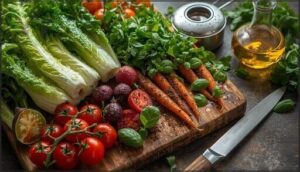
A truly great garden salad starts with the right foundation, and that means picking vegetables at their freshest, crispest peak. You’ll want to think about your greens, your dressing, and those extra touches that turn something simple into something you’ll actually crave.
Once you’ve nailed the basics, you can explore quick garden salad recipes that keep prep time short without sacrificing flavor.
Let’s break down what you need to build a salad that’s vibrant, nourishing, and completely your own.
Choosing The Best Garden Vegetables
You’ll love how the right vegetable selection transforms an ordinary garden salad into something extraordinary. Fresh ingredients picked at the perfect harvest timing deliver unbeatable flavor and nutrition:
- Cucumbers and cherry tomatoes bring crisp texture and hydration your body craves
- Bell peppers pack vitamin C while adding sweet, vibrant color
- Radishes offer that rebellious peppery bite and satisfying crunch
- Zucchini increases volume without weighing you down
These fresh vegetables work beautifully in vegetarian recipes when you’re planning your garden salad rotation.
Selecting Salad Greens and Leafy Options
Mixing romaine lettuce with arugula, spinach, and mesclun creates those irresistible flavor layers you’re craving in your garden salad. Fresh herbs like basil or cilantro add unexpected depth, while salad blends save precious time without sacrificing quality.
Choose crisp, vibrant leafy greens without yellowing or wilting, and look for locally grown varieties when possible. Store these green varieties with a damp towel to preserve their rebellious crunch.
Recommended Oils and Homemade Dressings
Your dressing can make or break the entire bowl, so you’ll want to choose wisely. Extra virgin olive oil pairs beautifully with apple cider vinegar in homemade vinaigrette recipes, creating balanced flavor profiles that dance on your tongue.
Here are your essential oil blends and dressing emulsifiers:
- Classic vinaigrette using 1:3 ratio of acid to oil
- Mustard as a stabilizing emulsifier
- Lemon juice for brightness
- Balsamic for depth
- Fresh herb-infused salad drizzles
Nutritious Mix-ins and Toppings
You’ll boost your salad’s nutrition by adding protein sources like nuts—almonds deliver 6–7 g per ounce—and healthy fats from avocado or olive oil.
Fresh herbs, crunchy textures from sunflower seeds, and nutrient boosters like cheese crumbles transform simple cherry tomatoes, cucumber, and red onions into a satisfying meal that keeps you full longer.
Step-by-Step Guide to Making Your Salad
Making a fresh garden salad is easier than you might think, and with a few simple steps, you’ll have a crisp, vibrant dish ready in minutes. The key is knowing how to prep your vegetables safely, slice them evenly, and combine everything at just the right moment.
Let’s walk through each step so you can create a salad that’s both delicious and perfectly balanced.
Washing and Prepping Vegetables Safely
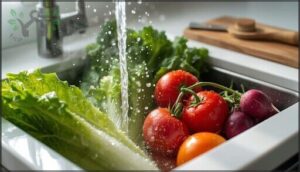
Before you toss those greens into your bowl, proper washing is your first line of defense against foodborne illness. Rinse all fresh vegetables under cool running water, scrubbing firm-skinned produce with a clean brush.
For food safety tips, keep your hands clean, use separate cutting boards to prevent cross contamination, and maintain kitchen hygiene throughout salad preparation—your health depends on it.
Slicing and Chopping Techniques
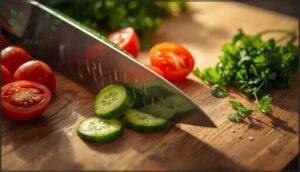
Once your veggies are clean and ready, the way you slice them can make or break the texture and flavor balance in every single bite. Grab your sharpest cutting tools and a sturdy chopping board—thin, uniform slices of cucumber and halved cherry tomatoes guarantee even distribution.
Don’t forget to finely chop parsley for a fresh finish that’ll enhance your salad preparation with minimal effort.
Combining Ingredients for Optimal Taste
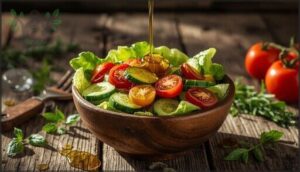
After you’ve sliced your cucumber and cherry tomatoes, layering your greens with crunchy vegetables creates texture blending that keeps every forkful interesting. Start with leafy bases, then add cucumber for coolness and cherry tomatoes for a sweet pop—balanced ingredient ratios matter here.
Drizzle olive oil right before you’re ready to enjoy, letting seasonal pairings and fresh flavor profiles shine through your garden salad without wilting those crisp edges.
Mixing, Serving, and Storage Tips
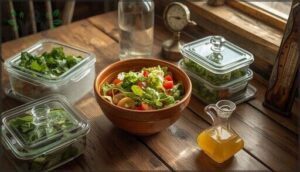
Now you’re ready to bring it all together—gently fold your garden salad with clean hands or tongs to coat every leaf in that homemade salad dressing. Here’s how to keep things fresh and safe:
- Serve on chilled plates for crisp, cool bites
- Store undressed greens in breathable containers at 40°F or below
- Keep dressing separate until mealtime to prevent wilting
- Consume within 24 hours for peak freshness preservation
Top 5 Tools for Perfect Salad Preparation
You don’t need fancy gadgets to make an exceptional garden salad, but the right tools turn prep from a chore into something you’ll actually enjoy.
A few well-chosen essentials make chopping faster, mixing easier, and dressing more flavorful.
Here are five tools that’ll transform your salad game without cluttering your kitchen.
1. United Scientific Mortar And Pestle Set
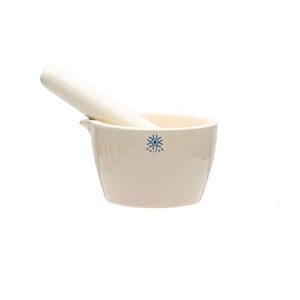
Grinding your own spices transforms a simple garden salad into something exceptional, and that’s where this mortar and pestle really shines. The United Scientific set features high-quality ceramic that won’t soften even at extreme temperatures, making it perfect for crushing fresh herbs, peppercorns, or garlic to elevate your vegetable salad and homemade salad dressing.
Its compact 50 ml capacity manages small jobs beautifully, while the sturdy lab equipment design ensures consistent grinding techniques. You’ll appreciate how freshly crushed ingredients bring deeper flavors to your fresh vegetable creations than pre-ground alternatives ever could.
| Best For | Home cooks and culinary enthusiasts who want to unlock deeper flavors in their salads and dressings by grinding fresh herbs and spices in small batches. |
|---|---|
| Material | Porcelain |
| Origin/Brand | India |
| Primary Use | Grinding/Crushing |
| Dishwasher Safe | Yes |
| Capacity/Size | 50 ml |
| Temperature Resistance | Up to 1000°C |
| Additional Features |
|
- Heat-resistant ceramic construction that maintains integrity even at extreme temperatures, ensuring long-lasting durability for daily kitchen use
- Compact 50 ml size is perfect for grinding small quantities of fresh ingredients without waste, ideal for single-serving salad preparations
- Easy to clean and maintain, with a non-porous glaze that resists staining and doesn’t absorb flavors between uses
- The 50 ml capacity may feel limiting if you’re preparing ingredients for larger meals or multiple servings
- Smaller than some users expect based on product images, so it’s worth checking the 3.9″ x 3.8″ dimensions before purchasing
- Logo printing quality can be inconsistent, which might matter if aesthetics are important to your kitchen setup
2. Bariani Extra Virgin Olive Oil
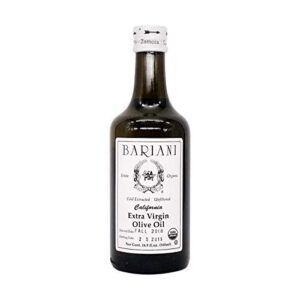
Your homemade dressing deserves a remarkable base, and Bariani Extra Virgin Olive Oil delivers exactly that. This California estate-grown oil is cold-pressed and unfiltered, preserving the rich flavor profiles and peppery finish that transform your vegetable salad into an Italian-style garden salad worth craving.
The sustainable farming practices behind each bottle mean you’re supporting quality from soil to table, while the full-bodied taste pairs beautifully with citrus and herbs in your vinaigrette.
Those olive oil benefits—from heart-healthy fats to vibrant flavor—make every drizzle count.
| Best For | Home cooks who want a premium, organic finishing oil with bold peppery flavor for salads, vinaigrettes, and raw dishes. |
|---|---|
| Material | Glass (Bottle) |
| Origin/Brand | Bariani (California) |
| Primary Use | Cooking/Dressing |
| Dishwasher Safe | N/A |
| Capacity/Size | 16.9 fl oz |
| Temperature Resistance | N/A |
| Additional Features |
|
- Cold-pressed and unfiltered to preserve natural flavors and health benefits
- Estate-grown in California with organic certification and sustainable practices
- Rich, robust taste with peppery notes that elevates simple dishes
- Strong, bitter flavor may not suit those who prefer mild olive oils
- Small-batch production can lead to inconsistency between bottles
- No-return policy on damaged items and occasional quality control issues reported
3. Sonder Acacia Wood Cutting Board
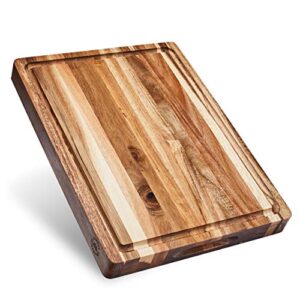
A sturdy cutting surface protects your counters and keeps your salad preparation smooth, and the Sonder Acacia Wood Cutting Board delivers both durability and kitchen safety in one beautiful package. Its edge-grain construction and juice groove catch liquids from fresh vegetables while you slice, and the dense acacia benefits include natural resistance to knife marks and moisture.
With proper wood maintenance—regular oiling and hand washing—this 16″L x 12″W board stays ready for every garden salad you create, making vegetable salad prep easier and safer.
| Best For | Home cooks who want a durable, attractive cutting board for daily prep work and entertaining, especially if they value natural materials and don’t mind a bit of upkeep. |
|---|---|
| Material | Acacia Wood |
| Origin/Brand | N/A |
| Primary Use | Cutting/Serving |
| Dishwasher Safe | No |
| Capacity/Size | 16″L x 12″W |
| Temperature Resistance | N/A |
| Additional Features |
|
- Dense acacia wood resists knife marks and moisture better than softer woods, so it holds up well over time
- Juice groove catches liquids from juicy vegetables and fruits, keeping your counter clean during prep
- Reversible design with a sorting compartment gives you flexible workspace options for different tasks
- Needs regular oiling and hand washing only—no tossing it in the dishwasher for quick cleanup
- Will show scratches and wear marks eventually, even with careful use and maintenance
- Some buyers report quality control issues like receiving used or damaged products
4. Zwilling Santoku Knife
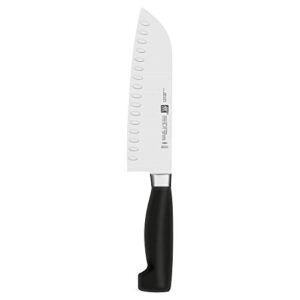
Precision counts when you’re transforming cucumbers and tomatoes into a stunning garden salad, and the Zwilling Santoku Knife gives you the control you need. Its 7-inch high-carbon stainless steel blade features a hollow edge that keeps fresh vegetable slices from sticking, while the ergonomic grips reduce hand fatigue during extended salad preparation.
The blade geometry facilitates smooth cutting techniques for healthy recipes, and with regular knife sharpening and proper steel composition care, you’ll slice paper-thin rounds every time.
| Best For | Home cooks who prep lots of vegetables and want precise control with less hand fatigue, especially if you have smaller hands or prefer a shorter blade. |
|---|---|
| Material | High Carbon Steel |
| Origin/Brand | ZWILLING (Germany) |
| Primary Use | Chopping/Slicing |
| Dishwasher Safe | No |
| Capacity/Size | 7″ blade |
| Temperature Resistance | N/A |
| Additional Features |
|
- Hollow edge design prevents thin slices from sticking to the blade, making it easier to work through large quantities of vegetables quickly
- Ergonomic handle and balanced 7-inch blade reduce strain during extended prep sessions
- Ice-hardened FRIODUR blade with precision-honed edge holds sharpness well and delivers clean, paper-thin cuts
- Requires hand washing only, which adds extra time to cleanup
- Higher price point may be a stretch for casual cooks or those on a tight budget
- Not ideal for cutting through meat joints or bones due to blade length and material
5. Freshmage Glass Mixing Bowls
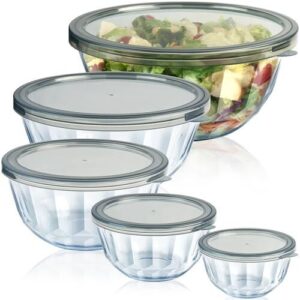
You’ll need a reliable set of bowls that can handle everything from tossing crisp greens to storing tomorrow’s lunch, and the Freshmage Glass Mixing Bowls deliver exactly that versatility.
This five-piece glass storage collection features high borosilicate construction for exceptional bowl durability, ranging from 0.5 to 4.4 quarts to accommodate any fresh vegetable portion. The airtight lids maintain food safety by sealing in nutrients and crispness, perfect for prepping garden salad ingredients ahead.
You’ll appreciate how the dishwasher-safe design simplifies cleanup after testing new salad recipes, while the diamond-cut pattern adds confidence during mixing techniques.
| Best For | Home cooks who want durable, versatile bowls for mixing salads, prepping ingredients, and storing leftovers without worrying about temperature extremes. |
|---|---|
| Material | Borosilicate Glass |
| Origin/Brand | Freshmage |
| Primary Use | Mixing/Storage |
| Dishwasher Safe | Yes |
| Capacity/Size | 0.5-4.4 quarts |
| Temperature Resistance | -4°C to 400°C |
| Additional Features |
|
- Five different sizes (0.5 to 4.4 quarts) give you options for everything from small portions to big batches
- Temperature range of -4℉ to 400℉ means you can move them from freezer to oven without stress
- Diamond-cut pattern looks good on the table and adds grip when handling
- Lids can be stubborn to pull off, which gets annoying when you’re in a hurry
- Some people worry about cracking if they use them in the microwave
- Glass is heavier than plastic, so the larger bowls can feel bulky when full
Frequently Asked Questions (FAQs)
How can I prevent salad from getting soggy?
Like a sponge left in the sink, greens soak up dressing fast.
Keep your Garden Salad crisp by storing Fresh Vegetable components separately, using dry leaves, and adding Salad Dressing with Olive Oil and Vinegar right before serving.
What are the best containers for salad storage?
Look for airtight containers in glass or BPA-free materials to keep your salad preparation fresh longer. Salad keepers with vented lids reduce moisture, while separate storage for dressings protects food safety and preserves crisp vegetables.
Can garden salads be made ahead for meal prep?
Absolutely—think of meal prep like packing a suitcase: keep things separate until you’re ready. Store your greens, chopped vegetables, and dressing in individual containers at 40°F or below, then combine just before eating.
Are there kid-friendly versions of vegetable salads?
Yes—try milder vegetables like cucumber and corn, add sweet fruits (grapes or apples), and use honey-yogurt dressings.
Let kids help assemble their bowls to boost engagement and make healthy eating fun.
How do I add protein to a garden salad?
Think of protein as your salad’s anchor—it keeps you satisfied longer.
Toss in grilled chicken, chickpeas, hard-boiled eggs, or cubed tofu to transform your garden greens into a complete, balanced meal.
Can I make garden salad the night before?
You can definitely prep your garden salad overnight for meal prep success! Store fresh vegetables and dressing separately at 40°F or below to preserve freshness.
This overnight prep strategy keeps your veggie selection crisp while preventing sogginess—just combine before serving.
What dressings pair best with garden vegetables?
A light vinaigrette made with olive oil and apple cider vinegar pairs beautifully with garden vegetables, while citrus dressings brighten flavors and creamy sauces add richness without overpowering crisp, fresh produce.
How do I keep lettuce crispy longer?
Storing lettuce properly means keeping it in your crisper drawer with high humidity control, wrapped loosely in paper towels to absorb moisture, and separated from ethylene-producing fruits like apples and bananas.
To maintain freshness, it’s vital to follow proper lettuce storage tips.
Should vegetables be raw or slightly blanched?
Most raw veggies deliver unbeatable enzyme preservation and nutrient retention, but blanching techniques can work magic on tougher vegetables like carrots, brightening color while enhancing texture without sacrificing those essential raw vegetable benefits you’re after.
Can garden salad be served as main course?
When you add protein additions like grilled chicken, beans, or tofu alongside hearty salad enhancers such as quinoa and avocado, your garden salad transforms into a satisfying main course that meets meal portioning and nutrient balance criteria.
Conclusion
What if reclaiming your health could start with something as simple as a bowl of vibrant vegetables? When you make a fresh garden vegetable salad with quality tools and peak-season ingredients, you’re choosing nutrient-dense nourishment over processed alternatives.
You’ll taste the difference in every crisp, flavorful bite, and your body will feel the benefits with improved digestion, sustained energy, and stronger immunity.
Start today—your healthiest meals grow right outside your door.