This site is supported by our readers. We may earn a commission, at no cost to you, if you purchase through links.
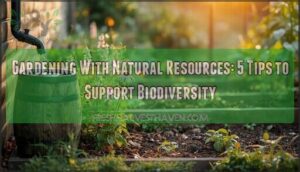
Your garden doesn’t need synthetic fertilizers, municipal water, or imported soil amendments to thrive. The resources already flowing through your yard—rainwater running off your roof, fallen leaves piling up in corners, native plants adapted to your region—can build a resilient, self-sustaining ecosystem that outperforms conventional approaches.
Gardening with natural resources isn’t just about reducing your environmental footprint; it’s about working with ecological patterns rather than against them. When you harvest rainwater, build soil with compost, select native species, apply organic mulch, and encourage beneficial plant relationships, you create a garden that requires less intervention while supporting more life.
These five strategies transform your outdoor space into a thriving habitat that conserves water, enriches soil, and welcomes pollinators and wildlife.
Table Of Contents
Key Takeaways
- Harvesting rainwater from your roof can capture 300–1,000 gallons per storm and cut irrigation costs by 20–80% when paired with drip systems and proper storage barrels.
- Building soil through composting and cover crops boosts microbial activity by 15–40% and increases organic matter up to 3% per season without synthetic fertilizers.
- Native plants slash water needs by 20–60% and maintenance time by 20–50% while increasing pollinator visits and bird diversity by 25–40% compared to non-native species.
- Applying 2–3 inches of organic mulch reduces evaporation by up to 70%, cuts irrigation needs by 25%, and blocks weed growth while preventing soil erosion during rainfall.
Harvest and Use Rainwater in Your Garden
Rainwater harvesting turns a free resource into a reliable water supply for your garden while cutting your dependence on municipal systems.
Getting started requires some planning around collection methods, calculating what your plants actually need, and pairing storage with efficient delivery systems.
You’ll also want to understand any local regulations before you set up your first barrel.
Setting Up Rain Barrels and Collection Systems
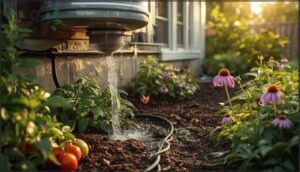
With a decent-sized roof, you can capture 300–1,000 gallons per rainfall event—enough to slash irrigation costs by 20–80%. Start by mounting a 60–80 gallon rain barrel under your downspout, adding a mesh screen for water filtration and debris control. Gravity feeds your drip irrigation setup beautifully. For bigger gardens, link multiple barrels to boost storage and power your rainwater harvesting game all season long.
To resolve any issues with your online gardening resources, check the web server status for errors.
Calculating Your Garden’s Water Needs
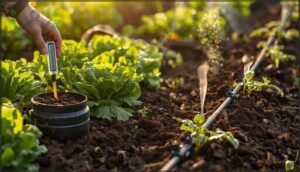
Once you’ve got barrels ready, it’s time to dial in water budgeting. Most garden beds need 25–40 mm per week during peak season—about 1–1.5 inches—to keep soil moisture in the sweet spot without drowning roots. Check evapotranspiration rates for your crops and climate; they’ll guide your irrigation scheduling better than guesswork.
Five quick wins for water conservation strategies:
- Track weekly rainfall to adjust watering
- Test soil moisture before you irrigate
- Match drip irrigation flow to plant type
- Add organic matter to boost soil health and water retention
- Mulch heavily to cut evaporation by half
Smart rainwater harvesting starts with knowing exactly how much you actually need. Understanding the literature review process is essential for evaluating water conservation methods.
Combining Rainwater With Drip Irrigation
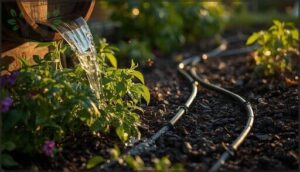
When you pair rainwater storage with a well-designed drip system, you’re not just stretching every drop—you’re rewriting the rules of irrigation efficiency. This combo can slash outdoor water use by up to 50%, especially when you mulch around emitters to lock in moisture.
Sustainable gardening thrives on these small shifts, boosting soil health, conserving water, and nurturing real biodiversity.
Legal Considerations and Best Practices
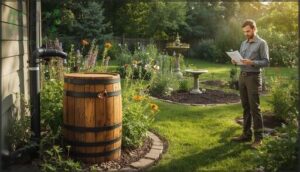
Before you set up rain barrels, check your local Rainwater Laws—some states limit collection or require permits. Stick to Sustainable Regulations by using backflow preventers and labeling pipes. Most Conservation Policies encourage using rainwater for irrigation, not drinking.
Following these Water Rights guidelines promotes Wildlife Conservation, boosts Soil Health, and ensures your garden’s Conservation Methods align with broader Ecosystem Management and Biodiversity goals.
Build Healthy Soil With Compost and Organic Matter
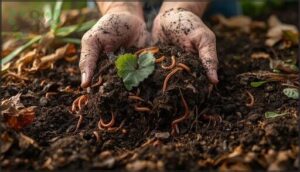
Healthy soil is the foundation of any thriving garden, and you don’t need synthetic fertilizers to build it. By working with natural processes like composting and reducing soil disturbance, you’ll create an environment where plants, microbes, and beneficial organisms can flourish together.
Here are five practical approaches to strengthening your soil from the ground up.
Starting a Home Composting System
Building your own compost pile unlocks one of nature’s best soil amendments while cutting waste—and you don’t need fancy equipment to start. Here’s your beginner roadmap:
- Choose a spot with good drainage and partial shade for your compost materials.
- Layer greens and browns at a 1:2 ratio to balance nitrogen with carbon sources.
- Turn the pile every week or two for faster decomposition and pile management.
- Monitor moisture—it should feel like a wrung-out sponge.
- Wait 2–4 months for dark, crumbly finished compost that boosts soil health and biodiversity in your organic gardening beds.
Apply it as mulch or blend it into planting areas for composting benefits you’ll see all season.
What to Compost and What to Avoid
You’ll want to fill your bin with fruit and vegetable scraps—they make up nearly half of typical compost materials and power microbial activity. Toss in coffee grounds, crushed eggshells, and shredded yard waste for balanced green waste and soil amendments.
Skip meat, dairy, and thick branches; they attract pests and slow organic recycling. Smart composting tips keep your organic gardening on track while boosting soil health and biodiversity through effective mulching.
Using Finished Compost as Mulch and Amendment
Once your compost is dark and crumbly, spread 2–3 cm as mulch or dig it 5–10 cm deep for soil structure and nutrient cycling boosts.
You’ll see microbial growth jump 15–40% within weeks and soil organic matter climb up to 3% over a season—key compost benefits that power biodiversity and organic gardening methods.
That’s how mulching and composting fuel real soil health.
Cover Crops for Off-Season Soil Building
Legumes like crimson clover deliver nitrogen fixation, adding 20–60 kg N/ha, while cereal rye shields against soil erosion and drives carbon sequestration up 0.1–0.4% over two seasons.
Cover cropping feeds soil microbes, boosts biodiversity, and cuts nitrate leaching by 15–40%.
Mix grasses with legumes for soil health gains of 10–35%, then terminate before your main planting begins.
Reducing Tillage to Protect Soil Life
Turning the soil less often keeps fungal networks intact and earthworm populations thriving. No-till methods can boost microbial health by 15–40% while cutting fuel costs by a quarter.
You’ll see soil structure improve as aggregation strengthens, reducing soil erosion and preserving biodiversity below ground.
These conservation practices protect soil health without sacrificing yields, making tillage reduction one of the smartest soil preservation methods for long-term garden resilience.
Choose Native Plants for Less Maintenance
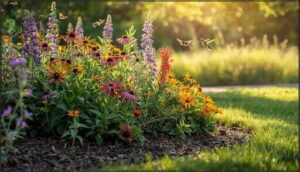
Native plants are your garden’s best allies when you want to cut down on maintenance while giving local wildlife a real home. They’ve evolved alongside your region’s insects, birds, and pollinators, so they naturally require less water, skip the fertilizer, and shrug off pests that would flatten non-native species.
Here’s how to choose and use them to build a thriving, low-effort garden that works with nature instead of against it.
Benefits of Native Species for Local Wildlife
Native plantings aren’t just pretty—they’re lifelines for your backyard ecosystem. When you choose local species, you’re basically rolling out the welcome mat for butterflies, birds, and beneficial insects that have evolved alongside these plants for centuries.
Here’s what you’re supporting with native plants:
- Pollinator populations thrive when 70–80% of native insects find the larval and nectar resources they need
- Bird diversity jumps by up to 30% as native shrubs provide nesting sites and berry production
- Specialized wildlife like butterflies see 40–60% higher larval survival on their native host plants
Beyond wildlife conservation, native gardens tackle practical challenges too. They cut erosion and improve water infiltration, reducing surface runoff by 15–25% during storms.
That’s ecosystem balance working in your favor—native species naturally promote biodiversity while demanding fewer inputs over time. You’ll spend 20–50% less on maintenance compared to non-native plantings, freeing you up to enjoy the wildlife show unfolding in your local habitat.
Matching Plants to Your Climate and Soil
Attracting wildlife is one win—but your native plants won’t thrive unless they match your climate and soil profiles. Check your USDA zone and run a soil test to identify texture and pH.
When you pair drought-tolerant species with your local rainfall patterns, you’ll boost establishment success by 25–40% and slash irrigation needs by up to 50%, strengthening climate resilience and ecosystem balance naturally.
Reducing Water and Fertilizer Needs Naturally
Once your native species are in place, they’ll cut supplemental irrigation by 20–60% and need minimal fertilizer—often under 20–40 kg N/ha annually.
This eco-friendly approach to water conservation and fertilizer reduction preserves soil moisture and soil health while supporting sustainable gardening.
You’ll save time, slash inputs, and strengthen biodiversity promotion through conservation methods rooted in organic gardening principles.
Creating Pollinator-Friendly Garden Zones
Beyond reducing inputs, you’re ready to welcome pollinators. Design zones with 6–12 flowering native plantings per 100 square meters to sustain continuous nectar flow. Space multiple patches 10–20 meters apart—this boosts visits by 25–40% and strengthens pollinator diversity.
You’ll build a garden habitat that fosters bee conservation and biodiversity:
- Layer groundcover, midstory, and taller bloomers for season-long forage
- Plant early-spring and late-summer natives matching local pollinator life cycles
- Leave 15–25% bare ground for ground-nesting bees
- Link flower beds with native hedgerows as movement corridors
- Choose multi-hued species to attract diverse wildlife
Your eco-friendly zones become living corridors. Gardening for wildlife and wildlife conservation through gardening merge as you create a biodiverse garden where monarchs, native bees, and butterflies thrive—cutting their travel energy by up to 30% while you enjoy higher pollinator counts and a resilient, low-effort landscape.
Apply Mulch to Conserve Water and Suppress Weeds
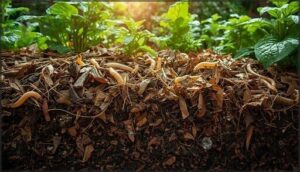
Mulch acts as a protective blanket for your soil, locking in moisture and blocking out weeds before they take root. It’s one of the simplest ways to cut water use and reduce garden labor without spending a fortune on fancy equipment.
Here’s how to choose the right materials and apply them for maximum conservation benefits.
Types of Natural Mulch Materials
You’ve got options for mulch that keep your garden thriving while cutting down on watering and weeds. Here’s a quick comparison of natural materials that boost soil health and biodiversity in your organic gardening:
| Material | Key Benefit |
|---|---|
| Wood chips | Slash evaporation by 30–50% |
| Straw | Drop soil temps 4–6°C in summer heat |
| Leaf mold | Add 1–3% organic matter yearly |
| Grass clippings | Quick nitrogen boost (10–20% in weeks) |
| Pine needles | Natural barriers for acid-loving plants |
Each choice fights soil erosion while feeding the underground ecosystem that makes compost work its magic.
Proper Mulch Depth and Application Techniques
Getting your mulch depth right makes all the difference for weed suppression and moisture retention. You’ll want to aim for 2–3 inches across most beds—just enough to control weeds without choking soil health or blocking organic matter breakdown.
- Keep mulch a few inches from stems to prevent rot and preserve your garden ecosystem
- Apply 4–5 inches around shrubs and trees while avoiding mulch layering
- Adjust depth based on climate: 2 inches in wet zones, 3 inches where it’s dry
Check annually and refresh as it decomposes to maintain biodiversity preservation and soil erosion control.
How Mulch Reduces Evaporation and Erosion
A simple layer of organic mulching shields your soil from the elements, slashing evaporation by up to 70% while cutting runoff by half during moderate rains. That means you’re watering less and keeping precious topsoil where it belongs.
Here’s how mulch benefits your garden:
| Mulch Benefits | Impact |
|---|---|
| Evaporation Control | Extends moisture by 1–2 weeks |
| Soil Erosion Prevention | Reduces runoff up to 50% |
| Water Conservation | Cuts seasonal use by 25% |
Sustainable gardening starts with protecting what you’ve built.
Using Leaves and Grass Clippings Effectively
Shredded leaves and grass clippings are compost gold—you’re turning yard waste into mulch that boosts soil organic matter by 1–3% per season. Layer grass clippings thinly to avoid matting, mix leaves into your pile for faster breakdown, and you’ll cut compost time to 3–6 months.
This organic gardening technique slashes chemical use while building soil health naturally.
Support Garden Biodiversity With Companion Planting
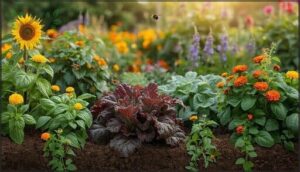
Companion planting lets you pair plants that naturally protect and support each other, creating a self-regulating garden ecosystem. When you match the right combinations, you’ll reduce pest pressure, attract helpful insects, and build healthier soil without relying on synthetic inputs.
Companion planting pairs plants that naturally protect each other, reducing pests and building healthier soil without synthetic inputs
Here’s how to use strategic plant partnerships to strengthen biodiversity across your garden.
Pest Control Through Plant Partnerships
Ever wonder how you can outsmart pests without reaching for harsh sprays? Companion Planting is your secret weapon. By pairing crops and aromatic herbs, you boost Pest Resistance and invite Beneficial Insects that keep troublemakers in check.
This approach weaves Biodiversity Protection into your garden, strengthens Soil Health and Management, and turns your space into a haven for Wildlife Conservation.
Attracting Beneficial Insects and Pollinators
You want pollinators buzzing around your garden? Plant native flowers that bloom from spring through fall—studies show continuous flowering boosts pollinator visits by 25–40%.
Add bee hotels and bare ground for nesting, and you’ll see beneficial insect activity jump 30–60%.
These Pollinator Habitats turn your space into a Biodiversity Garden, supporting Insect Conservation while strengthening Wildlife Conservation through real Native Flower Power.
Crop Rotation for Healthier Soil and Plants
Rotating crops across your beds can bump up soil organic matter by 20% and slash soil-borne disease risk in half. Here’s your rotation game plan:
- Swap heavy feeders (tomatoes) with legumes to boost nitrogen naturally
- Alternate shallow-rooted crops with deep-rooted ones
- Follow nutrient-hungry plants with light feeders
- Include cover crops in your off-season rotation
- Track what you plant where each year
This rotation planning strengthens microbial balance and keeps nutrient cycling humming.
Avoiding Invasive Species in Your Garden
Beyond rotating your crops, protecting ecosystem balance means blocking invasive species at the gate. Non-native thugs like English ivy or Japanese knotweed can choke out wildlife habitat and wreck garden biodiversity in months.
Choose native alternatives that support wildlife protection and ecosystem health instead:
| Invasive to Avoid | Native Alternative |
|---|---|
| English Ivy | Virginia Creeper |
| Japanese Barberry | Native Currant |
| Purple Loosestrife | Cardinal Flower |
This swap guards biodiversity protection and makes garden restoration straightforward.
Frequently Asked Questions (FAQs)
How can greywater be safely reused in gardens?
You can safely reuse greywater through filtration methods and subsurface irrigation systems. Avoid toilet waste, store less than 24 hours, and apply directly to non-edible plants—reducing water consumption while protecting soil safety.
How do soil moisture sensors improve watering efficiency?
Soil moisture sensors cut overwatering by 20–40% through real-time monitoring and irrigation automation.
Sensor calibration paired with drip systems boosts efficiency optimization by 30–50%, delivering substantial water savings while supporting soil conservation and sustainable gardening practices.
Which shade trees reduce home energy costs most?
Dense-canopied deciduous species like maples and oaks deliver 15–35% cooling energy savings when positioned on south and west exposures.
Climate fit, proper shade design, and regular maintenance optimize these sustainable gardening benefits year-round.
How does xeriscaping work in humid climates?
Xeriscaping in humid climates focuses on drought-tolerant natives and mulch to cut irrigation by 30–60%, building climate resilience through soil adaptation and water-efficient plantings that thrive during seasonal dry spells—sustainable gardening that conserves resources naturally.
Conclusion
Every drop of rain, every fallen leaf, every native seed carries more potential than any product you’ll find at a garden center. Gardening with natural resources doesn’t just reduce your expenses—it rewires your entire relationship with the land beneath your feet.
You’re no longer fighting nature’s rhythms; you’re riding them. The result? A garden that feeds itself, protects itself, and becomes a beacon for the wild life your neighborhood desperately needs.