This site is supported by our readers. We may earn a commission, at no cost to you, if you purchase through links.
The difference between a good fall harvest and a great one often comes down to a single week. Pull your carrots too early and they lack that deep, earthy sweetness. Wait too long after a hard frost and your spinach turns to mush overnight.
Fall vegetables operate on a tight schedule—shorter days slow growth, temperatures swing fast, and the window between perfect ripeness and ruin can be surprisingly narrow. Getting your timing right, knowing what to look for, and handling each crop the way it wants to be handled makes the whole season feel less like a race and more like a rhythm you’ve finally figured out.
Table Of Contents
- Key Takeaways
- Plan Your Fall Harvest Schedule
- Spot Peak Ripeness in Fall Crops
- Gather Tools and Prepare Plants
- Harvest Vegetables The Right Way
- Cool, Cure, and Store Harvests
- Refresh Beds After Final Picking
- Frequently Asked Questions (FAQs)
- Should you harvest fall vegetables?
- What is a good fall harvest crop?
- How do you harvest vegetables?
- When is the best time to harvest vegetables?
- What vegetables are good for fall harvest?
- What flowers should you not cut back in the fall?
- Is your vegetable garden ready to harvest in the fall?
- How do I choose the best fall harvest vegetables?
- Can you plant vegetables in the summer for fall harvest?
- What are some good crops for fall harvest?
- Conclusion
Key Takeaways
- Timing your harvest to within a single week—based on frost dates, daylight hours, and crop-specific cues like firmness and bud tightness—makes the difference between peak flavor and a ruined crop.
- Cold-tolerant crops like kale, carrots, and Brussels sprouts actually taste sweeter after a light frost, so waiting until morning after a 28–32°F night gives you better flavor, not worse.
- How you handle vegetables after picking matters just as much as when you pick them—cool them quickly, store roots at 90–95% humidity, cure squash and onions before long-term storage, and check everything weekly for spoilage.
- Keeping a garden log with planting dates, maturity adjustments, and weather notes sharpens your timing every season, turning guesswork into a rhythm you can rely on.
Plan Your Fall Harvest Schedule
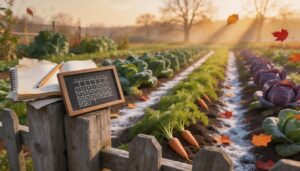
A good fall harvest doesn’t happen by accident — it starts with a solid plan weeks before you pick your first vegetable. Knowing your frost dates, your crops’ timelines, and how shorter days affect growth will save you a lot of guesswork.
Once you’ve mapped out your timeline, brushing up on fall crop harvesting and storage methods can help you get the most out of everything you grow.
Here’s what to sort out before harvest season gets underway.
Check Local Frost Dates First
Before you plant a single seed, get familiar with your local frost dates. These dates are your anchor—they mark when cold snaps usually hit and help you time your fall harvest.
For a smart start, try:
- Checking Frost date sources and Historical frost averages
- Mapping your Microclimate
- Frost alert apps
- Garden journal tracking
- frost protection methods
Match Crops to Days to Maturity
Once you know your frost date, match each crop to its days to maturity.
Radishes are Early Maturity Choices—ready in 25 to 40 days. Broccoli fits Mid-Season Crop Timing at 60 to 75 days. For Late-Season Harvest Planning, cabbage needs 75-plus days.
Whether you choose Transplant or Direct Sowing affects your vegetable harvest calendar, since transplants usually save 7 to 14 days.
Account for Shorter Fall Daylight
Days to maturity on seed packets assume long summer days.
In fall, daylight drops to around 11 hours by late September — and that slower light means slower growth. Factor in an extra week or two when planning.
Good canopy light management, smart row orientation optimization, and some pruning for sunlight can help.
Daylength growth modeling is simple: less light equals longer wait.
Use Succession Planting for Steady Harvests
Shorter days slow everything down — so why bet on a single planting? Staggered Planting Intervals keep your fall garden producing week after week.
- Sow greens every 10–14 days using a Harvest Calendar Sync to track each wave.
- Apply a Microbed Rotation Strategy across separate beds to reduce pest buildup.
- Use Seedling Tray Management to pre-start the next round before the current crop matures.
- Try Intercropping Companion Plants to fill gaps and use space efficiently.
- Match your continuous harvest technique to single versus continuous harvest vegetable types for a balanced fall planting schedule.
Prioritize Cold-tolerant Fall Vegetables
Not every vegetable can handle a cold snap — but the right Cold Resistant Varieties thrive in it. Kale survives down to -10 °C, Brussels sprouts sweeten after frost, and carrots turn noticeably sugary below 4 °C.
Frost Edge Planting with protective row covers usage and Insulated Bed Design to push your harvest timing guidelines further into autumn without losing crops to a sudden freeze.
Track Planting Dates in a Garden Log
A simple garden journal pays off more than most gardeners expect. Log these four things for each sowing:
- Planting Date Tags with variety name and days to maturity from the seed packet
- Crop Maturity Timing, adjusted 5–10 days for cooler fall temps
- Soil Moisture Levels, and any row cover dates
- Seasonal Weather Notes, tracking frost warnings or cloudy stretches
Your harvest timing schedule gets sharper every year.
Spot Peak Ripeness in Fall Crops
Knowing exactly when to pick is half the battle with fall vegetables. Each crop gives off its own signals—size, color, firmness, even a light frost—that tell you the moment is right.
Here’s what to look for across your most common fall crops.
Read Size, Color, and Firmness Cues
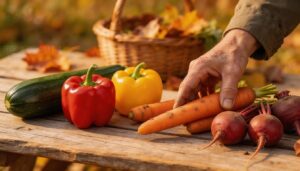
Your vegetables will tell you when they’re ready — you just need to know what to look for.
Once you’ve harvested the last of your crop, give your tools the care they deserve with these end-of-season garden tool maintenance tips.
A zucchini size guide starts at 6–8 inches; go longer and the texture gets spongy.
Use pepper color cues — firm, glossy, and heavy mean peak flavor.
For a root firmness check, squeeze gently: carrots and beets should feel dense, not rubbery.
These vegetable ripeness indicators make harvest timing far less guesswork.
Know When Leafy Greens Taste Best
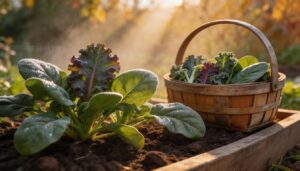
Timing really does change the flavor. Leafy green harvesting hits its sweet spot after the season’s first frost — that Frost-Triggered Sweetness you’ll notice in kale and spinach is real.
Harvest kale and spinach after the first frost, and the cold itself sweetens the flavor
Morning Light Harvest techniques, picking between 8 and 11 a.m. after Evening Irrigation Timing the night before. Midrib Crispness Indicator and absence of Leaf Curl Bitterness confirm your greens are harvest-ready.
Harvest Roots Before They Turn Woody
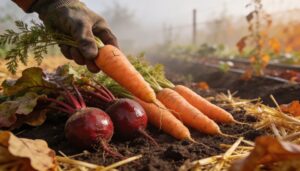
Root vegetables give you clear signals when they’re ready — and when they’ve waited too long. Aim to pull carrots and beets once they reach finger thickness, around 60–80 days after sowing.
Soil Temperature Management matters here: roots stay tender in 50–60°F soil. Mulch Timing helps regulate that.
Check Root Pull Resistance — easy lifts mean peak freshness. Skin cracking signals woodiness is coming.
Pick Brassicas Before Buds Loosen
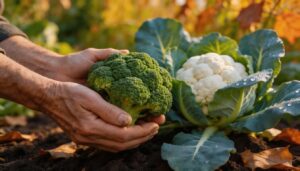
Broccoli and cauliflower give you one shot — miss the window, and lose, yellowing buds are all that’s left. These are single harvest crops, so Bud Tightness Indicators matter most.
- Check bud size daily — tight, compact florets signal peak harvest timing
- Apply the Stem Firmness Test: press gently; soft means wait, firm means go
- Watch for the Leaf Color Cue — healthy blue-green leaves confirm readiness
- Use Temperature Monitoring to track nights between 50–65°F, ideal for head formation
- After harvesting, practice Ethylene Separation — store away from apples to preserve freshness
Strong harvest indicators for broccoli include uniform color and zero floret separation. That’s your green light.
Use Light Frost to Improve Flavor
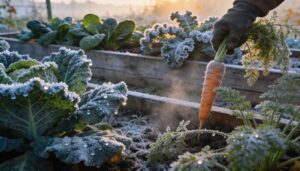
Unlike broccoli’s one-shot harvest window, some crops actually reward you for waiting.
A light frost — around 28–32°F for an hour or two — triggers sugar conversion in leafy greens and roots alike. That’s your flavor sweetness boost happening naturally.
Kale, spinach, and carrots all benefit; leafy frost benefits are especially noticeable. Time your harvest the morning after, and you’ll taste the difference.
Inspect Fast-growing Crops Every Day
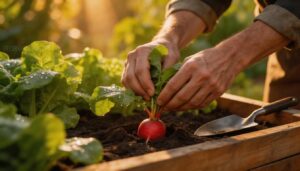
Fast-growing crops like radishes and cut-and-come-again plants don’t wait for you. Daily pest scouting, leaf color checks, and a quick stem firmness test each morning take less than five minutes. Check soil moisture while you’re at it.
Early morning harvests catch crops at peak crispness — and growth rate charting helps you forecast your next picking window before it slips by.
Gather Tools and Prepare Plants
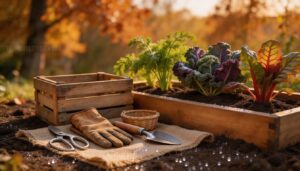
Before you pull a single carrot or snip a leaf, a little prep work goes a long way. The right tools and a few simple steps protect both your plants and your harvest.
Here’s what to have ready before you head out to the garden.
Use Pruners, Knives, and Digging Forks
Having the right tools in hand makes all the difference. Pruning shears with bypass blades give you clean cuts on stems up to 5/8 inch thick—no tearing, no stress on the plant. A sharp knife with an ergonomic handle choice reduces fatigue during long sessions.
For root crops, digging fork leverage is your best friend: curved tines loosen soil in a wide arc before you lift. These are the true essentials in your Tools and Supplies for Garden Harvesting kit.
Sanitize Tools Before Harvesting
Clean tools matter just as much as sharp ones. Before you cut a single stem, wipe blades with Alcohol Blade Wipes—70% isopropyl works fast.
For deeper garden tool sanitation, follow a simple Bleach Soak Procedure: ten minutes in a 10% solution, then rinse and dry fully.
Good Tool Drying Tips? Pat metal dry immediately—moisture invites rust.
Label your sanitizer containers and run a quick Tool Inspection Checklist before starting.
Water Dry Soil Before Lifting Roots
Bone-dry soil sounds ideal, but it actually works against you when lifting root crops. Soil moisture management matters here — aim for the sweet spot where the ground is firm but not parched.
Dry soil timing and compaction reduction techniques go hand in hand: loosen the top 6–12 inches, let moisture settle below field capacity, and root ball integrity stays intact during pulling.
Harvest in Cool Morning Conditions
Timing your harvest around cooler morning conditions makes a real difference. Aim to pick within two hours after sunrise — air temps are 5–10°F lower, humidity runs 70–90%, and temperature-driven crispness is at its peak.
- Morning dew management: wipe leaves gently with a damp cloth before cutting
- Moisture retention strategies keep greens crisp 1–2 extra days in storage
- Early light benefits include firmer roots and reduced wilt in cold-tolerant crops
Handle Vegetables Gently to Prevent Bruising
Even a small drop can bruise tender tissue, so think of each vegetable as something worth cradling — cushioned cradling with both hands keeps pressure even and prevents crushing. Practice gentle transfer into shallow, breathable crates lined with soft material.
Soft picking means cut, don’t pull. Inspect for quality as you go, set everything in single-layer storage, and move it straight to temperature-controlled cooling.
Protect Crops With Row Covers
A lightweight spunbond row cover is one of the simplest ways to extend your harvest window. raises temperatures under the fabric by 2 to 8°F — enough to protect cold‑tolerant crops when temps dip toward 28°F.
Secure covers with hoops or weighted edges, and lift them on warm, sunny days.
Match your cover material selection to frost dates awareness, and you’ll keep protecting fall crops with row covers well into late autumn.
Harvest Vegetables The Right Way
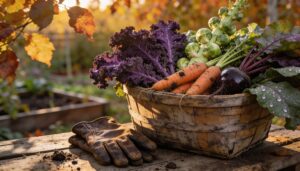
Each vegetable has its own rhythm, and harvesting at the right moment makes all the difference. A little crop-specific know-how goes a long way toward getting the best flavor and the longest shelf life out of your fall garden.
Here’s how to handle each one correctly.
Cut Kale, Spinach, and Lettuce Selectively
Think of kale, spinach, and lettuce as cut-and-come-again plants — harvest them right, and they keep producing for weeks.
For leaf size selection, pick outer leaves once they reach 6–8 inches. Slice at a low cutting angle just above the growth zone, targeting lateral leaves so the center bud stays intact.
Morning harvest techniques keep leaves crisp. Leave at least a third of the plant, and regrowth timing usually runs 2–3 weeks.
Lift Carrots, Beets, and Radishes Carefully
Root vegetables deserve a gentle touch. Before pulling carrots, beets, or radishes, check your moisture timing — damp but not soggy soil makes root vegetable pulling much easier and reduces skin damage.
Use a digging fork for root loosening technique: insert it beside the root, rock gently, then lift straight up using knee-friendly posture. This bruise-minimizing handling keeps your harvest table-ready.
Cut Broccoli and Cauliflower at Peak Stage
Broccoli and cauliflower don’t give you much warning. Once the floret tightness check tells you buds are compact and dark green — or the curd is firm ivory white — your harvest time window is just a few days.
Field temperature monitoring matters here: cooler mornings slow bolting. Cut broccoli 5–8 cm below the head, preserving that stem stub so side shoots can still develop.
Harvest Cabbage When Heads Feel Firm
Cabbage is ready when the head density check passes: press near the core, and it should feel solid with almost no give. The weight-to-size ratio matters too — a harvest-ready head feels surprisingly heavy. Try the core sound test: shake it lightly; no hollow sound means dense, packed leaves.
- Cut with a sharp knife, leaving 1–2 inches of stem (stem retention length preserves shelf life)
- Skip washing before storage to reduce rot risk
- Use perforated bags at 0–4°C for best results
- Apply the immediate chill method — cool within two hours of cutting
- Remove yellowing outer leaves before refrigerating
Pick Brussels Sprouts From The Bottom Up
Unlike cabbage, Brussels sprouts don’t ripen all at once — and that’s actually a good thing.
Start at the base, where lower sprout sweetness peaks first after cool nights. Cutting bottom sprouts triggers an energy focus shift, pushing the plant’s resources upward for yield consistency gains. Use the stem protection technique: snip cleanly just above a leaf node — no twisting.
| Harvest Timing Window | What to Do |
|---|---|
| Sprouts reach 1–1½ inches | Begin picking from the base |
| After first light frost | Expect sweeter lower buds |
Cut Winter Squash With a Stem Attached
Winter squash needs one thing you can’t skip: keep the stem on. That stem acts as a natural moisture seal, slowing surface decay and extending shelf life by several weeks.
Cut the vine with sharp pruners, leaving 2–3 inches of stem attached. If the rind resists your fingernail and the stem looks corky, it’s ready.
Cool, Cure, and Store Harvests
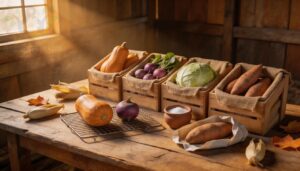
Getting your vegetables off the vine is only half the job—how you handle them after the harvest matters just as much. The wrong storage conditions can turn a week’s worth of fresh produce into mush in just a few days.
Here’s what to do as soon as you bring your crops in.
Move Produce to a Cool Spot Quickly
The moment you pick a vegetable, the clock starts ticking.
Move it to a cool dark place — whether a root cellar, shaded area, or refrigerator crisper drawer — within 15 minutes.
Use shade transport carts to block direct sun during that quick hand‑off.
Ventilated packing and immediate cold transfer keep things breathing without trapping heat.
Good temperature and humidity management in vegetable storage starts before you even reach the indoor cold storage methods.
Refrigerate Greens With High Humidity
Leafy greens are unforgiving if you skip humidity control in postharvest storage. Keep relative humidity near 95 percent and temperatures at 32–40°F to slow wilting and preserve that crisp texture.
Perforated bags or a damp paper towel inside a container are your best tools for container selection.
Store greens away from apples and bananas — ethylene prevention matters here.
Watch for shelf life indicators like limpness or browning edges.
Store Roots in Cold, Moist Conditions
Root vegetables love cold and moist conditions — think basements and root cellars where temperature control keeps things steady between 32–40°F. For humidity management, aim for 90–95% relative humidity to prevent shriveling.
Use breathable containers for proper air circulation, and practice ethylene prevention by keeping roots away from apples.
After root vegetable pulling, layer them in perforated bins and check weekly.
Cure Onions and Winter Squash Properly
Curing is what turns a freshly pulled onion or squash into something that lasts for months. Skip it, and you’re looking at rot within weeks.
- Pre-Cure Preparation: Brush off soil, don’t wash, and trim long tops.
- Curing Temperature Range and Airflow Setup: Cure onions at 75–85°F and squash at 85–90°F in a single layer with good air circulation.
- Skin Hardening Test: Onions are ready when necks feel dry and tight; squash when the skin resists a fingernail press.
Check Stored Vegetables for Spoilage Weekly
One bad onion really can spoil the whole bin — so weekly checks aren’t optional, they’re essential postharvest handling.
visual inspection: look for dark patches, slime, or shriveling. odor detection — a sour or sulfuric smell means something’s already turning. temperature and humidity control slows decay, but only if you’re monitoring regularly.
| What to Check | What It Means |
|---|---|
| Soft or mushy spots | Early internal rot |
| Dark discoloration | Bacterial or fungal spread |
| Slimy surfaces | Active decay — discard immediately |
| Off or sour odor | Spoilage spreading to nearby produce |
| Shriveled appearance | Humidity too low; adjust storage solutions for fresh produce |
Stock rotation matters too — pull oldest items forward and use them first. temperature and humidity management in vegetable storage prevents mold and mildew during harvest season, from quietly wiping out weeks of hard work.
Freeze, Pickle, or Dry Extra Produce
surplus go to waste. Blast freezing after a quick blanch (1–4 minutes, then ice water) locks in over 90% of vitamin C. Vacuum seal bags and label with crop name and date — that’s your labeling rotation sorted.
Quick pickle brine works beautifully for firm veggies like beans and carrots. Dehydrator settings around 6–24 hours yield shelf-stable results you’ll thank yourself when January comes.
Refresh Beds After Final Picking
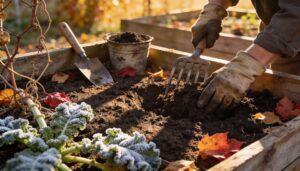
Once the last vegetable is off the vine, your work isn’t quite done — but the final steps are worth it. A little end-of-season care now sets your beds up for a stronger start next spring.
Here’s what to do after that final harvest.
Remove Spent Plants and Diseased Debris
Clearing out your beds after the final harvest is one of the most important things you can do for next year’s garden. Bag diseased debris immediately and seal disposal bags before they leave the bed—don’t compost anything showing spots or mold.
- Inspect for pest eggs on stems and leaves before removal
- Maintain clean area by cutting spent stems to the base
- Log removal dates to guide future crop rotation decisions
- Sanitize tools after handling diseased material to prevent spread
Add Compost and Mulch to Empty Beds
Once the debris is cleared, your beds are ready for a real boost.
Spread 1–2 inches of finished compost — that’s your organic matter boost — and follow it with 5–7 cm of organic mulch like straw or shredded leaves.
This moisture retention strategy cuts evaporation by roughly 30 percent. soil temperature influence drops below 10°C, so don’t wait too long.
Plant Cover Crops for Soil Health
With compost and mulch in place, your beds are primed for cover crops — your soil’s winter workforce.
- Winter rye excels at erosion control and boosts water infiltration with deep root channels
- Clover fixes nitrogen, supporting microbial activity and nutrient capture through cold months
- Hairy vetch adds biomass that lifts soil organic matter by up to 1.5 points by spring
Rotate Crops for Next Season
Your cover crops are already working underground — now think ahead to what grows there next. Sketch a simple Family Rotation Sequence: move brassicas where beans grew, shift root crops where greens sat.
That Legume Nitrogen Boost carries forward, feeding heavy feeders naturally. Good crop rotation planning breaks Pest Break Cycles before they start, making Soil Health Monitoring next spring far more rewarding.
Clean and Oil Harvest Tools
Before you hang everything up for the season, give your tools the care they’ve earned.
Wipe blades down for Blade Degreasing, wash grips with mild soap for Eco-friendly Cleaning, then dry thoroughly — Tool Drying is your best Rust Prevention move.
Finish with Handle Oil Application using a light coat.
Sharp garden shears and sanitizing harvest tools to prevent disease start here.
Review Harvest Notes for Better Timing
Your garden log is one of the most useful tools you own.
Flip back through it to Log Temperature Trends, Analyze Daylight Shifts, and Record Harvest Delays from this season.
Compare Maturity Data against what seed packets promised, and update Soil Moisture notes where timing slipped.
Good Garden Harvest Documentation sharpens your eye for Plant maturity indicators, tightens Harvest window management, and makes Seasonal garden planning and timing — and Optimizing harvest timing based on plant maturity — easier every year.
Frequently Asked Questions (FAQs)
Should you harvest fall vegetables?
Yes — timing is everything.
Harvest fall vegetables at peak ripeness to lock in nutrients, flavor, and food safety. Wait too long, and cold tolerance won’t save woody roots or bitter greens.
What is a good fall harvest crop?
Kale is a timeless winner for fall. It tolerates frost, sweetens after cold nights, and keeps producing for weeks.
With proper soil pH optimization, you’ll harvest tender leaves well into late autumn.
How do you harvest vegetables?
You cut, pull, or twist vegetables free using clean tools at the right moment.
Timing, gentle handling, and a well-stocked harvest basket make every step-by-step guide to harvesting fall vegetables more productive.
When is the best time to harvest vegetables?
Like a clock ticking toward the perfect moment, ideal harvest timing comes down to Physiological Maturity—when Temperature Thresholds, Moisture Levels, and Solar Radiation align with your crop maturity cues.
What vegetables are good for fall harvest?
Fall is prime time for cold-tolerant crops. Think rutabaga roots, parsnip harvest, turnip greens, kohlrabi sprouts, and pumpkin varieties—all built for cooler temps and richer flavor after frost.
What flowers should you not cut back in the fall?
Skip cutting back ornamental grasses, coneflowers, and late season perennials in fall. Their seed head preservation feeds birds, helps pollinator blooms, and adds winter structure foliage through the coldest months.
Is your vegetable garden ready to harvest in the fall?
Your garden is likely closer to ready than you think.
Check plant maturity indicators, soil moisture, and your harvest calendar.
A quick pest scouting walk and weather forecast check confirm the best moment to pick.
How do I choose the best fall harvest vegetables?
Think of your fall garden as a puzzle — the right pieces make everything click. Choose crops with cold tolerance, short days to maturity, and storage longevity, like kale and carrots.
Can you plant vegetables in the summer for fall harvest?
Yes, absolutely.
Sow seeds in midsummer using your seed packet’s Days to Maturity as your guide.
With soil moisture management and row cover extension, cool-season crops reach peak cold tolerance right as autumn arrives.
What are some good crops for fall harvest?
Some autumn vegetables thrive when temperatures drop.
Cold‑Hardy Greens like kale, spinach, and arugula lead the list. root crops, brassicas, and leafy greens with strong cold tolerance offer the widest harvest window management.
Conclusion
The best time to plant a tree was twenty years ago—the second best time is now.
Every fall season you pay close attention; your harvesting fall vegetables guide gets more personal and more precise. You’ll notice the exact day your carrots sweeten, the moment broccoli heads are perfectly tight.
That knowledge doesn’t disappear when the garden goes quiet. It carries forward, and next year the rhythm you’ve been building starts a little earlier and runs a little smoother.
- https://www.cloudflare.com/5xx-error-landing?utm_source=errorcode_526&utm_campaign=gardenerspathway.com
- https://developers.cloudflare.com/support/troubleshooting/http-status-codes/cloudflare-5xx-errors/error-526/
- https://warren.cce.cornell.edu/gardening-landscape/warren-county-master-gardener-articles/fall-planting-for-the-vegetable-garden