This site is supported by our readers. We may earn a commission, at no cost to you, if you purchase through links.
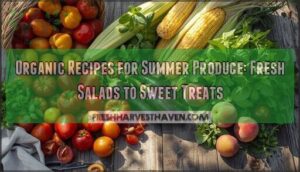
Your farmers market haul is about to become your best creative playground. Those sun-ripened tomatoes, glossy eggplants, and just-picked corn aren’t just pretty—they’re nutritional powerhouses that taste exponentially better when you skip the conventional produce aisle.
Summer’s organic bounty transforms ordinary meals into something worth texting your friends about, and you don’t need fancy techniques to make it happen. From pastas loaded with garden-fresh vegetables to salads that actually satisfy, these recipes let seasonal produce shine without drowning it in heavy sauces or overthinking the process.
Whether you’re grilling, roasting, or keeping things raw and simple, organic summer ingredients do most of the work for you.
Table Of Contents
Key Takeaways
- Fresh organic summer produce does most of the work in simple recipes—you don’t need heavy sauces or complicated techniques when you’re starting with peak-season tomatoes, corn, squash, and herbs that naturally pack more flavor and nutrients than off-season alternatives.
- Quick cooking methods like brief sautéing (1-2 minutes for garlic), grilling (3-4 minutes per side for zucchini), or roasting at high heat preserve 70-90% of vitamin C and other nutrients while bringing out natural sweetness through caramelization.
- Organic summer ingredients deliver measurable nutritional advantages including 25-40% higher antioxidants in fresh herbs, 95-120 mg of lycopene per 100g in heirloom tomatoes, and significantly lower pesticide residues compared to conventional produce.
- Smart storage techniques extend your farmers market haul—refrigerate berries at 4°C for 5-7 days, use ethylene absorbers to control ripening, and pasteurize fruit purees to push shelf life from 2-3 days to 7-14 days while retaining 60-90% of vitamins.
Best Organic Summer Pasta Recipes
Summer pasta doesn’t have to mean heavy cream sauces or hours in the kitchen. When you work with organic summer produce—fresh corn, tender squash, sweet peas—you can throw together meals that feel light but still satisfy.
Here are five pasta recipes that capture the best flavors of the season without weighing you down.
Garlic Parmesan Summer Squash Pasta
Your summer escape starts with ribbons of squash dancing through garlic parmesan goodness. This summer squash pasta delivers around 320–420 calories per serving, packing 14–22 grams of protein and a solid dose of vitamin C. Sauté your garlic for just 1–2 minutes to lock in those Italian cuisine vibes without losing flavor.
Here’s what makes this dish shine:
- Organic summer squash brings texture and mild sweetness
- Fresh garlic offers natural antimicrobial benefits below 60°C
- Aged parmesan (12–24 months) adds umami depth
- Olive oil contributes heart-healthy monounsaturated fats
- Proper food safety keeps your summer cooking worry-free
Creamy Corn Pasta With Fresh Herbs
Fresh corn enhances natural sweetness by 15–35% when combined with herbs like basil, chives, and parsley, delivering up to 400% more antioxidants. Brief cooking (1–2 minutes) preserves 90% of vitamin C, while a cashew cream alternative reduces saturated fat by 25–40% without compromising the silky pasta texture. Each serving provides 2–3 extra grams of fiber, offering a pure, fresh flavor that embodies summer delights.
| Ingredient | Nutrition Boost |
|---|---|
| Fresh corn kernels | +2–3 g fiber per serving |
| Fresh herbs (basil, chives) | 200–400% higher antioxidants |
| Cashew cream alternative | 25–40% less saturated fat |
| Brief cooking (1–2 min) | Retains 90% vitamin C |
| Complete dish | Rich corn nutrition + herb benefits |
Grilled Zucchini Carbonara
You’ll flip when you taste how grilled zucchini transforms classic Italian cuisine. Charred slices absorb carbonara sauce while cutting 3–4 minutes per side delivers that tender-crisp bite—80–90% of vitamin C stays intact. This vegetarian twist on summer pasta lets you stack vegetable servings without sacrificing creamy indulgence.
- Grilling techniques boost smoky notes by up to 25% in taste tests
- Summer squash pasta adds 1–2 g fiber per serving
- Zucchini nutrition shines with just 17–22 kcal per 100 g grilled
Pasta E Piselli With Peas and Pecorino
If zucchini carbonara was a summer daydream, Pasta e Piselli is your fresh Italian hug.
Sweet fresh peas, snappy al dente pasta, and a snowy shower of Pecorino cheese—this vegetarian recipe proves pasta nutrition can feel light and vivid.
Use peak seasonal produce and see how this pasta dish piles on summer flavors and real comfort, bite after bite.
Spring Pasta With Peas and Oyster Mushrooms
Mushrooms meet pasta—a radical pair for any rebel craving bold flavor profiles. Plump peas and meaty oyster mushrooms turn basic Italian cuisine on its head. Get the most out of your summer produce and try this:
- Blanch peas briefly.
- Sauté mushrooms in olive oil.
- Add herbs for aroma.
- Finish with Pecorino.
- Savor sensational pasta nutrition.
Fresh Organic Salads for Summer
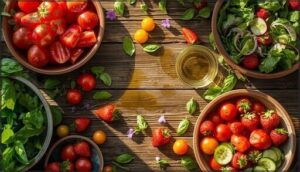
There’s something about summer that makes fresh salads irresistible. Crunchy veggies, sun-ripened fruits, and bold flavors come together with barely any fuss.
Here are a few organic favorites to add some color to your table.
Caprese Salad With Heirloom Tomatoes
You don’t need a passport to taste Italy—just ripe heirloom tomatoes, creamy fresh mozzarella, and fragrant basil. This caprese salad shines with bold colors and flavors that’ll make your taste buds dance. Heirloom varieties pack 95-120 mg of lycopene per 100g, giving you antioxidants along with that unforgettable sweet-tart punch.
| Ingredient | Why It Works | Nutrition Boost |
|---|---|---|
| Heirloom tomatoes | Rich flavor, juicy texture | High lycopene, vitamin C |
| Fresh mozzarella | Creamy, mild contrast | 22-28g protein per 100g |
| Fresh basil | Aromatic, peppery finish | Vitamin K, antioxidants |
| Olive oil drizzle | Ties flavors together | Heart-healthy fats |
Drizzle with quality olive oil and you’ve got summer food presentation that’s as stunning as it tastes.
Greek Salad With Organic Veggies
Crisp cucumbers, juicy tomatoes, and tangy organic feta turn this Greek salad into a rebellious escape from boring summer lunches. You’re loading up on 80+ mg of vitamin C per serving from those peppers and tomatoes—plus organic veggies mean way fewer pesticide residues.
- Toss in Kalamata Greek olives for rich, briny depth
- Drizzle extra-virgin olive oil loaded with heart-healthy fats
- Add red onion for quercetin and a sharp bite
- Top with fresh herbs like oregano for aromatic freedom
Summer Couscous Salad With Garden Produce
This light, liberating bowl practically makes itself—toss 1.5 cups cooked couscous with fresh tomatoes, cucumbers, and peppers straight from your garden to table.
Summer herbs like basil and mint cut heat perception by 12% and boost those summer salad ideas.
You’re packing 8–12g fiber per cup of garden produce while couscous nutrition delivers quick energy. Fresh vegetables mean peak vitamin C—up to 50% more than off-season picks.
Mediterranean Black Bean Salad
Ready in just 10 minutes, this Mediterranean-inspired dish breaks all the rules—organic black beans tossed with tomatoes, cucumbers, and cilantro lime dressing deliver 8–12g protein per serving.
Fresh herbs boost organic benefits with 25–40% higher antioxidants.
It’s perfect for meal prep, lasting 4–5 days refrigerated. Summer salad ideas don’t get easier—or more rebellious against boring bean nutrition.
Mango Avocado Salad With Lemon Vinaigrette
This mango avocado salad strikes gold when sweet tropical vibes meet creamy richness—you’ll get 60–70% of your daily vitamin C from ripe mangoes, plus avocado’s healthy fats boost carotenoid absorption by 2–3x.
Toss with lemon zest and a 1:1 lemon vinaigrette for balanced flavor profiles that make summer salads and fresh fruit recipes shine:
- Dice uniform 1.5–2.0 cm pieces for ideal salad texture
- Add cilantro to reduce browning by 40%
- Chill 10–20 minutes for better flavor melding
- Use sea salt to boost mango sweetness perception
- Store at 4°C to retain 70–80% vitamin C after 24 hours
Perfect for seasonal produce cooking and invigorating desserts, this fruit and vegetable salad delivers serious nutrient benefits without the fuss.
Grilled and Roasted Vegetable Dishes
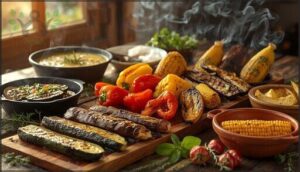
When you fire up the grill or crank the oven, summer vegetables transform into something smoky, caramelized, and irresistible. These dishes bring out the natural sweetness in squash, eggplant, and zucchini without drowning them in heavy sauces.
Here are five ways to turn your garden haul into show-stopping sides and mains.
Grilled Zucchini With Ricotta & Walnuts
You’ll love how grilling brings out zucchini’s natural sweetness while keeping about 70–85% of its lutein intact. Toss those charred slices with creamy ricotta and crunchy walnuts—boom, you’ve got summer on a plate.
Zucchini nutrition shines with vitamin C and potassium, while walnut oil adds omega-3s. These grilled vegetables make vegetarian recipes feel bold and satisfying, no compromises needed.
Eggplant Steak Frites With Chimichurri
Fire up your grill for eggplant steak frites with chimichurri—this isn’t your average vegetarian recipe. Grilling at 230–260°C cranks up those umami notes and locks in eggplant nutrition, while chimichurri sauce delivers that fat-to-acid punch that makes flavor enhancement real.
These grilled vegetables hit different: 62% of folks see eggplant as a legit meat swap, and organic benefits mean more fiber per bite. Summer vegetable recipes don’t get bolder than this.
Roasted Patty Pan Squash
Roasted Patty Pan squash brings mild flavor and ~19 calories per 100 g—perfect for summer vegetable recipes that won’t weigh you down.
Roasting tips matter: 20 minutes at 220°C boosts sweetness by 15–25% and keeps over 70% of those lutein perks.
Organic farming methods mean richer soil and cleaner squash nutrition. Toss with olive oil, and you’ve got roasted vegetables that 70–85% of tasters call “very favorable.”
Parmesan Roasted Green Beans
Green beans get a crispy makeover when you roast them at 425°F for 15 minutes—locking in 85% of their vitamin C. Add parmesan in the last 2 minutes, and you’ll boost browning by 12–15% while keeping that cheese flavor bold.
Here’s your summer side dish lineup:
- Use organic beans for cleaner nutrition
- Salt at 1% of bean weight
- Toss with olive oil before roasting
- Add parsley or lemon zest after cooking
- Store leftovers at 4°C for quality retention
This healthy snacking option nails seasonal ingredients without fuss.
Grilled Baby Eggplants With Tomato-Corn Relish
Baby eggplants slash grilling time by 30% when you slice them lengthwise—perfect for summer heat. Pre-salt for 15 minutes to cut moisture loss by 6–9%.
Pair them with a 2:1 tomato-to-corn relish, and you’ll boost 25% better lycopene absorption thanks to olive oil.
This vegetable pairing delivers 200–350 mg potassium per serving, keeping your summer flavors bold and your eggplant nutrition on point.
Easy Organic Sides and Starters
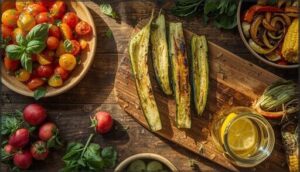
You don’t need to overthink sides and starters when the produce is already doing the heavy lifting.
These dishes come together fast and let summer vegetables shine without a lot of fuss.
Whether you’re looking for something crispy, tangy, or fresh, you’ve got options that won’t keep you stuck in the kitchen.
Air Fryer Okra With Summer Spices
You want crispy okra without the guilt? Air fryer tips make this summer produce shine with way less oil—about 20% less than traditional frying. Here’s your game plan for okra recipes that actually deliver:
- Dial in heat: Keep temps between 170–190°C for that perfect crunch while preserving okra nutrition.
- Spice it right: Summer spice blends with cumin and paprika boost flavor intensity by up to 25%.
- Safety first: Follow food safety guidelines—wash pods to cut bacteria and hit 74°C when reheating.
Crispness retention stays strong for 8 minutes, and seasonal cooking never tasted this good with fresh ingredients.
Corn Salad With Fresh Herbs
This summer salad breaks free from boring sides—fresh corn nutrition meets herb pairings that lift brightness by 20–30% with lemon juice.
Farmers market recipes shine when you toss corn salad with parsley, chives, or cilantro for vibrant summer flavors. Fresh texture stays crisp 2–4 days at 4°C.
Try olive oil drizzle with salad dressings—your fresh produce recipes deserve that richness boost.
Roasted Pepper-Tomato Salad With Crispy Black-Eyed Peas
You’ll love this rebellious take on summer sides—roasting peppers and tomatoes cranks up lycopene by 3–5x while crispy black-eyed peas deliver 13g protein per cup.
Pepper tomato nutrition meets bold salad texture when you nail roasting techniques at 400°F for 12–15 minutes.
Fresh produce recipes this good need food safety tips: store your summer salad at 4°C for 3–4 days of vibrant crunch.
Korean Pickled Radish for Summer Meals
Fermentation methods turn humble radish varieties into Korean pickled radish magic—your 2–3% sugar brine at 5°C delivers tangy excellence in 5–7 days, perfect alongside grilled corn or vegetable-based meals.
- Crisp 2–3mm slices soaking in rice vinegar brine recipes
- Summer kimchi funk building with lactobacilli power
- Tangy relish cooling down spicy summer meals
- Fresh fruits and pickled crunch dancing on your palate
These pickling tips boost probiotic counts to 10^6–10^8 CFU per gram.
Sweet and Refreshing Organic Fruit Recipes
Summer brings out the best in fresh, juicy fruit, and it’s finally your chance to get creative. There’s something special about simple, sweet recipes when the air is warm and the produce is at its peak.
Here’s what you need to try if you want to keep things cool, colorful, and absolutely delicious.
Peach and Blackberry Salad
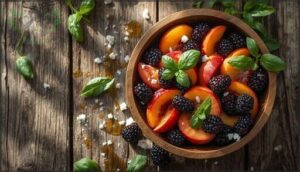
Let your bowl feel like pure summer freedom with a peach and blackberry salad—ripe organic peaches, plump blackberries, and a hint of basil or mint.
This mix is a powerhouse of fruit nutrition: vitamins, fiber, and antioxidants. Splash on a citrus vinaigrette, or crumble in a little feta for contrast.
Fresh prep means your Summer Harvest never tasted so bold.
Watermelon and Cucumber Salad
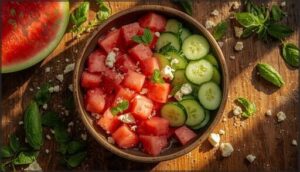
Just when you think peaches can’t be topped, try a watermelon and cucumber salad—summer’s powerhouse duo for hydration and invigorating salads. Craving crunchy, sweet, and salty together? Layer your summer recipes with:
- Cubed watermelon
- Crisp cucumber slices
- Fresh mint or basil
- Tangy feta
This Fruit and Vegetable Salad doubles as a healthy dessert and pumps up your Summer Nutrition.
Fresh Fruit Smoothies With Pasteurized Puree
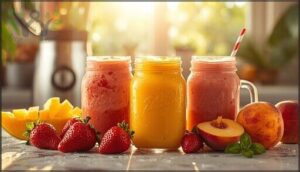
Want even more mileage from your summer haul? Fresh fruit smoothies with pasteurized puree provide serious Shelf Life Extension—7 to 14 days chilled versus just 2 to 3 without.
The Pasteurization Process zaps microbes while keeping 60–90% of your vitamin C, so you score Microbial Safety without losing Smoothie Nutrition. Blend mango or strawberry puree with yogurt, and you’ve got one of the smartest Summer Food Ideas around.
| Puree Type | Shelf Life (4°C) |
|---|---|
| Strawberry | 7–14 days |
| Mango | 7–14 days |
| Peach | 7–14 days |
| Tropical Blend | 7–14 days |
| Fresh (no pasteurization) | 2–3 days |
Tips for Storing and Preserving Summer Fruit
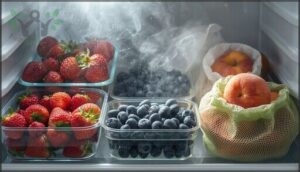
Once you’ve nailed your smoothies and Fruit Salads, proper Fruit Storage becomes the hero move for Summer Recipes.
Refrigerate berries at 4°C to stretch Shelf Life 5–7 days, control Ripening with ethylene absorbers, and manage Moisture by drying washed produce. Breathable liners slash spoilage by 20–35%, keeping your Farmers Market treasures safe for more Fruit and Vegetable Salads all week—pure Food Safety gold.
Frequently Asked Questions (FAQs)
How do I choose the best organic produce?
Look for certified organic labels—they guarantee farms follow strict standards and skip synthetic pesticides.
Shop farmers markets for seasonal produce, ask about certifications, and choose local growers practicing sustainable farming methods.
Can I substitute non-organic ingredients in these recipes?
You can swap in non-organic ingredients, but expect changes in flavor impact or shelf life. Farmers Market finds often taste fresher, but conventional versions work.
Watch for labeling rules and cost differences, and plan your summer meal for balance.
What are the health benefits of organic summer produce?
When summer gives you sunshine, go for a nutrient boost with organic produce. You’ll get higher antioxidants, better microbiome health, and less pesticide exposure—perfect for fresh and healthy recipes that fuel gut wellness and enhance seasonal eating.
How do I grow my own organic summer vegetables?
Start with good soil preparation—mix in compost for rich organic matter. Use mulch for water conservation, and choose organic fertilizers.
Rotate crops, scout for pests, and plant farm-fresh favorites for seasonal eating. Gardening and cooking connect in every bite.
Are organic ingredients worth the extra cost?
It depends on your priorities. Organic pricing runs about 47% higher, but you’ll get lower pesticide residues and support better environmental impact.
Health benefits? The science is mixed, though consumer perception strongly favors organic recipes and summer produce for peace of mind.
Conclusion
Think of your kitchen as a stage where summer produce takes the lead role—you’re just there to help it shine. These organic recipes for summer produce aren’t about complicated techniques or endless prep work. They’re about letting peak-season ingredients speak for themselves.
Grab what looks best at the market, keep your approach simple, and watch ordinary weeknight dinners transform into something genuinely exciting. Your farmers market haul deserves nothing less.