This site is supported by our readers. We may earn a commission, at no cost to you, if you purchase through links.
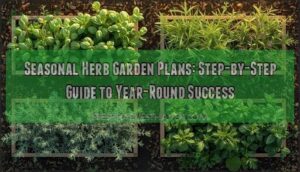
Most gardeners treat herb growing like a one-season gamble—plant in spring, harvest in summer, watch everything die by October. But wind protection alone can boost your first-year leaf growth by 11–14%, and positioning beds within 15 meters of your house transforms winter microclimates entirely.
The difference between a garden that limps through three months and one that delivers fresh harvests year-round isn’t luck or green-thumb magic. It’s strategic planning that accounts for drainage patterns, sunlight shifts, and the specific needs of herbs in each season.
You don’t need perfect conditions—you need a system that works with what you’ve got, rotating plantings and adjusting care as temperatures change. That’s where seasonal herb garden plans become your blueprint for breaking free from the spring-only mentality.
Table Of Contents
Key Takeaways
- Strategic site selection within 15 meters of your house, combined with wind protection and drainage systems, can boost first-year herb leaf growth by 11–14% and transform winter microclimates for year-round harvests.
- Soil preparation with 3–4 inches of compost mixed 8–12 inches deep slashes fertilizer needs by 20–40% while supercharging microbial activity, creating the foundation for explosive herb growth across all seasons.
- Smart pruning techniques like weekly tip pinching during peak growth can increase basil yields by 40–60%, while rotating herb families every 12–18 months cuts disease incidence by 33% and nematode populations by 30–50%.
- Themed herb garden clusters that group species with matching water and sunlight needs—like pairing oregano, rosemary, and thyme—increase yields by 30% through improved microclimate effects and soil health.
Planning Your Seasonal Herb Garden
Planning a seasonal herb garden isn’t about following someone else’s blueprint—it’s about making smart choices that work with your space and your rhythm. The three decisions you make upfront will determine whether you’re constantly fighting your garden or watching it thrive on its own terms.
Three upfront decisions determine whether your herb garden thrives on its own terms or keeps you constantly fighting it
Let’s break down where to place your garden, how to read your yard’s hidden patterns, and which growing setup gives you the control you actually need.
Site Selection for Year-Round Success
Before you break ground, think about where your outdoor herb garden will thrive year-round. Site selection separates weekend gardeners from herb revolutionaries.
- Choose spots within 15 meters of your house for easy access and passive solar warmth
- Ensure wind protection to boost leaf growth by 11–14% in first-year beds
- Prioritize drainage systems and soil testing to prevent root rot and fine-tune pH levels
Smart placement now means abundant harvests later. Understanding the text analysis process is vital for effective garden planning.
Microclimate Analysis and Sunlight Needs
Your outdoor herb garden lives or dies by the microclimate you create. Map sunlight patterns across your beds—Mediterranean herbs demand 6–8 hours of direct sun, while parsley tolerates 3–6. Temperature control matters: basil thrives at 20–25°C but sulks below 10°C. Track soil moisture, wind protection, and shade management through seasonal shifts. Small elevation changes create frost pockets that kill tender herbs overnight. Understanding key terms in AP study guides can help you better manage your herb garden’s microclimate.
| Microclimate Factor | Ideal Range | Impact on Herb Growth |
|---|---|---|
| Direct sunlight | 6–8 hours/day | Boosts essential oil concentration in basil, rosemary, thyme |
| Temperature | 20–25°C | Peak leaf quality; below 10°C reduces flavor compounds |
| Relative humidity | 40–60% | Higher levels increase foliar disease risk |
| Wind exposure | Protected zones | Reduces transpiration stress, prevents physical damage |
| Photoperiod | Seasonal variance | Longer spring/summer days accelerate growth rates |
Microclimate gardening transforms seasonal herbs from surviving to thriving. Monitor these variables weekly during herb garden maintenance—your harvest density could jump 15–25% with strategic adjustments.
Designing Garden Beds, Raised Beds, and Containers
Once you’ve mapped your microclimate, choose your growing structure. Raised bed construction with 10–12 inches of soil elevation can boost yields 20–60% over ground beds—soil stays loose, drainage improves, and container gardening offers total control in tight spaces.
Modular planters let you chase sunlight or dodge frost overnight. Your garden layout ideas should match your space, not fight it.
Preparing Soil for Healthy Herbs
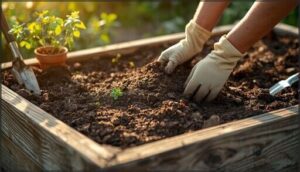
Your herbs won’t thrive without the right foundation beneath them. The soil you build today determines whether your plants produce explosive growth or limp along struggling to survive.
Let’s break down two essential soil preparation strategies that’ll set you up for success all season long.
Composting and Organic Amendments
Think of compost as your secret weapon for sustainable gardening—it slashes fertilizer needs by 20-40% while supercharging soil microbes. Layer 3-4 inches of finished compost into your beds, mixing it down 8-12 inches for ideal soil preparation.
Green manures and compost tea deliver nitrogen boosts within weeks, while biochar benefits include 5-15% better water retention. Organic fertilizers work slower but feed your herbs steadily all season.
Drainage Solutions for All Seasons
With every shift in season, your herb garden’s drainage systems become the unsung hero. Good soil permeability keeps the water table in check, while raised beds and container setups boost root oxygenation and soil aeration.
Mulch and gravel work wonders for soil preparation, and annual amendments mean your outdoor herb garden stays primed for healthy, thriving seasonal herbs and easy herb gardening.
Choosing Herbs for Each Season
Picking the right herbs for each season takes a bit of planning, but it’s where your garden’s real personality starts to show. Every time of year brings its own possibilities, whether you’re after flavor, healing, or both.
Here’s how to match your choices to the rhythm of the seasons.
Best Herbs for Spring, Summer, and Fall
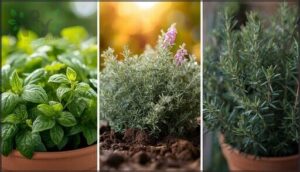
Ready to defy the ordinary? Spring Blooms like basil and parsley demand warmth and bold sunlight, while chives and cilantro thrive in cooler bursts.
Summer’s heat favors mint, oregano, and thyme—herb pairings that laugh in the face of drought.
Come Fall Harvest, rosemary and thyme rebound, inviting you to master seasonal pruning and climate resilience for unstoppable herb gardening.
Selecting Culinary Vs. Medicinal Varieties
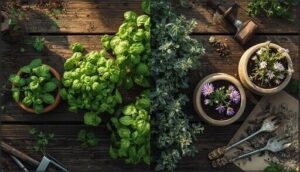
Herb Classification isn’t just a label—it’s your secret weapon for bold herb garden planning. Culinary herbs like basil and parsley deliver punchy Flavor Profiles and thrive with quick Harvest Methods, while medicinal herbs—think thyme and echinacea—offer unique Medicinal Uses and slower Growth Habits.
Weave both types into your seasonal herbs strategy for maximum freedom and year-round adventure in herb gardening.
Growing Zone Considerations
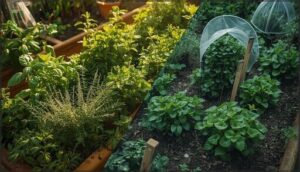
Want a longer harvest window and fewer casualties in your outdoor herb garden? Zone Mapping is your compass. Regional Planting lets you match herbs to local Hardiness Levels, while Microclimate Analysis helps you cheat the climate shift—think containers or raised beds to nudge zones. Seasonal herbs thrive with these tricks, making herb gardening and maintenance much more rewarding.
- Use raised beds for microclimate shifts
- Choose zone-appropriate herbs for strong establishment
- Adjust planting times by local temperature swings
- Propagate in containers for flexible hardiness
Planting and Propagating Seasonal Herbs
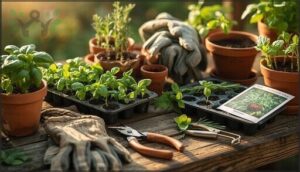
Growing herbs through the seasons means choosing the right planting and propagation methods for your space and goals. Whether you’re starting from seed, working with cuttings, or planning companion clusters, each approach has its strengths.
Let’s look at the options that fit your garden best.
Starting Herbs From Seed Vs. Cuttings
You’ve got two proven propagation methods at your disposal: seeds and cuttings. Seed germination rates for basil and cilantro hit 60–90% with proper warmth and moisture, though you’ll wait 5–14 days for sprouts.
Cutting techniques deliver faster results—mint and oregano cuttings root in 2–6 weeks with 70–85% success. Root development accelerates when you use hormone compounds, boosting success by 20–30%.
Choose based on your timeline and desired herb variety.
Companion Planting Strategies
Strategic companion planting transforms your garden into a self-sustaining ecosystem. Pairing basil near tomatoes boosts yields 5–10%, while marjoram beside peppers cuts pest pressure by 20%. Chives adjacent to carrots improve harvests 7% through natural repellent effects.
These herb pairings create soil harmony and growth synergy—oregano and dill amplify microclimate effects, while sage reduces mildew by 12% near cucumbers.
Themed Herb Garden Clusters
Beyond smart pairings, themed herb garden clusters increase yields by 30% when you group species with matching water and sunlight needs.
Design your cluster by pairing oregano, rosemary, and thyme for drought resilience and heat tolerance—they’ll buffer temperatures by 2°C while boosting soil microbes 15–25%.
This garden design principle delivers climate resilience and garden aesthetics in one strategic move.
Seasonal Maintenance and Harvesting Tips
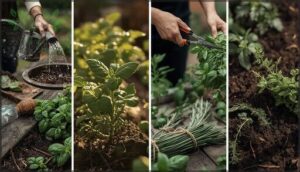
Your herbs are in the ground and growing—now the real work begins. Keeping them healthy through every season means staying on top of watering, pruning, and knowing when to swap out tired plants for fresh ones.
Let’s break down the maintenance moves that’ll keep your garden producing all year long.
Watering and Fertilizing Schedules
Mastering watering and fertilizing schedules unlocks your herbs’ full flavor potential season after season. Start by monitoring soil moisture—established beds need 1.0–1.5 inches weekly, jumping to 2.0 inches during summer heat.
Here’s your seasonal herb care roadmap:
- Install drip irrigation systems with 2–3 cm mulch to cut evaporation by 40%
- Apply balanced starter fertilizer (10-10-10) at 2–3 g per plant each spring
- Water early morning (5–9 a.m.) to slash foliar disease by 30%
- Target 40–60% soil moisture for maximum essential oil concentration in aromatic varieties
Pruning and Pinching for Maximum Yield
Once your watering rhythm is dialed in, smart pruning techniques transform bushy plants into powerhouses. Use clean, sharp shears in the cool morning hours—this simple move slashes tissue damage and speeds recovery by up to two days.
Weekly tip pinching during peak growth can boost basil’s leaf yield by 40–60%, while early-season cuts on oregano release 15–25% more harvest. Time your cuts before flowers form to extend harvesting windows by 2–3 weeks, and you’ll keep fresh flavor rolling all season.
| Herb | Pinching Method | Yield Gain |
|---|---|---|
| Basil | Weekly tip pruning | 40–60% increase |
| Mint | Regular shoot pinching | 25–50% more shoots |
| Oregano | Post-flowering trim | 15–25% annual boost |
| Cilantro | Early leaf-stage pinch | 20–30% yield jump |
Rotating and Replanting for Continuous Growth
Once you’ve mastered pruning, crop rotation becomes your secret weapon for long-term garden rejuvenation. Shifting herb families every 12–18 months can cut nematode populations by 30–50% and drop disease incidence by 33%. Soil renewal through composted residues boosts microbial life by 28% in just six weeks, while herb succession planning lifts seasonal yields by 8–12%.
Your seasonal planning checklist for continuous herb garden maintenance:
- Rotate herb families every 12–18 months to disrupt pest cycles and cut disease by up to 40%.
- Layer 3–4 inches of compost between plantings to spike microbial activity and lock in nitrogen.
- Time spring plantings 2–4 weeks earlier to grab a 10–18% yield jump on first harvests.
- Pair herbs with green manures to raise organic matter by 1.5–2.5% and stabilize soil structure.
- Track companion planting schedules to increase harvest density by 15–25% across the growing season.
Frequently Asked Questions (FAQs)
How do I protect herbs from frost damage?
Freezing frosts threaten tender herbs. Row covers, cold frames, and winter mulching with 2-4 inches of organic material protect roots.
Monitor soil temperatures and deploy freeze prevention measures early for successful herb garden maintenance.
Can herbs survive indoors during winter months?
Yes, herbs thrive indoors during winter with proper indoor lighting, temperature control, and humidity management. Basil, parsley, and chives adapt well to indoor garden setups when you maintain consistent herb care routines.
What pests commonly attack seasonal herb gardens?
Your herb garden faces an army of tiny invaders: aphids cluster on tender shoots, whiteflies hover beneath leaves, slugs devour low-growing varieties, and spider mites thrive in heat—each demanding targeted pest management strategies.
How do I preserve harvested herbs long-term?
Your harvest deserves long-term protection. Freeze-drying locks in up to 95% of essential oils, while vacuum sealing preserves color and aroma for two years.
Dehydration methods and oil preservation extend your herb garden maintenance payoff exponentially.
Should I mulch herb gardens between seasons?
Think of mulch as a thermal blanket for your herb garden maintenance between seasons. A 5–7 cm layer delivers weed suppression, stabilizes soil temperature, boosts organic matter, and can increase crop yield by 5–15%.
Conclusion
Think of your garden as a revolving door rather than a locked gate—herbs flow in and out with the seasons, never leaving you empty-handed.
Your seasonal herb garden plans are the blueprint that keeps that door spinning, ensuring fresh basil gives way to hardy thyme without missing a beat.
Stop treating your garden like a temporary project. Build it like the year-round harvest machine it was always meant to be.