This site is supported by our readers. We may earn a commission, at no cost to you, if you purchase through links.
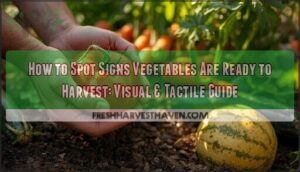
That perfect zucchini you’ve been watching all week can turn from tender to tough in a single afternoon, while the tomato that looked green yesterday might already be past its prime this morning. Knowing the signs vegetables are ready to harvest isn’t just about following a calendar—it’s about reading the plant itself.
A carrot’s shoulders pushing through the soil, the hollow thump of a ripe watermelon, or the way a pepper snaps cleanly from its stem all tell you more than any seed packet timeline ever could. Your garden speaks a visual and tactile language, and once you learn to interpret the color shifts, texture changes, and subtle growth signals, you’ll harvest at peak flavor and nutrition every time.
Table Of Contents
Key Takeaways
- Trust your senses over seed packet timelines—visual cues like deep color saturation, glossy firm skin, and how easily a vegetable releases from its stem tell you more about peak readiness than counting days ever will.
- Root vegetables reveal maturity through diameter standards (carrots at 0.75-1 inch, beets at golf-ball size) and natural leaf yellowing that signals it’s time to dig, not signs of stress or disease.
- Fruiting crops each have their own tactile language—beans should snap cleanly without strings, eggplants spring back from a fingerprint test, and melons produce a hollow thump when they’re truly ripe.
- Morning harvests capture vegetables at their peak moisture and sugar content while cooler temperatures protect quality, giving you crisper texture and longer shelf life than afternoon picking.
Key Visual Signs Your Veggies Are Ready
When your vegetables are nearing harvest, a few clear visual cues can help you spot the perfect moment. Knowing what to look for makes the process much easier and more rewarding.
Here’s what you’ll want to watch for as you check your garden.
Deep, Saturated Color Changes
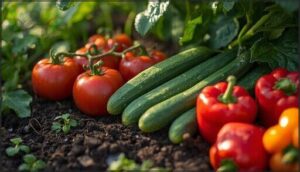
Color is your first reliable compass for veggie readiness. Watch for a deep, saturated hue—this visual cue signals Pigment Accumulation and marks critical Ripening Stages. Maturity Indicators like rich reds in tomatoes or uniform green in cucumbers tell you it’s harvest time.
The Color Shift Timing is fast, so don’t blink. These harvest signs make vegetable harvest straightforward. For peak flavor and nutrition, consider harvesting guidelines to guarantee you’re picking at the right time.
Glossy or Firm Skin Texture
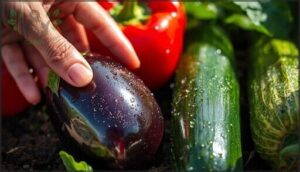
Once you spot that deep color, check for glossy skin and firm texture—two standout harvest signs. Glossy skin means high turgidity and healthy cuticle integrity, signaling peak veggie readiness. Firm texture tells you the surface smoothness is just right for harvesting vegetables. If skin turns dull or soft, you’re likely past prime harvest timing for your vegetable harvest.
Understanding the importance of food quality standards is essential for determining the best time to harvest.
Size and Shape Standards by Vegetable
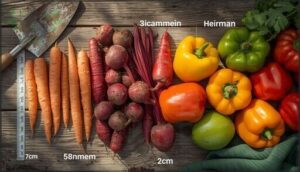
Once you’ve checked for firmness, turn your attention to size and shape—key signals for crop maturity and yield optimization.
Vegetable sizing matters: carrots hit their stride at about 2 centimeters thick, while beets shine around 4 centimeters. Peppers and tomatoes have their own benchmarks too. Matching fruit diameter and length to these standards helps you nail your harvest timing in vegetable gardening.
Ease of Harvest – Gentle Twist or Tug
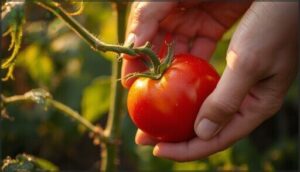
Matching size is just one step—how easily the fruit releases matters too. A gentle twist or tug tells you a lot about detachment force and stem strength. If the veggie snaps off with minimal resistance, you’re in the harvest sweet spot.
Here’s what to watch for:
- Fruit release with gentle twisting
- Clean break at the stem
- No tearing or bruising
Recognizing Readiness in Root Vegetables
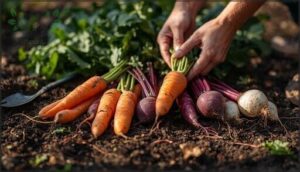
Root vegetables have their own set of clues regarding harvest time. It’s not always obvious just by looking at the tops.
Here’s what you should watch for as you check your carrots, beets, and turnips.
Root Diameter and Shape (Carrots, Beets, Turnips)
You’ll know root vegetables are at their peak when carrots reach about 0.75 to 1 inch in diameter at the shoulder, beets approach golf-ball size—roughly 1.5 to 2 inches—and turnips form smooth 2- to 3-inch globes.
Root growth patterns reveal harvest timing optimization: forked carrots or misshapen beets signal crowding or rocky soil, while uniform shapes confirm ideal veggie harvest conditions for tender, flavorful roots.
Leaf Yellowing and Drooping
When potato or sweet potato foliage yellows and topples over 90 to 120 days after planting, leaf senescence signals you’ve reached harvest maturity—your cue to dig within one to three weeks.
But yellow leaves from water deficit, poor drainage, or plant stress aren’t the same. Natural wilting paired with chronological maturity confirms readiness, while isolated drooping in immature plants points to correctable gardening techniques issues before harvesting.
Surface Firmness and Aroma
Firmness testing tells you more than appearance alone. Press your root vegetables gently—firm, crisp texture signals readiness, while soft or woody roots mean you’ve waited too long.
Aroma changes matter, too: mild, earthy scent marks peak harvest timing, but strong or pungent odor warns of overmaturity.
Sensory evaluation through touch and smell refines your harvest guide, ensuring you pick ripe veggies at their best.
Harvesting Clues for Fruiting Vegetables
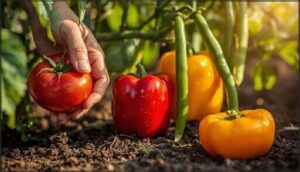
Fruiting vegetables—things like tomatoes, peppers, beans, and squash—give you a different set of clues than roots or greens. They’re all about surface texture, color shifts, and how they sound or feel when you give them a gentle test.
Here’s what to watch for when your fruiting crops are nearing harvest.
Snap Test for Beans and Peas
The snap test puts you in charge of bean maturity and pea harvesting with confidence. When your snap beans reach the mature green stage—usually 50 to 60 days after planting—bend a pod sharply. If it breaks cleanly without visible strings or seed bulging, you’ve nailed the timing.
This crisp fracture signals peak snap tenderness, low pod fiber development, and maximum flavor for your harvesting vegetables.
Gloss and Fingerprint Test for Eggplants
Think of Eggplant Maturity like judging a jewel—if the skin gleams with a glossy shine, it’s ready for harvesting. Use the Fingerprint Method: press gently, and if the fruit springs back, you’ve hit perfect Harvest Timing.
Dull skin or a lingering indent means declining Fruit Quality. Gloss Measurement and touch together make vegetable harvesting feel almost simple in your gardening routine.
Breaker Stage for Tomatoes
Ever wondered when Tomato Ripening truly begins? The breaker stage is your signal—when Fruit Coloration shifts from green to a blush of pink or red near the blossom end.
For precise Harvest Timing, look for:
- Less than 10% colored surface
- Firm texture
- Visible blush
- Ethylene Production starts
- Physiological Maturity achieved
Harvesting now ensures reliable fruit ripening.
Full Color and Firmness in Peppers
While tomatoes signal readiness with a subtle blush, peppers require more dramatic Color Development. You’re looking for at least 50% of the surface showing that final red, yellow, or orange hue—this Harvest Timing ensures sweetness peaks.
Firmness Tests matter too: a ripe pepper feels solid under gentle pressure, with smooth Skin Glossiness indicating proper hydration. Full color means fuller flavor, making your wait worthwhile.
Tapping and Sound Tests for Melons and Squash
Beyond peppers, melons and squash demand a different test: tapping. When you rap a ripe watermelon, listen for a low, hollow tone—not a sharp ring. That dull sound reflects Acoustic Maturity as Fruit Firmness shifts inside.
Winter squash should sound solid, not overly resonant. While Vibration Tests and Resonance Analysis guide commercial harvesting, your ear remains a surprisingly useful gardening tool for vegetables like these.
Environmental and Growth Factors to Watch
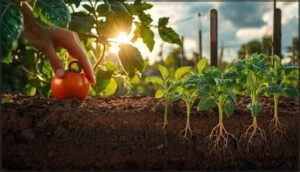
Your vegetables don’t ripen in a vacuum—they respond to everything happening around them. Sunlight, soil health, weather patterns, and even subtle shifts in plant behavior all play a role in determining when your harvest window opens.
Here’s what to watch for in your garden environment.
Impact of Sunlight and Temperature
Your vegetables’ readiness hinges on sunlight effects and temperature control—two forces that shape crop growth and harvest timing. Fruiting crops like tomatoes and peppers need 7–8 hours of direct sun daily, while leafy greens tolerate 3–4 hours.
High heat above ideal ranges reduces sugar and flavor, while frost-susceptible plants like beans and cucumbers demand immediate harvesting once temperatures dip near 28°F, ensuring climate influence doesn’t derail your gardening tips.
Role of Soil Quality and Drainage
While sunlight and temperature do their part, soil quality determines whether your vegetables actually reach their full potential. Healthy loams with 3–6% organic matter hold moisture without waterlogging, supporting strong root growth and consistent sizing at harvest.
- Improve drainage with raised beds or compost amendments for better aeration
- Rotate crops yearly to prevent nutrient depletion and soil erosion
- Add organic matter regularly—it boosts water retention by up to 32%
- Check root zones for compaction that limits nutrient uptake
- Monitor drainage patterns after rain to spot saturation issues early
Poor drainage drowns feeder roots, delaying maturity and reducing flavor—good soil preparation pays off in every harvest.
Effects of Weather on Ripening and Flavor
When temperatures climb above 95 °F, heat stress impact disrupts ripening processes and flavor profiles in your garden. Climate effects trigger blossom drop in tomatoes and peppers, while weather patterns above 90 °F reduce bee activity, limiting pollination success.
Harvesting fruits and vegetables becomes tricky as extreme heat causes sunscald and bitter taste. Smart harvest management means tracking these conditions—your vegetable gardening tips should include monitoring forecasts and adjusting your gardening and harvesting schedule accordingly.
Slowed Growth or Leaf Drooping Signals
Leaf senescence marks a turning point in your gardening and harvesting schedule—when leaves yellow and droop, it often signals physiological maturity rather than trouble. This growth slowdown tells you harvesting fruits and vegetables should begin soon, but not every drooping pattern means readiness.
- Natural maturity: Older leaves yellow gradually as roots or fruits finish developing
- Water stress: Persistent afternoon wilting before expected size reduces marketable yield by over 30%
- Nutrient issues: Premature leaf drop with undersized produce indicates deficiency, not harvest time
Smart crop management and care means distinguishing these cues for ideal plant growth and development.
Using Texture, Taste, and Timing
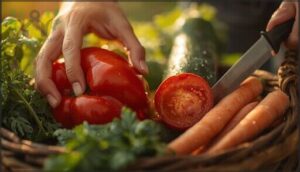
Beyond what you see on the surface, your senses of touch and taste offer some of the most reliable signals that a vegetable has reached its prime. Timing your harvest correctly—whether by the clock or by direct sampling—can mean the difference between bland and exceptional flavor.
Here’s how to use texture, taste, and smart timing strategies to know exactly when to pick.
Tenderness and Flavor Sampling
Your taste buds don’t lie—sampling small picks before committing to a full harvest reveals the truth about tenderness and flavor profiles. Snap a few beans by hand: if they break cleanly without strings, tenderness tests pass. Pull a single carrot or turnip, then taste it raw. Peas harvested at peak sweetness degrade within hours, so sensory evaluation guides precise harvest timing better than any calendar.
Your taste buds reveal peak harvest readiness better than any calendar—snap, taste, and trust what you sample
| Vegetable | Sample Test | Peak Indicator |
|---|---|---|
| Beans | Snap by hand | Clean break, no fiber |
| Peas | Shell and taste | Sweet, not mealy |
| Carrots | Pull one root | Tender, mild flavor |
| Peppers | Bite small piece | Sweet, no bitterness |
Soluble Solids and Dry Matter Content
Beyond what your eyes and hands reveal, measuring soluble solids with a refractometer gives you objective crop maturity data. Brix measurement tracks sugar content—tomatoes hitting 6° Brix are average, while 8° signals good quality and guides harvest timing.
Dry matter content rises as vegetables ripen, serving as a reliable harvest index for fruit and vegetable harvesting. These metrics sharpen your crop monitoring and management, helping you pick at peak readiness.
Morning Harvesting Benefits
Picking your produce when the dew is still fresh isn’t just garden folklore—it’s smart harvest timing. Vegetables regain overnight moisture, boosting morning moisture and crop quality while field temperatures stay low, protecting postharvest handling success.
- Temperature control advantage: Cool tissue slows respiration and extends shelf life after harvest.
- Higher turgor pressure: Crisp texture and reduced wilting give you better vegetable harvesting techniques results.
- Peak sweetness window: Overnight starch-to-sugar conversion improves flavor at harvest time.
Chronological Cues Vs. Visual Readiness
Calendar dates give you a starting point, but visual maturity indices trump fixed timing every season. Seed packets list 60 to 85 days for tomatoes, yet harvest timing shifts by up to two weeks depending on ripening rates and seasonal variations.
Check color, firmness, and growth stages instead of counting days—temperature swings alter vegetable gardening schedules, and visual readiness beats chronological guesswork for crop management success.
Frequently Asked Questions (FAQs)
How often should I check my garden for ripe vegetables?
You’ll want to check your garden at least weekly throughout the growing season, but daily inspection becomes essential during hot spells and peak harvest windows when vegetables can shift from perfect to overripe in just days.
Can I speed up ripening by adjusting watering schedules?
Irrigation timing shapes ripening, but adjusting watering schedules carries risks. Mild deficit irrigation near maturity can accelerate color change by two to four days, yet severe water stress triggers blossom-end rot and reduces your harvest markedly.
What happens if I harvest vegetables too early?
You’ll telegraph yourself into lower Reduced Yield and Inferior Quality every time. Immature vegetables lack full sweetness, nutrients dwindle by 20–30%, Shelf Life Issues multiply, and Economic Impact crushes your harvest gardening goals through poor crop management and plant care decisions.
Do all vegetable varieties ripen at the same rate?
No—ripening variability among cultivars is dramatic. Early tomatoes reach maturity in roughly 50 days, while beefsteak types need
Winter squash shows similar genetic factors, with some ready in 80 days, others requiring
Should I remove nearby weeds before harvesting my crops?
Yes, you should clear weeds before harvest. Dense weed growth reduces harvest efficiency, slows crop care tasks, and can introduce contaminants that lower product quality. Good weed control methods also protect future crop yields.
Conclusion
There’s a persistent belief that harvest timing is all about counting days, but the truth is your vegetables broadcast their readiness through color, texture, and feel long before any calendar tells you.
Learning to recognize these signs vegetables are ready to harvest transforms you from a passive gardener into an active observer. Trust what you see and touch—your senses will never mislead you the way a generic timeline might.
Your best harvests begin with practiced observation.
- https://www.farmstandapp.com/103293/7-crop-maturity-indicators-for-timing-harvest/
- https://bookstore.ksre.ksu.edu/download/harvest-maturity-indicators-for-fruits-and-vegetables_MF1175
- https://agriculture.institute/post-harvest-mgt-principles/determining-maturity-of-fruits-vegetables/
- https://www.fao.org/4/y4358e/y4358e05.htm
- https://www.pefferlaw.com/from-garden-to-table-a-guide-to-knowing-when-your-vegetables-are-ready-to-harvest/