This site is supported by our readers. We may earn a commission, at no cost to you, if you purchase through links.
Your tomatoes are wilting despite daily watering. Your zucchini plants sprawl across the garden path, crowding out everything in sight. And those prize roses you planted in May? They’re dropping leaves faster than they grew them.
These aren’t random acts of gardening misfortune—they’re predictable outcomes of summer gardening mistakes that derail even experienced growers. The difference between a thriving August harvest and a garden that limps through the season often comes down to a handful of critical missteps, most of which happen in the first few weeks of summer.
Understanding these patterns gives you the upper hand against heat stress, pest pressure, and resource waste.
Table Of Contents
Key Takeaways
- Water your garden early in the morning with drip irrigation to reduce evaporation by 30% and prevent fungal diseases that spread through wet foliage during midday heat.
- Test your soil before planting and add 2-4 inches of organic compost to improve water retention by up to 50% while cutting synthetic fertilizer needs by 40%.
- Space plants properly according to their mature size to prevent competition for nutrients, reduce disease risk from poor air circulation, and boost photosynthesis efficiency by 30%.
- Inspect your garden weekly for early signs of pests and disease, then act immediately—delayed response allows infestations to explode exponentially within two to four weeks.
Overwatering and Poor Watering Habits
Water is your garden’s lifeline, but too much or too little can spell disaster. Many gardeners make the same watering mistakes that stress plants and waste resources.
Here are four common watering habits you’ll want to fix right away.
Watering During Midday Heat
Watering plants during midday heat is one of the most common summer gardening mistakes you can make. When you water at the wrong time, rapid evaporation reduces root-zone moisture by up to 30%.
Instead, use drip irrigation systems in early morning for effective soil moisture management. This heat stress prevention strategy improves water conservation and minimizes overwatering while reducing water waste through evaporation reduction techniques.
Inconsistent Watering Schedules
Your plants crave consistency, yet many summer gardening enthusiasts fall into the trap of watering at the wrong time with irregular schedules. This approach damages root growth and foliar health by creating cycles of drought stress and overwatering.
Establish a routine using drip irrigation to maintain steady soil moisture. You’ll boost water efficiency by 30-50% while supporting water conservation and healthier watering plants throughout the season.
Watering Leaves Instead of Soil
Many gardeners aim for plant leaves when they water, but this common Summer Gardening mistake creates serious problems. Wet foliage invites Foliar Disease like powdery mildew and bacterial infections by extending Leaf Wetness duration. Direct water to the Soil Moisture zone instead:
- Water at plant bases early morning to support Root Health
- Use drip systems to improve Water Efficiency by 30-50%
- Avoid overhead sprinklers that promote Overwatering and disease spread
This simple shift prevents Watering at the Wrong Time disasters while advancing Water Conservation.
Skipping Mulch for Moisture Retention
You’ll lose 25-70% of your soil moisture to evaporation without Mulch Benefits during summer heat. A 2-3 inch layer of Organic Mulch stabilizes Soil Temperature by 5-10°C and cuts watering needs by 20-40%.
This Mulching strategy improves Moisture Retention while blocking 60% of weeds—one of the most efficient Summer Gardening Tips for Water Conservation and Management. It prevents common Gardening Mistakes affecting Soil Quality.
Ignoring Soil Quality and Preparation
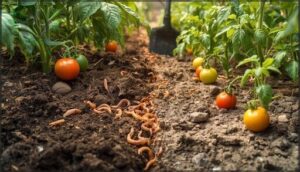
Healthy soil is the foundation of a thriving summer garden. Skip this step, and you’re setting your plants up to struggle no matter how much you water or fertilize.
Here are four critical soil mistakes that can undermine your entire growing season.
Failing to Test Soil Before Planting
Skipping a soil test is like driving blindfolded—you won’t know what you’re working with. Before planting, a basic kit costs just $10 to $50 and reveals soil pH levels, nutrient deficiencies, and micronutrient balance.
Testing soil composition guides your amendment strategies and prevents costly mistakes. You’ll know exactly what your soil needs for strong, healthy growth. State extension services make soil testing simple and accurate.
Neglecting Soil Amendments and Organic Matter
Even tested soil won’t thrive without regular additions of organic matter. Compost improves water retention by 20–50% and feeds beneficial microbes within weeks. Incorporate 2–4 inches into your top 6–8 inches of soil for best results.
Quality compost reduces your need for synthetic fertilizer by up to 40%, while mulch delivers slow-release nutrients as it breaks down naturally.
Planting Without Proper Drainage
Without good drainage, you’re setting up your plants for root rot and oxygen starvation. Waterlogged roots can’t breathe, and soil porosity drops fast in compacted beds. Test your drainage by filling a hole with water—if it sits for hours, you’ve got trouble.
- Install raised beds or perforated pipes in problem zones
- Mix coarse organic matter into heavy clay to boost soil aeration
- Map your garden by drainage quality before planting
Poor drainage cuts nutrient uptake and invites soil-borne diseases like Pythium.
Leaving Soil Bare and Unprotected
Bare soil acts like an open wound in your garden—erosion strips nutrients, evaporation surges, and soil temperature swings stress young roots. You’re inviting weeds and losing water-holding capacity fast.
Mulch benefits go beyond moisture retention; a 2–3 inch layer stabilizes soil health, feeds beneficial organisms, and cuts irrigation needs.
Organic groundcover transforms soil quality while protecting what you’ve worked to build. Don’t leave your soil exposed.
Planting and Spacing Mistakes
Getting plants in the ground is only half the battle—where and when you plant matters just as much. Many gardeners unknowingly sabotage their summer gardens by making simple placement and timing errors.
Let’s walk through the most common planting and spacing mistakes that can hold your garden back.
Overcrowding Plants
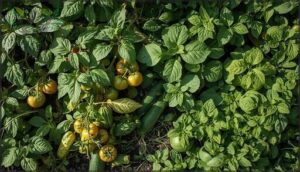
Cramming too many plants into your summer garden creates a cascade of problems you can’t afford. Dense spacing cuts photosynthesis by up to 30%, while poor air circulation invites powdery mildew and root rot.
Your plants compete for water and nutrients, leading to stunted growth and yellowing leaves. Proper plant spacing isn’t optional—it’s essential for healthy yields and effective crowd control.
Planting at The Wrong Time
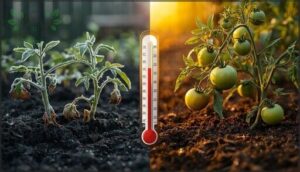
Planting outside proper windows drops establishment success by 40% in warm-season crops. You need to match your summer garden timing with phenology alignment and frost dates.
Check soil temperature against species thresholds before transplanting—cool-season crops thrive in early spring, while heat lovers wait for warmer ground.
Use local planting calendars to guide seasonal timing and avoid common gardening mistakes. Proper planting time transforms summer gardening success.
Choosing Unsuitable Plant Varieties
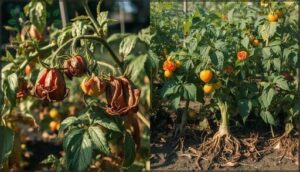
Timing matters, but cultivar selection determines whether your plants thrive or struggle. Choosing varieties mismatched to your summer climate drops survival rates dramatically—heat-tolerant cultivars vastly outperform standard types in hot conditions.
Check regional adaptation before buying seedlings. Match plant variety choices to your soil compatibility and local pest pressures.
Climate matching transforms summer gardening from frustrating to sustainable, preventing common gardening mistakes beginners make with plant care.
Ignoring Sunlight and Shade Requirements
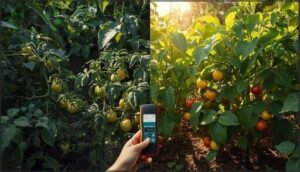
Beyond variety selection, you must match plants to available light. Misjudging sun exposure causes weak growth and poor yields—most vegetables need 6+ hours of direct sunlight daily.
Conduct a two-week sun survey documenting your site’s light patterns. Place full-sun crops where they’ll receive adequate exposure. Choose shade-tolerant varieties like leafy greens for spots with only 3–4 hours of direct sun, adjusting placements seasonally as sun angles shift.
Neglecting Pest and Disease Management
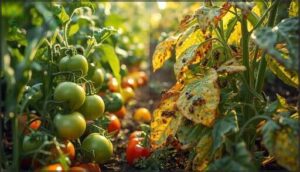
Pests and diseases can destroy a summer garden faster than you’d expect. Many gardeners don’t check their plants often enough or act quickly when problems appear.
Here are the most common pest and disease management mistakes you need to avoid.
Skipping Regular Inspections
You can’t catch what you don’t see. Weekly garden monitoring during peak growing season lets you spot early signs of pests, diseases, and nutrient deficiencies before they spiral out of control.
Consistent inspection schedules improve pest detection and plant vigor assessment across all zones.
Regular crop surveillance reduces potential losses by half in many cases—making it essential summer garden care, not optional maintenance.
Delaying Pest Control Measures
Once you spot trouble, act fast. Delaying pest control allows populations to explode—untreated infestations can grow exponentially within two to four weeks, demanding far more resources than early intervention.
Proactive monitoring and rapid response deliver measurable results:
- 50% reduction in chemical inputs through early integrated management
- 10–30% higher crop yields with timely pest prevention
- Lower pathogen transmission between neighboring plants
Swift action protects your entire garden ecosystem.
Overlooking Signs of Disease
Early symptoms like yellowing leaves or water-soaked spots signal fungal infections before damage spreads. Dark vascular streaking points to bacterial canker, while white powdery coatings reveal mildew under high humidity. Root rot causes mushy, brown roots that compromise plant health.
Regular scouting improves disease diagnosis and prevention by 20–40%. Laboratory confirmation through PCR identifies plant pathogens definitively, protecting your entire garden from escalating problems.
Using Unclean or Dull Gardening Tools
Dirty blades carry pathogens that spread bacterial speck and cankers across your garden. Disinfecting tools with dilute bleach reduces disease transfer by up to 90%.
Dull cuts heal slowly, inviting infection through ragged wounds. Sharp pruning requires consistent blade sharpening and rust prevention through light oiling.
Clean gardening practices and proper gardening tool maintenance protect plant health—core gardening techniques that prevent common gardening mistakes to avoid with your gardening tools.
Poor Seasonal and Maintenance Practices
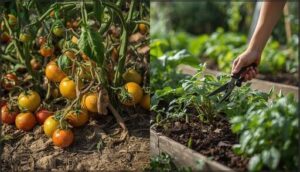
Summer gardening doesn’t end once your plants are in the ground. The real work comes from maintaining them week after week as conditions change.
Here are four seasonal and maintenance mistakes that can quietly undermine your garden’s success.
Forgetting to Prune and Deadhead
Skipping pruning and deadheading ranks among the most common summer gardening mistakes to avoid. You’ll notice reduced flowering when you ignore deadheading tips—spent blooms drain energy from new growth.
Proper pruning techniques improve airflow and light penetration, which are vital for plant renewal. Follow smart prune timing: trim early in the day to minimize heat stress.
These growth regulation practices keep your garden thriving through the season.
Not Rotating Crops Annually
Planting the same crops in the same spot each summer accelerates nutrient depletion and increases pest outbreaks. Crop rotation breaks pest cycles and boosts yield stability—rotated systems show 10–25% higher yields than continuous plantings.
Diversity improves soil quality and fertility while reducing soil erosion by up to 40%. You’ll sidestep major gardening mistakes when you plan a simple four-year rotation.
Failing to Support Tall or Heavy Plants
Tall plants without proper support collapse under their own weight, especially during storms or fruit production. You need staking methods or trellis designs installed before flowering—bamboo stakes work well at 1.5 times plant height. Garden cages and plant anchors prevent stem breakage and root damage.
- Secure stem support early to avoid disturbing established root systems later
- Choose sturdy materials like bamboo, metal stakes, or reinforced wire cages
- Anchor trellises firmly before heavy fruiting phases begin
- Inspect structures weekly for loosening, bending, or weather damage
- Prevent crowding issues by keeping neighboring plants properly spaced
Proper plant care and maintenance protects your investment all summer long.
Ignoring Weather Forecasts and Seasonal Changes
Weather forecasting isn’t optional—it’s your garden’s lifeline against extreme weather and failed crops. Extended heat waves drop germination rates, while sudden frosts destroy tender seedlings. Climate adaptation through seasonal planning builds true garden resilience when you align watering schedules with rainfall predictions and protect heat-sensitive plants before temperature spikes hit.
Weather forecasting isn’t optional—it’s your garden’s lifeline against extreme weather and failed crops
| Weather Event | Protective Action |
|---|---|
| Heat wave forecast | Install shade cloth, increase mulch depth |
| Heavy rain predicted | Pause irrigation, improve drainage |
| Frost warning | Cover tender crops, harvest early |
Monitor forecasts weekly during peak summer gardening months. Adjust your watering schedule based on predicted rainfall—skipping irrigation before storms prevents root rot and nutrient leaching. Choose drought-tolerant varieties when dry seasons appear in long-range outlooks. Install windbreaks before storm systems arrive to prevent stem breakage and soil erosion.
Seasonal gardening success depends on proactive weather awareness, not reactive damage control.
Frequently Asked Questions (FAQs)
How do I attract beneficial insects to my garden?
You’ll draw pollinators and beneficial insects by choosing native, nectar-rich plants that bloom continuously.
Create pollinator gardens with diverse flowering species, provide shelter like brush piles, and skip harsh pesticides—biodiversity conservation starts here.
What are the best companion planting combinations?
You’ll want to try basil with tomatoes—it cuts moth damage by up to 20%. Marigolds near tomatoes reduce nematodes, improving pest control naturally.
Plant beans, corn, and squash together for healthier soil.
When should I harvest different summer vegetables?
Harvest timing directly impacts vegetable yield and quality. Pick tomatoes when uniformly colored and slightly soft, cucumbers at 6–8 inches, and zucchini before seeds enlarge—daily checks prevent overmaturity and encourage continuous summer crops production.
How can I protect plants from extreme heat waves?
Protect your plants by applying 2-4 inches of organic mulch to lower soil temperature and conserve moisture.
Install shade cloth during peak afternoon hours, and water deeply in early morning to boost drought tolerance.
Should I fertilize during the peak summer months?
Fertilize lightly during peak summer heat, but timing matters. High temperatures reduce nutrient uptake and increase burn risk.
Use slow-release formulas, water thoroughly after application, and consider skipping fertilization during extreme heat waves.
Conclusion
A summer garden without a clear plan is like a ship without a compass—it drifts toward failure. These summer gardening mistakes avoid patterns give you the navigation tools to steer toward success.
You now understand the precise triggers behind wilting, overcrowding, and pest invasions. Apply these corrections consistently, and your garden transforms from a struggling experiment into a productive system.
The difference between frustration and abundance lies in executing these fundamentals without compromise.