
This site is supported by our readers. We may earn a commission, at no cost to you, if you purchase through links.
Your spring vegetables are pushing through the soil right now, and they’re thirsty. But here’s the challenge most gardeners face: too much water drowns roots and invites disease, while too little stunts growth and kills your harvest before it begins.
The difference between a thriving garden and a disappointing one often comes down to watering—not just how much, but when, where, and how you deliver moisture to those roots. Spring conditions shift rapidly, with warm afternoons following cool mornings and unpredictable rainfall throwing off your schedule.
Getting your watering strategy right means understanding your soil, choosing efficient methods, and adjusting as your plants grow and weather patterns change.
Table Of Contents
- Key Takeaways
- Preparing Soil for Efficient Watering
- Understanding Your Garden’s Soil Type
- How Much Water Does Your Garden Need?
- Best Times to Water a Spring Vegetable Garden
- Choosing The Right Watering Methods
- Mulching to Conserve Soil Moisture
- Crop-Specific Watering Requirements
- Monitoring Soil Moisture Effectively
- Adapting Watering to Weather Conditions
- Water Conservation Strategies for Spring Gardens
- Frequently Asked Questions (FAQs)
- Conclusion
Key Takeaways
- Your soil type determines watering frequency—sandy soils need water every 2–3 days, clay every 5–7 days, and loamy soils every 3–5 days—while adding 2–3 inches of compost boosts water retention by up to 30%.
- Combining drip irrigation with mulch cuts water use by 30–50% and reduces evaporation by up to 70%, delivering moisture directly to roots while preventing foliar diseases that thrive on wet leaves.
- Water early morning rather than evening to slash evaporation rates by 20–30% and reduce disease risk by 40%, since overnight leaf wetness invites fungal problems and root rot.
- Different crops drink at different rates—beans need 6 gallons weekly during flowering, broccoli requires steady moisture for 4 weeks post-transplant, and inconsistent watering can cut tomato yields in half or make cucumbers bitter.
Preparing Soil for Efficient Watering
Your soil is the foundation of a water-efficient spring garden. When you improve its structure with organic amendments, you create a living system that holds moisture longer and feeds your plants naturally.
Let’s look at two practical ways to prepare your soil for the season ahead.
Amending Soil With Organic Matter
Organic matter transforms your soil into a water-holding powerhouse. When you work compost into your garden beds 2–4 weeks before planting, you’re increasing water-holding capacity by up to 30% in loamy soils while boosting microbial growth and carbon sequestration. Here’s what happens:
- Water infiltration rates jump 15–25% in sandy soils
- Root-zone storage gains 2–6 liters per square meter
- Soil structure improvements cut erosion by 40%
Compost Application Rates
Getting the right amount matters more than you’d think. For vegetable beds, spread 1–2 inches of compost before planting—that’s roughly 20–40 pounds per 100 square feet. This rate boosts Organic Matter by 0.5–1.5% while improving Soil Amendments and Microbial Activity without risking nutrient overload. Annual applications at this level sustain Soil Health and amplify Compost Benefits season after season.
Understanding web server issues can also impact online resources for gardening.
| Soil Type | Application Rate | Moisture Improvement |
|---|---|---|
| Sandy | 2–3 cm (0.8–1.2 in) | 10–20% increase |
| Clay | 2–5 cm (0.8–2.0 in) | Better drainage, -40% ponding |
| Loamy | 1–2 inches yearly | Extended watering intervals |
| All types | Max 3 inches/season | Prevents nutrient imbalance |
Understanding Your Garden’s Soil Type
Your soil type is the foundation of every watering decision you’ll make this season. Sandy soils drain fast and need frequent attention, while clay holds moisture longer but can become waterlogged if you’re not careful.
Understanding what you’re working with helps you water smarter, not harder.
Sandy, Clay, and Loamy Soils
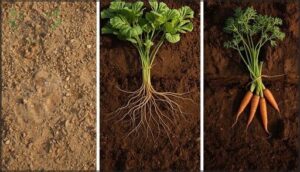
Your soil texture determines how water moves through your garden and how long it stays available to your plants. Think of it as the foundation of your watering strategy—getting this right means less guesswork and healthier vegetables.
- Sandy soils drain quickly, with water infiltration rates of 5–25 cm per hour, but they hold minimal moisture for your plants
- Clay soils retain water longer due to their dense structure and higher soil compaction, though drainage systems may be needed to prevent waterlogging
- Loamy soils strike the perfect balance, offering moderate water infiltration and consistent soil moisture levels
- Soil aeration improves when you add organic matter through mulching or incorporate compost, boosting water retention across all textures
Understanding these differences helps you adjust your watering frequency and choose methods like drip irrigation that match your specific soil type.
Impact on Watering Frequency
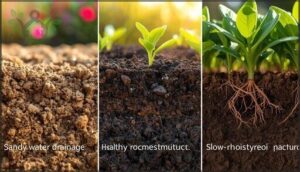
Once you know your soil type, you can nail down your watering schedule with precision. Sandy soils need water every 2–3 days, while clay or loamy types thrive on watering every 3–5 days. Your irrigation depth should match evapotranspiration rates—usually 1–1.5 inches per week for most spring vegetables.
| Soil Type | Watering Frequency | Irrigation Depth |
|---|---|---|
| Sandy | Every 2–3 days | 0.5–1 inch per session |
| Clay | Every 5–7 days | 1.5–2 inches per session |
| Loamy | Every 3–5 days | 1–1.5 inches per session |
| Amended (with compost) | Reduce by 15–25% | Match base soil type |
Drip irrigation paired with soil moisture monitoring keeps you dialed in, cutting guesswork by 60–80% while maintaining consistent soil moisture levels between 60–70% of field capacity.
Improving Water Retention
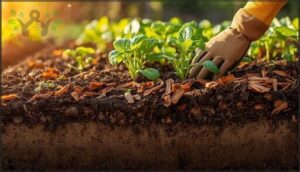
With a few simple organic amendments, you can boost your soil’s water retention by 15–25%. Adding 2–3% organic matter improves soil structure and moisture levels, while a 5–7 cm mulch layer cuts evaporation by 30–70%.
Soil aeration paired with compost enhances water absorption, extending time between irrigations by 2–4 days. Regular soil testing confirms your progress toward ideal conditions.
How Much Water Does Your Garden Need?

Your spring vegetable garden needs consistent moisture to thrive, but how do you know if you’re giving it enough? The answer depends on a few key measurements and tools that take the guesswork out of watering.
Let’s look at the essential guidelines that’ll help you water with confidence.
Weekly Watering Guidelines
Your spring vegetable garden thrives on roughly 1 inch of water per week during mild conditions—think 62 gallons for every 100 square feet. When heat arrives, bump that up to 1.5–2 inches to keep moisture levels stable.
A smart watering schedule tracks soil moisture and adjusts irrigation scheduling based on weather, boosting water efficiency by 10–15% and giving your crops the water balance they crave.
Measuring One Inch of Water
You can measure that 1-inch water depth by placing straight-sided containers around your beds—tuna cans work perfectly. Run your irrigation until you’ve collected 1 inch, then note the time.
For a 1,000-square-foot garden, that’s about 623 gallons delivering real soil moisture to your roots. This simple watering chart prevents costly watering mistakes and keeps your moisture level right where your vegetables need it.
Using Rain Gauges Effectively
A rain gauge transforms your watering chart from guesswork into precision. Position it 2–3 feet above ground, away from walls and trees—proper gauge placement cuts measurement error to within 5%.
Check your reading after each rain event, then adjust your watering schedule accordingly. Clean the rim every month to maintain rain gauge accuracy.
This simple data logging step can slash seasonal water use by 12% while keeping your beds perfectly moist.
Best Times to Water a Spring Vegetable Garden
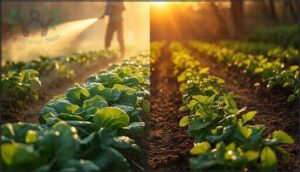
Timing your watering sessions can make the difference between a thriving garden and one that struggles with disease or moisture stress. When you water matters just as much as how much you water, especially during spring when temperature swings and morning dew patterns shift throughout the season.
Let’s look at the two main watering windows and how each one affects your vegetables’ health and water efficiency.
Early Morning Vs. Evening Watering
Timing your watering schedule can make or break your spring vegetable garden’s success. Early morning irrigation wins hands down—it cuts evaporation rates by 20–30% and slashes foliar disease risk by up to 40% compared with evening sessions.
Your plants absorb water more efficiently when soil temperature is cooler, boosting nutrient uptake while disease prevention stays strong. Evening watering leaves foliage damp overnight, inviting trouble you don’t need.
Reducing Evaporation and Disease Risk
Protecting your garden from water loss starts with smart layering. Mulch benefits shine here—organic mulch cuts surface evaporation by 30–70% while dropping soil temperature by 2–5°F. That’s serious evaporation control.
Boost your efficiency with these moves:
- Apply 2–3 inches of mulch for moisture retention lasting 5–10 extra days between watering
- Install drip irrigation for 90–95% drip efficiency
- Water early morning to prevent overnight leaf wetness
- Monitor soil moisture management to stop overwatering
Combining mulching with drip systems transforms water conservation—you’ll use 20–50% less water while keeping disease at bay.
Choosing The Right Watering Methods
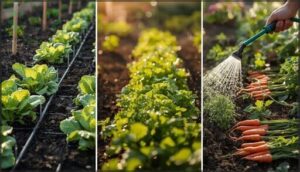
The watering method you choose shapes how efficiently your garden uses water and how healthy your plants grow. Each approach offers distinct advantages, from precision delivery systems to adaptable handheld options.
Let’s explore three proven techniques that work well for spring vegetable gardens.
Drip Irrigation Benefits
With a drip system, you’ll slash water use by 30–50% and nearly eliminate runoff—that’s irrigation management at its best. Drip irrigation keeps moisture right where your spring vegetable garden needs it, cutting weed growth by 40% while boosting water efficiency.
Drip irrigation slashes water use by up to 50%, delivers moisture precisely to plant roots, and cuts weed growth by 40%
You’ll also see fewer foliar diseases since leaves stay dry, making drip systems a smart choice for soil conservation and long-term water savings.
Using Soaker Hoses
Soaker hoses offer a simple alternative that delivers steady moisture straight to the root zone. Hose material selection matters—porous rubber or recycled tires work best for spring vegetable gardens. You’ll want to monitor water pressure management closely, keeping it low to prevent uneven flow, and check soil moisture monitoring regularly with your finger to maintain 60–70% field capacity.
Here’s what makes soaker hose installation work:
- Lay hoses in straight runs or gentle curves, not tight corners
- Space rows 12–18 inches apart for even coverage across beds
- Connect to a timer for consistent irrigation system design
- Pair with mulch to boost water conservation and reduce evaporation
Traditional Watering Techniques
Hand-watering with a wand or can still works for small spring vegetable gardens, though you’ll sacrifice some water efficiency. Traditional watering techniques use 25–40% more water than drip systems, but pairing them with mulch and careful irrigation timing helps your watering schedule stay on track. Expect application depth to vary up to 40% between plants—that’s why checking soil moisture at 5–6 inches matters.
| Method | Water Efficiency |
|---|---|
| Hand wand | 60–75% (high variability) |
| Overhead sprinkler | 60–75% (wind drift losses) |
| Drip systems | 85–95% (targeted delivery) |
| Furrow irrigation | 50–70% (runoff common) |
Mulching to Conserve Soil Moisture
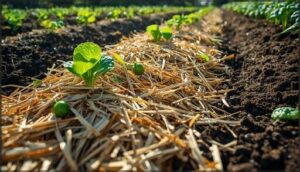
Mulch acts like a protective blanket over your garden soil, keeping moisture in and reducing the amount of time you spend with a hose. It’s one of the simplest ways to cut water loss by up to 50% while also moderating temperature swings that stress your plants.
Let’s look at the types of mulch that work best, how they actually conserve water, and the practical steps for applying them this spring.
Types of Mulch for Vegetable Gardens
You have several effective organic mulch options for spring vegetable beds. Straw mulch and wood chips are popular carbon mulches that work beautifully for soil moisture management techniques. Pine needles and cocoa hulls offer finer textures, while compost performs double duty as both mulch materials and soil amendments.
Apply organic gardening methods with a mulch depth of 5–7 cm for ideal water conservation and mulching success.
How Mulch Reduces Water Loss
Mulch benefits your garden by creating a physical barrier that slashes evaporation rates by 20–60%, depending on depth and material. This moisture retention mechanism works by intercepting sunlight and reducing soil temperature by up to 4°C.
You’ll conserve water more effectively when mulching is combined with proper watering and irrigation, keeping your soil moisture stable for 1–2 weeks longer between waterings—a powerful gardening technique.
Application Tips for Spring
Apply 2–3 inches of organic mulch around your spring garden plants after soil warms to 60°F, leaving a 2-inch gap at stems to prevent rot. Time your spring watering and irrigation before mulching to establish proper soil moisture—aim for 60–70% field capacity.
Seasonal adjustments matter: refresh mulch mid-spring if it compacts. Pair these watering techniques with soil sensors for precise water budgeting and conservation throughout the season.
Crop-Specific Watering Requirements
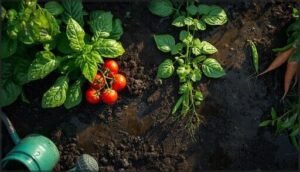
Not all vegetables drink from the same well. Some crops need a steady stream of water at specific growth stages, while others thrive with less attention.
Let’s break down the watering needs for the most common spring garden vegetables so you can give each one exactly what it needs.
Beans, Broccoli, and Root Vegetables
Different crops drink at their own pace—timing matters as much as volume. Beans, broccoli, and root vegetables each have crop-specific water needs that align with their growth cycles and nutrient uptake patterns. Consistent spring garden watering prevents stress, aids harvest timing, and improves water quality reaching the roots.
Key watering requirements:
- Beans: Apply 6 gallons weekly when flowers appear and during pod formation to optimize yield
- Broccoli: Maintain steady moisture for 4 weeks post-transplant; keep soil moisture at 40–60% to reduce bolting by 8–15%
- Root vegetables (carrots, beets): Provide 3 gallons weekly before soil dries completely; deep watering encourages straight root development
- Soil temperature: Monitor heat—above 75°F increases water demand and evaporation rates
- Crop rotation: Plan water conservation strategies around previous crops’ residual soil moisture and organic matter
Adjust frequency based on soil type and weather, checking moisture an inch below the surface before watering.
Tomatoes, Cucumbers, and Squashes
Tomatoes, cucumbers, and squashes turn thirsty once fruit starts forming—they need 1-2 inches weekly, jumping to 2 inches during hot spells. Inconsistent watering triggers bitter cucumbers and halved tomato yields, so keep soil at 60-70% moisture.
Drip irrigation paired with mulch cuts water use by 30-50% while supporting nutrient uptake optimization and consistent fruit set management.
These spring garden watering techniques prevent water stress effects while supporting crop rotation benefits.
Adjusting for Growth Stages
Your plants’ thirst changes as they mature—seedlings need gentle, frequent moisture, while established crops demand deeper, less frequent watering. Master this growth stage watering rhythm to boost yields by 15-25%.
- Seedling care: Keep top 2 inches consistently moist for transplant strategies during the first 2-4 weeks
- Flowering/fruiting: Double water volume as maturation timing hits peak demand
- Harvest planning: Reduce watering 3-5 days before picking to concentrate flavors
These crop-specific water needs and soil moisture adjustments reflect essential vegetable gardening and watering techniques for every gardening tips collection.
Monitoring Soil Moisture Effectively
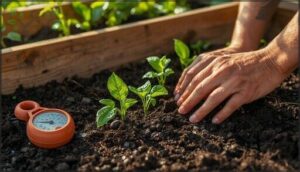
Checking your soil’s moisture level doesn’t require fancy equipment or guesswork. You can use simple hands-on tests to know exactly when your plants need water and catch problems before they start.
Let’s look at practical ways to monitor moisture, recognize thirsty plants, and avoid the common mistake of watering too much.
Simple Soil Moisture Tests
You can skip expensive equipment and start with a simple squeeze test—grab a handful of soil from one inch down and form it into a ball. If it crumbles, you need water.
For precision, gravimetric methods measure water content at around 10% by weight in loamy soils, while dielectric probes and volumetric analysis using soil moisture sensors deliver accurate readings within 1–2% for serious water conservation and soil management efforts.
Signs Your Plants Need Water
Catching water stress early saves your harvest. Beyond the squeeze test, watch for telltale signs—wilting leaves signal turgor pressure drops of 40–70%, while dull or pale foliage shows moisture deficits building over 1–2 days.
- Wilting leaves lose structural support when soil moisture drops below field capacity
- Leaf curling and drooping reveal drought response mechanisms kicking in
- Pale or dull foliage indicates declining plant hydration and nutrient uptake
- Soil sensors reading below 15% volumetric water content flag imminent stress
- Stomatal closure reduces gas exchange by 20–40% during dry spells
Preventing Overwatering
Too much water suffocates roots just as fast as too little starves them. Overwatering triggers root rot, especially when drainage systems fail and soil saturation lingers beyond 24–48 hours.
Moisture sensors prevent guesswork—readings above 80% field capacity mean you can skip the next session. Watch for persistent puddling or yellow leaves signaling waterlogging.
Smart watering techniques and water conservation go hand in hand with healthy roots.
Adapting Watering to Weather Conditions

Weather isn’t static, and neither should your watering plan be. You’ll need to adjust how often and how much you water based on temperature swings, wind patterns, and rainfall events.
Let’s look at the key adjustments that keep your garden thriving through unpredictable spring conditions.
Hot, Windy, and Dry Weather Adjustments
When heat waves roll in with dry spells and gusty winds, your soil moisture can plummet by 20–40% within two hours of watering. You’ll need to increase irrigation by 20–40% during these conditions, focusing on drip irrigation and mulching for water conservation.
Early morning watering techniques combat wind resistance and reduce evaporation by 25–35%, protecting against soil erosion while stretching water scarcity solutions further.
Modifying Schedules for Rainfall
While adjusting for extreme conditions is important, rainfall tracking transforms your watering schedule into a flexible tool. Weather forecasting lets you cut irrigation by 20–30% when rain arrives, checking your rain gauge and soil moisture level to maintain water efficiency. Here’s how irrigation adjustments work:
- Monitor 7-day forecasts to skip unnecessary watering and boost water conservation
- Test moisture levels an inch down after rainfall before resuming irrigation systems
- Reduce drip sessions by 1–2 days following moderate rain on loamy soils
- Combine real-time soil data with forecasted rainfall for smarter irrigation adjustments
Using Shade Cloth for Heat Protection
During peak heat, shade cloth benefits your spring plantings by cutting soil temperatures 14–22°F and slashing evaporation rates up to 40%. This summer crop protection technique pairs perfectly with garden water conservation—you’ll water every 2–4 days instead of daily. Here’s how garden shade systems deliver heat stress reduction:
| Shade Cloth Benefits | Heat Stress Reduction | Watering Techniques Impact |
|---|---|---|
| Lowers soil temps 2–6°C at root zone | Cuts leaf temps 3–5°C during peak sun | Extends irrigation intervals 12–36 hours |
| Reduces transpiration 15–40% | Decreases wilting by 25–50% in heat waves | Improves water use efficiency 20–40% |
| Maintains soil moisture consistency | Boosts pollination success 5–8% | Reduces evaporation from mulch 15–25% |
| Protects transplants 1–2 weeks longer | Increases leaf area 10–20% | Cuts seasonal water use 10–25% |
| Lasts 5–7 years with UV protection methods | Yields maintain or gain 8–15% | Aids vegetable garden care year-round |
Install 30–50% shade factor cloth over heat-sensitive crops like tomatoes and cucumbers when temperatures exceed 90°F. You’ll notice cooler soil moisture levels and healthier root growth—these UV protection methods and gardening techniques deliver real results within one season.
Water Conservation Strategies for Spring Gardens
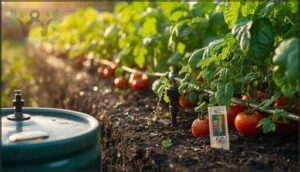
Smart watering isn’t just about keeping your plants alive—it’s about using every drop wisely. You can cut water waste by half while actually improving your garden’s performance.
Here are three proven strategies that work together to boost efficiency and keep your vegetables thriving all season long.
Combining Mulch and Drip Irrigation
When you pair mulch with drip irrigation, you create a powerhouse for water efficiency—cutting water use by up to 50% while maintaining steady soil moisture. This winning combination works because:
- Drip systems deliver water directly to roots, reducing waste by 30–50% compared to overhead watering
- Mulch locks in that moisture, slowing evaporation by up to 70%
- Together, they boost irrigation efficiency to 85–90%, keeping your plants thriving with less effort
Adjusting Frequency for Efficiency
Generally, you’ll water less often when irrigation systems and soil moisture sensors work together. Instead of fixed watering intervals, let soil moisture readings guide your irrigation timing—most vegetables thrive when you irrigate at 60–70% field capacity.
This frequency optimization reduces waste by 15–25% compared to rigid schedules. Your watering routine becomes smarter: drip irrigation delivers precisely what plants need, exactly when sensors indicate it’s time.
Maintaining Consistent Soil Moisture
Steady soil moisture—not wet-dry swings—protects your spring garden from stress. Combine mulching with soil moisture sensors to track moisture levels in real time, keeping readings near 60–70% field capacity. Adjust your watering schedule based on sensor feedback and weather shifts.
This approach stabilizes soil temperature management, extends water retention strategies, and reduces irrigation system runtime—saving water while supporting healthier root zones.
Frequently Asked Questions (FAQs)
How does companion planting affect watering needs?
Two heads are better than one—companion planting reduces watering needs by 10–20% through shading, improved soil moisture retention, and complementary root interactions. Dense canopies lower evaporation rates, while legumes boost water-holding capacity naturally.
Understanding AP study guides can help gardeners make informed decisions about their spring vegetable garden.
Can rainwater harvesting replace tap water completely?
Harvesting systems can offset 30–50% of household water use, but storage limits and seasonal rainfall gaps mean you’ll still need tap water as backup.
Monitor your rain gauge and adjust your watering schedule during drought periods.
What causes nutrient leaching from excessive watering?
Excessive watering pushes nutrients like nitrogen beyond root zones through leaching rates of 20–60%. Sandy soils lose fertilizer efficiency fastest, while poor soil management and NPK fertilizers application timing increase water pollution risks markedly.
Should seedlings and mature plants water differently?
Yes, seedlings and mature plants demand distinct watering approaches. Seedlings need frequent, light irrigation to maintain consistent moisture during establishment, while mature plants thrive with deeper, less frequent watering that encourages strong root development.
How do container gardens compare to in-ground watering?
While in-ground beds hold moisture longer thanks to soil contact, containers dry 20–40% faster and need smaller, more frequent watering—often twice daily in heat—despite drip irrigation boosting efficiency considerably.
Conclusion
Think of water as the silent messenger between your efforts and your harvest—it carries nutrients, sustains growth, and determines whether your spring garden thrives or falters. Mastering watering spring vegetable garden techniques means observing your soil, adjusting to weather shifts, and delivering moisture with purpose.
Your plants won’t demand flawlessness, but they’ll reward consistency. Step into your garden tomorrow morning, check the soil, and water with confidence. Your best harvest starts with what you do today.