This site is supported by our readers. We may earn a commission, at no cost to you, if you purchase through links.
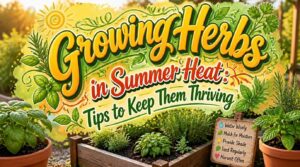
Basil sulking by noon, cilantro bolting before you even harvest a handful—summer heat turns herb beds into a test of wills. Your plants aren’t being dramatic. They’re just reacting to soil that dries out fast and sun that doesn’t quit.
Here’s the thing though: growing herbs in summer heat isn’t about fighting the season. It’s about picking the right plants, the right spot, and the right watering rhythm so your herbs work with the heat instead of wilting under it.
Get those basics right, and you’ll have rosemary, mint, and even cilantro pulling through July like champs.
Table Of Contents
- Key Takeaways
- Choose Heat-Tolerant Summer Herbs
- Plant Herbs in Heat-Smart Spots
- Prepare Soil for Hot Weather
- Water Herbs Without Stressing Roots
- Prevent Bolting and Summer Damage
- Frequently Asked Questions (FAQs)
- What herbs grow well in hot weather?
- Is July too late to grow herbs?
- What herbs can be planted in October?
- When should you start growing heat tolerant herbs?
- Can herbs grow in hot climates?
- Can herbs withstand hot summers?
- What herbs can survive hot weather?
- Why should you plant herbs in hot climates?
- What plants grow well in summer?
- What temperature is too hot for herbs?
- Conclusion
Key Takeaways
- Mediterranean herbs like rosemary, thyme, and oregano are your most reliable summer performers because their biology is literally built for heat and drought.
- Where you place herbs matters as much as which ones you grow—morning sun, afternoon shade, and grouping by water needs can save plants that would otherwise struggle.
- Deep, infrequent watering early in the day beats daily shallow sprinkling every time, pushing roots deeper and building real drought tolerance.
- Pinching flower buds early and harvesting often are the two habits that keep herbs producing leaves all summer instead of bolting and giving up.
Choose Heat-Tolerant Summer Herbs
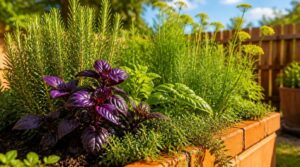
Not every herb can handle a blazing summer, but the right ones won’t just survive — they’ll thrive with attitude. Knowing which herbs are built for heat takes the guesswork out of your garden and puts you in control before the temperature climbs. Here’s what to grow when summer turns up the dial.
For a deeper dive into building a garden that shrugs off scorching days, check out this guide to gardening in hot weather.
Mediterranean Herbs for Dry Heat
If summer heat is your reality, Mediterranean herbs are your best allies. Rosemary, thyme, sage, oregano, and lavender evolved in scorching, dry conditions — their woody stems and silvery foliage actively conserve moisture and reflect harsh sunlight.
Sage’s fuzzy leaves and oregano’s essential oil production both work as natural cooling systems. Plant them in well-draining soil and they’ll practically laugh at drought. Many of these mediterranean herbs thrive best in warm climates.
Humidity-friendly Herb Choices
Now, if you’re battling thick, sticky air instead of bone-dry heat, that dry-loving crew won’t cut it. Mint and lemongrass actually want humidity; just give lemongrass well-draining soil so roots don’t sit wet.
Basil’s modern varieties resist fungal trouble when airflow’s good. Thyme experiences muggy air better than most Mediterranean herbs, as long as drainage stays sharp.
Cilantro Alternatives for Summer
Cilantro bolts the second temps creep past 80°F, but its flavor doesn’t have to disappear from your kitchen. Culantro brings that same punch with sturdier leaves. Vietnamese coriander shrugs off heat and humidity alike.
- Papalo adds citrus zing
- Mint covers chutneys
- Basil’s peppery tones fit Mexican dishes
Drought resistance varies, so match the herb to your garden’s conditions.
Annual Versus Perennial Herbs
Once you’ve picked your heat-fighters, ask yourself: do you want one good season or years of payoff?
Annuals like basil sprint through growth, flower, then die, leaving replanting labor each spring. Perennials such as rosemary, thyme, and sage build deeper roots over time, boosting drought resistance and rewarding patience. Check your climate zone before betting on perennials surviving winter.
Best Herbs for Beginners
Five plants make a perfect starter lineup, no green thumb required. Basil rewards regular harvesting with full sun and well drained soil. Chives barely ask for anything—trim them and they regrow.
- Basil: easy herb variety, thrives with consistent cutting
- Chives: low-maintenance, sunny to partly shaded spots
- Mint: forgiving in containers, rich moist soil
- Thyme: drought-tolerant, built for summer gardening
- Parsley: reliable with steady moisture
Starting herb seeds indoors works fine too.
Plant Herbs in Heat-Smart Spots
Where you plant matters just as much as what you plant. The right spot can mean the difference between herbs that struggle through July and ones that practically take care of themselves. Here are the placement strategies that actually work when summer turns up the heat.
Grouping herbs by thirst level isn’t the only thing that trips people up—common mistakes when growing herbs indoors shows how poor light and overcrowding can sabotage your harvest too.
Morning Sun Locations
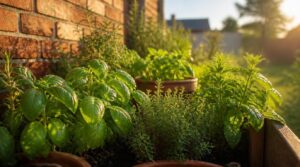
East-facing beds are your secret weapon. Morning sun runs cooler and gentler than the brutal afternoon rays, giving heat-sensitive herbs a fighting chance. A southeast orientation warms soil gradually, and morning dew acts like a quiet top-up, reducing how much you need to water.
Rotate containers weekly so every side catches equal light without scorching.
Afternoon Shade Protection
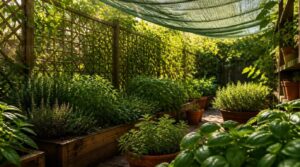
When afternoon heat peaks, shade cloth at 30–60% density gives sensitive herbs a real break. Position shade sails to block southwestern exposure from about 1 pm to 4 pm — that window is when leaf temperatures spike hardest.
Vertical structures like lattices on the south and west sides create a cooler microclimate without cutting airflow. Shift your setup seasonally as the sun angle changes.
Containers for Easy Moving
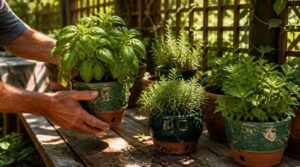
Pots aren’t just convenient, they’re your best defense against a brutal heat wave. Move basil or mint to shade in minutes instead of losing them.
Good containers handle the chase: weatherproof shells survive daily shuffling, wide openings ease loading, and drainage holes keep roots happy. This is container gardening built for summer gardening’s unpredictability, real heat stress management you control by hand, not weather.
Raised Beds for Drainage
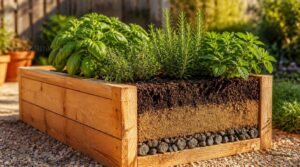
Soggy roots kill more summer herbs than heat ever does. A raised bed fixes that by lifting soil above soggy ground, with a gravel base for vertical percolation and untreated wood walls keeping things sturdy.
Mix in compost and coarse sand for truly well-draining soil, preventing compaction that traps water. Your herbs stay cool, your roots stay happy, no swampy mess.
Group by Water Needs
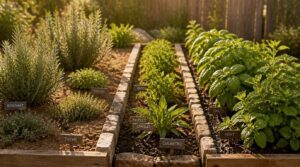
Water-loving herbs hate sharing a bed with drought lovers, plain and simple.
Smart microclimate planning means grouping by thirst level:
- Drought-resistant plants: thyme, rosemary, oregano
- Thirsty types: basil, mint
- In-between: parsley, culantro
This irrigation efficiency trick stops overwatering one while starving another, supporting real water conservation and better soil moisture retention across your whole herb patch, even during tough drought conditions.
Prepare Soil for Hot Weather
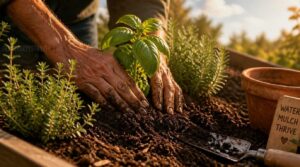
Good soil does half the work before the heat even shows up. You can’t control the sun, but you can control what’s under your herbs’ roots. Here’s how to build dirt that holds water without drowning anything.
Fast-draining Herb Soil
Building the right dirt mix matters more than people think. Herbs hate wet feet, so aim for well-draining soil with sand, perlite, or pine bark fines mixed in. Skip heavy clay—it compacts and chokes roots.
| Add This | Why It Works |
|---|---|
| Coarse sand | Boosts soil porosity |
| Perlite | Aerates roots |
| Pine bark | Adds drainage bulk |
Keep pH between 6.0–7.5 for steady nutrient availability.
Compost for Moisture Balance
Good drainage sets the stage, but compost is what feeds your herbs without drowning them. Aim for that wrung-out sponge feel—not soggy, not bone-dry. This keeps microbial heat generation humming along, breaking down organic matter efficiently.
Mix in finished compost generously. It balances moisture levels naturally, cuts down on water loss, and gives roots steady access to nutrients during drought conditions—real garden maintenance gold.
Sand and Perlite Amendments
Compost provides the nutrients, but sand and perlite manage the physical structure of your soil drainage. Mix in coarse, rinsed sand plus horticultural perlite, and you’ll get well-draining soil that won’t compact into a brick over time.
Both stay pH-neutral, supporting long-term soil stability. Go heavier on perlite for pots, lighter for raised beds—and skip beach sand; it carries salts your herbs hate.
Mulch to Cool Roots
Once your soil structure’s set, mulch is your next move for root zone insulation. A 2- to 4-inch layer cools soil by several degrees during heat waves.
Quick tips:
- Choose light-colored mulch—dark absorbs more heat.
- Use organic material like wood chips or straw.
- Apply after watering deeply for best microclimate creation.
This simple habit makes summer gardening tips actually stick for drought-resistant plants.
Keep Mulch Off Stems
Piling mulch right up against herb stems is a rookie move that invites stem rot fast. Keep a 3- to 6-inch gap from the base—this protects the root flare and improves airflow around stems, cutting humidity that breeds fungal trouble.
Check after every heat wave or watering session, since mulch shifts and creeps back toward stems. A quick rake-back keeps pathogens from gaining a foothold near the crown.
Water Herbs Without Stressing Roots
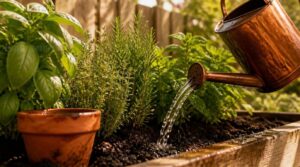
Watering sounds simple until your herbs start looking sad anyway. The truth is, how and when you water matters just as much as how much. Here’s what actually keeps roots happy when the heat turns up.
Water Early in Morning
Your body isn’t the only thing craving water at sunrise, your herbs are too. Watering between 6 and 10 am gives soil time to soak before summer heat kicks in.
Cooler air means less evaporation, so more moisture reaches the roots instead of vanishing into thin air. That timing alone can make or break drought-resistant plants during a brutal hot spell.
Deep Watering Techniques
Forget quick sprinkles, your herbs need water to reach 6 to 12 inches deep for real root growth. Try the cycle soak method: 10 minutes on, 15 off, repeat. This stops runoff and pushes moisture downward through vertical infiltration.
Grab a soil probe and check—uniform resistance at that depth means you’ve hit deep root saturation, the kind drought-resistant plants need to fight evapotranspiration.
Drip Irrigation Benefits
Drip irrigation is quiet, efficient, and surprisingly smart. It delivers water straight to the root zone, cutting water loss by up to 60% compared to sprinklers.
- Keeps foliage dry, reducing fungal disease pressure
- Boosts nutrient uptake efficiency through fertigation
- Pairs with timers for automated scheduling
Your drought-resistant plants get steady moisture without the guesswork.
Check Soil Moisture Daily
Your finger is actually a solid tool here. Push it one inch into the soil — if it feels dry, water deeply. Simple as that.
For precision, a moisture meter calibrated to your soil type catches what fingers miss. Track readings over time and you’ll spot soil moisture trends before drought stress sets in. Container herbs dry out fast, so check those daily without fail.
Avoid Frequent Shallow Sprinkling
Quick daily splashes feel helpful, but they actually train roots to stay lazy and shallow near the surface. Shallow sprinkling also raises evaporation loss and disrupts soil moisture stability, leaving roots stressed right when summer heat hits hardest.
Water deeply instead, less often, so moisture pushes down 6-8 inches and encourages real taproot development. This builds drought-resistant plants that handle dry stretches without flinching.
Prevent Bolting and Summer Damage
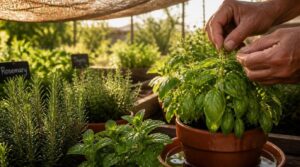
Once the heat hits, your herbs start thinking about survival, not flavor, and that means flowers and seeds instead of leaves. The good news? You’ve got more control over this than you’d think. Here’s how to keep your plants growing strong instead of giving up on summer.
Pinch Flower Buds Early
Snap the apical tip off early — that one cut stops bolting before it starts, redirecting energy into lateral branches instead of flowers.
Pinch at 6–12 inches tall, just above a leaf node:
- Basil: delays bolting, promotes bushier growth
- Cilantro: buys extra harvest time in summer heat
- Oregano and thyme: respond with compact growth
- Parsley: develops multiple crowns from one plant
Harvest Often for Growth
Pinching flower buds buys time, but frequent harvesting is what keeps culinary herbs producing all summer long.
Cut just above a leaf node, and your aromatic plants respond by pushing out lateral shoots — more branches, more leaves, better yield.
| Herb | Harvest Frequency | Benefit |
|---|---|---|
| Basil | Every 5–7 days | Prevents woody stems |
| Mint | Weekly | Stimulates lateral shoots |
| Oregano | Every 10 days | Boosts leaf yield |
Don’t wait. Prune regularly, and your home garden herbs stay tender through summer heat.
Succession Plant Cilantro and Dill
Harvesting regularly helps, but cilantro and dill will still bolt once summer heat hits. That’s just their nature.
The fix is succession planting every 10–14 days, starting in early spring. Sow seeds ¼ inch deep, space cilantro 6–8 inches apart, and label each sowing date. When one batch bolts, the next is ready. You stay in control all season.
Improve Airflow Between Plants
Spacing matters more than most gardeners realize. Crowded herbs trap heat and humidity — perfect conditions for fungal disease to take hold.
Keep these airflow basics in mind:
- Space plants 12–18 inches apart
- Use staggered planting patterns for air channels
- Prune dense interior growth regularly
- Avoid planting flush against walls
- Remove crowded lower leaves to open the base
Good circulation keeps canopies dry and resilient.
Watch Wilt and Sunscald
Heat waves don’t ask permission. Leaves curling, going reddish-yellow at the edges? That’s wilt talking to you.
Heat waves don’t ask permission—curling, reddish-yellow leaves are your herbs telling you they’re wilting
Touch test daily — firm leaves mean healthy turgor, limp ones mean trouble. Watch for sunscald too: bleached, sunken patches after sudden sun exposure. Harden off transplants over 7-14 days, keep foliage dense to protect developing fruit, and you’ll dodge most heatwave damage entirely.
Frequently Asked Questions (FAQs)
What herbs grow well in hot weather?
Some herbs practically laugh at a scorching summer sun. Rosemary, thyme, and oregano are built for Mediterranean drought resistance, while basil and sage handle blazing days surprisingly well — thriving exactly where other plants give up.
Is July too late to grow herbs?
Not at all. July is actually prime time for fast-maturing herbs like dill and cilantro, which hit harvest in just four to six weeks. Basil, oregano, and thyme establish easily too.
What herbs can be planted in October?
October is fall’s open invitation — thyme, rosemary, parsley, dill, and chives all thrive when planted this month. Parsley and dill do especially well with succession sowing every few weeks for steady cool-season harvests through winter.
When should you start growing heat tolerant herbs?
Start after your last frost date, once soil hits 50°F or warmer. Transplants go in when days reach 60–70°F. Early planting builds strong roots before summer’s heat arrives.
Can herbs grow in hot climates?
Yes, many herbs thrive in hot climates. Rosemary, oregano, thyme, and sage are built for heat and drought. Basil loves full sun too, as long as you keep the soil consistently moist.
Can herbs withstand hot summers?
What doesn’t kill you makes you stronger" — and herbs like rosemary, thyme, and oregano live by it. These drought-tolerant varieties laugh at heat waves, thriving where other plants wilt.
What herbs can survive hot weather?
Drought-tolerant perennials like rosemary, sage, and thyme handle hot weather best, alongside Thriving Tropical Varieties such as lemongrass.
Heat-Loving Basil (especially Thai basil) and Hardy Culantro Alternatives round things out, thanks to essential oil production boosting their natural heat resistance.
Why should you plant herbs in hot climates?
Heat turns gardens into survival of the fittest, and herbs often win.
Hot climates boost flavor intensity, support natural pest control, and reward you with year-round harvesting—proof that drought-resistant plants built for climate adaptation give you real garden strength.
What plants grow well in summer?
Heat-tolerant herbs like basil, oregano, and rosemary thrive alongside succulent summer annuals like portulaca, drought-hardy pollinators like yarrow, and rapidly maturing vegetables like summer squash—all sun-loving, warm-season options built for thriving heat.
What temperature is too hot for herbs?
Most herbs hit trouble past 90°F, but basil sulks above 95°F and parsley scorches past 85°F. Watch for wilting or bitter leaves, that’s plant stress talking. Rosemary and thyme just shrug it off.
Conclusion
Funny how it works out—the same scorching July afternoon that sends you scrambling for the garden hose is exactly when rosemary decides it’s thriving.
Growing herbs in summer heat isn’t the uphill battle it feels like on day one. Pick the right plants, water deep not often, and mulch before the soil bakes hard. Summer doesn’t have to be your herb garden’s enemy. Handle those basics well, and it becomes the season your garden finally hits its stride.
- https://gilmour.com/herb-growing-guide
- https://yardandgarden.extension.iastate.edu/how-to/managing-garden-extreme-heat
- https://www.myproductivebackyard.com.au/how-to-grow-2/how-to-look-after-your-herb-garden
- https://www.dripworks.com/blog/top-8-heattolerant-and-drought-resistant-herbs-that-grow-well-in-hot-climates
- https://gardeningwithsoule.net/how-to-grow-basil-in-the-heat