This site is supported by our readers. We may earn a commission, at no cost to you, if you purchase through links.
Your garden doesn’t stop changing just because you’ve put down your trowel. While you’re inside during winter, soil compacts. Spring rains trigger weed explosions. Summer heat stresses roots you can’t see.
Each season brings distinct challenges that determine whether your plants merely survive or actually flourish. The difference between a garden that limps along and one that thrives year after year comes down to matching your maintenance tasks to what’s actually happening in the soil and on the stems right now.
Strategic seasonal garden maintenance means working with nature’s rhythms instead of against them, timing each intervention—whether it’s pruning, mulching, or pest monitoring—to when it delivers maximum benefit with minimum effort.
Table Of Contents
- Key Takeaways
- Spring Garden Maintenance Tips
- Summer Care for Thriving Gardens
- Autumn Preparation and Cleanup
- Winter Protection and Planning
- Year-Round Maintenance Essentials
- Frequently Asked Questions (FAQs)
- What to do with a garden at the end of the season?
- How often should I sharpen my garden tools?
- When is the best time to divide hostas?
- Can I grow vegetables in partial shade successfully?
- Whats the ideal compost pile size for beginners?
- Should I remove snow from shrub branches immediately?
- How often should I rotate vegetable garden crops?
- When is the best time to divide perennials?
- What soil pH level suits most garden plants?
- How deep should mulch layers be applied?
- Conclusion
Key Takeaways
- Match your maintenance tasks to what’s happening in the soil and on the stems right now—spring demands debris removal and early planting, summer requires vigilant watering and pest monitoring, fall centers on compost preparation and bulb planting, and winter focuses on protecting plants while planning next season’s layout.
- Scout your garden twice weekly during active growing seasons to catch pest problems and disease symptoms early, cutting potential yield losses by up to 30 percent through timely intervention with organic controls or beneficial insects.
- Apply 2 to 4 inches of organic mulch around plants to slash water evaporation by 30 percent while stabilizing soil temperature and enriching your beds as the material breaks down, but keep it a few inches away from stems to prevent rot.
- Keep a detailed garden journal documenting planting dates, variety performance, pest encounters, soil test results, and harvest yields—this transforms scattered observations into actionable patterns that help you replicate successes and avoid repeating mistakes across seasons.
Spring Garden Maintenance Tips
Spring marks the garden’s wake-up call, and how you respond sets the tone for months ahead.
Getting a head start on early spring gardening tasks helps you build momentum before the growing season hits full speed.
This season demands attention to fundamentals—clearing away winter’s damage, getting plants in the ground at the right time, and catching problems before they spread. Here’s what to prioritize as your garden comes back to life.
Clearing Debris and Dead Growth
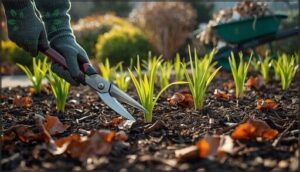
Your first spring task is debris removal and cutting back dead growth to set the stage for healthy new shoots. Clear fallen leaves and trim dead stems back to healthy wood—this simple garden cleanup can slash early season pest problems by up to 50 percent.
Clear winter debris and dead stems in early spring to cut pest problems by half and set the stage for healthy growth
- Rake debris from lawn edges to prevent mold and matting
- Remove dead perennial stems to encourage vigorous spring growth
- Prune dead wood on shrubs to reduce storm breakage
- Dispose of yard waste properly through local green waste programs
This seasonal garden maintenance improves air circulation and readies your soil for mulching.
Early Planting and Propagation
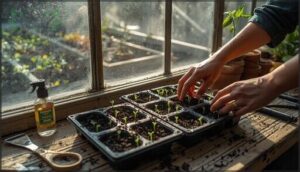
Once debris clears, shift your focus to seed selection and planting. Seed starting mix should drain freely while holding moisture, and soil temperatures between 65 and 75 F (18 to 24 C) foster strong germination rates for most vegetables.
| Propagation Method | Timing | Special Requirements |
|---|---|---|
| Indoor seed starting | 6–8 weeks before last frost | Light, well-draining mix |
| Softwood cuttings | Mid to late spring | Rooting hormone, 4–6 weeks |
| Division of perennials | Early spring or fall | Separate clumps with roots intact |
| Transplanting seedlings | After last frost, 2–3 true leaves | Harden-off 7–14 days outdoors |
Label rows clearly to track progress. Plant hardening strengthens transplants before they face full sun and wind. Staggered plantings every two to three weeks extend your harvest and spread out seasonal garden maintenance workload through summer. Understanding the role of can help gardeners choose the most effective approach for their specific crops and conditions.
Pruning Trees and Shrubs

Late winter sets the stage for pruning trees and shrubs while they’re still dormant. Remove dead or diseased branches first, then tackle crossing limbs that block airflow. Sharp, sterilized pruning tools prevent infection and make clean cuts that heal faster. For best practices, review guidelines for proper pruning techniques and tools.
- Cut just above outward-facing buds to guide new growth
- Use the three-cut method for branches over one inch
- Leave the branch collar intact for proper callus formation
- Wear safety gloves and eye protection during heavy limb removal
Shape trees naturally by following their inherent form rather than forcing unnatural silhouettes.
Early Pest and Disease Monitoring

Once pruning wraps up, shift your attention to pest identification and disease scouting. Walk your garden rows weekly, checking leaf undersides with a flashlight for hidden eggs or aphid clusters. Watch for yellowing leaves, unusual lesions, or stem cankers that signal trouble. Deploy yellow sticky traps near plant tops to monitor pest activity—check them every three to seven days and record what you find.
| Monitoring Method | Target Issue |
|---|---|
| Weekly field walks | Yellowing leaves, lesions, stem cankers |
| Pheromone traps | Specific moth arrival before damage |
| Yellow sticky traps | Aphids, whiteflies near canopy |
| Environmental tracking | Rainfall, humidity, disease risk |
Action thresholds guide your response. When pest counts climb above set limits, introduce beneficial insects like lady beetles or apply low-toxicity treatments. Track moisture and canopy density—high humidity plus dense foliage raises your monitoring frequency. Photograph symptomatic plants with dates to improve future threshold management and strengthen your integrated pest management strategy across seasonal garden maintenance cycles.
When thresholds are exceeded, reach for natural pest remedies that target specific invaders without disrupting your garden’s ecosystem balance.
Summer Care for Thriving Gardens
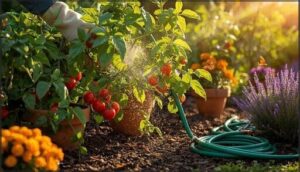
Summer brings the payoff for your spring efforts, but it also demands your most vigilant care. Heat, pests, and rapid growth can stress even established plants if you’re not proactive.
Here are five essential practices that’ll keep your garden thriving through the season’s toughest months.
Efficient Watering and Irrigation
Smart watering strategies transform summer gardens from struggling to thriving. Install drip irrigation systems to deliver water directly to roots, cutting evaporation by up to 30 percent. Check soil moisture regularly—clay holds water longer than sandy loam.
Smart controllers adjust schedules using local weather data, preventing waste. Deep watering encourages strong root systems. Efficient irrigation management means healthier plants and lower water bills.
Mulching for Moisture Retention
With the right mulch layer, you’ll save water and keep roots cool. Spread 2 to 4 inches of organic mulching materials like wood chips or straw around plants, pulling it back slightly from stems to prevent rot. This simple step cuts evaporation, stabilizes soil temperature, and enriches your soil preparation as it breaks down.
Five Steps to Effective Mulching:
- Choose organic mulch materials – Wood chips, shredded leaves, and compost improve moisture levels while feeding your soil as they decompose.
- Apply 2 to 4 inches deep – This thickness shields soil from direct sun and wind, reducing water loss during hot summer days.
- Keep mulch away from plant stems – Leave a few inches of clearance around trunks and crowns to prevent moisture-related rot and disease.
- Refresh annually – Top up your mulch layer each season to maintain effective water conservation and consistent soil temperature control.
- Combine with deep watering – Pair mulching with proper irrigation and fertilization practices to boost root health and drought resilience.
Managing Weeds and Pests
Vigilance against weeds and pests protects your summer garden from competing pressures. Scout twice weekly to catch aphids and fungal spots before they spread—early detection reduces yield losses by up to 30 percent.
Hand-pull young weeds before they seed, then apply organic controls like neem oil for pests. Pair these methods with crop rotation and mulching to support integrated management and long-term soil health.
Deadheading and Pruning Flowers
Regular deadheading redirects energy from seed production to fresh blooms, extending your flower display by several weeks. Snip spent blossoms just above a leaf node using sharp, disinfected pruning tools—this simple blossom management practice keeps annuals and perennials thriving through summer heat.
Pair petal removal with light shaping cuts on leggy stems to maintain compact form and encourage bushier seasonal growth.
Fertilizing for Peak Growth
Your garden hits peak growth when you match fertilizer types to what soil nutrient tests reveal. Balanced fertilization and nutrition means timing applications during active uptake—early summer demands steady plant nourishment to fuel blooms and fruit.
- Apply slow-release fertilizers to extend nutrient balance over weeks
- Boost microbial activity with compost-enriched soil preparation and care
- Split feedings reduce leaching and improve efficiency
- Foliar sprays supplement root uptake during heat stress
Proper fertilizing sustains vigor without burning sensitive roots.
Autumn Preparation and Cleanup
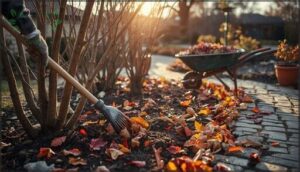
Autumn isn’t just about watching leaves fall—it’s your garden’s period of change that sets the stage for next year’s success.
The work you do now protects your plants through winter and gives you a head start come spring. Let’s walk through the essential tasks that’ll keep your garden healthy and productive through the cooler months ahead.
Leaf Removal and Composting
Fallen leaves are more than yard waste—they’re a goldmine for your soil. Shred them with a mower to speed up the decomposition process and cut volume by half. Balance carbon-rich leaf material with nitrogen sources like grass clippings at a 30:1 ratio.
Proper pile management means turning every two weeks and keeping moisture like a wrung-out sponge. Use finished compost as nutrient-dense mulch come spring, enriching beds while suppressing weeds.
| Composting Step | Best Practice |
|---|---|
| Shredding | Mower-chop leaves to reduce volume 50% |
| Carbon Balance | Mix 30 parts brown leaves to 1 part greens |
| Pile Management | Turn every 1-3 weeks; maintain damp interior |
| Mulch Benefits | Apply 2-4 inch layer in autumn garden beds |
Cutting Back Perennials and Annuals
Once your compost pile is humming along, turn your attention to trimming back spent plants. Late autumn is ideal for cutting perennials and annuals—it’s a seasonal gardening task that stimulates growth for next year.
Here’s your game plan:
- Remove perennials to 6-12 inches above soil using clean, sharp shears for plant renewal
- Cut leggy annuals at a 45-degree angle to prevent rot
- Sterilize tools between plant families to stop disease spread
This foliage management sets your beds up for spring success.
Planting Fall Bulbs and Cover Crops
After trimming back your beds, it’s time for strategic bulb selection and cover crop benefits that transform your fall garden maintenance.
Plant tulips and daffodils at three times their height—a 2-inch bulb goes 6 inches deep.
Sow winter rye or crimson clover after planting to suppress weeds and boost soil health. This autumn planting delivers spring color while enriching your beds naturally.
Mulching New Plantings
Once your bulbs and cover crops are settled, protect them with a 3-inch mulch layer that locks in soil temperature and blocks weed barriers from forming. Organic matter like wood chips boosts water infiltration while enriching your soil as it breaks down. Keep mulch a few inches from stems to prevent rot.
- Apply mulch after planting when soil is moist and cleared of weeds
- Use permeable organic mulch such as composted bark or aged wood chips
- Replenish your mulching layer every one to two years as decomposition occurs
Evaluating Plant Performance
As growth slows and leaves shift color, take stock of which plants thrived and which struggled. Compare biomass production and photosynthetic efficiency across varieties, noting water stress symptoms or nutrient uptake issues.
Document plant growth metrics, pest pressure, and bloom timing in your garden journal. This seasonal garden maintenance checklist guides smarter plant selection and planting for next year, refining your garden maintenance strategies season by season.
Winter Protection and Planning

Winter might look quiet, but it’s actually one of the most important times to set your garden up for success. You’ll need to protect vulnerable plants from freezing temps and hungry wildlife while taking advantage of dormant periods for strategic pruning.
Here’s how to keep your garden healthy through the cold months and get a head start on planning for spring.
Insulating Plants and Beds
When winter’s chill threatens your beds, smart insulation makes all the difference. Layer 2 to 4 inches of straw or wood chip bed mulching around your plants to stabilize soil temperatures.
Here are four effective plant protection strategies:
- Apply row covers over tender perennials to trap warmth
- Build cold frames for early spring starts
- Group plants together for microclimate creation
- Add compost beneath mulch for soil insulation
Pruning Dormant Trees and Shrubs
Late winter offers you the ideal dormancy period for pruning deciduous trees and shrubs. Make clean cuts just outside the branch collar for proper wound care.
Focus on removing dead wood, crossing branches, and crowded growth to strengthen tree structure. Sharp pruning tools prevent tissue damage and speed healing.
This essential seasonal gardening task shapes your plants before spring growth begins, making it a cornerstone of winter garden maintenance and tree and shrub care.
Protecting Against Frost and Wildlife
As temperatures plunge, protecting your garden demands a two-front strategy: shielding tender plants from frost while deterring hungry wildlife.
Row covers raise air temperature by 2 to 8 degrees Fahrenheit, giving you critical frost protection on borderline nights. Pair this winter insulation with 4- to 6-foot fence enclosures and motion-activated sprinklers to create effective wildlife deterrents and seasonal barriers for complete winter garden maintenance.
Winter Watering for Evergreens
Even while dormant, your evergreens lose moisture through wind and low humidity, making winter irrigation essential for frost protection. Target the dripline where most roots reside, applying water slowly until it reaches 12 inches deep.
Check soil moisture 6 to 8 inches down before watering during warm spells. Newly planted evergreens need roughly ten gallons per inch of trunk diameter weekly when soil isn’t frozen.
Planning Next Season’s Garden
Mapping out next season’s garden layout now sets you up for success when soil warms. Review your seasonal garden journal to identify underperforming crops and plan adjustments through crop rotation and strategic seed selection.
- Test soil pH in late winter to guide spring amendments and budget planning
- Sketch a garden layout grouping plants by water needs and sun exposure
- Order disease-resistant varieties suited to your frost-free window for year-round garden maintenance
Year-Round Maintenance Essentials

Some garden tasks don’t follow the calendar—they demand attention all year long.
These ongoing practices keep your garden healthy, productive, and easier to manage through every season.
Master these five essentials, and you’ll build a foundation that bolsters everything else you do in your garden.
Regular Tool Cleaning and Care
Your garden tools deserve the same care and maintenance as you give your plants. Clean tools after each use to remove soil and sap, then dry them completely before storage to prevent rust formation.
Sharpen blades every six to twelve months for clean cuts, and apply a light coat of oil to metal surfaces. Store tools in a dry, elevated space to maintain their edge and extend their life.
Soil Health Monitoring
Just as your tools need regular attention, your soil deserves consistent monitoring to fuel vigorous growth. Run a soil test every one to three years to track pH (ideally 6.0 to 7.0), nutrient cycling, and organic matter management trends.
Check for compaction by pushing a rod into moist soil—resistance above two MPa signals trouble. Soil amendments like compost boost microbial analysis markers and support long-term soil enrichment.
Record-Keeping and Garden Journaling
While your soil data tracks current health, a gardening journal builds long-term mastery through plant tracking and budget planning. Document planting dates, variety performance, and harvest yields to perfect your crop rotation strategy each season.
Your entries transform scattered observations into actionable garden planning and design:
- Record location, weather conditions, and pest encounters with treatment outcomes
- Log soil monitoring results alongside amendments and their visible effects
- Track tool purchases and project costs for smarter budget planning
This systematic approach reveals patterns across seasons, enabling you to replicate successes and avoid past mistakes.
Sustainable and Eco-Friendly Practices
Your journal entries reveal where sustainable gardening delivers real impact. Compost kitchen scraps to cut landfill waste by 50 percent while enriching soil through organic farming methods.
Install drip irrigation or collect rainwater in barrels to support water conservation, reducing evaporation by up to 60 percent. These eco-friendly practices and green landscaping choices turn environmental conservation into tangible garden health and renewable resources for future seasons.
Integrated Pest Management
Pest Prevention starts with selecting resistant varieties and maintaining healthy soil before problems arise. Regular Pest Monitoring—scouting twice weekly—catches aphids and fungal spots early.
Biological Controls like lady beetles suppress pests naturally, while Chemical Tactics remain your last resort after thresholds are crossed. IPM Strategies blend multiple tools into Seasonal Pest and Disease Control, reducing damage without harming beneficials.
Document your Pest Management outcomes to fine-tune future Integrated Pest Management decisions.
Frequently Asked Questions (FAQs)
What to do with a garden at the end of the season?
As growth slows and frost threatens, clear fallen leaves and debris to cut down on overwintering fungi.
Test your soil, prune damaged stems, and mulch beds for winter protection and spring success.
How often should I sharpen my garden tools?
Sharpen your garden tools once or twice per season depending on use.
Light tasks need attention only at spring’s start, while heavy pruning demands mid-season touch-ups to maintain clean cuts and efficient performance.
When is the best time to divide hostas?
Divide hostas in early spring as shoots emerge at 2 to 4 inches tall, or in late summer to early fall.
Both timing windows support strong root health and garden renewal through proper hosta division.
Can I grow vegetables in partial shade successfully?
Yes, you can successfully grow vegetables in partial shade. Many cool-season greens like lettuce, spinach, and kale thrive with three to five hours of direct sun, making partial shade gardening both practical and productive.
Whats the ideal compost pile size for beginners?
A three-by-three-foot pile is your sweet spot for effective composting. This compost size generates enough heat while remaining manageable, balancing carbon and nitrogen materials with good moisture levels to speed up decomposition rate.
Should I remove snow from shrub branches immediately?
Heavy snow on shrub branches requires prompt attention when you notice bending or breakage risk.
Gently sweep from the bottom up using a soft broom—but leave ice-encrusted branches alone to prevent further damage.
How often should I rotate vegetable garden crops?
Rotating your vegetable crops every single year is the absolute breakthrough for soil fertility and pest control.
Move each plant family to a fresh bed annually, completing a full four-year garden planning cycle for exceptional results.
When is the best time to divide perennials?
Divide perennials in early spring before new growth appears, or in early fall if you garden in hot-summer regions.
This timing minimizes plant stress and allows roots to establish before extreme temperatures arrive.
What soil pH level suits most garden plants?
Most garden plants thrive in soil pH between 0 and
Testing soil pH regularly helps you adjust nutrient availability through soil amendments, ensuring ideal pH range for strong plant pH needs and healthy soil health and management.
How deep should mulch layers be applied?
Apply two to four inches of organic mulch across most garden beds. This depth balances weed suppression with moisture retention and soil health.
Keep mulch a few inches from plant stems to prevent rot.
Conclusion
You might worry that seasonal garden maintenance demands too much time. It doesn’t. The secret lies in doing the right task at the right moment—spring pruning when sap flows, summer mulching before heat peaks, fall planting while soil stays warm.
These timed interventions prevent problems instead of fighting them later. Your garden rewards precision, not endless hours. Master the rhythm, and you’ll spend less time troubleshooting and more time enjoying what grows.