This site is supported by our readers. We may earn a commission, at no cost to you, if you purchase through links.
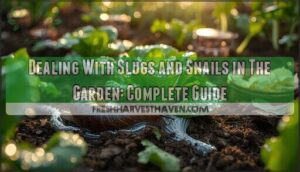
Last summer, a single night of slug activity destroyed an entire bed of young lettuce seedlings—a 25% crop loss that could have been prevented with early detection.
Slugs and snails rank among the most persistent garden pests because they feed under cover of darkness, leaving behind telltale slime trails and ragged holes in your prized plants. These mollusks thrive in moist environments, which means the same conditions that help your garden flourish also create ideal habitat for them.
The good news? Dealing with slugs and snails in the garden doesn’t require harsh chemicals or constant vigilance. A combination of early identification, strategic barriers, and organic control methods can protect your plants while maintaining a balanced ecosystem that keeps these pests in check naturally.
Table Of Contents
- Key Takeaways
- Identifying Slug and Snail Damage
- Why Slugs and Snails Thrive in Gardens
- Organic Slug and Snail Control Methods
- Effective Barriers and Natural Deterrents
- Sustainable Prevention and Garden Practices
- Frequently Asked Questions (FAQs)
- How do I keep snails and slugs out of my garden?
- Why is my garden full of snails and slugs?
- Do coffee grounds keep slugs and snails away?
- What kills slugs and snails instantly?
- How do I stop slugs and snails in my garden?
- What do slugs and snails hate the most?
- Will coffee grounds keep slugs and snails away?
- Should you kill slugs in the garden?
- How to get rid of slugs and snails in your garden?
- Do slugs & snails damage garden plants?
- Conclusion
Key Takeaways
- Early detection matters most—recognizing slime trails, irregular leaf holes, and overnight seedling damage helps you stop slug and snail destruction before crop losses reach 15-25% of your harvest.
- Physical barriers like copper tape, diatomaceous earth, and crushed eggshells create an effective first line of defense by exploiting the mollusks’ soft bodies without introducing harsh chemicals into your garden ecosystem.
- Smart watering strategies make your garden less hospitable—watering early in the morning instead of evening disrupts the pests’ active hours and reduces the damp conditions they need to thrive.
- Building biodiversity through native plants, natural predators like ground beetles and birds, and habitat variety delivers long-term control by creating a self-regulating system that suppresses slug populations by 40-60% naturally.
Identifying Slug and Snail Damage
You can’t fight an enemy you can’t identify. Distinct calling cards are left by slugs and snails in your garden, and recognizing these signs early makes all the difference in protecting your plants.
If you’re seeing shiny slime trails, irregular holes in leaves, or seedlings disappearing overnight, learning proven prevention techniques for garden pests will help you stop the damage before it spreads.
Let’s walk through what to look for so you can catch these pests before they turn your garden into an all-you-can-eat buffet.
Signs of Infestation
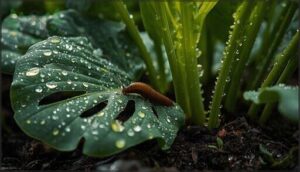
You’ll spot the telltale slime trail first—that silvery ribbon slugs and snails leave across leaves and soil. Look for irregular feeding holes in foliage, especially after night activity when these pests are most destructive.
Plant scars and nibbled edges reveal ongoing damage, while soil disturbance near stems signals hidden feeding. Early detection makes slug and snail control methods far more effective.
It’s vital to be aware of early pest infestation signs to prevent extensive garden damage.
Vulnerable Plants and Seedlings

Once you’ve identified the seedling protection, turn your attention to young plants – they are sitting ducks. Tender new growth lacks the defense compounds and thick cuticles of mature foliage, making vulnerable crops like lettuce and hostas prime targets.
These nibbled plants can’t bounce back easily because their shallow roots and thin leaves struggle with moisture loss. Plant hardening before transplanting helps, but garden vigilance remains your best defense for young plant care.
Slug-resistant varieties exist, though plant damage prevention starts with monitoring.
Impact on Garden Productivity

Understanding the full extent of slug damage patterns puts garden productivity in sharper focus. Slug and snail management isn’t just about cosmetics—crop yield loss can hit 15 to 25 percent in affected beds when repeated feeding lowers photosynthetic capacity.
Early season attacks on transplants delay harvests by one to three weeks, while soil health effects near feeding zones disrupt seedling establishment and nutrient cycling throughout your garden ecosystem.
Maintaining biodiversity in urban gardens is also vital, as it helps regulate pest populations naturally.
Why Slugs and Snails Thrive in Gardens
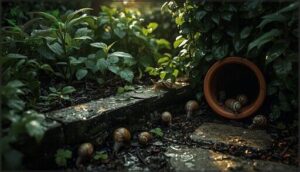
Your garden isn’t accidentally attracting slugs and snails—it’s offering exactly what these moisture-loving mollusks need to survive and multiply. Understanding why they choose certain spots helps you make your garden less inviting without resorting to harsh chemicals.
If you’re dealing with overly moist soil, check out these drought-tolerant summer garden tips to reduce standing water while still keeping pollinators happy.
Let’s look at the conditions that turn your yard into prime slug real estate.
Preferred Habitats and Conditions
Slugs and snails treat your garden like a five-star resort when you offer moist soil, dense vegetation, and shady spots. They need humidity levels above 60 percent and cool soil temperatures to thrive.
These mollusks create their ideal damp dim climate under thick mulch, leaf litter, and ground cover—perfect hiding places where moisture levels stay high and shade management becomes your key battleground.
Seasonal Activity Patterns
You’ll notice slugs and snails shift their feeding schedules throughout the year. Spring behavior peaks after April showers when newly hatched juveniles emerge.
Summer feeding extends into early morning hours as these pests escape midday heat. Autumn migration into leaf litter accelerates before frost, while winter dormancy sets in during prolonged cold.
Rainfall patterns drive the most dramatic activity surges within 24 hours of storms.
Common Hiding Places
Check those damp corners where moisture lingers longest. Ground cover and dense vegetation trap humidity, creating perfect slug habitats in hidden nooks.
You’ll find them clustered under mulch mats, behind raised bed liners, and beneath unused pots stacked in shaded areas. Garden debris like fallen fern fronds and leaf piles offer cool retreats, while drip line basins become reliable hiding places between irrigation cycles.
Organic Slug and Snail Control Methods
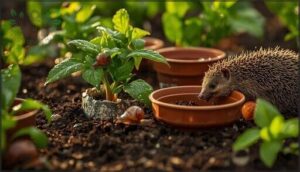
You don’t need harsh chemicals to manage slugs and snails effectively. Organic methods work by targeting their behavior patterns and creating conditions that make your garden less hospitable.
Let’s look at three proven approaches that protect your plants while maintaining a healthy ecosystem.
Handpicking and Night Hunts
When slugs emerge for night feeding after dusk, you can remove slugs by hand during nightly patrols—your most direct form of pest control. Handpicking tips include wearing gloves and using a flashlight to spot them on damp evenings, especially after 8 PM.
A slug hunt targets individuals hiding near plant bases and mulch before they damage seedlings, offering garden safety without chemicals or traps.
Natural Traps and Baits
You can trap and remove mollusks by setting beer traps—shallow dishes of beer attract them within two meters overnight.
Copper barriers around plant bases produce a mild electrochemical jolt that repels on contact. Molasses traps and yeast lures work as effective sugar baits, especially near lettuce beds.
These homemade slug repellents offer natural pest management without harsh chemicals.
Encouraging Natural Predators
Your garden already houses an army of slug hunters—you just need to roll out the welcome mat. Attracting beneficial wildlife like ground beetles, birds, and hedgehogs creates a biodiversity boost that keeps mollusk numbers in check.
Plant native flowers for insect support, install bird feeders for bird attraction, and leave leaf litter as habitat creation for ground-dwelling predators. These natural predators provide wildlife friendly pest control year-round.
Effective Barriers and Natural Deterrents
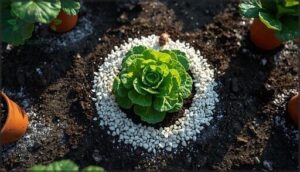
Physical barriers create a defense line that slugs and snails simply won’t cross. These methods work by exploiting the vulnerabilities of soft-bodied mollusks—sharp textures, electrical resistance, and moisture-absorbing materials all make their nighttime journeys nearly impossible.
Here’s how to build an effective barrier system around your most vulnerable plants.
Copper Tape and Collars
Copper barriers work because slugs and snails experience an unpleasant reaction when they cross the metal—think of it as nature’s electric fence. Here’s how to use copper tape and collars effectively:
- Wrap copper tape around pot rims or plant stems, overlapping ends by at least 2 cm
- Install collars 1-2 cm above soil level to block ground access
- Press firmly to make certain the adhesive holds without constricting growth
- Inspect monthly for corrosion or gaps, especially after heavy rain
- Pair with mulch management for enhanced slug deterrent protection
Clean surfaces before application and reapply annually to maintain barrier integrity.
Diatomaceous Earth and Eggshells
Two more natural slug deterrents work through abrasion rather than electricity. Diatomaceous earth scratches soft bodies as slugs cross the powder, causing dehydration—but you’ll need to reapply after rain.
Crushed eggshells offer dual benefits: the sharp edges discourage crossing while releasing calcium into your soil. Sprinkle both barriers in 5-cm bands around vulnerable seedlings for best results.
Repellent Plants and Mulch Management
Beyond physical barriers, companion planting offers organic pest control methods that work with garden ecosystems. Basil and lavender act as natural slug deterrents near ornamental beds, while rosemary ground cover reduces aphid visits on lettuce seedlings.
For mulch types, pine needle and straw layers at 2-3 cm create effective slug barriers without blocking beneficial insects—a great solution for ecofriendly pest management.
Sustainable Prevention and Garden Practices

The best defense against slugs and snails isn’t a single barrier—it’s changing how you manage your entire garden.
Small adjustments to your watering routine, maintenance habits, and plant diversity create an environment where molluscs struggle to thrive. Here’s how to build long-term control into your everyday gardening practices.
Watering Strategies and Mulch Choices
Since slugs thrive in damp conditions, smart watering schedules make all the difference. Water early in the morning so foliage dries before evening, when these pests emerge.
This moisture reduction strategy disrupts their active hours. Pair drip irrigation systems with organic mulch applied 2-4 inches deep for water conservation tips that support soil health while creating less hospitable conditions for molluscs in your garden maintenance routine.
Habitat Modification and Garden Cleanliness
Moisture reduction also depends on what you remove. Garden sanitation means raking dense groundcovers near beds and keeping mulch at least 5 centimeters from stems. Clear fallen leaves, weeds, and debris that create sheltered hiding places where slugs breed.
Here’s your yard cleanup checklist:
- Remove old pots and containers that trap dampness
- Clear tall grass within 1 meter of vegetables
- Replace thick organic mulch with coarse mineral alternatives
Supporting Biodiversity for Long-Term Control
When organic gardening embraces biodiversity management, you’re building ecosystem balance that sustains itself. Soil microbiome health feeds native predators like ground beetles and thrushes, which naturally suppress mollusc numbers by 40 to 60 percent. Garden heterogeneity—varied plants, textures, and edges—creates microhabitats where beneficial organisms thrive.
| Biodiversity Strategy | Impact on Slug Control |
|---|---|
| Mixed plantings with aromatic herbs | Masks feeding signals and distributes pest pressure |
| Dead wood and rock piles | Shelters predators that consume slugs nightly |
| Native vegetation buffers | Sources regional predator populations year-round |
This wildlife conservation approach transforms your garden into a self-regulating system. Sustainable gardening isn’t about eliminating every slug—it’s about maintaining ecological balance where damage stays minimal and biodiversity conservation delivers long-term control.
Sustainable gardening maintains ecological balance where biodiversity conservation delivers long-term slug control without eliminating every pest
Frequently Asked Questions (FAQs)
How do I keep snails and slugs out of my garden?
Think of your garden as a fortress—slug fences, plant selection, and physical barriers form your first line of defense.
Night patrols, soil modification, and garden sanitation complete your organic pest control strategy for total garden protection.
Why is my garden full of snails and slugs?
Your garden attracts these garden pests because it offers exactly what they need: consistent moisture, shade, and hiding spots in mulch or debris.
Night activity peaks where organic matter and vulnerable plants abound, drawing mollusk behavior naturally.
Do coffee grounds keep slugs and snails away?
Coffee grounds show mixed results as slug deterrents. While caffeine can disrupt their nervous systems at high concentrations, rain quickly washes away the barrier.
You’ll need frequent reapplication and shouldn’t rely on grounds alone.
What kills slugs and snails instantly?
Salt spray, boiling water, and ammonia solution deliver instant kills through dehydration or chemical damage. Metaldehyde pellets cause rapid paralysis.
Iron phosphate baits and diatomaceous earth work more gradually but remain effective.
How do I stop slugs and snails in my garden?
To get rid of slugs and snails, combine night patrols with beer traps, copper barriers, and garden sanitation.
Organic slug removal methods like handpicking and natural remedies work best with habitat modification and soil modification tactics.
What do slugs and snails hate the most?
Like kids avoiding broccoli, slugs steer clear of copper barriers, dry soil, and abrasive coffee grounds.
They also hate slug repellents like garlic spray, crushed egg shells, and rough surfaces that damage their soft bodies.
Will coffee grounds keep slugs and snails away?
Yes, but results vary. The caffeine and sharp texture in grounds can deter slugs and snails when applied as a thick barrier around plants. Refresh after rain for best effectiveness.
Should you kill slugs in the garden?
Killing slugs remains an ethical debate among gardeners. However, humane alternatives and natural predators offer effective slug control methods.
Wildlife conservation principles encourage coexisting with garden pests, recognizing their ecological role in healthy ecosystems.
How to get rid of slugs and snails in your garden?
Effective pest management combines organic controls like handpicking during night hunts, installing slug fences and copper barriers, encouraging natural predators, and practicing garden sanitation by removing hiding spots—all proven slug pellet alternatives for organic slug removal.
Do slugs & snails damage garden plants?
Picture a lush lettuce leaf, riddled with ragged holes and glistening slime trails—that’s the calling card of slugs and snails.
These nocturnal pests chew through tender foliage, leaving seedlings demolished and mature plants weakened.
Conclusion
An ounce of prevention truly beats a pound of cure when dealing with slugs and snails in the garden. By combining physical barriers, habitat management, and biological controls, you’ll shift the odds in your favor without resorting to harsh chemicals.
Your garden becomes more resilient when you work with nature’s rhythms rather than against them. Start tonight—check those hiding spots, set your barriers, and reclaim your lettuce beds before the next feeding cycle begins.
- https://www.jic.ac.uk/research-impact/technology-research-platforms/entomology-and-insectary/slugwatch/slug-identification-guide/green-cellar-slug/
- http://www.mrmiddleton.com/nemaslug-standard-pack/
- https://www.fruithillfarm.com/plant-care-protection/sprays-pellets-and-traps/sluggo-ultra-snail-pellets.html
- https://www.wildaboutgardens.org.uk/sites/default/files/2024-03/WAG%202024%20-%20Making%20friends%20with%20molluscs.pdf
- https://portlandnursery.com/docs/bestpractice-solutions/Slugs-SnailsBP.pdf