
This site is supported by our readers. We may earn a commission, at no cost to you, if you purchase through links.
Most gardeners pack up their lettuce beds when summer ends, not realizing they’re walking away from the best harvests of the year. Fall changes everything about how lettuce grows—cooler air slows the leaves down, and that slower growth lets sugars build up in ways that summer heat never allows. The result is crispier, sweeter, more flavorful lettuce than anything you’d pull from a July garden.
The catch is timing. Get it right, and you’re harvesting lettuce in fall well past the first frost with barely a wilted leaf. This guide walks you through every step—from picking cold-hardy varieties to storing your last harvest before winter sets in.
Table Of Contents
- Key Takeaways
- Benefits of Harvesting Lettuce in Fall
- Choosing and Planting Fall Lettuce
- Caring for Lettuce Before Harvest
- Step-by-Step Guide to Harvesting Fall Lettuce
- Storing and Handling Freshly Harvested Lettuce
- Frequently Asked Questions (FAQs)
- Will lettuce grow back if you harvest it?
- What happens if you let lettuce grow too long?
- When to start lettuce for fall harvest?
- Can you wait too long to harvest lettuce?
- When to harvest lettuce in fall?
- How do I know when my lettuce is ready to pick?
- How do you pick lettuce so it keeps growing?
- How do you harvest winter lettuce?
- How late can you harvest lettuce?
- How do you know when leaf lettuce is ready to harvest?
- Conclusion
Key Takeaways
- Fall lettuce develops sweeter leaves because cooler nights slow growth and let sugars concentrate in the leaves, making them crispier.
- Timing your planting 45–75 days before your first frost—and choosing cold-hardy varieties like Winter Density or Black Seeded Simpson—makes the difference between a short season and one that stretches well past the first freeze.
- Using the cut-and-come-again method, where you snip outer leaves 2–3 inches above the crown, keeps plants producing for weeks instead of giving you just one harvest.
- Cooling your lettuce quickly to 32–36°F after picking, and storing it in a humid crisper drawer away from ethylene-producing fruits, is what keeps those leaves crisp and fresh long after harvest day.
Benefits of Harvesting Lettuce in Fall
Fall is honestly one of the best times to grow lettuce, and the reasons go beyond just the calendar.
The cooler air and shorter days create ideal conditions for leafy greens, and pairing that with a solid fall gardening checklist keeps your whole garden on track as the season shifts.
Cooler temperatures do something good for the plant—and for you as the grower. Here’s what you can actually expect when you time your harvest right.
Improved Flavor and Texture
One of the quiet rewards of fall harvest is what happens to flavor. When night temperatures dip to around 45°F, lettuce naturally develops sweeter leaves and a crisp texture that summer crops rarely match.
When nights cool to 45°F, fall lettuce quietly transforms — developing sweeter, crisper leaves that summer harvests rarely match
Cooler air slows growth, letting sugars concentrate instead of rushing through heat-stressed plants. Whether you’re cutting loose leaf types or using the cut and come again method, fall lettuce delivers noticeably tender bites and flavor enhancement worth the wait.
For even better results, consider starting with frost-tolerant lettuce varieties that thrive in cool autumn conditions.
Extended Harvest Period
Fall lettuce doesn’t have to stop at one cutting. With smart harvest scheduling and succession planting — sowing small batches every 7 to 10 days — you keep fresh leaves coming well into late fall.
Three ways to stretch your season:
- Use cut-and-come-again harvesting every 2–3 weeks
- Choose varieties with strong cold tolerance
- Add row covers for season extension through light frosts
For a helpful overview of, check out this resource to help your lettuce plants continue producing.
Reduced Pest Pressure
Cooler temps do more than just improve flavor — they also keep pest population numbers low.
Aphids, leafminers, and armyworms slow down as temperatures drop, giving you a natural head start on pest management. Natural predators like lacewings and syrphid flies move in and handle the rest.
With organic methods, you’ll often need little extra pest control, making fall the most forgiving season for lettuce care.
Choosing and Planting Fall Lettuce
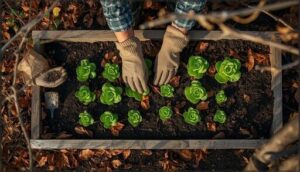
Getting your fall lettuce off to a good start comes down to a few key decisions made before you ever put a seed in the ground.
Knowing when and how to harvest vegetables like lettuce before bolting helps you plan your planting window so you’re never caught off guard at season’s end.
The variety you choose, when you plant, and how you prep your soil all shape what ends up on your plate. Here’s what you need to know to get it right.
Best Lettuce Varieties for Fall
Not every lettuce tolerates fall the same way — and smart lettuce variety selection makes all the difference. For reliable cold tolerance and great leaf texture, these cool season crops deliver:
- Black Seeded Simpson – crisp, cut-and-come-again leaf lettuce
- Winter Marvel butterhead – tender heads, survives light frost
- Winter Density romaine – compact, cold-hardy, space-efficient
- Sierra Batavian – crunchy leaves, ideal for repeated fall harvests
Sowing Times by Region
Timing your regional sowing window makes or breaks a fall lettuce harvest. In zones 3–5, get seeds in the ground by mid-August. Zones 6–7 gardeners can push into September.
If you’re in zones 8–10, cooler weather arrives later, so your planting times shift toward October. Always count back 50–75 days from your average first frost date.
Soil Preparation and Fertilization
Before anything goes in the ground, run a soil test. Lettuce thrives with a pH between 6.0 and 6.5, so knowing your numbers makes fertilization straightforward.
Work compost into the top 6–8 inches for better nutrient balance and drainage. For fertilizer types, a balanced 10-10-10 gives roots a solid start — your lettuce care and crop management will thank you.
Companion Planting for Lettuce
What grows beside your lettuce matters just as much as what goes in the soil. Thoughtful companion planting gives your fall harvest a real edge.
- Shade Provision – Tall tomatoes or trellised cucumbers shield lettuce from heat spikes above 80°F, slowing bolting.
- Pest Repellents – French marigolds deter aphids and slugs naturally.
- Trap Crops – Nasturtiums pull pests away from your lettuce varieties.
- Beneficial Herbs – Dill and coriander attract lacewings that eat aphids.
- Companion Flowers – Calendula draws predatory insects, keeping cool-weather crops healthier through the fall gardening season.
Caring for Lettuce Before Harvest

Getting your lettuce to the harvest stage is mostly about staying consistent with a few simple habits. The good news is that fall lettuce is pretty forgiving — it just needs a little attention along the way.
Here’s what to keep an eye on before you start cutting.
Watering and Irrigation Tips
Fall watering isn’t complicated, but get it wrong and your lettuce crop pays the price. Aim for 1 to 2 inches per week, and always water early morning so leaves dry before nightfall.
Drip irrigation keeps soil moisture steady without soaking foliage — a smart move for fall gardening.
| Irrigation Method | Best Use | Water Stress Risk |
|---|---|---|
| Drip Irrigation | Established plants | Low |
| Soaker Hose | Row beds | Low–Medium |
| Overhead Sprinkler | Germination stage | Medium–High |
Mulching and Frost Protection
Think of mulch as a sleeping bag for your soil. Layering 2 to 3 inches of straw or shredded leaves around your fall lettuce locks in soil insulation and keeps roots several degrees warmer during cold snaps.
Add frost covers over low hoops before hard freezes, and you’ll keep cool-weather harvests going much longer than your neighbors might expect.
- Use straw or shredded leaves for lightweight, breathable mulch types
- Keep mulch a few inches from the crown to prevent rot
- Secure row protection covers at the edges so cold air can’t sneak underneath
Monitoring for Pests and Diseases
Walk each bed in a zigzag pattern at least twice a week — that’s your best scouting technique for catching problems early. Flip leaves over to spot aphids hiding deep in the heart, or slug trails near the soil.
For organic solutions, neem oil tackles most infestations before they spread. Staying consistent with pest management protects your lettuce varieties all the way to harvest.
Step-by-Step Guide to Harvesting Fall Lettuce
Once your lettuce looks ready, the actual harvest is simpler than you might think.
A few small decisions — like how you cut and when you do it — can make a real difference in how much your plants keep giving.
Here’s exactly what to do, step by step.
Signs Lettuce is Ready to Harvest
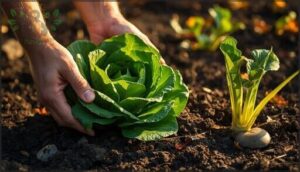
Knowing exactly when your lettuce is ready makes all the difference between a great salad and a bitter disappointment. Watch these key signals before harvesting:
- Leaf Color & Texture: Deep green, glossy leaves that snap crisply signal peak harvest timing
- Head Firmness: A gentle squeeze should feel dense and full, never hollow
- Leaf Size: Outer leaves reaching 4–6 inches mean it’s time
- Bolting Signs: A rising center stalk means harvest immediately — flavor turns bitter fast
Cut-and-Come-Again Vs. Whole Head Methods
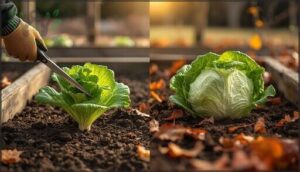
Once you’ve spotted those ready-to-pick leaves, your next call is how to harvest.
Cut and come again harvest techniques work beautifully for loose leaf lettuce varieties — snip outer leaves 2–3 inches above the crown, and new leaf regrowth appears within 7–14 days.
Whole head harvesting gives better crop yield in one cut but ends that plant’s run entirely, so match your method to your meal plans.
Harvesting at The Optimal Time of Day
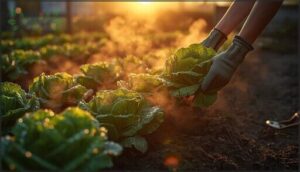
Now that you’ve chosen your harvest method, timing matters more than most gardeners expect. Early morning is your best window — leaves are crisp, fully hydrated, and carrying the lowest field heat thanks to cool temperature benefits.
If mornings are dewy, wait until leaves dry, then harvest before midday heat sets in. For lower nitrate levels, a cool late afternoon works just as well.
Proper Tools and Hygiene for Harvesting

Your tools matter just as much as your timing. A sharp harvest knife or scissors makes cleaner cuts than anything serrated or dull — less bruising, better shelf life.
Before harvesting lettuce, sanitize everything: dip blades in a diluted bleach solution, wash containers with hot soapy water, and keep clean containers separate from dirty ones. Always wash your hands first.
Storing and Handling Freshly Harvested Lettuce

You did the hard part — now don’t let a bad storage job undo it.
How you handle your lettuce in the next few minutes after picking makes all the difference in how long it stays crisp and fresh.
Here’s what to do right after the harvest.
Cleaning and Drying Lettuce Leaves
Getting your lettuce clean doesn’t have to be complicated. Start with simple rinsing methods — cool running water does most of the heavy lifting. For food safety, wash your hands first, then swirl leafy greens in a bowl of cold water. A vinegar wash (one part vinegar to three parts water) helps reduce bacteria on salad greens.
- Rinse both sides of each leaf under cool water
- Soak in a diluted vinegar solution for 30–60 seconds, then rinse again
- Use a salad spinner for quick, thorough drying
- Pat remaining moisture with paper towels before storage
Best Storage Methods for Longevity
Once your lettuce is dry, smart storage makes all the difference. Set your crisper drawer to high humidity — around 90 to 95 percent — and aim for 32 to 36°F for refrigeration tips that actually work.
Use airtight storage containers lined with a dry paper towel for moisture absorption. Keep lettuce far from apples or bananas; ethylene management and humidity control together are your best harvest management tools.
Preventing Wilting and Browning
Crispness doesn’t last by accident — it takes intentional care. After harvesting lettuce, a few smart habits protect every leaf:
- Cool quickly to 32–36°F for temperature control and enzyme inhibition
- Use perforated bags for humidity management and airflow balance
- Practice gentle handling to prevent bruising and leaf moisture loss
Damaged leaves brown fast. Your harvest management strategy starts the moment you cut.
Frequently Asked Questions (FAQs)
Will lettuce grow back if you harvest it?
Yes, most loose leaf varieties bounce back beautifully. Smart cut-and-come-again methods support steady leaf renewal, giving you three to four harvests per plant — though regrowth limits apply once bolting begins.
What happens if you let lettuce grow too long?
Wait too long, and your lettuce pays the price.
The bolting process kicks in, bitter flavor takes over, leaf texture turns tough and chewy, and the plant stops producing anything worth eating.
When to start lettuce for fall harvest?
Count back 45 to 60 days from your first frost date. That’s your planting window for fall lettuce. Earlier for romaine, later for looseleaf or baby greens.
Can you wait too long to harvest lettuce?
Absolutely — waiting too long is one of the most common mistakes in crop management. Once lettuce bolts, flavor changes fast, turning bitter and tough.
Good harvest timing protects your lettuce quality every single time.
When to harvest lettuce in fall?
Harvest fall lettuce when daytime temperatures hold between 55 and 70°F and outer leaves reach 4 to 6 inches tall. That sweet spot gives you crisp, mild flavor before frost closes the season.
How do I know when my lettuce is ready to pick?
Check leaf size first — outer leaves at 4 to 6 inches signal it’s time. Watch for color change, firm heads, and avoid bolting signs like a stretching center stalk.
How do you pick lettuce so it keeps growing?
Think of your lettuce like a haircut — trim it right, and it grows back fuller.
Use the cut-and-come-again method: snip outer leaves, protect the crown, and you’ll keep harvesting leafy greens for weeks.
How do you harvest winter lettuce?
For winter lettuce, snip outer leaves about 2 inches above the crown each morning when leaves are firm and cold.
This leaf selection method protects the growing center, extending your fall harvest through frost.
How late can you harvest lettuce?
Your lettuce’s calendar doesn’t end when frost arrives. With cold frames and row cover for season extension, cool weather harvests stretch well past December — stop only when nights consistently hit 20°F.
How do you know when leaf lettuce is ready to harvest?
Your loose leaf is ready when outer leaves hit 4 to 6 inches tall and show full, rich color. That’s your harvest window — before bolting begins and bitterness sets in.
Conclusion
Most gardeners treat fall deadline as if the garden punches out when summer does. Meanwhile, the lettuce is just getting started.
Harvesting lettuce in fall rewards the gardener who stays curious past September. You’ve got the timing, the varieties, and the storage methods now—everything you need to keep cutting long after your neighbors have put their gloves away.
Don’t pack up early. The crispest leaves of the season are still out there waiting.
- https://www.sustainablemarketfarming.com/tag/cold-tolerance-of-lettuce/
- https://www.patwelsh.com/garden-q-a/vegetable-garden/
- https://extension.umd.edu/resource/growing-lettuce-home-garden
- https://migardener.com/blogs/blog/how-to-harvest-lettuce
- https://www.gardenary.com/blog/how-to-harvest-lettuce-to-increase-production