
This site is supported by our readers. We may earn a commission, at no cost to you, if you purchase through links.
Most gardeners feed their peppers the same way from seedling to harvest, and then wonder why their plants refuse to fruit. Peppers demand different nutrients at different stages, and the wrong fertilizer ratio at the wrong time stunts production faster than any pest or disease. A nitrogen-heavy formula might push impressive foliage in June, but come August, you’ll be staring at leafy bushes with sparse peppers.
The best fertilizer for peppers isn’t a single product—it’s a strategic approach that shifts as your plants grow. Once you match your feeding schedule to what peppers actually need during germination, flowering, and fruiting, you’ll see the difference in both plant vigor and harvest weight.
Table Of Contents
- Key Takeaways
- Key Nutrients for Healthy Pepper Plants
- Choosing The Best Fertilizer for Peppers
- Top 7 Fertilizers for Peppers Reviewed
- Fertilizer Application Tips for Peppers
- Optimizing Soil Health for Pepper Growth
- Frequently Asked Questions (FAQs)
- Is 20-20-20 fertilizer good for pepper plants?
- How often should you fertilize a pepper plant?
- Is 5-10-10 good for peppers?
- What does Epsom salt do for pepper plants?
- What’s the best fertilizer for peppers?
- Is 20/20/20 fertilizer good for peppers?
- Can I fertilize peppers during cold weather?
- How does container size affect fertilizer needs?
- Should I fertilize peppers with yellowing leaves?
- What fertilizer works best for hot peppers?
- Conclusion
Key Takeaways
- Peppers need different fertilizer ratios at each growth stage—high nitrogen early for foliage, then switch to higher phosphorus and potassium (like 5-10-10) once flowering starts to drive fruit production instead of just leaves.
- Soil pH between 6.0 and 6.5 is critical because outside this range your peppers can’t absorb nutrients no matter how much you fertilize, with aluminum toxicity below 5.8 and phosphorus lockup above 7.0.
- Over-fertilization shows up as crispy leaf tips and stunted fruit, so start seedlings at half-strength formulas and watch for burn signs before ramping up your feeding schedule.
- Calcium and magnesium matter just as much as NPK—calcium prevents blossom end rot and improves flavor, while magnesium powers photosynthesis and keeps leaves green throughout the season.
Key Nutrients for Healthy Pepper Plants
Your pepper plants need the right nutrients to thrive, but not all of them do the same job. Some build strong leaves and stems, while others fuel flowering and fruiting or help move water through the plant.
Timing your harvest right ensures you’re collecting peppers at their peak nutrient density, which you can master by learning how to harvest bell peppers at different ripeness stages.
Let’s break down which nutrients matter most and how soil chemistry can make or break your harvest.
Nitrogen, Phosphorus, and Potassium Roles
Understanding NPK balance is your first step toward pepper mastery. Nitrogen fuels leafy growth and photosynthesis, phosphate strengthens roots and powers flowering, and potash regulates water while building disease resistance.
Your fertilizer ratios should shift with growth stages—higher nitrogen early on, then more phosphorus and potassium as fruit sets.
This nutrient uptake dance directly impacts soil fertility and plant nutrition success. To improve yields, it’s crucial to follow.
Importance of Calcium and Magnesium
Beyond NPK ratio, calcium and magnesium are game-changers for fruit development and soil balance. Calcium strengthens cell walls in your peppers, preventing blossom end rot and boosting flavor through better sugar transport.
Magnesium powers photosynthesis as the core of chlorophyll, keeping leaves green and energy flowing.
Together, they enhance nutrient interactions and soil health—making your fertilization schedule work harder.
How Soil PH Affects Nutrient Uptake
Those nutrients won’t reach your peppers if soil pH is off. At pH 6.0 to 6.5, nitrogen, phosphate, and micronutrient uptake hit their peak—roots absorb what you’re feeding them.
Peppers absorb nutrients best when soil pH stays between 6.0 and 6.5, where roots can actually use what you feed them
Drop below 5.8 and aluminum toxicity damages roots. Rise above 7.0 and phosphorus locks up with calcium.
Soil testing reveals your baseline, letting you adjust pH before your fertilization schedule fails. For a deeper dive into how pH shapes nutrient availability for plants, see the latest research.
Choosing The Best Fertilizer for Peppers
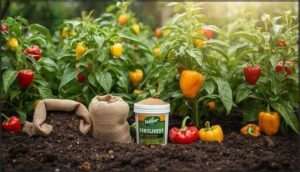
Picking the right fertilizer for your peppers isn’t about grabbing the first bag off the shelf. You need to understand what those numbers mean, how organic and chemical options stack up, and when to shift your feeding strategy as your plants grow.
Let’s break down exactly what to look for so you can make the best choice for your garden.
Fertilizer Grades and What They Mean
Those three numbers on fertilizer labels—like 10-10-10 or 5-10-10—tell you exactly what you’re feeding your peppers. The NPK ratio shows the percentage by weight of nitrogen, phosphate, and potash in that order.
Here’s what each does:
- Nitrogen (N) fuels leafy growth and green foliage
- Phosphate (P₂O₅) fosters strong roots and flowering
- Potash (K₂O) boosts overall plant health and stress resistance
- Balanced ratios like 10-10-10 work well for general feeding
Understanding NPK values helps you match fertilizer grades to your pepper’s growth stage.
Differences Between Organic and Chemical Fertilizers
Choosing between organic and chemical fertilizers for peppers comes down to speed versus sustainability. Chemical fertilizers deliver nitrogen and other nutrients rapidly—often within hours—giving you quick growth and precise NPK ratios.
Organic fertilizers release nutrients slowly through soil microbes, building long-term fertility and nutrient cycling. Organics improve soil structure over time, while synthetics can reduce microbial activity if overused.
Selecting Fertilizer Based on Growth Stage
Timing matters for fertilizer for peppers. Your seedlings need a light, balanced blend to avoid root burn while building early strength.
As vegetative growth kicks in, shift to nitrogen-rich formulas for lush foliage.
Once flowering starts, switch to higher phosphorus and potassium—think 5-10-10 NPK—to fuel fruit set and boost yields through proper nutrient uptake.
Top 7 Fertilizers for Peppers Reviewed
You’ve learned what peppers need to thrive, so now it’s time to match those needs with the right fertilizer.
I’ve tested and reviewed seven standout products that deliver consistent results across different growing situations. Each option below brings something unique to the table, whether you’re growing in containers or garden beds.
1. Espoma Organic Garden Fertilizer
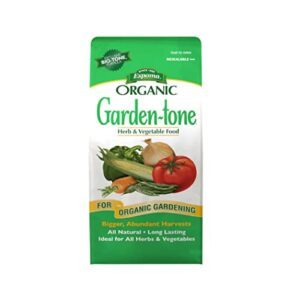
Espoma Garden Tone delivers a balanced 3-4-4 NPK formula that feeds your peppers steadily without the risk of burning tender roots. This organic option includes Bio-tone microbes that actually boost nutrient uptake in the soil, which means stronger plants and better yields.
You’ll work the granules into your topsoil at transplant time, then reapply monthly throughout the season. The slow-release formula builds soil health over time rather than spiking nutrients fast. It’s USDA Organic certified and made without synthetic fillers or sludge.
| Best For | Organic gardeners growing vegetables and herbs who want a safe, slow-release fertilizer that builds soil health without burning plants. |
|---|---|
| Form | Granules |
| Weight | 4 lb |
| Organic | Yes |
| Application Type | Granular spread |
| Made in USA | Yes |
| Use Case | Vegetables & herbs |
| Additional Features |
|
- Balanced 3-4-4 formula with Bio-tone microbes enhances nutrient uptake and promotes healthy root development
- USDA Organic certified with no synthetic chemicals, sludges, or toxic ingredients
- Works for both cool-season greens and warm-season crops like tomatoes and peppers
- Strong odor that some gardeners may find unpleasant
- Requires monthly reapplication throughout the growing season for best results
- May feel “hot” initially, which can be concerning for first-time users despite being normal
2. FoxFarm Liquid Fertilizer Soil Trio
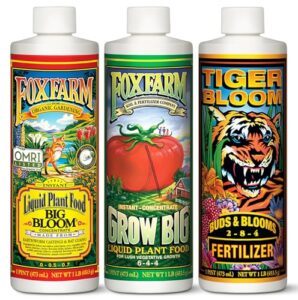
FoxFarm’s three-bottle system gives you total control over your pepper’s nutritional needs at every stage. Mix each liquid with water following the feeding schedule that comes with the trio, adjusting rates based on how your plants respond.
You’ll use Grow Big during the vegetative phase for lush foliage, then switch to Tiger Bloom when flowers appear to drive fruit production. Big Bloom, with its earthworm castings and bat guano, works throughout to strengthen roots and improve soil moisture retention.
| Best For | Gardeners who want precise control over their pepper plants’ nutrition through each growth stage, from seedling to harvest. |
|---|---|
| Form | Liquid |
| Weight | 1 lb |
| Organic | No |
| Application Type | Liquid mix |
| Made in USA | Yes |
| Use Case | All plant types |
| Additional Features |
|
- Three-bottle system lets you tailor feeding to vegetative growth, flowering, and fruiting phases
- Easy to mix with water and adjust dosing based on how your plants respond
- Works across all growing methods—soil, hydroponics, indoor, or outdoor setups
- Bottles may arrive with seal issues or crusty residue on caps
- Overfeeding can burn your plants, so you need to stick to the schedule and monitor closely
- Strong organic smell that some growers find off-putting
3. Miracle Gro Organic Plant Food
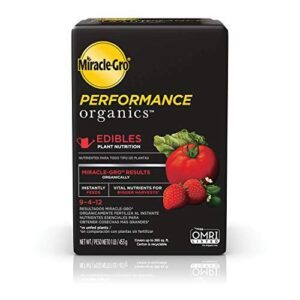
If you’re looking for an OMRI-listed option that won’t overload your pepper plants, Miracle-Gro’s liquid organic formula delivers gentle, plant-based nutrition. Its 1-0.5-1 ratio provides steady nitrogen for leafy growth without pushing excessive foliage that steals energy from fruit production.
You’ll mix the concentrate with water and apply it directly to the soil, where nutrients move quickly into the root zone. This works especially well for container peppers, which need frequent, low-dose feeding as potting mix loses nutrients faster than garden beds.
| Best For | Organic gardeners growing peppers in containers who want OMRI-certified nutrition that feeds plants quickly without causing excessive foliage growth. |
|---|---|
| Form | Powder |
| Weight | 1 lb |
| Organic | Yes |
| Application Type | Water soluble |
| Made in USA | Not specified |
| Use Case | Tomatoes & vegetables |
| Additional Features |
|
- OMRI-listed for certified organic growing with plant-based ingredients
- Feeds instantly through quick-absorbing liquid formula ideal for container peppers
- Balanced NPK ratio promotes fruiting without overstimulating leafy growth
- Strong, unpleasant odor that some users find off-putting
- Powder can be difficult to fully dissolve, often requiring warm water and stirring
- More expensive than synthetic options, especially for larger gardens or frequent feeding
4. Miracle Gro Organic Plant Nutrition Granules
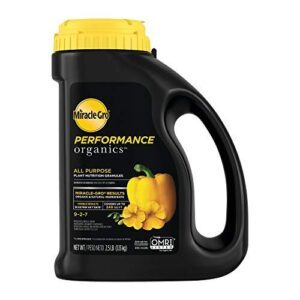
When you need a granular option that feeds both peppers and the soil beneath them, Miracle-Gro’s Performance Organics stands out with its 7-6-9 analysis. That higher potassium level promotes flower development and fruit quality, while the moderate nitrogen keeps foliage in check.
You’ll spread these OMRI-listed granules around established plants and water them in, then reapply every four to six weeks. The organic ingredients break down slowly as microbes work, delivering steady nutrition without sudden spikes that stress pepper roots.
| Best For | Organic gardeners who want a granular fertilizer that feeds peppers steadily over time while improving soil health naturally. |
|---|---|
| Form | Granules |
| Weight | 2.5 lb |
| Organic | Yes |
| Application Type | Granular spread |
| Made in USA | Not specified |
| Use Case | Vegetables & flowers |
| Additional Features |
|
- Higher potassium (7-6-9) supports strong flowering and fruit development without pushing excessive leafy growth
- OMRI-listed organic formula breaks down gradually through microbial activity for consistent nutrition
- Built-in shaker makes application easy and covers up to 240 sq. ft. per container
- Requires reapplication every 4-6 weeks, which can be more work than slow-release synthetic options
- Granules can burn plant stems if they touch directly, so you need to apply carefully around the base
- Typically costs more than conventional fertilizers and may not last as long between feedings
5. Greenway Pepper And Herb Fertilizer Powder
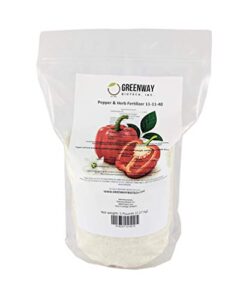
If you grow peppers in hydroponics or want serious potassium for fruiting, Greenway’s 11-11-40 formula delivers. That 40 percent potassium boosts capsaicin in hot varieties and firms up fruit across the board, while chelated micronutrients—iron, manganese, zinc, copper, boron, molybdenum—prevent deficiencies before they show.
You’ll mix about half a teaspoon per gallon every four to six weeks in soil, or dissolve it completely for hydroponic reservoirs without clogging lines. The powder lacks package instructions, so measure carefully and adjust based on your system’s EC readings.
| Best For | Hydroponic growers and pepper enthusiasts who want maximum fruiting power and capsaicin production from a high-potassium formula with chelated micronutrients. |
|---|---|
| Form | Powder |
| Weight | 4 lb |
| Organic | Yes |
| Application Type | Granular spread |
| Made in USA | Yes |
| Use Case | Vegetables & herbs |
| Additional Features |
|
- 40% potassium drives serious fruiting, capsaicin development, and essential oil concentration in peppers and herbs
- Chelated micronutrients (iron, manganese, zinc, copper, boron, molybdenum) prevent common deficiencies
- 100% water soluble and clog-free for seamless use in hydroponic systems and drip lines
- No instructions on the package—you’ll need to measure carefully and adjust based on your system
- Requires some experience with EC readings and dilution rates to avoid over-feeding
- May need tweaking for different climates or growing conditions beyond standard pepper/herb setups
6. Dr Earth Organic Fertilizer
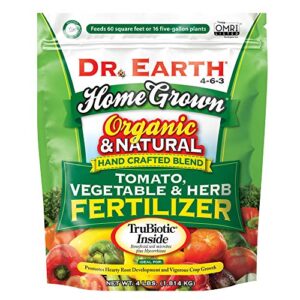
Dr. Earth’s granular formula brings a balanced NPK ratio and a living soil ecosystem. Endo and ecto mycorrhizae colonize roots to pull in phosphorus and water, while seven strains of beneficial microbes break down nutrients continuously.
You’ll scatter the pellets around your pepper base, scratch them in lightly, and water to activate the slow-release blend of feather and fish meals.
Expect steady feeding for months without the burn risk of synthetics, plus extra calcium to dodge blossom-end rot when temperatures swing.
| Best For | Organic gardeners who want a complete soil health system that feeds plants steadily while building beneficial microbe populations for stronger, more drought-tolerant pepper crops. |
|---|---|
| Form | Powder |
| Weight | 5 lb |
| Organic | No |
| Application Type | Water soluble |
| Made in USA | Not specified |
| Use Case | Peppers & herbs |
| Additional Features |
|
- Mycorrhizae and seven probiotic strains create a living soil ecosystem that improves nutrient uptake and water absorption
- Slow-release organic formula feeds for months without burning roots, making it forgiving for beginners
- Extra calcium helps prevent blossom-end rot during temperature fluctuations
- Calculating the right amount for small containers or custom soil mixes takes extra effort
- Compost tea mixture can be too concentrated for sensitive plants if not diluted properly
- Customer support reportedly doesn’t respond well to questions about application rates or troubleshooting
7. Miracle Gro Organic Plant Nutrition
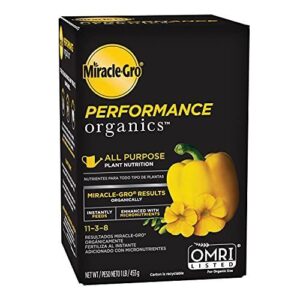
Miracle-Gro’s Performance Organics granules deliver an 11-3-8 ratio that powers vegetative growth when your peppers are building sturdy stems and lush canopies. You’ll shake the granules onto your soil surface, scratch them in, then water to start nutrient release.
The high nitrogen content accelerates foliage expansion, though you’ll want to switch to a higher-phosphorus option once buds appear. Expect visible results within a week, and plan to reapply every four to six weeks during active growth.
| Best For | Gardeners who want quick nitrogen delivery during early pepper growth and don’t mind switching fertilizers once flowering starts. |
|---|---|
| Form | Granules |
| Weight | 4 lb |
| Organic | Yes |
| Application Type | Granular spread |
| Made in USA | Not specified |
| Use Case | Vegetables |
| Additional Features |
|
- Feeds instantly with visible results in about a week
- High nitrogen (11-3-8) builds strong stems and healthy foliage fast
- Works for multiple plant types—vegetables, flowers, and herbs
- Granules can be tough to dissolve and may leave sludge in your watering can
- You’ll need a different fertilizer once peppers start flowering (too much nitrogen at that stage)
- Pricier than many competing organic options
Fertilizer Application Tips for Peppers
Knowing which fertilizer to use is only half the battle. The real difference comes down to when you apply it and how you get those nutrients into your plants without causing harm.
Let’s walk through the timing, techniques, and common mistakes that can make or break your pepper harvest.
When and How Often to Fertilize
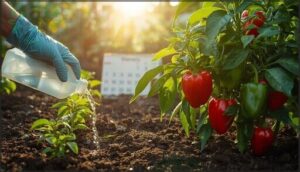
Fertilization timing separates thriving pepper plants from struggling ones. Start feeding about one week after seedlings sprout to build strong roots and stems.
During active growth, most peppers respond best to weekly or biweekly applications—your fertilizer label will guide the exact schedule. Adjust feed frequency when growth slows in cool periods, and always water thoroughly before fertilizing to boost nutrient uptake and prevent root burn.
Proper Application Methods for Maximum Absorption
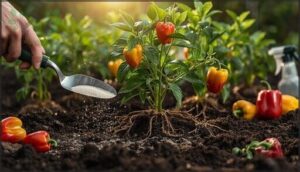
Where you place fertilizer makes all the difference. Root zone placement works best—band granular fertilizer 4 inches from stems and work it into the top 2 to 3 inches for even soil incorporation. Always water deeply after fertilization to activate nutrients and push them toward feeder roots.
Foliar feeding with diluted NPK solutions offers quick micronutrient fixes during cool mornings when pepper plant fertilization through leaves peaks.
Avoiding Over-Fertilization and Nutrient Burn
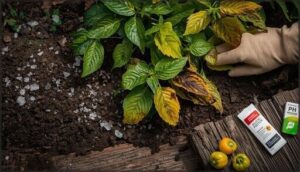
Over-fertilization often sneaks up on you before symptoms appear. Watch closely for crispy leaf tips, brown margins, and stunted fruit set—classic nutrient burn signs from salt buildup in your soil. Keep your pepper plant fertilization balanced with these burn prevention tactics:
- Start seedlings at half-strength NPK formulas
- Switch to lower nitrogen once flowering begins
- Leach containers with water to flush excess salts
- Monitor pH management between 6.0 and 6.8
- Match fertilizer rates to growth stage guidelines
Optimizing Soil Health for Pepper Growth
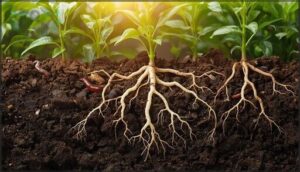
Even the best fertilizer won’t do much if your soil can’t support strong root systems and efficient nutrient flow. Healthy soil structure creates the foundation for vigorous pepper plants that actually use what you feed them.
Let’s look at how you can build better soil and catch problems before they slow down your harvest.
Improving Soil Structure and Fertility
Think of your soil as a living ecosystem—building sturdy structure and fertility gives your peppers the foundation they need to thrive.
Work 2 to 3 inches of finished compost into beds yearly to boost organic matter, improve soil aggregation, and increase nutrient cycling. This approach elevates fertility levels while promoting soil aeration, creating ideal conditions for healthy root growth and balanced NPK availability through effective soil fertility management.
Monitoring for Nutrient Deficiencies
Catching nutrient deficiencies early saves your peppers from permanent setbacks. Watch for these plant stress signs:
- Nitrogen deficiency – uniform yellowing on older leaves with stunted growth
- Phosphorus deficiency – purple or reddish tints developing on older foliage
- Potassium deficiency – leaf edges turning brown and scorched
- Magnesium deficiency – yellowing between veins while veins stay green
- Iron deficiency – pale yellow new leaves with green veins
Conduct soil pH management tests and nutrient testing to confirm suspected fertilizer imbalance before adjusting fertilizer application.
Frequently Asked Questions (FAQs)
Is 20-20-20 fertilizer good for pepper plants?
A 20-20-20 fertilizer works well during early vegetative growth when pepper plants need balanced nutrition for strong stems and healthy foliage.
Once flowering begins, switch to higher phosphorus and potassium ratios.
How often should you fertilize a pepper plant?
Your pepper plant care routine should include fertilizing every 2 to 4 weeks during the growing season.
Adjust fertilizing frequency based on growth stages, soil types, and nutrient uptake needs for ideal plant nutrition.
Is 5-10-10 good for peppers?
Absolutely—5-10-10 is an excellent fertilizer selection for peppers! The nutrient balance delivers moderate nitrogen for foliage, higher phosphorus for root strength and blooms, plus potassium for fruit quality and plant response throughout your growing season.
What does Epsom salt do for pepper plants?
Epsom salt supplies magnesium that sits at the heart of chlorophyll molecules, helping your pepper plants photosynthesize efficiently.
When soil runs low on this essential nutrient, it results in deeper green leaves.
What’s the best fertilizer for peppers?
You need a formula with lower nitrogen and higher phosphorus and potassium—something like 5-10-10 works well. This NPK ratio encourages flowering and fruiting instead of just pushing leafy growth.
Is 20/20/20 fertilizer good for peppers?
Many growers reach for 20/20/20 fertilizer during early growth, and it works well then. The balanced NPK ratio drives vigorous foliage in young pepper plants, but switch to lower nitrogen once flowering starts.
Can I fertilize peppers during cold weather?
Skip fertilizing peppers when soil temperatures drop below 60°F—cold roots can’t absorb nutrients effectively.
Wait until consistent warm days return and monitor soil temperature to avoid stress and wasted effort during winter feeding strategies.
How does container size affect fertilizer needs?
Think of Container Size as your pepper plant’s pantry—smaller pots mean tighter shelves. Limited Soil Volume accelerates Nutrient Depletion through Root Restriction and leaching, demanding higher Fertilizer Frequency to sustain healthy growth.
Should I fertilize peppers with yellowing leaves?
Yellow leaves don’t always mean your pepper plants need fertilizer. Check soil moisture and drainage first—overwatering causes yellowing more often than nutrient deficiency, and adding fertilizer to waterlogged peppers worsens stress.
What fertilizer works best for hot peppers?
Hot peppers thrive with fertilizers offering balanced NPK ratios around 3-4-6 during fruiting. Potassium-rich blends boost fruit size and heat, while calcium prevents cracking. Organic options like fish emulsion support steady yields through proper soil conditioning.
Conclusion
Think of feeding peppers like shifting gears—you wouldn’t floor the accelerator in first and expect peak performance. The best fertilizer for peppers changes as your plants mature, matching their hunger for nitrogen early on and phosphorus when flowers emerge.
Stop guessing and start reading your plants. Watch their leaves, track their blooms, and adjust your approach. That strategic shift separates growers who harvest baskets from those who harvest regrets.