This site is supported by our readers. We may earn a commission, at no cost to you, if you purchase through links.
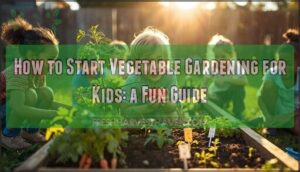
The first tomato a child grows tastes nothing like the ones from a grocery store. Ask any kid who’s pulled one warm off the vine—they’ll tell you it’s the best thing they’ve ever eaten.
That pride of ownership changes everything about how children relate to food and the natural world around them. Vegetable gardening for kids builds more than just green thumbs; it quietly teaches patience, responsibility, and scientific thinking without feeling like a lesson.
A small patch of soil and a packet of seeds can spark a curiosity that lasts a lifetime—and the steps to get started are simpler than you might expect.
Table Of Contents
- Key Takeaways
- Why Vegetable Gardening Benefits Kids
- Planning a Kid-Friendly Vegetable Garden
- Selecting Easy and Safe Vegetables for Kids
- Engaging Gardening Activities for Children
- Top 6 Kid-Friendly Gardening Products
- Frequently Asked Questions (FAQs)
- What is the easiest vegetable to grow for kids?
- What is the 80 20 rule in gardening?
- What are the easiest vegetables to grow for kids?
- How to start a vegetable garden for kids?
- What age is best to start gardening with kids?
- How do you handle garden pests without harsh chemicals?
- What should kids wear while gardening for safety?
- How often should children visit their garden weekly?
- Can container gardening work for small apartment spaces?
- What vegetables grow best in partial shade?
- Conclusion
Key Takeaways
- Gardening helps kids build confidence, responsibility, and curiosity by letting them care for plants and see their progress firsthand.
- Choosing easy-to-grow vegetables like radishes, lettuce, and cherry tomatoes keeps kids excited and makes harvesting quick and rewarding.
- Safe, accessible garden layouts and kid-sized tools encourage outdoor activity and make gardening fun and manageable for children of all ages.
- Hands-on projects like rainbow seed art, tepee frames, and nature experiments turn the garden into a playful space for learning and discovery.
Why Vegetable Gardening Benefits Kids
Vegetable gardening does a lot more for kids than just putting food on the table. It builds real skills, good habits, and a genuine love for the outdoors — all at the same time.
Research even backs this up — kids who garden tend to eat better, focus more, and behave well in school.
Vegetable gardening inspires kids to develop practical skills, healthy habits, and a lasting love for the outdoors
Here’s a look at the biggest ways it benefits them.
Building Responsibility and Life Skills
Responsibility doesn’t arrive all at once — it grows, just like your garden. When kids take on Task Rotation, Progress Tracking, and Budget Management for seeds and supplies, something clicks.
Gardening with Children builds Child Development through everyday choices:
- Watering schedules teach time management
- Tracking growth charts builds Data Literacy
- Team Coordination during group tasks strengthens communication
Outdoor Education never felt this hands-on.
Encouraging Healthy Eating Habits
Once kids start harvesting their own Easy to Grow Vegetables, Taste Exposure becomes a fun part of Family Meal Routines.
You might notice your child reaching for fresh carrots or snap peas, especially after helping with Cooking Involvement.
Using “build your own” salads or wraps, you foster Portion Awareness, Nutrition, and Gardening, while Reducing Food Waste through Kids Gardening Activities.
Fostering Curiosity About Nature
When you invite your child to Nature Journaling or Sensory Exploration in the garden, you spark questions and wonder.
Observing insects, creating Mini Ecosystem Projects, or joining Seasonal Scavenger Hunts turns kids gardening into a treasure hunt for answers.
Educational Gardening builds curiosity, weaving Nature Education and Outdoor Learning into Child Development through gardening—every sprout and bug becomes a story to share.
Supporting Outdoor Activity and Exercise
Curiosity keeps kids moving, and that’s where Kinesthetic Learning takes root.
Gardening for Kids turns Outdoor Activities into natural Movement Breaks—pulling weeds, carrying a watering can, and harvesting encourage bending, reaching, and walking without it feeling like exercise.
Watering Routines, Balance Pathways with stepping stones, and Weather Play all support Kids Outdoor development, making Outdoor Learning and Kids Gardening genuinely good for growing bodies.
Planning a Kid-Friendly Vegetable Garden
Before your kid digs their first hole, little planning goes a long way toward making the whole experience actually enjoyable.
The good news is that designing a kid-friendly garden doesn’t have to be complicated — it just needs to work for small hands and big curiosity.
Here are a few key things to think about before you get started.
Choosing The Right Location and Size
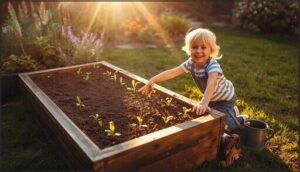
Ever notice how plants stretch toward the sun like enthusiastic kids reaching for a ball?
Sunlight exposure is key—aim for 6–8 hours daily.
Good soil drainage keeps roots happy, so loosen compacted earth.
For easy access, beds should be 12–18 inches tall and 3–4 feet wide.
Smart garden planning means safer, more inviting Kids Garden Design for all.
Designing Fun and Manageable Layouts
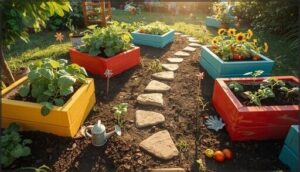
Designing a kid-friendly garden starts with making it feel like theirs. Use Color‑Coded Zones to separate sun-loving crops from shade plants — it’s practical garden planning that also teaches.
Raised Bed Sections keep easy-to-grow vegetables within reach, while Interactive Plant Stations let kids observe and record growth.
Themed Path Shapes like spirals or circles make Kids Garden Design genuinely exciting to explore.
Creating Paths and Dividing Sections
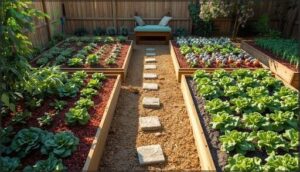
Good garden planning makes every step feel like an adventure.
Clear Path Widths of 24–30 cm give little feet room to move safely, while Hidden Stepping Stones turn walking between beds into a balance game. Color‑C Zones help kids and gardening routines click into place naturally.
Add Simple Irrigation Zoning and Elevated Play Areas, and you’ve got kid‑friendly gardening tips built right into the layout.
Ensuring Safe and Accessible Spaces
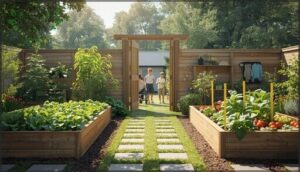
Safety starts from the ground up. Gentle ramp slopes and wide gateways, at least 32 inches across, make your garden welcoming for every child.
Non-slip surfaces keep muddy boots from slipping, while child-height storage puts tools within easy reach.
Color-coded zones help kids and gardening routines click naturally.
These kid-friendly gardening tips turn vegetable gardening for kids into a safe, accessible adventure everyone can enjoy.
Selecting Easy and Safe Vegetables for Kids
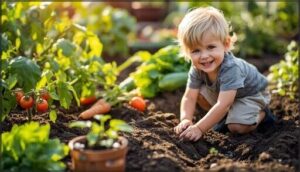
Picking the right vegetables makes all the difference when you’re gardening with kids.
Some plants are just easier to grow, safer to handle, and way more fun to watch sprout up from the soil. Here’s a look at the best options to get started.
Best Fast-Growing Veggies for Beginners
easy to grow vegetables practically beg to be planted first.
Radishes are a top pick — with rapid germination tips like keeping soil moisture management consistent, they’re harvest-ready in just 25 to 30 days.
Lettuce and carrots follow nicely for compact container choices.
seedling growth tracking with simple rulers, and use harvest timing strategies so kids always know exactly when to pick.
Kid-Friendly Fruits and Herbs
Imagine picking sun-warm strawberries right from your kid-friendly garden—now that’s a treat!
Gardening with Kids means you can try berry harvest safety, dwarf citrus care, and Herb Companion Planting.
Basil, mint, and chives make tasty snacks and add color.
Fruit tree pruning keeps dwarf apples manageable, while edible flower integration brings beauty and fun to your kids’ vegetable garden.
Unique and Fun Plant Varieties
Beyond herbs and berries, there’s a whole world of plants that’ll make your kids do a double‑take. Rainbow chard looks like it belongs in a crayon box, with pink, orange, and yellow stalks all on one plant.
Mini peppers, dwarf tomatoes, edible flowers, and pollinator‑friendly varieties like zucchini and peas keep things exciting.
Even beets and cherry tomatoes surprise kids with their bold colors and sweet flavors.
Avoiding Toxic Plants in Children’s Gardens
Kids gardening is all about fun, but it’s smart to keep an eye out for sneaky plants that aren’t safe. Here’s what you can do:
- Learn Poisonous Plant Identification together
- Choose Safe Mulch Options
- Use Child‑friendly Plant Labels
- Practice Toxic Plant Removal
- Prep for emergencies—just in case
That’s peace of mind for everyone! Make sure to identify poisonous plants early by consulting a reliable guide.
Engaging Gardening Activities for Children
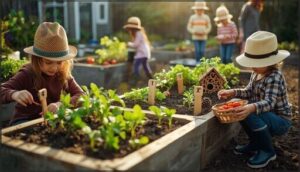
Gardening gets even better when kids have activities to look forward to beyond just watering and waiting.
There’s a whole mix of projects that make the garden feel like a place of discovery, building, and learning all at once.
Here are some of the best ways to keep kids engaged from the first seed to the last harvest.
Fun Planting and Harvesting Projects
Harvesting vegetables is like finding treasure—your hands get busy, your senses wake up, and your garden turns into a playground.
Try Rainbow Seed Art for bright rows, craft Seed Bomb Creations for splashes of color, or build a DIY Bird Feeder.
Here’s a quick peek at fun projects:
| Project | What You’ll Learn |
|---|---|
| Mini Herb Window | Daily snipping, scents |
| Butterfly Garden Kit | Pollinator spotting |
Simple Science and Nature Activities
After you’ve tasted your homegrown veggies, try simple science and nature activities that make gardening for kids even more exciting.
Watch seed germination in a clear jar, explore soil life with a worm compost bin, and track pollinators visiting your flowers.
These hands‑on kids activities turn vegetable gardening for kids into nature‑based learning, weaving science and gardening together every day.
Try a leaf breathing experiment to see photosynthesis in action.
Building Structures Like Tepees and Sunflower Circles
Let’s roll up your sleeves and build a tepee frame or sunflower ring layout—classic gardening projects for children!
Grab safe pole materials, weave in DIY cover fabrics, and create a cozy hideout.
Sunflowers offer shade and charm, while seasonal structure maintenance keeps everything sturdy.
Try a DIY bird feeder nearby for even more kid-friendly gardening tips and fun kids activities outdoors.
Teaching Garden Care and Safety
Teaching kids to garden means safety comes first, every single time.
Go through a simple Protective Gear Checklist together — closed‑toe shoes, lightweight gloves, a wide‑brim hat.
Cover Tool Safety Rules by showing how child‑sized tools are stored and handled correctly.
Practice Water Hygiene Practices like handwashing for 20 seconds after digging.
Use Boundary Marking Strategies with clear paths, and always follow Chemical Handling Basics by keeping fertilizers locked away.
Top 6 Kid-Friendly Gardening Products
The right tools can make gardening so much more fun for kids — and for you too. Having the proper gear helps little gardeners feel confident and stay excited about their plants.
Here are six kid-friendly products worth adding to your garden setup.
1. Colorful Metal Hanging Flower Pots

These little pots are a big hit with kids — and it’s easy to see why. The OGIMA set comes with 10 multicolor metal pots, each with a detachable hanging hook, so you can line them up along a fence, balcony rail, or window.
They’re iron-made with a varnish finish, meaning they hold up outdoors and indoors alike.
At 10cm wide, they’re just right for herbs, small flowers, or starter seedlings.
Plus, each pot has a drainage hole, so roots stay happy and healthy.
| Best For | Anyone looking to add a splash of color and charm to small spaces like balconies, fences, or windows with easy-to-use hanging pots. |
|---|---|
| Plant Capacity | 10 small pots |
| Suitable For | Herbs, flowers, seedlings |
| Indoor/Outdoor Use | Both |
| Child-Friendly | Yes |
| Material Type | Iron |
| Space-Saving | Yes |
| Additional Features |
|
- Bright, multicolor set is fun and eye-catching for both kids and adults.
- Durable iron construction works well indoors and outdoors.
- Drainage holes keep plants healthy and prevent overwatering.
- Hooks can be tricky to secure unless the pots are actually hanging.
- Colors may fade if left in direct sunlight for too long.
- Small size limits use to herbs, seedlings, or tiny plants only.
2. Stackable Strawberry Herb Garden Planter
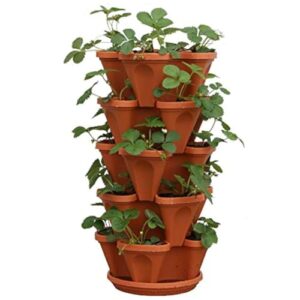
Ever wish you could grow a whole garden in the space of a doormat? Mr. Stacky Stackable Planter makes it possible—and fun for kids.
Five tiers offer twenty pockets, perfect for strawberries, mint, or even peas. Each layer drains into the next, so watering is a breeze (and messes stay contained in the bottom tray). Lightweight and easy to assemble, it keeps plants right at eye level, inviting curious hands to plant, water, and harvest—all without leaving the porch.
| Best For | People with small spaces, like balconies or patios, who want to grow herbs and strawberries without fuss. |
|---|---|
| Plant Capacity | 20 pockets |
| Suitable For | Herbs, strawberries, peas |
| Indoor/Outdoor Use | Outdoor/Indoor |
| Child-Friendly | Yes |
| Material Type | Plastic |
| Space-Saving | Yes |
| Additional Features |
|
- Space-saving vertical design fits almost anywhere
- Easy, tool-free assembly and lightweight to move
- Fun for kids and adults, with simple watering and maintenance
- Small pods limit root growth and plant size
- Can get unstable when stacked high or with mature plants
- Water doesn’t always distribute evenly, especially indoors
3. Mobile Garden Vegetable Planter Pot
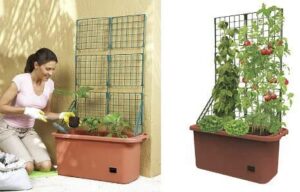
What if your garden could follow the sun? This mobile vegetable planter rolls wherever you need it, thanks to two wheels and a sturdy handle.
Kids love moving it around the patio or backyard, which means they’re already learning that plants need sunlight to thrive. It holds up to 10 gallons of soil, so there’s room for tomatoes, peas, herbs, or eggplant. The built-in 3-gallon water reservoir keeps soil from drying out too fast—one less thing to worry about.
| Best For | People with small outdoor spaces who want an easy way to grow veggies, herbs, or flowers and move their garden around. |
|---|---|
| Plant Capacity | 10-gallon planter |
| Suitable For | Veggies, herbs, flowers |
| Indoor/Outdoor Use | Outdoor |
| Child-Friendly | Yes |
| Material Type | Plastic/Metal |
| Space-Saving | Yes |
| Additional Features |
|
- Easy to move with wheels and handle, so you can chase the sun or rearrange your space.
- Self-watering feature means less hassle and healthier plants.
- Sectional trellis grows with your plants, making it flexible for different crops.
- Trellis can be brittle and may crack or break over time.
- Only two wheels, so moving it when full can be tricky.
- Planter might not hold up well after long exposure to sun and weather.
4. Black Wrought Iron Garden Trellis
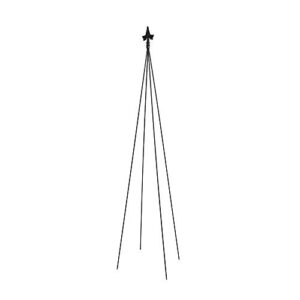
Want your veggie patch to reach new heights? Try a black wrought iron trellis—it’s like a climbing frame for plants!
With its classic Fleur-de-Lis design and powder‑coated finish, it stands tall and strong, perfect for sweet peas or cherry tomatoes.
Kids can weave stems through the lattice, watching vines stretch skyward.
It’s easy to install and fits both pots and garden beds, so you can create secret corners or bold towers.
Plus, the slim profile means it’s simple to store when seasons change.
| Best For | Gardeners who want to add height and charm to their space with lightweight climbing plants like clematis, sweet peas, or Mandevilla. |
|---|---|
| Plant Capacity | Single trellis |
| Suitable For | Climbing plants |
| Indoor/Outdoor Use | Both |
| Child-Friendly | Yes |
| Material Type | Wrought iron |
| Space-Saving | Yes |
| Additional Features |
|
- Elegant Fleur-de-Lis design looks great in garden beds, patios, or pots
- Adjustable legs and slim profile make it easy to reposition and store
- No assembly needed—just push it in and let your plants do the rest
- Not built for heavy vines or veggies—it’s better suited for lighter climbers
- Easier to install with a second set of hands, and may need extra anchoring in loose soil
- Some units may arrive slightly bent or damaged due to the welding process
5. Heavy Duty Plant Trellis Netting
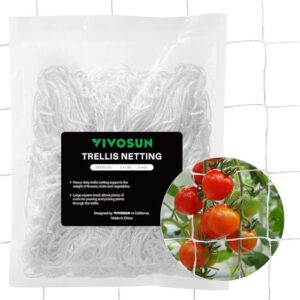
While a trellis gives plants a sturdy frame, netting takes things even further by turning your whole fence or garden wall into a growing zone.
The VIVOSUN Heavy Duty Trellis Netting stretches 5 x 15 feet and can be cut to fit any space, so it works whether you’ve got a tiny balcony or a big backyard.
The 6-inch mesh openings are perfect for guiding peas, cucumbers, or tomatoes upward, and kids love weaving stems through the squares as the plants climb.
| Best For | Gardeners who want a flexible, reusable way to train climbing plants like cucumbers, tomatoes, or peas — whether they’re working with a small balcony or a full backyard setup. |
|---|---|
| Plant Capacity | 5×15 ft net |
| Suitable For | Climbing veggies |
| Indoor/Outdoor Use | Both |
| Child-Friendly | Yes |
| Material Type | Nylon/polyester |
| Space-Saving | Yes |
| Additional Features |
|
- Stretches 5 x 15 feet and can be cut down to fit almost any space or garden setup
- The 6-inch mesh makes it easy to guide and weave stems through as plants grow
- Works for vertical, horizontal, and A-frame setups, so it adapts to however you like to garden
- The packaging can be a pain to open and get into
- You’ll likely need extra support or a structure to actually hang or secure it
- May not hold up well with very heavy or large plants without added reinforcement
6. Breathable Garden Grow Bags Set
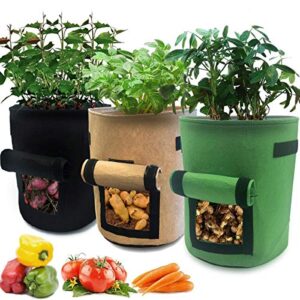
Once your climbers have a place to go up, it helps to give roots a smart home too.
A breathable grow bag set, like the three-pack Nicheo bags, keeps soil airy with non-woven fabric so roots stay healthy and don’t sit in soggy mud.
The built-in window lets kids peek at potatoes or carrots as they form.
Grips make it simple to slide bags around a patio, balcony, or sunny corner.
Kids feel proud caring for their portable mini garden.
| Best For | Families with small gardens, patios, or balconies who want an easy, hands-on way to grow vegetables with kids. |
|---|---|
| Plant Capacity | 3 grow bags |
| Suitable For | Root vegetables |
| Indoor/Outdoor Use | Both |
| Child-Friendly | Yes |
| Material Type | Non-woven fabric |
| Space-Saving | Yes |
| Additional Features |
|
- The non-woven fabric keeps roots airy and healthy, so you’re not stuck dealing with soggy, waterlogged soil.
- The built-in window is genuinely fun — kids can actually watch potatoes and carrots grow without digging anything up.
- They fold flat when you’re done, so storage is a non-issue.
- The fabric breathes so well it can dry out fast, meaning you’ll need to water more often than you might expect.
- Durability is a bit hit or miss — some users find the material starts to wear after a season or two.
- They’re not great for bigger, heavier plants, so you’re mostly limited to root veggies and smaller crops.
Frequently Asked Questions (FAQs)
What is the easiest vegetable to grow for kids?
radishes shoot up from the soil—sometimes ready in just four weeks.
lettuce follows close behind, sprouting fast and letting you pick leaves early.
Both kids excited and enthusiastic to taste their harvest.
What is the 80 20 rule in gardening?
The 80/20 rule in gardening means about 20% of your efforts — like prepping soil, watering well, and planting at the right time — deliver around 80% of your results.
What are the easiest vegetables to grow for kids?
As the saying goes, “The proof is in the pudding.”
Radishes, lettuce, green beans, peas, and cherry tomatoes are the easiest vegetables for kids. They grow fast, need little fuss, and are fun to harvest.
How to start a vegetable garden for kids?
Start small with a sunny 1–2 square meter bed, give each child a section. Choose fast growers like radishes, lettuce, peas, and cherry tomatoes in raised beds or bags with paths and colorful labels.
What age is best to start gardening with kids?
Like learning to stir pancake batter, gardening can begin early: ages two to three for simple watering and exploring.
Three to four for hands‑on help.
Then five and up for responsibility, reading labels, and planning.
How do you handle garden pests without harsh chemicals?
You don’t need harsh sprays to keep pests away.
Try soap-and-water mixes, copper barriers for slugs, or plant nasturtiums as a trap crop — they lure pests away from your vegetables naturally.
What should kids wear while gardening for safety?
Wearing the right gear could save your child from a thousand tiny garden disasters!
Dress them in closed-toe shoes, long pants, a lightweight long-sleeve shirt, grippy gloves, and a wide-brim hat for full protection.
How often should children visit their garden weekly?
Aim for garden visits two to three times a week, with short 15–30‑minute sessions so kids stay fresh, notice small changes, and build steady routines, adding a catch‑up day after bad weather when necessary.
Can container gardening work for small apartment spaces?
Yes, container gardening suits small apartments.
A 2‑square‑foot balcony can host pots, hanging baskets, or grow bags, while vertical and stackable planters let you raise lettuce, peppers, and tomatoes without using any extra floor space.
What vegetables grow best in partial shade?
Think of a shady corner as a cool reading nook for plants: leafy greens like lettuce, spinach, kale, and arugula, plus beets, carrots, radishes, peas, and herbs such as parsley, mint, and cilantro thrive there.
Conclusion
What if the most powerful lesson you ever teach a child happens not at a desk, but on their knees in the dirt?
Vegetable gardening for kids turns a patch of soil into a place where confidence, curiosity, and real-world skills take root naturally.
Every seed planted is a small act of trust—in the process, in nature, and in themselves.
Hand them a trowel, step back, and watch something impressive grow.