This site is supported by our readers. We may earn a commission, at no cost to you, if you purchase through links.
Plant a tomato too early and you’ll lose it overnight to a late frost. Wait too long and your growing season slips away before the first fruit sets. That narrow window between those two mistakes is exactly what a spring vegetable planting calendar by zone helps you hit.
Your zip code tells a story—one written in frost dates, soil temperatures, and decades of climate data. A gardener in Zone 5 and one in Zone 9 aren’t just planting at different times; they’re working with different rules. Getting your zone right is the first move that makes every decision after it easier.
Table Of Contents
- Key Takeaways
- Determining Your Spring Planting Zone
- Key Frost Dates and Planting Windows
- Spring Vegetable Planting Calendar by Zone
- Sowing and Transplanting Spring Vegetables
- Top 4 Tools for Zone-Based Planting Success
- Frequently Asked Questions (FAQs)
- What vegetables do I plant in October?
- What is the 70 30 rule for gardening?
- How do soil types affect spring planting dates?
- What pests are most common in spring gardens?
- How much sunlight do spring vegetables need daily?
- Which fertilizers work best for early spring crops?
- How often should spring vegetables be watered?
- How do moon phases affect vegetable planting timing?
- Which spring vegetables grow best in containers?
- How does soil pH impact spring crop success?
- Conclusion
Key Takeaways
- USDA hardiness zone — found by ZIP code — sets the exact frost dates and planting windows that determine what grows and when.
- Microclimates like south-facing slopes, frost pockets, and windbreaks can shift your practical planting dates by up to two weeks beyond what your zone map shows.
- Cool-season crops go in first when the soil hits 50°F, while warm-season crops need 60–65°F — matching each crop to that threshold is what keeps your harvest on track.
- Succession planting every 7–14 days, combined with row covers and soil temperature monitoring, extends your growing season well past your zone’s standard frost window.
Determining Your Spring Planting Zone
Before you plant a single seed, you need to know your zone.
Your zone tells you what grows, when to plant, and what will survive winter—this beginner vegetable garden guide walks you through how to use that information before you ever touch a trowel.
It shapes everything from your frost dates to what crops will actually thrive in your garden.
Here’s how to nail it down.
Using The USDA Hardiness Zone Map
Understanding the USDA Plant Hardiness Zone map puts your spring planting dates on solid ground. The map divides North America into 13 zones using 30-year temperature averages — your starting point for zone‑based crop selection.
- Zones 1–4: short, cold seasons
- Zones 5–7: moderate windows
- Zones 8–13: warm, extended growing
Factor in microclimate adjustments — a south‑facing slope or urban heat island can shift your practical zone. Historical zone shifts in the 2023 update reflect real climate movement, so recheck yours before finalizing any regional gardening advice. The 2023 USDA zone revision(https://www.thisoldhouse.com/gardening/understanding-the-plant-hardiness-zone-map) provides more detailed data for accurate planning.
Finding Your Zone by ZIP Code
Your ZIP Code is the shortcut you didn’t know you needed. Plug it into any ZIP-based hardiness lookup tool — like the USDA Plant Hardiness Zone finder — and you’ll instantly get your zone, spring planting dates, and an individualized planting guide adapted to your exact region.
ZIP Code mapping pulls from a regional climate database, making gardening by region precise rather than guesswork.
Considering Local Climate and Microclimates
Your ZIP code points you to the right plant hardiness zone, but local climate tells the real story.
Low spots collect cold air overnight — classic frost pockets.
South-facing slopes warm faster.
Windbreaks shift what’s possible.
Use soil temperature sensors and sunlight exposure zones to build a microclimate map.
That’s how your planting calendar stops being generic and starts being yours.
Key Frost Dates and Planting Windows
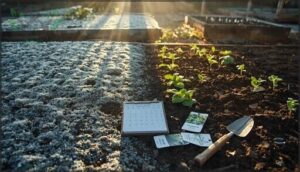
Frost dates are the backbone of your entire spring planting schedule.
Miss them, and you’re either planting too early into cold soil or scrambling to catch up.
Here’s what you need to know to get your timing right.
Identifying Last Spring Frost Dates by Zone
Your last spring frost date is the single most important number in your planting calendar. Check your USDA plant hardiness zone first, then dig into historical weather data from local stations for reliable frost dates.
Once you know your frost dates, pairing that knowledge with frosty garden landscaping ideas helps you choose cold-hardy plants and structures that actually survive your winters.
Remember that elevation effects and microclimate impact can shift those dates by two weeks. Use probabilistic forecasts from climate zones tools — they’re more honest than a single fixed date.
Consult the USDA hardiness zone map for regional frost trends.
Calculating Your Frost-Free Growing Season
Once you know your last spring frost and first fall frost, subtract one date from the other — that’s your Frost Window Formula in action.
Historical Frost Data from local weather stations makes this more accurate than guessing.
Add Safety Margin Planning of two to three weeks on each end.
Your USDA plant hardiness zone shapes this entire Seasonal Gardening timeline, giving your Planting Calendar real structure for Vegetable gardening success.
Adjusting for Climate Variability
Climate doesn’t follow your Planting Calendar perfectly — and that’s fine.
Spring conditions shift by days or even weeks each year.
Use Soil Temperature Monitoring and Weather Alert Integration to stay ahead.
Microclimate Mapping helps you spot warmer pockets on your property.
Flexible Row Covers and Adaptive Plant Varieties give you real options when frost surprises you.
These Seasonal Gardening Tips keep your Seed Starting and Frost Dates flexible and your harvest on track.
Spring Vegetable Planting Calendar by Zone
Your planting zone shapes everything — from when you sow your first seeds to when you pull your last harvest. Each zone has its own rhythm, and working with it makes all the difference.
Your planting zone sets the rhythm of every seed sown and every harvest pulled
Here’s what your 2026 spring planting window looks like, zone by zone.
Zone 3–4: Short-Season Planting Strategies
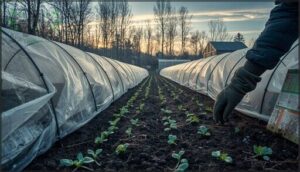
short window: Zones 3–4 offer a short window, so your planting schedule has to be tight.
cold soil prep: Start with cold soil prep early — turn in compost before the ground fully warms.
Rapid harvest crops: Rapid harvest crops like radishes, spinach, and peas go in first.
row cover: Use row cover to protect young starts.
Early transplant hardening: Early transplant hardening matters here.
Seasonal gardening: Seasonal gardening rewards those who move fast.
Zone 5–6: Balancing Frost Risk and Soil Warmth
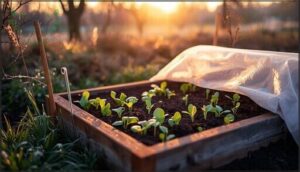
Your spring gardens in Zones 5–6 sit right on the edge — frost risk lingers into late April or May, while soil temperature monitoring tells you when it’s truly safe to sow.
Smart vegetable gardening here means using every advantage:
- Use raised bed warming and mulch to push soil above 50°F faster
- Apply frost protection like row covers when nights dip unexpectedly
- Prioritize cool-season crop selection — spinach, peas, and brassicas thrive first
Microclimate utilization and a solid planting calendar turn this balancing act into a winning season.
Zone 7–8: Early Starts and Succession Planting
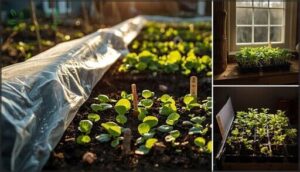
If you’re in Zone 7–8, spring gardens wake up early. Soil temperature monitoring matters here — once you hit 50°F, cool-season crops are ready to go.
Use seedling heat mats indoors 4–6 weeks out, then shift with row cover usage to guard against late cold snaps. Build your planting calendar around succession harvest scheduling every 2–3 weeks, and let microclimate site selection do the rest.
Zone 9–10: Extended and Year-Round Planting
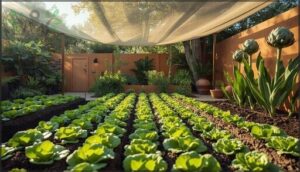
Living in Zones 9–10 means your planting schedule barely takes a break. Your frost‑free window stretches 9–10 months, so year‑round planting isn’t a dream — it’s your reality.
- Use shade cloth strategies and afternoon cover for heat management during peak summer
- Practice succession harvesting every 2–4 weeks with radishes, lettuce, and cilantro
- Establish perennial vegetables like artichokes for multi‑year yields
- Apply microclimate design near structures to increase warmth on cooler nights
Sowing and Transplanting Spring Vegetables
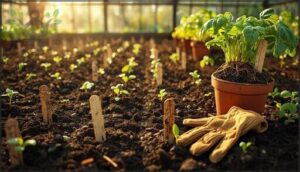
Knowing when to sow and when to transplant can make or break your spring garden.
Timing depends on your crop type, your setup, and how you want your harvests to roll in.
Here’s what you need to know to get it right.
Cool-Season Vs. Warm-Season Crop Timing
Cool-season crops like lettuce, spinach, and kale tolerate frost and thrive at 50–70°F — get them in your spring vegetable planting calendar early.
Warm-season crops like tomatoes and peppers need soil temperature thresholds above 60–65°F to germinate. Match your planting schedule to each crop’s frost tolerance levels, and your harvest window differences will speak for themselves.
Indoor Seed Starting Vs. Direct Sowing
Your planting planner shapes everything here.
Indoor seed starting gives you a head start — transplants mature one to three weeks earlier, and germination speed improves with controlled warmth between 65–75°F.
Direct sow works better for fast growers like radishes.
Watch soil moisture carefully outdoors.
Either way, plan your garden calendar around hardening off: that’s 7–14 days before any transplant goes outside.
Succession Planting for Continuous Harvests
Once you’ve settled your transplant timing, staggered sowing keeps the harvests rolling. Space your vegetable planting in 7–14 day blocks, starting with fast-maturing varieties like radishes or lettuce.
Microclimate timing helps here — warmer beds mean earlier starts. Weave in crop rotation cycles between successions to protect soil health. Season-extension methods like row covers stretch your garden calendar well past the last frost.
Top 4 Tools for Zone-Based Planting Success
The right tools make zone-based planting a lot less guesswork. From reference books to cold‑weather structures, these four picks cover what you actually need to plan and grow with confidence.
Here’s what’s worth adding to your setup.
1. Companion Planting Garden Guide Book
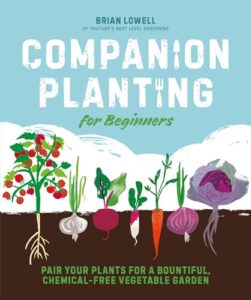
Think of this book as your cheat sheet for a thriving, chemical‑free garden.
The Companion Planting Garden Guide from DK pairs vegetables strategically — tomatoes with basil, beans with carrots — so plants protect each other naturally.
You get color‑coded charts, layout diagrams, and expert troubleshooting tips across 176 pages.
It’s built for beginners but useful enough for seasoned growers.
When you plant with intention rather than guesswork, you reduce pests, improve soil, and boost your yield without reaching for a single chemical.
| Best For | Home gardeners — beginners especially — who want to grow vegetables naturally without relying on pesticides or chemicals. |
|---|---|
| Format | Paperback Book |
| Skill Level | Beginner to Intermediate |
| Visual Aids | Color charts and diagrams |
| Primary Use | Garden planning |
| Language | English |
| Practical Limitations | Surface-level for experts |
| Additional Features |
|
- Covers smart plant pairings that actually cut down on pests and boost your harvest without any sprays
- Packed with color photos, illustrations, and charts that make it easy to follow along
- Practical advice from a master gardener means the tips are tried and tested, not just theoretical
- Advanced gardeners might find the companion planting coverage a bit too surface-level
- A few photos of insects might catch you off guard if creepy crawlies aren’t your thing
- It’s really geared toward organic growers, so if you’re open to conventional methods, some of it won’t feel relevant
2. North America Time Zone Map

Coordinating seed orders, irrigation schedules, and weather forecasts across regions gets messy quickly — especially when you’re working with suppliers or gardening partners in different time zones.
The North America Time Zone Map from ImageAbility makes that easier. It covers every major zone from Pacific to Newfoundland, with color-coded regions and city references printed on laminated, archival paper. Hang it near your desk and you’ll always know when to call your nursery contact or sync your planting schedule with a regional forecast.
| Best For | Home gardeners, customer service reps, and office workers who regularly coordinate with people across different North American time zones. |
|---|---|
| Format | Laminated Map |
| Skill Level | All Levels |
| Visual Aids | Color-coded zones with clocks |
| Primary Use | Schedule coordination |
| Language | English |
| Practical Limitations | Small size, static clocks |
| Additional Features |
|
- Color-coded zones with printed clocks make it easy to read at a glance — no guessing, no Googling
- Laminated on both sides with a glossy finish, so it holds up well on a desk or wall
- Includes a reverse lookup area code table updated through 2026, handy for knowing where a call is coming from
- Some area codes on the reference chart may be inaccurate, so double-check anything critical
- At 17 x 11 inches, it’s on the smaller side and might feel cramped if you need fine detail
- The clocks are decorative only — they don’t show real time, so you’re still doing the mental math yourself
3. Year Round Vegetable Gardener Calendar
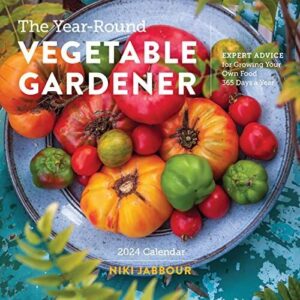
Once you’ve nailed your zone and frost dates, you need a system to keep everything on track. The Year-Round Vegetable Gardener Calendar, created by Niki Jabbour, does exactly that. It maps out planting tasks month by month, aligns them with regional frost windows, and builds in succession planting rhythms every two to four weeks.
Full-color photos keep it practical and clear. Hang it on your wall, mark your key dates, and you’ve got a year-long harvest plan you can actually follow.
| Best For | Gardeners of all experience levels who want a simple, visual way to stay on top of planting schedules and make the most of their growing season. |
|---|---|
| Format | Wall Calendar |
| Skill Level | All Levels |
| Visual Aids | Full-color photos |
| Primary Use | Planting scheduling |
| Language | English |
| Practical Limitations | Expires after 2024 |
| Additional Features |
|
- Maps out month-by-month tasks so you always know what to plant and when
- Full-color photos make it easy to follow along without digging through a book
- Includes succession planting tips to keep your harvest going well into winter
- Tied to 2024, so it loses its calendar function after that year
- Gardeners wanting deep, detailed guidance may find the tips a bit surface-level
- Only available in English, which limits its reach
4. Building Cold Frame Gardens Easily
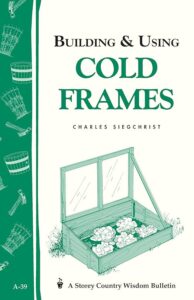
Cold frames are one of the smartest ways to stretch your season without spending much.
Storey Publishing’s Building Cold Frame Gardens Easily walks you through construction basics — frame dimensions, lid materials, ventilation — plus how to manage interior temperatures as conditions shift. It’s built for beginners but useful at any level.
Plant lettuce, spinach, and kale weeks earlier than your zone normally allows. Simple, practical, and worth keeping on your shelf next to your planting calendar.
| Best For | Beginner gardeners who want a simple, affordable way to grow food longer into the year. |
|---|---|
| Format | Paperback Booklet |
| Skill Level | Beginner to Intermediate |
| Visual Aids | Step-by-step instructions |
| Primary Use | Season extension |
| Language | English |
| Practical Limitations | Basic design only |
| Additional Features |
|
- Walks you through building a cold frame from scratch, even if you’ve never done it before
- Covers climate management so your plants don’t freeze or overheat
- Helps you grow cold-hardy crops like lettuce and kale weeks outside your normal season
- Experienced gardeners may find the design and advice too basic
- At 32 pages, it’s pretty light — most of this info is free online
- Assumes you already have some gardening know-how, so true beginners might hit a wall
Frequently Asked Questions (FAQs)
What vegetables do I plant in October?
October is prime time for cool-season crops.
Plant lettuce, spinach, radishes, kale, and carrots.
Add cilantro and parsley for herbs.
Use row covers to protect against frost and extend your harvest window.
What is the 70 30 rule for gardening?
The 70/30 rule splits your garden space: 70 percent goes to edible crops like vegetables, fruits, and herbs, while 30 percent holds ornamentals or pollinator-friendly flowers. It balances food production with visual appeal.
How do soil types affect spring planting dates?
Sandy soils warm fast, so you can plant earlier. Clay soils hold cold longer, pushing your planting dates back. Always check soil temperature, not just the calendar.
What pests are most common in spring gardens?
Aphids, slugs, cutworms, and cabbage loopers hit hardest in spring. They target new growth fast. Scout early, use row covers, and hand-pick when possible.
How much sunlight do spring vegetables need daily?
Most spring vegetables need at least 6 hours of direct sunlight daily. Leafy greens can manage with 4 to 6 hours. Brassicas and warm-season crops perform best with 6 to 8 hours.
Which fertilizers work best for early spring crops?
Use a balanced 10-10-10 fertilizer at planting for most early crops.
For leafy greens like spinach and kale, go nitrogen-heavy — something like 20-10-10 keeps growth moving fast in cool soil.
How often should spring vegetables be watered?
Ironically, more water isn’t always better. Most spring vegetables need about 1 inch per week.
Water deeply every 2–3 days during establishment, then weekly once roots settle. Check soil moisture daily on windy days.
How do moon phases affect vegetable planting timing?
Moon phases offer a supplementary timing layer. Plant leafy crops during waxing phases and root vegetables during waning ones. Always let frost dates and soil temperature lead your decisions first.
Which spring vegetables grow best in containers?
Even a balcony can feed you. Lettuce, spinach, radishes, and cherry tomatoes all thrive in containers. Most need just 6 to 12 inches of depth, full sun, and consistent watering.
How does soil pH impact spring crop success?
Soil pH controls how well your plants absorb nutrients. Most spring vegetables thrive between 0 and Outside that range, key minerals lock out, stunting growth before your season starts.
Conclusion
Your garden is a clock. Every zone hand points to a different hour, and planting at the wrong time means the harvest never comes. A spring vegetable planting calendar by zone isn’t just a schedule—it’s the mechanism that keeps everything running on time.
Know your zone. Track your frost dates. Start seeds when the data says, not when the weather feels right. Follow the clock, and your garden will answer back.