This site is supported by our readers. We may earn a commission, at no cost to you, if you purchase through links.
Most first-time gardeners don’t fail because they chose the wrong crops—they fail because they started too big. A sprawling plot full of ambition and weeds by July isn’t a garden; it’s a lesson.
The good news? A single 4×4 raised bed, the right six hours of sunlight, and decent soil can produce more food than most beginners expect.
Starting a vegetable garden is less about green thumbs and more about a few decisions made correctly upfront. Nail the site, the soil, and the timing, and the plants do most of the work from there.
Table Of Contents
- Key Takeaways
- How to Start a Vegetable Garden
- Choose a Sunny Garden Spot
- Plan Beds and Garden Layout
- Prepare Soil for Planting
- Pick Crops and Planting Times
- Water, Maintain, and Harvest
- Frequently Asked Questions (FAQs)
- What is the most common mistake of first time gardeners?
- How to start a vegetable garden from scratch?
- How to start a vegetable garden?
- How do I choose a vegetable garden?
- How do I become a vegetable gardener?
- How do you start a vegetable garden in pots?
- How do you make a vegetable garden?
- What is the best vegetable garden for beginners?
- What is the best month to start a vegetable garden?
- What is the easiest vegetable to grow for a beginner?
- Conclusion
Key Takeaways
- Start small with a single 4×4 raised bed, quality compost, and a spot that gets 6–8 hours of direct sun — nail those three things and the plants carry most of the weight.
- Test your soil pH before planting, aim for 6.0–7.0, and mix in 1–2 inches of compost to feed the microbial life that unlocks nutrients for your crops.
- Kick off your first season with radishes, lettuce, and bush beans — they’re forgiving, grow fast, and hand you a real harvest before doubt has a chance to set in.
- Water about an inch per week at the base of plants, early in the morning, and mulch 2–3 inches deep to lock in moisture and keep weeds from stealing the show.
How to Start a Vegetable Garden
Starting a vegetable garden doesn’t take much — just a few good decisions upfront and the willingness to get your hands dirty. Before you dig in, it helps to know what you’re working with and what you actually need.
If you’re also thinking about what to grow, a solid healthy homegrown eating plan can help you plant with purpose right from the start.
Here’s every beginner should have ready before planting day.
What a Beginner Garden Needs
Starting a vegetable garden doesn’t take much — but getting the basics right makes everything easier. You’ll need a raised bed or a simple plot, quality compost, and a soil test to understand what you’re working with.
A compost bin, a watering can, space for seed starting, and a garden journal to track progress round out the essentials.
That’s your foundation. Make sure your site receives the full sunlight requirement for ideal growth.
Simple Tools and Supplies to Gather
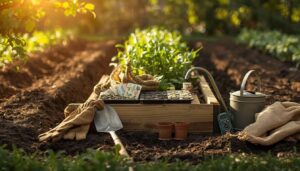
Good tools don’t need to be fancy — just reliable. A garden trowel and hand pruners handle most planting and trimming tasks. Grab a watering can for small beds, garden gloves for hand protection, and a soil moisture meter, so you stop guessing when to water.
Three supplies worth prioritizing first:
- Hand trowel — dig, transplant, and open seed furrows
- Irrigation kit essentials — drip tubing and emitters cut water waste
- Protective gloves — nitrile fits snugly and keeps cuts minor
Set Realistic Space and Budget Goals
Now that your tools are sorted, let’s talk numbers. A 4×4-foot bed keeps budget planning simple — you’re looking at under $150 for lumber, soil, and amendments. That’s budget-friendly gardening without cutting corners.
| Goal | Recommendation |
|---|---|
| Space Allocation | Start with a 4×4 bed |
| Affordable Materials | Untreated lumber or recycled wood |
| DIY Bed Borders | Simple 2×6 boards stacked two high |
| Yield per Foot | Plan 1–2 crops per square foot |
| Budget Ceiling | Keep first season under $150 |
Choose a Sunny Garden Spot
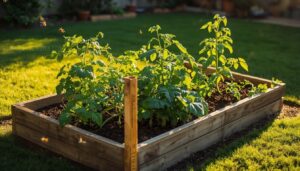
Where you put your garden matters more than most beginners expect. The right spot sets you up for strong harvests before you’ve even touched a seed.
Here’s what to look for when scouting your space.
Aim for 6–8 Hours of Direct Sun
Choosing a sunny location isn’t optional — it’s the foundation everything else builds on. Most vegetables need 6 to 8 hours of direct sunlight daily to truly thrive. Full sun drives photosynthesis, boosts plant vigor, and even helps suppress shade-loving weeds naturally.
Full sun is not optional — it is the foundation every thriving vegetable garden is built on
Here’s what to keep in mind:
- Track sunlight timing across your yard before committing to a spot
- Confirm the area meets the full sun requirement from morning through afternoon
- Note that consistent sun raises soil temperature, which warm-season crops love
- Selecting a sunny garden location reduces fungal pressure through better air circulation
- Practice UV safety during midday scouting — a hat goes a long way
Check Drainage After Rain
Even the sunniest spot fails if water has nowhere to go. Walk your yard 24 hours after rain and look for these Ponding Indicators — soggy ground, standing puddles, or spongy soil underfoot.
Check Slope Grading to confirm beds drain away from structures. Inspect any nearby Inlet Blockage and watch Foundation Moisture levels closely.
| Check | What to Look For | Action |
|---|---|---|
| Ponding Indicators | Puddles lasting 24+ hours | Regrade or relocate bed |
| Slope Grading | Less than 1" drop per 4 ft | Add fill soil, regrade |
| Inlet Blockage | Debris-clogged drains | Clear grates and channels |
Post‑Rain Soil Compaction matters too — run a simple soil test kit before planting to confirm drainage suitability.
If you’re planning a vertical setup, timing is everything — check the Zone 6 vegetable gardening calendar to know exactly when compacted soil should be ready for climbing crops like beans or cucumbers.
Keep The Garden Near a Water Source
Proximity Water Access matters more than most beginners expect. Placing your garden within 50–100 meters of a water source makes sticking to a consistent watering schedule genuinely easy.
- Use a drip system for Irrigation Efficiency — it cuts water use by 30–50%.
- Try rainwater harvesting with a barrel for off-grid days.
- Test for Water Quality Testing if using municipal supply.
- Plan Flood Drainage Planning to redirect runoff from beds.
- Enjoy Microclimate Benefits — nearby water moderates heat naturally.
Add Wind Protection for Tender Seedlings
Wind can snap young stems before they ever get a chance.
That’s why blocking gusts is part of smart garden layout design for ideal plant spacing.
| Protection Type | Best Use |
|---|---|
| Windbreak Fabrics | Rows and open beds |
| Garden Cloches | Individual seedling transplant |
| Cold Frames | Season-start hardening off seedlings for outdoor planting |
Living windbreaks — shrubs or fast-growing hedges — offer permanent, natural cover worth planting early.
Plan Beds and Garden Layout
Before you plant a single seed, you need a plan for where everything goes. A smart layout makes the difference between a garden that’s easy to manage and one that becomes a chore.
Here are the key decisions to make before you break ground.
Start Small With a 4×4 or 4×8 Bed
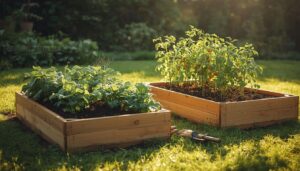
Start small — a 4×4 raised bed gives you 16 square feet, that’s easy to reach from every side. Ready for more?
A 4×8 bed doubles your garden layout without overwhelming you. Both sizes fit standard lumber perfectly, keeping DIY bed frames and bed cost estimation simple.
Use seasonal crop rotation by quadrant to protect soil health year after year.
Compare Raised Beds, In-ground Rows, and Containers
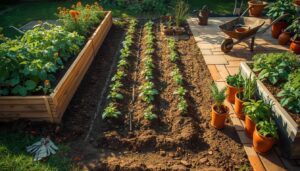
Each method has real trade-offs worth knowing.
Raised beds warm up 2–3 weeks earlier, and Soil Customization is simple with a custom blend. An inground plot costs less upfront but demands more Labor Intensity to amend existing soil.
Container gardening wins on Portability Advantage — move pots to chase sunlight.
Material Investment varies, but Yield Consistency depends on matching the method to your garden layout goals.
Leave 18-inch Pathways Between Beds
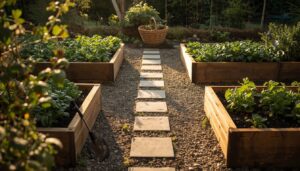
Think of your garden pathways as the roads that hold everything together. In garden layout design, 18-inch walkways hit the sweet spot — wide enough for tool access, narrow enough to save space. Here’s what Path Width Benefits give you:
- Soil Compaction Prevention keeps roots healthy by limiting foot traffic on beds
- Accessibility and Mobility lets you kneel, harvest, and maneuver comfortably
- Aesthetic Garden Design creates clean, organized visual lines throughout your plot
- Edge Edging Materials like gravel or pavers, reduce weeds along garden walkways for easy maintenance
Put Taller Plants on The North Side
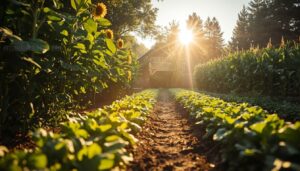
Once your pathways are set, north-side placement changes the whole game. Put your tallest plants — sunflowers, corn, or trellised pole beans reaching 5–7 feet — along the garden’s northern edge.
This shade management move keeps shorter crops in full sun all day. Good tall plant spacing also creates natural windbreak integration.
Watch microclimates along that north edge, especially early season when cold pockets form overnight.
Use Trellises to Save Space
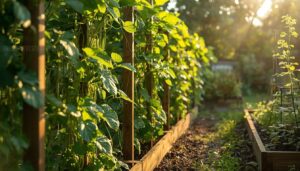
Growing vertically is one of the space-efficient vining moves you can make. A vertical crop support — cedar, galvanized steel, or aluminum — lets cucumbers, beans, and peas climb 6–8 feet instead of sprawling across your beds.
Smart trellis placement strategies mean positioning your multi-plant trellis at the north bed edge. An adjustable height trellis supports fast-growing vines all season long.
Prepare Soil for Planting
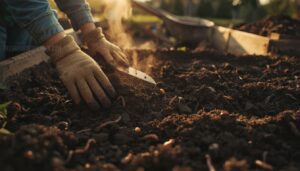
Good soil is the foundation that everything else depends on. Before you plant a single seed, it’s worth taking a few steps to get that foundation right.
Here’s what to do to prepare your soil for a strong growing season.
Test Soil PH and Nutrient Levels
Before you plant a single seed, test your soil. A simple soil testing kit checks soil pH and gives you basic nutrient levels on the spot.
For deeper insight, send a Soil Sample Collection from several garden spots to a lab — they’ll flag Nutrient Deficiency Signs and suggest Amendment Rate Calculations.
vegetables thrive between pH 6.0 and 7.0.
Mix in Compost or Aged Manure
Once your pH is dialed in, it’s time to feed the soil itself. real magic happens where the real magic — compost or well‑rotted manure transforms tired dirt into a living system.
- Mix 1–2 inches of organic compost into the top 6–8 inches of soil
- Aged manure offers Nutrient Timing that aligns with early vegetable growth
- Compost delivers a Microbial Boost that unlocks nutrients naturally
- Using compost and organic matter to enrich soil improves Soil Structure and Pathogen Safety
Improve Raised-bed Soil With The Right Blend
Raised beds give you full control over what goes into your soil. Use this blend for the best results:
| Component | Proportion | Purpose |
|---|---|---|
| Topsoil or mineral soil | 60% | Structural base |
| Compost (organic matter) | 30% | Nutrients + microbial inoculants |
| Coarse sand or perlite | 10% | Texture optimization and drainage |
This mix nails the right nutrient ratios and organic matter proportions—roots breathe, water moves freely, and microbes thrive.
Adjust PH With Lime or Sulfur if Needed
Most vegetables thrive at a pH between 6.0 and 7.0.
If your soil testing for pH and nutrient levels reveals something off, fix it before planting.
For soil pH management and testing, lime application timing matters — fall is ideal.
Use 40–80 lbs per 1,000 sq ft to raise pH.
For sulfur rate calculation, apply 1–4 lbs per 100 sq ft to lower it.
Never mix them in the same spreader — that lime sulfur interaction causes problems.
Follow your pH monitoring schedule and recheck after 2–3 months.
Always use protective gear when handling either powder.
Add Mulch After Soil Prep
Once your soil is amended and settled, mulch timing matters. Apply it right after prep — before summer heat arrives.
- Layer Thickness: Spread 2–3 inches of organic mulch evenly.
- Mulch Types: Straw suits cool-season beds; wood chips last longer.
- Nutrient Enrichment: Compost-based mulch doubles as a soil amendment, improving moisture retention and weed suppression as it breaks down.
Keep it 2 inches from stems.
Pick Crops and Planting Times
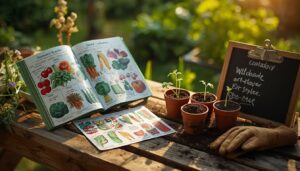
Picking the right crops — and knowing when to plant them — can make or break your first season. Not every vegetable plays by the same rules, so a little planning now saves a lot of frustration later.
Here’s what you need to know to choose wisely and get your timing right.
Start With Easy Crops Like Lettuce, Radishes, and Beans
Three crops make the perfect beginner lineup: lettuce, radishes, and green beans.
| Crop | Fast Growth Timeline |
|---|---|
| Radishes | Ready in 20–30 days |
| Lettuce | Harvestable in 4–6 weeks |
| Green beans | Pods in 50–60 days |
Succession sowing every 2–3 weeks keeps harvests rolling. Companion planting these together maximizes your bed space. Watch soil moisture closely — consistent watering prevents bitter lettuce and pithy radishes. Harvest timing matters: pick early, pick often.
Add Tomatoes, Peppers, and Zucchini When Ready
Once your easy crops are thriving, it’s time to think bigger. Tomatoes, peppers, and zucchini are warm-season crops — plant them at the right time, after your last frost.
Use a firmness test and color indicator to know when to harvest. Cut stems cleanly, pick zucchini every two days, and keep air circulation open. Regular picking keeps all three producing.
Choose Seeds or Transplants by Crop Type
Not every crop plays by the same rules.
Tomato transplant timing matters because they need a long warm season — start them indoors 6–8 weeks before your last frost. Peppers share similar seed suitability.
But cucumber direct seeding works great; it germinate fast in warm soil.
For carrot seedling method, always sow directly — roots hate disturbance.
Check your seed packets for guidance.
Use Frost Dates and Growing Zones to Time Planting
Seed packets tell you what to grow — frost dates tell you when. Find your last frost date using a Frost Date Calculator or your local extension service.
Then cross-reference the USDA Plant Hardiness Zone Map for zone-based planting decisions.
Your planting calendar should map cool-season crops 4–6 weeks before that date.
Build in a succession planting schedule and account for any microclimate adjustment your yard offers.
Harden Off Seedlings Before Moving Them Outside
Once your planting dates are locked in, don’t rush the move outdoors. Hardening off seedlings before outdoor planting means giving them a gradual sun exposure — start with one to two hours in a sheltered spot.
Temperature acclimation matters too; wait for 60–70°F days.
Practice moisture monitoring and stress observation daily, watching for wilting or bleaching.
After seven to ten days, they’re ready.
Water, Maintain, and Harvest
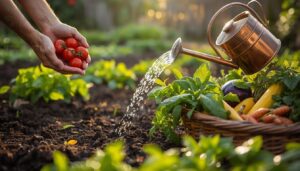
You’ve done the hard work — now it’s time to keep your garden alive and actually enjoy what you grow. Watering, maintenance, and harvesting each have a rhythm that gets easier once you know the basics.
Here’s what to focus on.
Water About 1 Inch Per Week
One inch of water per week is your baseline — but don’t just guess.
Use a rain gauge to verify actual delivery, and adjust for heat with evapotranspiration adjustments when summer turns relentless.
Check soil moisture 1–2 inches deep before watering.
A consistent watering schedule timing helps roots grow steady and deep.
Your watering routine doesn’t need to be complicated — just reliable.
Water Early and at The Plant Base
Timing matters as much as quantity. Morning soil moisture gives roots a head start before heat builds — and keeping water at the base means less fungal disease risk.
Root zone hydration, not wet leaves, is the goal.
Follow these base watering benefits in practice:
- Water before 9 a.m. for cooler absorption
- Direct flow to the soil, never the foliage
- Check 1–2 inches deep before each session
- Keep your watering routine consistent, not reactive
Use Drip Lines or Soaker Hoses When Possible
If you want less work and better results, drip irrigation and soaker hoses are worth the small setup effort. They cut water waste by 20–50% compared to overhead sprinklers — and your leaves stay dry.
| Feature | Drip Line | Soaker Hose |
|---|---|---|
| Best For | Widely spaced plants | Dense or curved beds |
| Emitter Spacing | Adjustable per plant | Continuous along length |
| Pressure Regulators | Required | Required |
| Zone Valving | Easy to add | Works with manifold |
| Winterization Procedures | Drain and store | Drain and coil |
Use System Flushing every season to clear mineral buildup. Both methods keep water at the root zone — where it actually counts.
Mulch to Hold Moisture and Suppress Weeds
Mulch does two jobs at once — it locks in moisture and shuts weeds out.
Spread a 2–4 inch layer of organic mulch like straw or shredded leaves across your beds.
This mulch depth cuts evaporation substantially while blocking weed seeds from germinating.
Keep mulch 2–3 inches from stems to prevent rot.
Replenish it each season for consistent moisture conservation and weed suppression.
Watch for Pests, Disease, and Overcrowding
Even small garden can go sideways fast if you ignore what’s living on your leaves. Check plants weekly for pest signs — chewed edges, sticky residue, or yellowing patches. Early pest detection stops outbreaks before they spread.
Flip leaves to spot eggs or webbing. airflow management through proper crop spacing cuts disease pressure substantially.
Practice crop rotation yearly, and always sanitize tools between beds.
Harvest at Peak Size and Store Produce Properly
Pick at peak ripeness indicators — color, firmness, and aroma tell you more than any calendar. Harvest in the cool morning hours using clean, sharp tools.
Apply rapid post-harvest cooling within a few hours to remove field heat.
Use gentle handling techniques, breathable packaging solutions, and smart ethylene management strategies — keep ethylene producers away from sensitive crops.
Label everything with harvest dates for smarter rotation.
Frequently Asked Questions (FAQs)
What is the most common mistake of first time gardeners?
Most beginners make five big mistakes: Sunlight Misplacement, Soil Testing Skipped, Overcrowding Plants, Inconsistent Watering, and Improper Crop Timing.
Catch these early, and your beginner vegetable garden will thrive instead of struggling.
How to start a vegetable garden from scratch?
Start with a sunny location, good soil, and a short list of easy crops. A 4×4 bed, some compost, and a planting calendar are all you really need.
How to start a vegetable garden?
Think of your garden as a blank canvas — a little planning goes a long way.
Choose a sunny location, improve your soil, choose easy crops, and plant at the right time to grow food confidently from day one.
How do I choose a vegetable garden?
Choosing a vegetable garden comes down to four things: site accessibility, space constraints, budget limits, and climate suitability. Match those to your personal goals, and you’re already halfway there.
How do I become a vegetable gardener?
You become a vegetable gardener by doing — not by waiting until you feel ready. Pick three easy crops, prep your soil, and plant. Confidence follows your first real harvest.
How do you start a vegetable garden in pots?
Container gardening works well even on a small balcony.
Use pots at least 12 inches deep, fill them with quality potting mix, add slow-release fertilizer, and pick compact varieties like bush beans or dwarf peppers.
How do you make a vegetable garden?
Pick a sunny spot, prep your soil, and plant what you love.
With good drainage, a simple layout, and the right crops for your zone, your garden practically writes its own planting calendar.
What is the best vegetable garden for beginners?
simple raised bed with lettuce, radishes, and bush beans is your best start.
These low-maintenance varieties grow fast, forgive beginner mistakes, and reward you with harvests in as little as 25 days.
What is the best month to start a vegetable garden?
There’s no single best month — it depends on your climate zone and frost dates. Cool crops like lettuce go in early spring; tomatoes wait until soil hits 60°F.
What is the easiest vegetable to grow for a beginner?
Lettuce and radishes are your best starting points. Lettuce offers rapid harvest greens in 30–60 days. Radishes mature in just 25 days with low water needs and simple soil mix requirements.
Conclusion
What’s really stopping you from knowing how to start a vegetable garden this season? Not skill—just the first step.
Pick your sunniest spot. Build one small bed. Feed your soil before you plant.
The rest follows naturally.
Every seasoned gardener you admire once stood exactly where you’re standing—uncertain, hopeful, trowel in hand.
Your garden won’t be perfect the first year. It doesn’t need to be. It just needs to begin.