This site is supported by our readers. We may earn a commission, at no cost to you, if you purchase through links.
Boil broccoli and you can kiss up to 70% of its vitamin C goodbye, straight down the drain with the cooking water. That’s a rough trade for a side dish. Steam it instead, though, and you keep close to 90% intact—same vegetable, wildly different outcome.
Here’s the thing: how you cook matters as much as what you cook. A carrot roasted at 425°F turns sweet and caramelized; that same carrot boiled turns mushy and bland.
Once you know which technique fits which vegetable, you’ll never look at your produce drawer the same way again.
Table Of Contents
- Key Takeaways
- Best Ways to Cook Vegetables
- Match Methods to Vegetable Types
- Make Vegetables Taste Better
- Preserve Nutrients While Cooking
- Top 3 Vegetable Cooking Tools
- Frequently Asked Questions (FAQs)
- What is the best method to cook vegetables?
- What are the 6 ways to cook vegetables?
- How to cook vegetables in a tasty way?
- What is the best cooking method for vegetables?
- What is the healthiest way to cook veggies?
- How to cook the best vegetables?
- Is it healthier to bake or boil vegetables?
- Is it better to steam or air fry vegetables?
- Is it better to grill or bake vegetables?
- Can vegetables be cooked in the microwave safely?
- Conclusion
Key Takeaways
- Steaming preserves about 90% of vitamin C in vegetables like broccoli, while boiling can strip away up to 70% of it.
- Matching your cooking method to the vegetable type—roasting root veggies, steaming leafy greens, grilling squash—delivers better texture and flavor than a one-size-fits-all approach.
- Roasting at 425°F triggers the Maillard reaction, caramelizing natural sugars into deep, sweet flavors that boiling can’t achieve.
- Small techniques like salting before cooking, pairing veggies with healthy fats, and finishing with bright acids like lemon juice dramatically boost both flavor and nutrient absorption.
Best Ways to Cook Vegetables
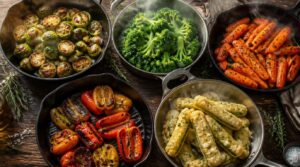
Ever wonder why some veggies come out crispy and golden while others turn soggy and sad? The secret’s all in the method you choose. Let’s break down five go-to techniques that’ll change the way you cook, starting right here.
Roasting for Deep Flavor
Craving that deep, caramelized flavor? Roasting delivers through the Maillard reaction, browning sugars and amino acids at 425°F. Pat vegetables dry, coat lightly with high-smoke-point oil, and space them out—crowding causes steaming, not browning. Using high-heat oils helps prevent burning during the process.
- Dry surfaces = crispier results
- Give pieces breathing room
- Try two-stage roasting for tender centers
- Watch for golden-brown, not burnt, edges
Steaming for Better Nutrients
Want max nutrients without sacrificing bite? Steam it. Cooking with steam keeps veggies from swimming in water, so vitamin C and minerals stay put instead of leaching out. Broccoli holds onto roughly 90% of its vitamin C steamed, versus 60% boiled.
This gentle method also makes steamed broccoli and cauliflower ideal candidates for freezing garden vegetables for long-term storage, locking in that nutrient boost well beyond harvest season.
You get crisp-tender texture, brighter color, and stable antioxidants—proof nutrient-dense foods don’t need heavy cooking to shine.
Grilling for Smoky Char
Steaming plays it safe, but grilling brings the fire—literally. A two-zone setup (hot direct heat plus a cooler side) lets vegetables char without burning.
Toss in soaked fruitwood chips—apple or maple—for subtle smoke, keep the lid down, and you’ll lock in that smoky charred flavor. Lump charcoal beats briquettes for cleaner smoke and crisper marks every time.
Stir-frying for Quick Meals
Got fifteen minutes and a hungry table? Fire up the wok. Uniform chopping and a high smoke point oil (peanut or canola) are non-negotiable here.
Quick rules:
- Sear protein first, set aside
- Garlic and ginger hit hot oil next
- Dense veggies before quick-cooking ones
- Add sauce at the very end
- Rest one minute before serving
Microwaving for Fast Prep
Nights when you’re starving and short on patience, the microwave earns its keep. Dielectric heating excites water molecules fast, so chopped veggies with a splash of water and vented cover steam in minutes.
Stick to 700-900 watts, stir halfway for even heating, and let carryover cooking finish the job during a short rest.
Match Methods to Vegetable Types
Not every vegetable wants the same treatment, and that’s actually good news for you. Some crave high heat, some want a gentle steam, and a few just need a quick toss in a hot pan. Let’s break down which method fits which vegetable, so you can stop guessing and start cooking with confidence.
If you’re planning ahead, picking heat-loving summer vegetables to plant now can save you guesswork in the kitchen later.
Root Vegetables
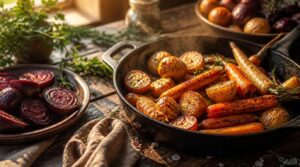
Root vegetables reward patience: roasting carrots and potatoes at 425°F caramelizes their natural sugars into a sweet, savory crust. Beets keep their earthy-sweet color when steamed, while parsnips turn nutty and tender around 420°F.
Waxy potatoes hold shape beautifully for roasting, floury ones mash like a dream. Store them cool and dark—crisp texture depends on it.
Leafy Greens
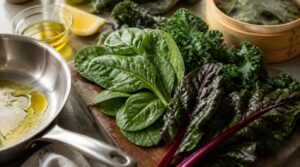
Give spinach, kale, and chard a light hand—these delicate leaves wilt fast and lose nutrients faster.
- Sauté quickly in olive oil for better nutrient absorption
- Steam gently to preserve vitamin C and folate
- Store away from apples and bananas; ethylene gas speeds spoilage
Watch for yellowing or sliminess—that’s your spoilage signal. Fresh greens pack serious fiber benefits into every bite.
Cruciferous Vegetables
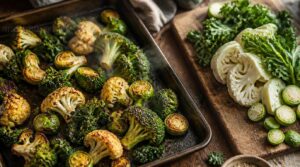
Broccoli, cauliflower, kale, and Brussels sprouts each pack glucosinolate benefits that come out through chopping and heat. Roasting at 425°F caramelizes their natural sugars while sharpening those signature peppery flavor profiles.
Steaming beats boiling here, hands down—it preserves way more nutrients. Want maximum bioactive compound metabolism? Slice these nutrient-dense varieties right before cooking, and stop just shy of mushy for that perfect texture-focused prep.
Summer Squash
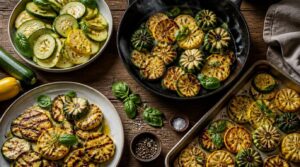
Zucchini, crookneck, patty pan—summer squash rewards a light touch. These tender fruits, best picked at 4-8 inches, cook fast and turn mushy if you blink.
- Sauté in olive oil, 3-5 minutes
- Grill 6-8 minutes per side for smoky notes
- Roast at 425°F for caramelized sugars
- Steam 4-6 minutes to lock in nutrients
- Eat raw in salads for peak crunch
Store unwashed, refrigerated, 4-7 days.
Corn, Peas, and Beans
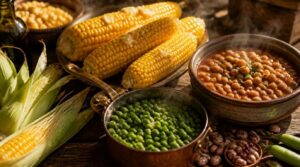
Corn, peas, and beans aren’t just garden buddies in the classic Three Sisters planting—they’re a flavor trio too.
Corn (yellow, white, or blue) wants minimal heat for sweetness preservation. Peas love a quick steam for that bright green pop. Beans? Soak first for better digestibility, then simmer low and slow. Beans also handle nitrogen fixing, enriching soil for everyone.
Make Vegetables Taste Better
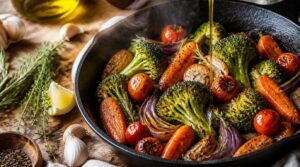
Cooking vegetables the right way is only half the battle—flavor is what keeps you coming back for more. A few smart moves in the kitchen can turn "meh" into "wow," no fancy skills required. Here’s how to make every bite count.
Season Before Cooking
Salt your vegetables before they hit the pan, not after. That early hit draws moisture to the surface, sparking better browning and letting seasoning actually penetrate instead of just sitting there.
Salt also mellows bitterness, so those natural sugars in carrots or Brussels sprouts get to shine. Let them rest five minutes first, then cook—you’ll notice deeper, more even flavor throughout.
Add Herbs and Spices
Once salt’s done its job, herbs and spices bring the personality. Add fresh herbs like basil or parsley at the very end—their bright flavors fade fast under heat.
Dried spices work differently: bloom cumin, smoked paprika, or turmeric early so their oils release fully. Try layering spices in stages, then finish with lemon zest or minced garlic for real depth.
Use Healthy Cooking Fats
Fat’s your flavor delivery system, and picking the right one matters as much as any spice. Go with heart-healthy oils like olive, canola, or avocado—their smoke points and stability determine whether they crisp vegetables or break down into off-flavors.
- Extra virgin olive oil for roasting
- Avocado oil for high-heat searing
- Canola oil for everyday sautéing
- Sesame oil as a finishing touch
- Walnut oil drizzled on after cooking
Balance Sweet and Bitter
Ever bite into a roasted Brussels sprout and get hit with bitterness first, sweetness second? That’s chemistry, not bad luck.
Roasting concentrates natural sugars, taming those phenolic compounds responsible for sharp edges. A drizzle of honey works wonders too, and fat mellows bitter aftertastes beautifully. Even a pinch of salt suppresses lingering harshness.
Small, alternating additions—not a flavor dump—get you that perfect balance.
Finish With Bright Acids
A squeeze of lemon at the end wakes vegetables right up. Vinegar dressings and acidic marinades cut through richness, brightening taste profiles instantly.
Balancing acidity levels matters—too much turns dishes sour. Try citrus flavor balance with roasted carrots, or a quick vinegar splash on sautéed greens. This finishing touch elevates flavor enhancement across countless cooking techniques, giving even simple seasoning a memorable, restaurant-worthy edge.
Preserve Nutrients While Cooking
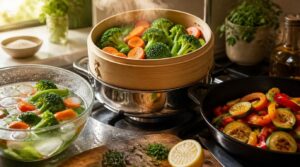
Here’s the thing about cooking veggies: heat can be a nutrient’s worst enemy if you’re not careful. The good news? A few smart habits keep those vitamins right where they belong—in your food, not down the drain. Let’s look at what actually works.
Avoid Overboiling Vegetables
That rolling boil you crank up out of habit? It’s actually working against you.
A gentle simmer, around 85-95°C, cooks vegetables evenly without turning them mushy. Time tenderness precisely—2-4 minutes for green beans, 1-3 for leafy greens. Pull them the moment they’re right, then shock in an ice bath to lock texture and stop carryover cooking. Boiling too hard destroys up to 70% of vitamin C.
Simmer gently and time it precisely—an aggressive boil can strip away up to 70% of vitamin C
Use Minimal Water
Water is precious, and honestly, most of us pour way more of it down the drain than cooking actually requires. Try these swaps:
- Water-efficient steaming over a shallow pool
- Nutrient-rich rinsing in a bowl, not the tap
- Low-moisture roasting with zero added water
- Reusing cooking-liquids for soups later
- Pressure cooker benefits: faster, less water, better retention
Cook Until Just Tender
Timing is everything when cooking vegetables—pull them too soon and you get raw crunch, too late and you’re stuck with mush.
Testing tenderness means checking probe resistance: a gentle give around 70-75°C for root vegetables. Watch for carryover heat—lift a minute early!
| Sign | Meaning |
|---|---|
| Slight give | Just tender |
| Deep color | Near done |
| Mushy | Overcooked |
| Firm bite | Undercooked |
| Rest 2 min | Sets texture |
Pair Vegetables With Fats
Here’s the truth: naked veggies leave nutrients behind. Fat unlocks absorption of carotenoids your body can’t access otherwise.
- Drizzle olive oil over roasted carrots
- Toss avocado into salads
- Finish sautéed greens with a nut-based dressing
Extra virgin olive oil boosts flavor and carotenoid uptake, while ghee’s high smoke point suits sautéed peppers. Choose fats that satisfy—both nutritionally and in taste.
Mix Raw and Cooked
Why cook everything? Some veggies deserve to stay crisp. Mixing raw and cooked boosts fiber intake while preserving enzymes and vitamin C that heat destroys.
Try roasted carrots over raw shredded kale, or warm grain bowls with cool herbs. That temperature contrast and texture contrast—crunchy meets tender—makes every bite more interesting, nutrient-dense, and honestly, way more fun to eat.
Top 3 Vegetable Cooking Tools
Great technique only gets you so far without the right gear backing you up. You don’t need a kitchen full of gadgets, just a few reliable pieces that earn their keep every single day. Here are three tools worth having on hand.
1. Le Creuset Cast Iron Dutch Oven
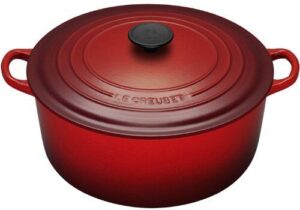
One pot to rule your whole vegetable game? That’s the Le Creuset. Its enameled cast iron holds heat evenly, so braised cabbage or seared squash cooks without scorched edges.
The tight-fitting lid traps moisture, basting veggies in their own juices while you multitask. Side grips stay grip-friendly even loaded and hot.
Yes, it’s pricier. But this thing goes stovetop to oven to table, handling acidic tomato braises without staining. For serious cooks chasing texture and flavor, it earns its keep.
| Best For | Home cooks who braise, sear, and slow-cook vegetables often and want one pot that moves confidently from stovetop to oven to table. |
|---|---|
| Material | Enameled Cast Iron |
| Heat Performance | Even heat distribution |
| Cleaning | Gentle tools required |
| Durability | Can chip if dropped |
| Primary Use | Braising and searing |
| Price Tier | Premium investment |
| Additional Features |
|
- Enameled cast iron distributes and retains heat evenly, preventing scorched edges on braised or seared vegetables
- Impermeable enamel surface handles acidic ingredients like tomato braises without staining
- Enlarged, grip-friendly handles make it easy to move safely even when loaded and hot
- Significant investment compared to standard cookware
- Requires low to medium heat and gentle tools (wood, plastic, or nylon) to avoid scratching or damaging the enamel
- Enamel can chip or crack if dropped or knocked against hard surfaces
2. OXO Good Grips Locking Tongs
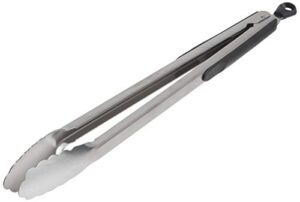
Not every tool needs enamel and heft—sometimes you just need a solid grip. OXO’s locking tongs use scalloped edges to grab everything from Brussels sprouts to seared cutlets without tearing them apart.
The non-slip rubber grips stay steady even with wet hands, and the back-mounted locking tab keeps them compact in a drawer. At 0.5 pounds, they’re light enough for flipping stir-fry all night without wrist strain. Simple, dishwasher-safe, and honestly indispensable at the stove.
| Best For | Home cooks who want a lightweight, no-fuss tool for grilling, tossing, and flipping everything from Brussels sprouts to large cuts of meat. |
|---|---|
| Material | Stainless Steel/Rubber |
| Heat Performance | Not rated high-heat |
| Cleaning | Dishwasher-safe |
| Durability | Long-lasting build |
| Primary Use | Grabbing and flipping |
| Price Tier | Affordable |
| Additional Features |
|
- Scalloped edges grip food securely without tearing it
- Non-slip rubber handles stay steady even with wet hands
- Lightweight design (0.5 lbs) minimizes wrist strain during extended use
- Not explicitly rated for high-heat contact with certain surfaces
- Requires manually locking and unlocking for storage each time
- Locking mechanism adds an extra step compared to simpler tong designs
3. Nordic Ware Aluminum Bakers Half Sheet
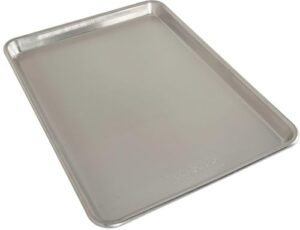
Tongs handle the flipping, but roasting demands a pan that won’t warp under high heat—and that’s where the Nordic Ware Aluminum Bakers Half Sheet earns its keep. Pure aluminum means even heat distribution, no scorched edges while your Brussels sprouts stay pale in the middle.
The encapsulated steel rim keeps it flat batch after batch, so your veggies actually roast instead of steam. Hand wash only, but at roughly two pounds, it’s a workhorse worth babying.
| Best For | Home bakers and cooks who roast vegetables or bake goods frequently and want a commercial-grade pan that resists warping and delivers even heat. |
|---|---|
| Material | Aluminum |
| Heat Performance | High heat conductivity |
| Cleaning | Hand wash only |
| Durability | Commercial-grade durability |
| Primary Use | Baking |
| Price Tier | Mid-range |
| Additional Features |
|
- Pure aluminum construction offers lifelong rust resistance and excellent heat conductivity for consistent baking and roasting results
- Reinforced encapsulated steel rim prevents warping, so the pan stays flat batch after batch
- Made in the USA with commercial-grade durability suited for both professional and home kitchens
- Hand wash only, meaning it can’t be tossed in the dishwasher for easy cleanup
- Bare aluminum surface may require extra care to avoid scratching or discoloration over time
- Lack of a nonstick coating means food may stick more than on coated pans, especially without oil or parchment
Frequently Asked Questions (FAQs)
What is the best method to cook vegetables?
Truth is, there’s no single winner. Steaming and roasting top the list, steaming for nutrient retention, roasting for flavor depth at 400–425°F. Your best bet? Match the method to the vegetable and what you’re craving that night.
What are the 6 ways to cook vegetables?
Your six best bets: roasting for caramelized edges, steaming for nutrient retention, grilling for smoky char, stir-frying for quick weeknight meals, microwaving for speedy prep, and sautéing to boost fat-soluble vitamin absorption while keeping textures crisp and vibrant.
How to cook vegetables in a tasty way?
Flavor is a puzzle, and salt, fat, acid, and heat are your four corner pieces. Season boldly before cooking, roast with olive oil for caramelized edges, then finish with lemon juice or balsamic to wake everything back up.
What is the best cooking method for vegetables?
There’s no single winner here — it depends on the veggie. Roasting wins for caramelized flavor, steaming protects nutrients best, and grilling brings smoky char. Match the method to your goal, not the other way around.
What is the healthiest way to cook veggies?
Steaming wins here, hands down. It preserves vitamin C and B vitamins far better than boiling, needs zero added fat, and keeps minerals locked in — just 2-6 minutes over simmering water, no leaching, no fuss.
How to cook the best vegetables?
Match the method to the vegetable: roast root veggies for caramelized sweetness, steam leafy greens for tenderness, grill squash for smoky char, and stir-fry crunchy favorites like peas fast, over high heat, minimal oil.
Is it healthier to bake or boil vegetables?
Boiling drowns your veggies’ nutrients before they even hit your plate—ironic, right? Baking wins here: it preserves more vitamin C, boosts carotenoid absorption, and skips the nutrient-leaching bath boiling requires. Your carrots and sweet potatoes will thank you.
Is it better to steam or air fry vegetables?
Both win, honestly. Steaming locks in vitamin C and stays gentle, perfect for tender greens. Air frying brings crispy, caramelized edges with little oil, great for Brussels sprouts or carrots craving that roasted crunch.
Is it better to grill or bake vegetables?
Grilling gives you char and smoky flavor fast, but can fade vitamin C. Baking offers even roasting and better mineral retention. Pick grilling for peppers and zucchini, baking for root veggies and big batches.
Can vegetables be cooked in the microwave safely?
Absolutely—just cover veggies with a splash of water, use a microwave-safe container, and cook in short bursts. This method actually preserves vitamin C better than boiling, keeping nutrients locked in while giving you tender, quick-cooked vegetables in minutes.
Conclusion
Like Cinderella’s midnight transformation, the right heat turns a humble carrot into something worth savoring. That’s the magic hiding in the best ways to cook vegetables: small choices, big payoffs.
Steam for nutrients, roast for caramelized depth, grill for smoky char—your pan is a toolbox, not a rulebook. Season boldly, finish bright, and taste as you go.
Your vegetable drawer isn’t a chore anymore. It’s your next great meal, waiting.
- https://pmc.ncbi.nlm.nih.gov/articles/PMC6049644
- https://hopkinsdiabetesinfo.org/how-to-keep-the-nutrients-in-your-veggies
- https://www.taylorfarms.com/the-taylor-leaf/nutrition/raw-vs-cooked-vegetables-which-is-better-for-your-health
- https://modernistcuisine.com/mc/the-maillard-reaction
- https://oldguykitchen.com/2019/01/04/the-maillard-reaction-a-cooks-best-friend