
This site is supported by our readers. We may earn a commission, at no cost to you, if you purchase through links.

Most gardeners don’t realize fall is actually prime time for container gardening—not a wind-down. While summer pots fade and get yanked, autumn brings cooler temps that many flowers genuinely prefer.
Chrysanthemums, cyclamen, and pansies bloom harder when the air bites a little.
Your porch, patio, or balcony can carry color well into November with the right picks.
The best fall flowers for containers aren’t just survivors—they’re showstoppers that pair beautifully with seasonal textures like ornamental kale, sedum, and bronze grasses. seed selection to frost protection, what follows gives you everything to build planters worth a second glance.
Table Of Contents
- Key Takeaways
- Top 10 Fall Container Seed Picks
- 1. Seed Needs Dragon Blood Sedum Seeds
- 2. Black Eyed Susan Wildflower Seeds
- 3. Purple Cyclamen Flower Seeds
- 4. Seed Needs Tetra Mix Heirloom Seeds
- 5. Sow Right California Giant Zinnia Seeds
- 6. Everwilde Old Field Goldenrod Seeds
- 7. Survival Garden Victoria Blue Sage Seeds
- 8. Romi Mixed Color Dahlia Seeds
- 9. Sow Right Sweet Alyssum Seed Mix
- 10. Dames Rocket Edible Flower Seeds
- Best Fall Flowers for Containers
- Foliage Plants for Fall Texture
- Designing Beautiful Autumn Planters
- Caring for Fall Container Flowers
- Frequently Asked Questions (FAQs)
- What are good fall potted flowers?
- What do you put in a planter for fall and winter?
- Can I plant fall flowers in pots?
- What are the most durable fall flowers?
- What container plants are best for autumn color?
- What flowers can I put in pots for winter?
- What is the best long lasting fall flower?
- How often should I water fall container flowers?
- What size containers work best for fall blooms?
- How do I protect containers from frost damage?
- Conclusion
Key Takeaways
- Fall is actually peak season for container gardening, since cooler temps help chrysanthemums, pansies, and cyclamen bloom harder than they would in summer heat.
- The thriller-filler-spiller formula — one tall anchor, mid-height fillers, and trailing edge plants — is the quickest way to make a fall container look intentional rather than thrown together.
- Foliage plants like ornamental kale, dusty miller, and bronze sedge do the heavy lifting between blooms, so don’t skip them when you’re building out a planter.
- A few consistent habits — deadheading every two to three days, checking soil moisture before watering, and wrapping pots before a frost — are what keep fall containers looking great well into November.
Top 10 Fall Container Seed Picks
Starting with the right seeds makes everything easier when you’re building fall containers from scratch. These ten picks cover a solid range of colors, textures, and growth habits — so there’s something here whether you’re filling a small porch pot or a large statement planter.
If you’d rather skip the guesswork, easy vegetables to grow from seed in spring can double as great companions for fall containers too.
Here’s what made the list.
1. Seed Needs Dragon Blood Sedum Seeds
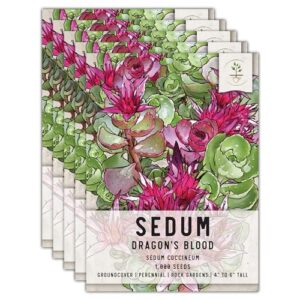
If you want a container plant that earns its keep through every season, Dragon Blood Sedum is hard to beat. It creeps into a dense, low mat and turns a rich burgundy as fall temperatures cool — giving you color without constant effort.
The seeds are tiny, so press them lightly onto moist soil rather than burying them.
Once established, it tolerates drought, poor soil, and full sun, making it one of the most forgiving picks on this list.
| Best For | Gardeners who want low-maintenance ground cover with year-round color, especially those working with dry, rocky, or poor-soil conditions. |
|---|---|
| GMO Status | Non-GMO heirloom |
| Seed Storage | Temperature-controlled facility |
| Pollinator Friendly | Bees and butterflies |
| Container Suitable | Yes |
| Germination Notes | Variable; tiny seeds |
| Bloom Color | Pink to red |
| Additional Features |
|
- Turns a stunning deep burgundy in full sun, so it looks great even when it’s not flowering
- Drought-tolerant and deer-resistant once established — basically thrives on neglect
- Works in containers, rock gardens, borders, and even cascading over walls
- Seeds are extremely tiny and tricky to handle, and germination can be hit or miss
- Can’t handle regular foot traffic, so placement matters
- Needs well-drained soil and the right conditions to get started — it’s not totally foolproof from seed
2. Black Eyed Susan Wildflower Seeds
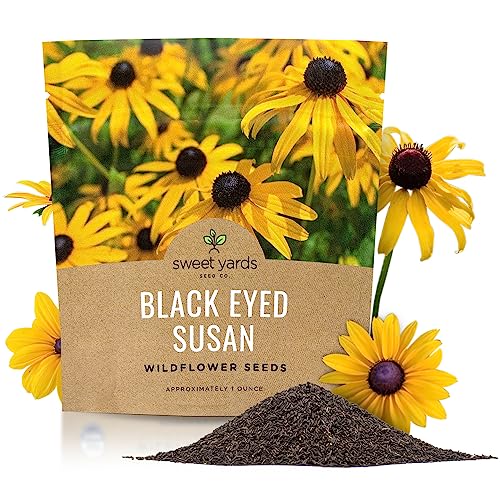
Where Dragon Blood hugs the soil low and tight, Black-Eyed Susans go tall and bold — bright yellow blooms rising 2 to 3 feet with that signature dark center.
Sweet Yards packs over 100,000 seeds into one $7.99 packet, covering roughly 600 square feet. That’s serious value for a pollinator-friendly planting.
Sow in well-drained soil with full sun, and expect germination in 7 to 30 days. One tip: a quick cold stratification period improves your germination rate noticeably.
| Best For | Gardeners, landscapers, and community garden projects looking to cover a large area with low-maintenance, pollinator-friendly wildflowers without spending much. |
|---|---|
| GMO Status | Non-GMO open-pollinated |
| Seed Storage | Resealable premium packaging |
| Pollinator Friendly | Butterflies and honeybees |
| Container Suitable | Yes |
| Germination Notes | Cold stratification recommended |
| Bloom Color | Yellow |
| Additional Features |
|
- Over 100,000 seeds for $7.99 is genuinely hard to beat — great coverage for the price
- Long blooming season that keeps butterflies and bees coming back all summer
- Beginner-friendly with planting instructions included right on the packaging
- Germination can be spotty without cold stratification first — an extra step some buyers don’t expect
- High seed density means you’ll likely need to thin seedlings once they take off
- A few customers have had trouble getting timely refunds or replacements when things went wrong
3. Purple Cyclamen Flower Seeds
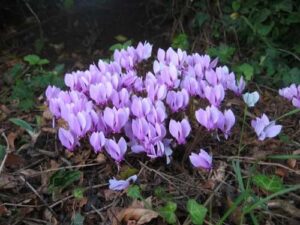
If bold and upright isn’t your style, Purple Cyclamen takes things in a softer direction — nodding purple blooms above silver-marbled foliage that genuinely earns its place in a shaded fall container.
Each packet gives you 100 non-GMO seeds. Soak them 12 to 24 hours before sowing, then keep them cool and dark until germination kicks in around six to ten weeks. They’re patient plants, but worth it.
Pair them with warm orange tones for a contrast that really pops.
| Best For | Beginner gardeners who want a low-fuss, beautiful seasonal display and don’t mind starting plants from seed. |
|---|---|
| GMO Status | Non-GMO mix |
| Seed Storage | Temperature-controlled facility |
| Pollinator Friendly | General pollinators |
| Container Suitable | Yes |
| Germination Notes | Quick under proper conditions |
| Bloom Color | Purple |
| Additional Features |
|
- 100 non-GMO, filler-free seeds packed fresh — so you’re getting real quality right out of the envelope.
- Staggered bloom times mean you’re not stuck with everything flowering at once and then going quiet.
- Super easy to grow, even if you’ve never started seeds before.
- Germination takes six to ten weeks — you’ll need some patience before you see anything worth photographing.
- Seeds only, so you’ll need to sort out your own soil, pots, and setup before you even get started.
- Not great for indoor or non-temperate climates unless you can control temperature and moisture pretty carefully.
4. Seed Needs Tetra Mix Heirloom Seeds
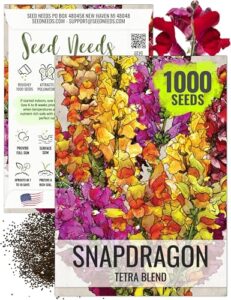
If you want a real showstopper in the mix, Seed Needs Tetra Mix delivers exactly that.
Each packet holds 1,000 heirloom seeds in pink, purple, red, yellow, and white — more than enough to fill containers and still share with a neighbor.
These semi-dwarf snapdragons grow 28 to 30 inches tall and bloom right into fall’s cooler weeks. They prefer full sun and consistent moisture.
Cut a few stems, too — each flower lasts seven to ten days in a vase.
| Best For | Gardeners who want a high-yield, multi-color snapdragon mix for cut flowers, garden borders, or sharing seeds with friends. |
|---|---|
| GMO Status | Non-GMO heirloom |
| Seed Storage | Temperature-controlled facility |
| Pollinator Friendly | Bees and butterflies |
| Container Suitable | Yes |
| Germination Notes | Surface planting required |
| Bloom Color | Pink purple red yellow white |
| Additional Features |
|
- 1,000 seeds per packet gives you plenty to fill beds, containers, and still have leftovers to pass along
- Blooms hold up 7–10 days in a vase, making them great for fresh-cut arrangements
- Heirloom, GMO-free seeds stored to stay viable — you can even save them for next season
- Germination can be hit or miss, even when you follow the instructions closely
- Not the best pick for hot, humid climates — these snapdragons really prefer cooler weather
- Needs surface planting, steady moisture, and good sunlight — a little less forgiving if conditions aren’t right
5. Sow Right California Giant Zinnia Seeds
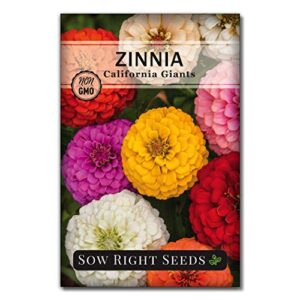
California Giant Zinnias are hard to beat when you want bold color that keeps going until frost. Each packet from Sow Right holds around 175 non-GMO heirloom seeds across red, orange, yellow, lavender, and more.
Plants grow three to four feet tall with blooms up to six inches wide — big enough to stop someone mid-walk. They attract butterflies and hummingbirds too.
Sow in warm soil above 75°F, give them full sun, and deadhead regularly to keep the color coming.
| Best For | Gardeners who want big, showy blooms for cut flowers, pollinator gardens, or adding serious color to beds and containers. |
|---|---|
| GMO Status | Non-GMO heirloom |
| Seed Storage | Solar-powered fresh batch |
| Pollinator Friendly | Butterflies and hummingbirds |
| Container Suitable | Yes |
| Germination Notes | 7-10 days at 75-78F |
| Bloom Color | Red orange yellow lavender violet white |
| Additional Features |
|
- Blooms are massive — up to six inches wide — and come in a solid range of colors that keep going all summer.
- Great for attracting butterflies and hummingbirds, so your garden pulls double duty.
- Works in containers, raised beds, or loose wildflower-style plantings, so it fits a lot of setups.
- Germination isn’t guaranteed, and some buyers report nothing sprouting at all.
- The color variety can be hit or miss — you might not get the full palette shown on the packet.
- About 175 seeds per packet, which won’t go far if you’re working with a large bed.
6. Everwilde Old Field Goldenrod Seeds
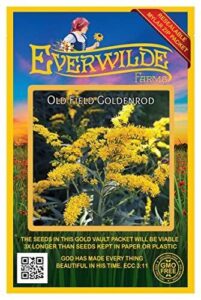
Goldenrod might be the most underrated fall container plant you’re not growing yet. Everwilde’s Old Field Goldenrod seeds give you roughly 2,000 per packet at just $3.75 — and that goes a long way in a native‑style planting.
Feed them right through bloom time with summer flower garden fertilization tips to keep those golden plumes going strong all season.
Plants reach about 24 inches tall with bright yellow clusters that honeybees absolutely love late in the season. They handle dry, poor soil better than most.
Sow directly in fall, press seeds lightly into the surface, and let them do the work.
| Best For | Native garden enthusiasts, pollinator supporters, and preppers who want an easy-to-grow wildflower that thrives in tough conditions. |
|---|---|
| GMO Status | Non-GMO native |
| Seed Storage | Triple-layer Mylar foil |
| Pollinator Friendly | Honeybees fall pollen |
| Container Suitable | Yes |
| Germination Notes | Variable; specific timing needed |
| Bloom Color | Yellow |
| Additional Features |
|
- Affordable at $3.75 a packet — lots of seeds for a very small investment
- Late-season bloomer that gives honeybees a valuable pollen source when most flowers are done
- Tough as nails in dry, poor soil — basically low-maintenance once established
- Germination can be hit or miss, even when you follow the instructions closely
- Seeds are tiny and tricky to handle, making even sowing a bit of a challenge
- Shipping costs can bump up the total price more than you’d expect
7. Survival Garden Victoria Blue Sage Seeds
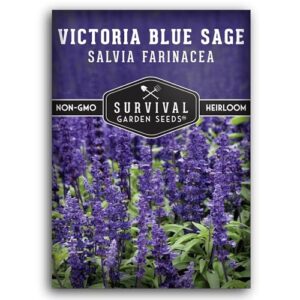
If you want deep blue-purple spikes rising above your fall containers, Victoria Blue Sage from Survival Garden Seeds delivers. At $4.99 a packet, you’re getting an open-pollinated, heirloom variety that bees, butterflies, and hummingbirds genuinely can’t resist.
It thrives in full sun with well-drained soil and tolerates heat without complaint. Start seeds indoors at 70–75°F — they usually sprout within two weeks. Deadhead spent blooms to keep the color coming strong well into fall.
| Best For | Gardeners in hot, dry climates who want a low-maintenance, pollinator-friendly plant that looks stunning in containers or borders. |
|---|---|
| GMO Status | Non-GMO heirloom |
| Seed Storage | Cool dry location |
| Pollinator Friendly | Bees butterflies hummingbirds |
| Container Suitable | Yes |
| Germination Notes | Widely variable 2-90% |
| Bloom Color | Blue purple |
| Additional Features |
|
- Gorgeous deep blue-purple blooms that draw bees, butterflies, and hummingbirds all season long
- Drought-tolerant and heat-hardy — perfect for low-water gardens in warm regions
- Open-pollinated and heirloom, so you can save seeds and grow them again year after year
- Germination results are hit or miss — some gardeners get a full tray of sprouts, others get two or three plants
- Packet size is small, which may not be enough if you’re planning a larger planting
- Needs the right conditions (sun, drainage, warmth) to actually bloom — not quite as carefree as advertised
8. Romi Mixed Color Dahlia Seeds
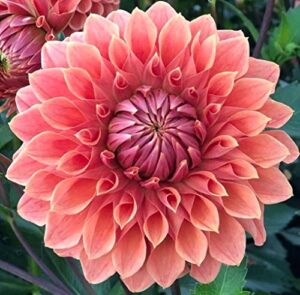
Dahlias from seed feel like a gamble, but the Romi Mixed Color pack makes it worth the bet. For $10.49, you get 100 seeds in a burst of colors — deep burgundy to pale cream — all in one carton.
Plants grow 18 to 24 inches tall and bloom from midsummer right into fall.
Give them full sun, well-drained soil, and a roomy 8 to 12-inch pot.
Deadhead regularly and they’ll keep producing those layered, 2 to 4-inch blooms without much fuss.
| Best For | Gardeners who want a colorful mix of dahlias without spending a lot — great for bulk planting, gifting, or just experimenting with what grows. |
|---|---|
| GMO Status | Non-GMO mixed |
| Seed Storage | Standard carton packaging |
| Pollinator Friendly | General pollinators |
| Container Suitable | Yes |
| Germination Notes | 0% to 80% reported |
| Bloom Color | Mixed varied |
| Additional Features |
|
- 100 seeds for $10.49 is genuinely hard to beat if you’re planting in volume
- Works in both garden beds and indoor systems like AeroGarden, so you’ve got options
- The mixed colors mean you get a fun surprise as they bloom — no two patches look the same
- Germination rates are all over the place — some buyers get great results, others get almost nothing
- No labels on individual varieties, so tracking which color came from which seed is pretty much impossible
- 100 seeds can pile up fast — you’ll likely need extra pots or a solid plan for what to do with all the seedlings
9. Sow Right Sweet Alyssum Seed Mix
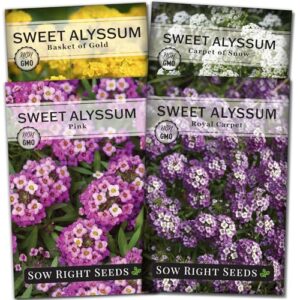
Sweet Alyssum is the quiet overachiever of fall containers. The Sow Right Seed Mix gives you four heirloom colors — white, purple, pink, and yellow — all from one $9.99 packet of roughly 1,100 seeds.
Plants stay low at 4 to 6 inches tall but spread 10 to 12 inches wide, spilling softly over pot edges. They bloom in 6 to 8 weeks and keep going through cool fall weather. Bees love the honey-scented flowers, and so will you.
| Best For | Gardeners who want an easy, fragrant groundcover that attracts pollinators and fills borders or container edges with minimal effort. |
|---|---|
| GMO Status | Non-GMO heirloom |
| Seed Storage | Solar-powered fresh batch |
| Pollinator Friendly | Bees and butterflies |
| Container Suitable | Yes |
| Germination Notes | 5-14 days at 65-75F |
| Bloom Color | White purple pink yellow |
| Additional Features |
|
- One packet gets you four heirloom colors — about 1,100 seeds for just $9.99, which is solid value.
- Stays low and compact (4–6 inches), so it layers beautifully without crowding other plants.
- Draws in bees, butterflies, and pest-fighting wasps, which makes your whole garden healthier.
- The seeds are tiny — we’re talking almost dust-level small — so precise sowing is tricky without a seed tray.
- Pre-emergent herbicides or inconsistent watering will shut down germination fast.
- The strong honey scent, while lovely, might not work for everyone — especially if bees in close quarters are a concern.
10. Dames Rocket Edible Flower Seeds
Dame’s Rocket pulls double duty in fall containers — it’s beautiful and edible. These non-GMO seeds from MySeeds.Co pack 40,000 seeds into one $13.95 pouch, so you’ll have plenty to work with.
Flowers range from white to purple and add a mild, peppery kick to salads. Plants are cold-hardy down to 20°F and attract pollinators naturally.
Give them well-drained soil and full sun to light shade, and they’ll self-seed happily for next year.
| Best For | Gardeners who want a low-maintenance, cold-hardy flower that looks great, attracts pollinators, and pulls double duty as an edible salad topper. |
|---|---|
| GMO Status | Non-GMO open-pollinated |
| Seed Storage | Double-wrapped moisture pouch |
| Pollinator Friendly | General pollinators |
| Container Suitable | Yes |
| Germination Notes | Cold stratification 60 days |
| Bloom Color | Purple pink white |
| Additional Features |
|
- Massive value — 40,000 seeds for under $14 means you can scatter freely without worry
- Cold-hardy down to 20°F and self-seeding, so it comes back year after year with little effort
- Edible flowers add a mild, peppery flavor and a pop of white-to-purple color to salads
- Germination can be tricky — seeds may need up to 60 days of cold stratification to sprout reliably
- Aggressive self-seeding means it can spread beyond where you want it if you’re not managing it
- Some buyers have reported receiving dried-out seeds, so germination rates aren’t always consistent
Best Fall Flowers for Containers
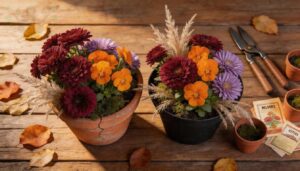
Fall containers come alive when you pick the right flowers for the season.
Some bloom all the way to frost, some add weeks of color with almost no fuss, and a few do both.
Here are the best fall flowers to grow in containers this year.
Chrysanthemums (Mums)
Chrysanthemums are the workhorses of fall container gardening — and for good reason. Hardy mums bloom from early autumn right through light frost, giving you serious bloom longevity without much fuss.
Pinching techniques applied in early summer produce bushier plants and more flowers.
They prefer well-drained soil and a slightly acidic pH.
For Color Trends 2026, deep burgundy and burnt copper are winning combos.
The genus includes approximately 40 species worldwide.
Asters
If mums are the reliable anchor, asters are the late-season surprise that keeps your containers buzzing. Their pollinator appeal is real — bees and butterflies can’t resist them.
Expect color shifts toward richer purples and blues as temperatures drop.
Space them well to avoid powdery mildew, stake taller forms against wind, and divide clumps every few years to keep blooms strong.
Pansies and Violas
Where asters lean bold and buzzy, pansies and violas bring quiet charm. These cool-season annuals shine when temperatures dip, and their face pattern blooms, layering beautifully into any autumn color palette.
- Cold tolerance holds strong — violas handle down to 20°F
- Pansies’ face pattern adds contrast against foliage fillers
- Violas’ matting habit fills container gaps fast
- Color pairings with orange mums feel natural and rich
- Container spacing of 6–8 inches keeps airflow healthy
Zinnias
If pansies are the quiet ones, zinnias are anything but. These heat-resistant cultivars thrive in full sun and well-drained soil, blooming until frost with almost zero fuss. Their pollinator magnetism is real — butterflies and hummingbirds show up reliably.
| Feature | Detail |
|---|---|
| Light Need | Full sun daily |
| Container Size | 8–12 inches minimum |
| Compact Container Varieties | Zahara, Profusion series |
| Seasonal Color Shifts | White to deep red |
Deadhead regularly, and you’ll keep the color coming strong.
Dahlias
Few flowers command container like dahlias do. Plant them in full sun with well-drained soil, and they’ll deliver bold blooms well into autumn.
- Choose compact varieties for containers at least 12–16 inches wide
- Master staking techniques early to keep tall stems upright
- Explore color trends from deep burgundy to soft peach
- Dig and dry tubers for storage before hard frost hits
- Invite companion planting with zinnias for pollinator-friendly plants that extend bloom longevity
Black-Eyed Susans
Black-Eyed Susans (Rudbeckia spp.) are the low-maintenance autumn garden plants your fall containers have been waiting for. They thrive in full sun, tolerate drought, and keep feeding pollinators well into October.
| Care Factor | Quick Tip |
|---|---|
| Soil Preferences | Sandy to loamy, fast-draining mix |
| Pollinator Benefits | Draws bees and butterflies all season |
Deadhead regularly to extend blooms when choosing fall flowers for containers.
Cyclamen
Cyclamen is a cool-season planting gem that earns its spot in fall containers with upswept blooms in white, pink, red, and purple.
Fragrant varieties add a quiet bonus indoors.
Place yours in bright indirect light, water when the top soil dries, and keep tuber care simple — never let water pool on the crown.
Seasonal repotting after dormancy keeps them thriving year after year.
Sweet Alyssum
Sweet Alyssum is the quiet workhorse of fall containers — a Fragrant Groundcover with a Low-Mound Habit that fills gaps beautifully without stealing the show.
- Thrives as a Cool-Season Bloomer in cool weather, spreading 6–18 inches wide.
- Grows best in full sun for maximum bloom.
- Acts as a Pollinator Magnet, drawing bees and butterflies.
- Its Self-Seeding Ability means it may return next season.
- Weave Sweet Alyssums around taller plants for a soft, honey-scented edge.
Foliage Plants for Fall Texture
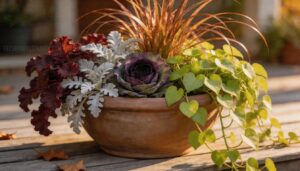
Flowers get all the attention, but foliage is what gives a fall container its backbone. The right leaf textures and colors can carry a planter through the season even when blooms slow down.
Here are six foliage plants that earn their spot in any autumn pot.
Ornamental Cabbage and Kale
Few plants put on a better slow-motion show than ornamental cabbage and ornamental kale. Their color shifts kick in as temperatures dip below 60°F, deepening magenta, purple, and creamy white tones right through frost.
That cold hardiness makes them reliable anchors in fall containers.
Pair their bold leaf texture with zinnias or dusty miller for easy color coordination in autumn, and always mind container size and drainage.
Coral Bells (Heuchera)
Heuchera spp., or Heuchera Coral Bells, might just be the hardest-working foliage plant in your fall toolkit.
Its leaf color spectrum runs from caramel and cherry truffle to deep plum, holding strong through cool-season planting without much fuss.
Shade adaptability means it fits tricky spots easily.
Low maintenance care, winter foliage retention, and frost-tolerant plant status make it a reliable container soil mix companion all season.
Sedum (Stonecrop)
If Heuchera brings the color drama, Sedum (Stonecrop) offers the quiet resilience. It’s one of the best low‑maintenance autumn garden plants you can grow — drought tolerant, sun‑loving, and surprisingly beautiful as temperatures drop.
Here’s why it earns a spot in your fall containers:
- Drought Resilience — Sedum stores water in its leaves, so skipping a watering day won’t hurt it.
- Full Sun Performance — Give it six or more hours of direct light and it’ll reward you with stronger color.
- Seasonal Color Change — Varieties like Dragon’s Blood shift to rich burgundy tones as fall arrives.
- Mat‑Forming Habit — Low spreaders fill gaps beautifully without crowding neighboring plants.
- Stonecrop Variety Selection — Match your pot size to the variety; compact types suit smaller containers perfectly.
Well‑drained soil is non‑negotiable — soggy roots are its one weak spot. And if you want more plants, Leaf Cutting Propagation is easy: just press a stem into gritty mix and wait.
Dusty Miller
While Sedum manages the sun and drought like a champ, Dusty Miller plays a completely different role — it’s the Silver Foliage Appeal that makes every other color in your planter pop. Those Heat Reflective Leaves aren’t just pretty; they actually bounce light around the pot.
| Feature | Detail | Benefit |
|---|---|---|
| Compact Mounding Habit | 8–18 inches tall | Perfect Edge Planting Strategy |
| Drought Tolerant Foliage | Low water needs | Pairs with drought tolerant neighbors |
| Soil drainage for containers | Fast-draining mix required | Prevents root rot |
| Works as filler plants | Fills gaps between cool season annuals | Adds texture without bulk |
| Mixes with hardy perennials | Stays attractive through mild frost | Extends seasonal display |
Tuck it along container edges and watch it frame your bolder bloomers beautifully.
Bronze Sedge and Carex
If Dusty Miller brings the silver, Bronze Sedge brings the warmth.
Carex Toffee Twist grows to about 18 inches with arching, bronze‑toned blades that deepen as temperatures drop — making it a reliable Winter Color Retention anchor in any fall container garden.
Good soil drainage for containers keeps root rot away.
Pair it with orange zinnias or purple asters for standout Companion Plant Pairings.
Ornamental Grasses for Height
Want to add real height to your fall containers? Ornamental grasses are your answer — natural Vertical Focal Points with Plume Architecture that no flower can quite match.
- Pennisetum’s bottlebrush spikes and Miscanthus’s feathery plumes offer Seasonal Height Variation through frost
- Wind-Resistant Stalks rarely need Staking Strategies unless your site gets serious gusts
- In the thriller spiller filler formula, grasses own the thriller role — use a deep pot with solid drainage
Designing Beautiful Autumn Planters
A great fall planter isn’t just about picking pretty flowers — it’s about putting them together in a way that actually works. A simple design moves make the difference between a container that looks intentional and one that just looks busy.
Here’s what to keep in mind as you start planning yours.
Use The Thriller, Filler, Spiller Formula
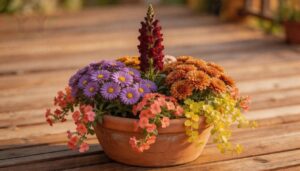
Think of your fall container like a small stage: one dramatic star, a supporting cast, and a few actors who steal the edge. That’s the thriller filler spiller formula in action.
Every great fall container needs a star, a supporting cast, and a few scene-stealers at the edge
Your thriller silhouette anchors the vertical rhythm at the center or back. Filler texture fills the middle. Spiller flow softens the rim.
Together, they create fall container flowers with real seasonal cohesion.
Match Plants by Sun Needs
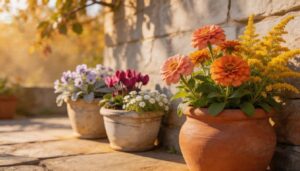
Pairing plants that share the same light appetite makes your container easier to manage and far more likely to thrive.
Check your spot for Morning Sun Pairings like cyclamen and sweet alyssum in Partial Shade Strategies, or lean into Afternoon Heat Zones for zinnias and black‑eyed Susans hitting partial to full sun.
Microclimate Mapping and Reflective Container Effects matter too.
- Full sun: zinnias, sedum, goldenrod
- Part shade: cyclamen, violas, cool-season planting annuals
- Shade tolerant annuals: dusty miller, sweet alyssum
- Mixed spots: layer coolweather flower varieties for patios near structure walls
Combine Warm Fall Color Palettes
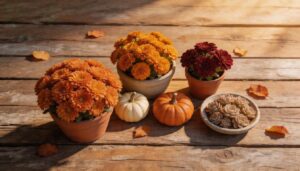
Build your autumn color palette around Layered Warm Tones — burnt orange mums, soft amber marigolds, and burgundy accents from deep red zinnias.
Neutral Anchors, like cream and taupe, prevent clashes and let bold hues breathe.
Matte Finish Pairings and Triadic Color Rhythm tie everything together visually.
Group three or more plants per color family, then tuck in pumpkins for natural texture contrast.
Add Cool-Tone Contrast
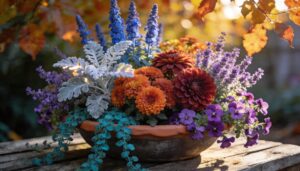
Cool tones are the secret handshake of fall container design.
blue foliage accents like Blue Salvia or silver leaf texture from Dusty Miller, and your warm oranges suddenly look twice as vibrant. Lavender bloom highlights and teal background foliage push those burnt hues forward.
Purple foliage contrast from cool-season annuals — violas, Sweet Alyssum — quietly ties the whole planter together.
Layer Heights for Full Containers
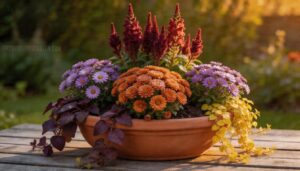
Height is everything in a fall container.
Start with a tall thriller at the back — something bold that hits 18 to 28 inches — then step down through filler plants in the middle tier, and finish with trailing plants draping the rim. This visual slope and stem staggering create natural balance ratio and layer proportions that make your autumn garden design look intentional, not accidental.
Pair Flowers With Pumpkins and Gourds
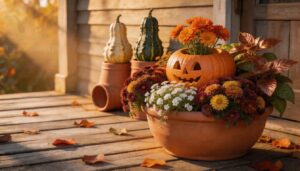
Tuck a hollow pumpkin into your fall containers and fill it with mums or zinnias — it works as a vase for up to a week with regular water changes. Practice Gourd Pedestal Placement by elevating tall gourds on overturned pots for height variety.
Add sweet alyssum for Spiller Edge Softening, and weave in copper foliage for Metallic Accents.
Skip heavy-scented plants — Fragrance Management keeps the display pleasant, not overwhelming.
Caring for Fall Container Flowers
Getting your flowers to look great is one thing — keeping them that way through fall is another.
The good news is that container care doesn’t have to be complicated. A few simple habits make all the difference, and here’s where to start.
Choose The Right Pot Size
Getting the pot size right sets up everything else for success. Leave 1–2 inches of root ball clearance so roots expand gradually without drowning in excess soil.
Mind your depth-to-width ratio — deep pots suit perennials, while shallow 6–8 inch containers handle compact annuals beautifully.
Pot material impact matters too: terracotta dries faster, so seasonal size adjustment helps match plant needs as fall temperatures shift.
Use Fast-Draining Potting Mix
sorted pot size, the next step is what goes inside it. A well-draining soil mix gives roots room to breathe — that’s where aeration benefits really show up.
Mix in perlite or coarse sand to improve drainage components and keep fall containers from holding excess moisture.
For most plants, a simple 60/40 potting mix to perlite ratio protects root health beautifully.
Water Deeply Without Overwatering
Once your mix is right, watering well is the next skill worth mastering. Think of it less as a daily habit and more as reading what your plants actually need.
- Check soil moisture with a moisture meter before watering — aim for 40–60% volumetric water content in the root zone.
- Water slowly to encourage root zone saturation without runoff.
- Build a drainage layer design into each pot using perlite or broken terracotta at the base.
- Use pot elevation — raise containers on feet to improve soil drainage and prevent standing water.
- Adjust your irrigation scheduling based on temperature, not the calendar — cool spells mean longer dry spells between sessions.
Fertilize for Longer Bloom Time
Good watering habits get your blooms started — the right feeding keeps them going. A phosphorus boost through a 10-20-10 water soluble feeding encourages strong flower development without pushing leafy growth.
For a balanced nutrient schedule, swap to slow release granules or Jobe’s Flower Fertilizer Spikes mid-season. That fertilizer timing shift helps flowering period extension, especially when extending bloom time with hardy perennials into cooler weeks.
Deadhead and Trim Leggy Growth
Spent blooms are quietly stealing energy your plant could spend on fresh flowers. Deadhead spent flowerheads every two to three days during peak bloom — that single habit drives seasonal color shift better than most products will.
For trailing filler plants and cool-season annuals going leggy, here’s your quick trim routine:
- Pinch just above the second leaf set to trigger branching and restore growth hormone balance.
- Cut at a 45-degree pruning angle above a leaf node for faster healing.
- Practice tool sterilization between cuts to block disease spread.
- Time major reshaping around light management shifts — avoid pruning during frost weeks.
- Remove one-third of height for container maintenance without shocking the plant.
Protect Pots From Early Frost
A hard freeze can wipe out weeks of work overnight, so act before the forecast drops.
Elevated pot placement and insulating pot wraps are your first defenses — raise containers on bricks, then wrap with bubble wrap or frost cloth.
Pre-condition soil the afternoon before frost hits; moist soil holds heat longer.
Cold frame cloches buy extra nights.
For overwintering strategies that stick, lean on frost-tolerant plant selection from the start.
Frequently Asked Questions (FAQs)
What are good fall potted flowers?
Chrysanthemums, asters, pansies, and zinnias are your go-to fall containers stars. They offer solid bloom duration, temperature tolerance, and color coordination — plus zinnias are genuinely pollinator-friendly.
What do you put in a planter for fall and winter?
Think of your planter as a tiny ecosystem. Layer evergreen focal plants with frost-tolerant plants like cyclamen and heuchera, add trailing vines, and mulch insulation keeps roots safe all season.
Can I plant fall flowers in pots?
Yes, you absolutely can. Fall containers are one of the easiest seasonal projects you’ll take on. Pick frost-tolerant plants, use a pot with drainage, and you’re already halfway there.
What are the most durable fall flowers?
Fall flowers don’t need babying — some practically thrive on neglect. Coneflower, Black-Eyed Susan, Sedum, Aster, and Mums lead for frost hardiness, extended bloom, and drought tolerance across most hardiness zones.
What container plants are best for autumn color?
For autumn color, your best bets are mums, pansies, sedum, ornamental kale, and ornamental cabbage. Each one manages cooler temps well and keeps containers looking full through seasonal color change.
What flowers can I put in pots for winter?
Pansies, violas, hellebores, and winter heath all handle cold-hardy container life well. Winter jasmine trails beautifully, while Skimmia adds evergreen structure and berries through the frost months.
What is the best long lasting fall flower?
Chrysanthemums win for bloom duration and frost resilience — they flower from late summer through hard frost.
Their heat tolerance, pollinator appeal, and long‑lasting color make them the go-to perennial fall blooms for any container.
How often should I water fall container flowers?
Check the top inch of soil before reaching for the watering can — that simple soil moisture testing habit saves more plants than any watering schedule ever will.
Every two to three days works for most fall containers.
What size containers work best for fall blooms?
Aim for at least 12 inches in diameter and depth.
That size balances root room, moisture retention, and drainage — giving fall blooms the stable footing they need to perform well through cooler nights.
How do I protect containers from frost damage?
Move containers against a south-facing wall before frost hits. Use frost blankets overnight, then remove them by morning.
Raise pots on risers, water the day before, and line large containers with insulating pot liners.
Conclusion
Fall, often seen as a season of decline, is actually a masterclass in vibrant comebacks.
As summer’s blooms fade, the best fall flowers for containers step up, painting porches and patios with resilient color.
With these hardy picks and a few smart care tips, you can extend the beauty of your outdoor spaces well into November.
So, embrace the season’s second chance at glory, and let your containers shine with autumn’s overlooked yet stunning stars.