This site is supported by our readers. We may earn a commission, at no cost to you, if you purchase through links.
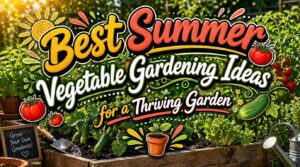
Something shifts in a garden when the soil finally hits 60°F. Seeds that sat dormant for days suddenly crack open overnight, and within a week you’ve got a jungle on your hands—or at least the beginning of one. Summer gives vegetables an energy boost that no other season can match, which means your decisions in late spring pay off in tomatoes, cucumbers, and peppers you’ll actually want to eat.
The catch? Summer gardens reward the prepared and punish the improvised. Knowing which crops to grow, how to set them up, and when to harvest makes all the difference between a thriving plot and a heat-stressed mess.
Table Of Contents
- Key Takeaways
- Best Summer Vegetables to Grow
- Smart Warm-Season Planting Ideas
- Raised Bed and Container Ideas
- Companion Planting for Summer Success
- Watering and Soil Care Tips
- Harvest and Garden Health Ideas
- Frequently Asked Questions (FAQs)
- What is the best vegetable to plant in summer?
- What is the 3-hour gardening rule?
- What vegetables can you grow in summer?
- How to grow summer vegetables in your backyard?
- What vegetables do kids like in a vegetable garden?
- What is the best vegetable garden layout?
- How do you grow a vegetable garden?
- When is the best time to plan a vegetable garden?
- What’s the best vegetable to grow in the summer?
- What is a good layout for a vegetable garden?
- Conclusion
Key Takeaways
- Soil temperature hitting 60°F is your real starting gun — not the calendar date — so check the soil temperature at a 4-inch depth before planting a single seed.
- Pairing crops strategically (basil with tomatoes, beans with squash, marigolds around pest-prone beds) cuts down on chemicals while boosting yield naturally.
- Succession planting every 2–3 weeks and picking squash every 1–3 days are the two habits that keep your kitchen stocked all season instead of drowning in one big harvest.
- Drip irrigation, early-morning watering, and a 2–4-inch mulch layer work together to slash water waste and keep roots cool when summer heat peaks.
Best Summer Vegetables to Grow
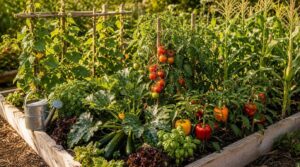
Summer is honestly one of the best times to grow your own food — the warmth, the long days, and the sheer variety of crops you can pick from make it exciting. The key is knowing which vegetables actually love the heat and will reward your effort with a real harvest.
A good summer vegetable planting calendar takes the guesswork out of timing so your heat-lovers hit their peak right when they should.
Here are the best options to get growing this season.
Tomatoes and Peppers
Tomatoes and peppers are summer’s real MVPs. For tomatoes, pick indeterminate varieties like Sakura or Mai Tai — they just keep producing. Use staking cages early, before fruit weighs things down. Keep your watering schedule for summer crops consistent; uneven moisture triggers blossom end rot from calcium fluctuations.
Peppers love heat — container gardening works beautifully for them. Harvest when color cues tell you they’re ready.
Ensuring full sun and well‑drained soil is essential for vigorous growth.
Cucumbers and Melons
Cucumbers and melons share similar care requirements: warm soil (60–70°F), pH optimization around 6.0–6.8, and a steady watering schedule for summer crops.
Soak seeds before planting using seed soaking techniques to speed germination. Choose varieties with powdery mildew resistance for fewer headaches.
Trellis your cucumbers to save space and improve air circulation. For melons, patience pays off—allow fruit sweetness to peak at harvest time before picking.
Eggplant and Okra
If cucumbers got you hooked on warm-season vegetables, eggplant and okra are ready to keep that momentum going. Both love heat — actually thrive in it.
- Ivory eggplant varieties and bi-colored eggplant types add visual interest alongside classic purple Italian types
- Eggplant heat tolerance makes it dependable when summer gets brutal
- Okra pollination tips and okra seed spacing (thin to 12 inches) enhance those 3–4 inch pods
Squash and Beans
Now, squash and beans form a dynamic duo. Summer squash matures in 45–60 days, so staggering harvests ensure a steady kitchen supply all season. Pick fruits every 1–3 days to maintain consistent production.
Pole beans thrive with vine training methods, elegantly climbing trellises, while bush beans suit compact garden beds. Both crops benefit from early row cover usage, protecting young plants.
Beans naturally fix nitrogen in the soil, enriching it quietly, while squash leaves provide canopy shade benefits—suppressing weeds beneath their broad foliage. This partnership optimizes space and resources efficiently.
Heat-tolerant Leafy Greens
Most summer greens bolt in high temperatures — but not all of them. High Heat Greens like Malabar spinach, leafy amaranth, and New Zealand spinach thrive above 90°F. These varieties offer reliable options for hot-weather gardening.
Pair bolting-resistant varieties of leaf lettuce with mustard greens to ensure steady harvests. This combination maximizes productivity while adapting to warmer conditions.
Implement microclimate planting, afternoon shade, and light mulch to maintain cooler soil. These practices support drought-tolerant plants, keeping them productive throughout the season.
Smart Warm-Season Planting Ideas
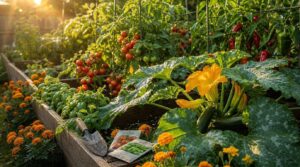
Timing is everything for warm-season vegetables. Planting too early risks cold soil, while planting too late means summer may end before your harvest peaks.
A few smart moves at the start of the season make all the difference.
Check Soil Temperatures
Before you drop a single seed in the ground, grab a digital thermometer and check your soil — at 4 inches deep. Warm season crops like tomatoes need at least 60°F for healthy root development. Use temperature logging over a few days to map microclimates in your beds.
Mulch’s effects and soil preparation both shift readings, so measure in multiple spots for an accurate picture.
Start After Frost
Even after your last frost date passes, allow one to two more weeks as a safety margin — warm season crops dislike unexpected cold snaps.
Use your garden planting calendar to monitor soil warm-up cues, then gradually harden off seedlings before transplanting.
Row covers and microclimate tunnels provide reliable frost protection if temperatures drop unexpectedly, ensuring seedlings remain safe and strong.
Stagger Plantings Every Few Weeks
Think of your garden as a relay race — one wave finishes, and the next is already running. That’s the magic of succession planting.
Using a garden planting calendar to track your wave scheduling and interval tracking keeps Succession Harvests coming all season long.
- Start a new planting every 2–3 weeks
- Log each vegetable succession planting date for yield optimization
- Aim for 4–6 rounds across 12 weeks
- Use your planting schedule to spot gaps before they happen
Choose Fast-maturing Varieties
Not all varieties are created equal — and that gap really shows in summer. Early maturity hybrids, like cherry tomatoes, can hit your plate in just 50–60 days. Compact fruit cultivars and determinate growth types wrap up quickly, keeping your vegetable succession planting on track.
Heat-tolerant seedlings with rapid harvest timelines — think Piccolo or short-season summer vegetable varieties — give you more harvests per season.
Match Crops to Zones
Your garden is a patchwork of microclimates—and matching crops to these zones transforms growth. Microclimate mapping strategically places plants using soil heat management and irrigation zoning to meet temperature needs. Key crops include:
- Peppers thrive where nights stay warm (a zone 8b gardening staple)
- Tomatoes require consistent soil warmth for fruit set
- Cucumbers excel with steady irrigation and daytime heat
- Leafy greens prefer cooler, afternoon-shaded areas
Building zone rotation plans each season sustains soil health and boosts yields—particularly with heat-tolerant varieties and warm-season crops in changing climates.
Raised Bed and Container Ideas
You don’t need a huge backyard to grow a seriously impressive summer garden. The right setup — whether it’s a raised bed, a fabric planter, or a trellis system — makes all the difference in what you can grow and how well it thrives.
Here are some smart enclosure ideas worth trying.
Four-foot-wide Raised Beds
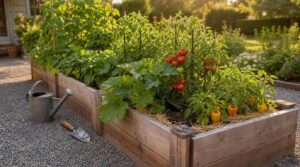
Four feet is the sweet spot for raised bed gardening, allowing easy access to the center from either side without soil compaction. This height ensures less back strain while tending warm-season crops.
Cedar frame construction withstands wet summers effectively, while walkway integration on both sides enhances tool accessibility.
Mulch usage and edge soil retention maintain tidiness, further optimizing the gardening experience.
Deep Beds for Roots
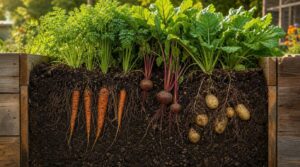
Depth matters more than most gardeners realize. While four feet accommodates width perfectly, root depth optimization really pays off when digging 12–18 inches deep. Carrots, beets, and potatoes need this vertical room to spread.
A solid soil layering strategy—40% compost up top, balanced minerals beneath—keeps soil fertility strong all season.
For bed walls, use untreated timber or stone, as both manage outward root pressure without warping.
Good drainage design and smart aeration techniques ensure the soil stays loose and productive.
Fabric Planter Vegetables
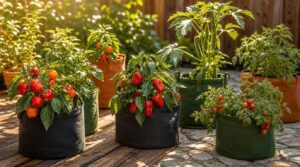
Not everyone has space for raised garden beds — and that’s where fabric planters shine. Root air-pruning keeps root systems healthy and fibrous, while breathable, durable fabrics handle moisture management beautifully, preventing rot during summer heat waves.
They’re lightweight, portable layouts you can rearrange to chase sunlight.
Try heat-tolerant vegetables like peppers or okra in them. Container gardening just got smarter.
Vertical Trellises for Vines
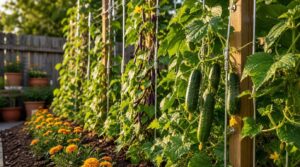
Vertical trellis support systems turn wasted airspace into productive growing room. Space optimization gets real when vining plants like cucumber or Northeaster Pole Beans climb metal poles with stainless wire.
Modular design makes tension adjustments easy as vines grow, while burying posts 12–18 inches deep ensures wind stability solid all season.
North-side Tomato Placement
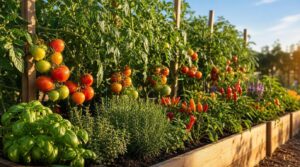
Place your indeterminate tomatoes on the north side of raised beds — it’s a small move with real payoff. You get uniform leaf temperature, reduced fruit sunscald, and simplified staking access since you’re not squinting into afternoon glare.
Morning shade benefits heat-tolerant varieties during peak summer stress.
It also keeps companion planting balanced, letting full sun reach peppers and herbs along the southern edge.
Companion Planting for Summer Success
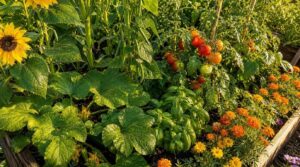
Companion planting is one of those garden tricks that just makes everything work better together.
The right plant pairings can keep pests away, boost your yields, and even improve flavor — all without extra chemicals.
Here are some of the best combinations to try in your summer garden.
Basil With Tomatoes
Basil and tomatoes are garden soulmates, with a real flavor synergy. Basil’s aroma enhances tomato acidity, and their companion planting benefits extend beyond the plate.
Basil acts as a natural pest repellent, deterring aphids, spider mites, and other threats from indeterminate tomato growth.
- Keep soil pH balance between 6.0–7.5 for both
- Harvest basil regularly for bolting management
- Space plants 12–24 inches apart for pollinator-friendly plants to move freely
Marigolds for Pest Control
Marigolds might just be the hardest-working companion plants in your summer garden. Their volatile aromas genuinely confuse insects, disrupting how pests locate your tomatoes and peppers.
African marigolds are especially powerful for nematode suppression — plant them densely for best results.
For optimal protection, try perimeter planting around vulnerable beds. Space marigolds 12–18 inches apart, prioritize continuous-blooming or drought-tolerant varieties, and deadhead regularly to maintain non-stop integrated pest management all season.
Three Sisters Planting
The Three Sisters method is one of the oldest companion planting systems around — and it genuinely works. Indigenous corn varieties anchor the mound, giving beans something to climb (Corn Support at its finest). Bean Nitrogen feeds everything below, while Squash Groundcover smothers weeds and locks in moisture.
In the Three Sisters method, corn lifts beans, beans feed the soil, and squash smothers the weeds
Build it right:
- Mound Design: 18–24 inches wide, 6–8 inches high
- Sequence: corn first, beans after two weeks, then squash
- Together, these crop rotation allies suppress pests naturally
Pollinator-friendly Annual Flowers
Your vegetable garden becomes twice as productive when you invite pollinators in. Tuck in annual flowers like zinnias and sunflowers — they’re natural bee landing pads. Calendula brings early-season nectar diversity, while butterfly magnets like cosmos and verbena keep things buzzing all summer.
Try mass planting marigolds between rows for color sequencing and steady pollinator traffic from June straight through frost.
Space-saving Crop Pairings
Think of your bed like a three-story building — every layer earns its keep. Pole beans and carrots work beautifully together, using different soil depths without competing. Radish buffer planting fills gaps fast before your vines take over.
Trellised cucumber corn and tall-short pairing optimize vertical space, while layered intercropping keeps production continuous. Smart garden bed design and garden planning turns companion plants into a tight, productive team.
Watering and Soil Care Tips
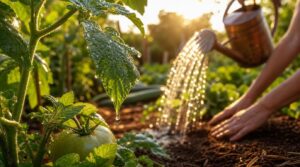
Your garden lives or dies by how well you feed and water it — especially in summer heat.
The good news is that a few smart habits go a long way toward keeping your plants happy and productive. Here’s what actually works.
Compost-rich Garden Soil
Your soil is the foundation of everything, and compost-rich garden soil truly transforms your gardening. Layering 2–3 inches of compost boosts microbial diversity, improves soil structure, and provides effective nutrient buffering all season long.
This organic matter enhances moisture retention, holding up to 30% more water. Pairing compost layering with mulch ensures your organic practices yield healthier, more productive plants.
Drip Irrigation Systems
Once your soil is loaded with compost, keeping it consistently moist is where drip irrigation really shines. This system delivers water right to the roots — less waste, healthier plants.
- Emitter Selection & Zone Design match flow rates to each crop’s needs
- Pressure Regulation & Filtration Solutions keep your system running smoothly all season
- Subsurface Installation cuts evaporation and protects emitters
Smart water conservation starts here.
Early-morning Watering
Your drip irrigation does the heavy lifting — but when you water matters just as much. Early morning, between 5 and 9 AM, is the sweet spot. Cooler air means evaporation reduction of up to 40%, giving root zone hydration a real head start.
Stomatal nutrient uptake peaks at dawn, while soil microbial activity receives a natural boost. This timing aligns with the plant’s biological rhythms, optimizing nutrient absorption and fostering a healthier root environment.
By watering early, you minimize overnight leaf moisture, a key factor in disease prevention. Fewer wet leaves mean reduced fungal risks, promoting healthier plants throughout the summer.
Organic Mulch Layers
Early watering sets your plants up beautifully — and mulch keeps that moisture locked in. A 2–4 inch layer of organic matter works overtime all summer long:
- Mulch Moisture Retention cuts irrigation needs by up to 30%
- Thermal Insulation keeps roots 6–12°F cooler during heat waves
- Weed Suppression blocks up to 70% of annual weeds
- Soil Biology Boost feeds earthworms and beneficial fungi as it decomposes
- Erosion Prevention shields your soil amendment investments from rain and wind
Keep mulch a few inches from stems to avoid rot.
Summer Fertilizing Schedule
Before you pour on any fertilizer, test your soil first — it tells you exactly what’s missing.
| Growth Stage | Feeding Focus |
|---|---|
| Pre-plant | Pre-plant nitrogen + compost |
| Early season | Split-dose feeding every 2 weeks |
| Mid-season | Mid-season phosphorus for fruit set |
| Late season | Late-season potassium for heat tolerance |
| Anytime | Foliar micronutrients for quick fixes |
Nitrogen-fixing beans nearby help too.
Harvest and Garden Health Ideas
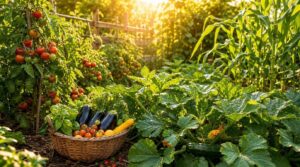
Getting to harvest is the fun part — but how you tend your garden in these final weeks makes all the difference.
A few simple habits can keep your plants productive, healthy, and stress-free through the hottest days.
Here’s what to focus on as the season hits its stride.
Pick Squash Frequently
Squash won’t wait — and that’s the beauty of it. Check your plants every one to three days during peak season. Morning harvest is ideal; fruits are firmer and easier to handle. Use sharp tools to cut cleanly and protect vine health.
- Watch size indicators: 6–8 inches is your sweet spot
- Harvest timing keeps fruits tender, never bitter
- Yield stimulation happens naturally with frequent picking
- Harvesting tips for squash: leave a small stem nub
Consistent picking = continuous yield from your summer vegetables.
Support Heavy Melons
Big melons need real support — don’t leave that to chance. A load-bearing trellis with adjustable braces keeps vines off the ground, while a cradle design distributes each fruit’s weight evenly, preventing stem breakage. Tuck a weatherproof cover nearby for heavy rain days. Good airflow under fruit reduces rot fast.
Pair trellising with shade cloth or black plastic mulch as vine protection strategies. Check weekly.
Prune Tomatoes for Airflow
Think of pruning like giving your tomatoes room to breathe. Indeterminate tomatoes especially need regular sucker pruning and canopy thinning — otherwise, you’re growing a jungle, not a garden. Lower leaf removal clears the first 12–18 inches from the soil for air channel creation and disease prevention. Stay on top of tie adjustment with your trellising or staking every week or two.
- Remove suckers weekly on indeterminate varieties.
- Clear lower leaves up 12–18 inches from the soil.
- Adjust ties to keep stems open and upright.
Watch Heat Stress Signs
Your garden — and your body — will both tell you when summer heat is winning. Watch for Plant Wilting Signals like curled or scorched leaves even after watering, plus slowed fruit set. For you, Sweat Indicators, rising Skin Temperature, and Dehydration Cues like dark urine or headaches demand a break. Cognitive Impairment — confusion, clumsiness — means stop immediately.
| Signal Type | Early Warning | Action Needed |
|---|---|---|
| Plant Wilting Signals | Drooping despite watering | Add mulch, shade cloth |
| Dehydration Cues | Dark urine, dry mouth | Drink water or electrolytes |
| Cognitive Impairment | Confusion, slow reaction | Rest immediately in shade |
Choose heat-tolerant varieties and drought-tolerant plants to ease summer heat stress management and reduce thermal stress on plants.
Preserve Fresh Summer Harvests
Don’t let a bumper crop go to waste. Water bath canning works beautifully for preserving tomatoes and pickling cucumbers — just keep that brine acidic and below pH 4.6.
Flash freezing locks in peak flavor fast, while fruit dehydration and drying herbs are surprisingly simple with an oven at 130°F.
Root cellaring stores squash and roots for months, offering a low-effort solution for extended storage.
These vegetable preservation methods give your harvest real staying power.
Frequently Asked Questions (FAQs)
What is the best vegetable to plant in summer?
Tomatoes take the crown. They’re packed with nutrient density, top the charts in market popularity, and offer serious culinary versatility — from fresh salads to sauces.
Plant them in full sun and don’t look back.
What is the 3-hour gardening rule?
The 3-hour gardening rule means skipping outdoor work between 11 AM and 2 PM. This midday heat avoidance window protects you from heat exhaustion and sunburn.
It also helps with plant stress reduction, ensuring both gardener and garden stay healthier during peak heat hours.
What vegetables can you grow in summer?
Picture sun-warmed rows bursting with color. You can grow tomatoes, peppers, cucumbers, squash, beans, eggplant, okra, and heat-tolerant greens — all thriving warm-season crops that love long, hot summer days.
How to grow summer vegetables in your backyard?
Start with soil temperature — warm season crops stall in cold ground. Once it hits 60°F, follow your garden calendar planning, add mulch heating, and scout for seasonal pest scouting early.
What vegetables do kids like in a vegetable garden?
Kids go wild for Snack‑Size Harvests — cherry tomato varieties, sweet mini peas, and Bush Beans.
Bright Color Crops like corn and rainbow peppers turn Harvest Play Areas into Kid Involvement Activities they’ll actually beg for.
What is the best vegetable garden layout?
Your garden layout is the backbone of everything.
A Classic Row fits large spaces well.
A Square Foot Grid maximizes small plots.
Polyculture Zoning pairs companion plants beautifully for a productive, healthy summer garden.
How do you grow a vegetable garden?
Growing a vegetable garden starts with soil temperature, pH testing, and Garden Layout Mapping.
Pair that with a solid watering schedule, mulch, and smart crop rotation strategies, and you’re already ahead.
When is the best time to plan a vegetable garden?
The best time to plan is late winter.
Check your Frost Date Planning calendar, confirm your Regional Climate Window, and align your Seed Start Calendar so soil temperature hits 60°F before transplanting.
What’s the best vegetable to grow in the summer?
Tomatoes win, hands down. They pack serious nutrient density, strong yield per square foot, and a flavor profile that nothing else matches.
Most heat-tolerant varieties ripen in 70–85 days and keep producing all season.
What is a good layout for a vegetable garden?
Funny how the ‘perfect’ vegetable garden layout looks easy — until you’re crawling through overgrown beds.
Keep it simple: four-foot-wide Modular Bed Blocks, Uniform Pathways, and Sun‑Optimized Orientation north to south.
Conclusion
Think of your garden as a conversation between you and the land—you show up prepared, and it responds in kind. Every summer vegetable gardening idea in this guide is a word in that exchange: soil temperature checked, companions planted, harvests timed right. Skip steps, and the conversation breaks down. Honor them, and by midsummer you’re standing in rows of color, weight, and flavor you grew yourself.
That’s not luck. That’s a gardener who listened.
- https://yardandgarden.extension.iastate.edu/how-to/managing-garden-extreme-heat
- https://www.thrivelot.com/resources/seasonal-watering-guide-for-vegetable-gardens
- https://all-americaselections.org/how-to-raised-bed-garden-care/
- https://homesteadingfamily.com/best-time-to-water-garden/
- https://www.thepurposefulyou.com/blog/how-to-water-your-summer-vegetable-garden-a-beginners-guide