
This site is supported by our readers. We may earn a commission, at no cost to you, if you purchase through links.
 When a single dark spot appears on a tomato leaf on Monday, by Thursday morning, that entire plant can be stripped bare, its neighbors already showing the telltale signs of infection. Blight doesn’t negotiate or give second chances—it moves with ruthless efficiency through vegetable gardens, turning weeks of careful cultivation into compost.
The pathogen thrives in the exact conditions most gardeners can’t control: humidity, temperature swings, and those lingering droplets of water that cling to foliage after summer rains.
Yet preventing blight on vegetable plants isn’t about fighting nature; it’s about understanding the specific environmental triggers and cultural practices that either invite disaster or create an inhospitable landscape for these opportunistic pathogens.
Table Of Contents
- Key Takeaways
- Blight Disease Basics
- Environmental Factors
- Preventive Cultural Practices
- Control and Eradication Methods
- Natural Prevention Techniques
- Frequently Asked Questions (FAQs)
- How to get rid of blight in a vegetable garden?
- What kills blight in soil naturally?
- Is blight caused by overwatering?
- How can blight be prevented?
- How to prevent tomato blight next year?
- How do farmers prevent blight?
- Can companion planting help prevent blight outbreaks?
- How does soil pH affect blight development?
- What timing works best for fungicide applications?
- Are there specific watering schedules that reduce blight?
- Conclusion
Key Takeaways
- Blight prevention requires a multi-layered defense system combining crop rotation (3-4 years for nightshades), strategic spacing (24-36 inches apart), drip irrigation instead of overhead watering, and immediate removal of infected plant material to break the pathogen lifecycle before it devastates your entire garden.
- Environmental monitoring is critical because blight pathogens thrive in specific conditions—12+ hours of leaf wetness, humidity above 70%, and temperatures between 60-80°F—meaning you can prevent outbreaks by controlling moisture through proper air circulation, mulching, and morning watering schedules that allow foliage to dry quickly.
- Disease-resistant varieties provide 60-80% better protection than standard seeds and now dominate 95% of the hybrid vegetable market, making cultivar selection your most powerful preventive tool before any pathogen pressure begins.
- Early intervention determines success because late blight can destroy an entire plant within 72 hours once symptoms appear, requiring weekly garden inspections during vulnerable periods and immediate fungicide applications (copper-based or organic alternatives) at the first sign of water-soaked lesions or dark spots.
Blight Disease Basics
Blight disease represents one of the most serious threats you’ll face in your vegetable garden, capable of destroying entire crops within days if conditions favor its spread. Understanding the different types of blight—whether fungal, bacterial, or viral—gives you the knowledge to recognize early warning signs and take swift action.
Blight disease can destroy entire vegetable crops within days, making early recognition of fungal, bacterial, or viral symptoms critical for swift action
Let’s examine the key categories of blight disease and how each one affects your plants differently.
Early Blight Symptoms
Late blight symptoms hit harder and faster than early blight, often wiping out an entire crop in just days if conditions favor the pathogen. You’ll notice water-soaked lesions with pale green edges on leaves, quickly turning brown and papery. White fuzzy growth appears on leaf undersides during humid mornings, signaling active fungal infections.
- Rapid Progression: Disease symptoms advance from small spots to complete plant defoliation within 72 hours
- Stem Cankers: Dark streaks develop on stems and petioles, weakening structural integrity
- Fruit Infection: Greasy brown patches appear on tomatoes and potatoes, making them unmarketable
Late Blight Symptoms
While early blight gives you some breathing room to respond, late blight operates on a different timeline entirely—one measured in days rather than weeks. You’ll spot water-soaked lesions with pale green edges that rapidly expand across leaf surfaces, often developing white fuzzy growth during humid conditions. These fungal infections progress aggressively, causing plant defoliation within 72 hours if left unchecked.
| Symptom | Appearance | Location |
|---|---|---|
| Leaf lesions | Dark brown with greasy texture | Upper and lower leaf surfaces |
| Stem damage | Black streaks with firm cankers | Stems and petioles |
| Fruit infection | Sunken brown patches | Tomatoes and potatoes |
Watch for irregular grayish patches on tomatoes that soften quickly and purplish-brown spots under potato skin. Accurate disease diagnosis requires examining the white cottony growth on leaf undersides, which helps distinguish late blight from other fungal diseases. Effective symptom management starts with recognizing these warning signs early.
Fungal Blight Causes
Most fungal blights start their assault when pathogenic fungi like Phytophthora infestans (late blight) and Alternaria solani (early blight) find their way into your garden through four main pathways:
- Airborne fungal spores — Wind carries microscopic spores from infected plants miles away, landing on your healthy crops during humid weather
- Contaminated soil and debris — Blight pathogens overwinter in plant residue and contaminated soil, reactivating when soil moisture levels rise above 70%
- Water splash transmission — Rain and overhead watering propel disease cycles forward by splashing infected soil particles onto lower leaves
- Infected seeds and transplants — You might unknowingly introduce plant infection when purchasing seedlings harboring dormant pathogens
Poor air circulation can’t be overstated—dense plantings trap humidity around foliage, creating perfect conditions for fungal diseases to explode. That’s why preventing blight outbreaks requires understanding these entry points before considering fungicide treatments. Once you grasp how these pathogens infiltrate your garden, you’ll see why strategic placement and spacing matter as much as any spray. Understanding fungal disease control is essential for maintaining a healthy garden.
Bacterial Blight Effects
Unlike fungi that ride the wind, bacterial blight needs water as its vehicle, infiltrating plants through wounds and natural openings to trigger a completely different kind of destruction. Bacterial strains like Pseudomonas syringae and Xanthomonas species overwhelm plant defenses, creating water-soaked lesions that rapidly expand into necrotic tissue with distinctive yellow halos.
You’ll notice bacterial infections cause wilting, stunted growth, and stem blackening—symptoms that fungicide treatments can’t touch since bacteria require different control strategies.
Preventing blight outbreaks means focusing on disease-resistant varieties and soil remediation, while bolstering natural plant disease prevention through proper spacing bolsters blight resistance against these persistent bacterial threats.
Viral Blight Impacts
When viral pathogens infiltrate your garden through sap-sucking insects, they hijack plant cells at the genetic level, triggering irreversible damage that no fungicide can reverse. Viral transmission through aphids and whiteflies compromises plant immunity before symptoms appear, making disease ecology understanding critical for virus management.
Your plant disease prevention strategy must focus on:
- Selecting varieties with proven blight resistance
- Controlling insect vectors immediately
- Removing infected plants to protect overall plant health
Disease management requires vigilance since viral blight spreads faster than you can respond once established.
Environmental Factors
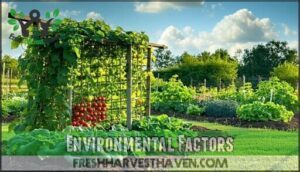
Environmental Factors
Understanding the environmental conditions that fuel blight development is your first line of defense against these destructive pathogens. Climate patterns, moisture levels, air movement, and temperature fluctuations all create the perfect storm—or the perfect protection—for your vegetable plants.
Let’s examine the four critical environmental factors you need to monitor and control to keep blight at bay.
Climate Change Effects
Climate change is reshaping the battle against blight disease in ways that challenge even experienced gardeners. Rising global temperatures have pushed crop pests and pathogens toward the poles at roughly 2.7 km per year since 1960, bringing blight to regions that were once too cold to support these destructive organisms. Temperature shifts create longer warm periods that allow pathogens to complete multiple infection cycles in a single season, while increased rainfall—often 30% above historical averages—extends leaf wetness duration beyond the critical 12-hour threshold that triggers severe outbreaks.
Disease forecasting now relies on climate modeling to predict when conditions will favor infection, helping you time protective measures more effectively. Consider these ecosystem disruption impacts:
- Pathogen migration northward – Late blight risk zones may expand over 20% into northern latitudes by 2050
- Intensified outbreak severity – Infection rates have jumped 40–60% during warmer summers
- Fungicide resistance development – Heat-stressed pathogens evolve defenses against conventional treatments
- Earlier seasonal threats – Blight appears weeks ahead of traditional schedules
- Increased management costs – Adaptation expenses have risen 10–18% since 2015
Understanding climate change effects is essential for developing effective strategies against blight.
Soil Moisture Levels
Soil moisture sits at the heart of every blight battle—too much water turns your garden into a pathogen playground, while too little weakens plants and makes them vulnerable to infection.
You’ll need moisture sensors to track soil water accurately, especially during unpredictable weather. Implement drip irrigation instead of overhead watering to maintain precise moisture control without creating water logging conditions. Install drainage methods like raised beds or French drains in problem areas where excess water collects.
Managing moisture levels through consistent monitoring prevents the 12-hour leaf wetness that triggers severe outbreaks.
Air Circulation Importance
Think of air circulation as your garden’s invisible defense system—without it, moisture clings to leaves like a wet blanket, creating the perfect breeding ground for blight spores to germinate and spread.
You’ll achieve ideal air flow management by spacing plants 24 to 36 inches apart, which prevents foliage overlap and promotes rapid drying after rain or irrigation. Pruning lower branches improves ventilation systems naturally, while soil aeration through tilling boosts root health and overall plant vigor.
Strategic plant spacing combined with proper humidity control reduces leaf wetness duration, cutting blight infection risk by up to 70 percent compared to densely packed gardens where stagnant air traps moisture.
Temperature Control
Managing temperature isn’t just about keeping plants comfortable—it’s about denying blight the precise conditions it needs to launch an attack. Cold protection strategies and proper temperature regulation create hostile conditions for blight spores, reducing infection rates considerably. You’ll prevent infection by maintaining thermal regulation that discourages pathogen development while protecting your crops from temperature extremes.
- Monitor soil temperatures between 65-75°F using mulch for soil warming and heat stress reduction
- Implement climate monitoring systems to track air temperature fluctuations that trigger blight outbreaks
- Combine temperature control with air circulation importance and humidity control for evaporative cooling effects
Preventive Cultural Practices
You can’t fight blight with wishful thinking alone—you need proven strategies that break the disease cycle before it starts. The cultural practices you implement throughout the growing season create a foundation of defense that makes all the difference between a thriving garden and a devastated one.
Here’s what you need to put into action.
Crop Rotation Benefits

Rotating your crops annually breaks the disease cycle that keeps blight pathogens thriving in your soil. This proven strategy boosts soil health while markedly reducing pathogen loads through systematic plant family management. By alternating susceptible crops with resistant varieties, you’ll disrupt blight organisms and create conditions that favor beneficial microbes over destructive pathogens.
Here are the key benefits of crop rotation:
- Disease Suppression: Rotating plant families every 3-4 years prevents pathogen buildup and reduces blight severity
- Nutrient Cycling: Different crops extract and replenish various soil nutrients, maintaining natural fertility
- Soil Rejuvenation: Diverse root systems improve structure while supporting beneficial microorganism populations
- Yield Increase: Effective crop rotation strategies break pest management challenges and boost overall production
Sanitizing Garden Tools
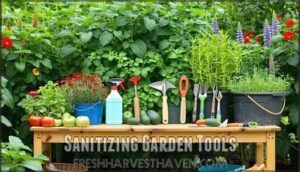
While crop rotation cuts off blight’s food supply, dirty pruners and shovels can reintroduce pathogens with a single cut, making tool sanitation your next line of defense. Equipment cleaning after each use prevents cross-contamination between healthy and infected plants, maintaining garden hygiene throughout your growing season.
You’ll want to sanitize tools using 70% rubbing alcohol, which effectively kills fungal and bacterial spores on contact. For heavily contaminated equipment, a 10% bleach solution provides stronger sterilization methods, though you’ll need to rinse metal tools afterward to prevent corrosion.
Tool disinfection becomes especially critical when you’re pruning symptomatic foliage or working in areas where blight has previously appeared. Keep a spray bottle of sanitizer types at your workstation, and make tool hygiene as routine as washing your hands—both practices protect what you’re cultivating from invisible threats.
Removing Plant Debris
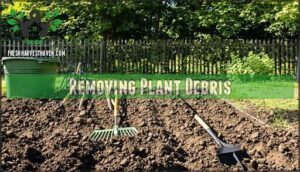
Even spotless tools can’t protect your garden if last season’s infected leaves and stems remain scattered across your beds, creating a reservoir of dormant spores ready to attack next spring’s crops. Removing plant debris after harvest breaks the blight lifecycle, eliminating overwintering sites where pathogens survive freezing temperatures and resurface when conditions warm.
Your garden cleanup protocol should include:
- Infected material removal – Pull symptomatic foliage immediately, bagging it for municipal disposal rather than adding to compost management systems
- Complete plant waste extraction – Cut spent vegetable plants to soil level, leaving no stem stubs where spores hide
- Weekly yard sanitation – Clear fallen leaves and decomposing matter before pathogen populations establish
- Debris disposal away from garden – Never compost diseased material, which contaminates otherwise healthy amendments
- Post-cleanup soil assessment – Test soil health after thorough garden sanitation to identify remaining contamination
This systematic approach to plant debris management protects your investment in sanitizing garden tools and crop rotation efforts.
Using Disease-Resistant Varieties
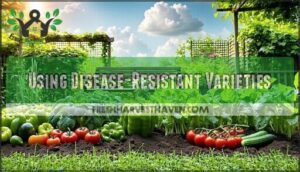
Beyond clearing debris, your strongest defense lies in resistant crop selection – choosing varieties bred to withstand blight before pathogens strike. Selecting disease-resistant varieties through modern plant breeding delivers genetic resistance that cuts infection rates by 60-80% compared to standard seeds.
In the U.S., hybrid vegetable seeds with disease tolerance now hold roughly 95% market share, while resistant tomato lines show 10-15% yield improvements over conventional types. These seed breeding innovations mean you’re not just reacting to disease – you’re preventing it.
For Solanaceae crops like tomatoes and peppers, about 30% of new releases feature resistance traits, with leading companies launching 15-20 improved lines annually. Using disease-resistant varieties transforms variety performance from hopeful to predictable.
Solarization Methods
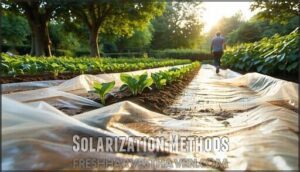
Once you’ve chosen resistant varieties, you can double down on protection by treating the soil itself – a technique called solarization that uses summer heat to sterilize your garden bed before planting even begins. This thermal treatment leverages soil heating and UV exposure to achieve soil pasteurization. Here’s how to execute effective soil solarization:
- Moisten your tilled garden bed thoroughly, then cover with clear plastic sheeting to trap moisture and intensify heat buildup
- Maintain coverage for 4-6 weeks during peak summer when temperatures exceed 90°F for ideal pathogen elimination
- Remove plastic and test soil drainage before planting to verify soil structure and soil health remain intact for disease-free crops
Control and Eradication Methods

When preventive measures fall short, you’ll need proven strategies to stop blight in its tracks. This section covers five powerful control methods, from targeted fungicides to physical removal techniques, each designed to help you reclaim your garden from active infections.
Let’s explore these essential eradication tools that can save your crops when blight strikes.
Chemical Fungicides
When blight pathogens threaten your vegetable garden, chemical fungicides can serve as your first line of defense—but only if you apply them with precision and purpose. Modern copper fungicide formulations and synthetic compounds like azoxystrobin offer powerful protection, reducing disease severity by 30-75% when you time applications correctly. You’ll need to understand fungicide resistance patterns, though, since over 60% of some fungal populations now resist multiple chemical classes.
Strategic fungicide application involves these critical elements:
- Fungicide Selection: Choose strobilurins for broad-spectrum coverage or triazoles for systemic activity, matching the chemical treatment to your specific blight pathogen
- Spray Techniques: Calibrate equipment properly and guarantee thorough coverage during early disease stages for maximum penetration
- Rotation Protocols: Alternate between fungicide groups to combat resistance development and maintain long-term effectiveness
- Toxicity Risks: Follow label rates precisely to protect beneficial organisms while controlling pathogens
- Chemical Controls: Tank-mix compatible products to improve results and reduce total fungicide applications needed throughout the season
Organic Fungicides
Organic fungicides offer proven protection without synthetic chemicals, backed by field research showing substantial disease control. Copper formulations suppress late blight by up to 88% when you apply 1.9 lbs elemental copper as cupric oxide across four applications, while European trials confirm 27% control and 20% yield increases.
Sulfur applications at 2 lbs per 100 gallons protect grapes for 21 days, and plant extracts like cinnamon and clove oil (found in products like Arber Bio Fungicide) reduce leaf infections by 58% in celery. You’ll see comparable results with neem oil and baking soda solution when applied weekly during vulnerable periods.
These bio fungicides and organic controls break down quickly, preserving soil health while delivering measurable disease suppression—just remember that the best dosage matters for maximum effectiveness.
Biological Controls
Harnessing the power of living organisms transforms your approach to disease management, offering a sustainable alternative that works with—not against—the ecosystem. Beneficial microorganisms like Trichoderma fungi and Bacillus species outcompete pathogens in soil enriched with organic matter and compost, reducing blight severity by 60% through competitive exclusion.
These biological agents establish protective colonies around plant roots, while beneficial fungi form microbial controls that disrupt pathogen lifecycles. Natural predators and organic regulators work as living bactericides, creating resilient soil communities that suppress disease without chemical intervention.
Soil Solarization
Think of soil solarization as nature’s sterilizer—a method that transforms sunlight into a powerful weapon against the pathogens lurking beneath your garden’s surface. This thermal disinfection technique uses solar trapping to achieve soil pasteurization through controlled soil heating.
Here’s your action plan:
- Clear debris and water soil deeply for moisture control
- Cover with clear plastic, sealing edges completely
- Leave for 4-6 weeks during peak summer heat
- Apply soil amendments post-treatment to restore beneficial microbes
You’ll improve soil drainage and overall soil health while eliminating disease pressure naturally.
Pruning Infected Plants
Sharp pruning shears become your first line of defense when blight strikes your vegetable garden. Tool sanitation is critical—dip blades in 70% rubbing alcohol between each cut to prevent disease spread. Remove infected plant foliage immediately, cutting back to healthy tissue during dry morning hours when pruning timing reduces spore dispersal.
Proper pruning techniques involve making clean cuts at 45-degree angles to promote wound treatment and drainage. Bag all debris for municipal disposal rather than composting, since fungal diseases survive decomposition. Monitor regrowth weekly for recurring symptoms, and apply disposal methods that protect future plantings from these persistent pathogens.
Natural Prevention Techniques
You don’t need to rely solely on chemical treatments to keep blight under control. Nature offers several proven methods that work with your garden’s ecosystem rather than against it.
Let’s explore practical techniques that prevent blight naturally while strengthening your plants’ defenses.
Baking Soda Solution
You probably have the ingredients sitting in your pantry right now to fight off blight without reaching for harsh chemicals. A simple baking soda solution acts as an effective organic gardening fungicide that disrupts the pH balance fungal pathogens need to thrive. Mix this home remedy and apply it weekly during vulnerable growth stages for maximum solution effectiveness:
- Three tablespoons baking soda per gallon of water
- One tablespoon vegetable oil for leaf adhesion
- One teaspoon liquid soap as a spreading agent
- Optional garlic extract for enhanced protection
- Neem oil addition for broader spectrum control
Recipe variations allow you to customize based on plant sensitivity and specific blight pressure. Test a small area first, as some varieties react differently to application frequency adjustments. This approach to preventing blight in gardens gives you control without compromising your soil’s ecosystem.
Drip Irrigation Benefits
While baking soda solutions treat the symptoms, switching to drip irrigation addresses one of the root causes by keeping water where it belongs—at the soil level, not on your leaves. This targeted delivery system prevents the humid conditions that blight pathogens crave while conserving water and preventing soil splash that spreads spores from contaminated ground to vulnerable foliage.
| Drip Irrigation Benefits | Impact on Vegetable Garden |
|---|---|
| Water Conservation | Reduces usage by 30-50% compared to overhead methods |
| Disease Prevention | Keeps foliage dry, blocking blight spore germination |
| Nutrient Delivery | Delivers fertilizers directly to root zones efficiently |
| Weed Reduction & Soil Erosion Control | Limits moisture in pathways, stabilizes soil structure |
You’ll maintain consistent soil moisture without creating the wet leaf surfaces that invite early and late blight development, giving your plants the hydration they need while preventing blight in gardens through smart water management.
Mulching Advantages
After drip irrigation delivers water precisely to roots, adding a protective layer on top of that soil completes your defense strategy against splash-borne pathogens. Organic mulch creates a physical barrier between soil-borne blight spores and vulnerable foliage, preventing rain droplets from carrying pathogens upward during storms.
You’ll also benefit from improved moisture retention that stabilizes soil moisture levels, reducing plant stress while suppressing weeds that compete for nutrients. As the mulching material decomposes gradually, it improves soil health by adding organic matter, creating conditions where disease-resistant plants thrive naturally through these compounding mulching advantages.
Staking or Caging Plants
Once your mulch layer locks in moisture and blocks soil splash, vertical support systems take the next step by lifting vulnerable foliage away from contaminated ground where blight pathogens lurk. Staking or caging plants creates favorable airflow optimization while maximizing sunlight exposure throughout your canopy, reducing the humid microclimates where fungal spores thrive.
These plant support systems deliver measurable growth management benefits:
- Wire cages maintain proper space efficiency with three-foot spacing between plants
- Sturdy stakes prevent leaves from touching plant debris and contaminated soil
- Elevated foliage improves air circulation around stems and reduces moisture retention
- Better sunlight exposure reaches lower leaves, strengthening plant defenses naturally
- Enhanced soil drainage around supported plants prevents waterlogged conditions
You’ll find that proper staking or caging plants transforms vulnerable sprawling growth into organized, disease-resistant structures that naturally complement your crop rotation schedule.
Crop Rotation Strategies
Staking lifts foliage off the ground, but rotating crops through different garden beds each season ensures pathogens can’t establish a permanent foothold in your soil. Plan three-to-four-year rotation schedules that separate nightshade families—tomatoes, peppers, potatoes—from previous planting sites where soilborne pathogens persist.
You’ll boost soil health through succession planting with legumes or brassicas between vulnerable crops, while companion planting with marigolds or basil provides additional cultural controls.
Regional adaptations matter: adjust rotation frequency based on your climate’s disease pressure to optimize crop rotation benefits against blight.
Frequently Asked Questions (FAQs)
How to get rid of blight in a vegetable garden?
Blight hits vegetable gardens like a wildfire through dry brush, spreading fast if you don’t act immediately. Remove infected leaves and debris first, then improve spacing between plants to boost airflow and reduce moisture.
Apply organic treatments like neem oil or copper fungicides while practicing crop rotation annually. Always sanitize your tools to maintain garden hygiene and prevent fungal management failures.
What kills blight in soil naturally?
Natural remedies like soil solarization, baking soda solution, and compost-rich soil amendments effectively eliminate blight pathogens. Hygiene control, pest prevention, and proper infected disposal strengthen your soil management strategy, while organic mulch creates a protective barrier against recurring disease.
Is blight caused by overwatering?
Overwatering doesn’t directly cause blight, but it creates ideal conditions for pathogens to thrive. Excess soil moisture and high humidity levels enable fungal and bacterial spores to germinate and spread rapidly through your garden.
How can blight be prevented?
Effective prevention starts with resistant cultivars that naturally fend off pathogens, paired with crop rotation to disrupt disease cycles.
Improve airflow through proper spacing and pruning, maintain soil health with organic amendments, and adjust watering practices using drip irrigation at soil level to prevent leaf wetness.
How to prevent tomato blight next year?
To stop tomato blight from returning, rotate your tomatoes to fresh garden locations each year, space plants three feet apart for better air circulation, switch to drip irrigation to keep foliage dry, and apply organic mulch to block soil splash.
How do farmers prevent blight?
Commercial growers combat blight through strategic farm management practices. Idaho potato farmers rotate nightshade crops every four years to disrupt disease cycles, while soil testing guides amendments that strengthen plant immunity.
They install drip irrigation systems to keep foliage dry, space plants three feet apart for ideal air circulation, and apply copper-based fungicides preventively during humid conditions.
Crop monitoring technology helps detect early symptoms, and disease-resistant varieties bred specifically for regional conditions provide an additional safeguard against outbreaks.
Can companion planting help prevent blight outbreaks?
Yes, companion planting helps prevent blight by improving air circulation, attracting beneficial insects that prey on disease vectors, and creating natural barriers.
Pairing susceptible crops with compatible plants boosts soil health and disrupts disease cycles effectively.
How does soil pH affect blight development?
Soil pH shapes your garden’s defense system, determines nutrient flow, and controls microbial balance. You’ll need slightly acidic to neutral levels (0-0) for ideal soil health—this range strengthens blight resistance while limiting fungal growth that thrives in extreme pH conditions.
What timing works best for fungicide applications?
For best results, apply fungicides before symptoms emerge, especially when weather forecasts predict conditions favorable for blight development.
Preventive measures work better than reactive treatment scheduling, so start your spray interval during periods of high humidity and warm temperatures when the disease cycle accelerates.
Are there specific watering schedules that reduce blight?
Timing is critical for watering schedules that minimize blight risk. Water early in the morning using drip irrigation or soaker hoses, which keeps foliage dry while delivering moisture directly to the soil.
Avoid overhead watering and evening schedules, as these create humid conditions overnight that encourage blight spores to germinate and spread rapidly across your plants.
Conclusion
A Pennsylvania farmer lost 400 tomato plants in 2019 when late blight swept through his greenhouse in just 72 hours, costing him $12,000 in revenue. That devastation was entirely preventable.
Preventing blight on vegetable plants demands vigilance with environmental monitoring, immediate removal of symptomatic tissue, and strategic fungicide applications timed to pathogen life cycles.
Your garden’s survival hinges on recognizing that blight prevention isn’t a single action—it’s a disciplined system of cultural practices, resistant cultivars, and early intervention that creates conditions where pathogens can’t establish themselves before they turn your harvest into a cautionary tale.
- https://www.vegetables.cornell.edu/pest-management/disease-factsheets/disease-resistant-vegetable-varieties/evaluation-of-late-blight-resistant-tomato-varieties/
- https://www.umass.edu/agriculture-food-environment/greenhouse-floriculture/fact-sheets/garden-retailers-late-blight-disease
- https://hort.extension.wisc.edu/articles/late-blight/
- https://www.sare.org/publications/crop-rotation-on-organic-farms/physical-and-biological-processes-in-crop-production/managing-plant-diseases-with-crop-rotation/
- https://hgic.clemson.edu/factsheet/crop-rotation/