This site is supported by our readers. We may earn a commission, at no cost to you, if you purchase through links.
A single garden bed planted with the right flowers can support over 100 bee visits per hour during peak bloom. Most gardeners never get close to that number—not because their soil is wrong or their climate too harsh, but because plant selection makes or breaks a pollinator garden.
Coneflowers, milkweed, and bee balm aren’t just pretty choices; they’re functional infrastructure for bees, butterflies, and hummingbirds. These flowers work because they meet the specific feeding needs of local species.
Get that match right, and your garden becomes a reliable stop on their foraging routes all season long.
Table Of Contents
- Key Takeaways
- Best Perennial Flowers for Pollinators
- Best Annual Pollinator Flowers
- Flowering Shrubs for Pollinator Habitat
- Planting for Season-Long Blooms
- Top 4 Pollinator Flower Products
- Frequently Asked Questions (FAQs)
- What are some low-maintenance pollinator plants?
- Which flower attracts the most pollinators?
- What can I put in my garden to attract pollinators?
- What is the number one flower that attracts butterflies?
- What are the best perennials for attracting pollinators?
- Can I plant pollinators in the fall?
- Which plants are best for Pollinator gardens?
- Which plants attract more pollinators?
- How do you attract pollinators to your garden?
- Why should you add plants that attract pollinators?
- Conclusion
Key Takeaways
- Choosing plants that match your local pollinators’ feeding needs matters far more than soil quality or climate — get that right, and your garden becomes a reliable stop on their foraging routes all season.
- Perennials like coneflower, bee balm, milkweed, and anise hyssop form the backbone of any pollinator garden, while fast-blooming annuals like zinnias, cosmos, and borage fill the gaps and keep nectar flowing continuously.
- Staggering bloom times from early spring (alliums) through late summer (summersweet, lantana) ensure pollinators always have something to return to — no hungry lulls, no dead zones in the season.
- Skipping pesticides near blooms, planting in clusters, and adding a shallow water source close by are the three most practical steps to turning occasional pollinator visits into a steady, season-long pattern.
Best Perennial Flowers for Pollinators
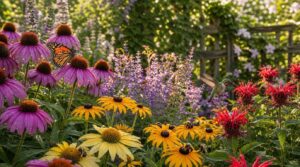
Perennials are the backbone of any pollinator garden—plant them once and they keep giving year after year. The right choices will draw native bees, hummingbirds, and monarchs through every season.
For a head start on planning, this guide to long-lasting summer flower varieties highlights perennials that reliably bloom across multiple seasons.
Here are five hardworking perennials that deserve a place in your garden.
Coneflower for Native Bees
Coneflower — or Echinacea spp. — is one of the hardest-working perennials for pollinators you can grow. Its open cone structure gives native bees easy access to pollen and nectar right through summer into fall.
Plant in sunny, well-drained soil and group several together — plant density genuinely matters.
That bloom longevity, spanning months, makes it a cornerstone native plant for any serious pollinator garden. These flowers supply abundant basal nectar that fuels honeybees and bumblebees throughout the season.
Bee Balm for Hummingbirds
Bee balm — Monarda spp. — is the hummingbird attractor your garden needs. Its tubular red and pink blooms are perfectly adapted for long bills, offering steady nectar volume throughout its 6–10 week bloom period in midsummer.
To maximize its appeal, provide full sun to enhance nectar production. This ensures consistent forage during its extended flowering window.
For long-term health, divide clumps every 2–3 years to prevent disease and manage rhizome spread. With proper care, bee balm will reward you with seasons of reliable forage, thriving year after year.
Milkweed for Monarchs
Hummingbirds love bee balm, but monarchs need something more personal — a host plant they can’t survive without. Milkweed (Asclepias spp.) isn’t just a nectar stop; it’s where egg-laying happens and where caterpillars of butterflies and moths do all their growing.
Milkweed is more than a nectar stop for monarchs — it is the host plant where eggs are laid and caterpillars grow
Its cardenolide defense — toxins stored in the leaves — protects larvae from most predators.
- Host Plant Diversity matters: plant common, swamp, and butterfly weed varieties together
- Swamp milkweed (Asclepias incarnata) tolerates moisture needs and partial shade well
- Showy milkweed prefers full sun with well-drained soil
- A pesticide-free butterfly garden keeps larvae safe through every instar
- Butterfly migration support improves when milkweed stands include nearby nectar sources
Anise Hyssop Nectar Spikes
Monarchs need milkweed — but anise hyssop (Agastache foeniculum) keeps everything else fed. Its pollinator spike architecture delivers sequential bloom progression, opening from base to tip over weeks, ensuring bees always find fresh nectar.
High nectar concentration makes it a top-tier nectar source, attracting bees and butterflies. This trait, combined with its aromatic foliage defense that deters browsers, enhances its value to pollinators.
The plant’s drought tolerance further solidifies its role as one of the most reliable perennials for sustaining pollinator populations.
Allium for Spring Forage
When spring pollinators first emerge, they need a reliable nectar source fast — and *Allium spp.
- delivers. These perennials for pollinators bloom at exactly the right moment, offering a nectar sugar profile that bees can metabolize in cool temperatures.
Here’s what makes alliums work:
- Bulb Planting Depth — plant 2–3x the bulb height for reliable emergence
- Soil Drainage — they thrive in well-drained sandy to clay soils
- Pollinator Visibility — tall stems (60–90 cm) make flower heads easy to spot
- Deer Resistance — foliage scent deters browsers without disrupting foraging
- Seasonal Nectar Availability — flowering season aligns with peak pollinator activity in temperate zones
Best Annual Pollinator Flowers
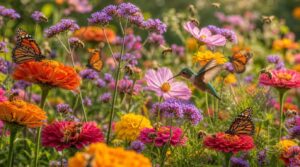
Annuals might only last one season, but they pull serious weight in a pollinator garden.
From nectar-rich zinnias to fast-blooming cosmos, annuals keep pollinators fed all season—just pair them with safe rose pest control practices to protect the visitors you’re trying to attract.
They bloom fast, flower for months, and fill in gaps that perennials simply can’t cover.
Here are five annuals worth planting if you want bees, butterflies, and hummingbirds showing up all season long.
Borage for Bee Gardens
Few annuals pull their weight like borage. Its bright blue, star-shaped flowers open in sequence, providing bees with continuous blooms from late spring through summer. The large, open petals serve as natural bee landing platforms, significantly reducing foraging effort.
Once established, borage is drought tolerant and self-seeding season after season. It excels as a companion vegetable planting, offering a dependable nectar source for pollinator-friendly gardens. This resilience and versatility make it an invaluable addition to any garden ecosystem.
Cosmos for Butterflies
Cosmos might just be the easiest win in your pollinator-friendly garden. Their open blooms offer high nectar density, and with height variety ranging from 12 to 48 inches, butterflies find them hard to miss.
- Color Attraction – White, pink, and purple blooms draw diverse species.
- Continuous Sowing – Stagger plantings to extend nectar availability through fall.
- Companion Planting – Pair with zinnias to attract butterflies season-long.
- Low Maintenance – No heavy fertilizing needed.
Sunflowers for Pollen
Sunflowers are a powerhouse pollinator food source, and the numbers back that up. Their pollen nutrient profile delivers high carbohydrates for a real bee energy boost during foraging.
Studies even show disease suppression benefits — bees eating sunflower pollen exhibit lower gut infection rates.
Larger grains support foraging diversity across bee species, as their size accommodates varied pollinator needs.
Add them to your pollinator habitat now.
Zinnias for Easy Nectar
Zinnias might be the most reliable nectar-rich flowers you can grow for a pollinator-friendly garden. Their Single Bloom Advantage means bees and butterflies reach nectar instantly — no digging required.
Plant in Full Sun Preference spots, practice Moisture Consistency, and use Cluster Planting to increase visits.
- Choose single-bloom annual flowers for open nectar access
- Plant in clusters of 5–7 for pollinator visibility
- Water consistently to prevent bloom drop
- Deadhead every 1–2 weeks for Extended Bloom Season
- Pick bright pink, orange, or yellow as your pollinator food source
Calendula for Cool Seasons
When most annual flowers tap out in cool weather, Calendula officinalis is just hitting its stride. This frost-tolerant annual flowers best between 60–70°F, making it a reliable cool-season nectar source for bees when little else is blooming.
Its self-seeding habit means less work each year.
The edible blooms add color to your plate — and your pollinator-friendly garden.
Flowering Shrubs for Pollinator Habitat
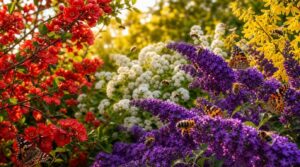
Shrubs often get overlooked in pollinator gardens, but they punch well above their weight. A single flowering shrub can support dozens of bee and butterfly species across an entire season.
Here are five worth planting.
Button Bush for Butterflies
Few shrubs earn their place in a pollinator garden quite like button bush. Its white spherical blooms appear in midsummer — right when butterfly traffic peaks and competing shrubs go quiet.
Monarchs, swallowtails, and skippers use the rounded flower heads as reliable landing platforms.
Plant it along a wetland edge where moist habitat keeps it thriving, and you’re doing real habitat restoration work with one native plant.
Chokeberry for Spring Bees
Chokeberry steps in as spring’s first generous host. Its white flower clusters open early, delivering both nectar and pollen protein right when bees need fuel most.
As a native plant, it fits naturally into pollinator-friendly gardens and tolerates partial shade well.
Smart pruning practices after bloom keep flowering vigorous year after year — and come fall, the fruits feed birds too.
Oakleaf Hydrangea Blooms
While Oakleaf Hydrangea sustains spring’s energy, its cone-shaped panicles—growing up to 12 inches—unfurl white in late spring, then undergo a gentle color shift to soft pink as summer arrives.
This extended bloom period offers pollinators like bees and butterflies reliable nectar timing, while its shade adaptability makes it ideal for woodland pollinator gardens.
The bold foliage contrast completes the appeal, blending practicality with striking aesthetics.
Summersweet for Late Nectar
Where Summersweet steps up as Oakleaf Hydrangea winds down. Its fragrant nectar spikes — bottlebrush clusters stretching 2 to 6 inches — bloom through late summer, feeding native bees, butterflies, and hummingbirds when most plants have quit.
Plant it in moist, acidic soils with partial shade for reliable seasonal blooms. Bonus: seed capsule interest carries your pollinator-friendly garden well into autumn.
Lantana for Hummingbirds
Few plants earn a spot in pollinator-friendly gardens quite like lantana. Its vivid red, orange, and yellow clusters act as natural color attraction signals — hummingbirds spot them from a distance and return daily. Each flower head holds multiple florets, making it a reliable flower nectar source. Bloom duration stretches from late spring through fall.
Plant in well-draining soil, follow 12–24 inch spacing guidelines, and it thrives equally well in container planting.
Planting for Season-Long Blooms
Getting pollinators to visit once is easy — keeping them coming back all season takes a little more thought.
The key is making sure something is always in bloom, from early spring through the first frost.
Here are five ways to make that happen in your own garden.
Match Flowers to Zones
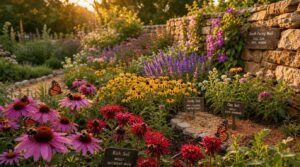
USDA Hardiness Zones are the foundation of a successful pollinator garden. Match perennials like coneflower and bee balm to your plant hardiness zones—zone 3–9 for most native plants. Factor in Sun Exposure, Soil Preference, Heat Tolerance, and Microclimate Shifts (e.g., south-facing walls) to ensure optimal conditions.
Pollinator-Friendly Native Plant Lists are essential tools for designing gardens tailored to your region. These resources help you select species that naturally thrive in your local environment, creating pollinator zones that support ecosystems effectively.
Cluster Plants by Color
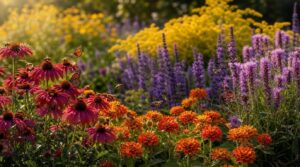
Color is your secret weapon for a pollinator magnet garden. Grouping blooms into warm-color blocks — think Coneflower, Bee Balm, and orange Zinnias — creates visible targets that pollinators spot from a distance. Cool-hue gradients with Salvia and Liatris spp. balance those fiery patches beautifully.
Try these cluster strategies:
- Build monochrome bloom beds using Echinacea shades for depth
- Layer seasonal color transitions from spring Allium to fall Goldenrod
- Use pollinator visibility palettes by repeating purple Salvia spikes throughout borders
- Anchor beds with perennials for pollinators, then fill gaps with annuals
Mix Native and Non-native
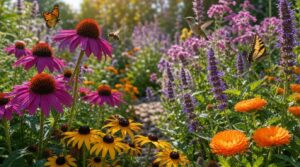
Native plants are your foundation, but smart Cultivar Selection fills the gaps. Pairing native perennials for pollinators with well-chosen annuals for pollinators creates Pollinator Corridors that hum from spring through frost.
Prioritize Bloom Overlap so there’s no hungry lull. Moisture Matching keeps both groups thriving side by side.
Beware of invasive risk — stick to non-aggressive varieties to keep your pollinator-friendly gardens ecologically sound.
Avoid Pesticides Near Blooms
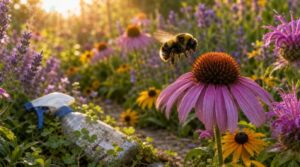
Your garden can’t be both a pollinator haven and a spray zone — choose one. Pesticide-free gardening starts with Label Awareness and Bloom Exclusion, two critical strategies. Always read bee toxicity ratings on product labels, and maintain spray-free buffers around flowering beds to protect pollinators.
These five rules safeguard pollinator health year-round:
- Time sprays at dawn or dusk — Spray Timing matters most on warm, sunny days
- Choose low-toxicity products and read labels for blooming restrictions
- Use Drift Mitigation tools like shielded nozzles and calm-wind scheduling
- Swap chemicals for Biological Controls — beneficial insects handle many common pests
- Keep a bloom calendar to plan pesticide-free windows through the season
Add Water and Shelter
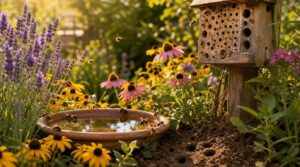
Flowers bring pollinators in — water and shelter keep them coming back. Set out shallow water stations no more than 10 to 20 meters apart, and keep depth at one to two inches so bees can drink safely. Add drip irrigation basins near plant roots to maintain soil moisture.
Bare ground patches, bee nesting blocks, and sheltered flight corridors complete a true pollinator-friendly garden with reliable nest sites year-round.
Top 4 Pollinator Flower Products
Finding good seeds and starter plants doesn’t have to be overwhelming. These four products make it easy to get pollinators visiting your garden without a lot of guesswork.
Here’s what’s worth picking up.
1. Bonnie Plants Herb Garden Kit
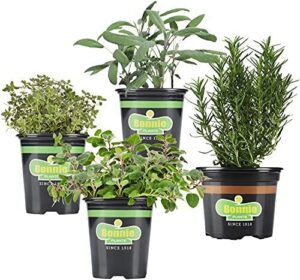
The Bonnie Plants Herb Garden Kit offers four ready-to-grow herbs—sage, thyme, oregano, and rosemary—in a single package. Each plant arrives rooted and ready for planting in a patio container or small garden bed.
You can harvest within days of planting, making it ideal for those seeking fresh herbs fast. The kit’s compact 3-lb total weight and beginner-friendly design further enhance its appeal.
Note that sage isn’t pet-friendly, so ensure it’s kept away from cats and dogs. This precaution ensures a safe environment while enjoying your herb garden.
| Best For | Home cooks who want fresh herbs on hand for grilling and everyday cooking, without waiting weeks for seeds to sprout. |
|---|---|
| Pollinator Friendly | Sage attracts bees; not pet-safe |
| Non-GMO | Conventional Bonnie Plants stock |
| Seed/Plant Count | 4 live herb plants |
| Sun Requirement | Full sun preferred |
| Germination Time | Live plants; no germination wait |
| USDA Zones | Not specified |
| Additional Features |
|
- Four useful grilling herbs in one kit — sage, thyme, oregano, and rosemary all show up ready to plant
- Rosemary stems double as natural kebab skewers, which is a genuinely clever bonus
- Plants arrive rooted and ready, so you can start harvesting in just a few days
- Some customers have gotten plants that arrived dead or wilted — shipping can be rough on live plants
- Fulfillment mix-ups happen, like getting two sage plants instead of the oregano you paid for
- Sage is toxic to cats and dogs, so pet owners need to either skip it or keep it well out of reach
2. Sow Right Mixed Sunflower Seeds
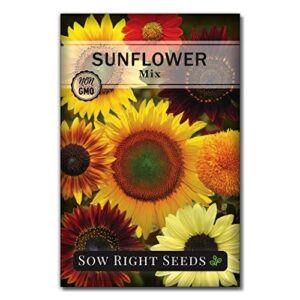
If you want bees and butterflies showing up all summer, sunflowers are hard to beat.
The Sow Right Mixed Sunflower Seeds pack includes varieties like Chocolate Cherry, Mammoth, and Mexican Sunflower — plants that reach 8 to 12 feet tall and produce generous, pollen-rich blooms from summer into fall. Each non-GMO, heirloom packet holds around 70 seeds.
You gain cut flowers, pollinator habitat, and dried seed heads that birds love — three wins from one packet.
| Best For | Gardeners, families, and teachers who want an easy, rewarding grow that pulls in pollinators and produces stunning cut flowers all season long. |
|---|---|
| Pollinator Friendly | Attracts bees and butterflies |
| Non-GMO | Non-GMO heirloom seeds |
| Seed/Plant Count | ~70 mixed seeds (7g) |
| Sun Requirement | Full sun required |
| Germination Time | 7–14 days |
| USDA Zones | Zones 3–9 |
| Additional Features |
|
- Five variety mix means you get a real range of colors and heights — from deep burgundy Chocolate Cherry to towering 12-foot Mammoths
- Non-GMO heirloom seeds from a solar-powered company, so you’re supporting something worth supporting
- Attracts bees and butterflies while blooming, then feeds birds once the heads dry out — serious bang for your buck
- Only about 70 seeds per packet, so you won’t be planting a whole field
- Needs full sun and warm soil (65–75°F) to germinate well — timing matters
- Germination isn’t guaranteed across the board; some buyers have seen spotty sprouting results
3. Orange Calendula Heirloom Seeds
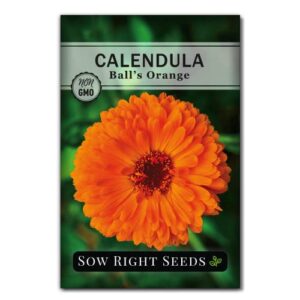
Sunflowers steal the show, but calendula quietly holds its own. Sow Right’s Ball Orange Calendula seeds produce deep orange, open-faced blooms that bees and butterflies land on them readily — no coaxing needed.
Each packet holds about 80 heirloom, non-GMO seeds and costs just $4.49. Plants grow to 1–2 feet tall, bloom within 50–60 days, and thrive in zones 2–11.
Deadhead regularly, and you’ll keep nectar flowing from spring right into cool fall weather.
| Best For | Gardeners who want low-maintenance, pollinator-friendly blooms — especially anyone interested in cut flowers, natural skincare, or adding reliable color to beds across a wide range of climates. |
|---|---|
| Pollinator Friendly | Attracts bees and butterflies |
| Non-GMO | Non-GMO heirloom seeds |
| Seed/Plant Count | ~80 seeds (750mg) |
| Sun Requirement | Full sun required |
| Germination Time | 7–14 days |
| USDA Zones | Zones 2–11 |
| Additional Features |
|
- Heirloom, non-GMO seeds backed by the Safe Seed Pledge, so you know exactly what you’re growing
- Incredibly versatile — works in garden beds, containers, hydroponics, and even indoors through winter
- Up to 100 blooms per plant, and the seller will replace any seeds that don’t sprout
- Germination can be hit or miss — many growers find pre-soaking for 48 hours or wet-sprouting is necessary to get consistent results
- Some buyers report single-petaled flowers even though the packaging suggests double-petaled blooms
- Needs soil temps above 65 °F to germinate well, which can slow things down in cooler climates or late-season planting
4. California Giant Zinnia Seed Mix
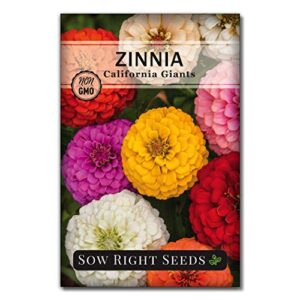
If you want bold color and non-stop nectar all summer, California Giant Zinnias deliver both. These heirloom annuals grow 2–3 feet tall, with blooms reaching 4–5 inches across — big enough to land butterflies, bees, and even the occasional hummingbird.
The mix covers pink, red, orange, yellow, purple, and white. Deadhead them regularly, and they’ll keep flowering from midsummer through fall.
Full sun, well-draining soil, and spacing of 10–12 inches is all they really need to thrive.
| Best For | Gardeners who want big, showy blooms that attract pollinators and look great in bouquets — especially those with sunny garden beds and room to let plants spread out. |
|---|---|
| Pollinator Friendly | Attracts butterflies and pollinators |
| Non-GMO | Non-GMO heirloom seeds |
| Seed/Plant Count | ~175 seeds (1g) |
| Sun Requirement | Full sun required |
| Germination Time | 7–10 days |
| USDA Zones | Zones 3–9 |
| Additional Features |
|
- Huge, colorful blooms that keep coming all summer as long as you deadhead regularly
- Great for pollinators — butterflies and bees love them
- Heirloom, non-GMO seeds from a company with solid eco-friendly practices
- Color variety can be hit or miss — some growers end up with mostly reds and pinks
- Seeds won’t sprout well in cool soil, so timing your planting matters
- A few buyers have reported packets with poor germination, even with a company guarantee in place
Frequently Asked Questions (FAQs)
What are some low-maintenance pollinator plants?
Some of the easiest options include coneflower, cosmos, and allium. They need minimal care, tolerate average soil, and reliably draw bees and butterflies season after season without much fuss.
Which flower attracts the most pollinators?
Milkweed is hard to beat. It feeds bees, butterflies, and hummingbirds, while serving as the sole host plant for monarch larvae.
This makes it a true pollinator powerhouse in one compact plant.
What can I put in my garden to attract pollinators?
Think of your garden as a diner open for business. Stock it with coneflowers, bee balm, borage, and cosmos.
Then add shrubs like button bush — and pollinators will find their way to your door.
What is the number one flower that attracts butterflies?
Coneflower is hard to beat. Its pink-purple petals and flat central cone give butterflies a perfect landing pad.
It blooms for six to eight weeks straight — offering reliable nectar, season after season.
What are the best perennials for attracting pollinators?
Picture your garden humming with wings and buzzing life. Coneflowers, bee balm, milkweed, anise hyssop, and alliums are your best perennial picks for feeding pollinators from spring through fall.
Can I plant pollinators in the fall?
Yes, fall is actually a great time to plant.
Cool air and warm soil reduce transplant shock, and perennials have time to root before winter, so they’ll bloom earlier next spring.
Which plants are best for Pollinator gardens?
The quietest garden often buzzes the loudest.
Perennials like coneflower, bee balm, and milkweed anchor your pollinator garden, while annuals like borage, cosmos, and zinnias keep the nectar flowing all season long.
Which plants attract more pollinators?
Plants with bright colors, strong scents, and varied bloom times attract the most pollinators. Coneflower, bee balm, borage, and milkweed consistently draw bees, butterflies, and hummingbirds throughout the growing season.
How do you attract pollinators to your garden?
To attract pollinators, plant a variety of nectar-rich flowers that bloom across all seasons, group them in clusters, skip pesticides near blooms, and add a shallow water source nearby.
Why should you add plants that attract pollinators?
It’s no coincidence that gardens buzzing with life tend to feed more people. Adding pollinator-friendly plants boosts local biodiversity and sustains your food supply.
This creates habitat corridors that keep bees, butterflies, and hummingbirds thriving season after season.
Conclusion
Think of your garden as a medieval waystation—travelers depended on them, and so do pollinators today. The best flowers for attracting pollinators aren’t chosen for looks alone; they’re chosen because they deliver.
Coneflowers, milkweed, bee balm, and a well-timed mix of annuals turn your yard into a foraging route that runs from early spring through first frost.
Plant with purpose, skip the pesticides, and pollinators won’t just visit—they’ll return.
- https://bees.caes.uga.edu/bees-beekeeping-pollination/pollination/pollination-plants-for-year-round-bee-forage.html
- https://chaletnursery.com/blogs/chalet-blog/august-2024-plant-of-the-month-pollinator-plants?srsltid=AfmBOopZte49Mglbb2O_kbObph3Vo9q9XzIS1wGoj1G5OobT5Iw2fYHH
- https://thistlebetheday.com/2024/04/26/perennials-for-pollinators/
- https://www.ernstseed.com/perennials-that-support-pollinators-through-seasons/?srsltid=AfmBOopTw5s7UW-C_B0RxAqOgmv1Vvxxl1GTLYzsyfyixJfpnqS59jML
- https://www.growjoy.com/august-flowers-for-pollinators?srsltid=AfmBOorcvQ7o36C_m-59jLkw0qNb766_QPSQVHXCZmeyxGFM3SPdV5Ro