This site is supported by our readers. We may earn a commission, at no cost to you, if you purchase through links.
Most gardeners lose their first tomato crop to the same handful of mistakes—wrong variety, poor soil prep, inconsistent watering.
The frustrating part? Each failure feels personal, like you don’t have a green thumb, when really you just needed better information before you started.
Tomatoes are forgiving plants when you meet their core needs, and surprisingly unforgiving when you don’t.
Getting a heavy, flavorful harvest comes down to five specific areas where small, deliberate choices compound into big results.
These gardening tips for growing tomatoes cut through the guesswork so your plants spend their energy producing fruit, not surviving.
Table Of Contents
- Key Takeaways
- Choose Tomato Varieties Wisely
- Prepare Soil and Sunny Sites
- Plant Seedlings for Strong Roots
- Water, Mulch, and Feed Consistently
- Prune, Protect, and Harvest Tomatoes
- Frequently Asked Questions (FAQs)
- What are common tomato growing mistakes?
- What not to do when growing tomatoes?
- How to grow a tomato garden?
- How do I select a tomato plant?
- How do you care for a tomato plant?
- How do I choose the right tomatoes for my garden?
- How do you grow a tomato plant in a pot?
- Can new gardeners grow tomatoes at home?
- When should I harvest ripe tomatoes?
- How do I store fresh tomatoes properly?
- Conclusion
Key Takeaways
- Picking the right tomato variety for your climate and space—determinate vs. indeterminate, heirloom vs. hybrid—is the single biggest decision that shapes your entire harvest.
- soil pH between 6.0 and 6.8, deep compost prep, and consistent crop rotation aren’t optional extras; they’re the foundation that determines how much fruit your plants can actually produce.
- Deep planting, proper spacing for airflow, and early support structures give your tomatoes the physical conditions they need to grow strong, resist disease, and carry heavy fruit without collapsing.
- Consistent deep watering at the base, a 3–4 inch mulch layer, and switching from nitrogen to phosphorus and potassium after transplanting are the three habits that turn average plants into productive ones.
Choose Tomato Varieties Wisely
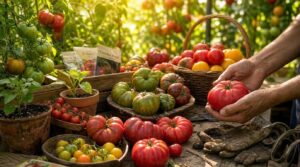
The variety you pick shapes everything—how fast it grows, how much it produces, and whether it even survives your summer. Not every tomato thrives in every garden, and that’s okay. Here’s what to keep in mind before you buy your first seed packet or transplant.
Matching your garden’s conditions to the right cultivar makes all the difference, and browsing best summer tomato varieties can help you narrow it down fast.
Match Varieties to Climate
Not every tomato thrives in every garden. Choose the right variety for your region first. If summers run hot, heat resistant cultivars like "Heatmaster" or "Arkansas Traveler" hold fruit set above 30 °C. For short seasons, Early Girl matures fast. Cool, coastal spots need late frost hardy types.
Climate considerations aren’t optional — they’re your starting point. Tracking growing degree days helps you time tomato maturity to your local climate.
Determinate Vs Indeterminate
Once you’ve matched your climate to a variety, the next call is growth habit. Determinate tomatoes stop growing at a set height, flower all at once, and ripen fruit in a tight 2–3 week window — perfect for container gardening or small yards. Indeterminate tomatoes keep climbing and fruiting until frost hits.
Here’s how they compare:
- Plant Height — Determinate varieties stay compact; indeterminates can exceed 6 feet.
- Harvest Period — Determinate plants concentrate yield; indeterminates deliver fruit continuously.
- Support Structure Needs — Determinates need short stakes; indeterminates need tall cages or trellises.
- Container Suitability — Determinate varieties adapt well; indeterminates need more root room.
Disease-Resistant Tomato Types
Growth habit tells you how a plant behaves — disease resistance tells you how long it survives.
Look for hybrid resistance codes on seed packets: VF means Verticillium and Fusarium wilt protection, N adds nematode resistance.
Varieties like Celebrity and Mountain Fresh Plus cover late blight, TMV, and nematodes — solid choices when humid summers or dense soil make disease pressure almost inevitable.
Heirloom or Hybrid Tomatoes
Disease resistance keeps your plants alive — but flavor is what keeps you coming back. That’s where the heirloom vs. hybrid decision really matters.
- Flavor profiles: Heirlooms offer fruity, smoky, and tangy complexity; hybrids deliver consistent sweetness.
- Seed saving: Heirloom seeds breed true; hybrid seeds don’t.
- Fruit diversity: Heirlooms come in purples, stripes, and odd shapes.
- Disease resistance: Hybrids win here — built-in wilt protection.
- Growth habits: Hybrids fruit more reliably; heirlooms need extra care.
Best Uses by Variety
Think about what you’re actually going to do with your tomatoes.
Beefsteak varieties like Brandywine produce thick, meaty slices perfect for sandwiches. San Marzanos are the preferred choice for sauce — low moisture, dense flesh.
For even better results, planting tomatoes in early spring gives beefsteaks and San Marzanos the long growing season they need to develop full flavor.
Cherry types are ideal for snacking straight off the vine. Match the variety to your kitchen, and you’ll never waste a harvest.
Prepare Soil and Sunny Sites
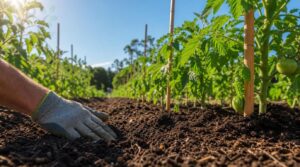
Before your tomatoes can thrive, the ground beneath them has to be ready to do its job. Sunlight and soil quality aren’t details you can fix later — they set the ceiling for everything your plants can achieve. Here’s what to get right before you put a single seedling in the ground.
Full-Sun Planting Locations
Tomatoes are sun worshippers — give them anything less than six to eight hours of sunlight daily and you’ll be disappointed at harvest. The south-facing side of your yard is your best starting point. Here’s why location makes or breaks your crop:
- Full sun drives fruit ripening and sweetness.
- Morning sunlight dries dew, cutting fungal risk fast.
- Afternoon sun — especially 2–6 pm — deepens color and flavor.
Reflective surfaces like light-colored walls can boost available light by up to 15 percent. Avoid low spots where shade lingers and cold air settles.
Ideal Soil PH
Soil pH is the quiet lever behind every nutrient your plants can — or can’t — absorb. Aim for pH between 6.0 and 6.8.
Outside that range, calcium and iron lock up, and blossom-end rot follows.
Test yearly with a reliable soil test kit, then correct gradually — lime to raise, elemental sulfur to lower.
Small, consistent adjustments beat overcorrection every time.
Compost and Organic Matter
Good compost is the backbone of productive tomato soil. Work one foot of well-rotted compost into the top 6–9 inches two weeks before planting.
This improves soil structure, boosts moisture retention, and kickstarts nutrient cycling through beneficial microbes. Finished compost smells earthy, not sharp — that’s your sign it’s ready.
Raised Beds or Containers
Raised beds and containers give you more control than you might expect. Aim for 12 to 24 inches deep in a raised bed — that’s enough room for roots to stretch and for soil to warm up faster in spring. Add a drainage layer of coarse gravel at the bottom to prevent waterlogging.
For containers, go with at least 5 gallons per plant, and consider fabric grow bags — they’re lightweight and easy to reposition when the sun shifts.
Rotate Tomato Planting Areas
Think of your garden beds like a chess board — moving your pieces strategically wins the game. Rotate crops annually to break soilborne disease cycles. Here’s why it matters:
- Disrupts Fusarium and Verticillium wilt buildup
- Rebuilds soil health naturally
- Reduces nematode pressure
- Creates space for cover crop integration
Follow a four-year rotation plan and use a bed labeling system to stay organized.
Plant Seedlings for Strong Roots
Getting your seedlings off to the right start makes everything easier down the line. A few simple steps during planting can mean the difference between a struggling plant and one that takes off fast. Here’s what to do to give your tomatoes a strong foundation from day one.
Start Seeds Indoors
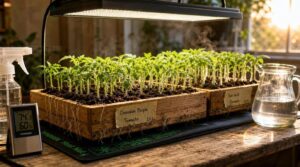
Starting tomatoes from seed gives you full control — from the very first sprout.
Fill your trays with a sterile seed-starting mix, moisten it evenly, and sow seeds at 70–80 °F using a heat mat to hit that sweet spot. Set your grow light 2–4 inches above the trays.
Once true leaves appear, begin bottom watering and add diluted seedling fertilizer.
Harden Off Seedlings
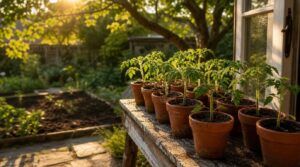
Your seedlings have been thriving indoors — now they need to meet the real world slowly. Hardening off your seedlings over 7–10 days prevents transplant shock. Day one, set them outside for just one hour in a sheltered, shaded spot. Add an hour daily. Bring them in if nights drop below 50°F.
Plant Deep for Roots

Now that your seedlings are ready for the ground, the deep planting method is your first big win. Bury two-thirds of the stem — roots will sprout all along it. Root development in tomatoes accelerates dramatically this way, giving you a stronger, drought-tolerant plant from day one.
Space Plants for Airflow
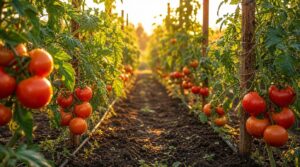
Deep planting gives roots a head start — but how you space your plants determines whether those roots ever thrive long-term.
Space indeterminate varieties 30–48 inches apart, with rows set 48 inches wide. Determinate types can sit 18–24 inches apart.
These gaps create wind channels between plants, keeping airflow patterns steady and leaf surfaces dry, which cuts disease risk considerably.
Install Supports Early
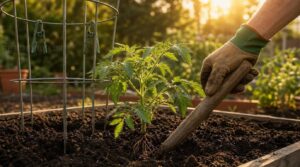
Once your plants are in the ground, don’t wait to add support. Install stakes, cages, or trellis support at planting time — before roots spread wide — to avoid damaging them later.
Use untreated wood or metal stakes at least six feet tall for indeterminate varieties. Attach soft fabric ties every 8–12 inches, and adjust support height weekly as your plants climb.
Water, Mulch, and Feed Consistently

Getting tomatoes to actually produce comes down to how consistently you care for them between plantings and harvest. Water, mulch, and fertilizer aren’t complicated, but timing and method matter more than most gardeners realize. Here’s what to get right.
Deep Morning Watering
Timing matters more than you think. Water your tomatoes early in the morning so roots can drink deeply before heat peaks. Aim for 6 to 12 inches of soil penetration — that’s the root zone where it counts. Water at the base, never on the leaves, and keep soil consistently moist, not waterlogged.
Drip Irrigation Benefits
If you’re serious about a productive tomato patch, a drip irrigation system is worth every penny. It delivers water directly to the root zone, cutting water use by up to 50 percent while keeping soil moisture steady. Less waste, healthier roots, better fruit.
A drip irrigation system cuts water use by 50 percent while delivering steadier moisture straight to the roots
Here’s what drip irrigation quietly does for you:
- Water use efficiency — no evaporation, no runoff, no guesswork
- Weed suppression — dry soil between rows means fewer weeds germinating
- Nutrient precision — fertigation delivers feed straight to the roots
- Disease prevention — dry foliage means far less blight risk
Mulch to Preserve Moisture
Think of mulch as a blanket your soil never wants to take off. A 3–4 inch layer of straw can cut evaporation by up to 65 percent, keeping roots consistently moist between waterings. Apply it beyond the drip line, but keep it a few inches away from the stem to avoid rot.
Avoid Excess Nitrogen
Too much nitrogen is the silent saboteur of a productive tomato plant. It pushes leafy, lush growth at the expense of fruit.
Switch fertilizer focus after transplanting — favor phosphorus early, then potassium once fruit sets. Use a split application approach and test for soil nitrate before feeding.
Organic nitrogen sources release slowly, reducing leaching and keeping nutrient balance steady.
Prevent Blossom-End Rot
Blossom-end rot isn’t a disease — it’s a calcium deficiency signal. Calcium moves through water in the xylem, so inconsistent watering starves developing fruit.
Water at the base deeply every morning, mulching 2–3 inches to hold moisture steady. Keep soil pH between 6.2 and 6.8 for ideal calcium uptake, and avoid excess nitrogen, which diverts resources away from fruit.
Prune, Protect, and Harvest Tomatoes

Getting your tomatoes to this stage took real work, and the final stretch matters just as much. A few smart habits around pruning, disease prevention, and knowing when to pick can be the difference between a good harvest and a great one. Here’s what to focus on as your plants hit their stride.
Remove Suckers Properly
Catch suckers when they’re 2 to 4 inches long — that’s the sweet spot. Any smaller and you’re fussing unnecessarily; any larger and you’re stressing the plant.
Pinch out indeterminate suckers with clean fingers or sharp bypass pruners, cutting flush at the node.
Always disinfect your tools between plants to avoid spreading disease.
Suckers pruned consistently mean bigger, better fruit.
Support Heavy Vines
Once suckers are gone, your vines need somewhere to go. Indeterminate varieties can reach 6 feet or more, so provide early support before they sprawl.
- Drive 6-foot stakes at planting
- Use cages rated for heavy load capacity
- Run galvanized cable with cable tension via turnbuckles
- Secure netting installation between posts
- Set posts with concrete post anchoring 12–18 inches deep
Prevent Blight and Disease
Good vine support buys you airflow — and airflow is your first line of defense against blight.
Scout weekly for lesions, yellowing spots, or dark patches on leaves. Remove infected material immediately and clean your tools with 70% alcohol between cuts. Clear all debris at season end. Apply an organic fungicide early when humidity rises, and lean on disease-resistant varieties and crop rotation to stay ahead.
Manage Common Tomato Pests
Even after defending against blight, pests can quietly undo your progress. Integrated pest management starts with early detection — check leaf undersides weekly for aphids and whiteflies.
Yellow sticky traps cut adult populations by up to 60 percent. Companion planting with basil and marigolds deters soft-bodied pests naturally. For hornworms, hand‑pick nightly or apply Bacillus thuringiensis at the first signs of feeding.
Harvest for Peak Flavor
Timing your harvest right is everything. Look for peak flavor signs: uniform color, a slight give under gentle pressure, and skin that hasn’t cracked.
Early morning picking captures higher sugar levels before heat breaks down flavor compounds.
Handle each fruit gently — bruising triggers off‑flavors fast.
Store ripe tomatoes stem-side down at room temperature, never refrigerated, and eat within two days for the fullest taste.
Frequently Asked Questions (FAQs)
What are common tomato growing mistakes?
Most mistakes come down to the same handful of habits: overwatering tomatoes, neglecting soil pH, improper plant spacing, and skipping support structures until it’s too late. Get these basics right, and you’re already ahead.
What not to do when growing tomatoes?
Think of your tomato patch as a living system — one wrong move ripples through the whole. Avoid overwatering, skip crop rotation, and limit early nitrogen to keep that system balanced and productive.
How to grow a tomato garden?
Growing tomatoes successfully comes down to matching variety to climate, planting deep, and staying consistent with water and feeding. Get those three things right, and a productive harvest almost takes care of itself.
How do I select a tomato plant?
Selecting the right tomato starts with matching plant age and seed source to your season. Choose disease-resistant varieties coded VFN, and decide between determinate or indeterminate based on your space and support setup.
How do you care for a tomato plant?
Caring for a tomato plant comes down to water, feed, and prune consistently. Keep soil evenly moist, remove suckers, mulch well, and harvest once fully colored.
How do I choose the right tomatoes for my garden?
The garden is your canvas, and the tomato you choose is your first brushstroke. Match your tomato cultivar selection to your local climate — your harvest depends on it.
How do you grow a tomato plant in a pot?
You can absolutely grow tomatoes in a pot. Choose a container at least 15 inches wide, fill it with nutrient-rich, well-drained soil, and place it where it gets eight hours of sun daily.
Can new gardeners grow tomatoes at home?
Yes, new gardeners can absolutely grow tomatoes at home. Compact, determinate varieties stay manageable, and with the right sunlight, consistent watering, and a little patience, a successful harvest is well within reach.
When should I harvest ripe tomatoes?
Knowing when to pick is like reading a whisper — easy to miss if you’re not paying attention. Check color and gentle give daily; harvest in the cool morning at the breaker stage for peak flavor.
How do I store fresh tomatoes properly?
Store ripe tomatoes at room temperature — ideally 64–68°F — stem-side down in an open bowl. Refrigerate only when fully ripe, and just 2–3 days max to protect flavor.
Conclusion
It’s no coincidence that gardeners who follow gardening tips for growing tomatoes end up with harvests worth talking about—the right variety, the right soil, the right water, at the right time.
None of it is luck. Every heavy cluster of fruit traces back to a deliberate choice made weeks earlier.
You now have five decisions that matter most. Make them well, and your tomatoes will do exactly what they’re built to do: produce.
- https://ipm.ucanr.edu/agriculture/tomato/fertilization
- https://fieldreport.caes.uga.edu/news/balance-your-tomato-gardens-soil-ph-and-fertilization-for-a-bountiful-homegrown-harvest
- https://content.ces.ncsu.edu/growing-tomatoes-in-the-home-garden
- https://ksnmdrip.com/blogs/drip-irrigation-for-tomato-crop
- https://extension.psu.edu/determining-how-long-to-run-drip-irrigation-systems-for-vegetables